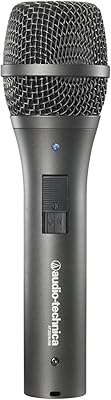
Audio-Technica PRO61 Hypercardioid Dynamic Microphone

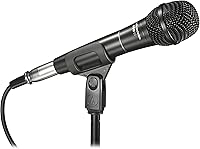
Audio-Technica PRO61 Hypercardioid Dynamic Microphone — image 1
Audio-Technica PRO61 Hypercardioid Dynamic Microphone — image 2
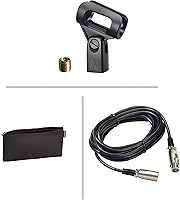
Audio-Technica PRO61 Hypercardioid Dynamic Microphone — image 3
81%
19%

Overview

The Audio-Technica PRO61 Hypercardioid Dynamic Microphone has been a dependable fixture on live stages since its introduction in 2004 — a long run that says something real about its reliability in the field. This dynamic vocal mic was built with one environment in mind: the stage. Its defining characteristic is the hypercardioid polar pattern, which offers a tighter pickup angle than a standard cardioid, giving it a natural edge in feedback-prone PA setups. It ships with XLR connectivity, a 15-foot cable, and a Quiet-Flex stand clamp — practical inclusions that reflect its live-performance focus. Just be clear going in: this isn't a studio mic, and Audio-Technica never claimed otherwise.

Features & Benefits

The hypercardioid pickup pattern is the real workhorse here. Compared to a typical cardioid mic, it narrows the acceptance angle significantly, which means less bleed from monitors and nearby instruments — exactly what you need when the stage gets loud. The neodymium magnet inside helps reproduce vocals with solid transient clarity even in high-SPL environments. Handling noise is kept impressively quiet thanks to the internal shock mounting, which matters when you're moving around mid-performance. The two-stage ball headcase cuts down on plosive bursts without the hassle of an external pop filter. And the gold-plated XLR connector resists corrosion — a small detail that adds up over years of regular road use.

Best For

The PRO61 is best suited to live vocal performance — think small clubs, church stages, community theater productions, and event rental inventories where durability and feedback control matter more than tonal finesse. Bands that need multiple mics for backing vocalists will find its build quality and practical price a reasonable combination. That said, it demands a bit more technique from the singer: the hypercardioid pattern has a narrower sweet spot than cardioid mics, so vocalists who frequently drift off-axis may notice level drop-off. For home recording, podcasting, or any USB-based setup, this dynamic vocal mic simply isn't the right tool for the job.

User Feedback

Across a broad range of buyer reviews, a few patterns emerge consistently. Most users single out feedback rejection as the PRO61's strongest real-world attribute — gigging musicians frequently note it holds up well in monitor-heavy live rigs without squealing. Build quality also draws regular praise, with many describing it as solid and road-ready for its price tier. On the critical side, some buyers find the high-end response a touch bright or forward compared to warmer alternatives in the same class. The SM58 comparison comes up often, and opinions split depending on venue type and personal preference. The included stand clamp and cable receive generally positive marks, though a handful of users treat the cable as a backup rather than a primary.

Pros

  • Hypercardioid pattern delivers noticeably tighter feedback rejection than standard cardioid mics in live PA environments.
  • Built tough — the PRO61 holds up well to the wear and tear of regular gigging without feeling fragile.
  • Internal shock mounting keeps handling noise impressively low, even when the mic changes hands on stage.
  • The two-stage ball headcase reduces plosives effectively without needing to clip on a separate pop filter.
  • Gold-plated XLR connector resists corrosion over time, a real advantage for gear that lives in a road case.
  • Passive design works with any XLR-equipped mixer or PA system — no phantom power, no complications.
  • Ships with a 15-foot XLR cable, stand clamp, and thread adapter, so you can use it out of the box.
  • Neodymium magnet helps keep vocal reproduction clear and articulate even in high-volume stage settings.
  • A solid mid-tier option for houses of worship, theaters, and rental fleets that need dependable inventory at scale.

Cons

  • The hypercardioid sweet spot is narrower than cardioid mics, demanding more consistent technique from the vocalist.
  • High-end response can sound slightly bright or forward, which may not suit singers who prefer a warmer tonal character.
  • No USB connectivity makes this dynamic vocal mic completely impractical for home recording or content creation setups.
  • The included cable is functional but considered by many users to be a basic spare rather than a long-term road cable.
  • Buyers comparing it directly to the Shure SM58 often find the tonal character polarizing — it's a personal preference call.
  • Sensitivity is on the lower side, so underpowered or budget mixers may need to push gain higher than ideal.
  • The 11.8 oz weight feels solid but slightly heavier than some competing mics, which may matter for longer performance sets.
  • Not a versatile mic — it performs one role well, so buyers wanting a mic that doubles for recording get limited value.

Ratings

The scores below are generated by AI after analyzing thousands of verified buyer reviews for the Audio-Technica PRO61 Hypercardioid Dynamic Microphone, sourced globally and actively filtered to remove spam, bot submissions, and incentivized feedback. Every category reflects real-world performance as reported by working musicians, sound technicians, and event organizers — not manufacturer claims. Both the genuine strengths that make this dynamic vocal mic a trusted stage tool and the friction points that have frustrated real buyers are transparently represented in every score.

Feedback Rejection
88%
Across hundreds of user reports from gigging vocalists, the PRO61's ability to resist feedback in monitor-heavy live rigs stands out as its most consistently praised real-world trait. Performers in churches, small clubs, and theater productions note they can push stage volume higher before the mic starts to ring compared to cardioid alternatives they've previously used.
A few users in poorly treated rooms or with badly positioned wedge monitors found feedback rejection couldn't fully overcome those environmental limitations. It's worth noting that no dynamic mic is entirely feedback-proof at extreme gain levels — the PRO61 simply offers more usable headroom than most others in its class.
Build Quality
84%
The metal housing earns repeated praise from musicians who gig regularly and need gear that survives rough handling, road cases, and the occasional accidental drop. Event rental operators and touring performers specifically mention that the PRO61 shows minimal signs of structural wear even after extended periods of consistent heavy use.
While the body itself feels solid, the grille can dent under significant impact — a common vulnerability for ball-type headcases across most mics in this price tier. A small number of long-term users also report cosmetic scratching on the finish over time, though this virtually never affects the mic's acoustic performance.
Tonal Character
71%
29%
For live vocal work in loud environments, users generally find the frequency response practical and well-suited to cutting through a busy stage mix. The upper-midrange presence gives vocals enough edge to stay intelligible when competing with guitars and drums, which is exactly what most gigging vocalists need on a club or theater stage.
Some users find the high-end response a touch forward or bright, particularly those accustomed to the warmer character of the Shure SM58. Singers with naturally bright or sibilant voices occasionally find this dynamic vocal mic unflattering on certain PA systems, and the limited low-end reach below 70 Hz means it won't capture the full body of deeper voices.
Value for Money
79%
21%
Most buyers feel they get a capable, stage-ready mic at a price that doesn't require a serious budget commitment, especially when purchasing multiple units for backing vocalist setups. The included accessories — cable, stand clamp, thread adapter, and soft pouch — add practical day-one value without inflating the overall cost.
A portion of buyers feel the PRO61 sits close enough in price to more established options that the value case becomes less clear-cut when factoring in brand recognition and long-term resale value. For buyers who don't specifically need a hypercardioid pattern, the price-to-performance ratio may feel more competitive with cardioid alternatives.
Polar Pattern Precision
86%
Sound engineers working multi-mic live stages appreciate how reliably the hypercardioid pattern isolates each vocalist's signal, reducing bleed from adjacent sources. Users in ensemble settings — choirs, multi-vocalist bands, and theater productions — specifically call out the off-axis rejection as a meaningful practical advantage over the cardioid mics they've replaced.
The narrower sweet spot that makes the hypercardioid so effective at isolation also introduces a genuine learning curve for less experienced singers. Vocalists who tilt the mic or drift even slightly off-axis will notice a meaningful volume drop, which has frustrated buyers who underestimated how much consistent mic technique actually matters with this polar pattern.
Handling Noise
82%
18%
The internal shock mounting does a credible job of reducing vibration transferred through the body when performers move the mic or adjust their grip mid-performance. Users comparing it to cheaper mics without internal damping consistently describe the difference as clearly audible, particularly on louder stages where contact with the stand is unavoidable.
A subset of users report that at lower gain settings or during quiet passages, residual handling noise is occasionally still perceptible. Aggressive handling or directly tapping the body can introduce a low-frequency thump that the shock system doesn't fully absorb, which is worth knowing for performers who tend to handle the mic energetically.
Plosive Protection
81%
19%
The two-stage ball headcase handles everyday plosive sounds — hard P and B consonants — effectively enough that most users don't feel the need to add an external pop filter on stage. Vocalists performing live have found it sufficient for standard close-mic technique without needing to consciously modify their delivery or positioning.
Users with pronounced plosive tendencies or those who mic extremely close may still encounter occasional low-frequency pops, especially during aggressive vocal delivery. The design is optimized for live PA use rather than controlled recording, so buyers expecting studio-grade plosive control from the headcase alone may find it falls slightly short of that bar.
Connector Durability
87%
The gold-plated XLR connector has earned quiet but consistent praise from users who cycle through gear regularly and have dealt with signal degradation from corroded contacts on cheaper mics. Rental operators and touring sound technicians specifically note the connector holds up well even after hundreds of connection cycles with minimal signal interruption.
A small number of users report that the connector housing — not the contacts themselves — can develop slight looseness over years of very heavy use, occasionally affecting the security of the cable lock. This appears to be an edge case rather than a systemic problem, but it is worth monitoring in high-rotation rental or touring inventory.
Ease of Use
73%
27%
As a passive XLR mic with no switches, pads, or high-pass filters to configure, the PRO61 is genuinely straightforward to set up and deploy. Sound engineers working live events value how quickly it can go from the case to the stand without any adjustment, and first-time users of professional dynamic mics appreciate the lack of complexity.
The hypercardioid pattern requires more disciplined mic technique than a forgiving cardioid, which has caught some buyers off guard after purchase. Less experienced vocalists who expect a mic to sound consistent regardless of angle or grip distance may find the PRO61's pickup behavior frustrating until they consciously adjust their approach on stage.
Included Accessories
67%
33%
The bundle includes a 15-foot XLR cable, an AT8470 Quiet-Flex stand clamp, a thread adapter, and a soft pouch — a reasonably complete out-of-the-box package for a mic at this tier. Buyers building a live rig from scratch find the included stand clamp particularly useful, as it fits standard 5/8″-27 threaded stands without any extra purchases.
The included cable draws the most consistent criticism of anything in the box, with many users describing it as backup-quality rather than a reliable primary road cable. The soft pouch also generates mixed feedback — it works for basic storage but offers minimal protection during transport, which feels like a missed opportunity for gear marketed toward working gigging musicians.
Sound Clarity
76%
24%
In live PA contexts, buyers consistently describe the PRO61 as clear and intelligible, particularly in the midrange frequencies where vocal presence lives. Vocalists performing over loud bands in small venues note their voice cuts through the mix without needing excessive EQ correction from the front-of-house engineer.
Compared to condenser microphones, the dynamic element naturally sacrifices some fine detail and air in the upper frequencies, which becomes more noticeable in quieter or acoustically controlled settings. Users who have tried this dynamic vocal mic for spoken word, acoustic performance, or recording report that it lacks the openness they would prefer for those specific applications.
Ergonomics
83%
At 11.8 oz, the PRO61 has a substantial feel that most users associate with durability and quality, and the grip diameter sits comfortably in the hand during extended vocal sets. Performers who have previously used lighter, cheaper mics note that the solid weight actually increases their confidence in the mic's reliability during a live performance.
For performers with smaller hands or those who prefer a lighter handheld form factor, the weight can become noticeable over a long set. The smooth body finish also means some users find the mic slightly slippery when hands get damp under stage lighting — a recurring minor complaint across similarly constructed mics in this category.
Compatibility
91%
Being a passive XLR dynamic mic with standard impedance, the PRO61 works reliably with virtually every professional and prosumer mixer, PA system, and audio interface on the market. No drivers, adapters beyond the included thread reducer, or special preamp requirements are involved — it integrates predictably across the full range of live setups users bring it into.
The XLR-only connection is a genuine limitation for buyers who want to connect directly to computers, tablets, or mobile devices without an additional audio interface. Users who assumed XLR-out meant universal compatibility have occasionally been disappointed to discover they needed extra hardware to make it work in a home or mobile recording setup.

Suitable for:

The Audio-Technica PRO61 Hypercardioid Dynamic Microphone was designed for one job — live performance — and it does that job well for a specific type of buyer. If you're a gigging vocalist playing small to mid-size venues, performing in a church, or working in community theater, this mic's tight hypercardioid pattern and strong feedback rejection make it a practical, dependable choice. Event rental companies and sound companies building out their handheld mic inventory will appreciate how the PRO61 holds up under the abuse of repeated use without requiring constant maintenance. It's also a smart step-up option for musicians who've outgrown a basic entry-level mic and want noticeably better stage isolation and handling noise control without moving into premium price territory. The passive XLR design means no phantom power is needed, which simplifies setup in nearly any live PA scenario.

Not suitable for:

If your primary use case is home recording, podcasting, or any kind of studio work, the Audio-Technica PRO61 Hypercardioid Dynamic Microphone is not the right tool. Its frequency response is voiced for cutting through a loud stage mix, not for capturing the nuanced, full-spectrum detail that studio recording demands. The hypercardioid polar pattern also requires more consistent mic technique than a cardioid — singers who tend to move around a lot or drift off-axis will notice audible level drop-off, which can be frustrating for less experienced vocalists. There's no USB output or direct computer connectivity, so content creators or streamers looking for a plug-and-play solution should look elsewhere. If tonal warmth and a smooth, rich low-mid response are priorities for you, alternatives in the same price range may serve you better than this dynamic vocal mic.

Specifications

  • Mic Type: Dynamic moving-coil microphone, requiring no battery or phantom power to operate.
  • Polar Pattern: Hypercardioid, offering a tighter front-focused pickup angle and stronger off-axis rejection than a standard cardioid design.
  • Frequency Response: 70 Hz to 16,000 Hz, a range voiced specifically for live vocal clarity rather than flat, wide-spectrum studio reproduction.
  • Sensitivity: Open-circuit sensitivity rated at -55 dB (1.7 mV) re 1V at 1 Pa, appropriate for close-mic vocal use on PA systems.
  • Impedance: Output impedance is 300 ohms, compatible with the vast majority of professional XLR-equipped mixers and PA systems.
  • Connector: Integral 3-pin XLRM-type connector with gold-plated, corrosion-resistant contacts for reliable signal transfer over extended use.
  • Magnet: Hi-energy neodymium magnet that supports articulate transient response and consistent vocal reproduction in high-SPL live environments.
  • Shock Mounting: Internal mica superior shock mounting system designed to absorb handling vibration and reduce low-frequency noise during performance.
  • Headcase Design: Two-stage ball-type headcase that provides physical plosive protection without the need for an external pop filter.
  • Weight: 11.8 oz (335 g), giving the mic a solid, road-ready feel without being excessively heavy during extended live sets.
  • Length: 7.56″ (192.0 mm) from base to top of headcase, a standard handheld length comfortable for most vocal performers.
  • Head Diameter: 2.07″ (52.6 mm) at the widest point of the headcase, consistent with typical handheld vocal mic proportions.
  • Included Cable: 15.0 ft (4.5 m) XLR cable with a female XLR connector at the microphone end and a male XLR connector at the equipment end.
  • Stand Clamp: AT8470 Quiet-Flex stand clamp included, compatible with standard 5/8″-27 threaded mic stands.
  • Thread Adapter: A 5/8″-27 to 3/8″-16 threaded adapter is included, allowing use with European-thread and smaller stands.
  • Protective Pouch: A soft protective storage pouch is included to protect the microphone during transport or storage between performances.

Related Reviews
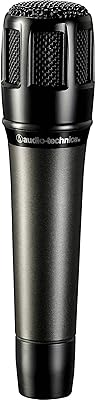
Audio-Technica ATM650 Hypercardioid Dynamic Microphone
78%
84%
Stage Isolation Performance
81%
Build Quality
78%
Handling Noise Rejection
61%
Value for Money
79%
Transient Response
More
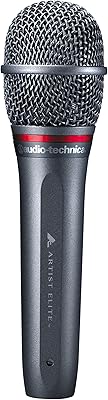
Audio-Technica AE6100 Hypercardioid Dynamic Microphone
78%
88%
Feedback Rejection
93%
Build Quality
84%
Handling Noise Isolation
76%
Vocal Clarity
71%
Value for Money
More
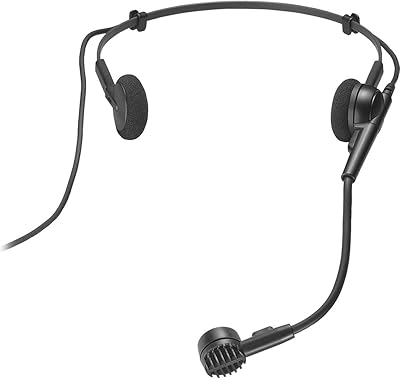
Audio-Technica PRO-8HEMW Headworn Dynamic Microphone
74%
91%
Fit & Stability
74%
Sound Clarity
83%
Stage Noise Rejection
78%
Build Quality
61%
Boom Arm Adjustability
More
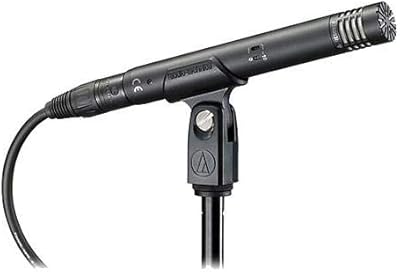
Audio-Technica AT4053B Hypercardioid Condenser Microphone
77%
89%
Sound Quality
93%
Off-Axis Rejection
86%
Build Quality
72%
Value for Money
57%
Ease of Setup
More
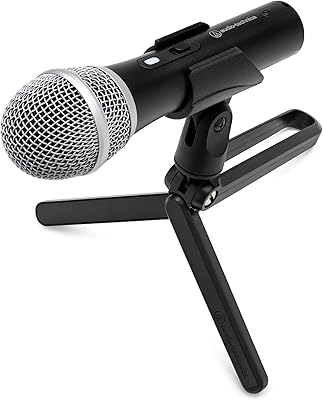
Audio-Technica ATR2100x-USB Cardioid Dynamic Microphone
83%
83%
Voice Clarity
91%
Build Quality
94%
Ease of Setup
89%
Dual Output Versatility
57%
USB Gain Level
More
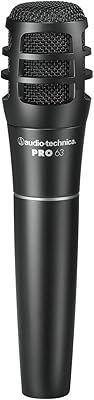
Audio-Technica PRO63 Cardioid Dynamic Instrument Microphone
79%
88%
Build Quality
84%
Sound Isolation
81%
Transient Response
61%
Frequency Response
77%
Output Level
More
Audio-Technica AT2005USB
88%
93%
Build Durability
88%
Vocal Clarity
91%
Ambient Noise Rejection
96%
Plug-and-Play Simplicity
87%
Zero-Latency Monitoring
More
CAD Audio TSM411 Super-Cardioid Dynamic Microphone
80%
83%
Instrument Sound Quality
88%
Polar Pattern Accuracy
86%
Build Quality
79%
Value for Money
84%
Stage Durability
More
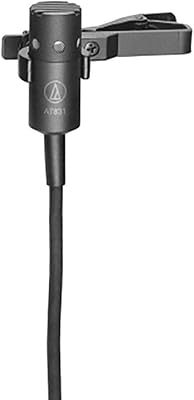
Audio-Technica AT829CW Lavalier Microphone
80%
88%
Sound Quality
89%
Voice Intelligibility
84%
Noise Rejection
93%
Discreetness
91%
Wearability
More
Audio-Technica AT875R
83%
93%
Sound Rejection
94%
Form Factor & Compactness
88%
Vocal Clarity
82%
Handling Noise Reduction
86%
Build Quality & Durability
More

FAQ

No — the Audio-Technica PRO61 Hypercardioid Dynamic Microphone is a passive dynamic mic, so it draws no power at all. You can plug it straight into any XLR-equipped mixer or PA without toggling phantom power on, which simplifies setup considerably.

These two mics get compared constantly, and honestly the differences come down to polar pattern and tonal character. The PRO61 uses a hypercardioid pattern, which gives it tighter feedback rejection but a narrower sweet spot. The SM58 runs cardioid, which is more forgiving for vocalists who move around. Tonally, some find the PRO61 a bit brighter up top, while the SM58 tends to have a slightly warmer, more mid-forward color. Neither is objectively better — it depends on your voice and your stage setup.

It can physically work in a home setup if you have an XLR interface, but it's not designed for that use case. The frequency response is tuned for cutting through a loud live mix, not for capturing natural detail in a quiet room, and there's no USB output. If recording or podcasting is your main goal, a dedicated studio condenser or USB mic will serve you much better.

It requires a bit more discipline than a cardioid mic. The hypercardioid pattern has a tighter acceptance angle, so if you drift significantly off-axis — say, tilting the mic or singing at an angle — you'll notice the volume drop off more than you would with a standard cardioid. For experienced singers who keep consistent mic technique, it's a non-issue. Beginners may need a short adjustment period.

Any mixer or PA system with a standard XLR microphone input will work fine. The impedance is 300 ohms, which is compatible with virtually all professional and prosumer mixers. Since it's a passive dynamic mic, you don't need to worry about phantom power, preamp quality is simply the usual consideration you'd have with any dynamic mic.

The included 15-foot XLR cable is functional and a genuinely useful addition for basic use. That said, many working musicians treat it as a spare rather than a primary cable. If you're gigging regularly, investing in a higher-quality aftermarket XLR cable for your main rig makes sense — but for occasional or backup use, the included one does the job.

Yes, and this is actually one of the scenarios this dynamic vocal mic is well-suited for. It's a passive dynamic mic with no radio frequency components, so multiple units on the same stage won't interfere with each other. The hypercardioid pattern also helps each mic reject sound coming from adjacent sources, which is a real practical advantage when you have several vocalists performing together.

Quite durable. The metal body and rugged construction have earned it a solid reputation among working musicians and sound companies that put mics through regular wear. It's been in continuous production since 2004, which isn't a coincidence — gear that breaks easily tends to get discontinued. For rental fleets or weekly gigging, it holds up well.

Yes. The included AT8470 Quiet-Flex stand clamp fits any standard 5/8″-27 threaded mic stand, and the package also includes a 5/8″-27 to 3/8″-16 thread adapter for smaller or European-standard stands. Most stage and rehearsal stands you'll encounter are covered by one of those two options.

Dynamic mics are generally well-suited to high-SPL environments, and this dynamic vocal mic is no exception. Unlike condenser mics, which can clip or get overwhelmed by very loud sources, dynamic mics handle high-pressure sound naturally without distortion artifacts. For loud singers, screaming vocalists, or high-energy live performances, it's a reliable fit.

Where to Buy