Overview

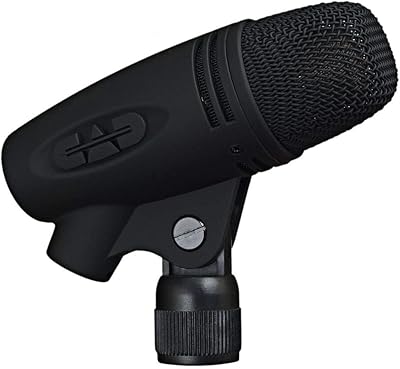
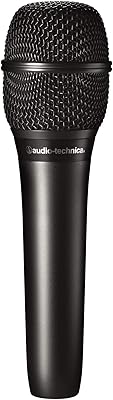
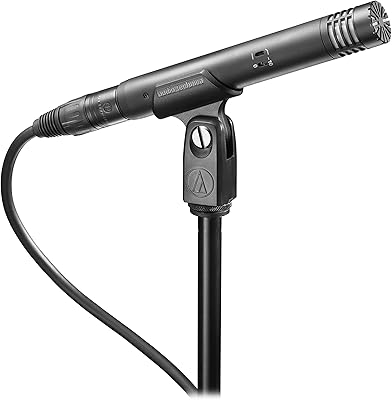
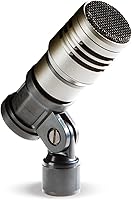
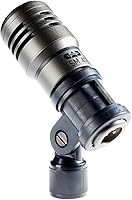
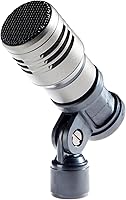
The CAD Audio TSM411 Super-Cardioid Dynamic Microphone comes from a brand that has been building professional audio gear since the 1970s, so there is real pedigree behind it. What sets this mic apart from a standard instrument dynamic is its super-cardioid polar pattern, which pulls focus tightly on the source and rejects sound coming in from the sides and rear — a meaningful advantage when working a crowded live mix or a live room with multiple open mics. It runs on a standard XLR connection, so there are no batteries to manage and no wireless latency to worry about. The brass body is a welcome choice over plastic at this tier, signaling that it was built to take some punishment.
Features & Benefits

The super-cardioid pickup pattern is the headline spec here, and it earns that attention. Compared to a standard cardioid, you get noticeably tighter off-axis rejection — useful when a snare mic is sitting two feet from an open hi-hat. The frequency response runs from 100 Hz to 15 kHz, which is a practical shape for instruments: it ignores low-end rumble and does not chase the top-end air that instrument mics rarely need. That said, the 15 kHz ceiling is worth acknowledging honestly — it is a real constraint for very bright sources like cymbals or acoustic strings. The 74 dB signal-to-noise ratio holds up well at moderate SPLs, the 310-ohm impedance plays nicely with most standard preamps and interfaces, and the included clip mount means you are not scrambling for an adapter out of the box.

Best For

The TSM411 is most at home in a drum micing setup, particularly on snare and toms where that tight polar pattern keeps bleed from neighboring drums to a minimum. Guitar and bass cabinet work is another natural fit — point it at the cone and the super-cardioid pattern does a solid job of isolating the cab from whatever else is happening in the room. Brass players in rehearsal or live settings will find it handles the directional punch of those instruments well. Home studio owners tracking percussion on a sensible budget will also get good mileage out of it. One practical note: monitor placement matters more with super-cardioid mics than with standard cardioids, since the rear lobe can pick up floor wedge bleed if the mic is positioned carelessly on stage.

User Feedback

Drummers and live sound engineers make up the bulk of reviewers who seem genuinely satisfied with this CAD mic, and the most consistent praise centers on snare and tom performance specifically — tight, punchy, and not prone to picking up the whole kit at once. Build quality earns positive mentions more often than you might expect; the brass construction reads as sturdy rather than cheap in hand. On the critical side, a handful of buyers note the 15 kHz ceiling as a real constraint when capturing instruments with extended high-frequency content. The included clip gets a generally positive reception, though a few users mention it fits certain stand threads more snugly than others. Reviewers who attempted to use this as a vocal mic tended to walk away less satisfied — it is simply not what this mic was designed to do.

Pros

  • Super-cardioid pattern delivers noticeably tighter off-axis rejection than a standard cardioid, reducing bleed in dense micing setups.
  • Brass body construction feels solid and road-ready — this is not a mic that feels like it will crack under normal gigging conditions.
  • No phantom power required, so it works straight into virtually any preamp, interface, or mixer without extra configuration.
  • Frequency response is well-shaped for instrument work, rolling off low-end rumble and focusing on the midrange punch that drums and cabs need.
  • A clip mount is included in the box, which saves an immediate trip to the accessories aisle for most drum and cab applications.
  • The 310-ohm impedance is compatible with standard gear across the board — no mismatch headaches with typical preamps or audio interfaces.
  • The TSM411 performs particularly well on snare and toms according to consistent user feedback, delivering punch without excessive room wash.
  • At its weight of under ten ounces, it is light enough to clip-mount without stressing standard boom arms or drum rim mounts.
  • No batteries or wireless components means one less failure point during a live show.

Cons

  • The 15 kHz frequency response ceiling is a real constraint for instruments with significant upper harmonic content like cymbals or acoustic strings.
  • Super-cardioid patterns require more careful placement than standard cardioids — the rear lobe can pick up monitor bleed if you are not deliberate about positioning.
  • Not suited for vocal use at all; buyers who try to repurpose this instrument dynamic mic for singing will be let down.
  • The included clip has drawn mixed feedback around thread fit, with some users finding it less universally compatible than expected.
  • No carrying case or pouch is included, which matters for gigging musicians transporting multiple mics.
  • This CAD mic does not capture the full acoustic picture of very bright or complex instruments, limiting its versatility outside its core use cases.
  • Single-channel mono output only — not a concern for most instrument applications, but worth knowing if your workflow needs anything more complex.
  • Buyers who expect the tight polar pattern to do all the heavy lifting will still need to spend time on placement to get a clean signal.

Ratings

The scores below for the CAD Audio TSM411 Super-Cardioid Dynamic Microphone were generated by AI after analyzing verified buyer reviews from across major global markets, with incentivized, spam, and bot-driven submissions actively filtered before any scoring was applied. Each category reflects what real working musicians, live sound engineers, and home studio owners actually experienced — not manufacturer claims. Both the consistent strengths and the recurring frustrations are represented transparently in every scorecard below.
Instrument Sound Quality
83%
On snare, toms, and close-miced guitar cabinets, users consistently describe the output as punchy and focused — the kind of direct, dry tone that sits well in a dense mix without needing heavy EQ correction. Drummers in particular appreciated how naturally the mic captured the crack of a snare hit at close range without flattering it into something it is not.
The shaped frequency response, while ideal for drums and cabs, leaves the mic sounding a bit restricted on instruments with complex upper harmonics. Several buyers noted that acoustic strings and certain woodwinds came out slightly dull compared to what they expected, which is a real limitation to factor in if instrument versatility matters to you.
Polar Pattern Accuracy
88%
The super-cardioid pattern performs reliably close to its specification in real-world use — users micing snare in a five-piece kit reported meaningfully less hi-hat bleed compared to standard cardioid mics they had used previously. In live reinforcement settings, the tight pickup angle made gain-before-feedback management noticeably more manageable for engineers running dense monitor mixes.
The rear sensitivity lobe catches some users off guard, particularly those who are accustomed to cardioid mics where rear rejection is more complete. A few stage users noted unexpected pickup from floor monitors sitting directly behind the mic, requiring repositioning of the wedge rather than the microphone itself to resolve the issue.
Build Quality
86%
The brass housing gives the TSM411 a noticeably solid feel that reviewers across multiple experience levels mentioned unprompted — it does not rattle, flex, or feel hollow when handled. Gigging musicians who transport multiple mics in a bag or case reported that it held up to the knocks and drops of regular touring without showing damage beyond cosmetic scuffing.
The XLR collar and clip mount interface points drew occasional criticism for showing wear after extended heavy use, particularly when the mic is clipped and unclipped repeatedly each night. The finish also shows scratches more visibly than matte-bodied alternatives, which is a minor but real point for users who care about how their gear looks on stage.
Value for Money
79%
21%
For drummers and engineers who need a dedicated snare or tom mic with genuine off-axis rejection, this CAD mic delivers results that justify its place in a working setup without requiring a significant investment. Home studio users in particular appreciated getting a purpose-built instrument dynamic that includes a usable clip out of the box, reducing the total outlay to get started.
Buyers who expected broader versatility — particularly those hoping to cover vocals or acoustic room recording with a single mic — felt the value proposition weaken considerably given the narrow application range. At its price tier, the frequency response ceiling at 15 kHz is an acknowledged trade-off, but for users who did not read carefully before purchasing, it felt like a shortcoming that hurt perceived value.
Stage Durability
84%
Multiple reviewers with multi-year ownership reported the mic still performing to spec after consistent live use, which speaks well of how the brass body handles the physical demands of being clipped to a drum kit every weekend. The passive dynamic design also eliminates the failure modes that come with active electronics — there is no internal circuitry to degrade over time from heat or humidity.
The included clip mount showed durability concerns from a meaningful subset of longer-term users, with thread wear and loosening grip being the most cited issue after extended regular use. For drummers playing hard-hitting gigs, the clip is the component most likely to need replacement before the mic body itself shows any signs of wear.
Frequency Response Range
67%
33%
The 100 Hz low-end rolloff is genuinely useful for instrument close-micing, cutting proximity-effect buildup and low-frequency handling noise before they even reach your preamp. Users micing floor toms and bass cabs appreciated that the bottom end stayed controlled and defined rather than boomy, without needing a high-pass filter at the console.
The ceiling at 15 kHz is the most consistently flagged technical limitation across all reviewer groups. Any instrument that relies on upper harmonics for its character — acoustic guitar shimmer, cymbal sizzle, bowed strings — will sound noticeably rolled off, and no amount of EQ boost can fully compensate for information the mic simply did not capture.
Off-Axis Rejection
87%
In dense live micing environments, the TSM411's off-axis rejection performance earned repeated praise from engineers who had been struggling with bleed on busy stage setups. Pointed correctly at a snare or tom, the mic rejects sound from neighboring kit elements to a degree that reduces the need for heavy gating in a mix.
Achieving that strong rejection requires accurate aiming — users who placed the mic casually rather than deliberately reported bleed levels that were not meaningfully better than cheaper cardioid options. The narrower acceptance angle also means that small shifts in mic position during a performance, from a knocked stand for example, produce more audible tonal changes than a wider-pattern mic would.
Ease of Setup
91%
Passive dynamic XLR mics are about as straightforward as audio gear gets — plug in a cable, aim at the source, and you are working. Reviewers with limited technical backgrounds consistently noted they had this mic clipped to a drum and producing signal in under two minutes, with no phantom power settings or gain structure concerns to navigate.
The super-cardioid polar pattern does raise the skill floor slightly when it comes to placement, since precise aiming matters more than it would with a forgiving cardioid. First-time instrument micing users sometimes needed a few sessions of trial and error before they found the sweet spot, which is a minor friction point that a wider-pattern mic would not present.
Compatibility
93%
The standard 3-pin XLR output and 310-ohm impedance rating make this mic compatible with virtually any audio interface, mixer, or standalone preamp that accepts a balanced mic-level signal. No special adapters, no phantom power requirements, and no driver software — it works with professional consoles and entry-level home studio interfaces equally well.
Compatibility is genuinely a non-issue for the vast majority of buyers, so complaints here are scarce and minor. The only recurring edge case was from users with very low-gain preamps who noted they needed to push the gain higher than expected, though this is common to most dynamic mics rather than a specific shortcoming of this instrument dynamic mic.
Included Accessories
71%
29%
The inclusion of a clip mount is a practical and appreciated touch that removes at least one additional purchase from the setup process, particularly for drum applications where clip mounts are essential. Buyers who were outfitting a home kit for the first time called it a helpful starting point that let them get positioned and recording without waiting on extra gear.
The clip mount is functional but not robust enough to earn universal praise — thread compatibility with certain stands was flagged as inconsistent, and a few users reported the grip loosening under the vibration of heavy drumming over time. There is no carrying pouch or stand adapter included, which means protection and mounting flexibility still require a separate investment.
Signal Clarity
77%
23%
At moderate to high instrument SPLs, the 74 dB signal-to-noise ratio holds up cleanly without introducing audible hiss into the recorded signal. Users tracking loud sources like snare drums and guitar cabs found the noise floor to be a non-issue in practice, producing tracks that required minimal noise reduction in post.
At lower SPLs — quieter acoustic instruments or distant room sources — the noise floor becomes more audible relative to signal, limiting how far users can push gain before noise becomes a problem. This is an inherent characteristic of dynamic mics at this sensitivity level and is not unique to this model, but it does narrow the comfortable working range for quieter applications.
Versatility
56%
44%
Within its designed use cases — drums, guitar cabs, bass cabs, and brass instruments — the TSM411 covers meaningful ground for a single mic. Users who bought it specifically for drum micing and occasionally needed it on a trumpet or trombone in a rehearsal setting reported it handled that secondary role without issue.
Outside of close-miced instrument applications, the versatility picture deteriorates quickly. Vocals, acoustic room recording, podcasting, overhead micing, and high-frequency instruments are all scenarios where this mic underperforms, and the 15 kHz ceiling combined with the super-cardioid pattern means buyers seeking one mic to do many things will find it limiting.
Monitor Feedback Resistance
73%
27%
The tight super-cardioid pattern does provide a real advantage in gain-before-feedback on stage when monitors are positioned thoughtfully — engineers using this mic in live reinforcement reported better headroom than they got from standard cardioid instrument mics in similar setups. For IEM-focused rigs where floor monitors are not a factor, this is essentially a non-issue.
The rear lobe specific to super-cardioid designs means that floor monitors placed directly behind the mic — a common stage layout — can trigger feedback more readily than users expect if they have only worked with cardioid mics before. A subset of live sound reviewers flagged needing to re-angle wedges at the start of gigs to avoid feedback problems that would not have occurred with a standard cardioid.
Drum Micing Performance
89%
This is where the TSM411 earns its strongest and most consistent praise across all reviewer groups. Snare and tom applications in particular drew repeated comments about how well the mic captured attack and body without making the drum sound hyped or artificially enhanced — a quality that speeds up mixing and reduces the need for heavy processing.
Users who tried using this instrument dynamic mic for overhead or room micing on a drum kit found the results disappointing — the frequency response and polar pattern are simply not suited for capturing the full picture of a kit from a distance. It is a close-mic specialist, and buyers who need more than that from a single drum mic should plan accordingly.

Suitable for:

The CAD Audio TSM411 Super-Cardioid Dynamic Microphone is a strong fit for drummers who need precise pattern control when micing a full kit — the tight super-cardioid pickup keeps snare and tom signals clean without pulling in hi-hat splash or room noise from every angle. Guitar and bass cabinet players, both in home studios and live venues, will find it handles close-micing duties reliably without requiring phantom power or a complex signal chain. Brass players in rehearsal rooms or on stage benefit from that same focused pickup, which helps cut through a dense mix without over-capturing the room. Live sound engineers who need a compact, clip-compatible instrument mic that can survive a busy gig schedule will appreciate the brass construction and no-fuss XLR connectivity. It also makes practical sense for home studio owners who are tracking percussion or amplified instruments and want a purpose-built tool rather than repurposing a vocal mic.
Not suitable for:

The CAD Audio TSM411 Super-Cardioid Dynamic Microphone is not the right call for anyone who needs extended high-frequency capture — the 15 kHz response ceiling is a genuine limitation when micing instruments like cymbals, acoustic violin, or bright acoustic guitars where the upper harmonics carry real character. Vocalists should look elsewhere entirely; this mic was not shaped for the human voice, and reviewers who tried it that way came away disappointed. The super-cardioid pattern, while useful in the right hands, demands more careful placement than a standard cardioid — if you are new to mic technique, the narrower pickup angle and rear lobe can create unexpected bleed problems, especially from floor monitors on stage. Engineers working in acoustic recording environments who need a flat, wide-range reference capture will find the shaped frequency response a constraint rather than a benefit. And if you need wireless freedom or battery-powered operation in any form, this corded XLR mic simply does not offer that.
Specifications

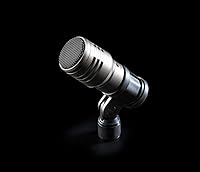
  • Microphone Type: Dynamic moving-coil microphone, purpose-built for close-micing instruments rather than vocal or room recording applications.
  • Polar Pattern: Super-cardioid, providing a tighter pickup angle and stronger off-axis rejection than a standard cardioid, with a small rear sensitivity lobe.
  • Frequency Response: Covers 100 Hz to 15 kHz, a range shaped for instrument sources that prioritizes midrange punch and rolls off both low-end rumble and extreme high-frequency content.
  • Impedance: Rated at 310 ohms, which is compatible with the vast majority of standard mic preamps, mixers, and audio interfaces without requiring any impedance-matching adapters.
  • Signal-to-Noise Ratio: 74 dB, indicating a clean noise floor relative to signal that holds up reliably when micing instruments at moderate to high sound pressure levels.
  • Connector: Standard 3-pin XLR output, the industry-standard balanced connection used across professional and prosumer audio equipment worldwide.
  • Body Material: Machined brass housing, offering greater impact resistance and long-term durability compared to the plastic-bodied mics common at entry-level price points.
  • Weight: 9.6 ounces (approximately 0.49 lbs), light enough for clip-mount use on drum rims or mic stands without placing excessive strain on mounting hardware.
  • Dimensions: Measures 5 x 4 x 3 inches overall, a compact form factor suited to close-quarters placement on drum kits, amp cabinets, and instrument stands.
  • Power Source: Passive dynamic design requiring no phantom power or batteries — it operates solely through its XLR connection to any standard mic input.
  • Output Channels: Single-channel mono output, standard for a dedicated instrument dynamic microphone used in close-micing or live reinforcement scenarios.
  • Included Accessories: Ships with a microphone clip mount included in the box, enabling immediate use with standard boom and straight mic stands without a separate purchase.
  • Compatible Devices: Designed for use with amplifiers, mixers, and audio interfaces equipped with a standard balanced XLR mic input.
  • Model Number: Manufacturer model number is AMS-TSM-411, as listed by CAD Microphones; the ASIN on Amazon is B0003066QO for reference when cross-shopping.

Related Reviews
CAD Audio D90 Handheld Dynamic Microphone
84%
89%
Sound Quality
91%
Durability & Build Quality
82%
Ease of Use
87%
Value for Money
73%
Weight & Comfort
More
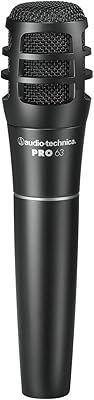
Audio-Technica PRO63 Cardioid Dynamic Instrument Microphone
79%
88%
Build Quality
84%
Sound Isolation
81%
Transient Response
61%
Frequency Response
77%
Output Level
More
Audio-Technica ATR2100x-USB Cardioid Dynamic Microphone
86%
89%
Sound Quality
91%
Ease of Use
92%
Value for Money
88%
Build Quality
85%
Connectivity Options
More
Audio-Technica AT2005USB
88%
93%
Build Durability
88%
Vocal Clarity
91%
Ambient Noise Rejection
96%
Plug-and-Play Simplicity
87%
Zero-Latency Monitoring
More
CAD Audio E70 Small Diaphragm Cardioid Condenser Microphone
87%
91%
Sound Quality
94%
Clarity & Sensitivity
88%
Versatility of Polar Patterns
85%
Build Quality
87%
Ease of Use
More
Sennheiser e 945
Sennheiser e 945
87%
94%
Build Quality
92%
Feedback Rejection
89%
Vocal Clarity
86%
Handling Noise
78%
Off-Axis Rejection
More
CAD Audio M179 Condenser Microphone
85%
88%
Sound Quality
82%
Build Quality
91%
Polar Pattern Versatility
85%
Noise Reduction (Pop Filter)
87%
Ease of Use
More
Shure 545SD-LC
Shure 545SD-LC
87%
96%
Build Durability
93%
Instrument Recording
89%
Switch Reliability
88%
Feedback Rejection
97%
Vintage Aesthetic
More
Audio-Technica AT2010
85%
93%
Vocal Clarity & Articulation
91%
High-Frequency Detail
84%
Feedback Resistance
78%
Handling Noise Suppression
88%
SPL Handling
More
Sennheiser e 835
Sennheiser e 835
88%
94%
Build Quality
89%
Vocal Clarity
91%
Feedback Rejection
86%
Handling Noise Suppression
93%
Value for Money
More

FAQ

No, and that is one of its practical advantages. The CAD Audio TSM411 Super-Cardioid Dynamic Microphone is a passive dynamic mic, so it draws no power from your interface or mixer at all. You can plug it straight into any XLR mic input and it will work immediately.

It is not a good fit for vocals. The frequency response tops out at 15 kHz and the super-cardioid pattern is optimized for instrument sources, not the human voice. Reviewers who have tried it for vocals consistently come away disappointed — this CAD mic was simply not designed with that application in mind.

A super-cardioid pattern has a narrower pickup angle than a standard cardioid, which means it rejects sound from the sides more aggressively. On a drum kit, that translates to less bleed from neighboring drums — so your snare mic picks up the snare without pulling in as much hi-hat or overhead wash. The trade-off is a small rear sensitivity lobe, so you need to be thoughtful about what is sitting directly behind the mic.

Almost certainly yes. The 310-ohm impedance is well within the range that standard audio interfaces handle without any mismatch issues. As long as your interface has a standard XLR mic input with a decent preamp, the TSM411 will connect and perform as expected — no adapters or special gear needed.

A common starting point is angling it about 45 degrees toward the center of the drum head from the rim, positioned roughly 2 to 4 inches above the head. Since the super-cardioid pattern is tighter than a standard cardioid, precise aiming matters more here — small adjustments in angle will noticeably change how much of the drum body tone versus attack you capture.

Most buyers find it functional for getting started. A few users have noted it fits some mic stand threads more snugly than others, so whether it becomes a long-term solution depends on your specific stand. For regular gigging, having a backup clip on hand is not a bad idea, but for home studio use it tends to hold up fine.

Yes, and it is genuinely well-suited for that application. Point it at the cone of the cabinet at close range and the super-cardioid pattern will do a solid job of isolating the cab from room noise and amp bleed from other sources. It handles the SPL levels a guitar cabinet produces without trouble.

Brass is genuinely more impact-resistant than the molded plastic used in many entry-level mics — it dents rather than cracks, and the threaded collar areas tend to hold up better over repeated mounting and unmounting. For a mic that gets clipped onto a drum kit night after night, that durability difference is real and practical.

For those specific applications, not meaningfully. The fundamental frequencies and most of the harmonics that define snare crack and tom punch sit well below 15 kHz. Where the ceiling becomes a real limitation is on instruments with significant upper harmonic content — cymbals, bright acoustic guitars, or violin — where you will notice the rolled-off top end more clearly.

This is worth thinking through before your first gig with it. Unlike a standard cardioid, the super-cardioid has a rear lobe that makes it moderately sensitive to sound coming in from directly behind the mic. If a floor monitor is sitting right behind it, you may get more feedback risk than you would with a cardioid. Angling your monitors slightly to the side of the rear axis of the mic, rather than directly behind it, tends to resolve the issue in most live setups.

Where to Buy