Overview

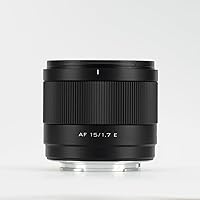
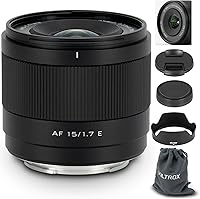
The Viltrox 15mm F1.7 Wide-Angle Lens arrives at a moment when Sony APS-C shooters have been genuinely hungry for a fast wide prime that doesn’t demand first-party pricing. Weighing roughly 180g and compact enough to slip into any camera bag, this Viltrox wide-angle prime carves out smart middle ground between plasticky kit zooms and the considerably pricier Sony 15mm F1.4 G. Its current #1 Best Seller ranking in Mirrorless Camera Lenses reflects real community demand rather than a marketing fluke — this is a lens that fills a gap Sony’s own lineup left open for a long time.
Features & Benefits

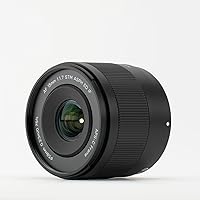
What makes the 15mm F1.7 genuinely stand out is its F1.7 maximum aperture — rare territory for a wide prime — paired with a nine-blade rounded diaphragm that produces smooth background separation when you focus close. The STM motor handles autofocus quietly and continuously, which matters during video recording when lens noise can bleed into on-camera audio. An 84.9° angle of view pulls in expansive scenes, and the 0.23m minimum focus distance lets you push close for exaggerated perspective shots. The internal focus design keeps the front element stationary, making polarizer and ND filter use clean and straightforward.

Best For

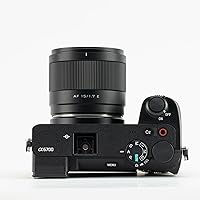
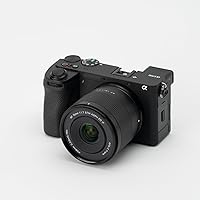
This Sony E-mount lens is a natural fit for APS-C bodies like the A6700, ZV-E10II, and FX30 — cameras favored by travelers, vloggers, and run-and-gun creators who prize portability above all else. Architecture and real estate photographers will appreciate tight-space coverage, since 15mm on APS-C frames a room generously without requiring a fisheye. The fast aperture makes low-light shooting genuinely viable — think indoor events, dimly lit streets, or casual astrophotography. For environmental portraits where you want both a subject and their surroundings in frame, the 15mm focal length hits a sweet spot that longer primes simply cannot.

User Feedback

Across roughly 168 ratings, the 15mm F1.7 holds a 4.7-star average — strong, though not without nuance. Center-frame sharpness draws consistent praise, and most buyers feel the optical performance punches well above what the price suggests. Edge softness wide open is the most common complaint; corner sharpness tightens meaningfully once you stop down to F2.8 or F4. A handful of video shooters note that autofocus can hunt in low-contrast scenes. Against the Sony 15mm F1.4 G, buyers tend to see this Viltrox wide-angle prime as the smarter value choice for everyday use, conceding only that Sony’s version edges it in outright optical consistency.

Pros

  • F1.7 aperture is genuinely rare for a wide prime and opens up low-light shooting significantly.
  • Center-frame sharpness is consistently praised and holds well across a range of subjects.
  • STM motor is quiet enough for on-camera mic users during solo vlog recording.
  • Compact 180g build makes it one of the least intrusive wide primes to carry daily.
  • Internal focus design keeps the front element stationary, making polarizer use clean and practical.
  • Close focusing to 0.23m unlocks creative perspective shots that typical wide lenses cannot achieve.
  • Nine-blade aperture produces smooth, non-distracting background blur at closer working distances.
  • Strong value proposition compared to the Sony 15mm F1.4 G for everyday hobbyist and creator use.
  • Face and eye tracking integration works reliably on current Sony APS-C bodies without workarounds.
  • Firmware update support from Viltrox is more active than many competing third-party lens brands.

Cons

  • Corner softness wide open is noticeable and requires stopping down to F4 for edge-to-edge consistency.
  • No weather sealing limits confidence when shooting outdoors in rain or dusty conditions.
  • Autofocus can hunt in low-contrast or very dim scenes, causing hesitation in video sequences.
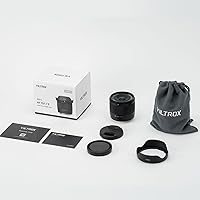
  • Lens hood is not included in the box, leaving the front element exposed to flare and accidental knocks.
  • 58mm filter thread means buyers with existing 67mm or 77mm filter sets need additional step-up rings.
  • Focus ring travel is short, making precise manual focus adjustments at close distances fiddly.
  • Slight focus breathing during rack-focus video shots can complicate professional editing workflows.
  • Build feels slightly hollow under the fingers despite the metal barrel exterior.
  • APS-C-native design limits long-term usefulness for shooters who plan to upgrade to full-frame bodies.
  • Some sample variation in optical consistency has been noted across early production units.

Ratings

The Viltrox 15mm F1.7 Wide-Angle Lens scores below are generated by our AI engine after systematically analyzing verified global buyer reviews, actively filtering out incentivized submissions and bot patterns to surface only genuine user experiences. This Viltrox wide-angle prime earned strong aggregate sentiment, and these ratings reflect both the real strengths that keep buyers recommending it and the recurring friction points that honest shoppers deserve to know about before purchasing.
Center Sharpness
91%
Buyers shooting landscapes, architecture interiors, and street scenes consistently describe center-frame detail as crisp and punchy even at F1.7. Many users upgrading from kit zooms report a visible jump in clarity that holds well into the corners once stopped down to F2.8.
A minority of users noted that sharpness consistency can vary slightly unit-to-unit, suggesting some sample variation in the optical assembly. This is not a widespread complaint but worth keeping in mind when evaluating early production batches.
Edge & Corner Sharpness
72%
28%
Stopped down to F4 or F5.6, edges tighten up noticeably and most buyers find the results more than acceptable for architecture and landscape work where depth of field is expected. Several real-estate photographers mention the falloff is predictable and easy to correct in post.
Wide open at F1.7, corner softness is the single most common criticism across reviews. Users shooting flat subjects like whiteboards or full-frame documents will notice it quickly, and those who need consistent edge-to-edge sharpness for product or document photography may find it frustrating.
Autofocus Speed & Accuracy
83%
The STM motor is quiet enough that vloggers using on-camera microphones report minimal focus noise in footage, a practical win for solo creators. Face and eye tracking on bodies like the A6700 works reliably in decent light, locking on fast during walking interview-style clips.
In low-contrast or low-light scenarios, a handful of video shooters describe occasional hunting before the lens settles on its target. It is not a dealbreaker for most use cases, but users relying on the lens for fast action or event coverage in dim venues should factor this in.
Aperture & Bokeh Quality
88%
F1.7 is genuinely unusual for a wide prime, and buyers shooting environmental portraits or close-up lifestyle content appreciate the soft, circular background blur produced by the nine-blade diaphragm. The bokeh character is described as smooth and non-distracting rather than busy or nervous.
At closer focus distances the subject-to-background separation is impressive, but at typical wide-angle working distances the depth of field remains deep even wide open, which can disappoint buyers expecting DSLR-standard blur at every distance. Managing expectations around this is important.
Video Performance
86%
Continuous autofocus transitions are smooth and gradual during video, avoiding the jarring snapping that plagues some budget lenses. Travel vloggers specifically call out how the compact size and quiet STM motor make it a dependable everyday lens for walking footage and talking-head content.
A small number of videographers note slight focus breathing when racking between near and far subjects, which can be distracting in edited sequences without stabilization. It is manageable in post but worth noting for users producing professional-grade video content.
Build Quality & Finish
77%
23%
The all-metal barrel feels solid for a lens in this class, and the focus ring has a smooth, damped action that users appreciate during manual focus pulls. The overall fit and finish reads closer to a mid-tier lens than an entry-level accessory, which sets it apart from cheaper third-party alternatives.
At roughly 180g the lightweight build is a travel asset, but some buyers note the lens feels slightly hollow when tapped and wish the construction had more heft to it. There is no weather sealing, which limits confidence when shooting in light rain or dusty outdoor environments.
Value for Money
94%
Against the Sony 15mm F1.4 G, buyers repeatedly describe this Viltrox wide-angle prime as delivering around 85 to 90 percent of the optical performance at a fraction of the cost. For hobbyists, travel creators, and APS-C shooters who cannot justify first-party pricing, the value case is hard to argue with.
A few buyers who tested both this lens and the Sony counterpart side by side note that the premium option does win on autofocus consistency and corner-to-corner rendering. If your work demands absolute technical perfection, the price gap between them starts to feel more justified.
Size & Portability
93%
Paired with a compact body like the ZV-E10II or FX30, the 15mm F1.7 barely changes the footprint of the camera, making the combo genuinely pocketable in a jacket or small sling bag. Travelers who previously avoided bringing a dedicated wide prime due to weight consistently flag this as a turning point.
The relatively short 56.4mm length means the lens sits close to the body, which some larger-handed shooters find awkward when gripping during manual focus adjustments. It is a minor ergonomic note rather than a functional problem, but worth considering if you shoot manually often.
Low-Light Performance
84%
The F1.7 aperture gives a meaningful exposure advantage in indoor venues, evening street scenes, and astro setups where every stop of light matters. Buyers testing it for indoor event photography note a marked improvement in hit rate compared to slower zoom lenses at comparable focal lengths.
Autofocus reliability does dip in truly dark environments, which means users sometimes need to assist focus manually when shooting in near-dark conditions. Combined with edge softness wide open, very low-light landscape shots at the corners may need additional post-processing attention.
Distortion Control
74%
26%
For a wide prime at 15mm, most buyers find the barrel distortion manageable and note that in-camera correction profiles handle the bulk of it on compatible Sony bodies automatically. Architecture and real-estate shooters using A6700 or FX30 report clean horizontal lines after applying the profile.
Users shooting without correction profiles enabled, or editing in software that does not auto-apply lens data, will encounter noticeable barrel distortion at the frame edges. Raw shooters need to manually apply corrections in Lightroom or Capture One, which adds a step to the workflow.
Filter Usability
89%
The 58mm filter thread and internal focus design mean the front element never rotates during autofocus, which makes circular polarizers and variable ND filters easy to set and forget. Landscape photographers who depend on polarizers to manage reflections particularly appreciate this detail.
58mm is not the most common filter diameter in enthusiast kits, so buyers who own a collection of 67mm or 77mm filters will need step-up rings or to purchase new filters. It is a one-time inconvenience rather than an ongoing problem, but it does add a small upfront cost.
Compatibility & Lens Communication
87%
EXIF data passes correctly to Sony bodies, aperture control works from the camera menu, and eye-tracking integration on newer APS-C bodies functions as expected without any firmware workarounds. Users report firmware update support from Viltrox as reasonably responsive compared to other third-party brands.
Full-frame Sony users who mount this APS-C-native lens in crop mode lose the resolution advantage of their sensor, and some report minor vignetting at the extreme corners even in APS-C crop. It is technically supported but not the ideal use case the lens was designed around.
Manual Focus Experience
79%
21%
The focus ring is smooth with enough resistance to allow deliberate, controlled pulls during video, and focus peaking on Sony bodies works reliably with this lens. Studio photographers and videographers who use manual focus racks as a creative tool find the ring behavior predictable and consistent.
The focus ring travel is relatively short, which makes fine adjustments at close distances a bit tricky for users accustomed to longer-throw manual focus lenses. Those transitioning from dedicated cine lenses or legacy glass may need a short adjustment period to dial in their technique.
Packaging & Unboxing Experience
71%
29%
The lens arrives in tidy, well-padded packaging with a front and rear cap included, which buyers generally find adequate for the price point. Several reviewers mention the presentation feels above average for a third-party lens brand, which adds to the positive first impression.
A lens pouch or hood is not included in the standard package, which draws occasional criticism from buyers accustomed to more complete accessory sets. A dedicated lens hood would be a practical addition for reducing flare in backlit situations and protecting the front element during travel.

Suitable for:

The Viltrox 15mm F1.7 Wide-Angle Lens is a strong match for Sony APS-C shooters who want a dedicated wide prime without paying first-party prices, particularly those using the A6700, ZV-E10II, or FX30. Travel photographers will appreciate how little space and weight it adds to a kit — at roughly 180g it barely registers on a full day of shooting. Vloggers and solo content creators benefit directly from the STM motor's quiet operation and reliable face tracking, since both matter the moment you start recording yourself walking and talking. Architecture enthusiasts and real-estate photographers working in compact rooms will find the 84.9° angle of view practical and the 0.23m minimum focus distance a creative bonus for detail shots. Anyone regularly shooting in low light — indoor events, evening street scenes, casual astrophotography — will find the F1.7 aperture a genuine advantage over slower kit alternatives.
Not suitable for:

The Viltrox 15mm F1.7 Wide-Angle Lens is not the right call for photographers who need consistent edge-to-edge sharpness wide open, particularly those shooting flat subjects, documents, or technical architectural work where corner rendering at F1.7 will fall short of professional standards. Full-frame Sony users should approach with caution — while the lens physically mounts on A7 and A9 series bodies, native performance is designed around APS-C sensors, and crop-mode shooting sacrifices a significant portion of the resolution those cameras were purchased for. Sports or wildlife photographers who depend on fast, decisive autofocus in near-dark conditions may find the occasional focus hunting frustrating at critical moments. Buyers who shoot in rain, dusty environments, or other challenging outdoor conditions should also note the absence of any weather sealing, which is a real limitation for field use. Finally, videographers who demand zero focus breathing for professional narrative or commercial productions will likely want to audition the lens carefully before committing.
Specifications

  • Focal Length: Fixed 15mm prime focal length designed natively for APS-C sensor cameras.
  • Maximum Aperture: Opens to F1.7, providing strong light-gathering capability for low-light and shallow depth-of-field shooting.
  • Minimum Aperture: Stops down to F16 for maximum depth of field in bright outdoor conditions.
  • Aperture Blades: Nine rounded aperture blades produce smooth, circular bokeh across the focus range.
  • Optical Formula: 12 elements arranged in 10 groups to manage distortion, chromatic aberration, and edge rendering.
  • Angle of View: 84.9° diagonal angle of view on APS-C sensors, delivering a genuinely expansive wide-angle perspective.
  • Min Focus Distance: Minimum focusing distance of 0.23m allows close-up wide-angle shots with strong foreground presence.
  • Max Magnification: Maximum magnification ratio of 0.1x, suitable for environmental detail shots but not macro work.
  • Focus Motor: Internal STM (Stepping Motor) delivers quiet, smooth autofocus transitions well-suited to video recording.
  • Focus Modes: Supports both autofocus and manual focus, switchable via the camera body menu on compatible Sony bodies.
  • Filter Thread: 58mm front filter thread with a non-rotating front element, compatible with circular polarizers and ND filters.
  • Lens Mount: Sony E-mount, natively optimized for APS-C sensor bodies; physically compatible with full-frame E-mount bodies in crop mode.
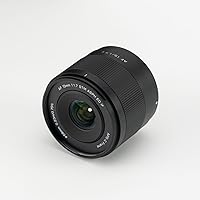
  • Dimensions: 65mm in diameter and 56.4mm in length, forming a compact cylindrical profile that suits small mirrorless bodies.
  • Weight: Approximately 180g, making it one of the lightest dedicated wide primes available for the Sony E-mount system.
  • Stabilization: No optical image stabilization built in; relies on in-body stabilization (IBIS) where available on the host camera.
  • Weather Sealing: No weather sealing is present; the lens should be used with caution in rain, dust, or high-humidity environments.
  • Hood Included: A lens hood is not included in the standard retail package; front and rear caps are provided.
  • APS-C Compatibility: Fully compatible with Sony APS-C bodies including the A6700, A6600, A6500, A6400, A6300, A6100, ZV-E10, ZV-E10II, and FX30.
  • Full-Frame Note: Usable on full-frame Sony bodies (A7, A9, A1 series) only in APS-C crop mode, with reduced resolution output.
  • Firmware Updates: Lens firmware is user-updatable via compatible Sony bodies, with Viltrox providing periodic updates through their official support channels.

Related Reviews
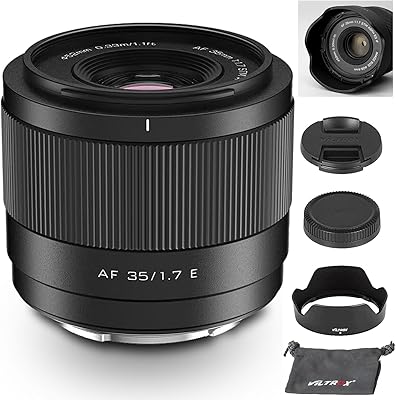
Viltrox 35mm F1.7 E-Mount Prime Lens
81%
93%
Value for Money
88%
Build Quality
79%
Autofocus Performance
82%
Optical Sharpness
86%
Bokeh Quality
More
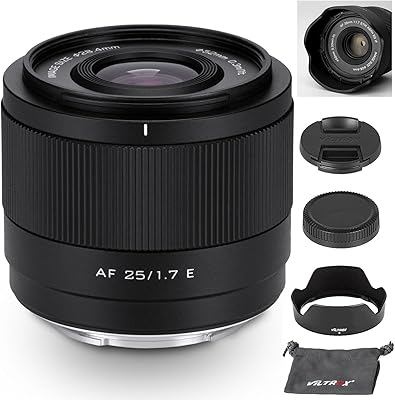
Viltrox 25mm f/1.7 E-Mount Prime Lens
81%
88%
Autofocus Performance
83%
Image Sharpness
86%
Aperture & Background Rendering
71%
Build Quality & Feel
87%
Low-Light Capability
More
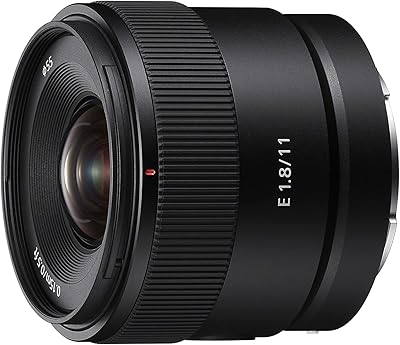
Sony E 11mm F1.8 APS-C Ultra-Wide-Angle Prime Lens
87%
93%
Autofocus Speed
91%
Image Quality
89%
Portability
74%
Low-Light Performance
88%
Build Quality
More
Brightin Star 7.5mm F2.8 III Fisheye Lens
75%
78%
Image Sharpness
88%
Value for Money
71%
Low-Light & Astrophotography Performance
82%
Build Quality & Construction
61%
Manual Focus Usability
More
VILTROX 85mm F1.8 Z Portrait Lens
76%
78%
Autofocus Performance
83%
Image Sharpness
81%
Bokeh Quality
76%
Build Quality
86%
Value for Money
More
Panasonic LUMIX G 25mm F1.7 Mirrorless Lens
79%
91%
Optical Sharpness
83%
Autofocus Performance
88%
Low-Light Capability
87%
Video Usability
62%
Build Quality
More
VILTROX 27mm F1.2 XF Fuji Autofocus Lens
85%
89%
Autofocus Performance
91%
Low-Light Capability
87%
Image Sharpness
83%
Build Quality
85%
Ease of Use
More
VILTROX 35mm f/1.7 Fujifilm X-Mount Lens
83%
91%
Optical Sharpness
83%
Autofocus Speed
88%
Bokeh Quality
72%
Build Quality
87%
Video Performance
More
VILTROX 16mm F1.8 FE Lens for Sony E Mount
88%
89%
Image Quality
91%
Autofocus Speed and Accuracy
85%
Low-Light Performance
87%
Build Quality
93%
Portability
More
VILTROX AF 13mm F1.4 XF Lens for Fujifilm X-Mount
88%
92%
Image Quality
88%
Autofocus Speed
90%
Low-Light Performance
85%
Build Quality
93%
Portability
More

FAQ

Yes, the 15mm F1.7 communicates fully with the A6700 and supports Sony’s real-time eye and face tracking. Most users report reliable subject lock-on in good to moderate light, though tracking can hesitate slightly in very dark or low-contrast scenes.

Physically, yes — it mounts without any adapter. However, to avoid severe vignetting you will need to shoot in APS-C crop mode, which reduces your effective resolution to around 15 megapixels on the A7 IV. It works, but you are essentially paying full-frame camera money to shoot with an APS-C-sized image circle, so it is not the ideal long-term pairing.

In most real-world shooting situations, no. The STM motor runs quietly, and vloggers using on-camera microphones have generally found it does not bleed audibly into recorded footage during normal continuous autofocus operation. In very quiet recording environments or with highly sensitive microphones, faint motor noise is possible but uncommon.

The Sony version has a slight edge in corner-to-corner sharpness wide open and marginally faster, more consistent autofocus. That said, the Viltrox wide-angle prime costs considerably less, and most users shooting travel, vlogging, or casual architecture find the optical gap smaller than the price gap. If you need absolute technical perfection for commercial work, the Sony earns its premium; for everyday creative use, the Viltrox holds its own comfortably.

No. The lens uses an internal focus design, which means the front element stays completely stationary during autofocus. This is a genuine practical benefit if you use circular polarizers or graduated ND filters, since you can set the filter position and it will not shift when the camera refocuses.

It depends on what you shoot. For landscapes, architecture, and travel photos where most of the interesting detail sits in the center of the frame, the edge softness at F1.7 is barely noticeable in practice. If you routinely shoot flat subjects, wide group shots where sharpness across the full frame matters, or document-style photography, it is a real limitation. Stopping down to F4 tightens up corners significantly for most users.

Yes, the 15mm F1.7 is fully compatible with older Sony APS-C bodies including the A6300 and A6400. Autofocus performance will naturally reflect the capabilities of the body itself rather than the lens, so do not expect A6700-level eye tracking on older hardware, but basic phase-detect autofocus works reliably across the supported lineup.

No adapters are needed for any Sony E-mount camera. Just attach it directly and the body will recognize it immediately. On some older firmware versions, applying the in-camera lens correction profile is recommended to get the best distortion and shading control, so it is worth checking that your body is running current Sony firmware.

There is a modest amount of focus breathing when racking between near and far subjects, which some videographers find distracting in edited sequences. For casual vlogs, travel videos, or documentary-style content it is rarely an issue. For professional narrative productions where seamless focus pulls are critical, it is worth testing before committing to extended use.

A lens hood is the first thing worth picking up separately since one is not included in the box — it helps reduce flare in backlit situations and protects the front element during travel. A 58mm circular polarizer is worth having if you shoot landscapes or anything near water. Beyond that, a quality lens pouch or small padded case is useful since the retail packaging is not designed for repeated daily use.

Where to Buy