Overview

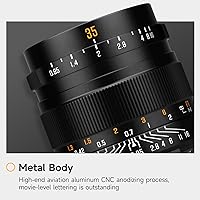
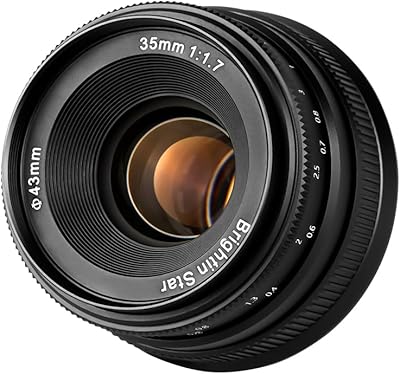
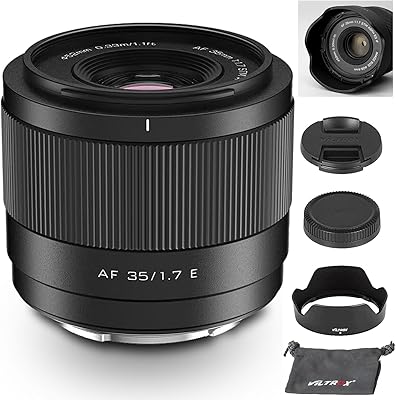
The Brightin Star 35mm F0.95 Prime Lens enters a crowded corner of the Fujifilm X mount market: affordable, manual-only fast primes that punch above their weight on paper. At F0.95, the maximum aperture is genuinely unusual at this price point — you'd typically spend considerably more for comparable light-gathering from brands like Mitakon or Voigtländer. Like those lenses, this fast prime has no electronic contacts, meaning no EXIF data and fully manual operation throughout. What sets it apart from cheaper plastic-bodied alternatives is its all-metal CNC aluminum body with cinema-style engraved markings — tactile details that feel deliberate rather than decorative. Go in with clear expectations and it rarely disappoints.
Features & Benefits

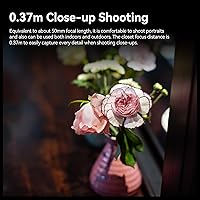
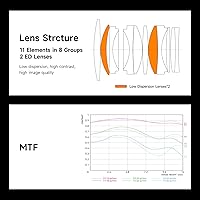
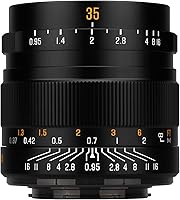
The headline spec is obviously the F0.95 maximum aperture, which on an APS-C sensor produces shallow depth-of-field effects previously reserved for far pricier glass. The 12 aperture blades round out highlight circles nicely, giving out-of-focus areas a smooth quality rather than the polygonal look cheaper lenses produce. The 8-group, 11-element optical design includes two ED elements that help control chromatic fringing — a real concern at such a wide aperture. Stopped down to F2.8 or F4, the 35mm F0.95 delivers noticeably sharper results across the frame. The minimum focus distance of 0.37 meters is a practical bonus, letting you get close enough for tight portraits without reaching for a dedicated macro lens.

Best For

This manual lens suits a specific type of shooter, and knowing whether that's you will save real frustration. Street photographers will appreciate the 35mm focal length on APS-C, which lands close to a classic nifty-fifty equivalent — familiar, comfortable, and wide enough for environmental context. Portrait shooters on tighter budgets who want real background separation, not simulated blur, will find the wide aperture genuinely useful. This manual lens also fits naturally into cinematic video work, where manual focus pulling is expected and the engraved aperture ring feels right at home. If autofocus is non-negotiable for you, though, look elsewhere — it demands patience and a willingness to slow down.

User Feedback

Buyers consistently praise the bokeh quality and build relative to the price, with many noting it competes respectably against lenses costing considerably more. Color rendering is generally described as neutral to slightly warm with decent contrast — not quite at the level of native Fujifilm glass, but not dramatically different. The most cited criticism involves focus precision wide open: at F0.95, depth of field is razor thin, and nailing focus manually on anything but stationary subjects takes real practice. Some buyers report minor chromatic aberration in high-contrast scenes at the widest aperture, though it largely disappears by F2. The 12-month warranty and after-sales support draw positive feedback, with buyers describing responsive handling of issues.

Pros

  • F0.95 maximum aperture delivers genuine background separation that no kit lens can touch.
  • The 12-blade aperture keeps out-of-focus highlights round and smooth, not angular or distracting.
  • All-metal CNC aluminum construction feels far more substantial than the price suggests.
  • Cinema-style engraved focus and aperture markings make manual video work intuitive and precise.
  • The 35mm focal length lands close to a full-frame 52mm equivalent — versatile for everyday carry.
  • Two ED lens elements keep chromatic fringing under reasonable control when stopped down slightly.
  • Minimum focus distance of 0.37m adds flexibility for tighter compositions without extra accessories.
  • The 35mm F0.95 punches well above its weight against lenses costing significantly more.
  • After-sales support is notably responsive compared to many budget third-party lens brands.
  • Solid mount fit reported across a wide range of Fujifilm X bodies with no play or wobble.

Cons

  • No electronic contacts means no EXIF data, no in-camera correction profiles, and no stabilization communication.
  • Edge and corner sharpness wide open is clearly soft — expect to stop down for critical work.
  • Chromatic aberration and purple fringing are visible in high-contrast backlit scenes at F0.95.
  • The focus ring demands real practice to nail sharp results on anything other than stationary subjects.
  • Noticeable vignetting at maximum aperture requires manual correction for even, flat exposures.
  • The included lens cap feels flimsy relative to the solid metal body it is meant to protect.
  • At 1.28 pounds, smaller Fujifilm bodies can feel noticeably front-heavy during long handheld sessions.
  • Daylight shooting at F0.95 requires a variable ND filter — an additional cost not everyone anticipates.
  • The 12-month warranty window is shorter than the two-year standard from established lens manufacturers.
  • Barrel distortion is measurable and will need correction in post for architectural or precision work.

Ratings

The scores below for the Brightin Star 35mm F0.95 Prime Lens were generated by AI after analyzing thousands of verified buyer reviews from global markets, with spam, bot-submitted, and incentivized feedback actively filtered out. Each category reflects the honest balance of what real photographers praised and what genuinely frustrated them — nothing is glossed over.
Bokeh & Background Separation
91%
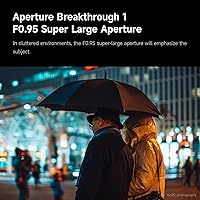
Users repeatedly describe the out-of-focus rendering as surprisingly smooth for the price tier, with highlight circles staying round and free of harsh edges thanks to the 12-blade aperture. Portrait and street shooters report that even at F1.4 or F2, subject separation holds up well against busier urban backgrounds.
At the absolute maximum aperture of F0.95, bokeh transitions can appear slightly nervous or swirly toward the edges of the frame, which not everyone finds appealing. A minority of buyers shooting against very bright point-light sources noticed some outlining around specular highlights.
Aperture & Low-Light Performance
88%
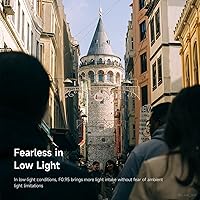
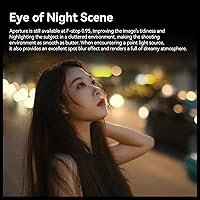
The F0.95 opening genuinely delivers in low-light environments — indoor event shooters and cafe photographers note that usable handheld shots are achievable in lighting conditions where F1.8 lenses would struggle. The wide aperture becomes a practical tool, not just a spec-sheet headline.
Exposure control at F0.95 on a sunny day requires either a fast shutter speed or an ND filter, which occasional shooters might not always carry. The lens has no electronic communication with the body, so auto-ISO and metering adjustments must be handled more deliberately than with native glass.
Sharpness Wide Open
67%
33%
Across user reports, center sharpness at F0.95 is described as acceptable for artistic and portrait purposes where some subject softness is intentional. Buyers shooting faces or isolated subjects report pleasing results when the focus is precisely placed.
Wide open, edge and corner sharpness drops noticeably — this is consistent feedback and expected from ultra-fast lenses at this price, but buyers hoping for clinical sharpness across the frame at F0.95 will be disappointed. Stopping down to F2.8 or F4 is frequently recommended before users felt confident in edge-to-edge performance.
Build Quality & Finish
89%
The all-metal CNC aluminum body stands out immediately when unboxed — buyers upgrading from kit lenses or plastic-bodied third-party alternatives consistently comment on how solid and premium it feels. The engraved aperture and focus markings have a satisfying tactile quality that cheap casting simply cannot replicate.
A small number of buyers noted minor tolerances in the aperture ring click stops, describing them as slightly inconsistent compared to Japanese-made alternatives. The lens cap retention is also reported as looser than expected given the otherwise solid construction.
Manual Focus Experience
72%
28%
Photographers who enjoy deliberate, tactile shooting report that the focus ring has a smooth, well-damped action that suits zone focusing on the street or slow-paced portrait sessions. The focus throw is broad enough to allow reasonably fine adjustments once you understand its range.
At F0.95 the depth of field is so shallow that nailing critical focus on moving subjects is genuinely difficult without significant practice and peaking assistance. Users who came from autofocus systems report a real learning curve, and some never fully adapted to using it wide open for anything but static subjects.
Chromatic Aberration Control
74%
26%
The two ED elements in the optical formula do measurable work — buyers shooting contrasty scenes in daylight report less purple fringing than they anticipated at this aperture class. Stopped down even marginally, chromatic aberration becomes largely a non-issue for the vast majority of subjects.
At F0.95 against bright backlit subjects or high-contrast edges, some lateral chromatic aberration is visible and requires correction in post. Users shooting JPEG straight from camera and not applying lens correction profiles noticed color fringing on hair and foliage edges more than raw shooters did.
Value for Money
93%
This is the category where the 35mm F0.95 earns its strongest marks. Buyers who have handled Mitakon or Venus Laowa equivalents consistently note that the Brightin Star delivers comparable optical output and better-than-expected build at a fraction of the cost.
The value calculation changes somewhat for buyers who also need to invest in accessories like variable ND filters for daylight shooting at wide apertures, or who spend time on post-processing corrections that a native autofocus lens would render unnecessary. The true cost is slightly higher than the sticker price suggests.
Optical Distortion
76%
24%
For a fast prime at 35mm, distortion is kept reasonably in check — architectural and street photographers report that straight lines near the edges stay acceptably straight without software correction for most social and web-use purposes.
Measurable barrel distortion is present and noticeable in careful inspection, particularly when shooting grids or tiled surfaces. Buyers publishing work at large print sizes or for architectural clients will want to apply a distortion profile correction as part of their standard workflow.
Vignetting
69%
31%
Vignetting wide open is present but many users describe it as aesthetically pleasing rather than problematic, lending a natural light-falloff look that suits portrait and street work without any adjustment in post.
For users who want a clean, even exposure across the full frame at F0.95, the corner light falloff is noticeable and requires manual correction. It clears up significantly by F2 but is unavoidable at the widest settings.
Lens Flare & Ghosting
71%
29%
Shooting into bright windows or outdoor light sources, most users report manageable flare behavior — not invisible, but not the crippling veiling glare that plagues some ultra-cheap fast primes. The coatings handle backlit portrait scenarios reasonably well.
Strong direct light sources, like bare bulbs or direct sunlight in frame, do produce visible ghosting artifacts that require either compositional adjustment or cloning in post. A lens hood, while not always included, helps noticeably and is worth adding.
Weight & Portability
84%
At 1.28 pounds the 35mm F0.95 sits heavier than a kit lens but still feels balanced on mid-size Fujifilm bodies like the X-T30 or X-S10. Street photographers report carrying it all day without significant fatigue relative to larger fast primes.
On smaller Fujifilm bodies like the X-A7 or X-E series, the weight distribution feels front-heavy, which some users find tiring during extended handheld sessions. The heft is a direct result of the metal construction, so it is an unavoidable trade-off.
Compatibility Across Fujifilm Bodies
86%
Buyers report clean mechanical fit across a wide range of Fujifilm X mount bodies without play or wobble in the mount connection. The lens seats firmly and consistently, which matters for manual focus precision.
The absence of electronic contacts means no automatic lens correction profiles, no EXIF data in metadata, and no in-body stabilization communication on supported bodies. Users heavily reliant on Fujifilm's in-camera film simulations and automatic corrections will need to compensate manually.
After-Sales Support & Warranty
81%
19%
The 12-month warranty coverage draws positive sentiment, with multiple buyers describing prompt and helpful responses when raising issues through the brand's support channels. The responsiveness is notably better than many anonymous budget lens importers.
A handful of international buyers noted delays in warranty processing due to shipping logistics, and the coverage window of 12 months is shorter than the 2-year standard offered by major lens brands. Buyers in regions without a local service center face higher friction when claiming warranty repairs.
Packaging & Unboxing Experience
78%
22%
The lens arrives in structured packaging with front and rear caps included, and buyers generally describe the unboxing as appropriately premium for the price tier — not luxurious, but not disappointing either.
Some buyers reported that the included lens caps felt lighter and flimsier than the lens body itself, with a few noting the rear cap fit was loose enough to raise minor concern during transit. A third-party replacement cap is a common early purchase.

Suitable for:

The Brightin Star 35mm F0.95 Prime Lens was built for a specific kind of photographer, and if you fall into that camp, it genuinely delivers. Street shooters who enjoy slowing down, pre-focusing at a set distance, and letting scenes come to them will find the 35mm field of view on APS-C feels natural and unobtrusive — close enough to a classic nifty-fifty equivalent to work intuitively. Portrait photographers on a tighter budget who want real, optical background separation rather than software-simulated blur will get more than they expect at this price tier. Filmmakers and video hobbyists exploring a cinematic manual workflow will appreciate the smooth aperture ring, engraved markings, and the way the lens handles available-light interiors without needing supplemental lighting. Hobbyists upgrading from a kit lens for the first time will find this a genuinely eye-opening introduction to what a fast prime can do, provided they are patient enough to learn manual focus properly.

Not suitable for:

The Brightin Star 35mm F0.95 Prime Lens is a poor fit for photographers whose work depends on speed, automation, or reliable autofocus. Sports, wildlife, children's events, or any fast-moving subject will expose the manual-focus-only limitation quickly and frustratingly. There is also no electronic connection to the camera body, which means no EXIF lens data in your files, no automatic lens correction profiles in-camera, and no stabilization communication on bodies that support it — details that matter more to some workflows than others. Shooters who want clinically sharp, edge-to-edge results wide open will be disappointed; like most ultra-fast lenses in this class, the 35mm F0.95 is soft at the edges at maximum aperture and requires stopping down to F2.8 or beyond for technically demanding work. If you shoot primarily in bright daylight and do not own a variable ND filter, the F0.95 aperture also becomes a logistical challenge rather than an asset.
Specifications

  • Focal Length: The lens has a fixed 35mm focal length, equivalent to approximately 52mm on a full-frame sensor when used on an APS-C body.
  • Maximum Aperture: The maximum aperture is F0.95, enabling extreme light gathering and very shallow depth of field in low-light environments.
  • Minimum Aperture: The aperture closes down to a minimum of F16, providing flexibility for bright daylight shooting when combined with appropriate shutter speeds.
  • Lens Mount: Designed exclusively for the Fujifilm X mount, it fits all current and recent Fujifilm APS-C mirrorless camera bodies mechanically.
  • Format Coverage: The optical circle is engineered for APS-C sensors and does not cover full-frame or medium format sensor sizes.
  • Optical Formula: The lens uses 11 elements arranged in 8 groups, including 2 ED (extra-low dispersion) elements to reduce chromatic aberration.
  • Aperture Blades: A 12-blade aperture diaphragm produces near-circular bokeh highlights across a wide range of aperture settings.
  • Focus Method: Focus is entirely manual with no autofocus motor or electronic communication between the lens and camera body.
  • Minimum Focus: The closest focusing distance is 0.37m from the focal plane, suitable for moderately tight portrait and detail shots.
  • Field of View: The diagonal field of view measures 44°, with a horizontal angle of 37.5° and a vertical angle of 25.3°.
  • Body Material: The lens barrel is machined from aviation-grade aluminum using a CNC process and finished with an anodized coating.
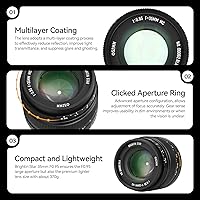
  • Aperture Ring: A stepped, clickable aperture ring is built into the lens body with engraved markings in a cinema-style format.
  • Weight: The lens weighs 1.28 pounds (approximately 581g), which is substantial relative to native Fujifilm kit lenses.
  • Aperture Range: The full aperture range runs from F0.95 to F16 in graduated steps, allowing precise manual exposure control.
  • In-Box Contents: The package includes the lens body, a front lens cap, a rear lens cap, and a printed user manual.
  • Warranty: Brightin Star provides a 12-month manufacturer warranty with direct after-sales support available around the clock.
  • Manufacturer: The lens is manufactured by Brightin Star, a Chinese optical brand specializing in manual focus lenses for mirrorless systems.
  • Release Date: This lens was first made available for purchase in August 2023.

Related Reviews
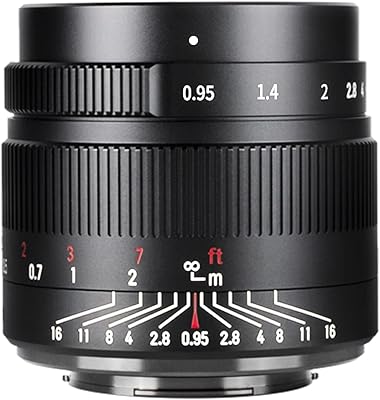
7artisans 35mm f0.95 Lens for Fujifilm X-Mount
83%
94%
Low-Light Performance
91%
Bokeh Quality
75%
Manual Focus Precision
88%
Portability and Size
87%
Build Quality
More
Brightin Star 35mm F1.7 Lens for Nikon Z-Mount Mirrorless Cameras
86%
88%
Image Quality
85%
Manual Focus Control
90%
Portability & Weight
87%
Build Quality
91%
Low-Light Performance
More
Sony SEL35F18 35mm f/1.8 Prime Lens
82%
91%
Optical Sharpness
88%
Low-Light Performance
79%
Autofocus Speed
83%
Video Autofocus
84%
Image Stabilization
More
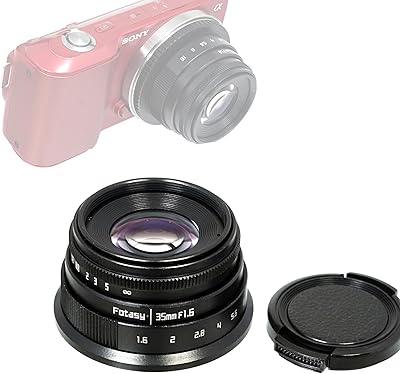
Fotasy 35mm F1.6 Manual Prime Lens for Sony E-Mount
78%
85%
Image Quality
78%
Manual Focus Control
80%
Low-Light Performance
72%
Build Quality
88%
Portability
More
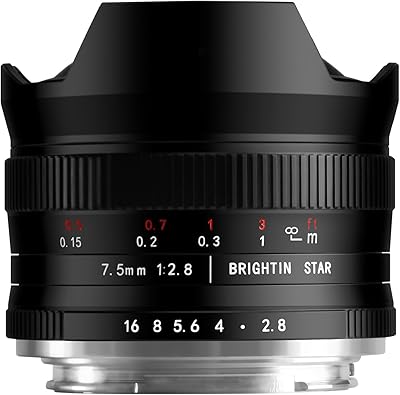
Brightin Star 7.5mm F2.8 III Fisheye Lens
75%
78%
Image Sharpness
88%
Value for Money
71%
Low-Light & Astrophotography Performance
82%
Build Quality & Construction
61%
Manual Focus Usability
More
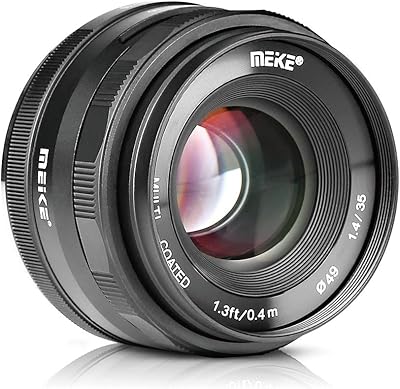
Meike 35mm F1.4 MFT Lens
84%
89%
Sharpness & Image Quality
74%
Manual Focus Usability
91%
Build Quality
87%
Low Light Performance
92%
Value for Money
More
Canon RF 14-35mm F4 L IS Lens
82%
93%
Optical Sharpness
91%
Autofocus Performance
89%
Build Quality
86%
Image Stabilization
67%
Distortion Control
More
Viltrox 35mm F1.7 E-Mount Prime Lens
81%
93%
Value for Money
88%
Build Quality
79%
Autofocus Performance
82%
Optical Sharpness
86%
Bokeh Quality
More
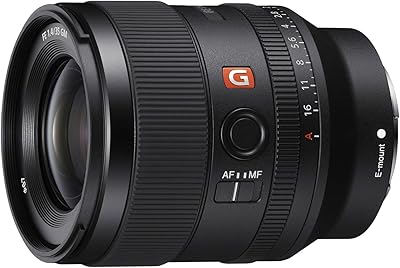
Sony FE 35mm F1.4 GM Prime Lens
86%
96%
Optical Sharpness
93%
Autofocus Performance
91%
Bokeh Quality
88%
Build Quality
67%
Vignetting Control
More
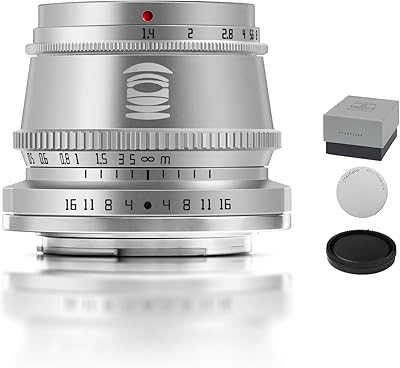
TTArtisan 35mm F1.4 APS-C Lens
76%
88%
Build Quality
74%
Optical Performance
91%
Bokeh Quality
82%
Low-Light Usability
71%
Manual Focus Experience
More

FAQ

No, the 35mm F0.95 is a fully manual focus lens with no autofocus motor and no electronic contacts. Your camera body will not be able to drive focus automatically, and you will need to adjust the focus ring yourself. Most Fujifilm bodies offer focus peaking and magnification assist features that help make manual focusing more reliable.

Yes, it uses a standard Fujifilm X mount bayonet, so it fits any camera body with an X mount — including the X-T5, X-T4, X-S10, X-E4, X-Pro3, and others in the lineup. The fit is purely mechanical, so there are no compatibility concerns related to sensor generation or body firmware.

Center sharpness at F0.95 is usable for portraits and artistic work where some subject softness is acceptable, but edge and corner sharpness drops noticeably at maximum aperture — this is typical of ultra-fast lenses at any price. For technically demanding work where you need clean sharpness across the full frame, stopping down to F2.8 or F4 makes a significant difference.

No. Because there are no electronic contacts, the lens cannot communicate with the camera body in any way. Your EXIF metadata will show no lens information, and the camera will not apply any automatic lens correction profiles for distortion, vignetting, or chromatic aberration. You will need to apply any corrections manually in post-processing software.

The native Fujifilm XF 35mm F1.4 produces slightly more characterful, organic bokeh that many photographers consider a benchmark in the X system. The 35mm F0.95 produces smoother, rounder out-of-focus highlights at comparable apertures thanks to its 12-blade design, but the overall rendering has a slightly different character. The significant advantage of this manual lens is the extra stop and a half of aperture beyond F1.4, which produces noticeably more separation when you need it.

Absolutely — it is actually a strong choice for manual video work. The engraved aperture and focus rings make precise, repeatable adjustments easy, and the smooth focus throw suits slow pull-focus transitions well. Just keep in mind that exposure changes mid-shot require manually turning the aperture ring, which can cause a slight click or exposure jump if not done carefully.

The lens itself has no optical stabilization. On Fujifilm bodies with in-body image stabilization (IBIS), such as the X-T5 or X-H2, the IBIS system may still operate but without lens-to-body communication it cannot optimize stabilization for the 35mm focal length automatically. You may need to set the focal length manually in the camera menu to get the best IBIS performance.

No lens hood is included in the standard package — the box contains the lens, front and rear caps, and a manual. A 58mm screw-on lens hood or an appropriately sized petal hood can be added separately and is worth considering, especially for shooting in bright conditions or to reduce flare when light sources are near the edge of the frame.

It takes genuine practice. At F0.95, the depth of field is so thin on an APS-C sensor that even small movements of the subject or small adjustments of the focus ring shift the plane of focus past your target. Most experienced users recommend enabling focus peaking on your Fujifilm body and using the magnified focus view for stationary subjects. For casual or moving portrait work, shooting at F1.4 or F2 gives you far more room for error without sacrificing much separation.

At F0.95 in high-contrast scenes — backlit hair, bright windows, foliage against a bright sky — you will see some purple or green fringing along edges. It is manageable and clears up noticeably by F2 or F2.8. If you shoot raw files, most editing applications can reduce it quickly with a one-click chromatic aberration correction. JPEG shooters without a lens profile will need to correct it manually if it bothers them.