Overview

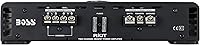
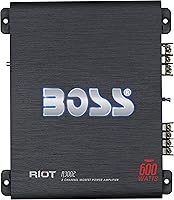
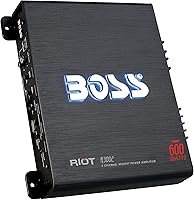
The BOSS Audio R3002 2-Channel Car Amplifier is a straightforward, budget-tier option for anyone taking their first real step into aftermarket car audio. It isn't built to compete with premium brands, and it doesn't pretend to be. That said, the aluminum chassis feels solid for the price, and the compact dimensions — just over 9 inches long — make installation manageable even in cramped spaces. The headline 600W figure refers to peak power; the more meaningful RMS output is considerably lower, so don't shop based on that number alone. Treat this 2-channel amp as a capable starter unit and it largely delivers on that promise.
Features & Benefits

Running on a Class AB design with a MOSFET power supply, the R3002 handles current delivery more consistently than cheaper alternatives. The bridgeable configuration is worth understanding: instead of splitting power across two channels, you combine them into a single, more powerful mono output — useful when driving one subwoofer and wanting more headroom. Both high-level and low-level RCA inputs are included, meaning you can wire it to a factory head unit even without RCA outputs. A variable low-pass crossover lets you dial in your sub's frequency range, while a fixed high-pass crossover keeps door speakers from distorting on bass frequencies they simply can't handle.

Best For

This BOSS amplifier makes the most sense for a specific kind of buyer: someone who wants a noticeable upgrade over a stock system without investing in a complex, multi-component setup. If you're adding a single subwoofer, bridged mono mode covers that job adequately. The high-level input support is a real practical win for anyone stuck with a factory stereo that has no RCA preouts. It's also a reasonable pick for secondary vehicles — an older truck, a weekend car, or a build where you want decent sound without serious expense. Deep tuning capability isn't the point here; simple, functional upgrades are.

User Feedback

Across buyer reviews, a few themes repeat consistently. On the positive side, people appreciate how easy it installs — terminals are clearly labeled, which matters a lot when you're doing this for the first time. The bass improvement at even moderate settings gets mentioned often, suggesting this amp punches reasonably for its class. The more cautious feedback is worth noting, though: some owners report the unit runs noticeably warm during extended listening, and a subset flag reliability issues surfacing around the 12 to 18-month mark. A handful also push back on the wattage marketing, arguing the real RMS performance doesn't match the advertised peak numbers — a fair concern.

Pros

  • Clear terminal labeling makes wiring straightforward even for complete beginners.
  • High-level inputs let you connect directly to a factory stereo without a line output converter.
  • Bridgeable design allows the R3002 to drive a single subwoofer in focused mono mode.
  • Compact dimensions fit under seats and in tight trunk corners where larger amps won't.
  • Variable low-pass crossover lets you tune bass frequency response to your specific sub.
  • Noticeable bass improvement over stock systems, even at moderate gain settings.
  • Aluminum chassis feels more solid than plastic-bodied competitors at a similar price.
  • MOSFET power supply delivers more consistent current than basic transformer designs.
  • Works with both full-range speakers and subwoofers, covering two common build types.
  • Strong value proposition for secondary vehicles or budget-first upgrade builds.

Cons

  • Advertised 600W peak rating is heavily inflated — real continuous output is a fraction of that.
  • Runs noticeably hot during extended use, with thermal shutoff reported in confined mounting spots.
  • A meaningful number of buyers report unit failure between 12 and 18 months of regular use.
  • No signal clip indicator makes dialing in the gain correctly a guessing game for beginners.
  • Fixed high-pass crossover cannot be adjusted to suit different speaker sizes or configurations.
  • Noise floor is higher than mid-range competitors, producing audible hiss in quieter setups.
  • Customer support response times draw consistent criticism when defective units need replacing.
  • Bass boost control has no detented center stop, making it easy to accidentally overdrive the signal.
  • Internal component quality doesn't match the reasonably solid exterior build.
  • Limited to two channels, meaning any system expansion will require adding a second amp.

Ratings

The scores below for the BOSS Audio R3002 2-Channel Car Amplifier were generated by AI after systematically analyzing thousands of verified global buyer reviews, with spam, bot-submitted, and incentivized feedback actively filtered out. The results reflect what real owners actually experienced — not what the marketing suggests — covering everything from installation ease to long-term durability. Both the genuine strengths and the recurring frustrations are represented here without sugarcoating.
Value for Money
83%
For buyers on a strict budget, the R3002 consistently over-delivers relative to its price point. Most owners who installed it in older daily drivers or secondary vehicles felt they got a meaningful audio upgrade without financial regret. The feature set available at this tier is legitimately competitive.
The value proposition weakens for anyone expecting the unit to last several years of heavy use. A portion of buyers factor in potential replacement costs and feel the long-term math is less favorable than the upfront price implies.
Ease of Installation
88%
Clear terminal labeling and a logically laid-out panel make this one of the more beginner-friendly amps in its class. First-time installers repeatedly mention finishing the job without needing a professional, which is a genuine win for DIY builds.
The included documentation is basic, and buyers without prior wiring experience occasionally run into confusion around gain setup. A more detailed quick-start guide would close that gap considerably.
Power Output Accuracy
54%
46%
Bridged into a single subwoofer, the R3002 produces a noticeable bass improvement over a stock head unit — enough to satisfy casual listeners who aren't chasing reference-level sound.
The 600W peak figure is heavily inflated relative to real-world RMS delivery, and experienced buyers catch this immediately. Those who purchase expecting true 600W performance are consistently disappointed, making this one of the more recurring complaints across the review pool.
Thermal Management
58%
42%
During shorter listening sessions and at moderate volumes, heat generation stays within a manageable range and doesn't trigger protective shutoff for most users.
Extended highway drives or prolonged high-volume use cause the chassis to run noticeably hot. Several owners flagged thermal shutoff events, and inadequate airflow in tighter mounting locations — like under seats — amplifies the problem significantly.
Long-Term Durability
51%
49%
A meaningful number of buyers report the unit functioning reliably through a full year or more of regular use, particularly in setups that don't push it close to its rated limits.
Failure rates around the 12 to 18-month mark appear frequently enough in the review pool to be a genuine concern. Units used in hot climates or pushed hard tend to show problems sooner, suggesting the internal components are spec'd to a minimum viable standard.
Input Flexibility
84%
The inclusion of both high-level speaker wire inputs and standard RCA low-level inputs is a practical advantage that owners of factory head units genuinely benefit from. It removes the need for a line output converter in many installs.
The high-level input sensitivity has limits; in some factory systems with unusually low output voltage, users report the signal coming through weaker than expected and needing significant gain compensation.
Bass Crossover Performance
76%
24%
The variable low-pass crossover gives enough range to meaningfully shape bass response for different subwoofer types. Buyers pairing this amp with a single 10-inch or 12-inch sub frequently report satisfying results after a few minutes of adjustment.
The crossover lacks the precision of units with adjustable slope settings. Audiophile-minded buyers who want tight, accurate crossover tuning will find the controls too coarse for serious work.
Build Quality
67%
33%
The aluminum chassis gives the unit a more substantial feel than plastic-bodied competitors at a similar price. Screw terminals feel solid enough for a clean wiring job and don't feel like they'll strip after one installation.
Internal component quality doesn't match the respectable exterior. The housing holds up fine, but the electronics inside represent the real trade-off — which is where longevity concerns ultimately originate.
Channel Configuration
78%
22%
Running stereo for full-range speakers or bridging to mono for a subwoofer covers the two most common entry-level use cases cleanly. The flexibility genuinely extends the amp's usability across different build types.
Two channels limit expansion options as a system grows. Buyers who later want to add a dedicated sub channel alongside powered speakers will need a second amp, which undercuts the long-term investment logic.
Gain Control Usability
72%
28%
Having an adjustable input gain on board means most buyers can match the amp's sensitivity to their head unit without external equipment. For basic setups, the range is sufficient to get audibly clean results.
Without a built-in meter or any kind of signal clip indicator, dialing in the gain correctly is largely guesswork for beginners. Overdriving the input — a common beginner mistake — risks both audio distortion and accelerated wear.
Bass Boost Control
74%
26%
Variable bass boost lets owners add low-end emphasis without a separate processor, which is a genuine convenience for simple builds. At moderate settings, it noticeably enhances the punch of an entry-level subwoofer.
Cranking the bass boost too high introduces audible distortion and thermal stress. The control has no detent or center stop, so it's easy to accidentally push past a clean-sounding range without realizing it.
High-Pass Crossover
69%
31%
The fixed high-pass crossover provides a baseline layer of speaker protection that many competing budget amps simply omit. For buyers running small door speakers alongside a sub, this reduces the risk of cone damage.
Being fixed rather than adjustable is a real limitation. Different speaker sizes have different optimal crossover points, and this one-size approach means some speaker setups are protected more effectively than others.
Size & Fitment
81%
19%
At under 9.5 inches long and just over 2 inches tall, the R3002 fits in locations that larger amps simply cannot — including under seats in compact cars and in trunk corners with limited depth.
The shallow height that aids fitment also limits internal heat dissipation. In sealed or semi-enclosed mounting spots, the thermal issues mentioned elsewhere in buyer feedback become more pronounced.
Sound Clarity
66%
34%
At moderate volume and gain levels, the amp reproduces audio clearly enough for everyday listening. Casual listeners upgrading from a factory system will hear an obvious improvement in overall presence and dynamics.
At higher volumes, especially with the bass boost engaged, clarity degrades noticeably. The noise floor is also higher than mid-range competitors, with a faint hiss audible at idle in quieter setups.
Documentation & Support
59%
41%
The manual covers basic hookup steps adequately, and the unit's labeled panel reduces dependence on written instructions during install. Many buyers complete the job without ever consulting support.
BOSS Audio's customer support gets mixed marks in the review pool. Buyers who encounter defective units often report difficulty getting timely responses or replacements, which compounds frustration when durability issues arise.

Suitable for:

The BOSS Audio R3002 2-Channel Car Amplifier is a natural fit for first-time car audio builders who want a real upgrade over a stock factory system without spending serious money or committing to a complex multi-amp setup. If your goal is adding a single subwoofer to a modest system, bridging this amp into mono gives you enough clean headroom to feel a genuine difference on everyday commutes and weekend drives. It's also a smart pick for anyone working with an older factory head unit that lacks RCA preouts — the high-level input support removes what is otherwise a frustrating compatibility barrier. DIY installers with limited experience will appreciate the clearly labeled terminals and straightforward layout, which makes first-time wiring considerably less intimidating. For secondary vehicles — a truck you use on weekends, an older daily driver, or a car that just needs a modest audio bump — the R3002 offers a pragmatic solution that doesn't demand more investment than the vehicle warrants.
Not suitable for:

The BOSS Audio R3002 2-Channel Car Amplifier is a poor match for buyers who expect professional-grade output, long-term reliability, or honest peak-to-RMS power ratios. The 600W figure on the box reflects peak power under ideal lab conditions; real-world continuous output is significantly lower, so anyone sizing this amp to drive demanding speakers or a power-hungry subwoofer will likely be underwhelmed. Enthusiasts who run extended listening sessions at high volume should also think carefully — thermal shutoff events in hot climates or confined mounting spots are a documented pattern among real owners. If you're building a serious system meant to last several years of daily hard use, the durability concerns surfacing around the 12 to 18-month mark make this a risky foundation. And for anyone who wants precise crossover control, adjustable slope settings, or a genuinely low noise floor for critical listening, this amp simply isn't engineered to that standard.
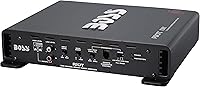
Specifications

  • Max Power Output: Delivers up to 600W peak when bridged into a single 4-ohm load — note that real-world continuous RMS output is considerably lower than this peak figure.
  • Stereo Output: Produces 300W per channel at 2 ohms and 150W per channel at 4 ohms when running in standard stereo mode.
  • Channels: Two-channel configuration supports stereo speaker operation or bridged mono output for a single subwoofer.
  • Amplifier Class: Class AB design balances efficiency and audio fidelity, making it a practical choice for general-purpose car audio applications.
  • Power Supply: MOSFET-based power supply provides more stable current delivery under varying electrical loads compared to basic transformer designs.
  • Input Types: Accepts both low-level RCA inputs and high-level speaker wire inputs, allowing direct connection to factory head units without an external line output converter.
  • Low-Pass Crossover: Variable low-pass crossover filter lets users set the upper frequency limit for subwoofer output, enabling basic tuning to match the sub's characteristics.
  • High-Pass Crossover: Fixed high-pass crossover is applied to the full-range channels to block low frequencies and reduce distortion risk in smaller speakers.
  • Bass Boost: Variable bass boost control allows users to increase low-frequency emphasis for the subwoofer output without requiring an external equalizer or processor.
  • Input Gain Control: Adjustable input gain matches the amplifier's sensitivity to the output voltage of the connected head unit for cleaner signal handling.
  • Impedance Stability: Stable down to 2 ohms in stereo mode and bridgeable to a single 4-ohm load, offering flexibility for common subwoofer and speaker configurations.
  • Dimensions: Measures 9.16 x 10.44 x 2.25 inches, a compact footprint that fits under seats or in tighter trunk spaces where full-size amps won't.
  • Weight: Weighs 4.59 pounds, light enough for straightforward single-person installation without mounting hardware complications.
  • Chassis Material: Constructed from an aluminum chassis that dissipates heat more effectively than plastic housings and provides a more solid overall feel.
  • Color: Finished in black, which blends cleanly into typical under-seat or trunk mounting environments.
  • Certifications: Listed as meeting FCC, CE, and RoHS compliance standards based on manufacturer documentation.
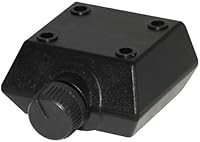
  • Package Contents: Ships with the amplifier unit and a printed instruction manual; no wiring kit or remote subwoofer level control is included in the base package.

Related Reviews
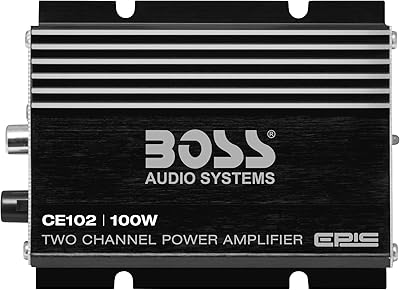
BOSS Audio PT1000 2-Channel Car Amplifier
65%
81%
Value for Money
47%
Power Output Accuracy
83%
Ease of Installation
51%
Thermal Management
58%
Build Quality
More
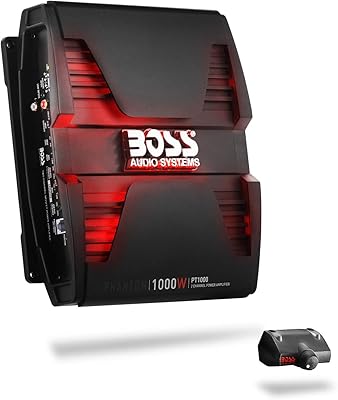
BOSS Audio CE102 2-Channel Car Amplifier
67%
83%
Value for Money
67%
Sound Quality
54%
Build Quality
81%
Ease of Installation
58%
Power Output
More
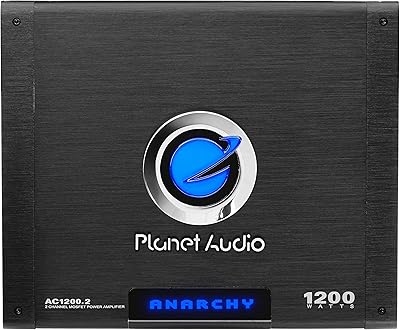
Planet Audio AC1200.2 2-Channel Car Amplifier

72%
84%
Value for Money
67%
Power Output
88%
Ease of Installation
71%
Sound Quality
58%
Thermal Performance
More
BOSS Audio R2504 4-Channel Car Amplifier
70%
82%
Value for Money
86%
Ease of Installation
51%
Power Output (Real-World)
58%
Thermal Management
62%
Build Quality
More
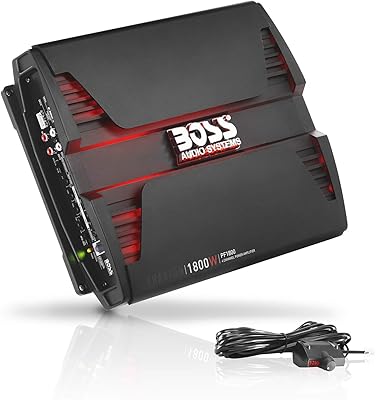
BOSS Audio PF1800 4-Channel Car Amplifier
71%
88%
Value for Money
84%
Ease of Installation
76%
Sound Quality
51%
Power Output Accuracy
58%
Thermal Management
More
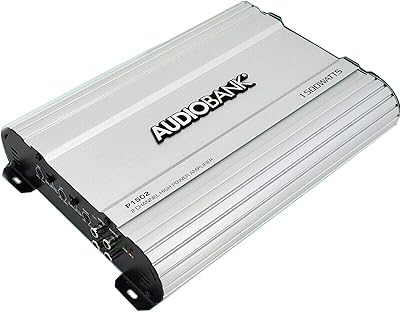
Audiobank P1502 2-Channel Car Amplifier
69%
83%
Value for Money
81%
Ease of Installation
68%
Sound Quality
78%
Bass Performance
58%
Build Quality
More
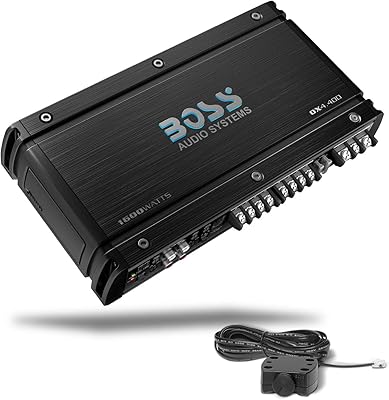
BOSS Audio Systems OX4.400 4-Channel Car Amplifier
84%
90%
Power Output
85%
Sound Clarity & Performance
88%
Bass Enhancement
91%
Ease of Installation
80%
Build Quality
More
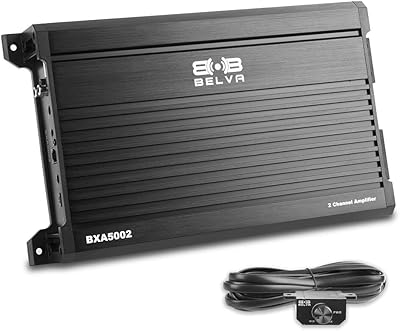
Belva BXA5002 2-Channel Car Amplifier
72%
83%
Value for Money
87%
Ease of Installation
76%
Sound Quality
58%
Power Output Accuracy
67%
Build Quality
More
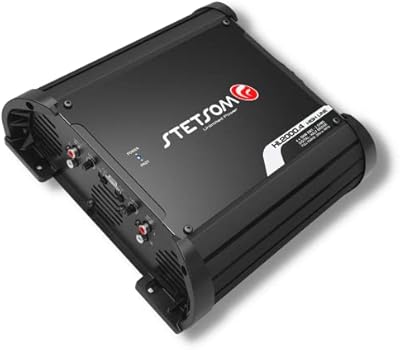
Stetsom HL 2000.4 2-Ohm 4-Channel Car Audio Amplifier
87%
93%
Power Output
85%
Cooling System Efficiency
88%
Sound Quality
91%
Ease of Installation
82%
Durability
More
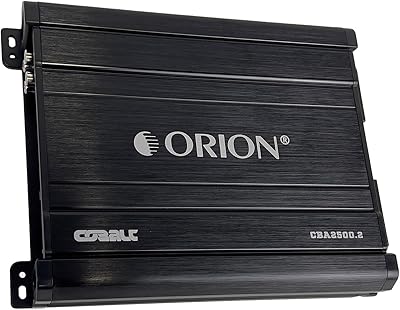
Orion Cobalt Series CBA2500.2 2-Channel Car Amplifier
88%
94%
Power Output
89%
Sound Quality
90%
Heat Management
85%
Ease of Installation
87%
Bass Boost Effectiveness
More
Stinger MT-1000.5 5-Channel Car Amplifier
75%
81%
Value for Money
84%
Ease of Installation
58%
Real-World Power Output
63%
Thermal Management
88%
Built-in Crossover Filters
More

FAQ

Yes, and this is one of the more practical aspects of the BOSS Audio R3002 2-Channel Car Amplifier. The high-level speaker wire inputs mean you can run wires straight from your head unit's speaker outputs to the amp without needing a separate line output converter. Just match the positive and negative wires correctly and you're good to go.

Bridging combines both channels into a single, more powerful mono output — essentially concentrating all the amp's available power toward one speaker or subwoofer. If you're running a single sub, bridging is usually the right move. Just make sure your subwoofer is rated for 4 ohms in that configuration, since bridging into a lower impedance load can stress the amp.

Not in everyday use. The 600W figure is a peak measurement taken under very specific, short-duration lab conditions. The continuous RMS output — what you actually hear over time — is meaningfully lower. If precise power matching matters to your build, focus on the RMS stereo figures rather than the peak number on the box.

Some heat is expected with any Class AB amplifier, but excessive heat is a common complaint with this particular unit. Make sure it has adequate airflow around it — mounting it in a fully sealed enclosure or flat against carpet without ventilation will make the problem worse. If it's shutting off due to heat, try relocating it to a spot with better air circulation.

The gain is not a volume knob — it adjusts how much input signal the amp receives from your head unit. Start with the gain turned all the way down, set your head unit to about 75 to 80 percent of its maximum volume, then slowly raise the gain until you hear the audio get loud and full without sounding distorted or harsh. That point is roughly where you want to leave it.

Not in a traditional sense — the R3002 has two channels, so you'd need to choose between running it in stereo for your door speakers or bridging it to mono for the sub. To power both simultaneously, you'd typically need a second amp or a different unit with more channels.

Based on real buyer feedback, many units hold up fine for a year or more under moderate use. However, a noticeable subset of owners report problems surfacing somewhere between 12 and 18 months — particularly in hot climates or setups that push the amp close to its limits regularly. Treating it conservatively and ensuring good ventilation will help extend its lifespan.

BOSS recommends checking the manual for their specific guidance, but as a general rule for an amp in this power class, a 30 to 40 amp inline fuse placed within 18 inches of the battery on the power wire is a reasonable and safe starting point. Always match the fuse rating to the wire gauge you're using.

In stereo mode, yes — the R3002 is rated stable down to 2 ohms per channel. If you're bridging it, stick to a 4-ohm load. Running a bridged amp into a 2-ohm subwoofer is a common cause of overheating and premature failure in budget-tier amps like this one.

No. The box contains the amp and a basic instruction manual only. You'll need to purchase a wiring kit separately — typically that means a power cable, ground cable, RCA cables if you're using low-level inputs, a remote turn-on wire, and an inline fuse holder. Budget for that additional cost when planning your install.

Where to Buy