
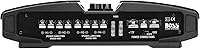

Overview

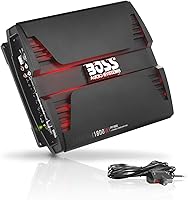
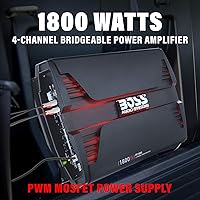
The BOSS Audio PF1800 4-Channel Car Amplifier is a budget-conscious option that punches reasonably hard for everyday drivers who want more from their car audio without spending serious money. It sits comfortably in the accessible end of the market, offering a respectable spec sheet for its price tier. One thing worth knowing upfront: the advertised 1800W figure is a peak rating. Real-world RMS output lands at 225 watts per channel at 4 ohms — still workable, but a different story than the headline implies. Build quality is solid enough for the class, with a reasonably compact chassis that won’t devour your entire trunk.

Features & Benefits

Class A-B topology is a genuine highlight here. Unlike pure Class D designs that can sound thin at lower volumes, this 4-channel amp delivers noticeably cleaner audio during everyday listening — not audiophile-grade, but a clear step up from stock speakers driven by a factory head unit. The MOSFET power supply helps maintain stable voltage under load, which reduces distortion when things get loud. Being full-range capable means you can run door speakers and a subwoofer from a single unit, keeping installation simpler and cheaper. Variable gain and bass boost controls are both onboard, making it easy to dial in the signal without needing a separate equalizer or processor.

Best For

This Boss amplifier is well-suited for beginners building their first upgraded car audio setup who don’t want to sink serious money into gear right out of the gate. Its four channels, bridgeable design, and full-range compatibility make it practical for anyone wanting to power both door speakers and a subwoofer from a single amp — a real money-saver at this level. Space-conscious installs benefit from its compact footprint. Straightforward gain and bass controls make it a strong pick for DIY installers who’d rather spend time listening than troubleshooting. If you’re moving away from factory sound but aren’t ready to go high-end, this is a logical first step.

User Feedback

Across more than 2,100 reviews, the PF1800 holds a 4.3 out of 5 rating — a solid result for a budget-tier amp. Installation ease comes up repeatedly as a positive, with buyers appreciating well-labeled terminals and a relatively painless setup process. Many feel the performance-to-price ratio is genuinely fair. On the downside, the gap between peak wattage marketing and actual RMS delivery catches people off guard, so going in with accurate expectations matters. Heat buildup during prolonged high-volume use is a recurring concern — mounting in a ventilated area is worth prioritizing. A handful of buyers also cite inconsistent unit quality, making it wise to review warranty terms before committing.

Pros

  • Class A-B design delivers noticeably cleaner sound at moderate volumes compared to entry-level Class D alternatives.
  • The MOSFET power supply keeps voltage stable under load, reducing distortion when the volume climbs.
  • Full-range capability means you can power both speakers and a subwoofer from a single amp, saving money on installation.
  • Variable gain control makes it easy to match signal levels from almost any aftermarket or factory head unit.
  • Built-in variable bass boost removes the need for a separate equalizer in basic setups.
  • Bridgeable channels give you the flexibility to redirect more power to a dedicated sub when needed.
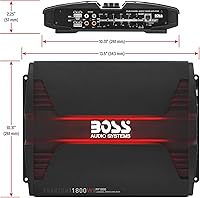
  • At 13.5 x 10.31 x 2.25 inches, this 4-channel amp fits comfortably in tight install locations.
  • Terminal labeling is clear enough that even first-time installers report getting it wired correctly without much trouble.
  • Over 2,100 buyer reviews back up a 4.3 out of 5 rating, suggesting broad real-world satisfaction at this price tier.
  • The price-to-performance ratio is genuinely competitive for a budget-class multi-channel amplifier.

Cons

  • The 1800W advertised figure is a peak rating — actual RMS output is significantly lower and should set your real expectations.
  • Heat buildup during extended high-volume use has been flagged by multiple buyers, making ventilated mounting a necessity.
  • Quality control appears inconsistent across units, with a subset of buyers reporting early failures or defects out of the box.
  • The amp is not well-suited for running demanding subwoofers that require sustained high-power output.
  • No advanced DSP, signal processing, or crossover fine-tuning options are available for users who want precise audio control.
  • Build materials are a plastic and metal composite, which feels appropriately budget-tier rather than premium or durable long-term.
  • The gap between marketing specs and real-world output can feel misleading if you don't research before purchasing.
  • Not designed for high-volume or competition-level listening — thermal performance under stress is a genuine limitation.

Ratings

The scores below reflect an AI-driven analysis of verified global user reviews for the BOSS Audio PF1800 4-Channel Car Amplifier, with spam, bot-generated, and incentivized feedback actively filtered out before scoring. Each category is evaluated transparently, meaning genuine strengths and recurring buyer frustrations carry equal weight in the final numbers. The result is a balanced picture of where this amp earns its reputation and where it falls short of expectations.

Value for Money
88%
Among budget-tier 4-channel amplifiers, buyers consistently feel they got more than they paid for. The combination of Class A-B topology, MOSFET power supply, and bridgeable channels at this price point is genuinely hard to match, and that sentiment shows up across thousands of reviews from everyday drivers.
The value calculation shifts if you factor in potential early failure or a replacement purchase. A subset of buyers who encountered quality control issues felt the savings were offset by the hassle of returns or warranty claims, which tempers an otherwise strong consensus.
Ease of Installation
84%
First-time amp installers repeatedly highlight how clearly labeled the terminals are, which makes wiring significantly less intimidating. The straightforward layout means most DIYers can complete a basic install in an afternoon without professional help or specialized tools.
While the amp itself is approachable, some buyers note that the manual lacks detailed diagrams for bridged wiring configurations. Users unfamiliar with gain staging also report a trial-and-error phase before dialing in clean signal levels without clipping.
Sound Quality
76%
24%
The Class A-B design delivers noticeably cleaner audio at moderate listening volumes compared to entry-level Class D alternatives in the same price range. Casual listeners on daily commutes report a satisfying, full-bodied sound improvement over stock head unit output alone.
At higher volume levels, some users detect audible distortion, particularly when the bass boost is engaged alongside a subwoofer. Audiophiles or anyone accustomed to mid-range or premium amplifier performance will find the sound reproduction less refined than they expect.
Power Output Accuracy
51%
49%
The amp does deliver real, usable power that noticeably improves system volume and dynamics compared to running speakers off a head unit alone. At 2-ohm loads in particular, buyers report solid low-end punch for everyday listening.
The gap between the advertised 1800W peak figure and the actual RMS delivery is significant enough that many buyers feel misled before researching further. This disconnect is the single most repeated frustration across negative reviews and creates unrealistic expectations before purchase.
Thermal Management
58%
42%
Under normal driving conditions and at moderate listening volumes, the amp runs at an acceptable temperature for most users. Those who mount it in ventilated locations like open trunk areas with airflow rarely report heat-related issues during standard daily use.
Extended high-volume sessions in enclosed or poorly ventilated mounting locations cause noticeable heat buildup, which several buyers link to performance throttling or intermittent shutdowns. This is a real limitation for users who regularly push the system hard on long drives.
Build Quality
63%
37%
The chassis has a reasonably solid feel for its price tier, and the combination of metal and plastic construction holds up adequately under normal installation stress. Most buyers who handle it carefully during mounting report no structural issues over time.
Up close, the plastic components feel noticeably budget-grade, and a handful of buyers reported cosmetic or structural defects straight out of the box. Quality control inconsistency means not every unit feels equally well-assembled, which is a recurring concern in long-tail reviews.
Channel Flexibility
81%
19%
The ability to run four independent channels or bridge pairs for higher subwoofer power gives this amp genuine versatility for different system configurations. Buyers building mixed setups with door speakers and a sub find the channel routing options particularly practical.
Bridged operation requires the load to stay at 4 ohms or above, which limits subwoofer pairing options somewhat. Users who want to bridge down to a 2-ohm sub will need to reconsider their setup, as running below the rated impedance risks damage.
Gain & Bass Controls
78%
22%
Having both variable gain and variable bass boost onboard means most users can tune the amp to their head unit and speaker setup without adding an external equalizer. For beginner systems, this simplifies the signal chain considerably and reduces total component cost.
The bass boost control lacks labeled detent points or a center-click reference, making precise, repeatable adjustments harder than it should be. Some users also report that the gain knobs feel loose and could shift out of position if the amp is mounted in a high-vibration area.
Compatibility
82%
18%
The 2-to-4-ohm impedance range covers the vast majority of aftermarket speakers and entry-level subwoofers, making this amp a flexible fit for most standard car audio builds. It also works with factory head units when paired with a line output converter.
The amp does not natively support 1-ohm loads, ruling it out for some higher-performance subwoofer configurations. Users with high-output aftermarket head units may also need to carefully manage gain settings to avoid overdriving the inputs.
Packaging & Accessories
47%
53%
The amp itself arrives well-protected for shipping in most reported cases, and the unit is typically intact upon delivery. For buyers who already own a wiring kit, the bare-bones packaging is a non-issue.
No wiring kit, RCA cables, or mounting hardware is included, which catches some first-time buyers off guard and adds immediate additional cost. The sparse documentation inside the box also leaves beginners without much guidance on initial setup or gain configuration.
Long-Term Reliability
59%
41%
Many buyers report using this amp trouble-free for a year or more under normal daily conditions, which speaks to adequate baseline reliability for casual listeners. Those who size their speaker load correctly and maintain good ventilation tend to have better long-term outcomes.
A consistent thread of reviews mentions failures occurring within six to twelve months, particularly among users who run the amp hard or in thermally compromised locations. The inconsistency in unit-to-unit quality means longevity feels like a lottery compared to more established brands at higher price points.
Physical Footprint
79%
21%
At 13.5 x 10.31 x 2.25 inches, this 4-channel amp fits comfortably in a range of trunk and under-seat locations that would be too tight for bulkier multi-channel alternatives. The compact profile is a genuine advantage for smaller vehicles or builds where space is at a premium.
The amp still requires meaningful clearance around it for ventilation, which reduces how creatively it can be tucked away in the tightest spots. Users expecting to hide it in a very shallow or enclosed cavity often need to rethink their mounting plan.

Suitable for:

The BOSS Audio PF1800 4-Channel Car Amplifier is a strong match for first-time amp buyers who want a meaningful upgrade from factory sound without the complexity or cost of a high-end setup. If you're the kind of person who wants to run door speakers and a subwoofer from a single unit, this 4-channel amp makes that possible in a tidy, cost-efficient way. DIY installers with limited installation experience will appreciate the clearly labeled terminals and intuitive gain and bass controls that don't require a technical manual to navigate. Drivers working with tight trunk or under-seat space also benefit from its compact chassis, which fits in spots where bulkier amps simply won't. For anyone stepping away from a weak factory head unit output for the first time, the PF1800 offers a practical, low-risk entry point into amplified car audio.

Not suitable for:

The BOSS Audio PF1800 4-Channel Car Amplifier is not the right tool for serious audio enthusiasts who demand high fidelity, consistent power delivery, or long-term reliability under heavy use. The 1800W headline figure refers to peak output — the actual continuous RMS power is far more modest, which will disappoint buyers expecting that number to reflect real sustained performance. Anyone planning to run power-hungry competition-grade subwoofers or high-impedance component speaker sets will likely find this amp underpowered for those demands. Extended high-volume listening sessions can cause noticeable heat buildup, making it a poor fit for users who regularly push their system hard without proper ventilation in the install location. Buyers who prioritize premium build materials, advanced DSP features, or rock-solid quality control across every unit should look further up the market before committing.

Specifications

  • Peak Power: The amplifier delivers a total system peak power of 1800W across all four channels combined.
  • RMS Power: Continuous RMS output is rated at 450W per channel at 2 ohms, or 225W per channel at 4 ohms under normal operating conditions.
  • Bridged Output: When two channels are bridged, the amp produces up to 900W into a 4-ohm load, useful for dedicated subwoofer applications.
  • Channels: This is a 4-channel amplifier, allowing independent signal routing to up to four speakers or a combination of speakers and a subwoofer.
  • Amplifier Class: The PF1800 uses a Class A-B topology, which balances thermal efficiency with lower distortion compared to pure Class B designs.
  • Power Supply: A MOSFET-based power supply regulates output voltage precisely, helping maintain stable performance under varying electrical loads.
  • Impedance Range: The amplifier is stable at impedance loads between 2 and 4 ohms, covering most standard aftermarket speaker configurations.
  • Frequency Response: The amp is full-range capable, meaning it can handle the full audio spectrum from low bass frequencies up through high-frequency speaker content.
  • Dimensions: Physical dimensions measure 13.5 x 10.31 x 2.25 inches, making it compact enough for most trunk or under-seat installations.
  • Weight: The unit weighs 10.1 pounds, which is typical for a 4-channel amplifier in this output class.
  • Operating Voltage: Designed to operate on a 12V DC electrical system, which is standard in virtually all passenger vehicles.
  • Mounting Type: Surface mount installation is the supported method, requiring a flat, stable mounting surface with adequate ventilation clearance.
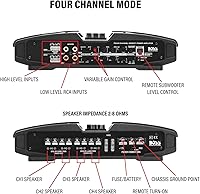
  • Controls: Onboard user controls include a variable gain adjustment and a variable bass boost, both accessible on the amp chassis.
  • Bridgeable: Channels can be bridged in pairs, allowing users to reconfigure power delivery based on their specific speaker or subwoofer requirements.
  • Material: The chassis is constructed from a combination of plastic and metal components, consistent with build standards at this price tier.
  • Input Voltage: The unit accepts a standard 12V DC input and is not designed for dual-battery or higher-voltage vehicle systems.
  • Package Contents: The package includes the BOSS amplifier unit only; wiring kits, RCA cables, and mounting hardware are not included in the box.
  • Manufacturer: The PF1800 is manufactured and sold by BOSS Audio Systems, a US-based car audio brand with a broad consumer product lineup.

Related Reviews
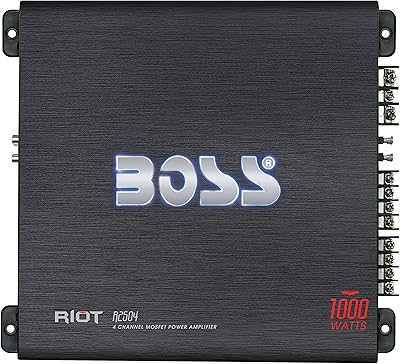
BOSS Audio R2504 4-Channel Car Amplifier
70%
82%
Value for Money
86%
Ease of Installation
51%
Power Output (Real-World)
58%
Thermal Management
62%
Build Quality
More
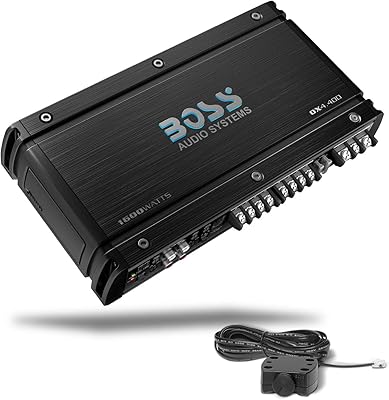
BOSS Audio Systems OX4.400 4-Channel Car Amplifier
84%
90%
Power Output
85%
Sound Clarity & Performance
88%
Bass Enhancement
91%
Ease of Installation
80%
Build Quality
More
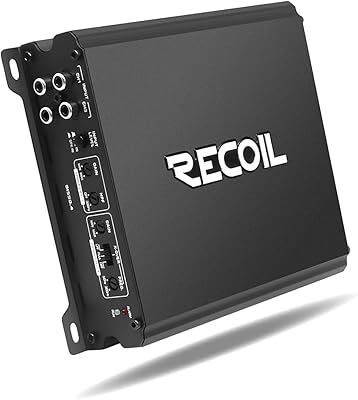
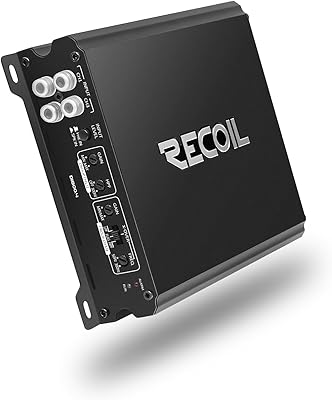
Recoil DI550.4 4-Channel Car Audio Amplifier
74%
91%
Value for Money
78%
Power Output
86%
Ease of Installation
74%
Sound Quality
67%
Build Quality
More
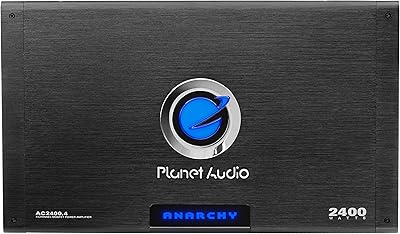
Planet Audio AC2400.4 4-Channel Car Amplifier
84%
95%
Power Output
89%
Sound Clarity
87%
Bass Performance
82%
Ease of Installation
65%
Thermals/Heat Management
More
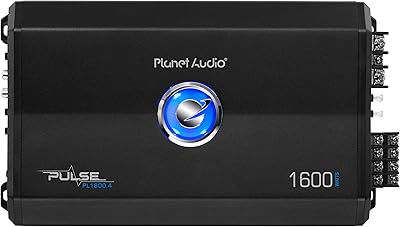
Planet Audio PL1600.4 4-Channel Car Amplifier
72%
88%
Value for Money
84%
Ease of Installation
74%
Sound Quality
58%
Power Output (Real-World)
61%
Build Quality
More
Recoil DI800.4 4-Channel Car Audio Amplifier
83%
88%
Sound Quality
92%
Power Output
65%
Thermal Management
84%
Build Quality
91%
Ease of Installation
More
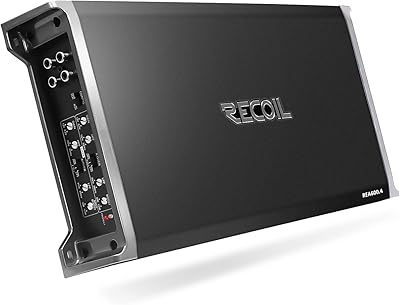
Recoil REA600.4 4-Channel Car Audio Amplifier
84%
89%
Audio Performance
91%
Ease of Installation
85%
Sound Quality at High Volumes
62%
Heat Management
90%
Power Output
More
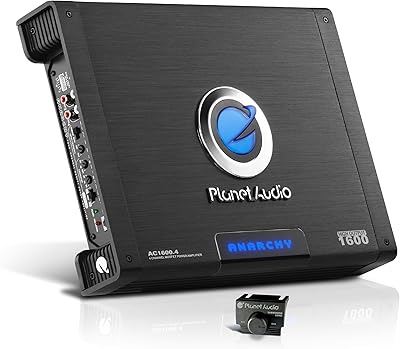
Planet Audio AC1600.4 Anarchy Series 4-Channel Car Amplifier
82%
94%
Power Output
88%
Sound Quality
70%
Ease of Installation
92%
Value for Money
85%
Build Quality
More
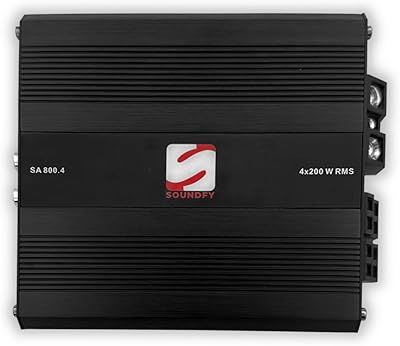
Soundfy SA 400.4 4-Channel Car Amplifier
71%
78%
Value for Money
72%
Sound Quality
63%
Power Output
58%
Build Quality
81%
Thermal Management
More
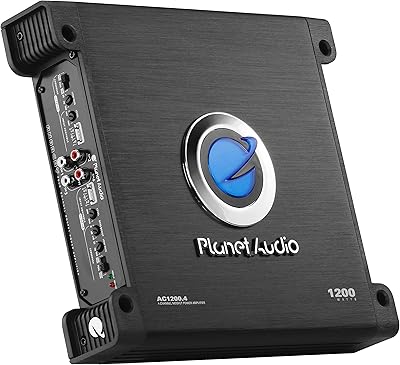
Planet Audio AC1200.4 4-Channel Car Amplifier
73%
88%
Value for Money
67%
Power Output
83%
Installation Ease
74%
Sound Quality
61%
Build Quality
More

FAQ

That figure represents the total peak power across all channels under ideal, momentary conditions. In real-world use, you should focus on the RMS ratings instead — 225W per channel at 4 ohms or 450W per channel at 2 ohms. Those numbers reflect what the amp sustains during normal listening, and that’s what actually matters for matching it to your speakers.

Yes, that’s one of the more practical things about the PF1800. Because it’s full-range and has four channels, you can run a pair of door speakers on two channels and bridge the remaining two channels to push a subwoofer. It’s a cost-effective way to build out a complete system with a single amplifier.

Bridging combines two channels into one, effectively doubling the power output to a single speaker or subwoofer. In bridged mode, this amp can deliver up to 900W to a 4-ohm subwoofer. The process involves connecting your speaker wires to the positive terminal of one channel and the negative terminal of the adjacent channel, following the wiring diagram in the manual.

It can run warm during extended high-volume sessions, which is something a number of buyers have noted. This isn’t unusual for amplifiers in this class, but it does mean installation location matters. Make sure there’s airflow around the unit and avoid mounting it flush against surfaces that trap heat. A well-ventilated spot in the trunk typically solves the issue.

Yes, it can work with a factory head unit. You’ll want to use the variable gain control carefully to match the often-lower output voltage coming from a stock radio. Some users also add a line output converter if their factory head unit lacks dedicated RCA preamp outputs.

Any speakers with an impedance between 2 and 4 ohms will work fine. Most standard aftermarket car speakers fall in this range. Just make sure you’re not connecting speakers rated below 2 ohms, as the amp isn’t stable at that load and could overheat or clip.

Yes. The box only includes the amplifier itself. You’ll need to pick up a separate amp wiring kit that includes power cable, ground wire, remote turn-on wire, fuse holder, and RCA interconnects. Most car audio retailers sell these kits in bundles sized for the amp’s power draw, and sizing the kit correctly is important for safe, reliable performance.

Most first-timers report it’s manageable with some patience and a decent wiring diagram. The terminal labels on the amp are clear, which helps a lot. The main learning curve is routing wires cleanly through the vehicle and setting the gain correctly. There are plenty of YouTube tutorials specific to this amp that walk through the process step by step.

The variable bass boost lets you add extra low-frequency emphasis directly at the amp without needing a separate equalizer. It’s handy for users running a subwoofer who want a bit more punch without adding components. That said, cranking the bass boost too high can overwork the sub or introduce distortion, so it’s best used in moderation rather than maxed out.

BOSS Audio Systems typically offers a limited warranty on their products, though the exact duration can vary by retailer and region. Given that a small number of buyers have reported unit-level inconsistencies, it’s worth confirming the return window with wherever you purchase it before your order ships. Keeping your receipt and packaging for the first few weeks is a smart habit with any electronics purchase in this tier.

Where to Buy