Overview

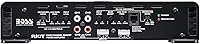
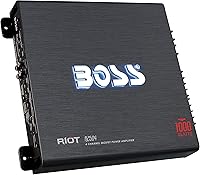
The BOSS Audio R2504 4-Channel Car Amplifier has been a fixture in the budget car audio space since 2011, and its longevity on bestseller lists is not accidental. Part of BOSS Audio's Riot Series, it leads with a 1000W max output claim and a Class A/B topology — specs that sound compelling at this price point. But let's be direct: peak wattage figures are rarely sustained in real-world use, and this Riot Series amp is no exception. It is a value-tier option built for enthusiasts who want noticeably more sound from their system without a serious financial commitment.

Features & Benefits

What makes this 4-channel amplifier genuinely useful is not the headline wattage — it is the feature set bundled in at this price. The Class A/B topology delivers a better balance between thermal efficiency and audio fidelity than many Class D options at comparable prices. The bridgeable design lets you run two channels in mono for a dedicated subwoofer while the remaining pair handles your door speakers — a practical, flexible layout. The gain and bass boost controls help you match the amp to your specific head unit and sub without trial-and-error guessing. Built-in high/low-pass crossover filtering removes the need for a separate external crossover unit entirely.

Best For

The R2504 hits its sweet spot with first-time builders who are stepping past stock audio and do not want to juggle multiple amplifiers. If your vehicle runs a factory head unit without preamp outputs, the high-level inputs let you tap directly from the speaker wires — no line output converter needed. It also suits anyone wanting one compact unit to handle both speakers and a subwoofer on a modest budget. Experienced installers chasing precise RMS power ratings, detailed tuning flexibility, or thermal endurance during long high-volume sessions will likely find themselves outgrowing it relatively quickly.

User Feedback

People who have installed this Riot Series amp generally agree that getting it up and running is refreshingly straightforward — the wiring layout is logical, and most first-timers complete the job without professional help. The value proposition earns consistent praise. Where opinions split is on heat and longevity: running the amp hard for extended stretches produces noticeable warmth, and a portion of buyers reported failure within the first year or two, while others have logged several years without issue. Long-term durability is genuinely mixed. The included manual covers the basics adequately for beginners but leaves experienced users wanting more depth on advanced configuration.

Pros

  • High-level inputs let you connect directly to a factory head unit without extra adapters.
  • Built-in high and low-pass crossover eliminates the need to buy a separate external crossover.
  • Bridgeable channels give you the flexibility to run both speakers and a subwoofer from one unit.
  • Variable gain control helps prevent distortion when matching the amp to different source units.
  • Class A/B topology delivers cleaner audio than many Class D alternatives at a similar price.
  • Installation is straightforward enough for first-timers to complete without professional help.
  • Adjustable bass boost lets you fine-tune low-frequency output to match your subwoofer and taste.
  • Compact dimensions make mounting easier in tight spaces under seats or in small trunks.
  • Strong bestseller track record since 2011 reflects a wide and generally satisfied install base.
  • FCC-certified build adds a basic layer of verified compliance for US buyers.

Cons

  • Peak wattage claims are significantly higher than the real-world continuous output most users will experience.
  • Heat buildup during prolonged high-volume listening is a recurring complaint that can shorten lifespan.
  • Long-term durability is inconsistent — a notable portion of buyers report failure within the first couple of years.
  • The included instruction manual lacks the depth needed for more involved or custom installation scenarios.
  • Tuning options are basic and will frustrate anyone who wants precise, flexible signal control.
  • Quality control variability means two units of the R2504 can perform differently out of the box.
  • Not ideal for driving power-hungry subwoofers that need reliable, sustained high wattage to perform well.
  • Thermal management relies on passive cooling, which is insufficient if airflow around the unit is restricted.

Ratings

The BOSS Audio R2504 4-Channel Car Amplifier scores below are generated by AI after systematically analyzing thousands of verified global buyer reviews, with spam, bot activity, and incentivized feedback actively filtered out. The result is an honest, balanced picture that reflects both what this Riot Series amp genuinely does well and where real users have run into frustration. No category has been softened to protect the brand.
Value for Money
82%
18%
For buyers stepping into car audio on a limited budget, the sheer amount of functionality packed into the R2504 at this price point is difficult to argue with. Variable crossovers, bass boost, bridgeable channels, and dual input types would typically require spending considerably more — making this 4-channel amplifier feel like a smart entry-level investment.
The value proposition weakens somewhat when real-world output is measured against the advertised peak wattage. Users expecting near-1000W performance often feel misled, and if the unit fails within a year or two, the savings evaporate quickly when replacement costs are factored in.
Ease of Installation
86%
A large portion of buyers — many of them first-time installers — completed the setup without professional assistance, which speaks well to the amp's straightforward terminal layout and logical wiring design. The dual high and low-level inputs make integration with factory head units particularly painless.
The included instruction manual, while adequate for a basic install, leaves gaps for anyone attempting a more customized configuration such as active biamplification or mixed impedance setups. Intermediate and advanced users consistently reported needing to supplement it with third-party resources.
Power Output (Real-World)
51%
49%
In everyday listening scenarios — commuting at moderate volume with standard 4-Ohm speakers — the R2504 delivers a clearly audible and satisfying improvement over a stock system. For casual daily use, the output is more than sufficient to fill a compact car cabin with clear, energetic sound.
The gap between the 1000W peak claim and actual sustained RMS delivery is substantial and frequently flagged by experienced users. Anyone running power-hungry speakers or a demanding subwoofer at sustained high volume will hit the amp's real ceiling quickly, which is noticeably lower than the spec sheet implies.
Thermal Management
58%
42%
Under normal listening conditions and with reasonable ventilation — such as an open under-seat mount — the amp handles heat well enough for typical daily commutes without triggering protection mode. Casual users in moderate climates rarely reported thermal issues at sensible volume levels.
Extended high-volume sessions, especially in warm environments or tight mounting locations, produce noticeable heat buildup that multiple user cohorts flagged as a concern. Passive cooling without any fan assistance means heat dissipation is entirely dependent on airflow, which is often restricted in real vehicle installations.
Build Quality
62%
38%
The unit feels solid enough for the price tier and the chassis construction does not feel obviously flimsy out of the box. Terminals accept wiring securely, and the overall fit of components suggests BOSS Audio put reasonable effort into the physical assembly at this price point.
Long-term durability reports are genuinely mixed — a meaningful portion of buyers experienced component failure within one to two years, suggesting inconsistent quality control between production runs. At this tier, build quality can vary noticeably from unit to unit, which is a real gamble for buyers without warranty backup.
Sound Quality
74%
26%
The Class A/B topology gives this Riot Series amp a sonic edge over budget Class D alternatives, with cleaner midrange reproduction and less harshness at moderate volumes. Paired with efficient speakers and properly set gain, the audio improvement over a factory system is genuinely noticeable for the average listener.
At higher volumes or with more revealing speakers, the amp's limitations in dynamic headroom become apparent, with some compression and softness at the upper end. Audiophiles or users with high-sensitivity speaker setups may find the audio character underwhelming compared to mid-range amplifiers.
Crossover Functionality
77%
23%
Having variable high-pass and low-pass filters built directly into the amp removes the need for an external crossover unit, which at this price tier is a genuinely useful cost saver. Users running a mixed speaker and subwoofer setup praised the ability to roll off frequencies per channel without additional hardware.
The crossover controls lack the precision of a dedicated external processor, and the adjustment range, while functional, is coarser than what enthusiasts accustomed to parametric EQ would expect. Fine-tuning for a specific speaker's rolloff point requires patience and some trial-and-error.
Gain Control Usability
73%
27%
The variable gain control allows users to match the amp's input sensitivity to a wide range of source unit output levels, which is especially helpful when pairing with factory head units that have inconsistent output voltage. Getting a clean, undistorted signal is achievable without specialized equipment for most setups.
The lack of a built-in signal clip indicator makes setting the gain precisely more difficult for users without an oscilloscope or multimeter. Beginners frequently set it too high by ear, which introduces distortion that they sometimes mistake for insufficient power.
Bass Boost Control
71%
29%
The variable bass boost gives users a tactile, real-time way to tune the low-frequency character of their subwoofer output, which most buyers found intuitive and satisfying to adjust. It adds flexibility that would otherwise require a separate bass processor or a head unit with its own EQ.
At maximum boost settings, the bass response can become muddy or cause the amp to clip if the gain is not properly calibrated first. Users who boosted aggressively without setting gain correctly reported distortion issues that they initially attributed to the amp rather than their own settings.
Compatibility
88%
The combination of high-level and low-level inputs makes this 4-channel amplifier one of the more universally compatible options at its price — it slots cleanly into both modern aftermarket and older factory audio systems without requiring adapter hardware in most cases. This flexibility is a clear standout for a budget amp.
Compatibility with very low-output factory head units can still require careful gain adjustment to avoid introducing noise, and a small number of users reported a persistent ground loop hum that took significant troubleshooting to resolve. It is not entirely plug-and-play in every vehicle configuration.
Bridging Performance
69%
31%
Bridging two channels to drive a dedicated subwoofer works as advertised and is a meaningful feature for buyers who want a single compact unit managing their whole system. The setup process is reasonably intuitive once the manual is supplemented with basic online guidance.
The bridged output is only rated stable at 4 Ohms, which limits subwoofer compatibility and rules out users running dual 2-Ohm voice coil woofers in a common wiring configuration. Users who bridge into lower impedance loads risk triggering thermal protection or causing premature hardware stress.
Instruction Manual Quality
53%
47%
For a complete beginner doing a basic four-speaker install, the manual covers enough ground to get the job done without external help. The wiring diagrams are legible and the fundamental setup steps are presented in a reasonable sequence.
Beyond the basics, the manual falls short — bridging instructions are thin, gain-setting guidance is superficial, and there is almost no troubleshooting content. Intermediate users consistently supplemented it with YouTube tutorials and forum posts, which should not be necessary for a product in active retail.
Size & Fitment
81%
19%
At just over 10 inches square and under 2.5 inches tall, the R2504 fits comfortably under most bench seats and in standard trunk locations without requiring custom fabrication. The compact footprint was a frequently cited installation advantage, particularly in sedans and hatchbacks with limited mounting real estate.
The relatively small chassis also means less surface area for heat dissipation, which ties directly back to the thermal concerns users experienced. In tightly enclosed mounting spots where the footprint is an asset, the limited cooling capacity becomes a more significant liability.
Longevity & Reliability
56%
44%
A substantial share of buyers have run the amp for multiple years under casual to moderate use conditions without incident, and for those users the reliability-to-price ratio is genuinely favorable. Light daily use in a temperate climate appears to be where the unit performs most consistently over time.
The failure rate reported within the first two years is high enough to be a real concern rather than statistical noise. Units that run warm regularly — whether due to mounting location, impedance mismatch, or aggressive gain settings — appear disproportionately likely to experience premature component failure.

Suitable for:

The BOSS Audio R2504 4-Channel Car Amplifier is a strong match for anyone taking their first real step into car audio without wanting to overcomplicate the process or overspend. If you are driving an older vehicle with a factory head unit that lacks RCA preamp outputs, the high-level input support means you can wire this Riot Series amp directly to your existing speaker lines — no extra adapter hardware required. It is also a practical pick for someone who wants one unit handling both door speakers and a subwoofer, since the bridgeable channels let you dedicate two channels to a sub while the other pair runs your full-range speakers. DIYers who are comfortable with basic wiring and want meaningful sound improvement over a stock system will find the built-in crossover filtering and adjustable bass boost genuinely useful without needing external processors.
Not suitable for:

The BOSS Audio R2504 4-Channel Car Amplifier is not the right tool for buyers chasing high-fidelity audio or sustained, competition-level output. The advertised 1000W figure represents peak power under ideal lab conditions — real-world continuous RMS output is considerably lower, which can disappoint anyone expecting to push demanding speakers or subwoofers at length. Enthusiasts who run their system loud for extended periods should also be aware of heat buildup, which real users have flagged as a concern, and which can shorten the amplifier's lifespan if ventilation is inadequate. If you are an experienced installer who wants granular tuning controls, a stable thermal platform, or verified long-term durability, this 4-channel amplifier sits below the threshold where those expectations are consistently met. Spending more on a reputable mid-range amp from a brand with stricter quality control will serve those users far better.
Specifications

  • Max Power Output: Total peak power output is rated at 1000W across all four channels combined under ideal conditions.
  • Power Per Channel: Each channel delivers up to 250W at 2 Ohms or 125W at 4 Ohms in standard four-channel configuration.
  • Bridged Output: When bridged, the amplifier delivers up to 500W into a single 4-Ohm load across two combined channels.
  • Amplifier Class: Uses a Class A/B topology, which balances audio fidelity and thermal efficiency better than entry-level Class D designs.
  • Channels: Four fully independent channels allow flexible speaker and subwoofer configuration within a single unit.
  • Impedance: Stable operation at both 2-Ohm and 4-Ohm loads, giving compatibility with a wide range of aftermarket speakers and subwoofers.
  • Input Types: Accepts both high-level speaker inputs and low-level RCA inputs, making it compatible with factory and aftermarket head units.
  • Crossover: Built-in variable high-pass and low-pass crossover filters allow channel-by-channel frequency routing without external hardware.
  • Bass Boost: Variable bass boost control lets users increase low-frequency output to suit their subwoofer and listening preferences.
  • Bridgeable: Any two adjacent channels can be bridged to mono output, effectively doubling power delivery to a single speaker or subwoofer.
  • Dimensions: The unit measures 10.7 x 10.4 x 2.3 inches, offering a relatively compact footprint for under-seat or trunk mounting.
  • Weight: Weighs 5.8 pounds, making handling and positioning during installation manageable for a solo installer.
  • Supply Voltage: Designed to operate on a standard 12V DC automotive electrical system.
  • Mounting Type: Built for fixed car-mount installation using standard hardware, suitable for most vehicle mounting locations.
  • Compliance: FCC certified for use in the United States, confirming it meets federal electromagnetic interference standards.
  • In the Box: Package includes the amplifier unit and an instruction manual; no wiring kit or mounting hardware is included.

Related Reviews
BOSS Audio PF1800 4-Channel Car Amplifier
71%
88%
Value for Money
84%
Ease of Installation
76%
Sound Quality
51%
Power Output Accuracy
58%
Thermal Management
More
BOSS Audio Systems OX4.400 4-Channel Car Amplifier
84%
90%
Power Output
85%
Sound Clarity & Performance
88%
Bass Enhancement
91%
Ease of Installation
80%
Build Quality
More
Recoil DI800.4 4-Channel Car Audio Amplifier
83%
88%
Sound Quality
92%
Power Output
65%
Thermal Management
84%
Build Quality
91%
Ease of Installation
More
Recoil REA600.4 4-Channel Car Audio Amplifier
84%
89%
Audio Performance
91%
Ease of Installation
85%
Sound Quality at High Volumes
62%
Heat Management
90%
Power Output
More
Planet Audio AC2400.4 4-Channel Car Amplifier
84%
95%
Power Output
89%
Sound Clarity
87%
Bass Performance
82%
Ease of Installation
65%
Thermals/Heat Management
More
Planet Audio PL1600.4 4-Channel Car Amplifier
72%
88%
Value for Money
84%
Ease of Installation
74%
Sound Quality
58%
Power Output (Real-World)
61%
Build Quality
More
Recoil DI550.4 4-Channel Car Audio Amplifier
74%
91%
Value for Money
78%
Power Output
86%
Ease of Installation
74%
Sound Quality
67%
Build Quality
More
Planet Audio AC1200.4 4-Channel Car Amplifier
73%
88%
Value for Money
67%
Power Output
83%
Installation Ease
74%
Sound Quality
61%
Build Quality
More
Planet Audio AC1600.4 Anarchy Series 4-Channel Car Amplifier
82%
94%
Power Output
88%
Sound Quality
70%
Ease of Installation
92%
Value for Money
85%
Build Quality
More
Soundfy SA 400.4 4-Channel Car Amplifier
71%
78%
Value for Money
72%
Sound Quality
63%
Power Output
58%
Build Quality
81%
Thermal Management
More

FAQ

Yes, it does. The high-level inputs let you tap directly into your existing speaker wiring from the factory head unit, so you do not need to buy a separate line output converter. This is one of the more practical features for anyone upgrading from a stock system.

Absolutely. You can run your door speakers on two channels and then bridge the other two channels together to send more power to a single subwoofer. It is a flexible setup that makes this 4-channel amplifier genuinely versatile for a first build.

Bridging involves connecting your speaker or subwoofer to the positive terminal of one channel and the negative terminal of the adjacent channel, then setting the amp to bridged mode using the crossover controls. The instruction manual walks through the basic steps, though experienced installers may find the wiring diagram somewhat minimal.

This is an important distinction. The 1000W figure is peak power under optimal lab conditions — not what you should expect continuously. Real-world continuous RMS output per channel is considerably lower, which is typical for amplifiers at this price point. If sustained high wattage is a priority, look at the RMS ratings rather than the peak numbers.

Heat buildup during extended high-volume sessions is a real concern that a number of users have flagged. The unit relies on passive cooling, so if airflow around it is restricted — say, it is mounted under a tight enclosure — it will run hotter. Give it adequate ventilation and avoid burying it under carpet or panels.

Most first-time installers find it manageable. The layout is logical, the terminals are clearly labeled, and the included manual covers the essentials. You will need to supply your own power cable, ground wire, RCA cables or speaker wire for high-level input, and a remote turn-on wire — none of which come in the box.

For an amplifier in this power range, a 60–80 amp inline fuse near the battery is a common recommendation, along with 4-gauge power and ground wiring. That said, always verify with a wiring gauge calculator based on your actual wire run length before purchasing materials.

The bridged output is rated stable at 4 Ohms, not 2 Ohms. Running a 2-Ohm load on the bridged output can stress the amplifier and is not recommended — it risks overheating or triggering protection mode, and may shorten the unit's lifespan over time.

Honestly, opinions are split. Some users have run the R2504 for several years without issues, while others have reported failures within the first year or two. Quality control at this price tier tends to be less consistent than on premium brands, so it is worth keeping your purchase receipt in case warranty service is needed.

No, and this is a common point of confusion. The gain control adjusts input sensitivity — essentially matching the signal level coming from your head unit to what the amplifier expects. Setting it too high causes distortion, not more volume. Start with the gain low and adjust it until the sound is clean at your typical listening level.