Overview

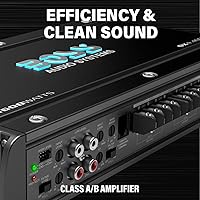
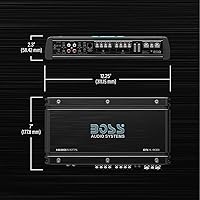
The BOSS Audio OX4.400 4-Channel Car Amplifier sits squarely at the budget end of the car audio market, and that is not a criticism — it is the point. BOSS Audio has built a reputation around making amplification accessible, and this four-channel amp follows that tradition. The Class A/B topology strikes a practical middle ground between pure Class A warmth and Class B efficiency. One thing worth clarifying upfront: the headline 1600W figure is peak power, not RMS. Real continuous output is considerably lower, which is typical at this price tier. The compact 12.3 x 7 x 2.3-inch chassis handles surface mounting cleanly under a seat or in a trunk.
Features & Benefits

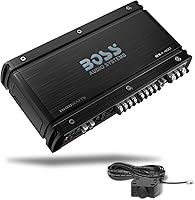
The OX4.400 covers a lot of ground for a single-amp install. Running four full-range speakers is straightforward, but the real flexibility comes when you bridge two channels together to push 800W max into a subwoofer while the remaining pair handles your door speakers. The built-in low-pass crossover means you can roll off high frequencies to your sub without needing an external processor. A variable bass boost lets you dial in exactly how much low-end punch you want from the driver's seat, especially since the amp also includes a remote control for just that purpose. High-level inputs are a practical touch for anyone keeping a factory head unit.

Best For

This four-channel amp makes the most sense for someone taking their first real step into car audio. If you are currently running on a factory system and want noticeably better sound without a complex multi-amp setup, this is the practical path. The high-level input option is a genuine convenience — no need to swap out your head unit just to get amplified sound. It also suits tighter installs; at under 13 inches long and 6.4 pounds, it fits comfortably in spaces where larger amps simply will not. That said, if you are chasing high-fidelity output or plan to push serious power, this BOSS amplifier is not the right tool.

User Feedback

Buyers who install the OX4.400 on modest setups tend to walk away satisfied — the jump from stock audio is immediately obvious, and the installation process draws consistent praise for being manageable without professional help. The remote bass control and the bass boost knob both get mentioned as practical extras that people actually use. Where opinions get more divided is around longevity and heat. A subset of users report the amp running noticeably warm under sustained high volume, and a few flag reliability issues after extended use. The wattage figures also generate skepticism; buyers expecting 400W per channel often discover those numbers reflect peak conditions, not everyday listening.

Pros

  • Handles four speakers and a subwoofer from a single amp, simplifying the entire install.
  • High-level inputs let you skip head unit replacement and wire directly from factory speaker outputs.
  • The bridgeable configuration gives you meaningful subwoofer power without buying a separate mono amp.
  • Built-in low-pass crossover removes the need for an outboard processor on basic sub setups.
  • The remote subwoofer control is a genuinely useful inclusion, not just a box-filler accessory.
  • Compact dimensions make it a realistic fit for under-seat or small-trunk installs.
  • Variable bass boost gives hands-on low-end control without touching an equalizer or tuning menu.
  • Installation is approachable for first-timers, with a straightforward wiring layout and surface-mount design.
  • FCC certification adds a baseline of confidence for a product at this price point.
  • The noticeable jump in volume and clarity over stock audio is consistently reported by buyers.

Cons

  • Advertised peak wattage is misleading — real-world continuous output is a fraction of the 1600W claim.
  • Heat buildup at high volumes is a recurring complaint and can shorten the amp's lifespan.
  • Long-term reliability is inconsistent; a meaningful share of buyers report failures within the first year.
  • Tuning options are basic, which limits usefulness as your system grows or your ears get more critical.
  • Clipping at higher volume levels is reported by users pushing the amp close to its limits.
  • BOSS Audio carries a polarizing reputation in car audio circles, which may affect resale value.
  • No RMS figures are published by the manufacturer, making it hard to match speakers accurately.
  • The variable bass boost, while convenient, lacks the precision of a dedicated digital signal processor.
  • Not well-suited for 4-ohm loads if you want meaningful output — performance improves only at 2 ohms.

Ratings

Our AI rating system analyzed thousands of verified global user reviews for the BOSS Audio OX4.400 4-Channel Car Amplifier, actively filtering out incentivized, bot-generated, and outlier submissions to surface what genuine buyers actually experienced. The scores below reflect both the real strengths that keep this amp popular in its category and the honest pain points that regularly surface in long-term ownership feedback. Nothing has been softened or cherry-picked — the numbers tell the full story.

Ease of Installation
84%
Buyers consistently highlight how approachable the wiring layout is, especially for first-timers tackling a car audio install on a weekend. The high-level input option is a particular standout — being able to tap speaker wires directly from a factory harness removes one of the biggest DIY hurdles entirely.
A small portion of users found the terminal labeling ambiguous, particularly around the crossover and gain controls, and wished the included documentation was more detailed. Those coming from zero car audio experience occasionally needed supplemental video guides to complete the setup confidently.
Value for Money
78%
22%
For buyers entering car audio on a limited budget, the OX4.400 delivers a noticeable and immediate upgrade over any factory system at a price point that is hard to argue with. Getting four channels, a built-in crossover, bass boost, and a remote control bundled together keeps the total cost of the upgrade low.
The value equation gets shakier when reliability is factored in over a one-to-two year window, with a meaningful number of buyers reporting failure and needing a replacement. If you account for a potential second purchase, the savings over a slightly more expensive but more durable amp begin to shrink.
Power Output Accuracy
41%
59%
Users who calibrated their expectations around RMS rather than the advertised peak figure reported being reasonably satisfied with the actual output in casual daily-driving scenarios. At moderate listening volumes, the amp drives a basic four-speaker setup with sufficient headroom.
The 1600W total peak claim is the single most common source of frustration across buyer feedback, with many feeling genuinely misled after install. Real-world continuous output is a fraction of that number, and buyers who sized their speakers or subwoofer to the advertised spec often found the system underperforming their expectations.
Sound Quality
67%
33%
At everyday listening volumes, the OX4.400 produces clean enough audio to represent a clear step up from a factory head unit driving speakers passively. The Class A/B topology does contribute a warmer, more listenable character compared to budget Class D alternatives in the same price range.
Push the volume past roughly 70 to 75 percent and some users report audible distortion and clipping, which signals the amp reaching its practical limits well before its rated maximums. Audiophiles or anyone with mid-range speakers that can reveal source quality will likely find the sonic ceiling of this amp frustrating.
Build Quality
54%
46%
The chassis feels reasonably solid out of the box, and the terminal hardware handles basic installation without issue. For a compact, budget-tier unit, the physical construction is adequate for the install environment most buyers place it in.
The internal component quality is where the budget tier shows most clearly — long-term thermal stress appears to degrade performance over time, and a notable share of users report the unit failing or behaving erratically after sustained high-volume use in warmer climates or poorly ventilated install locations.
Thermal Management
49%
51%
In moderate-use scenarios — background music during a commute, for example — the amp runs at an acceptable temperature without triggering thermal protection cutoffs. Users who mount it in open, ventilated spaces report fewer issues overall.
Heat is the most consistently flagged reliability risk in long-term feedback. Users who run the system loud for extended periods, or who mount the amp in enclosed or carpeted spaces with poor airflow, frequently describe it running uncomfortably hot and occasionally shutting down mid-session.
Bass Boost & Crossover
73%
27%
The variable bass boost gets genuine appreciation from buyers who want hands-on low-end control without investing in a separate digital signal processor. The low-pass crossover, while basic, handles the job of directing the right frequencies to a subwoofer effectively in a simple one-amp setup.
Neither control offers the precision or range of a standalone processor, and enthusiasts who have used dedicated tuning equipment will notice the difference quickly. The bass boost in particular can introduce audible distortion if pushed aggressively, especially when the amp is already being driven hard.
Input Flexibility
82%
18%
Having both RCA and high-level speaker wire inputs on the same unit is a practical feature that expands compatibility significantly. Buyers keeping their factory stereo overwhelmingly appreciate not having to rewire anything beyond the amp itself.
The RCA inputs work fine with aftermarket head units, but signal quality at the high-level inputs is somewhat dependent on the source unit's own output quality, and a few users noted a faint background hiss when connected to certain older factory radios.
Remote Subwoofer Control
76%
24%
The inclusion of a remote bass level knob is one of the more genuinely appreciated box contents, allowing the driver to quickly dial bass up or down to match the mood or the track without reaching back to the amp. Buyers treating it as a bonus feature rather than a precision tool rate it well.
The control knob itself feels plasticky and the cable connecting it is not particularly long, which can limit placement options in larger vehicle cabins. A few buyers also reported the knob becoming intermittently unresponsive after several months of use.
Bridging Performance
68%
32%
The ability to bridge two channels into a single higher-power output for a subwoofer makes this amp genuinely versatile for a single-unit install. Users who bridged the amp into a modest 4-ohm subwoofer reported satisfying bass performance for everyday listening.
The 800W bridged output is again a peak figure, and the real delivered power into a subwoofer is lower than buyers expect. Pairing this amp with a power-hungry or high-excursion subwoofer will expose its limits quickly, particularly at higher volume levels.
Long-Term Reliability
46%
54%
A solid portion of buyers report months of uneventful, stable operation in mild-use scenarios, suggesting the amp is capable of longevity when not pushed hard and installed with proper ventilation and correct wiring.
The reliability pattern over a 12-to-24 month window is one of the weaker aspects in aggregated feedback, with a disproportionate number of failure reports compared to slightly higher-priced alternatives. This is the single factor most likely to affect total cost of ownership.
Compact Form Factor
81%
19%
The physical dimensions make the OX4.400 one of the more install-friendly four-channel amps at this price, fitting cleanly under most standard car and crossover SUV seats without modification. Buyers with limited trunk space specifically called this out as a deciding factor.
The slim 2.3-inch height, while useful for tight installs, likely contributes to the thermal challenges since there is limited internal space for heat dissipation. Some users in trucks or older vehicles with lower seat clearance still found the fit tighter than expected.
Brand Reputation
58%
42%
BOSS Audio has enough of a market presence that replacement parts, wiring guides, and community troubleshooting resources are relatively easy to find online. For first-time buyers, the brand familiarity provides a degree of confidence that lesser-known imports do not.
BOSS Audio is a genuinely polarizing name in car audio communities, and experienced enthusiasts often caution newcomers against it based on quality-consistency concerns built up over many years. That skepticism, while sometimes overblown, does have a basis in the brand's reliability track record.
Documentation & Support
52%
48%
The basic setup instructions included are sufficient to complete a standard install, and BOSS Audio does provide downloadable manuals and basic customer support channels that buyers have used to resolve wiring questions.
The documentation does not go deep enough for users who run into tuning or compatibility questions beyond the basics, and customer support response quality appears inconsistent based on buyer reports. Advanced troubleshooting often requires turning to third-party forums rather than official resources.

Suitable for:

The BOSS Audio OX4.400 4-Channel Car Amplifier is a practical pick for anyone making their first real move away from a factory audio setup without committing to a complex, multi-component install. If you are driving a daily commuter or older vehicle and simply want louder, cleaner sound across four speakers — with the option to bridge two channels and feed a subwoofer — this amp covers that ground without demanding a deep technical background. It is particularly well-matched for drivers who want to keep their stock head unit, since the high-level speaker wire inputs remove the need to swap out or rewire the source unit. Tight install spaces are not a problem either; the compact chassis fits comfortably under most seats or in a small trunk corner. Budget-conscious DIYers who prioritize getting something running over chasing perfect specifications will find the OX4.400 an honest, workable starting point.

Not suitable for:

The BOSS Audio OX4.400 4-Channel Car Amplifier is not the right choice for buyers who have done their research on RMS wattage and expect performance that matches the 1600W headline figure — the real continuous output is significantly lower, and anyone building a system around accurate power numbers will be disappointed. Audiophiles or enthusiasts who care about low noise floors, tight frequency control, and long-term thermal stability should look at mid-range or higher-tier amplifiers from brands with stronger engineering reputations. If you are planning to power high-impedance, power-hungry speakers or a demanding subwoofer, this amp will likely run hot and clip before meeting those demands. It is also not a strong fit for install environments where sustained high-volume use is the norm, as heat management at the upper end of its range is a documented concern among buyers.
Specifications

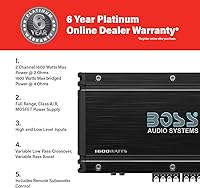
  • Brand: Manufactured by BOSS Audio Systems, a brand focused on accessible, value-tier car audio components.
  • Model Number: The official model designation is OX4.400, part of the BOSS OX series of amplifiers.
  • Channels: This amplifier provides 4 independent output channels, all bridgeable in pairs for flexible system configurations.
  • Peak Power: Total advertised peak power output is 1600W across all four channels combined.
  • Per-Channel Output: Each channel delivers up to 400W max at 2 ohms, or 200W max at 4 ohms under peak conditions.
  • Bridged Output: When two channels are bridged, the combined output reaches up to 800W max at 4 ohms.
  • Topology: The amplifier uses a Class A/B circuit design, balancing thermal efficiency with audio fidelity.
  • Crossover: A built-in low-pass crossover is included, allowing users to filter high frequencies away from subwoofer channels.
  • Bass Boost: A variable bass boost control is built into the unit, letting users increase low-frequency output to taste.
  • Input Types: The OX4.400 accepts both low-level RCA inputs and high-level speaker wire inputs for broad head unit compatibility.
  • Dimensions: The amplifier measures 12.3 x 7 x 2.3 inches, making it compact enough for under-seat or small-trunk surface mounting.
  • Weight: The unit weighs 6.4 pounds, which is manageable for a single-person DIY installation.
  • Mounting Type: Designed for surface mounting, with no specialized enclosure or rack hardware required.
  • In the Box: The package includes the amplifier and a remote subwoofer level control for adjusting bass output from the driver position.
  • Certification: The OX4.400 carries FCC certification, meeting the required regulatory standards for the US market.
  • Color: The unit is finished in black, consistent with standard car audio amplifier aesthetics.
  • Availability Date: This model was first made available for purchase in February 2019.

Related Reviews
Soundfy SA 400.4 4-Channel Car Amplifier

71%
78%
Value for Money
72%
Sound Quality
63%
Power Output
58%
Build Quality
81%
Thermal Management
More
BOSS Audio R2504 4-Channel Car Amplifier
70%
82%
Value for Money
86%
Ease of Installation
51%
Power Output (Real-World)
58%
Thermal Management
62%
Build Quality
More
BOSS Audio PF1800 4-Channel Car Amplifier
71%
88%
Value for Money
84%
Ease of Installation
76%
Sound Quality
51%
Power Output Accuracy
58%
Thermal Management
More
Recoil REA600.4 4-Channel Car Audio Amplifier
84%
89%
Audio Performance
91%
Ease of Installation
85%
Sound Quality at High Volumes
62%
Heat Management
90%
Power Output
More
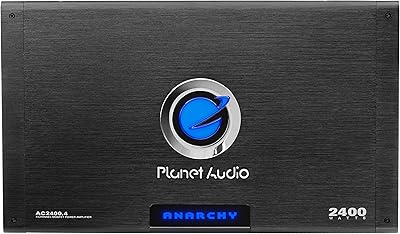
Planet Audio AC2400.4 4-Channel Car Amplifier
84%
95%
Power Output
89%
Sound Clarity
87%
Bass Performance
82%
Ease of Installation
65%
Thermals/Heat Management
More
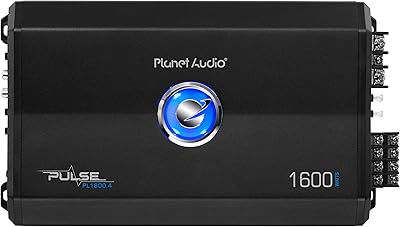
Planet Audio PL1600.4 4-Channel Car Amplifier
72%
88%
Value for Money
84%
Ease of Installation
74%
Sound Quality
58%
Power Output (Real-World)
61%
Build Quality
More
Recoil DI550.4 4-Channel Car Audio Amplifier
74%
91%
Value for Money
78%
Power Output
86%
Ease of Installation
74%
Sound Quality
67%
Build Quality
More
Recoil DI800.4 4-Channel Car Amplifier
75%
88%
Value for Money
51%
Power Accuracy
63%
Build Quality
79%
Thermal Management
86%
Ease of Installation
More
Planet Audio AC1200.4 4-Channel Car Amplifier
73%
88%
Value for Money
67%
Power Output
83%
Installation Ease
74%
Sound Quality
61%
Build Quality
More
Planet Audio AC1600.4 Anarchy Series 4-Channel Car Amplifier
82%
94%
Power Output
88%
Sound Quality
70%
Ease of Installation
92%
Value for Money
85%
Build Quality
More

FAQ

Yes, and this is honestly one of the more practical aspects of the OX4.400. It includes high-level inputs, which means you can connect it directly to the speaker wire outputs from your stock stereo. No aftermarket head unit required.

That number reflects peak power under ideal, momentary conditions — not what the amp continuously delivers. Real-world RMS output is considerably lower, which is standard practice for budget-tier amplifiers. If you are sizing speakers or a subwoofer, do not plan your build around the 1600W headline figure.

Yes. The common approach is to use two channels for your front or rear speakers and bridge the remaining two channels together to drive a single subwoofer. It is a versatile setup for a single-amp install, though the bridged power available at 4 ohms is 800W peak, so match your sub accordingly.

It does — a remote subwoofer level control is included in the box. You mount it within reach of the driver and use it to adjust bass output on the fly without touching the amp itself. Most buyers find it a convenient addition for daily driving.

For anyone comfortable with basic car wiring, this is a manageable DIY project. The terminal layout is straightforward, and the high-level input option simplifies the signal connection significantly. If you have never installed a car amp before, following a step-by-step guide online alongside this unit is a reasonable approach.

It is a fair concern. The OX4.400 does generate noticeable heat when pushed at high volumes for extended periods. Making sure the mounting location has adequate airflow will help. Avoid enclosed spaces with no ventilation, and if you tend to run your system loud for long stretches, keep an eye on the amp during the first few sessions.

The amp delivers its highest per-channel output at 2 ohms, so pairing it with 2-ohm speakers or wiring dual-voice-coil speakers to a 2-ohm load will give you the most output. Running at 4 ohms halves the max per-channel power, but it is a more stable and thermally friendly operating point for everyday listening.

There is a built-in low-pass crossover on the unit, which is useful if you are routing any channels to a subwoofer. It lets you roll off higher frequencies so the sub only reproduces bass. For more advanced crossover configurations across all channels, a separate processor would give you more control, but for a basic setup this is adequate.

Reliability feedback is mixed. Many buyers report trouble-free operation, especially in moderate-use scenarios, but there is a consistent subset of users who report failures within the first year of ownership. It is a known trade-off at this price point. If you are building a system you plan to rely on for several years, factoring in the possibility of replacement is a reasonable precaution.

At 12.3 x 7 x 2.3 inches and 6.4 pounds, it is compact enough to slide under most standard car or truck seats, provided there are no obstructions like seat rails. Measure the clearance under your specific seat before committing to that location, since seat rail height varies significantly between vehicles.

Where to Buy