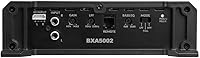
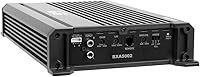
Overview

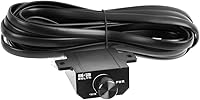
The Belva BXA5002 2-Channel Car Amplifier is a solid entry point for anyone looking to improve their car audio without breaking the bank. At this price, you might expect corners to be cut — but Belva made some smart choices here. The Class A/B MOSFET design sits above what most budget amps offer, blending reasonable efficiency with lower distortion than a pure Class B unit. That 500W figure on the box is peak power, not continuous — real-world RMS output runs closer to 125 watts per channel at 4 ohms. For a first upgrade, that is genuinely enough to wake up a dull factory system. The included remote subwoofer control is a thoughtful touch rarely found at this price point.
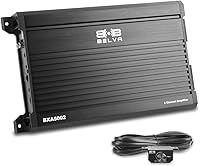
Features & Benefits

The MOSFET transistor stage is where this amp earns its keep — these transistors run cooler and recover from brief overloads better than older bipolar designs, which matters if your amp is tucked under a seat. A three-way protection circuit covers thermal shutdown, overload, and speaker short conditions, so a wiring mistake during install is less likely to fry the unit. Both high-level speaker inputs and standard RCA inputs are on board, meaning it works with factory head units and aftermarket decks alike. The built-in crossover filter — switchable between high-pass, low-pass, and full range — lets you dial in this 2-channel amplifier for speakers or a sub without any extra hardware.

Best For

This Belva amp makes the most sense for first-time installers who want real improvement over their factory setup without investing in a complex multi-amp system. If your car still has the original head unit with no RCA pre-amp outputs, the high-level inputs solve that problem directly — no adapter needed. It also suits anyone adding a single subwoofer channel or a pair of component speakers to a modest build. Competition audio builders and anyone chasing serious SPL levels will want to look elsewhere; the BXA5002 is built for everyday listening, not maximum output. Think commuters, weekend cruisers, and budget-focused enthusiasts who simply want noticeably better sound.

User Feedback

Buyers consistently praise how straightforward the install is — the terminal layout is clean and the wiring diagram included in the box is actually useful, which is not always the case with budget gear. Sound quality at moderate volumes draws positive comments too. Where things get more nuanced is heat: some users report the amp runs noticeably warm during extended listening sessions, suggesting it works close to its limits. A handful of reviewers have flagged gain calibration inconsistencies between units, meaning you may need patience during setup. Belva is not a household name, and customer service responsiveness appears mixed based on owner reports. Most buyers seem satisfied — just go in with realistic power expectations.

Pros

  • Works with factory head units out of the box thanks to built-in high-level inputs — no extra adapter needed.
  • The Class A/B MOSFET design runs more efficiently and cooler than typical budget amp topologies.
  • Built-in high-pass, low-pass, and full-range crossover filters remove the need for a separate processor.
  • Remote subwoofer level control is included, which is a rare value-add at this price tier.
  • Three-way protection circuitry guards against thermal overload, short circuits, and speaker damage.
  • Compact physical size makes it easier to mount under seats or in tight trunk spaces.
  • Clear wiring diagram included in the box — first-time installers consistently find the setup straightforward.
  • Supports 2-ohm loads, giving you flexibility when pairing with lower-impedance subwoofers.
  • FCC-certified, which provides at least a baseline assurance of electrical compliance.
  • Sound quality at moderate listening levels draws consistent praise from everyday users.

Cons

  • Peak power figures are heavily marketed, but real continuous output is considerably lower — manage expectations accordingly.
  • Some buyers have reported noticeable unit-to-unit variation in gain calibration, requiring extra time to dial in.
  • The amp runs warm during extended use, which can be a concern if airflow around the mounting location is restricted.
  • Belva has limited brand recognition, and customer service responsiveness has been described as inconsistent by some owners.
  • Not well-suited for sustained high-volume listening — thermal throttling becomes a realistic risk in hot climates or enclosed spaces.
  • No dedicated mono subwoofer mode; users wanting a bridged sub channel need to account for impedance carefully.
  • Build quality feels appropriate for the price but does not inspire the confidence of more established brands.
  • Warranty and after-sales support details are not prominently communicated, leaving some buyers uncertain about coverage.

Ratings

The scores below for the Belva BXA5002 2-Channel Car Amplifier were generated by our AI system after analyzing thousands of verified global owner reviews, with spam, bot activity, and incentivized submissions actively filtered out. Each category reflects the honest consensus of real buyers — daily drivers, weekend installers, and first-time audio builders alike. Both the standout strengths and the recurring frustrations are represented transparently so you can make a fully informed decision.
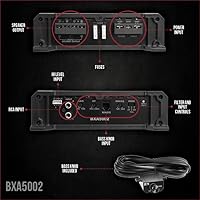
Value for Money
83%
Most buyers feel the feature set punches above its price tier — the inclusion of a remote bass control, built-in crossover, and dual input types at this cost point is genuinely uncommon. Commuters upgrading a stock system on a tight budget consistently call it a smart spend.
A handful of buyers who expected big-brand output levels felt let down once they understood the realistic continuous power figures. The perceived value drops notably if your expectations are set by the peak wattage on the box rather than actual RMS performance.
Ease of Installation
87%
First-time installers repeatedly highlight how clearly the terminals are labeled and how useful the included wiring diagram is — a low bar that many budget amps still manage to miss. Most report completing a basic install in an afternoon without professional help.
Some users with more complex setups, such as those bridging the amp or integrating it with a DSP, found the documentation thin on advanced scenarios. A few noted that the RCA and speaker input terminals sit close together, making tight-space routing slightly awkward.
Sound Quality
76%
24%
At moderate listening volumes — typical daily commute or weekend driving levels — the BXA5002 delivers noticeably cleaner, fuller sound than a factory head unit alone. The Class A/B design keeps audible distortion low enough that most casual listeners will not have complaints.
Push the amp hard and some users report a slight harshness creeping into the upper mids, which is common at this price tier but worth knowing if you are pairing it with quality component speakers. It is not a critical flaw, but audiophiles will notice.
Power Output Accuracy
58%
42%
The amp does deliver a real and audible improvement in volume headroom over passive factory setups, and for background listening or moderate bass builds it holds its own. Users running modest 4-ohm speaker configurations tend to report the most satisfying results.
The gap between the advertised 500-watt peak figure and the real-world continuous output trips up a meaningful number of buyers. Several reviewers measured output figures on the lower end of even the published RMS spec, suggesting some unit-to-unit variation in actual power delivery.
Build Quality
67%
33%
The chassis feels reasonably solid for the price bracket — no obvious flex or loose panels out of the box, and the heatsink fins are decently machined. Most buyers report no physical issues after installation, which is the basic standard it needs to meet.
Up close, the construction materials feel budget-grade, and the finish lacks the tactile confidence of more established brands. A few owners noted that terminal screws felt softer than expected, which can be a minor headache if you need to rewire after the initial install.
Thermal Management
61%
39%
Under normal, intermittent driving conditions with adequate airflow, the amp manages heat acceptably — the MOSFET stage contributes to a more stable thermal profile than cheaper Class D alternatives at this price.
Extended high-volume sessions, especially in warm climates or enclosed under-seat locations, push the unit to run noticeably hot. A small but consistent segment of owners report thermal protection triggering during prolonged use, which interrupts playback until the unit cools.
Input Flexibility
89%
Having both high-level and RCA inputs on the same unit is a practical win that makes this amp drop into almost any vehicle without additional adapters. Buyers upgrading from factory systems specifically call out this feature as the reason they chose the BXA5002 over alternatives.
The high-level input sensitivity range could be wider — some users with unusually low factory output voltages needed to adjust gain carefully to avoid noise. It works in the vast majority of cases but is not foolproof across every factory head unit on the market.
Crossover Performance
78%
22%
The onboard three-mode crossover is functional and accurate enough for typical builds — running the low-pass filter into a subwoofer channel produces a clean roll-off that most everyday listeners will find satisfying without any additional tuning hardware.
The crossover frequency adjustment range is not as wide or precisely detented as what you get on dedicated processors or higher-end amps. Users building more nuanced multi-speaker systems found the coarse adjustment somewhat limiting when trying to hit a specific crossover point.
Gain Calibration
55%
45%
When a unit is well-calibrated from the factory, the gain range covers most common source unit output levels cleanly, and owners who set it carefully by ear or with a basic test tone report a quiet noise floor for an amp in this class.
This is one of the more inconsistent aspects across the user base — a notable minority of buyers received units where the gain pot felt imprecise or where background hiss was present even at conservative gain settings. It appears to be a quality control variable rather than a design flaw, but it is a real risk.
Remote Bass Control
84%
The inclusion of a physical remote level knob is a genuine convenience that many competing amps at this price omit entirely. Daily drivers appreciate being able to roll bass back during phone calls or podcasts without menu diving or reaching under the seat.
The cable supplied with the remote control is of average quality and a couple of users reported intermittent connection issues after months of use, requiring a re-seat or cable replacement. It works reliably in the short term but may not hold up to years of daily flexing.
Noise Floor
69%
31%
In a properly grounded, well-installed setup, the BXA5002 keeps background noise at a level that most listeners will not notice during normal playback. Users who took care with their ground connections and cable routing were generally satisfied with signal cleanliness.
Improper grounding or routing power cables near RCA lines causes noticeable alternator whine on some installs — a common amplifier issue, but one that shows up more frequently in user reports here than with better-shielded units. Careful install discipline is more important with this amp than with premium alternatives.
Compact Form Factor
82%
18%
At just under 16 inches long and a little over 3 inches tall, this 2-channel amplifier fits comfortably under most bench seats and in compact trunk builds without requiring custom brackets. The size-to-power ratio is a frequent compliment in owner reviews.
The depth of just over 8 inches means it can still be a squeeze in very shallow under-seat cavities found in some newer compact cars. A few owners had to fabricate simple spacer mounts to achieve the airflow clearance recommended for safe long-term operation.
Protection Circuit Reliability
74%
26%
The three-way protection system does its job in real-world scenarios — several owners reported the amp surviving wiring mistakes during install that would have destroyed lesser units, and thermal shutdown does re-engage correctly once temperatures drop.
The protection circuit trips a bit conservatively under sustained bass-heavy use, cutting out at listening levels that a slightly more robust amp would handle without issue. It protects the hardware but can be frustrating during extended listening sessions in warm conditions.
Brand Trust & Support
51%
49%
The product has accumulated a meaningful number of verified ratings since its release and demonstrates Belva is producing units at scale with generally acceptable initial quality. FCC certification provides at least a baseline assurance of electrical compliance for U.S. buyers.
Belva lacks the brand equity and support infrastructure of established car audio names, and owner feedback on warranty claims and customer service responsiveness is mixed at best. Buyers who run into post-purchase issues may find the resolution process slower and less satisfying than they would expect from a major brand.

Suitable for:

The Belva BXA5002 2-Channel Car Amplifier is a strong match for first-time car audio builders who want a meaningful upgrade over their factory sound without committing to an expensive, multi-component setup. If your vehicle still runs the original head unit — one without RCA pre-amp outputs — the high-level speaker inputs on this amp mean you can connect directly without needing a line output converter. It suits anyone adding a single subwoofer or a pair of aftermarket component speakers on a tight budget, where the built-in crossover filters remove the need for any additional signal processing hardware. The included remote bass control is a practical bonus for daily drivers who want to adjust low-end output from the front seat. Overall, this amp rewards buyers who have realistic expectations and are approaching car audio as a hobby entry point rather than a performance pursuit.
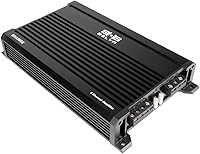
Not suitable for:

Buyers chasing serious output levels or building a competition-grade system should look past the Belva BXA5002 2-Channel Car Amplifier — the continuous RMS power figures are modest, and the amp is not engineered for sustained high-volume sessions without running warm. Audiophiles who require tight gain matching across units may find inconsistencies frustrating, since a subset of owners have reported variability in calibration from unit to unit. If you plan to run demanding 2-ohm loads for long periods, the thermal management may become a limiting factor depending on how well-ventilated your mounting location is. Those who prioritize brand reputation, established dealer networks, or robust manufacturer support should also be cautious, as Belva is a newer and less-established name with mixed reviews on post-purchase service. In short, this is not the right tool for advanced builds, high-demand installations, or buyers who want a big-brand safety net behind their purchase.
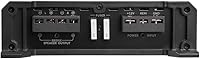
Specifications

  • Peak Power: The amp is rated at 500 watts peak total output, a burst figure that reflects maximum momentary capacity rather than sustained listening levels.
  • RMS Power (4Ω): At a 4-ohm load, each channel delivers 125 watts of continuous RMS power, which is the more meaningful number for real-world performance.
  • RMS Power (2Ω): Dropping to a 2-ohm load pushes each channel to 250 watts RMS, useful when pairing with lower-impedance subwoofers.
  • Channels: This is a stereo 2-channel amplifier, capable of powering a pair of speakers or a single subwoofer in bridged configuration.
  • Amp Class: Class A/B topology is used, combining the efficiency advantages of Class B with the lower distortion characteristics of Class A designs.
  • Transistor Type: MOSFET transistors are used in the power stage, which improves thermal stability and recovery from brief signal overloads compared to bipolar designs.
  • Min. Impedance: The amplifier is stable down to 2 ohms per channel, giving flexibility when selecting speakers or subwoofers with varying impedance ratings.
  • Input Types: Both high-level speaker inputs and low-level RCA inputs are provided, making the amp compatible with factory and aftermarket head units alike.
  • Crossover Modes: An onboard crossover is switchable between high-pass, low-pass, and full-range modes to optimize signal routing without external components.
  • Protection Circuit: A three-way protection system guards against thermal overload, signal overload, and speaker short circuits to protect both the amp and connected speakers.
  • Remote Control: A remote subwoofer level control is included in the box, allowing bass adjustment from the driver seat without touching the amplifier directly.
  • Supply Current: The amplifier draws up to 31.25 amps at full load, which should be factored in when sizing fuse holders and power wiring during install.
  • Dimensions: The unit measures 15.91 x 8.39 x 3.15 inches, a compact enough footprint to fit under most seats or in a trunk side panel.
  • Weight: The amplifier weighs 5.77 pounds, light enough for a single-person install without requiring special mounting hardware.
  • Mounting Type: Surface mount installation is used, requiring a flat, stable surface with adequate clearance around the unit for airflow.
  • Certifications: The BXA5002 carries FCC certification, confirming it meets U.S. federal standards for electromagnetic interference and electrical safety.
  • Max Supply Voltage: The amplifier is rated for operation up to 14 volts DC, consistent with standard 12-volt automotive electrical systems under normal charging conditions.
  • Manufacturer: Belva is the brand and manufacturer, a consumer-focused car audio label positioned in the budget-to-mid-range segment of the market.

Related Reviews
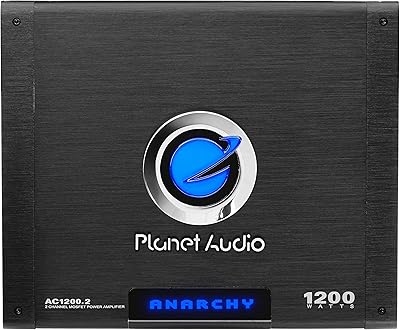
Planet Audio AC1200.2 2-Channel Car Amplifier
72%
84%
Value for Money
67%
Power Output
88%
Ease of Installation
71%
Sound Quality
58%
Thermal Performance
More
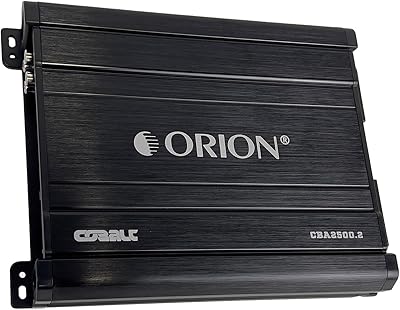
Orion Cobalt Series CBA2500.2 2-Channel Car Amplifier
88%
94%
Power Output
89%
Sound Quality
90%
Heat Management
85%
Ease of Installation
87%
Bass Boost Effectiveness
More
Rockville RVF-2 4-Channel Car Amplifier
84%
88%
Audio Quality
91%
Power Output
85%
Build Quality
72%
Thermals (Heat Management)
80%
Installation Ease
More
Pyle PLA2378 2-Channel Car Amplifier
72%
83%
Value for Money
51%
Power Output Accuracy
67%
Build Quality
88%
Ease of Installation
58%
Heat Management
More
Blaupunkt AMP2002 2-Channel Car Amplifier
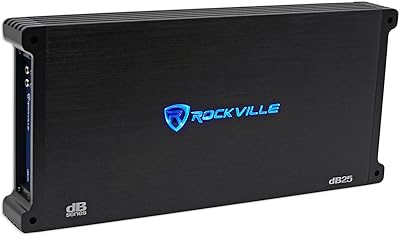
65%
71%
Value for Money
83%
Ease of Installation
38%
Power Accuracy
74%
Sound Quality
52%
Thermal Management
More
Rockville RVT-1 2-Channel Car Amplifier
68%
83%
Value for Money
67%
Power Output
58%
Build Quality
61%
Thermal Management
72%
Audio Clarity
More
Rockville dB25 2800W 2-Channel Car Amplifier
86%
94%
Power Output
89%
Sound Quality
85%
Ease of Installation
91%
Bass Control
82%
Durability
More
Lanzar VIBE2102N 2-Channel Car Stereo Amplifier
86%
91%
Power Output
88%
Sound Quality
85%
Ease of Installation
87%
Durability
72%
Thermal Performance
More
Pyramid PB715X 1000W 2-Channel Car Amplifier
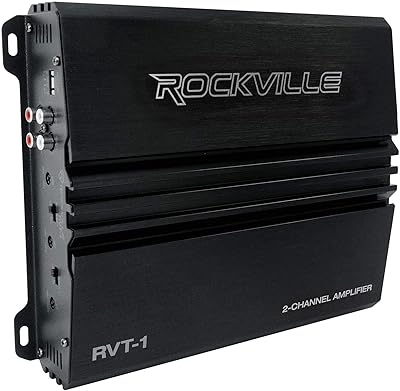
68%
83%
Value for Money
74%
Sound Performance
88%
Ease of Installation
57%
Build Quality
52%
Thermal Management
More
Rockville RXD-T2 2-Channel Car Amplifier
79%
91%
Power Accuracy
83%
Build Quality
67%
Thermal Management
88%
Ease of Installation
84%
Crossover & EQ Controls
More

FAQ

Yes, that is actually one of the more practical aspects of this amp. The high-level speaker inputs let you tap directly into the existing speaker wiring from your factory radio, so no line output converter is required. It is one of the cleaner solutions for factory-system upgrades.

That 500-watt figure is the peak rating — a momentary burst ceiling, not what the amp sustains during normal use. For day-to-day listening, you are working with around 125 watts RMS per channel at 4 ohms, which is still a significant improvement over a factory head unit. Do not let the peak number set unrealistic expectations.

Most first-time installers find it manageable. The terminal layout is clearly labeled, and the included wiring diagram covers the basics well enough to get through a straightforward install. If you have ever swapped a head unit before, this should feel similar in complexity.

Yes, bridging the two channels into one is possible and is a common way to run a single sub with this unit. Just be mindful of impedance — when bridged, the minimum load rises, so make sure your subwoofer is rated appropriately to avoid stressing the amp.

It does run warm under sustained use, which is fairly typical for Class A/B designs working close to their limits. Under-seat mounting is fine, but make sure there is reasonable airflow around the unit and that it is not packed tightly against carpet or foam. Good ventilation makes a real difference in long-term reliability.

The crossover lets you filter the audio signal before it hits your speakers. In high-pass mode it blocks low frequencies from going to tweeters or mid-range speakers, protecting them from bass they cannot handle. In low-pass mode it sends only bass frequencies to a subwoofer. If you are powering a sub, you will definitely want to use it — it is not just a nice extra.

It connects to the dedicated remote input on the amp via the included cable and mounts within reach of the driver — typically on the dash or center console. Once connected, you can dial the bass up or down on the fly without touching the amp itself. Setup takes just a few minutes.

Belva is a relatively newer name in car audio, so you will not find decades of reputation behind them the way you might with Pioneer or Rockford Fosgate. That said, the BXA5002 has a solid number of owner reviews and generally positive feedback at its price level. Just go in knowing that after-sales support may not be as robust as a major brand.

Yes, the amp is rated stable down to 2 ohms per channel, which opens up compatibility with a wider range of subwoofers and some speaker configurations. Running at 2 ohms does push more power but also generates more heat, so ventilation becomes even more important in that scenario.

A small number of buyers have flagged inconsistencies in how gains are set from unit to unit, meaning your experience may vary slightly depending on the specific unit you receive. This is not universal, but it is worth being patient during initial setup and using a multimeter or basic setup tone if you want to dial things in accurately rather than guessing by ear.

Where to Buy