Overview

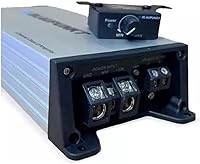
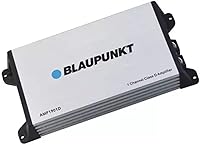
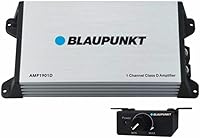
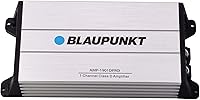
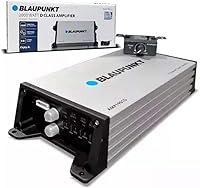
The Blaupunkt AMP1901D Class D Mono Car Amplifier is Blaupunkt's attempt to win back budget-minded car audio fans with a compact, single-channel design built squarely around subwoofer duty. At 13×5×3 inches, this mono amp fits where bulkier units simply won't — tucked under a seat or wedged into a shallow trunk corner. It's worth being upfront about one thing: the 2000W figure on the box is a peak rating, not a sustained measurement. Real-world usable power comes from the RMS numbers, which tell a more honest story. For the price tier, this Class D subwoofer amplifier offers a legitimate entry point into dedicated amplification without requiring a major financial commitment.
Features & Benefits

Class D topology is the right call here — it runs cooler and draws less current than older Class AB designs, which matters when you're pulling serious wattage in an enclosed vehicle. This Blaupunkt amp delivers 1800W RMS at 1 ohm, 1300W at 2 ohms, and a still-useful 600W at 4 ohms, so there's real flexibility depending on what subwoofer you're pairing it with. The variable gain range of 250mV to 6V means you won't need a line output converter when working off a factory head unit. A signal-to-noise ratio at or above 96dB keeps background hiss out of the picture, and the 30Hz–250Hz frequency band keeps this amp focused on exactly what it should be doing.

Best For

This mono amp is a natural fit for anyone running a single subwoofer off a factory system or a modest aftermarket head unit. If you've been relying on your receiver's built-in sub output and want a meaningful step up without rewiring your entire setup, this Class D subwoofer amplifier covers that gap cleanly. The compact dimensions also make it a strong candidate for installs where trunk space is at a premium — smaller hatchbacks and tight builds included. First-time DIY installers will appreciate the straightforward single-channel wiring, and those pairing a 2-ohm or 4-ohm sub will find the RMS figures more than adequate for everyday listening.

User Feedback

Buyers tend to split into two camps with this Blaupunkt amp. Those who go in knowing that 2000W is a marketing peak number — not what's actually reaching their subwoofer — come away satisfied with the real-world output. Installation feedback is mostly positive; terminal labeling is clear enough for first-timers, and the unit powers up without drama. Where some owners raise concerns is around sustained heavy use — a handful report occasional thermal shutoff under prolonged high-volume sessions, worth watching in poorly ventilated installs. Long-term reliability reports are mixed but lean positive for buyers who aren't consistently pushing the unit to its absolute limits.

Pros

  • Compact 13×5×3-inch body fits under seats and in tight trunk corners where most amps simply cannot go.
  • Class D efficiency runs cooler than older amp topologies, reducing risk under normal daily use.
  • Variable gain from 250mV to 6V works with factory head units without needing a line output converter.
  • Clear terminal labeling makes the install approachable for first-timers tackling their first subwoofer build.
  • 1800W RMS at 1 ohm provides real headroom for a single subwoofer pairing at an accessible price point.
  • Signal-to-noise ratio at or above 96dB keeps the bass clean and hiss-free in most real-world installs.
  • Single-channel design keeps wiring simple — far less intimidating than a multi-channel amp for new builders.
  • FCC-certified and compatible with standard 12V vehicle electrical systems across a wide range of vehicles.

Cons

  • The 2000W max figure is a peak rating — real sustained output is significantly lower and often misunderstood at purchase.
  • Thermal shutoff under prolonged high-volume sessions is a documented issue, especially in poorly ventilated installs.
  • Included documentation is minimal, leaving gain-setting and crossover tuning largely up to the buyer to research independently.
  • The gain control pot feels loose on some units, making precise adjustments without a multimeter frustrating.
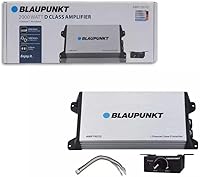
  • Accessories in the box are bare-bones — no wiring, RCA cables, or fuses included, adding to the true total cost.
  • Long-term reliability thins out noticeably among users who regularly push this mono amp close to its rated limits.
  • Alternator whine can surface in older vehicles with noisier electrical systems if grounding is not done carefully.
  • After-sales support and warranty resolution have drawn inconsistent feedback, with some buyers reporting slow response times.

Ratings

The Blaupunkt AMP1901D Class D Mono Car Amplifier has been scored by our AI system after parsing verified buyer reviews from multiple global markets, with spam, incentivized feedback, and bot activity actively filtered out before any scoring was applied. The results reflect a realistic picture — where this mono amp genuinely delivers and where it falls short — so you can make a confident buying decision without sifting through noise yourself.
Value for Money
83%
For buyers who understand that peak wattage figures are marketing shorthand, the actual RMS output at various ohm loads represents solid bang for the price tier. Most reviewers in the budget car audio space rate this Blaupunkt amp favorably against comparably priced competitors, citing meaningful real-world bass output without breaking the bank.
Buyers who take the 2000W max claim at face value often feel misled once they do deeper research into RMS numbers. A handful of reviewers noted that spending slightly more could land them a unit with a more transparent spec sheet and better long-term build confidence.
Power Output Accuracy
61%
39%
At 1 ohm and 2 ohm loads, experienced installers report that this Class D subwoofer amplifier moves enough air to satisfy casual to moderate bass listeners. The 1800W RMS at 1 ohm is plausible based on real-world listening tests described by knowledgeable reviewers.
The gap between the advertised 2000W peak and usable RMS power is a recurring frustration in user feedback. Buyers who expected concert-level output in a daily driver were consistently disappointed, and some questioned whether the amp even reaches its stated RMS figures under real-world conditions.
Thermal Management
58%
42%
Under normal daily listening volumes, most users report the unit running warm but not alarmingly hot. The Class D efficiency advantage does help keep temperatures lower than an equivalent Class AB design would in the same enclosure space.
Sustained high-volume sessions — weekend cruising with bass-heavy music for hours — triggered thermal shutoff complaints from a notable subset of owners. Installs in poorly ventilated trunk corners or under seats with limited airflow made the heat issue noticeably worse, pointing to a real limitation in the thermal design.
Ease of Installation
86%
Terminal labeling is clear and logically laid out, which first-time DIY installers specifically called out as a relief. The single-channel configuration keeps the wiring straightforward — no complex multi-channel routing to figure out, just power, ground, remote, and signal leads.
A small number of users noted the included documentation is minimal, leaving beginners to rely on online tutorials for gain setting and crossover adjustment. The gain range is wide enough that without a multimeter or bass knob, dialing it in precisely takes some trial and error.
Build Quality
67%
33%
The chassis feels solid enough for the price point, and the surface-mount design sits flush and secure once installed. At 2.9 pounds it feels substantial without being unnecessarily heavy, and the fit and finish is acceptable for a budget-tier unit.
Up close, the casing materials read as cost-optimized — some owners described the housing as feeling slightly hollow under pressure. A few long-term reviewers noted minor cosmetic wear on the finish after a year of use, though structural integrity generally held up.
Signal Clarity & Noise Floor
78%
22%
The 96dB signal-to-noise ratio pays off in practice — most users report a clean, quiet signal with no audible hiss at idle, even when paired with sensitive subwoofers. This is a meaningful spec for a unit at this price point and it largely delivers on paper and in real use.
A minority of reviewers encountered faint alternator whine, particularly in older vehicles with noisier electrical systems. Proper grounding resolved the issue in most documented cases, but it underscores that the amp is less forgiving of imperfect installs than premium alternatives.
Compatibility
89%
The variable gain range from 250mV to 6V covers factory head units and aftermarket decks without needing a separate line output converter in most cases. Users across a wide range of vehicle types — compact cars to full-size trucks — reported no compatibility headaches during setup.
Pairing this mono amp with a subwoofer rated below its minimum recommended impedance caused issues for a small group of reviewers who pushed the 1-ohm load hard. The amp is not rated for sub-1-ohm operation, and users who tried it reported rapid thermal shutoff.
Compact Footprint
91%
The 13×5×3-inch dimensions are genuinely useful for space-constrained builds. Reviewers in hatchbacks, compact SUVs, and vehicles with shallow trunks praised how easily this Class D subwoofer amplifier slotted into spots where larger amps simply would not fit.
While the footprint is compact, the mounting process in extremely tight under-seat locations can be awkward due to terminal placement. A couple of users wished the input and output terminals were on opposite ends rather than clustered together, which would have simplified cable routing.
Frequency Response Control
74%
26%
The 30Hz–250Hz response range keeps the amp locked onto subwoofer-appropriate frequencies, and most users found the crossover adjustment sufficient for blending with their mid-bass speakers. The high-frequency rolloff prevents any accidental full-range use that could damage a sub.
The onboard crossover controls are functional but lack the fine resolution that more experienced tuners want. Without a separate digital signal processor in the chain, some users found getting a perfectly smooth crossover blend with door speakers required more compromise than they expected.
Long-Term Reliability
63%
37%
Buyers who run the amp at moderate volumes — say, 60 to 70 percent of maximum gain — tend to report trouble-free operation well beyond the first year. Several reviewers mentioned using this Blaupunkt amp daily for over 18 months without any functional issues.
The subset of users who consistently push the unit hard tell a different story — a few reported failure between the 8- and 14-month mark, often related to heat stress. The warranty and after-sales support experience drew mixed comments, with some buyers finding the resolution process slower than expected.
Gain Adjustment Range
82%
18%
The 250mV to 6V input sensitivity range is genuinely practical, covering the overwhelming majority of source units on the market. Reviewers specifically appreciated not having to purchase additional interface hardware just to get a usable signal into the amp.
The gain pot itself feels a bit loose on some units, making repeatable fine adjustments tricky without external measurement tools. A few buyers noted the control had noticeable play, which made setting a precise gain level more difficult than it should be.
Packaging & Unboxing
71%
29%
The unit arrives well protected, and most buyers reported no shipping damage even across international routes. Accessories in the box — while minimal — were adequate for a basic install, and the amp itself was wrapped securely enough to survive standard courier handling.
The accessory kit is bare-bones: do not expect wiring, fuses, or RCA cables in the box. Reviewers new to car audio were occasionally caught off guard by how much additional hardware they needed to source separately before the install could even begin.
Brand Reputation & Trust
69%
31%
Blaupunkt carries genuine name recognition among car audio enthusiasts old enough to remember its stronger European market presence. That legacy gives some buyers a baseline level of confidence when choosing this mono amp over a completely unknown brand at the same price.
Younger buyers and those newer to the hobby are less swayed by the brand name, and some noted that Blaupunkt's current product line feels disconnected from its earlier reputation for quality. A few reviewers explicitly said they researched whether the brand had changed ownership before purchasing.

Suitable for:

The Blaupunkt AMP1901D Class D Mono Car Amplifier is a smart pick for budget-conscious car audio enthusiasts who want to add a single subwoofer to their setup without overcomplicating the install or overspending. It fits naturally into builds where the factory head unit is staying put — the wide gain range means no additional hardware is needed just to get a signal in. First-time DIYers will appreciate the single-channel simplicity: there are no crossover networks or multi-channel routing decisions to wrestle with, just a clean, focused wiring job. Drivers working with compact vehicles, hatchbacks, or trucks with shallow cargo areas will find the 13×5×3-inch footprint genuinely useful when larger amps simply won't fit. Anyone upgrading from the underpowered sub output on their receiver to a proper external amp will hear an immediate and meaningful difference running this mono amp at 2-ohm or 4-ohm loads.
Not suitable for:

Buyers chasing raw, competition-level bass output should look elsewhere — the Blaupunkt AMP1901D Class D Mono Car Amplifier is not built for sustained high-demand use, and thermal shutoff reports under prolonged heavy listening sessions are a real concern, not an edge case. Audiophiles who want fine-grained tuning control, a robust onboard crossover, or the kind of transparent spec sheet that holds up under scrutiny will find this Class D subwoofer amplifier underwhelming. If your plan involves pairing this amp with a high-impedance subwoofer in a large enclosure and expecting concert-hall output, the real-world RMS numbers will fall short of the advertised peak figure in ways that genuinely matter. Experienced installers who prioritize long-term reliability over upfront savings may find the cost-optimized build quality a dealbreaker, especially in a vehicle that runs bass-heavy music for several hours a day. Anyone without basic car audio knowledge who plans to skip gain-setting tools and documentation will likely struggle to get the best out of this Blaupunkt amp without some outside guidance.
Specifications

  • Amplifier Class: This unit uses Class D topology, which prioritizes switching efficiency to minimize heat output compared to linear amplifier designs.
  • Channels: Single-channel (mono) configuration, designed exclusively for driving one subwoofer or a pair of subwoofers wired to a single load.
  • Max Output Power: Rated at 2000W peak output, which represents a momentary maximum under ideal laboratory conditions rather than sustained listening power.
  • RMS Power (1 Ohm): Delivers 1800W RMS at a 1-ohm load, representing the continuous usable power output under that impedance condition.
  • RMS Power (2 Ohms): Rated at 1300W RMS when driving a 2-ohm load, a common impedance for dual voice coil subwoofers wired in parallel.
  • RMS Power (4 Ohms): Produces 600W RMS at a 4-ohm load, suitable for standard single voice coil subwoofers at their rated impedance.
  • Frequency Response: Operates across a 30Hz–250Hz range, keeping the amp focused on low-frequency reproduction appropriate for subwoofer-only duty.
  • Signal-to-Noise Ratio: Specified at 96dB or higher, indicating a clean output signal with minimal background noise relative to the audio level.
  • Gain Range: Input sensitivity adjusts from 250mV to 6V, covering both low-output factory head units and higher-voltage aftermarket source units.
  • Supply Voltage: Operates on 11–15V DC, making it fully compatible with standard 12V automotive electrical systems found in virtually all passenger vehicles.
  • Dimensions: The unit measures 13×5×3 inches (L×W×H), a compact footprint that suits shallow trunk installs and under-seat mounting locations.
  • Weight: Weighs 2.9 pounds, light enough for flexible mounting without requiring heavy-duty structural support in the vehicle.
  • Mounting Type: Designed for surface mounting, with a flat baseplate that allows direct attachment to trunk floors, amp racks, or enclosure boards.
  • Compliance: FCC certified for use in the United States, confirming the unit meets federal electromagnetic interference and radio frequency standards.
  • Brand & Model: Manufactured by Blaupunkt under model number AMP1901D, also referenced internally as AMP-1901DPRO on some documentation and packaging.
  • UPC: The product UPC is 815592026952, which can be used to verify authenticity and confirm correct listing when purchasing through third-party sellers.

Related Reviews
Stinger MT-1500.1 Monoblock Car Amplifier
74%
83%
Bass Output Performance
57%
Rated vs Real-World Power
74%
Build Quality
62%
Heat Management
88%
Ease of Installation
More
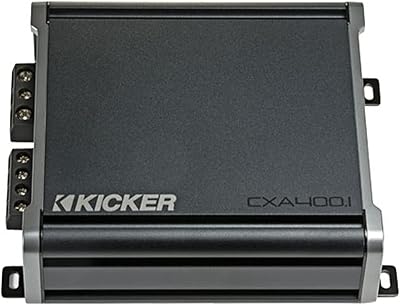
Kicker CXA400.1 Mono Car Amplifier

79%
86%
Sound Clarity
71%
Power Output Accuracy
91%
Installation Ease
67%
Build Quality
78%
Thermal Performance
More
Taramp's TL 500 2-Channel Car Amplifier
74%
88%
Value for Money
91%
Ease of Installation
74%
Sound Quality
62%
Power Output
67%
Build Quality
More
Audiobank P6001 6000W Class D Monoblock Car Amplifier
86%
90%
Audio Performance
87%
Ease of Installation
91%
Thermal Protection
85%
Build Quality
89%
Power Output
More
Pioneer GM-D8701 1600W Class D Mono Amplifier
83%
88%
Bass Performance
90%
Power Output
85%
Installation Process
89%
Compact Design
62%
Heat Management
More
MTX Thunder1000.1 Class D 1000W Mono Amplifier
87%
91%
Performance & Power Output
88%
Bass Enhancement
85%
Compact Design & Installation
89%
Heat Dissipation & Durability
87%
Bass Boost Functionality
More
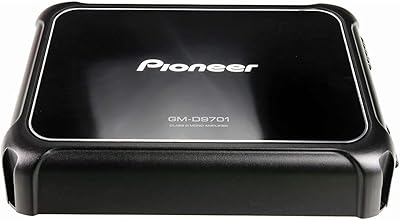
Pioneer GM-D9701 Mono Class D Car Amplifier
83%
93%
Bass Output Quality
88%
Power Delivery Consistency
84%
Installation Experience
91%
1-Ohm Stability
86%
Thermal Management
More
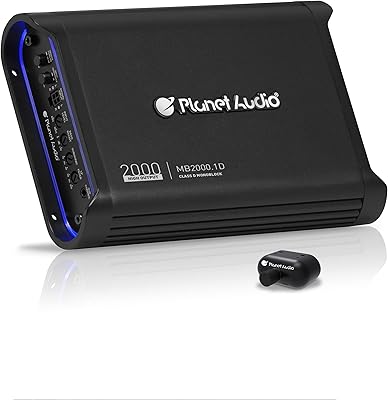
Planet Audio MB2000.1D Class D Car Amplifier
86%
94%
Power Output
88%
Sound Quality
85%
Build Quality
90%
Size and Portability
75%
Efficiency & Heat Management
More
Pyle INV1000DBA 2000W Class D Car Audio Amplifier
85%
88%
Sound Quality
92%
Power Output
85%
Build Quality
80%
Ease of Installation
89%
Protection Features
More
Soundstream RSM4.1200D 4-Channel Car Amplifier
71%
91%
Ease of Installation
83%
Value for Money
71%
Sound Quality
67%
Build Quality
58%
Thermal Management
More

FAQ

The 2000W figure is a peak or maximum rating — it reflects a brief momentary burst under perfect lab conditions, not what the amp sustains during real listening. The numbers that actually matter for your build are the RMS ratings: 1800W at 1 ohm, 1300W at 2 ohms, and 600W at 4 ohms. Always match your subwoofer to the RMS output at its rated impedance, not the peak figure.

You can use it with a factory head unit in most cases. The gain range starts at 250mV, which is low enough to work with the pre-amp output on many OEM radios. If your factory radio does not have RCA outputs, you will need a line output converter to tap the speaker wires — that is a simple and inexpensive add-on that most car audio shops carry.

The 13×5×3-inch dimensions make under-seat installation genuinely possible in many vehicles, particularly trucks and larger SUVs. The main thing to watch is airflow — Class D amps still generate heat under load, so you want at least a couple of inches of clearance around the unit. Avoid completely enclosed spaces with no ventilation, as that is the most common cause of thermal shutoff complaints.

Yes, it is rated for 1-ohm operation, which is useful if you are wiring a dual voice coil subwoofer in parallel or running two subwoofers off the same amp. That said, 1-ohm loads push the amp harder and generate more heat, so ventilation becomes more important at that impedance. Running at 2 ohms is a safer long-term choice if your sub wiring allows it.

It has an onboard low-pass crossover that rolls off the signal above the subwoofer frequency range — the amp is rated up to 250Hz. For most single-sub builds, the onboard crossover is sufficient. If you are building a more precise system with specific crossover points and slopes, a dedicated DSP or outboard crossover will give you more control than any amp at this price point.

For an amp in this power class, a 4-gauge power and ground wire is the standard recommendation, and many experienced installers prefer 0-gauge if running long cable runs from the battery to the trunk. The ground wire should be bolted directly to bare metal on the vehicle chassis as close to the amp as possible — a poor ground is the most common cause of noise issues and unexplained shutoffs.

Thermal protection is the most likely cause if the shutoff happens after the amp has been running for a while under heavy load. Check that the unit has adequate airflow around it, and verify that your gain is not set too high — overgaining causes distortion and pushes the amp harder than necessary. If it shuts off almost immediately, check your ground connection and confirm the impedance of your subwoofer matches what the amp is rated for.

Most users report a quiet, clean signal at idle thanks to the 96dB signal-to-noise ratio. The most common source of noise with this Class D subwoofer amplifier is alternator whine, which is a ground loop issue rather than a fault with the amp itself. A proper ground point and, if needed, an inline noise filter on the RCA inputs will resolve it in the vast majority of cases.

No — this is a mono amplifier with a single output channel, so bridging and stereo operation are not options. It is designed exclusively for subwoofer use and cannot power door speakers or tweeters. If you want to run full-range channels alongside a subwoofer, you would need a separate multi-channel amp for the speakers.

Match your subwoofer's RMS power handling to the amp's RMS output at the impedance you plan to run. If you are wiring at 2 ohms, look for a sub rated to handle around 1000–1300W RMS continuously. Running a sub that is significantly underpowered relative to the amp's output is a fast way to damage the driver, so err on the side of a subwoofer rated at or slightly above the amp's RMS output at your chosen load.

Where to Buy