Overview

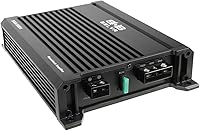
The Belva BXA15001 1500W Monoblock Car Amplifier enters a crowded budget segment with a clear pitch: meaningful bass output without a steep investment. Belva isn't a widely recognized name, and first-time buyers are right to pause on that — but over 300 ratings averaging 4.0 stars since its 2021 launch suggest it earns its keep for most use cases. The Class A/B design is a smart topology choice at this price point, blending efficiency with lower distortion than pure Class D alternatives. Tipping the scale at under five pounds, it's also compact enough to fit neatly into tight install spaces where bulkier amps simply won't go.
Features & Benefits

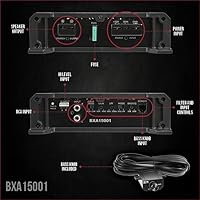
The headline 1500W figure is peak power, and that distinction matters — peak vs. RMS output are very different things, so match your subwoofer's RMS rating carefully rather than chasing the top-line number. The variable Bass EQ is a genuine differentiator here; instead of a simple on/off bass boost, you get fine-grained control over the low-end character of your system. The included remote bass knob ships in the box rather than being sold as an add-on, which is a practical win. MOSFET internals aid thermal stability, and the three-way protection circuit guards against overload, heat, and short-circuit events, which is reassuring for DIY installs.

Best For

This monoblock amp is a natural fit for first-time builders who want more bass without committing to a high-budget system. If your vehicle still runs a factory head unit with no RCA pre-amp outputs, high-level inputs remove a frustrating compatibility wall right away. Compact car owners will appreciate the slim footprint — just over 13 inches long, it tucks in cleanly behind most subwoofer boxes. DIY-friendly wiring and an intuitive control panel mean professional installation isn't a requirement. Those chasing competition-level power or audiophile precision should look at higher-tier options, but for everyday listeners who want more thump on a budget, it lands well.

User Feedback

Owners of the Belva BXA15001 most often lead with two positives: easy installation and a satisfying jump in bass output compared to running a subwoofer off a head unit alone. The remote knob gets consistent praise as a daily-driving convenience. Where reviews dip is around real-world power delivery — a fair number of buyers note the actual output feels more modest than the peak rating implies, which is an honest industry-wide pattern worth knowing upfront. A smaller subset mentions the unit running warm during sustained loud listening, though outright failures are rarely reported. Net result: this budget car amp over-delivers for casual listeners, less so for those with demanding performance expectations.

Pros

  • Dual input support — both RCA and high-level — means it works straight out of the box with factory head units.
  • Remote bass knob is included in the package, not sold separately as with many competing amps.
  • Class A/B topology delivers a cleaner, lower-distortion signal than typical budget Class D designs.
  • Compact footprint under 5 lbs makes it one of the easier amps to mount in tight spaces.
  • Three-way protection circuitry adds a meaningful safety net for DIY installs prone to wiring slip-ups.
  • Variable Bass EQ gives actual tuning control over low-end response, not just a blunt boost toggle.
  • MOSFET power supply contributes to stable efficiency under normal daily-driving conditions.
  • The Belva BXA15001 holds a 4.0 average across hundreds of real buyer reviews — solid standing for a newer brand.
  • Installation is consistently described as approachable even for first-time car audio builders.
  • At its price point, the overall feature set would cost noticeably more from a well-known brand name.

Cons

  • The 1500W headline figure is peak power — actual sustained RMS output is significantly lower and rarely clarified upfront.
  • Brand support and warranty service are inconsistent, with limited recourse if something goes wrong post-install.
  • Signal noise and background hiss become noticeable at higher gain settings, especially via high-level inputs.
  • The remote bass knob feels plasticky and imprecise compared to controls on better-built amplifiers.
  • Heat management under sustained high-volume use is a known weak point, particularly in enclosed installs.
  • Build tolerances and finishing quality carry clear signs of budget manufacturing that may not age gracefully.
  • The included documentation is minimal, leaving first-time installers to figure out gain and EQ settings on their own.
  • Protection circuit sensitivity can trigger nuisance shutdowns in some configurations unrelated to actual faults.
  • Long-term reliability data is limited given the brand's short track record in the market.
  • The bass EQ adjustment range is too narrow for users trying to compensate for subwoofer or box tuning issues.

Ratings

Our scores for the Belva BXA15001 1500W Monoblock Car Amplifier are generated by AI after analyzing verified buyer reviews from multiple global markets, with spam, bot-generated, and incentivized feedback actively filtered out. The result is an honest, data-driven picture of where this budget car amp genuinely impresses and where it falls short. Both the standout strengths and the recurring frustrations are reflected transparently in every category below.
Value for Money
86%
For buyers working within a tight car audio budget, this monoblock amp delivers a tangible bass upgrade at a price that doesn't require serious compromise elsewhere in the build. Most owners feel the feature set — including the remote knob — justifies the spend comfortably.
Buyers expecting competition-grade output at this price will feel shortchanged. The gap between the marketed peak wattage and the real-world sustained output leaves some feeling the value equation is slightly misleading if they didn't read the fine print.
Power Output
67%
33%
For casual daily listening — commuting, road trips, background music — the amp moves enough air to make a real difference over a factory head unit setup. Paired sensibly with a mid-range subwoofer, the low end is full and satisfying for most genres.
The 1500W figure is peak power, not RMS, and real-world performance reflects that gap clearly. Buyers who wired it to expect true 1500W of sustained output reported disappointment, and more demanding subwoofer builds quickly expose the amp's ceiling.
Ease of Installation
89%
This is one of the most consistently praised aspects across buyer reviews. The dual-input design — accepting both RCA and high-level speaker signals — removes the biggest wiring headache for users upgrading from a factory stereo with no preamp outputs.
The included documentation is basic, and a handful of first-time installers found the gain and bass EQ settings confusing without additional guidance. Those with no prior car audio experience may need to rely on online tutorials to get the tuning right.
Remote Bass Control
91%
The included remote subwoofer knob is one of the most practical day-to-day features this amp offers. Being able to dial the bass up for highway cruising and back down in a parking lot without reaching behind a seat is a genuine convenience that owners use constantly.
A small number of users reported the remote knob feeling slightly loose or imprecise after extended use, which can make fine adjustments fiddly. It functions reliably for most, but it doesn't feel as solid as the remote controls bundled with higher-end amplifiers.
Build Quality
71%
29%
The chassis feels reasonably solid for the price tier, and the surface-mount design sits flush and stable once installed. Most buyers report no physical issues after months of daily use, which speaks to adequate construction for light to moderate demands.
Up close, the finish and component tolerances carry clear hallmarks of budget manufacturing. The housing doesn't inspire the same confidence as established brands, and a few users noted minor cosmetic inconsistencies out of the box that didn't affect function but did raise eyebrows.
Thermal Management
68%
32%
Under normal listening conditions — moderate volume for daily commutes — the amp runs at an acceptable temperature and the built-in thermal protection keeps things safe. Most owners never encounter a heat-related shutdown during regular use.
Push the amp hard for extended periods, especially in a poorly ventilated enclosure, and heat becomes a noticeable issue. A subset of reviewers reported the amp getting uncomfortably warm during long highway drives at high volume, with occasional protection trips.
Bass EQ Flexibility
82%
18%
Unlike budget amps that offer only a fixed bass boost toggle, this unit provides a variable Bass EQ dial, giving users genuine control over low-end coloring. Owners transitioning from entry-level setups consistently noted the difference this made in dialing in a cleaner, more tailored sound.
The EQ range, while better than a fixed switch, is still limited compared to what you'd find on mid-tier amplifiers with parametric or multi-band controls. Audiophile-leaning buyers found the adjustment range too narrow to fully compensate for subwoofer or enclosure tuning.
Input Compatibility
88%
Supporting both high-level and low-level inputs in one unit is a practical advantage that broadens the amp's compatibility significantly. Users with factory head units — a common real-world scenario — can connect without buying an additional line output converter.
While the input flexibility is genuinely useful, the high-level input sensitivity isn't the most refined, and a few users noted slight signal noise when using speaker-level connections with certain factory head units. It's workable, but not noise-free in every setup.
Signal Clarity
63%
37%
At moderate listening volumes, the audio signal feeding the subwoofer is clean enough that most casual listeners won't notice any coloring or artifacts. For pop, hip-hop, and EDM where deep bass is the priority, the output is enjoyable and clear.
At higher gains, some owners detected a background hiss or slight muddiness, particularly when using the bass boost near its upper range. Listeners with more trained ears or cleaner source material will find the noise floor less forgiving than on better-built alternatives.
Size & Fitment
87%
At just over 13 inches long and under five pounds, this monoblock amp fits into install locations that larger competitors simply can't reach. Compact hatchbacks and sedans with limited trunk space benefit noticeably from the reduced footprint.
The compact frame, while convenient, does limit heat dissipation surface area compared to physically larger amps. In tight enclosed spaces with poor airflow, that tradeoff becomes relevant at sustained higher volumes.
Protection Circuitry
79%
21%
The three-way protection system covering thermal events, overload conditions, and speaker short circuits gives peace of mind for DIY installers who may not have perfectly optimized every component in their build. It has saved more than a few subwoofers from wiring mistakes during first installs.
The protection circuit can be overly sensitive in some configurations, with a handful of users reporting nuisance shutdowns that weren't tied to any real fault condition. Diagnosing whether it's a genuine protection event or a sensitivity issue takes some troubleshooting experience.
Brand Reliability
66%
34%
For a relatively new and lesser-known brand, Belva's track record from this product's reviews is encouraging. The majority of buyers report units still functioning normally well past the initial installation period, which builds cautious confidence.
Belva lacks the established reputation and support infrastructure of brands like Rockford Fosgate or Alpine. If something goes wrong, buyers have noted that warranty service and customer support responsiveness are inconsistent compared to more established car audio names.
Included Accessories
77%
23%
Beyond the remote bass knob — which genuinely stands out at this price — the packaging is practical and complete enough to get started without an immediate trip to the hardware store. It's a small touch, but it makes the unboxing experience feel more considered than competitors at the same tier.
The wiring hardware and documentation included are bare minimum. Serious installers will want to supplement with higher-gauge power wire and better connectors than what ships in the box, particularly if they are powering a more demanding subwoofer load.

Suitable for:

The Belva BXA15001 1500W Monoblock Car Amplifier is a strong fit for first-time car audio builders who want a meaningful bass upgrade without stretching their budget thin. If you're working with a factory head unit that has no RCA preamp outputs, the high-level input support removes a compatibility barrier that would otherwise require an extra line output converter. Owners of compact sedans, hatchbacks, or smaller SUVs will appreciate the slim, lightweight chassis that tucks in behind a subwoofer box without demanding creative trunk Tetris. DIY installers who want a relatively plug-and-play setup — without navigating complex crossover menus or advanced DSP configurations — will find the control layout approachable and the wiring logic straightforward. Casual listeners who want more thump on daily commutes or weekend road trips, rather than competition-level precision, will get genuine satisfaction out of this monoblock amp.
Not suitable for:

Buyers who need sustained, high-power output for demanding subwoofer builds should think carefully before committing, because the Belva BXA15001 1500W Monoblock Car Amplifier is rated at 1500W peak — not continuous RMS — and real-world output reflects that distinction in ways that can disappoint if expectations aren't calibrated accordingly. Audiophiles or enthusiasts who prioritize a low noise floor, clean signal reproduction at high gain, and tight bass articulation will likely find the amp's ceiling frustrating compared to mid-tier alternatives from more established brands. Anyone planning to run the amp hard for extended periods in a poorly ventilated enclosure should also reconsider, as thermal headroom under sustained high-volume use is limited. If brand support and reliable warranty service matter to your buying decision, the lack of an established after-sales infrastructure is a real concern. Power users building multi-subwoofer or high-SPL systems should step up to an amplifier with proven, independently verified RMS figures rather than relying on peak ratings at this price tier.
Specifications

  • Peak Power: This monoblock amplifier is rated at 1500W peak output, which represents the maximum instantaneous power draw rather than continuous sustained output.
  • RMS Power: Continuous RMS output is rated at 750W x 1 channel at 4 ohms and up to 1500W x 1 channel at 2 ohms under optimal conditions.
  • Amplifier Class: The unit uses a Class A/B topology, which balances the efficiency of Class B designs with the lower distortion characteristics associated with Class A operation.
  • Transistor Type: MOSFET transistors power the internal supply, contributing to more stable efficiency and better thermal regulation compared to standard bipolar transistor designs.
  • Channels: This is a single-channel monoblock configuration, purpose-built for driving one subwoofer load rather than full-range multi-channel applications.
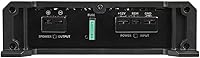
  • Input Types: Both low-level RCA inputs and high-level speaker-level inputs are supported, making the amp compatible with aftermarket head units and factory stereo systems alike.
  • Bass EQ: A variable Bass EQ control is included, allowing users to adjust low-frequency boost continuously rather than switching between fixed preset levels.
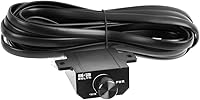
  • Remote Control: A remote subwoofer level control knob ships in the box, enabling volume adjustment of the bass output from the driver seat without reaching the amp directly.
  • Protection Circuitry: Three-way protection covers thermal overheating, electrical overload, and speaker short-circuit events, automatically safeguarding the amp and connected subwoofer from damage.
  • Supply Current: The amp draws up to 30 amps of supply current at full load, which should be factored into fuse and power wire sizing during installation planning.
  • Operating Voltage: Designed to operate at 16V DC, compatible with standard 12V automotive electrical systems which typically run between 13.8V and 14.4V when the engine is running.
  • Dimensions: The chassis measures 13.46 x 8.35 x 3.11 inches, making it compact enough for most under-seat or trunk subwoofer enclosure installations in smaller vehicles.
  • Weight: At 4.66 lbs, the amp is noticeably lighter than many competitors in its power class, simplifying mounting and reducing strain on install hardware.
  • Mounting Type: Surface mount installation is the intended method, with standard mounting points on the chassis base for securing to flat surfaces inside the vehicle.
  • Certifications: The unit carries FCC certification, confirming it meets U.S. federal standards for electromagnetic interference and radio frequency emissions.
  • Impedance Range: The amplifier is stable down to 2 ohms, giving users flexibility when selecting subwoofers and wiring configurations for their specific build.

Related Reviews
Belva BB200ABv2 500W Monoblock Car Amplifier
85%
88%
Bass Performance
91%
Installation Ease
85%
Sound Clarity
89%
2-Ohm Stability
82%
Build Quality
More
Blaupunkt AMP1500M Monoblock Car Amplifier
73%
81%
Value for Money
63%
Real-World Power Output
88%
Ease of Installation
77%
Audio Clarity
58%
Build Quality
More
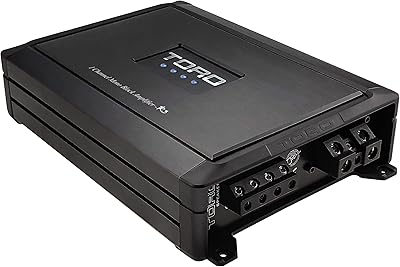
TORO TECH R3 Monoblock Car Amplifier
77%
88%
Power Accuracy
83%
Bass Output Quality
81%
Installation Ease
62%
Thermal Management
76%
Build Quality
More
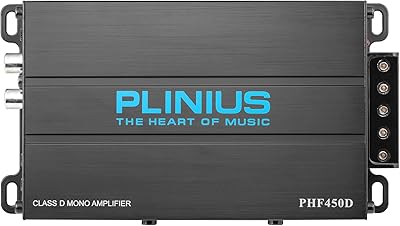
LKC PHF450D Car Audio Monoblock Amplifier
88%
91%
Power Output (2 Ohms)
87%
Power Output (4 Ohms)
93%
Heat Dissipation
88%
Build Quality
85%
Ease of Integration
More
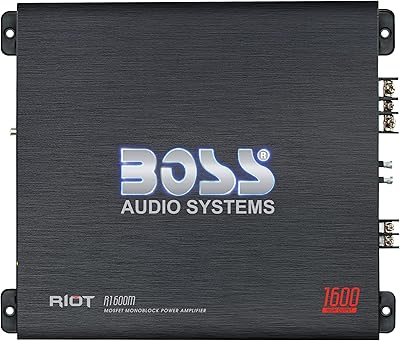
BOSS Audio R1600M Monoblock Car Amplifier
72%
83%
Value for Money
88%
Ease of Installation
79%
Bass Output
61%
Build Quality
86%
Signal Flexibility
More
Planet Audio TR1500.1M Monoblock Car Amplifier
70%
88%
Value for Money
79%
Bass Output & Performance
83%
Ease of Installation
63%
Build Quality
57%
Thermal Management
More
Planet Audio AC1500.1M Monoblock Car Amplifier
75%
91%
Value for Money
78%
Bass Output Quality
86%
Ease of Installation
61%
Thermal Management
67%
Build Quality
More
Planet Audio AC2500.1M Monoblock Car Amplifier
85%
92%
Performance
95%
Bass Output
85%
Ease of Installation
65%
Thermal Performance
88%
Build Quality
More
Blaupunkt AMP1404 4-Channel Car Amplifier
74%
83%
Value for Money
76%
Sound Quality
68%
Power Output
58%
Heat Management
88%
Ease of Installation
More
Rockville RXA-T1 1500W 2-Channel Car Amplifier
85%
88%
Audio Performance
92%
Bass Response
85%
Build Quality
89%
Compactness/Size
80%
Ease of Installation
More

FAQ

Yes, and that is actually one of the more practical things about this monoblock amp. The high-level inputs accept the signal directly from your existing speaker wires, so you can connect it to a factory stereo without buying a separate line output converter.

That figure is peak power, not continuous RMS output — and the difference matters. Peak wattage is the maximum the amp can handle in a brief burst under ideal conditions, while RMS is the power it delivers consistently. For real-world subwoofer matching, focus on the RMS ratings and pair accordingly rather than chasing the peak number.

It is genuinely useful for everyday driving. Being able to turn the bass down when you pull up somewhere quiet, then bring it back up on the highway, without touching the amp itself, is a convenience most people end up using regularly. Owners consistently highlight it as one of the more practical inclusions at this price point.

Under normal listening conditions at moderate volume, heat is not usually a problem. If you run it hard for extended periods in an enclosed, poorly ventilated space, some heat buildup is possible and a handful of users have noted this. Giving the amp adequate airflow during installation goes a long way toward avoiding any thermal issues.

With a 30-amp supply current draw, a 40-amp inline fuse close to the battery is a reasonable starting point, and 4-gauge power wire is commonly recommended for this power class. Always verify against the specific wire run length in your vehicle, since longer runs benefit from heavier gauge wire.

You can wire dual voice coil subwoofers or two separate subs in parallel down to 2 ohms, which is the minimum stable impedance this amp supports. Just make sure your total combined impedance does not drop below 2 ohms, or you risk overloading the amp and triggering the protection circuit.

Most first-timers report a manageable experience, especially if they watch a couple of installation walkthrough videos beforehand. The input and gain controls are labeled clearly, and the dual-input design removes a lot of the compatibility guesswork. The included documentation is minimal, so relying on outside resources for the gain-setting process is a good idea.

A single 10-inch or 12-inch subwoofer in the 300W to 500W RMS range is a sensible pairing given the amp's real-world continuous output. Matching a sub's RMS rating to the amp's actual RMS delivery — rather than the peak figures — will give you cleaner, safer performance over the long term.

For casual setups, the variable bass control is enough to tune the low-end response to your taste without additional equipment. If you are trying to precisely compensate for room acoustics, enclosure resonance, or subwoofer roll-off characteristics, a dedicated equalizer or DSP processor will give you finer control than the onboard EQ alone.

This is an area where Belva's newer-brand status is a genuine limitation. Warranty support exists but is not on par with established names in car audio, and some owners report slower or inconsistent response times when issues arise. If post-purchase support reliability is important to you, that is worth factoring into your decision before buying.

Where to Buy