

Overview

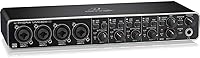
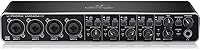
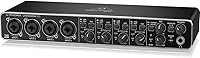
The Behringer U-PHORIA UMC404HD is a surprisingly capable hub for home studios that have outgrown basic two-input setups. Right out of the box, the first thing you notice is the weight. It features a sturdy all-metal chassis that feels far more substantial and professional than the plastic-heavy gear often found at this price point. Setting up this 4-channel interface is straightforward thanks to its plug-and-play USB 2.0 design, making it a reliable centerpiece for modern digital recording. While it offers four distinct inputs, it maintains a compact desktop footprint, ensuring it won't take over your entire workspace. It is a no-nonsense tool that prioritizes utility and physical durability for musicians who need more connectivity without the high cost of rack gear.

Features & Benefits

Internally, the UMC404HD handles audio with a level of clarity that punches above its weight class. The four Midas-designed preamps offer enough clean gain to handle various microphones without adding unwanted noise to your tracks. You can record at high-resolution 24-bit/192 kHz settings, ensuring your captures meet professional standards. Beyond just standard inputs, this USB recording box includes dedicated MIDI I/O for your hardware synths and analog inserts on every channel. Those inserts are a standout addition, allowing you to patch in external compressors or EQs before the signal hits your computer. You also get a mix knob for zero-latency direct monitoring, which is essential for performers who need to hear their input signal without any distracting digital delay during a take.

Best For

This 4-channel interface is a practical solution for several types of creators. It is particularly ideal for podcasters who need to record four people simultaneously but are working on a strict budget. Bands will also find it useful for capturing clean multitrack demos during rehearsals or basic studio sessions. If you are an electronic musician, the combination of multiple inputs and built-in MIDI makes it easy to integrate various hardware synthesizers and controllers into one workflow. It also serves as a great entry point for ambitious beginners who want to skip the typical two-channel starter kits. By providing more room to grow without a massive financial investment, the UMC404HD offers a clear path toward more complex recording projects while remaining simple enough for daily use.

User Feedback

Feedback from long-term users usually centers on the incredible value-to-performance ratio this USB recording box provides. Many owners are vocal about how the heavy-duty construction has survived years of travel and desktop use. While the preamp clarity earns consistent praise, some Windows users have noted that the driver installation process requires a bit of patience to get right the first time. It is not always a simple plug-and-play experience on PC compared to Mac, but once the software is configured, the stability is generally solid. Despite that minor initial hurdle, the consensus is that the clean audio quality and physical reliability make it a top choice for anyone looking for a budget multitrack recording interface that does not feel like a toy.

Pros

  • Four Midas-designed preamps provide clean, transparent gain for a variety of microphone types.
  • The heavy-duty metal chassis is exceptionally durable and stays planted on your desk during use.
  • Dedicated analog inserts on every channel allow for easy integration of external hardware processors.
  • Built-in MIDI I/O saves space and eliminates the need for an additional external interface.
  • Zero-latency direct monitoring lets performers hear themselves in real-time without any distracting digital delay.
  • Supports high-resolution 24-bit/192 kHz recording for professional-grade audio fidelity and detailed mixing.
  • The Behringer U-PHORIA UMC404HD offers an unmatched price-to-performance ratio for multitrack recording setups.
  • Separate XLR and TRS main outputs provide flexible connection options for different studio monitors.

Cons

  • Windows users often report a frustrating initial driver setup process that isn't always intuitive.
  • The global phantom power switch applies +48V to all four inputs simultaneously, which can be risky for certain microphones.
  • The headphone output lacks sufficient power to comfortably drive high-impedance studio headphones at high volumes.
  • Protruding plastic knobs feel slightly less premium and more vulnerable than the rugged metal housing.
  • The unit's significant depth requires extra clearance behind it to accommodate connected cables and connectors.
  • The UMC404HD lacks a modern USB-C connection, requiring adapters for many newer laptop models.
  • Finding and downloading the correct legacy drivers from the manufacturer's website can be an annoying chore.
  • There is no dedicated software mixer for complex internal routing, which some competitors offer at this level.

Ratings

Our experts analyzed thousands of global user reviews for the Behringer U-PHORIA UMC404HD, stripping away biased or incentivized feedback to provide an authentic look at its performance. These AI-generated scores reflect a balanced view of real-world home studio use, highlighting where this recording box shines and where it occasionally falters for modern creators.

Build Quality
93%
Users are consistently impressed by the heavy, impact-resistant metal chassis that feels like it belongs in a much higher price bracket. It stays firmly planted on your desk even when several heavy XLR cables are plugged in, resisting the sliding common with lighter plastic units.
The plastic knobs on the front panel, while functional and smooth, do not quite match the indestructible feel of the surrounding metal housing. Some owners worry about long-term durability if these protruding controls catch on something during transport in a backpack.
Value for Money
96%
This 4-channel interface is widely considered one of the best bargains in the audio world, offering four discrete inputs for the price of most competitors' two. It provides a professional feature set, including MIDI and inserts, that usually requires a much larger financial investment.
While the upfront cost is exceptionally low, users note that the lack of included high-end software bundles means you might spend more later. If you are starting from scratch, you will need to find your own DAW and plugins to fully utilize the hardware.
Preamp Clarity
88%
The Midas-designed preamps earn high marks for their low noise floor and transparent gain, especially when recording acoustic instruments or vocals. They provide a clean canvas that captures the natural character of your microphones without adding the brittle high-end harshness often found in budget gear.
While clean, these preamps do not offer a lot of 'flavor' or character for those seeking a vintage analog warmth. Additionally, they may struggle to provide enough clean gain for notoriously power-hungry dynamic microphones like the Shure SM7B without an external booster.
Windows Driver Stability
67%
33%
Once the correct drivers are successfully installed and configured within your DAW, the unit generally offers stable performance with manageable latency. Users who follow the specific setup instructions for their version of Windows find it works reliably for long recording sessions without crashing.
The initial setup can be a major headache, as the driver installation is not always intuitive and occasionally requires manual troubleshooting in the device manager. Finding the specific legacy drivers on the manufacturer website is sometimes necessary to resolve audio dropouts or recognition issues.
Input Versatility
91%
Having four combo XLR/TRS inputs allows for much more creative flexibility, such as miking a drum kit with four mics or recording a small podcast panel. The inclusion of analog inserts is a rare and highly praised feature that lets you use outboard compressors during tracking.
Because the phantom power is controlled by a single global switch, you cannot turn it on for one microphone while leaving it off for another. This requires caution when mixing sensitive ribbon mics with modern condensers that require the +48V power.
Monitoring Control
84%
The dedicated mix knob for zero-latency monitoring is a lifesaver for vocalists who need to hear themselves clearly without any digital delay. The ability to toggle between mono and stereo monitoring also helps in checking phase or simply centering a single input in your headphones.
The headphone output volume is somewhat modest, which might be an issue if you are using high-impedance studio headphones like the 250-ohm Beyer models. In a loud tracking environment, some users find they have to max out the volume knob to hear clearly.
MIDI Connectivity
89%
The built-in MIDI Input and Output ports are a fantastic inclusion for electronic musicians who still use legacy hardware synths or drum machines. It effectively eliminates the need for a separate MIDI interface, keeping your desktop clutter-free and saving a precious USB port on your computer.
A few users have reported minor timing inconsistencies when running very dense MIDI data streams alongside high-resolution audio. For 99% of home studio tasks it works perfectly, but extreme power users might find it slightly less robust than a dedicated MIDI hub.
Desktop Footprint
82%
18%
The slim, elongated design allows it to sit comfortably under a monitor stand or at the edge of a keyboard tray. It packs a significant amount of I/O into a relatively small space, making it a great choice for mobile rigs or cramped bedroom studios.
Because the unit is quite deep, you need to account for the extra space required for cables sticking out of the back. If your desk is pushed right against a wall, those XLR and TRS connectors can make the setup feel much bulkier than the chassis suggests.
Mac Compatibility
94%
Apple users enjoy a seamless 'Core Audio' experience, as the device is truly plug-and-play without the need for any proprietary drivers. It is instantly recognized by Logic, GarageBand, and Ableton, providing a very low-friction entry into multitrack recording for macOS enthusiasts.
Because it relies on standard USB 2.0, users with newer MacBooks will need a reliable USB-C adapter or hub to connect. While it works well, some users wish there was a more modern USB-C native version to avoid the 'dongle life' entirely.
Recording Resolution
92%
Support for up to 192 kHz sample rates ensures that your recordings are future-proofed and maintain a high level of detail for professional mixing. This resolution allows for high-quality time-stretching and processing that wouldn't be possible with standard 44.1 kHz or 48 kHz budget interfaces.
Most home users will rarely actually need 192 kHz, and recording at these high rates can quickly eat up hard drive space and put a strain on older CPUs. It is a great feature to have, but it can be overkill for simple podcasting or demo work.

Suitable for:

The Behringer U-PHORIA UMC404HD is a standout choice for budget-conscious creators who have outgrown basic two-channel setups. It is particularly well-suited for podcasters who need to capture up to four individual voices simultaneously without spending a fortune on high-end rack gear. Small bands will also find it invaluable for recording multitrack rehearsals or demos where separate inputs for vocals, guitars, and drums are required. Home producers who use outboard compressors or EQs will appreciate the rare inclusion of analog inserts, while electronic musicians can take advantage of the built-in MIDI ports to sync their hardware synthesizers. If you are a beginner looking for a professional-feeling hub that offers room to grow, this interface provides the necessary I/O at an entry-level price.

Not suitable for:

Despite its versatility, the Behringer U-PHORIA UMC404HD might not be the right fit for users who prioritize a seamless, purely plug-and-play experience on Windows. The driver installation can be finicky and often requires manual troubleshooting, which might frustrate those who aren't tech-savvy. High-end studio professionals or audiophiles seeking a specific 'analog warmth' or character from their preamps might find the Midas-designed inputs a bit too clinical or sterile for their tastes. It is also not the best choice for users with high-impedance headphones, as the built-in headphone amp can struggle to provide enough volume in loud environments. Finally, if your workspace is extremely shallow, the unit's depth combined with rear-protruding cables may make it difficult to fit on your desk.

Specifications

  • Audio Interface: The unit functions as a 4x4 USB 2.0 audio and MIDI recording interface.
  • Resolution: It supports high-definition 24-bit/192 kHz resolution for professional audio quality.
  • Microphone Preamps: The device features four Midas-designed mic preamplifiers with clean gain stages.
  • Phantom Power: A global +48V switch provides power for all condenser microphones simultaneously.
  • Physical Chassis: The impact-resistant metal housing is designed for desktop durability and heavy use.
  • Input Connections: There are four XLR/TRS combo inputs that accept both microphone and instrument signals.
  • Analog Inserts: Four 1/4″ TRS insert points allow for the integration of external signal processors.
  • MIDI I/O: Dedicated 5-pin DIN MIDI Input and Output ports are located on the rear panel.
  • Main Outputs: Primary monitoring outputs are available on both XLR and 1/4″ TRS balanced connectors.
  • Dimensions: The external measurements are approximately 11.5 x 5.12 x 1.81 inches.
  • Weight: The total weight of the metal unit is 2.65 pounds.
  • Monitoring: A dedicated mix knob provides zero-latency direct monitoring of input signals.
  • Power Source: The unit is powered via the included DC power supply or USB bus power.
  • Headphone Jack: A front-mounted 1/4″ TRS headphone output includes its own independent level control.

Related Reviews
Behringer U-PHORIA STUDIO PRO
87%
92%
Audio Interface Build Quality
88%
Mic Preamplifier Clarity
83%
Microphone Sensitivity
67%
Headphone Comfort & Build
94%
Ease of Setup
More
Behringer U-Phoria UMC204HD
85%
86%
Audio Preamplifier Quality
92%
Build & Chassis Durability
96%
Value for Money
88%
Connectivity & Routing
67%
Windows Driver Stability
More
Behringer U-PHORIA UM2 USB Audio Interface
86%
87%
Sound Quality
92%
Ease of Setup
90%
Portability
85%
Latency
80%
Build Quality
More
DigitalPersona U.are.U 4500HD Fingerprint Reader
86%
91%
Fingerprint Accuracy
88%
Ease of Use
87%
Durability and Build Quality
75%
Software Compatibility
90%
Fingerprint Recognition Speed
More
U Beauty The U Beauty Duo - Resurfacing Compound & SUPER Hydrator Set
85%
93%
Hydration Effectiveness
87%
Anti-Aging Results
89%
Texture Improvement
82%
Skin Sensitivity Compatibility
90%
Ingredient Quality
More
Behringer Podcastudio USB
86%
91%
Value for Money
94%
Ease of Use
88%
Sound Quality
82%
Build Quality
80%
Software Experience
More
Behringer XENYX X2442USB
80%
91%
Value & Channel Density
84%
Mic Preamps & Headroom
68%
USB Recording Functionality
76%
Routing & Sub-group Matrix
82%
Build Quality & Durability
More
Behringer XENYX X1222USB
78%
93%
Value for Money
88%
Ease of Setup
74%
Preamp Performance
82%
Onboard Compression
68%
Build Quality
More
Behringer XM8500 Wired Microphone
83%
88%
Sound Quality
92%
Value for Money
84%
Build Quality
86%
Ease of Use
85%
Noise Isolation
More
Behringer Xenyx X2222USB
83%
87%
Mic Preamp Performance
91%
One-Knob Compression
93%
Input Flexibility
84%
EQ Musicality
79%
FX Processor Utility
More

FAQ

Yes, this 4-channel interface sends four discrete signals to your recording software, making it perfect for multitrack podcasting or recording a small band.

It works with Windows 11, though you will need to download the latest UMC drivers from the official website rather than relying on generic plug-and-play drivers for the best stability.

The UMC404HD can run on USB bus power alone for simple tasks, but using the included power adapter is highly recommended when using all four preamps with phantom power to ensure signal stability.

Absolutely. One of the best features of this USB recording box is the set of four analog inserts on the back, which let you patch in outboard hardware before the signal is digitized.

Yes, it is class-compliant on macOS, meaning it is instantly recognized by your system without needing to hunt down any specific drivers.

It handles standard consumer and professional headphones well, but if you use high-impedance models like 250-ohm versions, you might find the volume is a bit lower than expected in loud environments.

You sure can. The combo jacks on the front of the Behringer U-PHORIA UMC404HD feature line/instrument switches so you can plug your guitar or bass straight in without needing a DI box.

The phantom power switch is global, so it turns on +48V for all four inputs at once. Just be careful not to use it with vintage ribbon mics that could be damaged by the voltage.

It is definitely built to last. The chassis is quite heavy and rugged, meaning it won't slide around your desk and can easily survive being tossed into a gig bag for mobile recording.

While it is compatible with almost every major DAW like Ableton or Pro Tools, it doesn't typically come with a high-end software bundle, so you'll want to have your preferred software ready to go.