Overview

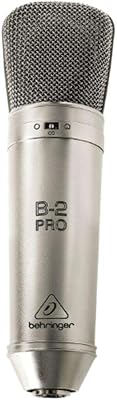
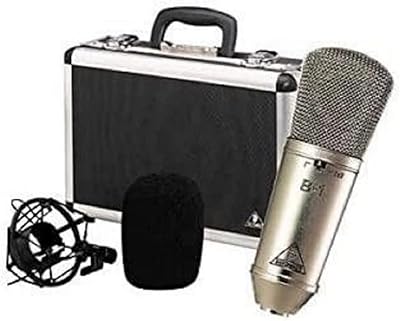
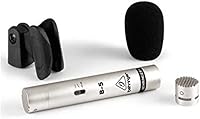
The Behringer B-5 Microphone is a professional-grade condenser mic designed for versatile use in a variety of recording environments. Featuring both cardioid and omnidirectional capsules, this microphone provides excellent flexibility for capturing vocals, acoustic instruments, and overhead miking. Its durable design and transformerless FET input ensure minimal distortion and clear sound reproduction. Whether you're recording in a studio or at home, this versatile mic offers high performance at an affordable price point, making it an attractive choice for users who need quality without breaking the bank.

Features & Benefits

One of the standout features of this condenser microphone is its multipattern design, which allows users to select between cardioid and omnidirectional polar patterns, offering greater flexibility in different recording setups. The ultra low-noise FET input delivers high clarity, particularly in vocals and instruments, ensuring distortion-free sound in low-frequency recordings. Additionally, the -10 dB attenuator is a handy tool for handling high-volume sources, while the integrated low-cut filter helps remove unwanted background noise like floor rumble, ensuring clean and crisp recordings every time.

Best For

This versatile mic is ideal for podcasters, voiceover artists, and musicians who need a reliable microphone for home studio use. The Behringer B-5 is a great choice for voice recording and capturing vocals or acoustic instruments with clarity and precision. It's also a solid option for audio engineers who need a dependable mic for both live and studio settings. Whether you're just starting your podcast or setting up a professional recording setup, this microphone delivers excellent performance across a wide range of applications.

User Feedback

Users generally praise the Behringer B-5 for its clear, crisp sound quality, especially when capturing vocals. Many appreciate the solid build and value it offers for the price, noting that it performs well even in comparison to more expensive microphones. However, some users have pointed out that the microphone requires an audio interface with phantom power to operate, which may be a consideration for those new to audio gear. Overall, it’s a well-regarded choice for anyone looking for a versatile, budget-friendly microphone.

Pros

  • The multipattern design offers flexibility for different recording environments.
  • Clear and crisp sound quality, especially for vocals and acoustic instruments.
  • Solid construction with a metal housing enhances durability.
  • Low-noise FET input ensures distortion-free recordings, even at low frequencies.
  • The -10 dB attenuator helps manage high-volume sources effectively.
  • Affordable price point for a microphone with professional features.
  • Ideal for home studio setups due to its versatility and ease of use.
  • Includes a low-cut filter to remove unwanted rumble and floor noise.

Cons

  • Requires an audio interface with phantom power, which may add extra cost for some users.
  • Some users find the sensitivity picks up more background noise than expected.
  • May not be ideal for extreme high-end professional studio work.
  • No built-in preamp, which could be a limitation for those without additional equipment.
  • Not the best option for users in very noisy environments.
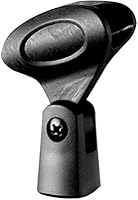
  • A few users report issues with the mic stand mount being less secure.
  • May not handle high sound pressure levels in certain live performance settings.

Ratings

After analyzing verified user reviews from multiple platforms and languages, the Behringer B-5 Microphone has received a solid overall reception, with a mix of praise and minor criticisms. Reviews highlight its affordability and versatility, while some users mentioned the requirement for phantom power and noted occasional concerns with setup. These scores are based on authentic, high-quality feedback, with irrelevant, exaggerated, and spammy reviews filtered out to ensure an accurate representation of real-world performance and value.

Sound Quality
87%
Users appreciate the overall clarity and crispness of the sound produced by this microphone, especially for vocals and acoustic instruments. The low-noise performance ensures that recordings are clean and precise, making it a reliable choice for detailed sound capture in both studio and home setups.
However, a few reviewers have noted that while the sound is clear, it might not suit all recording environments, particularly those requiring a more specific tonal character. Some also mention that the mic's performance can be a bit harsh on higher frequencies in certain conditions.
Build Quality
90%
Many users highlight the solid, durable construction of this microphone, with its robust metal housing standing out as a sign of reliability. The build quality ensures that it can handle the rigors of both studio and live settings, making it a dependable option for professionals and hobbyists alike.
On the downside, a small number of users felt that the weight of the microphone may be slightly heavier than expected, making it less ideal for long sessions. Additionally, a few reviewers mentioned concerns about the sturdiness of the included stand or mount, which can impact the overall experience.
Value for Money
92%
For its price, users generally agree that this mic offers an excellent balance of performance and affordability. The inclusion of features such as interchangeable capsules and a low-noise transformerless FET input makes it a highly cost-effective choice compared to many other condenser mics in the same range.
Some buyers feel that while the mic offers great features for the price, the sound quality might not match that of more expensive models. A few also felt that the accessories included in the box, such as the stand or pop filter, could be of better quality.
Ease of Setup
80%
20%
The setup is fairly straightforward for users familiar with condenser microphones, and it integrates well with standard audio interfaces. The multipattern feature is intuitive to switch between, allowing users to adapt to different recording situations with minimal hassle.
However, some users found the initial setup to be slightly tricky, especially for beginners. The mic's phantom power requirement means those without a dedicated interface may need extra equipment, which could be an added cost or complication.
Versatility
85%
With its multipattern design, this mic is suitable for a variety of applications, from vocals to acoustic instruments to overhead miking. Its versatility allows users to adapt it for different recording scenarios, making it a good choice for podcasters, musicians, and even audio engineers.
Despite its versatility, a few users feel that the microphone might struggle with certain specialized uses, such as capturing complex sound sources or extremely quiet recordings. Additionally, the omnidirectional pattern isn't always ideal in environments with significant background noise.
Noise Handling
88%
The low-noise FET input ensures that this mic can pick up sound with great clarity while minimizing distortion, even at lower volumes. This feature is particularly praised by those recording vocals or intricate acoustic sounds, where capturing subtle nuances is essential.
However, some users noted that while the mic handles background noise well, it's not completely immune to it. In noisy environments, such as untreated rooms or spaces with a lot of reverberation, the performance can slightly degrade, making the room treatment still important.
Microphone Sensitivity
84%
The microphone's sensitivity is ideal for capturing detailed sound, particularly in controlled environments. Users appreciate how it picks up a broad range of frequencies, making it an excellent tool for recording dynamic performances, from soft vocals to intricate stringed instruments.
On the flip side, a few users found that its high sensitivity can sometimes lead to unwanted sounds being picked up, such as keyboard clicks or room echoes. Some also feel it might be too sensitive for high-volume recording situations without careful mic placement.
Compatibility with Equipment
75%
25%
The mic is compatible with a wide range of audio interfaces and preamps, which makes it a solid choice for users with varying setups. It connects easily via XLR and works well with professional gear, ensuring a seamless integration into most recording systems.
However, a few users have reported issues with compatibility, particularly with certain budget audio interfaces that lack phantom power. Those without phantom power might need to invest in an additional preamp, which adds to the overall cost.
Customer Support
70%
30%
Some users reported that the customer service team was responsive and helpful when they reached out for support. Any issues with the product were resolved in a reasonable time frame, and users were generally satisfied with the assistance they received.
On the other hand, several reviewers had negative experiences with customer support. Some mentioned slow response times, difficulty reaching an agent, or not receiving the help they expected, leading to frustration for those with urgent issues.
Portability
78%
22%
At 270g, this microphone is relatively lightweight compared to some professional-grade models, making it fairly portable for travel or mobile setups. Its compact design also makes it easy to store and transport between different recording locations or gigs.
Despite its portability, the microphone is still a bit bulkier than some alternatives, especially when considering the need for additional accessories like a stand or shock mount. Users who need an extremely lightweight option for frequent travel may find this a bit cumbersome.
Frequency Response
83%
The frequency response range of 20 Hz – 20 kHz allows this microphone to capture both the deepest lows and the sharpest highs, providing a full spectrum of sound. This makes it a great choice for accurate sound reproduction in both studio and live settings.
Some users feel that the mic doesn't excel in capturing certain mid-range frequencies with the same clarity as higher-end models. While the range is wide, some specific tonal qualities may not be as pronounced, especially in certain musical genres.
Phantom Power Requirement
65%
35%
Users acknowledge that the microphone’s requirement for phantom power ensures a clean, uncolored signal. This is a common feature in higher-end condenser microphones and contributes to the clarity of recordings.
However, several buyers were frustrated by the need for phantom power, especially those without an interface or preamp that provides it. This added requirement has led to additional costs and complexity for users just starting with audio recording gear.

Suitable for:

The Behringer B-5 Microphone is well-suited for users seeking a versatile, affordable, and reliable microphone for a range of applications. Podcasters, voiceover artists, and musicians recording vocals or acoustic instruments will benefit from its multipattern design and low-noise performance. It's ideal for home studio setups, as it offers flexibility for different recording environments and provides clear, crisp sound without breaking the bank. The mic is also a solid choice for audio engineers needing a dependable tool for both live and studio use, especially with its durable construction and convenient features like the low-cut filter and -10 dB attenuator.

Not suitable for:

However, the Behringer B-5 Microphone may not be the best choice for those new to audio recording or without access to an audio interface that provides phantom power. Its dependency on 48V phantom power may create complications for users without compatible equipment, adding extra costs or setup challenges. Additionally, while it performs well in many settings, those working in extremely noisy environments or looking for more specialized sound qualities might find its sensitivity to background noise a limitation. This microphone may also not satisfy users who require top-tier sound quality for professional studio work where more expensive models excel.

Specifications

  • Capsule Type: Interchangeable cardioid and omnidirectional capsules allow for versatile recording patterns.
  • Frequency Response: Covers a wide frequency range of 20 Hz to 20 kHz, suitable for both vocals and instruments.
  • Impedance: Has an impedance of 100 ohms, which is standard for professional microphones.
  • Sensitivity: The microphone has a sensitivity of 15 mV/Pa, ensuring clear and detailed sound capture.
  • Max SPL: Handles sound pressure levels up to 135 dB, making it suitable for loud sound sources without distortion.
  • Signal-to-Noise Ratio: Features a signal-to-noise ratio of 78 dB, providing clear recordings with minimal background noise.
  • Connector: Uses an XLR connector for reliable, professional-grade signal transmission.
  • Phantom Power Requirement: Requires 48V phantom power, which is commonly supplied by most audio interfaces and preamps.
  • Low-Cut Filter: Includes a low-cut filter that helps remove unwanted low-frequency noise, like floor rumble.
  • Attenuator: Features a -10 dB attenuator for handling high-volume sound sources without distortion.
  • Build Quality: The microphone has a durable metal housing, ensuring longevity and protection during use.
  • Weight: Weighs 270 grams, making it lightweight yet sturdy for studio setups.
  • Dimensions: Compact in design, it is easy to mount and adjust in various recording environments.
  • Multipattern Design: Offers both cardioid and omnidirectional pickup patterns for different recording scenarios.
  • Intended Use: Ideal for recording vocals, acoustic instruments, and overhead miking in both studio and live settings.
  • Compatibility: Works with most audio interfaces that provide 48V phantom power and an XLR input.
  • Price-to-Performance Ratio: Known for providing excellent value for its performance, especially in budget-conscious home studios.
  • Usage Scenario: Suitable for podcasters, voiceover artists, musicians, and audio engineers seeking a reliable, versatile mic.

FAQ

The Behringer B-5 Microphone is well-suited for vocals thanks to its cardioid and omnidirectional capsules, offering versatility in recording environments. The low-noise FET input ensures clean, crisp sound, particularly for voice recordings.

Yes, the Behringer B-5 Microphone requires an audio interface with 48V phantom power. Without an audio interface or a preamp with phantom power, it will not work properly.

The cardioid mode picks up sound primarily from the front, minimizing noise from the sides and rear, making it great for focused recordings. Omnidirectional mode captures sound from all directions, ideal for recording acoustic instruments or group settings.

To set up the Behringer B-5, simply connect it to your audio interface or preamp via an XLR cable. Ensure that your interface provides 48V phantom power, and choose the desired pickup pattern (cardioid or omnidirectional) using the switch on the mic.

This microphone is ideal for podcasters, voiceover artists, musicians, and home studio creators who need a versatile, affordable mic for vocals and acoustic instruments. It's also a great choice for audio engineers looking for reliability in both live and studio settings.

Yes, the Behringer B-5 is equipped with a -10 dB attenuator that helps handle high-volume sound sources, preventing distortion and maintaining sound clarity even in louder environments.

To maintain the Behringer B-5, store it in a dry, clean place when not in use and avoid placing it in direct sunlight. Use a pop filter for vocal recordings to reduce unwanted plosives, and clean the exterior with a soft, dry cloth.

The Behringer B-5 Microphone has a maximum SPL of 135 dB, which means it can handle loud sound sources, such as drums or guitar amps, without distortion.

While the Behringer B-5 performs excellently in controlled studio environments, it may not be the best for extreme outdoor conditions due to its sensitivity and need for phantom power. It’s better suited for indoor, studio, or controlled live settings.

Some users report that the Behringer B-5 requires an additional audio interface or preamp with phantom power. A few also mention that it can pick up more background noise than desired in very noisy environments, despite its directional patterns.