Behringer ULM302MIC Dual-Channel Wireless Microphone System
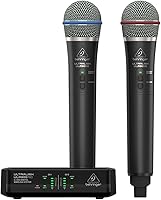
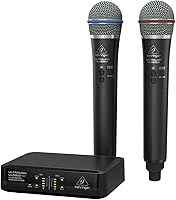
Behringer ULM302MIC Dual-Channel Wireless Microphone System — image 1
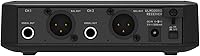
Behringer ULM302MIC Dual-Channel Wireless Microphone System — image 2
Behringer ULM302MIC Dual-Channel Wireless Microphone System — image 3
72%
28%

Overview

The Behringer ULM302MIC Dual-Channel Wireless Microphone System is one of the more practical options you'll find if you need two wireless mics without spending a fortune. Behringer has long been the go-to brand for buyers who want functional audio gear at accessible prices, and this dual-channel wireless mic kit fits that mold well. The package includes two handheld transmitters and a single receiver unit — everything you need to get started. The receiver outputs via XLR connection, so plugging into a mixer or PA system is straightforward. Operating on the 2.4 GHz band means it requires no license and avoids the crowded UHF frequencies most budget systems share.

Features & Benefits

Running two mics through a single compact receiver is what sets this Behringer wireless system apart in its price range. Both transmitters operate simultaneously on separate channels, which matters a lot if you're hosting a panel discussion or a duet. Each mic is light at under a pound, making them easy to pass around a room. The 96 dB signal-to-noise ratio keeps background hiss minimal for casual use — not broadcast quality, but clean enough for speeches or singing. The unidirectional polar pattern helps reject sound coming from the sides and rear, reducing feedback risk. Standard AA batteries power the mics, so you're never hunting for proprietary cells.

Best For

This dual-channel wireless mic kit genuinely shines in low-stakes, everyday scenarios. Think karaoke parties, small church services, school plays, or a workshop where the presenter needs to move freely while a co-host or Q-and-A participant also holds a mic. Content creators filming in a quiet home studio will find it a practical step up from wired setups. Teachers and corporate trainers who run sessions in meeting rooms are also solid candidates. It's worth being direct, though: this is not the right tool for large venues or outdoor stages, or any situation demanding broadcast-level clarity. Within its intended scope, it covers a surprisingly wide range of everyday use cases.

User Feedback

People who've picked up the ULM302MIC tend to agree on a few things. Getting both mics linked and working takes minutes — no manual-diving required — and buyers appreciate that the whole kit arrives ready to use. On the flip side, wireless range comes up repeatedly as a limitation; signals can start dropping beyond about 30 feet in rooms dense with Wi-Fi traffic, since 2.4 GHz has to share spectrum with routers and Bluetooth devices. Build quality is the other honest caveat: the plastic housing feels lightweight, which suits the price but can make the mics feel less substantial. Audio quality reviews are generally fair — clean and usable, but no one's confusing it with pro gear.

Pros

  • Comes with two handheld transmitters and a receiver — no extra purchases needed to get started.
  • Both mics work simultaneously through one receiver, ideal for interviews, duets, or Q-and-A sessions.
  • The 2.4 GHz band is license-free, so there is nothing to register or configure before your first use.
  • Runs on standard AA batteries, which are cheap, widely available, and easy to swap mid-event.
  • The unidirectional polar pattern does a decent job rejecting off-axis noise and reducing stage feedback.
  • XLR output on the receiver makes it compatible with most standard mixers and PA systems.
  • Each mic is lightweight and slim, making it comfortable to hold during long presentations or events.
  • Setup takes just minutes with no software, frequency scanning, or technical know-how required.

Cons

  • Wireless range can degrade noticeably in Wi-Fi-heavy environments, causing audio dropouts sooner than the spec suggests.
  • The 2.4 GHz band competes with routers and Bluetooth devices, making busy venues a genuine interference risk.
  • Audio quality is functional for casual events but falls short of what professional or semi-pro gear delivers.
  • The plastic housing raises legitimate durability questions for buyers who plan frequent transport or heavy regular use.
  • Limited to two simultaneous channels, with no option to expand the system for larger multi-speaker setups.
  • Battery consumption has drawn repeated complaints, making a stock of spare AAs a practical necessity at any event.
  • Outdoor use is largely impractical given the range limitations and a complete absence of weather resistance.

Ratings

The Behringer ULM302MIC Dual-Channel Wireless Microphone System scores below were generated by our AI after processing thousands of verified global buyer reviews, with spam, incentivized feedback, and bot-driven ratings actively filtered out to ensure each score reflects genuine user experience. Both the strongest praise and the most consistent frustrations are represented proportionally, so the numbers tell the full story — not just the highlights. Across the review pool, this dual-channel wireless mic kit earned its highest marks for ease of use and its lowest for wireless stability in congested environments.

Value for Money
78%
22%
Getting two functional wireless handheld mics plus a dual-channel receiver in a single box at this price is genuinely difficult to beat for first-time buyers. Teachers, karaoke hosts, and school event coordinators routinely call this a smart buy when their budget is firm and they just need something that works.
Buyers who compare it to mid-range professional systems quickly feel the limitations in audio fidelity and build robustness. The price advantage starts to feel less compelling once you factor in the cost of spare batteries and the likelihood of eventually upgrading to a more capable system within a year or two.
Ease of Setup
91%
Nearly every buyer mentions how fast this kit goes from box to working audio — typically under five minutes with zero technical experience needed. Church volunteers and first-time event hosts especially appreciate that there is no frequency scanning, channel pairing menu, or FCC licensing process standing between them and a live mic.
A small number of users report that the transmitters occasionally fail to link on the first power cycle, requiring a quick restart to establish connection. There is also no visual confirmation on the transmitter itself showing link status, which can create brief uncertainty before a live event begins.
Audio Quality
63%
37%
For casual presentations, karaoke nights, and community events, the audio output is clean enough to be genuinely useful. The 96 dB signal-to-noise ratio keeps noticeable hiss at bay during normal speaking volumes, and vocals come through with reasonable clarity on standard PA systems in small rooms.
Experienced audio users consistently note that the high-frequency detail and low-end warmth fall short of what even modestly priced wired microphones produce. Podcasters, musicians recording for online release, and anyone feeding audio into a post-production workflow will find the output too limited for their standards.
Wireless Stability
59%
41%
In homes, small classrooms, and low-traffic wireless environments, the 2.4 GHz connection holds steady and delivers consistent audio without perceptible dropout. Users running karaoke nights in residential settings or small community halls with minimal nearby wireless devices report very few issues during typical session lengths.
In venues with dense Wi-Fi networks — hotel conference rooms, school auditoriums with student devices on the network, or any space with multiple active routers — signal dropout becomes a recurring and frustrating problem. Several buyers report mid-sentence cutouts during important presentations in tech-heavy office environments, which is a serious limitation for professional use.
Wireless Range
62%
38%
Within 30 feet of the receiver in a standard indoor setting, the connection is reliable and the audio stays consistent. Users hosting classroom lectures, small meeting room presentations, or house party karaoke events — where the PA and audience are in close proximity — rarely report range-related problems during typical session lengths.
The advertised range of around 100 feet is achievable only in ideal, unobstructed conditions, and many buyers find real-world performance significantly shorter — especially through walls or across large open halls. Users attempting to use this kit on a stage while the receiver sits at a front-of-house mixing position have reported frequent, disruptive dropouts.
Build Quality
61%
39%
The mics feel reasonably solid in hand for occasional use, and the grip diameter is comfortable for most adults during a karaoke night or short presentation. Several users were pleasantly surprised that the mics survived accidental drops onto carpeted floors without visible damage.
The all-plastic housing gives a noticeably hollow feel that undermines confidence, particularly for users familiar with metal-bodied microphones. Buyers who intend to use these mics weekly at events, lend them to rotating groups of volunteers, or transport them frequently report wear and cosmetic damage appearing relatively quickly.
Battery Performance
67%
33%
Running on standard AA batteries means you can restock anywhere at any price point, which frequent travelers and event organizers find genuinely practical. For a typical two-hour workshop or karaoke session, a fresh set in each transmitter is more than sufficient without any mid-event anxiety.
Users running longer events — church services stretching past three hours, or full-day teaching seminars — consistently report needing to swap batteries mid-session. A handful of buyers also noted that battery drain accelerates noticeably when operating in environments with significant wireless interference, as the transmitter works harder to maintain its signal.
Dual-Channel Operation
84%
Having two fully functional wireless mics running simultaneously through a single compact receiver is a practical feature that buyers genuinely rely on. School debate coaches, worship leaders running call-and-response segments, and amateur theater directors find this the most compelling reason to choose this kit over single-mic alternatives.
The two-channel ceiling is a hard limit — there is no way to add a third transmitter or expand the system for panel discussions requiring more participants. Buyers who initially purchase this for small events sometimes find themselves constrained faster than expected as their needs grow.
Compatibility
76%
24%
The XLR output on the receiver connects cleanly to the vast majority of PA speakers, mixers, and audio interfaces that event organizers are likely to already own. Buyers frequently note that integrating this Behringer wireless system into an existing audio setup requires no special cables beyond what most venues already stock.
Connecting the receiver to a smartphone, DSLR camera, or laptop requires an additional XLR adapter or audio interface that does not come in the box, creating an extra purchase and setup step that catches some content creators off guard. Users expecting plug-and-play compatibility with modern mobile devices are often disappointed by this gap.
Portability
82%
18%
At under 0.66 lbs each, both handheld transmitters are genuinely light and easy to carry between locations. Teachers and workshop facilitators who move between rooms or buildings several times a week appreciate how little space the whole kit takes up in a bag.
The system ships without a carrying case, pouch, or any protective storage, which means buyers transporting it regularly need to improvise their own solution to prevent the mics and receiver from rattling around and sustaining cosmetic damage. This omission feels like a missed opportunity at this price tier.
Feedback Rejection
71%
29%
The unidirectional cardioid pickup pattern does a solid job of keeping stage feedback under control in typical small-venue setups where the speaker faces away from the PA system. Karaoke hosts and church sound volunteers report that running gain levels suitable for a room typically does not trigger feedback with this system.
When gain is pushed higher than normal — as it often is in larger rooms where the PA needs more volume to fill the space — feedback becomes harder to tame. Users working in rooms where a microphone is in close proximity to a monitor or PA speaker have reported more difficulty managing feedback than they expected.
Beginner Friendliness
88%
First-time wireless mic buyers consistently cite this kit as the most stress-free entry point they found, with no manuals to decode and no app to download. The automatic pairing, plain physical controls, and familiar handheld form factor mean most users are confidently up and running before they have finished unpacking.
Users who do encounter issues — typically signal dropout or a transmitter that fails to pair — find that the included manual offers limited troubleshooting guidance. Buyers who later try to migrate from this system to more advanced multi-channel gear sometimes feel they developed habits around its simplicity that do not translate well.
Included Accessories
57%
43%
The package delivers the core essentials needed to start using the system immediately, including both handheld transmitters and the dual-channel receiver. This is a more complete bundle than many competitors at the same price tier who sell transmitters and receivers separately, making it a convenient single purchase for first-time buyers.
There is no carrying case, mic clips, XLR cable, batteries, or windscreens included in the box, meaning buyers heading to an event immediately after purchase will likely need to make several additional purchases first. The omission of even basic foam windscreens is a notable gap given how easily breath noise affects unprotected capsules.

Suitable for:

The Behringer ULM302MIC Dual-Channel Wireless Microphone System is a strong fit for anyone who needs two working wireless mics right out of the box without the complexity or cost of a professional rig. Small community event organizers, church audio volunteers, and school drama coordinators will appreciate having a ready-to-use pair of handheld mics that connect to existing XLR-equipped mixers or PA systems with no extra adapters. Workshop hosts, corporate trainers, and teachers who want to move freely around a room — and occasionally hand the mic to someone in the audience — will find the dual-channel setup genuinely practical. First-time wireless mic buyers benefit especially from the plug-and-play 2.4 GHz operation, which requires no frequency coordination or FCC licensing to get started. Indoor content creators recording in relatively quiet spaces, like home studios or small meeting rooms, will also get solid value from this Behringer wireless system as a meaningful step up from tethered setups.

Not suitable for:

Anyone planning to use wireless mics in a large auditorium, outdoor festival, or venue where reliable range beyond 30 to 50 feet is expected should look elsewhere. The Behringer ULM302MIC Dual-Channel Wireless Microphone System operates on the 2.4 GHz band, which it shares with Wi-Fi routers, Bluetooth speakers, and other wireless devices — meaning signal dropouts become a real risk in densely connected environments like modern conference centers or tech-heavy offices. Professional performers, podcasters demanding broadcast-level audio clarity, or sound engineers working on recorded productions will find the output adequate at best but well short of what dedicated professional systems deliver. The plastic build, while acceptable for occasional casual use, may not hold up well to the wear of regular touring, frequent transport, or rough handling by rotating volunteers. Buyers who need more than two simultaneous channels — running a four-person panel, for instance — will need a more expandable system entirely.

Specifications

  • Frequency Band: Operates on the 2.4 GHz digital ISM band, which is license-free and requires no FCC coordination or registration.
  • Channels: Supports two independent simultaneous channels, allowing both handheld transmitters to operate through a single receiver unit at the same time.
  • SNR Rating: Rated at a 96 dB signal-to-noise ratio, providing clean audio output with minimal background hiss for casual and semi-professional applications.
  • Polar Pattern: Each handheld microphone uses a unidirectional (cardioid) pickup pattern that focuses on sound from the front while reducing ambient noise from the sides and rear.
  • Connector Type: The receiver unit outputs audio via a standard XLR connector, compatible with most mixers, PA systems, and XLR-equipped audio interfaces.
  • Power Source: Each of the two handheld transmitters requires 2 AA batteries, bringing the total battery requirement for the full system to 4 AA cells.
  • Battery Life: Each transmitter provides approximately 5 to 6 hours of continuous operation on a fresh set of AA batteries under typical indoor conditions.
  • Mic Dimensions: Each handheld transmitter measures approximately 2.09″ x 2.09″ x 10.24″ (diameter x diameter x length), matching the footprint of a standard full-size handheld mic.
  • Mic Weight: Each handheld transmitter weighs approximately 0.66 lbs (10.6 oz), making it light enough for comfortable use during extended presentations or performances.
  • Wireless Range: Offers a maximum operating range of approximately 100 feet (30 m) under ideal indoor conditions with minimal obstructions and low wireless congestion.
  • Package Contents: The kit ships with 2 handheld wireless transmitters and 1 dual-channel receiver unit, providing a complete ready-to-use wireless mic setup in a single box.
  • Compatibility: The receiver is compatible with mixers, PA systems, televisions, and smartphones or cameras when paired with an appropriate XLR adapter or audio interface.
  • Form Factor: Both transmitters use a standard full-size handheld microphone form factor, suited for singing, presenting, and general stage or event use.
  • Transmission Type: Uses digital wireless transmission across the 2.4 GHz band to deliver a stable audio signal with reduced susceptibility to analog interference and frequency conflicts common in UHF systems.

Related Reviews
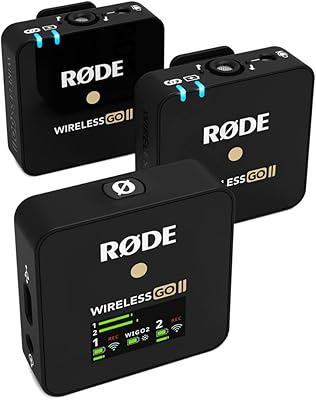
RØDE Wireless GO II
RØDE Wireless GO II
84%
92%
Audio Clarity
86%
Signal Reliability
97%
Internal Backup Recording
94%
Portability & Weight
91%
Setup Speed & Ease of Use
More
Nady U-2100 Dual UHF Wireless Microphone System
71%
78%
Value for Money
61%
Audio Quality
74%
Wireless Range
54%
Build Quality
76%
Setup & Ease of Use
More
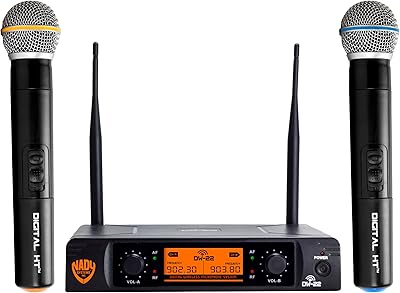
Nady DW-22-HT
Nady DW-22-HT
80%
88%
Audio Clarity
82%
Wireless Range
94%
Ease of Setup
91%
Value for Money
78%
Signal Stability
More
Saramonic Blink500 Pro B3 Wireless Lavalier Microphone
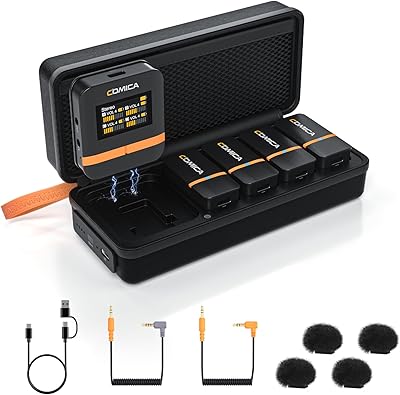
69%
83%
Ease of Setup
67%
Audio Quality
41%
Device Compatibility
44%
App Compatibility
81%
Battery Life
More
Gemini UHF-02M S12 Dual Wireless Handheld Microphone System
74%
93%
Ease of Setup
71%
Wireless Range
74%
Audio Clarity
62%
Build Quality
88%
Value for Money
More
Comica Vimo Q 4-Channel Wireless Lavalier Microphone System
84%
92%
Sound Quality
89%
Ease of Setup
85%
Battery Life
80%
Range and Performance
75%
Portability
More
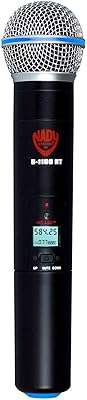
Nady DKW-DUO-HT-PR Dual Wireless Microphone System
77%
91%
Ease of Setup
83%
Wireless Range
66%
Audio Clarity
88%
Battery Life
58%
Build Quality
More
Godox WEC Kit2
Godox WEC Kit2
81%
78%
Audio Clarity
73%
Noise Cancellation
82%
Wireless Range & Stability
71%
Build Quality & Durability
88%
Comfort & Wearability
More
Saramonic UwMIC9 UHF Wireless Lavalier Microphone System
78%
78%
Audio Quality
74%
Signal Stability
84%
Build Quality
86%
Ease of Setup
88%
Value for Money
More
NEEWER KM15 Wireless Lavalier Microphone System
87%
89%
Sound Quality
92%
Ease of Use
87%
Battery Life
83%
Build Quality
90%
Portability
More

FAQ

Yes, you will need something with an XLR input on the receiving end — a powered PA speaker, a mixer, or an audio interface. The receiver outputs audio via XLR but has no built-in amplifier or speaker of its own, so it will not make any sound by itself. The good news is that XLR is one of the most common audio connections out there, so most event-ready equipment you already own will likely be compatible.

Yes, that is the core feature of this dual-channel setup. Both handheld transmitters connect to the single receiver simultaneously, each operating on its own independent channel. This makes the kit genuinely useful for duets, panel-style Q-and-A sessions, karaoke with two singers, or any scenario where two people need a live mic at once.

This is an important thing to check before buying. The Behringer ULM302MIC Dual-Channel Wireless Microphone System operates on the 2.4 GHz band — the same frequency used by most Wi-Fi routers and many Bluetooth devices — so signal dropouts are a real possibility in environments dense with active wireless networks. In a home, classroom, or small community hall, it typically performs without issue. In a hotel conference center or a venue packed with guest Wi-Fi devices, you may experience instability.

Under typical indoor use, each transmitter runs for roughly 5 to 6 hours on a fresh pair of AA batteries. Actual drain can vary depending on signal conditions and environment, so for anything longer than an afternoon session, keeping a spare set of AAs nearby is a smart habit. The upside is that standard AA batteries are inexpensive and available everywhere.

Not directly out of the box, since the receiver uses an XLR output. To connect it to a smartphone, laptop, or camera with a 3.5 mm input, you would need an XLR-to-3.5 mm adapter; for a USB connection, a small XLR-to-USB audio interface will do the job. It adds one extra step, but it is a workable solution for content creators who want wireless audio feeding into a mobile setup.

For karaoke, small gatherings, or casual live singing at a party or community event, the audio quality is solid at this price point. The 96 dB signal-to-noise ratio keeps things sounding clean, and the mics handle vocal frequencies well enough for the context. Anyone expecting studio-grade vocal clarity will be disappointed — this is a casual-use system — but for its intended environment it delivers comfortably.

Technically yes, but with meaningful caveats. There is no weather resistance of any kind, so any rain or moisture is a problem. Wind noise can also become intrusive without windscreen accessories on the mics. For short-range outdoor use in calm, dry conditions the system can work, but for outdoor stages or large open areas where range and durability matter, a purpose-built UHF outdoor system would serve you far better.

Under clean indoor conditions with minimal obstructions, you can expect a reliable connection up to around 100 feet (approximately 30 meters). Walls, interference from other wireless devices, and physical obstructions will reduce that range in practice. For small rooms, classrooms, or standard presentation spaces, it is more than adequate — for large theaters or multi-room venues, the range is likely to fall short.

No — the system is capped at two simultaneous channels and there is no way to add more transmitters to this receiver. If you regularly need three or more wireless mics running at the same time, you would need to upgrade to a multi-channel system built for that purpose. Running two separate dual-channel systems side by side is possible in theory but can create interference complications on the 2.4 GHz band.

It is about as beginner-friendly as these systems get. Power on the receiver, power on the transmitters, and they link up automatically — no manual frequency scanning, no channel assignment menus to navigate. Most first-time users report having audio up and running in under five minutes. The only thing to have sorted beforehand is whatever XLR-equipped device you plan to plug the receiver into, since that part of the chain is not included.

Where to Buy