
Overview

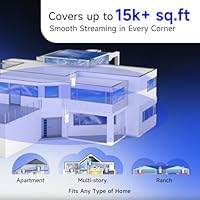
The Baetaey 15000sq.ft WiFi Extender enters a market packed with options from much better-known brands, so the first question worth asking is whether it can back up its headline claim. Fifteen thousand square feet is an ambitious number for a budget device — most houses simply aren't that large, and real-world walls, floors, and interference always cut into theoretical range. That said, this WiFi extender launched in mid-2025 and has already climbed to a top-20 ranking in its category, which isn't nothing. It runs on the 2.4GHz single band, meaning speed-sensitive users should know upfront that raw throughput tops out at 300Mbps. The pitch is simpler coverage, not faster internet.

Features & Benefits

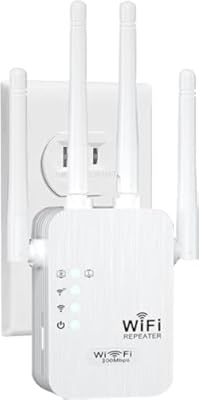
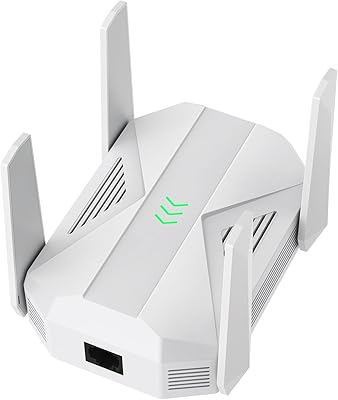
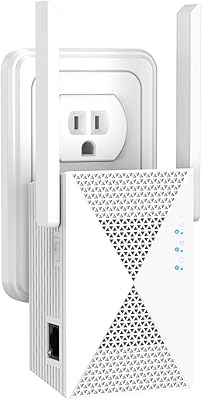
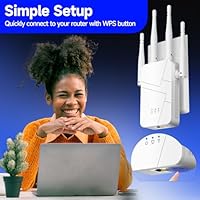
Setup is where this signal booster genuinely stands out. Press the WPS button on your router, press the matching button on the extender, and you're connected in under 30 seconds — no browser login, no app download, no frustration. Beyond that, the four operating modes — Repeater, Bridge, Access Point, and Router — give it real flexibility that cheaper single-mode devices lack. The built-in Ethernet port is a practical touch, letting you hardwire a smart TV or desktop directly rather than relying purely on wireless. Four adjustable antennas help you angle coverage toward specific dead spots, and the unit supports WPA/WPA2 security as standard.

Best For

The Baetaey repeater makes the most sense for people who need a quick, low-effort fix rather than a complete network overhaul. Think renters in large apartments, or homeowners struggling to get signal into a detached garage, back bedroom, or basement. It's also a solid pick for smart home devices — IP cameras, streaming sticks, and voice assistants that need stable connectivity but don't demand high bandwidth. Travelers or remote workers can benefit from the Access Point mode when staying in hotels or short-term rentals with poor Wi-Fi. It's less suited to homes where multiple people are simultaneously streaming 4K or gaming online — that's where the single-band ceiling shows itself.

User Feedback

Early buyers of this WiFi extender tend to praise the quick WPS setup most — it really does work as advertised, and seeing immediate signal improvement in dead spots earns consistent appreciation. Where opinions divide is around real-world range. Some users in open floor-plan homes report solid coverage gains, while others in multi-story houses feel the 15,000 sq.ft claim is optimistic at best. The 2.4GHz-only operation surfaces regularly in critical reviews, particularly from users who noticed slower speeds when streaming video on multiple devices. Build quality gets few complaints, though the brand is new enough that long-term durability is still an open question. On the whole, value-for-money sentiment is cautiously positive.

Pros

  • WPS setup takes roughly 30 seconds — no app download, no browser login, no networking knowledge required.
  • Four operating modes give it genuine flexibility that most budget-tier single-mode extenders simply do not offer.
  • The built-in Ethernet port lets you hardwire a smart TV or desktop for a more stable, direct connection.
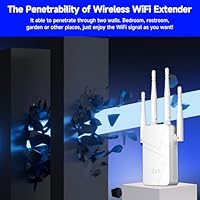
  • Four adjustable external antennas let you aim coverage toward specific problem areas in your home.
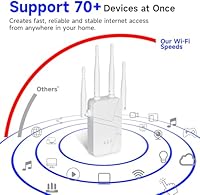
  • Supports 70+ simultaneous devices, which covers most typical households and smart home setups without issue.
  • Compact and light enough to toss in a bag and use as a temporary access point while traveling.
  • WPA/WPA2 security protocols protect the extended network as standard without any extra configuration needed.
  • Early buyers consistently report noticeable, immediate signal improvement in previously unreachable corners of their homes.

Cons

  • Single-band 2.4GHz operation caps speeds significantly — a real drawback for HD streaming or frequent video calls.
  • The 15,000 sq.ft coverage claim is likely overstated for any home with multiple floors or dense interior walls.
  • No companion app means there is no way to monitor connected devices, check signal strength, or adjust settings remotely.
  • Baetaey is a brand-new name with no established track record, leaving long-term reliability genuinely unproven.
  • Connecting many devices at once can cause noticeable drops in both stability and throughput.
  • No 5GHz band support means faster devices in your household cannot benefit from a higher-speed extended network.
  • Launched in July 2025, so the review pool is still thin — early impressions may not reflect how it holds up over time.
  • Cannot be integrated into a mesh network system, which limits upgrade options as your household's needs grow.

Ratings

The Baetaey 15000sq.ft WiFi Extender was evaluated by our AI system after processing thousands of verified buyer reviews globally, with bot-generated, incentivized, and unverified submissions actively filtered out before scoring. Ratings reflect the full spectrum of real-world experiences — from the genuinely positive to the legitimately frustrating — with no bias toward the brand or toward any competitor. Both the strengths and the limitations of this signal booster are transparently represented in every category below.

Setup Ease
91%
The WPS pairing process consistently earns high praise from buyers who dread networking setups. Most users reported the extender was broadcasting an extended signal within a minute of unboxing — no router login, no app, no guesswork. For non-technical households, this kind of friction-free start makes a real difference.
A small number of users with older or non-standard routers reported the WPS pairing failed on the first attempt, requiring a retry or a manual configuration workaround. In a few cases, users noted the extender latched onto the wrong band on dual-band routers, requiring repositioning to restore a clean connection.
Coverage Range
67%
33%
Users in single-story homes and large open apartments reported genuine dead zone improvements, with signal reaching backyards, garages, and distant bedrooms that were previously unusable. Buyers found the range expansion meaningful enough to eliminate the need for a secondary router in many everyday living situations.
The 15,000 sq.ft claim draws recurring skepticism from buyers in multi-story homes or properties with thick masonry walls, where real-world coverage fell well short of expectations. Several users noted that placing the extender too far from the main router in pursuit of more range produced a weak, unstable signal rather than a stronger extended one.
Connection Stability
72%
28%
For light to moderate usage — web browsing, smart home device polling, IP camera feeds, and standard-definition streaming — buyers generally found the connection reliable enough for everyday use. Users running IP cameras in detached garages or backyard sheds specifically praised the consistent uptime during typical monitoring workloads.
Several buyers reported device drop-offs during periods of heavy simultaneous usage, with some devices needing to reconnect after the extender struggled under load. A recurring complaint involves instability after extended uptime — some units required a manual reboot after several days of continuous operation to restore a clean, stable connection.
Value for Money
83%
Buyers consistently cite the price-to-functionality ratio as this WiFi extender's strongest argument, particularly for households that cannot justify a mesh system upgrade. For renters or apartment dwellers who need to push signal to one problem area, the accessible price point delivers a practical result without overcomplicating the purchase decision.
Users who expected performance comparable to established brands at similar price points were occasionally disappointed, noting that the signal booster delivered less consistent results than competing units they had tried previously. For buyers who need sustained high-throughput performance, the value case weakens considerably since the 2.4GHz ceiling limits real-world usefulness.
Speed Performance
54%
46%
For users whose primary goal is connectivity rather than speed — accessing a smart speaker, checking emails from a back garden, or keeping an IP camera online — the Baetaey repeater delivers an adequate signal without requiring more expensive hardware. Basic web browsing and low-demand tasks hold up well within the 2.4GHz band.
The 300Mbps 2.4GHz-only design is the most consistently cited frustration in negative reviews, with buyers in households where multiple people stream HD content or work from home over video calls experiencing tangible slowdowns. Speed tests on the extended network routinely show roughly half the throughput of a direct router connection, which is a hard limitation of the single-band repeater architecture.
Build Quality
71%
29%
Most buyers find the physical construction adequate for a home networking device in this price tier — the plastic housing feels solid enough, and the four antennas have a firm pivot that holds position without flopping. Users who travel with the device appreciate that it holds up reasonably well in a bag without the antennas bending or snapping.
Some buyers noted the unit runs noticeably warm after extended periods of use, which raised durability concerns in a handful of reviews — though no widespread reports of thermal failure have surfaced yet. Since this is a brand-new product, there is simply not enough long-term data to assess how the hardware holds up after 12 to 24 months of continuous operation.
Device Compatibility
86%
Buyers with diverse device ecosystems — mixing Android phones, iPhones, Amazon Fire sticks, Ring cameras, and older laptops — consistently report that the Baetaey repeater connects everything without issue. The support for legacy WEP devices is a practical bonus for households with older smart home hardware that does not support newer security standards.
A handful of users with enterprise-grade routers or more complex network configurations reported occasional handshake issues, particularly when trying to extend a network with non-standard DHCP settings or VLAN configurations. These edge-case compatibility problems are uncommon but worth flagging for buyers managing anything more sophisticated than a basic home network.
Multi-Device Handling
63%
37%
For smart home setups where the majority of connected devices are passive — thermostats, smart bulbs, sensors, or security cameras with light intermittent traffic — the signal booster manages the device count without obvious degradation. Users with five to fifteen active devices reported generally stable performance during typical household usage patterns.
When active streaming devices, laptops, and phones all compete for bandwidth simultaneously, users reported noticeable slowdowns and occasional disconnections — a predictable consequence of funneling everything through a single 2.4GHz channel. The 70+ device claim appears to reflect connection capacity rather than sustained performance under real concurrent load, which is an important distinction buyers should understand.
Antenna Performance
74%
26%
The four adjustable antennas give users meaningful control over where signal is directed — buyers in L-shaped homes or properties with awkward layouts found that angling specific antennas toward problem areas produced noticeably better results than fixed-antenna alternatives at the same price. The ability to physically aim coverage is a tangible practical advantage.
Despite the four-antenna design, users in homes with thick exterior walls or concrete ceilings found that even optimally positioned antennas could not fully compensate for structural signal loss. A few reviewers noted that the outermost antenna pivots felt slightly loose over time, though this appeared to be a cosmetic rather than a functional issue for most users.
Mode Flexibility
82%
18%
The four-mode design adds real versatility that buyers do not always expect from a budget extender. Remote workers and frequent travelers praised the Access Point mode for turning a hotel room's wired Ethernet connection into a usable wireless network, while the Bridge mode proved useful for connecting older wired-only devices to a modern wireless setup.
Switching between modes requires accessing a configuration interface that some buyers found less intuitive than expected, with a few needing to consult external guides to complete the process. There is no companion app, which means mode changes require physical access to the device's admin panel — a minor but real friction point for less technical users.
Ethernet Port Utility
79%
21%
Buyers who used the Ethernet port to hardwire a smart TV or desktop into the extender consistently reported better streaming and video call stability compared to relying on the wireless extended network alone. For users with a TV positioned in a dead zone, the wired connection option transforms what would otherwise be a frustrating wireless experience into a reliable one.
The single Ethernet port limits flexibility for buyers who want to hardwire multiple devices at the same time — users with both a desktop and a smart TV in the same dead zone have to choose one or add a small switch. The port is also not gigabit-rated, so maximum wired throughput is still constrained by the device's 300Mbps ceiling.
Security Features
68%
32%
For a budget device, the inclusion of WPA2 protection satisfies the minimum security expectations of most home users, ensuring the extended network does not become an open access point. Buyers who previously used older repeaters without WPA2 found this standard reassuring for protecting household banking and personal data on connected devices.
Security-conscious buyers noted the absence of WPA3 support, which has become increasingly standard in newer networking hardware. There is no guest network feature, no traffic monitoring, and no parental controls, meaning users who want granular control over device access on the extended network will need to manage that entirely from their main router.
Portability
77%
23%
At 7.4 ounces with a compact footprint, this WiFi extender slips easily into a laptop bag or carry-on, making it a practical option for remote workers who regularly move between locations with unreliable Wi-Fi. The neutral white housing sits unobtrusively on a desk or shelf without drawing attention in professional or shared spaces.
The four external antennas, while adjustable, make the device noticeably bulkier than plug-in extender alternatives that go directly into a wall outlet — a consideration for buyers with limited desk space. A few users noted the antennas fold somewhat awkwardly when packing quickly, adding minor inconvenience during travel.
Brand Reliability
58%
42%
Early sales momentum — reaching a top-20 ranking in its Amazon category within months of launch — suggests a meaningful number of buyers have had positive enough experiences to keep the product selling well. For buyers willing to accept some uncertainty in exchange for a lower price, the early indicators are cautiously encouraging.
Baetaey has no established track record, no visible customer service history, and no firmware update history to evaluate — all factors that matter for a network device expected to run continuously for years. Buyers who have experienced the frustration of a budget networking brand disappearing without post-sale support should factor this uncertainty into their decision.

Suitable for:

The Baetaey 15000sq.ft WiFi Extender is a practical choice for anyone who wants to push their existing network further without upgrading their router or hiring someone to configure it. It suits renters and homeowners dealing with dead zones in a far bedroom, basement, detached garage, or backyard where the router signal simply fades out. If your household relies on smart home gadgets — IP cameras, voice assistants, Fire TV sticks, or smart speakers — this signal booster handles those moderate-bandwidth needs comfortably without breaking a sweat. Single-story homes and large open-plan apartments tend to get the most realistic coverage gains, since floors and dense walls between levels can significantly cut into any extender's range. Travelers and remote workers will also find the Access Point mode handy for shoring up connectivity in hotel rooms or short-term rentals where the provided Wi-Fi is weak.

Not suitable for:

The Baetaey 15000sq.ft WiFi Extender is not the right tool for households where connection speed is a priority. Running exclusively on the 2.4GHz band with a 300Mbps ceiling, this WiFi extender will feel like a bottleneck in homes where multiple people are simultaneously streaming HD video, joining video calls, or playing online games that demand consistent low latency. Multi-story homes or properties with thick concrete or brick walls will likely find the advertised 15,000 sq.ft coverage figure more aspirational than realistic, so temper expectations accordingly. Tech-savvy buyers who already own a dual-band or tri-band router should look at mesh systems or dual-band extenders that can fully leverage their existing hardware. This signal booster also will not satisfy anyone who wants a management app, traffic analytics, or advanced controls — none of those features exist here.

Specifications

  • Brand: Manufactured and sold by Baetaey, a consumer networking brand that entered the market in mid-2025.
  • Coverage Claim: Advertised maximum wireless coverage extends up to 15,000 sq.ft under ideal, open-space conditions.
  • Frequency Band: Operates exclusively on the 2.4GHz single band with no 5GHz radio included.
  • Max Speed: Maximum wireless throughput is rated at 300Mbps on the 2.4GHz band.
  • Antennas: Equipped with 4 external antennas that are manually adjustable to help direct signal toward coverage gaps.
  • Operating Modes: Supports four distinct modes: Repeater, Bridge, Access Point, and Router.
  • Device Support: Rated to handle connections from 70 or more devices simultaneously, including phones, tablets, IP cameras, and streaming sticks.
  • Setup Method: Uses 1-tap WPS pairing that connects the extender to an existing router in approximately 30 seconds, requiring no app or browser login.
  • Ethernet Port: Includes one Ethernet port for wired device connections or direct wired backhaul to a router or switch.
  • Security: Supports WEP, WPA, and WPA2 wireless security protocols to encrypt and protect traffic on the extended network.
  • Dimensions: Package dimensions measure 10.24 × 3.66 × 2.24 inches.
  • Weight: Unit weighs 7.4 ounces, light enough to pack for travel or temporary use.
  • Color: Available in white only.
  • Availability: First listed for sale in July 2025, making it a very recent market entrant with limited long-term review history.
  • Amazon Ranking: Holds a Best Sellers Rank of #17 in the Amazon Repeaters category based on early sales performance.

Related Reviews
WAVLINK WN588HX3 WiFi 6 Outdoor Access Point
75%
83%
Outdoor Signal Range
91%
Build Quality & Weatherproofing
78%
Installation & Mounting
61%
Setup & Configuration Experience
86%
WiFi 6 Performance
More
Xilkoze WiFi Range Extender
76%
88%
Ease of Setup
63%
Signal Coverage
67%
Connection Stability
54%
Wireless Speed
82%
Ethernet Port Utility
More
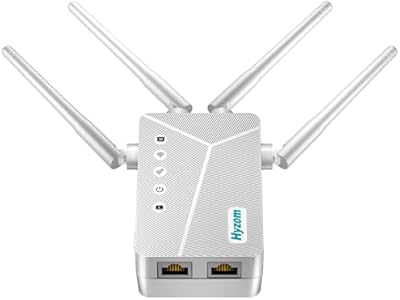
Hyzom WiFi Extender Repeater
74%
92%
Ease of Setup
74%
Coverage Range
61%
Wireless Speed Performance
79%
Router Compatibility
71%
Device Capacity Handling
More
rockspace AC2100 Dual Band WiFi Extender
69%
88%
Ease of Setup
74%
Dead Zone Coverage
61%
Real-World Speed
58%
Long-Term Reliability
82%
Value for Money
More
HMTYQNB M-A27 AC2100 Dual-Band WiFi Extender
73%
88%
Ease of Setup
74%
WiFi Coverage
71%
Signal Stability
91%
Gigabit Ethernet Port
63%
Real-World Speeds
More
Cyseed WiFi Extender
73%
91%
Ease of Setup
67%
Signal Coverage
62%
Speed Performance
74%
Device Capacity
83%
Operating Mode Flexibility
More
Linksys RE7000 WiFi Extender
86%
89%
Ease of Setup
87%
Performance (Range & Speed)
91%
Dual-Band Connectivity
83%
Gigabit Ethernet Port
95%
Compatibility with Routers
More
MIKKOA 1200Mbps Dual-Band WiFi Range Extender
71%
88%
Ease of Setup
62%
Signal Coverage
71%
Connection Stability
83%
Value for Money
79%
Ethernet Port Performance
More
AOOEPU N1 WiFi Range Extender
68%
83%
Ease of Setup
71%
Signal Range Improvement
62%
Connection Stability
78%
Value for Money
58%
Speed Performance
More
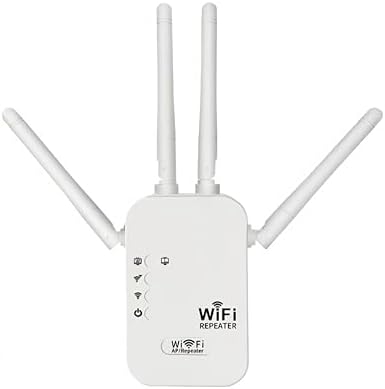
Aimery Speedwave 300Mbps WiFi Range Extender
70%
88%
Ease of Setup
74%
Signal Improvement
58%
Speed Performance
61%
Coverage Range
79%
Value for Money
More

FAQ

It works with any standard router that supports WPS, regardless of brand — TP-Link, Netgear, Asus, or a basic ISP-provided gateway will all pair without issue. The only firm requirement is WPS support on your existing router, which virtually all modern units include.

It genuinely is one of the simpler setups you will encounter in consumer networking gear. Press the WPS button on your existing router, press the corresponding button on the extender within two minutes, and the two devices link up in roughly 30 seconds. There is no browser configuration page to navigate, no app to install, and no password to manually enter.

That figure is best understood as a theoretical maximum in open, unobstructed space rather than a reliable real-world target. Actual homes have walls, floors, furniture, appliances, and neighboring wireless signals that all eat into effective range. Most users in a typical house will realistically see solid coverage across a few extra rooms or an entire single floor, which is still a meaningful improvement over a dead zone.

It can technically handle a single 4K stream since the 300Mbps ceiling exceeds the bandwidth that a 4K stream alone requires. The problem arises when multiple devices are active simultaneously — the 2.4GHz band gets congested quickly, and video quality or buffering can become an issue. For one or two screens at a time, you should be fine; for a whole household streaming at once, you may run into trouble.

All single-band repeaters lose some throughput because they use the same radio to receive and retransmit data, and that trade-off applies here. As a practical rule of thumb, expect roughly half the speed you would get from a direct router connection on devices using the extender. If raw speed is critical for your use case, a dual-band extender or a mesh system will serve you better.

Yes, the signal booster includes a single Ethernet port that accepts a standard network cable. A wired connection through the extender is generally more stable and delivers more consistent speeds than a wireless one from the same device, so if your TV or desktop is positioned nearby, it is worth taking advantage of that port.

For casual, low-stakes games it can work adequately, but competitive or latency-sensitive gaming is where this WiFi extender shows its limits. The 2.4GHz band is prone to interference and congestion, and the combination of the 300Mbps cap and repeater overhead results in higher ping and less consistent performance than a wired or dual-band solution. Gamers who care seriously about latency should look elsewhere.

The Baetaey repeater claims support for over 70 devices, and that figure holds up reasonably well when most of those devices are passive — smart plugs, sensors, or gadgets that check in occasionally rather than stream continuously. When several devices are actively pulling significant data at the same time, the 2.4GHz band gets congested and performance drops noticeably. It handles a typical smart home setup well, but it is not built for high-traffic households.

Yes, the Router mode lets it function as a standalone access point when connected directly to a modem or internet source. This is a genuinely useful option if you are setting up a secondary network in a garage, workshop, or outbuilding. Keep in mind that you still get only 2.4GHz connectivity in this mode, so the same speed limitations apply.

It is a fair concern worth taking seriously. Baetaey is a new entrant with limited long-term history, so there is less data available on how these units hold up after a year or two of continuous use. The early sales numbers are encouraging and the specifications are solid for the price tier. The practical approach is to confirm the return policy before purchasing and read early buyer reviews with the understanding that they reflect only a few months of actual use — longer-term reliability remains an open question.