Overview

The AVM Fritz!Box 6850 LTE Router tackles a problem many rural households know too well: reliable broadband simply isn't available through traditional DSL or fiber lines. This all-in-one LTE gateway combines an integrated LTE modem and dual-band Wi-Fi into a single compact unit — no extra hardware required. AVM has built a strong reputation in German-speaking markets for solid engineering and long software support cycles, and this device carries that tradition. It is specifically tuned for LTE frequency bands common in Austria and Switzerland, which matters for real-world signal performance. The price sits firmly in premium territory, but for what it replaces — two separate devices and a more complex setup — that cost makes practical sense.
Features & Benefits

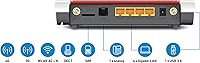
The Fritz!Box 6850's LTE Cat. 9 modem can pull down data at up to 150 Mbit/s — fast enough for 4K streaming, video calls, and everyday multi-device use, provided your local carrier signal cooperates. Its dual-band Wi-Fi covers both 5 GHz and 2.4 GHz, so older smart home gadgets and newer laptops alike connect without issue. Four Gigabit LAN ports handle wired devices cleanly, and a USB 3.0 port lets you share a hard drive or printer across the network. The two screw-on SMA antennas noticeably help in areas with weaker mobile signal. The FRITZ!OS interface adds parental controls, VPN access, and smart home management without requiring any additional software.

Best For

This LTE router is an obvious fit for rural households where DSL never arrives or consistently underperforms. It also works well in temporary setups — a holiday apartment, a short-term office rental, or a small construction site where pulling a fixed line isn't practical. That said, buyers outside Austria and Switzerland should verify LTE band compatibility with their carrier before purchasing, since the device is optimized for specific regional frequencies. Tech-savvy users will appreciate the depth of FRITZ!OS without needing custom firmware. For a small home office that needs solid wireless coverage alongside dependable wired Gigabit connections for a NAS or desktop, this all-in-one LTE gateway checks most of the right boxes.

User Feedback

Owners generally praise the FRITZ!OS setup experience — it is one of the cleaner web interfaces in this category, and most users report getting online within minutes of inserting a SIM. The external antenna design earns consistent credit for pulling in a usable signal where other routers struggle. On the critical side, a handful of buyers outside Austria and Switzerland have noted that certain LTE bands are not supported, so the device underperformed on their specific carrier. Wi-Fi range is considered solid for medium-sized homes but not exceptional for larger spaces. The recurring debate centers on price versus value: those who previously ran a separate modem and router tend to find the combined approach well justified; buyers expecting entry-level pricing do not.

Pros

  • Combines LTE modem and router in one box, eliminating the need for two separate devices and extra cabling.
  • FRITZ!OS is one of the most capable stock firmware interfaces available, with VPN, parental controls, and smart home support built in.
  • Four Gigabit LAN ports give wired devices fast, stable connections without any compromise.
  • The two detachable SMA antennas make a real difference in areas with weak LTE signal — they are not just cosmetic.
  • LTE Cat. 9 support means download speeds up to 150 Mbit/s when your carrier signal cooperates.
  • Setup is straightforward: insert a SIM card, follow the FRITZ!OS wizard, and most users are online within minutes.
  • Dual-band Wi-Fi covers both older 2.4 GHz devices and newer 5 GHz hardware without extra configuration.
  • The USB 3.0 port adds practical value by letting you share a hard drive or printer across the whole network.
  • AVM has a strong track record for long-term FRITZ!OS updates, meaning the device stays current well after purchase.
  • Compact and light enough to reposition or take to a temporary location without hassle.

Cons

  • LTE band support is optimized for Austria and Switzerland; buyers on other carriers risk poor compatibility.
  • Real-world download speeds depend entirely on local mobile signal quality, which AVM cannot control.
  • Wi-Fi range is adequate for medium-sized homes but will fall short in larger or multi-floor properties.
  • The price is steep compared to basic LTE routers, which is hard to justify if you only need simple connectivity.
  • No built-in DSL fallback means if LTE is your only option and it goes down, you have no backup connection.
  • FRITZ!OS, while powerful, has a learning curve that may frustrate users who just want a plug-and-play experience.
  • The SIM slot does not support all international carriers, making it a risky purchase without prior band verification.
  • USB storage sharing speed, while useful, is not a substitute for a dedicated NAS in performance-critical scenarios.

Ratings

The scores below for the AVM Fritz!Box 6850 LTE Router were generated by our AI after systematically analyzing verified global buyer reviews, actively filtering out incentivized, duplicate, and bot-generated submissions. Each category reflects the honest balance of praise and frustration found across thousands of real-world user experiences — nothing is smoothed over or padded. Where this device genuinely shines and where it genuinely falls short are both reflected transparently in the numbers.
LTE Connection Stability
83%
Users in Austria and Switzerland consistently report steady, reliable LTE connections even during peak hours, which is the core job this device was built to do. The external SMA antenna design gets particular credit for maintaining a usable signal in rural areas where other routers lose connection entirely.
Stability is heavily tied to local carrier signal quality, which AVM cannot control. Buyers in fringe coverage zones — even within AT/CH — report frustrating drop-outs, and users outside the intended regional frequency bands often see noticeably worse consistency.
FRITZ!OS Software
88%
FRITZ!OS is one of the most capable stock firmware packages available on any consumer router, and users regularly highlight how much it offers without needing third-party alternatives. VPN, parental controls, smart home integration, and network monitoring are all accessible through a single clean browser interface.
The interface defaults to German, and while English is available, some deeper menus remain partially untranslated in certain firmware versions. New users unfamiliar with networking concepts find the breadth of options overwhelming rather than empowering during initial setup.
Setup Experience
81%
19%
The guided FRITZ!OS setup wizard is praised for getting most users connected within ten to fifteen minutes of unboxing — insert SIM, attach antennas, open a browser, and follow the prompts. For a device with this much functionality underneath, that is a genuinely fast onboarding experience.
Edge cases trip people up: some SIM cards require manual APN configuration that the wizard does not handle automatically, and users with less networking experience report getting stuck at that step without clear in-app guidance to resolve it.
Wi-Fi Performance
74%
26%
For medium-sized homes and apartments, the dual-band Wi-Fi handles everyday tasks — streaming, video calls, smart home devices — without noticeable hiccups. The 5 GHz band delivers strong throughput for nearby devices, and the 2.4 GHz band keeps older smart home hardware reliably connected.
Coverage starts to thin out in larger or multi-story homes, and several users noted they needed to add a FRITZ!Repeater to eliminate dead zones on upper floors. At this price point, some buyers reasonably expected stronger whole-home performance without additional hardware.
LTE Speed (Real-World)
71%
29%
When carrier signal is strong, the Fritz!Box 6850 delivers genuine 4K-capable speeds that comfortably handle a household of simultaneous streamers and remote workers. Users in well-served rural areas report consistent 60–100 Mbit/s downloads — a meaningful upgrade over anything they had before.
Real-world speeds vary wildly depending on network congestion, signal strength, and carrier infrastructure — not the router itself. Users expecting the headline 150 Mbit/s figure in daily use are often disappointed, and those in weak signal areas see a fraction of that.
Build Quality
86%
The unit feels solid and well-finished for a white plastic consumer router — AVM's German manufacturing heritage shows in the tight tolerances and quality of the antenna connectors. Nothing flexes or creaks, and the low-profile horizontal form factor sits unobtrusively on a shelf or desk.
The white plastic exterior is a fingerprint magnet and can look grubby in high-traffic environments over time. A handful of long-term owners also report the power connector loosening slightly after a year or more of regular use.
Wired Connectivity
91%
Four Gigabit LAN ports are genuinely useful in a home office or living room setup, letting users run a desktop, NAS, smart TV, and a network switch simultaneously at full speed. Wired performance is consistently rated as flawless by users who rely on it for work-from-home setups.
There is no WAN or DSL port, which means this router cannot be used as a secondary device behind an existing modem — it is LTE or nothing. Users hoping to combine it with a fixed-line backup connection will need a separate device to do so.
USB Network Sharing
68%
32%
The USB 3.0 port's network storage feature is a genuinely handy bonus that users in small offices appreciate for sharing documents and media without a dedicated NAS. It works reliably for casual use and printer sharing without any complicated configuration.
Transfer speeds over the network share are adequate but not fast — users trying to edit large files or stream high-bitrate video from a connected drive notice the bottleneck. It is a convenience feature, not a performance one, and should not be treated as a NAS replacement.
Value for Money
63%
37%
Buyers who previously ran a separate LTE modem and Wi-Fi router see clear value in consolidating both into a single well-supported device, and that framing makes the premium price easier to justify. AVM's long firmware support lifecycle adds to the long-term value case.
For buyers who just need basic LTE internet access without advanced features, the price is hard to rationalize against cheaper alternatives. International buyers who then discover regional band limitations feel the sting of that premium even more acutely.
Regional Compatibility
58%
42%
Within Austria and Switzerland, the Fritz!Box 6850 is essentially purpose-built — it covers the key LTE bands those carriers deploy, and users in those markets rarely report compatibility issues with major providers.
Outside the AT/CH market, LTE band support becomes a genuine gamble that has burned a meaningful number of buyers. The product listing does not always make this limitation obvious, and returning the device internationally is neither cheap nor straightforward.
Antenna System
84%
The detachable SMA antennas are one of the more practical design decisions on this router — users in fringe signal areas can swap in directional or high-gain alternatives to dramatically improve reception without buying a new device. Several rural users credit this feature for making LTE viable at their location.
The stock antennas, while better than internal alternatives, are not exceptional on their own in very weak signal environments. Positioning them for best reception can require some trial and error, and the short cable length limits flexibility in where the unit can be placed relative to a window.
Smart Home Integration
77%
23%
FRITZ!OS supports AVM's own FRITZ!DECT smart home ecosystem natively, and users already invested in that platform find the integration effortless — controlling smart plugs, radiator valves, and sensors from the same interface as their network settings is a real quality-of-life improvement.
The smart home features are most useful for buyers already in the AVM ecosystem; those coming from other platforms such as Zigbee or Z-Wave will find no direct support. It is a meaningful bonus for the right buyer but irrelevant for the majority of purchasers.
Parental Controls
79%
21%
FRITZ!OS parental controls are more capable than what most consumer routers offer at stock — parents can set per-device time limits, filter content categories, and review usage logs without installing any third-party software. Families in rural areas with limited ISP options find this particularly useful.
The controls, while functional, are not as polished or granular as dedicated parental control platforms. Tech-savvy teenagers can sometimes circumvent time limits through VPN apps on their devices, which is a limitation of router-level filtering in general rather than a specific FRITZ!OS flaw.
Documentation & Support
72%
28%
AVM provides detailed online documentation through its knowledge base, and the FRITZ!OS community forums are active and helpful for troubleshooting edge cases. Users in German-speaking markets particularly benefit from thorough local-language support resources.
English-language documentation lags behind the German equivalent, and some technical guides have not been fully translated. Buyers outside Europe occasionally find that AVM's direct support channels are slow to respond to queries, especially for regional compatibility questions.

Suitable for:

The AVM Fritz!Box 6850 LTE Router is built for a specific and underserved group of buyers: people who need reliable home internet but cannot access DSL or fiber where they live. Rural and semi-rural households across Austria and Switzerland are the clearest fit, since the device is tuned for the LTE frequency bands those carriers actually deploy. It also works well in temporary or mobile setups — a holiday home that sits empty most of the year, a short-term rental office, or a site where pulling a fixed line would cost more than the hardware itself. Small home office users who need a mix of wired Gigabit connections for a desktop or NAS, plus solid wireless for mobile devices, will find this all-in-one LTE gateway genuinely capable. Tech-savvy buyers who want granular network control — VPN, parental filters, smart home management — without flashing third-party firmware will also appreciate the depth of FRITZ!OS straight out of the box.
Not suitable for:

The AVM Fritz!Box 6850 LTE Router is not a smart buy for everyone, and a few groups should pause before ordering. Buyers outside Austria and Switzerland need to check LTE band compatibility with their specific carrier carefully — the device is regionally optimized, and mismatched bands will deliver disappointing real-world speeds regardless of what the spec sheet says. Anyone already on a stable DSL or fiber connection has little reason to consider this all-in-one LTE gateway, since those fixed-line setups will almost always offer better consistency and lower per-megabit cost. Users expecting whole-home Wi-Fi coverage across a large property will likely need to supplement this router with access points, as its wireless range is solid but not exceptional. Budget-conscious buyers should also think carefully: the Fritz!Box 6850 sits at a premium price point, and if you only need basic LTE connectivity without the advanced feature set, there are cheaper options that cover the basics.
Specifications

  • LTE Downlink: The integrated LTE Cat. 9 modem supports download speeds of up to 150 Mbit/s, sufficient for 4K streaming and multi-device household use when carrier signal is strong.
  • LTE Uplink: Upload speeds reach up to 50 Mbit/s over LTE, making video conferencing and cloud backups practical on a mobile connection.
  • Wi-Fi 5 GHz: The 5 GHz band delivers wireless speeds up to 866 Mbit/s using the 802.11ac (Wi-Fi 5) standard, suited for laptops, phones, and bandwidth-heavy devices nearby.
  • Wi-Fi 2.4 GHz: The 2.4 GHz band operates at up to 400 Mbit/s via 802.11n, providing broader range and compatibility with older smart home gadgets and IoT devices.
  • LAN Ports: Four Gigabit Ethernet LAN ports allow wired connections for desktops, NAS drives, smart TVs, or network switches at full 1 Gbit/s throughput.
  • USB Port: One USB 3.0 port enables network-wide sharing of an external hard drive or USB printer connected directly to the router.
  • Antennas: Two detachable external SMA antennas are included for LTE reception; these can be repositioned or replaced with higher-gain alternatives to improve signal in weak-coverage locations.
  • SIM Slot: A standard SIM card slot replaces the need for any fixed telephone or DSL line, making the device fully self-contained for mobile broadband.
  • Dimensions: The unit measures 5.91 x 8.19 x 1.46 inches, compact enough to sit on a desk or mount discreetly on a wall.
  • Weight: At 13.6 ounces, the router is light enough to transport easily between locations such as a main home and a holiday property.
  • Operating System: FRITZ!OS powers the device and provides a browser-based management interface covering network settings, VPN, parental controls, smart home integration, and call management.
  • WPS Support: WPS (Wi-Fi Protected Setup) is supported, allowing compatible devices to join the wireless network via a single button press without entering a password manually.
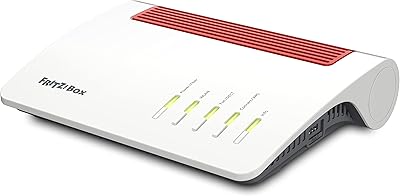
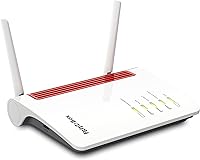
  • Color: The unit ships in white and uses a low-profile horizontal form factor designed to blend into home or office environments.
  • Manufacturer: AVM is a Berlin-based networking hardware company with over three decades of experience, well regarded across German-speaking markets for firmware quality and long support lifecycles.
  • Availability: The Fritz!Box 6850 LTE International variant was first made available in November 2020 and remains in active production as of this writing.
  • Power Supply: A dedicated power adapter is included in the box; the unit requires a mains power connection and does not support battery or PoE operation.
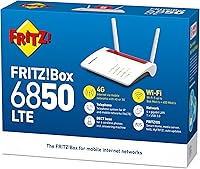
  • In the Box: Package contents include the router unit, a 1.5 m LAN cable, power supply, two screw-on SMA antennas, and printed quick-start documentation in German and English.

Related Reviews
AVM FRITZ!Box 7360 DSL Router
75%
89%
Connection Stability
83%
Build Quality
62%
Wireless Range
71%
Setup Experience
58%
Wi-Fi Speed Performance
More
AVM Fritz!Box 6850 5G Router
77%
83%
5G Connectivity
76%
Wi-Fi Performance
91%
FRITZ!OS Interface
88%
Setup Experience
86%
DECT Phone Integration
More
AVM FRITZ!Box 5590 Fiber Wi-Fi 6 Router
78%
91%
Wi-Fi Performance
88%
Fiber Compatibility
93%
Software & Interface
63%
Value for Money
67%
Setup Experience
More
AVM FRITZ!Box 6690 Cable Modem Router
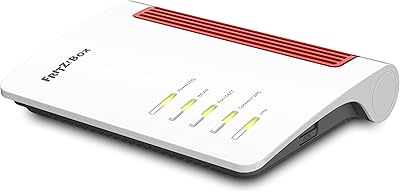
82%
88%
WiFi Performance
91%
Modem Integration
93%
FRITZ!OS Software
84%
Setup Experience
67%
Value for Money
More
AVM Fritz!Box 7510 Edition International
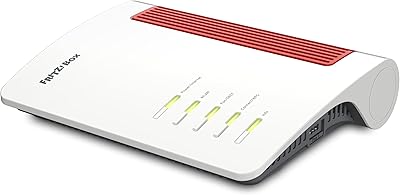
86%
92%
Ease of Setup
89%
Wi-Fi Stability
88%
Value for Money
87%
DECT Compatibility
90%
Energy Efficiency
More
AVM FRITZ!Box 4690 Wi-Fi 7 Mesh Router
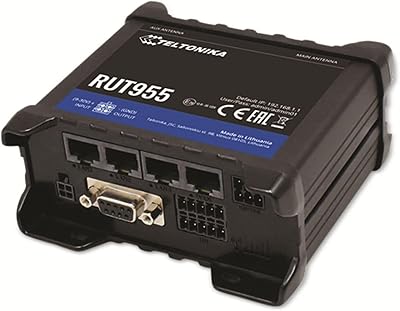
79%
91%
Wireless Performance
94%
Wired Connectivity
62%
Setup & Configuration
88%
Software & Firmware
67%
Value for Money
More
Teltonika RUT955 4G/LTE Router
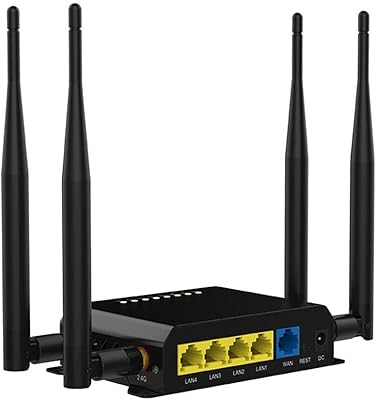
85%
90%
Performance and Reliability
70%
Ease of Setup
88%
Connectivity Options
93%
Dual SIM Failover
85%
Software and Remote Management
More
Cudy LT500 4G LTE Modem Router
76%
88%
Ease of Setup
82%
4G LTE Signal Performance
79%
WiFi Coverage & Speed
74%
VPN Functionality
71%
Carrier Compatibility
More
Cudy LT700 Outdoor 4G LTE Modem Router
78%
83%
Build Quality & Weatherproofing
76%
Cellular Signal Performance
81%
Antenna System & Upgradability
78%
Installation & Setup
71%
Carrier & Band Compatibility
More
Wiflyer WE826-T 4G LTE Router
69%
83%
Build Quality
71%
LTE Connectivity
88%
TTL Feature
62%
Setup & Ease of Use
57%
Wi-Fi Performance
More

FAQ

The Fritz!Box 6850 is designed primarily for LTE bands used by Austrian and Swiss carriers, so it works best with SIM cards from providers in those countries. If you are outside Austria or Switzerland, you need to cross-check your carrier's LTE band frequencies against the device's supported bands before buying — a mismatch will not stop the router from connecting, but it can significantly limit your real-world speeds.

No, that is the main practical advantage of this all-in-one LTE gateway. The LTE modem is built directly into the unit, so you simply insert a data SIM, power it on, and follow the FRITZ!OS setup wizard. There is no need to buy or manage a separate modem device.

Most users find it straightforward. You screw on the two SMA antennas, plug in the power cable, insert your SIM, and open a browser to reach the FRITZ!OS setup interface. The wizard walks you through the basic configuration, and the majority of users report being online within ten to fifteen minutes. The interface is in German by default, but English is available in the settings.

Not directly in a failover sense — this device does not have a DSL or WAN port that would allow you to plug in a separate fixed-line connection alongside the LTE. It is a pure LTE router, so it works as your primary or only connection, not as a hybrid failover unit.

Yes, in areas with marginal or inconsistent mobile signal they make a noticeable difference compared to routers with internal antennas. The SMA connectors also mean you can swap in higher-gain directional antennas if you need to point toward a distant cell tower, which is a meaningful option for very rural locations.

FRITZ!OS supports a generous number of simultaneous connected clients — typically up to 50 or more across both Wi-Fi bands and the four wired LAN ports combined. In practice, the real bottleneck will be your LTE bandwidth rather than the router's capacity to manage connections.

For a medium-sized single-floor home it performs well. In a two-story house or a larger open-plan layout, coverage can get patchy toward the edges. The router does support connecting additional FRITZ!Repeater units to extend coverage, which is worth considering if your space is larger than around 100 square meters.

Yes, FRITZ!OS has built-in VPN support using both the WireGuard and IPSec protocols depending on your firmware version. You can configure remote access through the FRITZ!Box dashboard without needing any third-party VPN software or subscriptions, which is one of the more useful features for home office users.

AVM has a strong track record for long-term FRITZ!OS support across its product range, and the Fritz!Box 6850 continues to receive updates as of the time of this writing. That said, always verify the current update status on AVM's official website before purchasing if long-term software support is a priority for you.

Yes, connecting an external drive to the USB 3.0 port turns it into a basic network-attached storage device accessible by all clients on your local network via FRITZ!OS's built-in NAS functionality. Transfer speeds are adequate for casual file sharing and media streaming, though it is not a replacement for a dedicated NAS unit if you need high-performance storage access.

Where to Buy