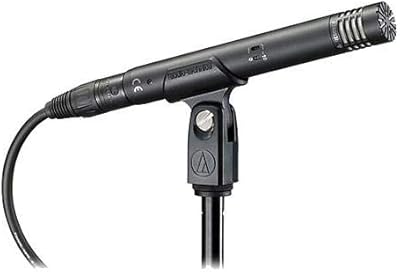
Overview

The Audix SCX1HC Hypercardioid Condenser Microphone has been a steady presence in professional audio circles since its 2009 debut — a long track record that speaks to its staying power. Despite some listing language that leans toward vocals, this Audix condenser was designed with instrument miking in mind, particularly for complex acoustic environments where bleed control matters. Its brass body construction signals durability right out of the box, and the standard XLR connection means there is nothing exotic about integrating it into an existing rig. This is a no-nonsense workhorse, not a flashy centerpiece.
Features & Benefits

What makes the SCX1HC particularly interesting is its hypercardioid polar pattern — a tighter pickup angle than a standard cardioid that aggressively rejects sound from the sides and rear. On a drum kit, that means hi-hat coverage without kick or snare bleeding all over your recording. The mic handles up to 130 dB SPL, so it will not flinch in loud environments. A 72 dB signal-to-noise ratio keeps the noise floor respectable, though not class-leading, and the 20 Hz–20 kHz frequency response captures the full audible range with solid clarity. Phantom power via XLR keeps things broadly compatible with virtually any standard interface or mixer.

Best For

This hypercardioid mic's tight pickup pattern makes it a natural fit for drum kit miking, especially hi-hats, where rejecting cymbal wash or snare bleed is critical to a clean mix. Live sound engineers who need to isolate a single source — a guitar amp, a horn, a choir section — in a dense stage environment will find the narrow pattern genuinely useful. It also suits home studio owners recording acoustic instruments in untreated rooms, since the focused capsule picks up less ambient room noise by design. Podcasters stepping up to an XLR-based setup may also find it a capable, reliable choice.

User Feedback

With around 20 verified ratings and a 4.3 out of 5 average, buyer sentiment toward this Audix condenser trends positive, though the sample size is small enough that individual opinions carry more weight than usual. Several users praised its solid build quality and noted the tight pattern performed well in loud live settings. On the other hand, a handful of buyers pointed out that the 72 dB SNR, while adequate, does not quite match pricier large-diaphragm studio condensers — worth knowing if an ultra-quiet noise floor is your top priority. Setup reportedly caused no headaches; most found it immediately compatible with standard gear.

Pros

  • Tight hypercardioid pattern excels at isolating sound sources and rejecting bleed in loud environments.
  • Brass body construction feels genuinely solid and built to handle the bumps of regular live use.
  • Handles up to 130 dB SPL, so it holds up confidently in front of loud instruments without distorting.
  • Full 20 Hz–20 kHz frequency response captures detail across the entire audible range.
  • Standard XLR connection works out of the box with virtually any interface, mixer, or preamp.
  • Several buyers noted quick, hassle-free setup with no compatibility issues on standard gear.
  • At 1.14 pounds, it is sturdy without being unwieldy on a mic stand or boom arm.
  • Audix has been producing professional microphones for decades, giving this model credible brand backing.
  • Phantom power operation keeps the power setup simple and universally compatible.
  • Has remained in active production since 2009, a quiet signal of long-term reliability.

Cons

  • A 72 dB signal-to-noise ratio trails behind premium large-diaphragm studio condensers at a similar investment level.
  • The hypercardioid pattern requires careful mic placement — small positioning errors cause noticeable tonal shifts.
  • No USB variant exists, so buyers without an XLR interface will need additional hardware before they can use it.
  • The review pool is very small, making it harder to spot patterns or confirm whether issues are widespread.
  • Not well-suited for capturing natural room sound or wide acoustic spaces where open pickup is needed.
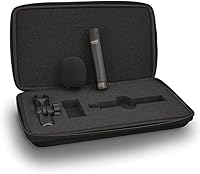
  • Lacks any included accessories such as a shock mount or carrying case, adding to the effective cost of ownership.
  • The product listing misdescribes some use-cases, which may create confusion for buyers researching before purchase.

Ratings

The Audix SCX1HC Hypercardioid Condenser Microphone has been scored by our AI rating engine after analyzing verified buyer reviews from multiple global sources, with spam, incentivized, and bot-generated feedback actively filtered out before scoring. Each category below reflects real-world usage patterns — both what buyers consistently praised and where they ran into friction. The scores are intentionally unvarnished: strengths and shortcomings are weighted equally so you can make a genuinely informed decision.
Sound Isolation
91%
The hypercardioid polar pattern is the defining strength here, and buyers who used this mic in live settings or on drum kits repeatedly highlighted how well it kept unwanted bleed out of the signal. Several drummers noted it handled hi-hat duty cleanly even in dense kit setups with cymbals and snare just inches away.
The tight pattern is a double-edged design — any source that moves or drifts off-axis quickly falls outside the pickup sweet spot. A few users found this unforgiving during dynamic vocal performances where the singer moved their head frequently.
Build Quality
88%
The brass body gave buyers real confidence in this mic's longevity. Several users who gigged with it regularly mentioned it held up well to the knocks and environmental wear of live touring without any rattles, loose parts, or finish degradation over time.
A handful of buyers noted the mic ships without a shock mount or carrying case, which means you are spending extra right away to protect that solid brass body during transport. For the investment, some felt protective accessories should be included as standard.
Noise Floor Performance
67%
33%
In live sound applications and loud acoustic environments, the 72 dB signal-to-noise ratio is more than adequate, and several users confirmed the output stayed clean and usable under real stage conditions where background noise was already a factor.
In quiet, well-treated studio environments, the noise floor becomes a more noticeable limitation. Buyers comparing this mic to higher-spec large-diaphragm condensers pointed out that the SNR trails behind what you get from pricier alternatives designed for ultra-quiet tracking sessions.
Ease of Setup
86%
Buyers across a wide range of experience levels found the SCX1HC straightforward to deploy — plug an XLR cable in, switch on phantom power, and it works. No drivers, no pairing, no configuration. Most users reported it was live and recording within minutes of unboxing.
The phantom power requirement is a hard dependency that catches some buyers off guard. Users who did not already own a phantom-power-capable interface had to factor in an additional purchase before they could use the mic at all, which added unexpected setup friction.
SPL Handling
89%
With a 130 dB maximum SPL rating, this mic handles loud sources confidently. Buyers who positioned it in front of guitar cabs, brass instruments, and directly over snare drums reported clean, undistorted capture even at punishing volume levels that would clip lesser mics.
While the high SPL ceiling is useful, some buyers noted there is no built-in pad switch to fine-tune the input sensitivity on the fly. Competing mics at a similar level sometimes include a switchable pad for added flexibility in extreme SPL scenarios.
Frequency Response
82%
18%
The full 20 Hz to 20 kHz response means the mic captures detail across the entire audible range, and several instrument recordists noted it preserved the natural high-frequency shimmer of cymbals and acoustic guitar without sounding brittle or hyped in the upper registers.
Some buyers noted the frequency response can feel clinical rather than flattering on certain sources, particularly vocals, where a slight presence lift or warmth in the low mids can make a meaningful difference. This is a neutral, accurate mic — not one tuned to flatter.
Compatibility
84%
Standard XLR connectivity means the SCX1HC works with virtually any professional or prosumer audio chain — interfaces, mixers, standalone preamps, and even preamp-equipped mic stands all reported zero compatibility issues. Buyers appreciated not having to worry about adapters or driver installs.
The lack of any USB or wireless option means this mic is locked out of setups that rely on direct computer connection without an interface. Buyers who wanted a simple plug-and-play desktop solution found this a firm limitation rather than a minor inconvenience.
Placement Flexibility
61%
39%
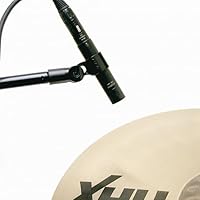
The pencil-style form factor and compact dimensions make physical positioning reasonably easy — it fits neatly on a small boom arm and can be angled precisely in tight spaces like a drum kit where a larger mic body would get in the way.
The strict hypercardioid pattern significantly reduces placement forgiveness. Getting the best sound requires accurate aiming, and small angular errors produce audible tonal changes. Users who were not already comfortable with hypercardioid mic technique found the learning curve steeper than expected.
Value for Money
73%
27%
For live sound engineers and drummers who specifically need tight-pattern isolation, the SCX1HC delivers what it promises at a professional level. Buyers who understood what they were buying before purchase generally felt the investment was justified by consistent real-world performance.
Buyers who expected a more versatile all-purpose condenser felt the price point was hard to justify given the narrow use case and the absence of features like a pad switch, built-in shock isolation, or included accessories that competing mics in this tier often provide.
Durability Over Time
83%
Users who had owned and regularly gigged the mic over extended periods reported no mechanical failures, capsule degradation, or connector issues. The brass construction appears to age well, and several long-term owners noted the mic still performed consistently after years of active use.
The review pool is relatively small, which makes it harder to draw firm long-term durability conclusions with high confidence. Buyers looking for a mic with thousands of documented long-term ownership reviews may find the limited sample size gives them less certainty than they would like.
Off-Axis Rejection
87%
Where the hypercardioid pattern truly earns its keep is in the off-axis rejection. Live sound engineers praised how effectively it attenuated monitor bleed and stage wash, reducing feedback risk and making it easier to push gain before the house mix became unruly.
The strong off-axis rejection comes with a rear lobe — a small area directly behind the capsule that the hypercardioid pattern does not fully null. In some stage setups, this rear lobe picked up unwanted reflections, requiring more careful positioning than a simple front-or-back mental model would suggest.
Hi-Hat & Cymbal Capture
92%
This is the scenario where this hypercardioid mic genuinely shines. Drummers consistently noted that hi-hat recordings came through with natural shimmer and definition while staying well isolated from the snare and ride directly beside it, delivering mix-ready tracks with minimal bleed cleanup needed.
The mic captures cymbals very accurately, which can be a downside if the cymbals themselves are not well-tuned or if the drummer plays inconsistently. The honest reproduction leaves little room for the mic to flatter a poor-sounding kit the way some colored microphones might.
Handling Noise
78%
22%
The brass body and overall mass of the mic help dampen mechanical vibrations from the stand, and several users noted that stand-transmitted rumble was less of an issue than they had experienced with lighter plastic-bodied mics at similar price points.
Without a factory-included shock mount, vibrations from a boom arm or squeaky stand do make their way into the signal more than they would with proper shock isolation in place. Buyers in rooms with any floor or structural vibration noticed this was a practical issue rather than a theoretical one.

Suitable for:

The Audix SCX1HC Hypercardioid Condenser Microphone is a strong fit for anyone who needs precise, isolated sound capture in acoustically challenging environments. Drummers and drum recordists will find it especially useful as a hi-hat or overhead mic, where its tight pickup pattern keeps cymbal bleed and kit noise from muddying the signal. Live sound engineers working dense stages — think horn sections, guitar amps close to monitors, or choir spots — will appreciate how effectively it rejects off-axis sound without requiring heavy EQ work after the fact. Home and project studio owners recording acoustic instruments in untreated rooms also benefit here, since the narrower hypercardioid pattern naturally captures less unflattering room ambience than a standard cardioid would. Podcasters and content creators who have already invested in an audio interface and want a durable, no-fuss XLR mic that performs consistently will find the SCX1HC a reliable upgrade over consumer-grade options.
Not suitable for:

Buyers expecting the Audix SCX1HC Hypercardioid Condenser Microphone to serve as a versatile all-purpose studio microphone may find it limiting. The hypercardioid pattern is a deliberate design choice that prioritizes isolation over wide, natural pickup — so if you are recording a room ambience, a choir in a reverberant hall, or any source where a spacious, open sound is the goal, a cardioid or omnidirectional mic will serve you far better. The 72 dB signal-to-noise ratio is respectable but not exceptional; engineers working in quiet studio environments who demand the lowest possible noise floor for delicate acoustic recordings may want to look at higher-spec large-diaphragm condensers. Beginners without an XLR-capable interface or phantom power source cannot use this mic at all, since there is no USB option or built-in power. And with only around 20 public reviews to draw from, buyers who rely heavily on broad community consensus before purchasing may feel they are working with limited data.
Specifications

  • Polar Pattern: The mic uses a hypercardioid polar pattern, which provides a tighter pickup angle than a standard cardioid and aggressively rejects sound arriving from the sides and rear.
  • Frequency Response: The SCX1HC covers a full 20 Hz to 20 kHz frequency range, capturing the complete audible spectrum without roll-off at the extremes.
  • Signal-to-Noise Ratio: The signal-to-noise ratio is rated at 72 dB, delivering a clean output suitable for detailed instrument and vocal recording in most professional contexts.
  • Max SPL: The microphone handles a maximum sound pressure level of 130 dB, making it capable of handling loud sources such as drums, brass instruments, and amplifiers without distortion.
  • Impedance: Output impedance is rated at 150 ohms, ensuring broad compatibility with standard preamps, audio interfaces, and mixing consoles.
  • Connectivity: The mic connects via a standard XLR connector, which is the professional industry standard for balanced audio transmission and phantom power delivery.
  • Power Source: The SCX1HC requires 48V phantom power delivered through the XLR cable, with no battery option or USB power mode available.
  • Body Material: The microphone body is constructed from brass, which contributes to mechanical durability, reduced handling resonance, and a solid feel in hand.
  • Weight: The unit weighs 1.14 pounds, making it sturdy enough to feel professional without being unwieldy on a standard boom arm or mic stand.
  • Dimensions: Physical dimensions are 11.35 x 6.5 x 2.4 inches, giving the mic a compact pencil-style profile suited for tight placement on drum kits or instrument setups.
  • Channels: This is a single-channel mono microphone, outputting one balanced audio signal per unit.
  • Color: The mic ships in a black finish, which is a neutral, professional appearance standard for live and studio use.
  • Compatible Devices: The SCX1HC works with audio interfaces, standalone mixers, preamp-equipped microphone stands, laptops, and desktop computers equipped with a phantom-power-capable input.
  • Brand: Manufactured by Audix, a U.S.-based company with a long history of producing professional microphones for live sound and studio recording applications.
  • Model Number: The official model designation is SCX1HC, distinguishing it from other microphones in the Audix SCX series with different capsule configurations.
  • First Available: This model was first listed in November 2009, giving it over 15 years of documented commercial availability as of 2025.
  • UPC: The product UPC is 687471241066, and it is identified by ASIN B002XOJMAA on Amazon.
  • Manufacturer Status: As of the latest available data, this microphone has not been discontinued by Audix and remains in active production.

Related Reviews
Audix D4
Audix D4
82%
94%
Low-Frequency Capture
92%
Build Quality & Durability
89%
Size & Positioning
88%
Isolation & Bleed Rejection
93%
High SPL Handling
More
Audio-Technica AT4053B Hypercardioid Condenser Microphone
77%
89%
Sound Quality
93%
Off-Axis Rejection
86%
Build Quality
72%
Value for Money
57%
Ease of Setup
More
Audix OM7
Audix OM7
83%
96%
Feedback Rejection
93%
Build Quality
84%
Vocal Clarity
61%
Sensitivity & Gain Requirements
91%
Off-Axis Rejection
More
Audix VX5 Supercardioid Condenser Microphone
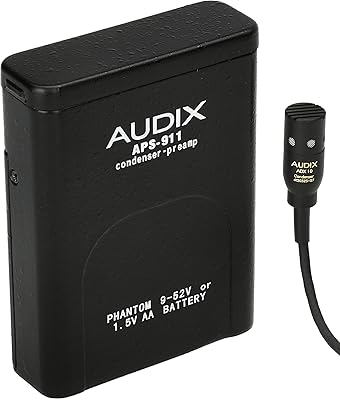
78%
91%
Vocal Clarity
88%
Feedback Rejection
86%
Build Quality
83%
Versatility
87%
Noise Floor
More
Audix ADX10-FLP Cardioid Condenser Flute Microphone
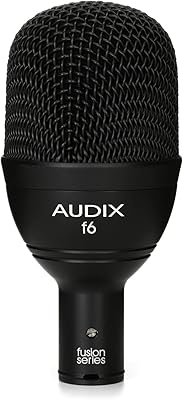
77%
88%
Sound Quality
84%
Noise Rejection
83%
Build Quality
71%
Clip & Mounting
67%
Capsule Placement
More
Audix F6 Hypercardioid Dynamic Kick Drum Microphone
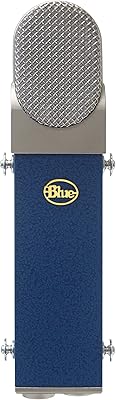
80%
91%
Low-End Sound Quality
94%
SPL Handling
86%
Bleed Rejection
72%
Placement Flexibility
88%
Build Quality
More
Blue Blueberry Cardioid Condenser Microphone
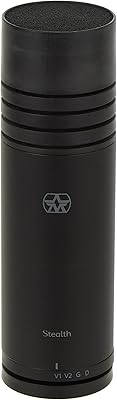
79%
93%
Tonal Character
91%
Vocal Performance
89%
Build Quality
94%
Capsule Quality
71%
Preamp Compatibility
More
Aston Microphones Stealth Condenser Microphone
79%
88%
Sound Quality
84%
Voice Mode Versatility
86%
Built-in Preamp
91%
Build Quality
83%
Value for Money
More
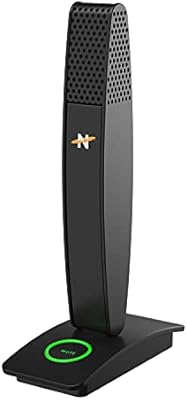
Neat Microphones Skyline USB Desktop Condenser Microphone
89%
94%
Audio Quality
91%
Ease of Use
89%
Build Quality
90%
Mute Button Functionality
92%
Value for Money
More
Aston Microphones Origin
85%
94%
Build Quality
89%
Vocal Clarity
92%
Instrument Response
71%
Internal Pop Filtering
91%
Price-to-Performance Ratio
More

FAQ

No, it does not. The SCX1HC is a condenser microphone and requires 48V phantom power to operate. If your interface, mixer, or preamp does not supply phantom power, you will need an external phantom power supply before you can use it.

Yes, and that is arguably its most natural use case. The hypercardioid polar pattern keeps a tight focus on the hi-hat while rejecting the bleed from nearby cymbals and the snare. Proper placement matters — position it above and angled toward the hi-hat to get the most out of the pattern.

Technically yes, but it was not really designed with that in mind. The hypercardioid pattern requires the speaker to stay closely on-axis, and any movement to the sides will cause noticeable tonal changes. For podcasting or vocals in a more relaxed setting, a standard cardioid mic is generally a more forgiving choice.

You need a standard balanced XLR cable — the same type used with the vast majority of professional microphones. One end plugs into the mic, the other into your interface, mixer, or preamp. Make sure your input also has phantom power enabled.

The key difference is the pickup angle. A standard cardioid is more forgiving and picks up a wider area around the front of the mic, which is great for natural-sounding recordings. The hypercardioid is stricter — it captures a narrower cone directly in front and rejects more from the sides, which is exactly what you want when bleed or ambient noise is a problem.

Based on user feedback and the brass body construction, yes. Several buyers specifically mentioned that the mic felt solid and held up well in live environments. That said, treat it with the same care you would any condenser microphone — condensers are generally more fragile than dynamic mics and should be handled accordingly.

As long as your USB interface has an XLR input with phantom power, absolutely. Most modern USB audio interfaces — from entry-level to professional — include at least one XLR combo jack with phantom power. Just make sure phantom power is switched on before connecting the mic.

No included accessories are listed with this microphone. You will need to source a compatible shock mount and storage or carrying case separately if you need them. Check Audix's accessories lineup or third-party options compatible with pencil-style condenser mics of this size.

It is respectable and perfectly usable for most instrument recording and live sound work. However, if you are doing very quiet acoustic recordings in a well-treated studio where every bit of noise floor matters, some higher-end condensers do offer better SNR figures. For hi-hat miking, drum overheads, and live use, 72 dB is not a practical limitation.

For hi-hats, aim the capsule directly at the top cymbal from a slight angle above, keeping it close enough to maximize isolation from the pattern. For overhead use, a spaced pair arrangement tends to work well, with each mic angled downward toward the kit. The tight hypercardioid pattern rewards precise placement, so take a few minutes to experiment before committing to a position.

Where to Buy