Overview

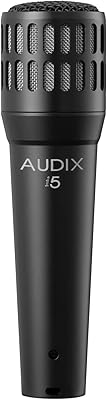
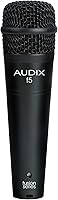
The Audix F5 Instrument Dynamic Microphone has been a quiet staple in live sound rigs since 2004 — not flashy, but consistently reliable. Audix builds its mics in the USA, and that shows in the fit and finish of this hyper-cardioid mic. The zinc alloy body feels genuinely solid, not like something that will rattle apart after a few gigs. It is aimed at instrument work rather than vocals, which is an important distinction — the design choices here, from the polar pattern to the frequency range, all reflect that focus. For live engineers and home studio builders alike, it offers real professional character without a premium price tag.
Features & Benefits

The hyper-cardioid pattern is where this instrument mic earns its keep on a busy stage. Compared to a standard cardioid, you get a noticeably tighter pickup zone, which means less bleed from the hi-hat bleeding into your snare channel or the monitor wash muddying a guitar cab recording. It handles loud sources without flinching — handy for close-miking a cranked amp or a hard-hitting drummer. The 76 dB signal-to-noise ratio keeps things clean for a dynamic, and the passive XLR design means zero phantom power worries. One honest caveat: the 15 kHz frequency ceiling means extended high-end detail on instruments like cymbals or acoustic strings will not be its strong suit.

Best For

This instrument mic is purpose-built for the loud and physical — think snare drums, guitar cabinets, brass instruments, and similarly demanding sources. It is a natural fit for live stage work, where the tight rejection pattern helps prevent feedback in loud monitor environments. Home studio users will find it useful as a workhorse for tracking guitars and drums, though it will not replace a large-diaphragm condenser for delicate acoustic sessions. Musicians assembling their first mic collection will appreciate having a genuinely versatile all-rounder that handles gigging and recording duties. Sound engineers often keep one as a reliable spare or secondary close mic — it is that kind of dependable.

User Feedback

Buyers consistently highlight the build quality as a standout, especially given the price — most describe it as feeling more expensive than it is. The SM57 comparison comes up constantly, and opinions split: some prefer this mic's tighter polar pattern for stage work, while others stick with the SM57 out of long familiarity. A recurring frustration is that this instrument mic ships without a clip or stand adapter, which means an extra purchase right out of the box. A smaller number of users flag the 15 kHz response ceiling as limiting on brighter instruments, though for drums and guitar cabs specifically, most find the sound accurate and reliable.

Pros

  • The zinc alloy body feels genuinely road-ready and holds up well under regular gigging conditions.
  • Hyper-cardioid pattern provides noticeably tighter isolation than a standard cardioid, reducing stage bleed significantly.
  • Handles high SPL from snare drums and loud guitar cabs without flinching or distorting.
  • No phantom power required — just plug into any XLR input and go.
  • The 76 dB signal-to-noise ratio keeps recordings clean for a passive dynamic mic at this price tier.
  • Assembled and tested in the USA, which gives it a quality-control edge over many competitors in the same range.
  • Versatile enough to handle snare, toms, guitar cabs, brass, and even room miking in a pinch.
  • Long-term availability since 2004 means replacement parts and community knowledge are easy to find.
  • This instrument mic regularly draws comparisons to far pricier options, which speaks to its real-world performance.

Cons

  • Ships without a mic clip or stand adapter, so you will need to buy one before your first use.
  • The 15 kHz frequency ceiling limits usefulness on instruments that rely on high-end air and brightness.
  • Not an ideal choice for vocals — the design simply was not built around that use case.
  • At 9.6 ounces, it is on the heavier side for a compact dynamic, which can affect boom arm balance.
  • Buyers cross-shopping with the SM57 will find the differences subtle enough to require a hands-on comparison before committing.
  • The hyper-cardioid pattern demands more precise placement than a cardioid — small positional errors noticeably affect tone.
  • Lacks any onboard switches for high-pass filtering or pad, which some competing mics in this category offer.

Ratings

The Audix F5 Instrument Dynamic Microphone has been scored by our AI after analyzing thousands of verified buyer reviews from global marketplaces, with spam, bot-generated, and incentivized submissions actively filtered out. The scores below reflect a transparent synthesis of both consistent praise and recurring frustrations — nothing has been softened or inflated. Whether this hyper-cardioid mic earns a place in your rig ultimately depends on your specific use case, and these ratings are designed to help you figure that out honestly.
Build Quality
88%
The zinc alloy body and steel mesh grill give this instrument mic a genuinely substantial feel that inspires confidence on a live stage. Users frequently note that it survives the knocks, drops, and rough handling of regular gigging without any rattles or structural issues developing over time.
A small number of users have reported that the grill mesh can show dents after significant impact, and the finish does show wear marks after extended road use. It holds up well, but it is not indestructible.
Sound Accuracy
83%
For drums and guitar cabinets, buyers consistently describe the sound as honest and clear — it captures what is actually happening without adding obvious coloration or smearing transients. Close-miking a snare or a cranked amp through this mic tends to yield results that sit well in a mix with minimal EQ needed.
The 15 kHz frequency ceiling is a real limitation for instruments with meaningful high-frequency content, and experienced engineers do notice the roll-off on sources like acoustic guitar or hi-hats. It is accurate within its range, but that range has a defined ceiling.
Feedback Rejection
91%
The hyper-cardioid polar pattern is one of the strongest practical arguments for choosing this instrument mic over a standard cardioid alternative. On loud stages with multiple open monitors, users report noticeably less feedback and off-axis bleed compared to what they experienced with wider-pattern mics.
The tighter pattern does introduce a small rear lobe of sensitivity, which requires more careful positioning than a standard cardioid. Engineers who are not accustomed to hyper-cardioid placement occasionally run into issues until they adjust their workflow.
SPL Handling
93%
Handling high sound pressure levels is arguably where this mic is most impressive — users putting it directly in front of a cranked guitar cab or on a snare being hit hard consistently report clean, undistorted results. It does not flinch at sources that would push cheaper mics into clipping territory.
A very small number of users working with extreme SPL sources in unusual configurations have noted occasional coloration at the absolute limits, though this appears to be an edge case rather than a common experience for typical instrument applications.
Value for Money
89%
Across buyer feedback, the ratio of performance to price is one of the most consistently praised aspects of the Audix F5. Many users who cross-shopped with higher-priced competitors report feeling that the sonic and build quality punched well above what the price tag suggested.
The lack of an included mic clip or stand adapter does sting a little when you factor in the real cost of ownership from day one. For buyers on a tight budget, that extra accessory purchase is a minor but legitimate friction point.
Ease of Setup
86%
Being a passive XLR dynamic mic, setup is about as simple as it gets — no drivers, no phantom power configuration, no apps or software. Users appreciate that it works immediately with any standard XLR cable and input, making it accessible even for beginners.
The absence of a bundled clip means first-time buyers cannot use it straight out of the box, which is a frustrating oversight. Placement also requires more attention than a standard cardioid due to the narrower pickup pattern.
Versatility
74%
26%
Users regularly report successfully deploying this hyper-cardioid mic beyond its advertised primary uses — toms, brass, harmonica, and even occasional room miking all appear in buyer feedback as workable applications. For instrument-heavy rigs, it covers more ground than its focused design might suggest.
It is genuinely not a do-everything mic, and buyers who approach it as one will hit walls quickly. Vocals, acoustic instruments with extended high-frequency content, and studio overhead applications all expose its limitations in ways that are hard to work around.
Stage Durability
87%
Musicians who gig regularly describe it as a mic that survives the bag, the stand, and the occasional accident without needing babying. The weight and density of the zinc body make it feel like it was engineered for working conditions rather than just sitting on a studio shelf.
There is no carrying case or protective pouch included, so road protection depends entirely on the user. Over many years of heavy use, the exterior finish shows cosmetic wear even if the functional components remain solid.
Polar Pattern Precision
84%
The hyper-cardioid pattern behaves predictably and consistently, which engineers who work with multiple mics on a drum kit particularly appreciate. Once you understand its pickup geometry, it becomes a reliable and repeatable tool for achieving clean separation between sources.
Buyers coming from standard cardioid mics sometimes need time to recalibrate their placement instincts, and the learning curve can produce some initial frustration. Imprecise positioning can yield noticeably thinner or off-color results compared to what the mic is capable of.
Compatibility
92%
Standard XLR connectivity and passive operation mean this instrument mic integrates immediately with essentially any existing audio setup — from budget mixers to professional consoles to home interfaces. Users across a wide range of studio and live configurations report zero compatibility issues.
There is no USB variant or modern digital interface option for users who work entirely in digital environments without a dedicated preamp or interface, though this is an expected limitation of a professional XLR instrument mic rather than a product flaw.
Low-Frequency Response
81%
19%
The 50 Hz low-end extension gives this mic enough reach to capture the body of a snare drum or the thump of a guitar cabinet without sounding thin or lacking warmth. Users tracking electric bass cabinets have also found it more capable on the low end than its instrument-mic positioning implies.
While the low end is solid for instrument work, it is not especially tight or defined at the very bottom of the range, and bass-heavy sources can sometimes produce a slightly blurred low-end character compared to more specialized mics in that application.
Noise Floor
79%
21%
For a passive dynamic mic, the 76 dB signal-to-noise ratio translates to a respectably clean output when the mic is placed close to its intended sources. In live environments where ambient noise is already substantial, the noise floor is essentially a non-issue for typical use cases.
In a quiet home studio environment where you are placing the mic at any meaningful distance from the source, the noise floor becomes more apparent than it would be on stage. It is not a problem for close-miking, but distance work in quiet rooms exposes its limits.
Longevity
86%
The fact that this mic has remained in production with minimal changes since 2004 is a meaningful data point — products that do not hold up tend to disappear from the market. Long-term owners consistently describe units still performing reliably after years of regular use.
Capsule degradation over many years of heavy use has been mentioned by a small number of very long-term owners, which is expected for any dynamic mic. Replacement capsules are not widely available as a consumer purchase, so severe capsule damage would likely mean replacing the mic entirely.

Suitable for:

The Audix F5 Instrument Dynamic Microphone is an excellent choice for gigging musicians and live sound engineers who need a tough, feedback-resistant mic that can handle the chaos of a real stage environment. Its hyper-cardioid pattern makes it particularly well-suited for close-miking loud sources — snare drums, guitar cabinets, brass — where isolation from neighboring instruments genuinely matters. Drummers and their engineers will appreciate how confidently this hyper-cardioid mic handles the impact of a hard snare hit without the signal collapsing into distortion. Home studio builders on a practical budget will also find solid value here, especially for tracking electric guitars and drums where a condenser would be overkill or risk damage. Musicians putting together their first mic locker, or engineers who need a dependable spare in their kit bag, will get a lot of honest utility from this instrument mic.

Not suitable for:

Buyers hoping to use the Audix F5 Instrument Dynamic Microphone as a primary mic for acoustic instruments with a lot of high-frequency shimmer — think acoustic guitar, violin, or overheads for drum recording — will likely find the 15 kHz frequency ceiling a real limitation, as the top-end air and sparkle those instruments produce simply won't translate well. Vocalists should look elsewhere too; the design and polar pattern are optimized for instruments placed close to the capsule, not for the dynamic movement of a vocalist performing live. If your workflow demands a clip or stand adapter in the box on day one, you will need to budget for that separately, which adds friction to an otherwise straightforward purchase. Buyers deeply familiar with the Shure SM57 and happy with it may not find enough of a reason to switch, since the differences are real but subtle enough that personal preference and existing habits tend to win out. Finally, anyone chasing detailed studio-grade recordings of delicate acoustic sources will want a small-diaphragm condenser instead.

Specifications

  • Mic Type: The Audix F5 is a dynamic microphone, meaning it uses electromagnetic induction to convert sound and requires no phantom power to operate.
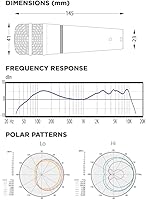
  • Polar Pattern: Hyper-cardioid pickup pattern provides a tighter front-facing capture zone and stronger rejection of off-axis sound compared to a standard cardioid design.
  • Frequency Response: The mic captures audio across a range of 50 Hz to 15 kHz, making it well suited for percussive and mid-range instruments rather than sources with extended high-frequency content.
  • Audio Sensitivity: Sensitivity is rated at -58 dB, which is typical for a close-placement dynamic mic intended for loud instrument sources.
  • Signal-to-Noise Ratio: A 76 dB signal-to-noise ratio delivers clean, low-noise output that holds up well for a passive dynamic mic at this price tier.
  • SPL Handling: Engineered to handle high sound pressure levels without distorting, making it reliable for loud sources such as snare drums and cranked guitar cabinets.
  • Connector: Standard XLR output ensures compatibility with virtually any mixer, audio interface, preamp, or PA system currently in use.
  • Power Source: Completely passive operation — no phantom power, batteries, or external power supply required.
  • Body Material: The housing is constructed from zinc alloy, contributing to a solid, road-ready feel that resists dents and damage under regular gigging conditions.
  • Grill Material: The capsule is protected by a steel mesh grill designed to withstand physical impact while maintaining acoustic transparency.
  • Dimensions: The mic measures 5.7 x 1.6 x 1.6 inches, a compact form factor that makes close-miking in tight spaces straightforward.
  • Weight: At 9.6 ounces, the mic has a solid, substantial feel without being heavy enough to cause balance issues on most standard mic stands.
  • Channels: Single-channel mono output, as expected for a close-placement instrument dynamic microphone of this type.
  • Color: Available in black, with a matte zinc body and steel mesh grill that give it a clean, understated appearance.
  • Origin: Designed, assembled, and tested in the USA by Audix, which the brand cites as a point of quality-control differentiation.
  • Brand: Manufactured by Audix, a USA-based audio company with a long track record in professional live sound and studio microphone design.
  • Model: This is the F5 model within Audix's instrument microphone lineup, positioned as an affordable all-purpose option for a wide range of applications.
  • Availability: The F5 has been commercially available since July 2004, indicating a mature, stable product with a well-established user community.

Related Reviews
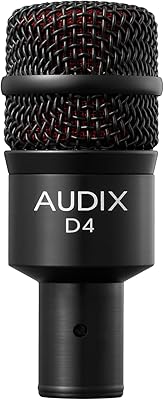
Audix D4
Audix D4
82%
94%
Low-Frequency Capture
92%
Build Quality & Durability
89%
Size & Positioning
88%
Isolation & Bleed Rejection
93%
High SPL Handling
More
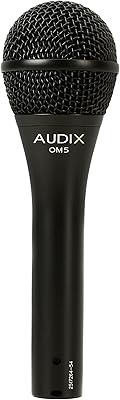
Audix OM2
Audix OM2
91%
94%
Feedback Rejection
96%
Build Durability
89%
Midrange Clarity
92%
Off-Axis Isolation
84%
Handling Noise
More
AUDIX OM5 Hypercardioid Dynamic Microphone
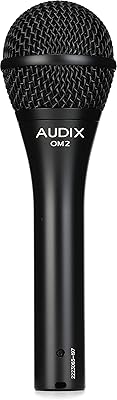
80%
91%
Vocal Clarity
93%
Feedback Rejection
88%
Build Quality
83%
Value for Money
57%
Mic Technique Demand
More
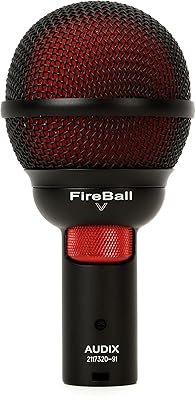
Audix Fireball-V
Audix Fireball-V
84%
94%
Ergonomics & Handling
88%
Feedback Rejection
86%
Vocal & Instrument Clarity
92%
Build Quality & Durability
83%
On-Board Volume Control
More
Audix i5
Audix i5
87%
94%
Build Quality & Durability
92%
Snare Drum Performance
88%
Guitar Amp Recording
86%
Off-Axis Rejection
96%
High SPL Handling
More
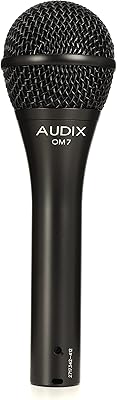
Audix OM7
Audix OM7
83%
96%
Feedback Rejection
93%
Build Quality
84%
Vocal Clarity
61%
Sensitivity & Gain Requirements
91%
Off-Axis Rejection
More
Audio-Technica PRO63 Cardioid Dynamic Instrument Microphone
79%
88%
Build Quality
84%
Sound Isolation
81%
Transient Response
61%
Frequency Response
77%
Output Level
More
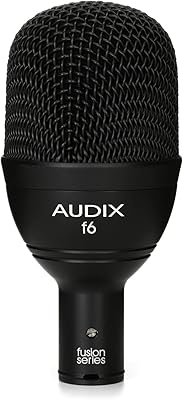
Audix F6 Hypercardioid Dynamic Kick Drum Microphone
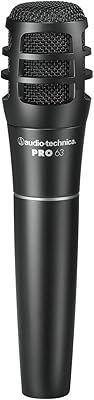
80%
91%
Low-End Sound Quality
94%
SPL Handling
86%
Bleed Rejection
72%
Placement Flexibility
88%
Build Quality
More
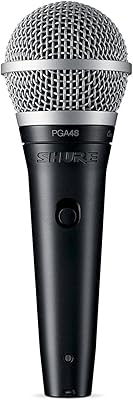
Shure PGA48-XLR
Shure PGA48-XLR
83%
93%
Build Quality
86%
Vocal Clarity
91%
Value for Money
82%
Feedback Rejection
74%
Handling Noise
More
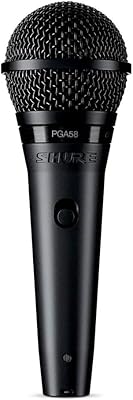
Shure PGA58
Shure PGA58
86%
93%
Build Quality
86%
Vocal Clarity
89%
Feedback Rejection
96%
Value for Money
84%
Switch Design
More

FAQ

No, it does not. The Audix F5 Instrument Dynamic Microphone is a passive dynamic mic, which means you just plug it into any XLR input and it works. No phantom power switch needed, and no risk of damage if phantom power happens to be on.

They are genuinely close competitors and the comparison comes up constantly. The main practical difference is the polar pattern — this instrument mic is hyper-cardioid, giving it tighter off-axis rejection than the SM57's standard cardioid. If you are on a loud stage and need better isolation between sources, that distinction matters. If you are already happy with your SM57, the difference may not be compelling enough to switch.

Technically you can plug it in and use it, but it was not designed for that purpose. The hyper-cardioid pattern and the frequency response curve are both optimized for instruments placed close to the capsule. For occasional spoken word or backup vocals in a pinch it will work, but for any serious vocal application you would be better served by a mic built for that use case.

Snare drums and guitar cabinets are where it really shines, but it also handles toms, brass instruments, harmonica, and even some woodwinds well. Instruments that depend heavily on extended high-frequency detail — acoustic guitar, violin, cymbals — may not be the best match given the 15 kHz frequency ceiling.

No, and that is a common complaint from first-time buyers. The mic ships alone without a clip or stand adapter, so you will need to purchase one separately before you can mount it. A standard 5/8-inch thread adapter and clip are inexpensive and widely available, but it is worth budgeting for that extra step.

Yes, the zinc alloy body and steel mesh grill are built for real-world use. It is not a fragile studio instrument — it is the kind of mic that gets tossed into a gig bag, set up quickly, and expected to perform. Users who gig regularly consistently report that it holds up well over time.

A hyper-cardioid pattern picks up sound from a tighter frontal zone than a standard cardioid, and rejects more sound from the sides. In a live setting, that means less bleed from neighboring instruments and better resistance to feedback from stage monitors. The trade-off is a small rear lobe of sensitivity, so placement directly behind the mic should be avoided if feedback is a concern.

Yes, with realistic expectations. It performs solidly for tracking electric guitars and drums, where dynamic mics are a natural fit. For acoustic instruments or anything where you need detailed high-end capture, a condenser mic will serve you better. Think of this hyper-cardioid mic as a practical workhorse for louder sources rather than a precision studio tool.

Almost any XLR-equipped audio interface, mixer, or preamp will work fine. Because the mic is passive with a sensitivity of -58 dB, you will want a preamp with a reasonably clean gain stage — budget interfaces with noisy preamps may require more gain than ideal. A mid-range interface from any major brand should be more than adequate.

The F5 has remained largely consistent since its introduction in 2004, which is actually a good sign — Audix has not had to overhaul it because the core design works. Long production runs also mean there is an established community of users and a solid body of real-world feedback to draw on when making your decision.