
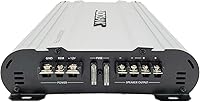
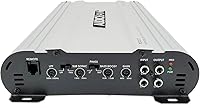
Overview

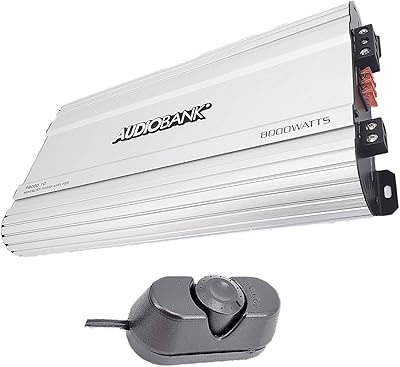
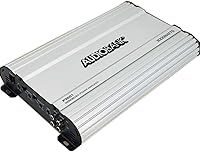
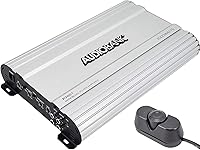
The Audiobank P3001 Monoblock Car Amplifier is a single-channel amp built for drivers who want real bass punch without spending serious money. It runs on Class A-B operation, which strikes a reasonable balance between power efficiency and audio quality — something you genuinely appreciate during long commutes. The aluminum alloy chassis keeps the whole unit under six pounds, so mounting options stay fairly flexible. At its price point, this budget car amp isn't competing with boutique brands; it's aimed squarely at everyday enthusiasts who want to feel their music without financing an audio overhaul. That's a legitimate and underserved sweet spot in the car audio market.

Features & Benefits

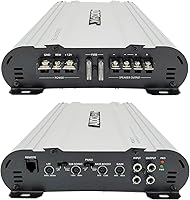
The headline spec is a 3000W peak output, but let's be honest about what that means: peak wattage is measured under momentary, ideal conditions. Real-world RMS output — the number describing sustained, usable power — will land considerably lower. Still, this mono amp provides enough headroom to drive a single subwoofer with real authority. It's 2-ohm stable, offering some wiring flexibility depending on your subwoofer's configuration. The heavy-duty heatsink does solid work keeping temperatures in check during longer drives, and the soft turn-on circuit prevents those annoying electrical thumps at startup. LED indicators for power and protection status are a genuinely practical touch that first-timers will appreciate.

Best For

This Audiobank amplifier makes the most sense for someone building their first car audio setup on a strict budget — think a sedan, hatchback, or mid-size SUV paired with a single subwoofer. You don't need to be an experienced installer; the wiring layout is intuitive enough that a careful first-timer can manage it without professional help. What it isn't suited for is running multiple subwoofers, chasing serious SPL competition numbers, or expecting premium build quality at every point. Think of it as a practical entry into mono amplification — dependable for daily listening, but not engineered for the show floor or aggressive sustained use.

User Feedback

Across several hundred ratings, the pattern is consistent: buyers who set realistic expectations tend to come away satisfied, while those comparing it against pricier competition often don't. Installation ease is praised frequently — people appreciate a straightforward layout that doesn't demand hours of head-scratching. Heatsink construction earns decent marks too. Where things get uncertain is long-term reliability; a notable portion of negative reviews describe units failing after months of regular use, which is a real concern worth acknowledging. Terminal quality is broadly described as average. If you plan to push this budget car amp hard on a regular basis, factor that durability question into your decision before buying.

Pros

  • Accessible price point makes entry-level subwoofer amplification genuinely affordable for most budgets.
  • Class A-B operation provides a reasonable balance between power draw and audio quality for daily use.
  • 2-ohm stable design gives some flexibility in how you wire your subwoofer for optimal output.
  • Heavy-duty aluminum heatsink handles thermal load well enough for typical daily listening sessions.
  • Soft turn-on circuit eliminates startup thumps, protecting both your speakers and your sanity.
  • Remote turn-on integration works cleanly with most aftermarket head units without extra adapters.
  • LED power and protection indicators make it easy to diagnose issues at a glance during installation or troubleshooting.
  • Lightweight build at under six pounds simplifies mounting in tight under-seat or trunk locations.
  • First-time installers consistently praise the straightforward wiring layout for reducing setup guesswork.

Cons

  • Claimed peak wattage is significantly higher than the real-world sustained output most users will actually experience.
  • A notable share of buyers report reliability issues appearing after several months of regular use.
  • Terminal and connector quality feels average, which can complicate wiring or cause frustration on revisits.
  • Not designed for multi-subwoofer setups, limiting upgrade paths without replacing the amp entirely.
  • No published RMS rating makes it genuinely difficult to match this amp accurately to a subwoofer's specs.
  • Build quality at the component level does not inspire confidence for heavy, sustained high-volume use.
  • Buyers chasing SPL competition numbers or precision audio tuning will find this amp too basic for their needs.

Ratings

The scores below reflect an AI-driven analysis of verified global buyer reviews for the Audiobank P3001 Monoblock Car Amplifier, with spam, bot-submitted, and incentivized feedback actively filtered out before scoring. Each category captures both the genuine praise and the real frustrations that everyday buyers have reported after installing and living with this amp. Nothing has been smoothed over — where the product underperforms, the scores and commentary reflect that honestly.

Value for Money
81%
19%
At its price tier, buyers consistently report that this mono amp delivers more bass presence than they expected for the spend. For someone upgrading from zero amplification on a tight budget, the perceived return is strong — particularly for hip-hop and EDM listeners where low-end punch matters most.
Value perception drops noticeably when buyers start comparing the rated peak wattage against real-world output. Those who did their research beforehand felt satisfied; those expecting the headline number to translate directly into sustained power were disappointed.
Sound Performance
68%
32%
For casual subwoofer use in a daily driver, this Audiobank amplifier moves enough air to make a genuine difference over factory audio. Listeners running a single 10-inch or 12-inch sub in a sedan or hatchback generally describe the bass as punchy and satisfying at moderate volumes.
At higher volumes or with demanding subwoofer loads, the output starts to feel compressed and the overall bass definition softens. Audiophile-oriented buyers or those accustomed to properly rated mid-range amps will find the performance ceiling arrives sooner than expected.
Build Quality
62%
38%
The aluminum alloy heatsink is the standout construction element — it feels substantial and dissipates heat reasonably well during normal sessions. The overall chassis has enough rigidity to survive a typical trunk installation without rattling loose over time.
Terminal and connector quality is where the build lets itself down. Multiple users describe the binding posts as feeling flimsy, which becomes an irritant when tightening down thicker gauge wiring. Fit and finish elsewhere on the unit is described as functional but unremarkable.
Reliability & Longevity
54%
46%
A fair share of buyers report months of trouble-free use under moderate, daily listening conditions. For someone who isn't pushing the amp hard or running it near its thermal limits regularly, short-to-medium term reliability is acceptable for the price.
Long-term reliability is the most frequently cited concern in negative reviews. A meaningful number of users report unit failures after several months of sustained use, particularly when the amp is driven at high volumes consistently. This is a legitimate risk at this price tier and should factor into the buying decision.
Thermal Management
71%
29%
The heavy-duty heatsink does a competent job during standard daily commutes and moderate listening sessions. Most buyers report that the amp stays warm but not alarmingly hot under those conditions, and thermal shutdown events are relatively uncommon in everyday use scenarios.
In enclosed or poorly ventilated mounting locations — a sealed trunk box or under-seat enclosure with minimal airflow — heat buildup becomes a more pressing issue. Several users triggered thermal protection by running the amp in tight spaces without accounting for adequate airflow clearance.
Installation Ease
83%
This is consistently one of the most praised aspects across user feedback. First-time installers specifically call out the wiring layout as intuitive, with clearly labeled terminals and a logical input-to-output flow that reduces guesswork during a first build. The soft turn-on circuit also prevents the startup thumps that frustrate new installers.
The average terminal quality does create some friction for installers using heavier gauge wiring. Tightening 4-gauge or larger wire into the power and ground terminals requires patience, and a few users report stripped terminal screws during the process.
Power Output Accuracy
41%
59%
The amp does produce usable output for subwoofer applications, and for listeners who did not anchor their expectations to the peak wattage figure, the actual performance is sufficient for casual bass reinforcement in a standard vehicle cabin.
The gap between the 3000W peak claim and real-world RMS output is significant, and this is the single most common source of buyer frustration. No official RMS figure is published, making it nearly impossible to properly match this amp to a subwoofer by the numbers — a genuine flaw in how the product is marketed.
Protection Features
74%
26%
Thermal shutdown and speaker short-circuit protection both function as intended in normal use cases. The LED indicators provide quick visual confirmation of amp status, which is especially useful during initial setup when troubleshooting wiring errors is common.
While the protection circuitry is appreciated, some users report the thermal protection triggers prematurely in warmer climates or during summer months, cutting audio unexpectedly. This suggests the thermal threshold may be set conservatively relative to the heatsink capacity.
Compatibility
77%
23%
The 2-ohm stable rating gives buyers some flexibility in how they configure their subwoofer wiring, and the remote turn-on circuit is broadly compatible with most aftermarket head units. It functions well as a single-sub solution across a wide range of vehicle types.
Factory head unit integration requires a line output converter, which adds cost and complexity that budget buyers may not anticipate. Additionally, the single-channel design means this amp cannot grow with a system that later expands to multiple subwoofers.
Packaging & Accessories
58%
42%
The product arrives adequately protected in its box, and most buyers report no cosmetic damage on delivery. For a budget amp, the unboxing experience is functional without any notable deficiencies in how the unit is packed.
Accessories included in the box are minimal — wiring, instructions, and mounting hardware are not included, which catches some first-time buyers off guard. Budget shoppers who assumed a complete kit will need to factor in additional wiring costs separately.
Aesthetics & Form Factor
66%
34%
The compact dimensions make it genuinely easy to tuck into under-seat locations or smaller trunk builds without dominating the available space. The heatsink fins give it a reasonably purposeful visual presence that fits comfortably in an entry-level car audio context.
The overall visual finish is basic — the branding and surface treatment feel consistent with the price tier rather than punching above it. Buyers who care about a clean, polished install aesthetic may find it underwhelming next to even modestly more expensive alternatives.
Noise & Signal Clarity
63%
37%
At moderate gain settings with a clean RCA signal source, the amp produces reasonably quiet operation without excessive hiss or alternator whine intruding on the bass signal. For listeners focused purely on low-frequency output, background noise is not typically a major complaint.
Some users report audible noise floors, particularly when gain is set aggressively or when using lower-quality signal sources. Ground loop interference has also been flagged by a handful of installers, suggesting the chassis grounding quality could be more robust.

Suitable for:

The Audiobank P3001 Monoblock Car Amplifier is a strong fit for budget-conscious car audio enthusiasts who want meaningful bass improvement without committing to a high-end system. It works particularly well in mid-size vehicles — sedans, hatchbacks, compact SUVs — where a single subwoofer is all that's needed to fill the cabin with low-end presence. First-time installers will find the wiring layout approachable, and the built-in protection features provide a reasonable safety net for those still learning the ropes. Drivers who primarily listen to bass-heavy genres like hip-hop, EDM, or trap will get the most satisfaction here, where punch and presence matter more than audiophile-grade precision. If your goal is a noticeable, affordable upgrade over factory sound without overcomplicating your setup, this mono amp delivers a reasonable return on investment.

Not suitable for:

The Audiobank P3001 Monoblock Car Amplifier is not the right tool for experienced car audio builders who need verified RMS output numbers, consistent long-term reliability, or competition-grade performance. Buyers planning to run multiple subwoofers should look elsewhere, since this is a single-channel design with no flexibility for multi-driver configurations. Those who tend to push their system hard daily — long commutes at high volume, frequent bass-heavy listening sessions — should take the durability concerns from real-world user feedback seriously before buying. The terminal and connector quality has been described as average at best, which can become a frustration point during installation or if wiring needs to be revisited later. Anyone expecting peak wattage figures to reflect sustained, real-world power output will likely come away disappointed, as that gap between rated and actual performance is one of the most common complaints at this price tier.

Specifications

  • Brand: Manufactured and sold under the Audiobank brand, a budget-oriented car audio label.
  • Model Number: This amplifier carries the model designation P3001.
  • Output Power: Rated at 3000W peak output, though real-world sustained RMS power will be significantly lower under typical operating conditions.
  • Operation Class: Class A-B operation, which balances power efficiency with audio fidelity for everyday listening use.
  • Channels: Single-channel monoblock configuration, designed exclusively for driving one or more subwoofers.
  • Impedance: Stable operation at a minimum of 2 ohms, allowing some flexibility in subwoofer wiring arrangements.
  • Operating Voltage: Rated for operation at up to 16 volts, compatible with standard 12V automotive electrical systems.
  • Heatsink: Heavy-duty aluminum alloy heatsink is integrated into the chassis to manage thermal buildup during use.
  • Protection: Built-in thermal protection and speaker short-circuit protection help safeguard both the amplifier and connected subwoofer.
  • Turn-On Circuit: Soft turn-on circuit minimizes electrical stress on the vehicle system at startup, paired with a remote turn-on/turn-off function.
  • Indicators: LED indicators display real-time power status and protection alerts directly on the unit.
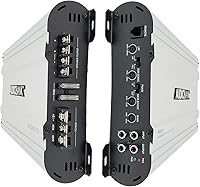
  • Mounting Type: Designed for surface mounting, typically in a trunk, under a seat, or on a custom enclosure board.
  • Item Weight: The unit weighs 5.65 pounds, keeping installation manageable without requiring additional support structures in most vehicles.
  • Dimensions: Package dimensions measure 15.19 x 8.97 x 2.91 inches, reflecting a compact profile suited to confined mounting spaces.
  • Availability: This model has been available on the market since October 2019, giving it several years of real-world user feedback.

Related Reviews
Audiobank P6001 6000W Class D Monoblock Car Amplifier
86%
90%
Audio Performance
87%
Ease of Installation
91%
Thermal Protection
85%
Build Quality
89%
Power Output
More
Audiobank P1601 Monoblock Car Amplifier
73%
84%
Value for Money
57%
Power Output Accuracy
88%
Installation Experience
61%
Thermal Management
76%
Bass Quality
More
LKC PHF450D Car Audio Monoblock Amplifier
88%
91%
Power Output (2 Ohms)
87%
Power Output (4 Ohms)
93%
Heat Dissipation
88%
Build Quality
85%
Ease of Integration
More
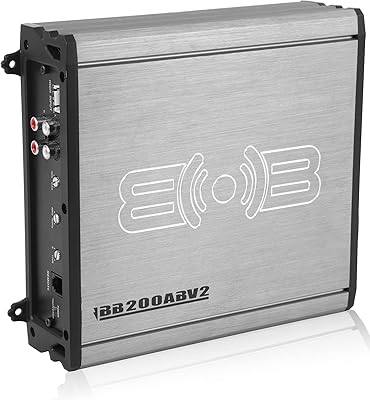
Belva BB200ABv2 500W Monoblock Car Amplifier
85%
88%
Bass Performance
91%
Installation Ease
85%
Sound Clarity
89%
2-Ohm Stability
82%
Build Quality
More
Audiobank P8001 Monoblock Car Amplifier
63%
74%
Value for Money
31%
Power Accuracy
81%
Ease of Installation
57%
Build Quality
53%
Thermal Management
More
Planet Audio AC2500.1M Monoblock Car Amplifier
85%
92%
Performance
95%
Bass Output
85%
Ease of Installation
65%
Thermal Performance
88%
Build Quality
More
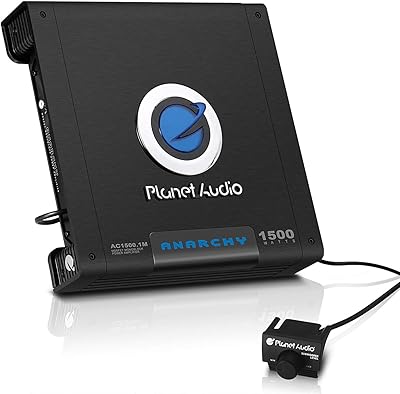
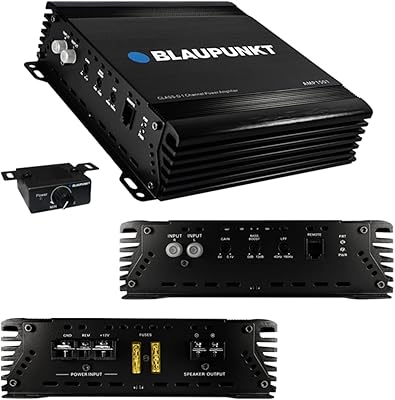
Planet Audio AC1500.1M Monoblock Car Amplifier
75%
91%
Value for Money
78%
Bass Output Quality
86%
Ease of Installation
61%
Thermal Management
67%
Build Quality
More
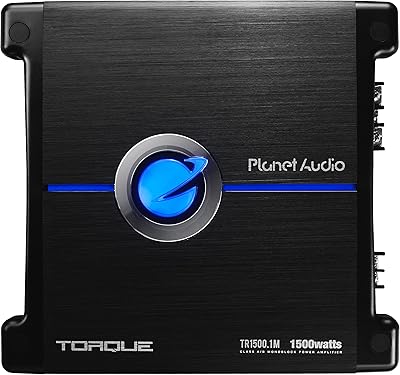
Planet Audio TR1500.1M Monoblock Car Amplifier
70%
88%
Value for Money
79%
Bass Output & Performance
83%
Ease of Installation
63%
Build Quality
57%
Thermal Management
More
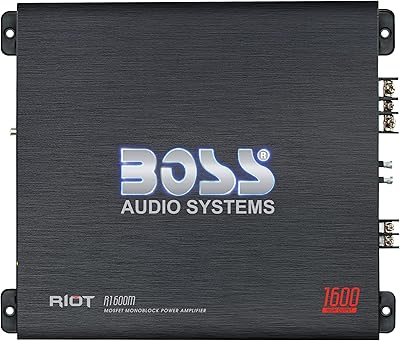
BOSS Audio R1600M Monoblock Car Amplifier
72%
83%
Value for Money
88%
Ease of Installation
79%
Bass Output
61%
Build Quality
86%
Signal Flexibility
More
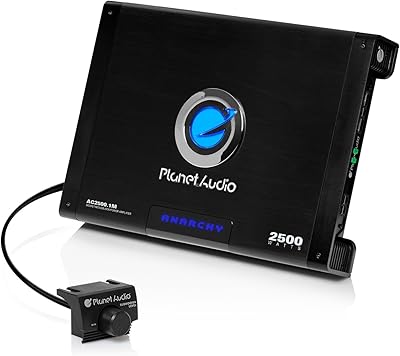
Blaupunkt AMP1500M Monoblock Car Amplifier
73%
81%
Value for Money
63%
Real-World Power Output
88%
Ease of Installation
77%
Audio Clarity
58%
Build Quality
More

FAQ

Not in any practical sense. The 3000W figure is a peak rating measured under momentary, idealized conditions — not something you will see during normal listening. Sustained RMS output, which is the number that actually matters for matching an amp to a subwoofer, is considerably lower. Audiobank does not publish an official RMS spec, so treat the peak number as a rough ceiling rather than a reliable performance benchmark.

It can drive most single subwoofers in the 10-inch to 12-inch range without issue for everyday listening. For best results, match the subwoofer's RMS power handling to the amplifier's realistic sustained output rather than chasing the peak wattage figure. A quality single 10-inch or 12-inch sub paired sensibly with this amp will produce solid bass for a daily driver setup.

Yes, and that is one of the reasons it shows up frequently in first-time build recommendations. The terminal layout is intuitive, and the wiring process follows the same basic steps as most car amps — power, ground, remote turn-on, signal inputs, and speaker output. Just make sure you use an appropriately rated fuse near the battery and follow standard installation safety practices.

You can use it with a factory head unit, but you may need a line output converter to translate the speaker-level signal into the RCA preamp signal this amp expects. If your factory radio already has RCA preamp outputs, you can connect directly. The remote turn-on circuit can also be wired to an accessory circuit if your factory radio does not have a dedicated remote turn-on wire.

The aluminum alloy heatsink does a reasonable job managing heat under typical daily driving conditions. You will notice it gets warm after extended listening sessions, which is normal. That said, mounting it in an enclosed space with no airflow is not recommended — leave some clearance around the heatsink to let heat dissipate properly and avoid triggering the thermal protection circuit.

For an amp at this power level, most experienced installers recommend 4-gauge power and ground wiring as a minimum. Some prefer to run 1/0-gauge for headroom, especially if the run from the battery is long. A quality ground connection to bare metal on the vehicle chassis is just as important as the power wire, so do not overlook that step.

Audiobank does not publish detailed crossover or EQ specifications for this model. Budget amps in this category often include a basic low-pass filter for subwoofer use, but the extent of onboard tuning controls is not officially documented. Check the physical unit for any crossover or bass boost knobs upon arrival, and plan to do most of your fine-tuning at the head unit level if controls are limited.

For casual daily listening at moderate volumes, a good number of buyers report satisfactory results over several months. However, a notable portion of user reviews do flag reliability concerns with extended heavy use — particularly running the amp hard at high volumes over a long period. If you plan to push the system aggressively or use it as a permanent high-output solution, this budget car amp may not be built to the standard that kind of sustained stress demands.

It depends on the subwoofers and how you wire them. Since this is a monoblock amp stable down to 2 ohms, you could theoretically run two 4-ohm subwoofers wired in parallel, which presents a 2-ohm load. However, two subwoofers sharing the output of a budget-tier mono amp will each receive less power than a single driver would, so evaluate whether that trade-off makes sense for your goals before deciding.

When the protection LED activates, the amp has detected a condition it considers unsafe and has shut down its output to prevent damage. Common causes include a short circuit in the speaker wiring, overheating from poor ventilation, or an impedance load dropping below the amp's stable threshold. Check your wiring, give the unit time to cool down, and confirm your subwoofer is presenting a 2-ohm or higher load before powering it back on.

Where to Buy