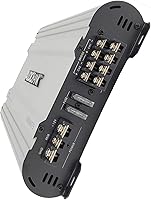
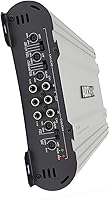
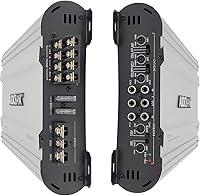
Overview

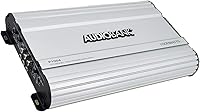
The Audiobank P1004 4-Channel Car Amplifier is a budget-oriented option that has been quietly building a following since its 2019 release. Audiobank leans firmly into the value segment, and this 4-channel amp fits that mold — it runs on Class A-B operation, which strikes a reasonable balance between efficiency and audio quality without pushing into expensive Class D territory. The aluminum alloy heatsink handles passive cooling, so there is no fan noise to worry about. On paper the unit claims 1000W total output, but like most budget amplifiers, that figure reflects peak rather than continuous RMS power. Keep that in mind when planning your system.

Features & Benefits

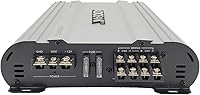
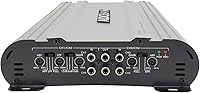
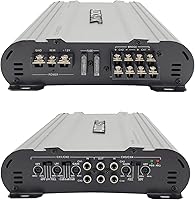
One of the more practical aspects of this budget car amplifier is its bridgeable channel design, which lets you combine two channels to push more power toward a subwoofer or a pair of component speakers. It also handles 2-ohm loads without fuss, giving you a bit more flexibility if your speakers dip below a standard 4-ohm rating. The soft turn-on circuit is a genuinely useful touch — it prevents the thump that can stress tweeters when the system powers up. Add in thermal and short-circuit protection, plus LED indicators that tell you at a glance whether the amp is running cleanly, and you have a reasonable feature set for the price.

Best For

This 4-channel amp makes the most sense for someone taking their first step beyond factory audio — think a daily driver with stock speakers that just need more volume and clarity than a head unit can deliver alone. It suits DIY installation well; the wiring layout is approachable, and the remote turn-on integration is standard fare most installers will recognize immediately. That said, if you are running high-end component speakers or a serious subwoofer setup, you would likely outgrow it quickly. The sweet spot is pairing it with mid-range coaxial speakers in a vehicle where mounting space is tight but four-channel coverage remains a priority.

User Feedback

Most buyers who are satisfied with the Audiobank P1004 tend to say the same thing: it is a noticeable step up from a head unit's built-in power, and it installs without much drama. That is a fair assessment for casual listeners. On the other side, more critical reviewers point to long-term reliability concerns — particularly in hotter climates where heat buildup appears to accelerate wear. There is also a recurring complaint about the advertised wattage not matching real-world output, which is a known pattern across the budget amplifier category and not unique to this unit. Build quality earns mixed marks when compared against brands with deeper reputations.

Pros

  • Noticeable improvement over factory head unit output, even at moderate listening volumes.
  • Bridgeable channels give you subwoofer upgrade flexibility without buying a separate mono amp.
  • Soft turn-on circuit eliminates startup pops that can wear on tweeters over time.
  • 2-ohm stable operation means you are not locked into a narrow range of speaker pairings.
  • Compact dimensions make it easier to tuck under a seat or into a tight cargo area.
  • LED indicators let you diagnose power and protection issues quickly during or after install.
  • Remote turn-on wiring is standard and integrates cleanly with most aftermarket head units.
  • Thermal and short-circuit protection adds a basic but real layer of hardware safety.
  • Entry-level price makes it a low-risk starting point for a first amplified system build.

Cons

  • Advertised peak wattage is misleading — real RMS output is significantly lower than the headline number.
  • Several users report reliability issues after extended use, particularly in warmer climates.
  • Build quality feels noticeably lightweight compared to amplifiers from more established brands.
  • Long-term durability is a genuine question mark for anyone planning heavy or daily high-volume use.
  • This budget car amplifier may struggle to keep up if you later upgrade to more demanding speakers.
  • No included wiring kit means additional out-of-pocket cost before you can complete the install.
  • Mixed feedback on quality control suggests some unit-to-unit inconsistency from the factory.
  • Limited brand reputation means finding reliable technical support or warranty service can be difficult.

Ratings

The scores below reflect an AI-driven analysis of verified buyer reviews for the Audiobank P1004 4-Channel Car Amplifier, sourced globally and filtered to exclude incentivized, bot-generated, and spam submissions. Each category is scored independently to give you an honest picture of where this budget car amplifier genuinely earns its keep — and where real buyers have run into frustration.

Value for Money
78%
22%
For buyers working with a tight budget, this 4-channel amp delivers a level of functionality that would cost significantly more from a name-brand competitor. Most satisfied buyers mention that the price-to-performance ratio is the primary reason they would recommend it to a friend building a first system.
The value equation weakens when you factor in the real-world power output gap versus the advertised peak figure. Buyers who did not research that distinction felt misled, which tempers the overall value perception for a meaningful portion of the user base.
Sound Quality
71%
29%
Compared to running speakers directly off a factory head unit, this budget car amplifier produces a clearly cleaner and more dynamic sound at moderate volumes. Casual listeners on daily commutes consistently describe the improvement as immediate and satisfying without any tuning expertise required.
Audiophiles and buyers with higher-end speakers quickly hit the ceiling of what this amp can deliver cleanly. At higher volumes, some users report audible distortion or a compressed sound stage that reflects the unit's budget-tier signal processing.
Build Quality
57%
43%
The aluminum alloy heatsink gives the chassis a sturdier feel than pure plastic-body competitors at a similar price point. For buyers who install the amp in a protected, ventilated location and use it at moderate output, the physical construction holds up acceptably.
Compared to more established amplifier brands, the overall fit and finish of the Audiobank P1004 feels noticeably lightweight and utilitarian. Several reviewers noted that terminals, connector housings, and internal components give the impression of cost-cutting that may affect long-term durability.
Reliability
54%
46%
Under light to moderate use in temperate climates, the amp runs consistently for extended periods without triggering protection mode. Buyers who use it primarily for background listening or short daily commutes report few operational problems over the first year of ownership.
A recurring pattern in critical reviews points to premature failures after sustained high-volume use, particularly in hot climates where ambient temperature accelerates heat buildup in the chassis. The long-term durability track record is genuinely mixed, and that uncertainty is a real consideration for buyers planning heavy use.
Advertised Power Accuracy
41%
59%
The unit does produce power across all four channels simultaneously, and for low-demand speaker setups the output is functional and audibly sufficient. Buyers who went in knowing that budget amps use peak figures rather than RMS ratings were not caught off guard.
The gap between the advertised 1000W peak figure and the actual continuous RMS output is significant enough that buyers who matched speakers based on the headline number frequently found the pairing underwhelming. This is a known industry-wide practice in the budget segment, but it remains one of the most common complaints tied directly to this unit.
Ease of Installation
82%
18%
The wiring layout is logical and clearly labeled, and the remote turn-on integration works with virtually any aftermarket head unit without adaptation. First-time installers regularly report completing the job without professional help, which is a genuine strength for a DIY-oriented buyer.
No wiring kit is included in the box, which adds a small but real extra cost and an extra step for buyers who did not anticipate it. Some users also noted that the mounting hardware and instruction documentation could be more thorough for true beginners.
Thermal Management
59%
41%
In well-ventilated installs — under a seat with open airflow or in a trunk with ambient circulation — the aluminum heatsink manages heat adequately during normal listening sessions. Buyers in cooler climates rarely report thermal protection triggering under typical driving conditions.
In enclosed or poorly ventilated mounting locations, the passive heatsink struggles to dissipate heat fast enough during extended high-volume playback. Multiple reviewers in warmer regions specifically called out heat-related protection shutdowns as a recurring annoyance during summer driving.
Compatibility
76%
24%
The 2-ohm stability and bridgeable channel design give this amp a wider range of compatible speaker and subwoofer configurations than many single-impedance competitors at this price. It works with the majority of aftermarket head units on the market without requiring any additional interface hardware.
Buyers with factory-integrated head units or BOSE-style OEM audio systems may need additional line output converters to get a clean signal into the amp. The unit also lacks any built-in bass boost or crossover adjustment flexibility that more feature-rich competitors offer.
Protection Circuitry
73%
27%
The thermal and short-circuit protection system does its job — the amp shuts down rather than sustaining damage when pushed beyond its limits, which is genuinely useful for less experienced installers who may make wiring mistakes during setup. The LED protection indicator makes diagnosing the fault type quick and intuitive.
While the protection system activates reliably, some buyers report that the thermal threshold triggers at what feels like a conservative temperature during normal extended listening, requiring a cooldown period before the amp will restart. This can feel disruptive during longer drives.
Soft Start Circuit
81%
19%
The soft turn-on circuit works as advertised, eliminating the startup thump that can stress tweeters and annoy passengers in the car. Buyers who have experienced pop noise from other amplifiers specifically call this feature out as a pleasant and functional aspect of the design.
A small number of users report that the soft start behavior can occasionally cause a delayed power-on if the remote trigger voltage from an older head unit is borderline. It is not a widespread issue, but it has appeared enough in feedback to be worth noting.
Size & Fitment
79%
21%
At roughly 15.6 inches long and just over 3 inches tall, this 4-channel amp fits cleanly under most car seats and in standard trunk installs without requiring custom brackets or fabrication work. The compact footprint is one of the more consistently praised practical aspects of the design.
While the length is manageable, the width of just over 9 inches can be tight in some under-seat applications, particularly in compact cars or trucks with shallow seat rails. Buyers should measure their available clearance carefully rather than assuming it will fit.
LED Indicators
74%
26%
Having dedicated LEDs for power status and protection state gives installers and end users a fast, no-tools diagnostic view of what the amp is doing, which is especially helpful when troubleshooting an unfamiliar setup for the first time. Most buyers find the indicator system intuitive and genuinely useful.
The indicators only communicate two states — on and in protection — without differentiating between thermal shutdown and short-circuit faults. More descriptive indicator feedback would help users resolve issues faster without resorting to trial-and-error diagnosis.
Packaging & Unboxing
66%
34%
The unit arrives adequately protected for standard shipping conditions, and most buyers receive it without cosmetic damage or transit issues. The packaging is functional and gets the amp to the customer in working order reliably.
The included documentation is minimal, and the absence of any wiring accessories means buyers doing their first install will need to do extra research before getting started. The unboxing experience does not inspire confidence in the premium feel of the product.

Suitable for:

The Audiobank P1004 4-Channel Car Amplifier is a practical pick for anyone taking their first real step into aftermarket car audio without wanting to spend a lot doing it. If your current setup relies entirely on a factory head unit to drive your speakers, this amp will deliver a genuinely noticeable improvement in volume, clarity, and headroom — without requiring a deep dive into complex installation. It works well for daily drivers with mid-range coaxial or component speakers, especially in vehicles where under-seat or tight-compartment mounting is a necessity given its compact footprint. DIY installers who are comfortable with basic wiring will appreciate the straightforward remote turn-on integration and the soft start circuit that keeps things clean on power-up. Essentially, if your goal is more sound for less money and you are not chasing audiophile performance, this budget car amplifier delivers fair value for that expectation.

Not suitable for:

Buyers who prioritize long-term reliability or plan to run this amp hard in hot climates should think carefully before committing to the Audiobank P1004 4-Channel Car Amplifier. The advertised 1000W output is a peak figure — real continuous RMS power will be considerably lower, which matters a great deal if you are trying to properly drive power-hungry speakers or a demanding subwoofer setup. Enthusiasts who already own or plan to buy premium component speakers would likely find this amp a weak link in the chain, limiting the performance those speakers are capable of. The build quality, while functional, does not hold up to comparison against more established amplifier brands at a modest price step up. If you are building a system meant to last several years of frequent, high-volume use, it is worth stretching the budget toward a more reputable nameplate.

Specifications

  • Brand: Manufactured and sold under the Audiobank brand, a value-oriented car audio label.
  • Model: The model designation is P1004, a 4-channel surface-mount amplifier.
  • Channels: This unit provides 4 independent amplifier channels suitable for driving front and rear speakers simultaneously.
  • Peak Output: Total advertised output is 1000W peak; continuous RMS power will be substantially lower and should be verified before speaker matching.
  • Operation Class: The amplifier operates in Class A-B, balancing audio fidelity and thermal efficiency for typical listening use.
  • Impedance: The unit is stable down to 2-ohm loads, offering flexibility when wiring lower-impedance speaker configurations.
  • Bridgeable: Channels can be bridged in pairs, allowing higher power delivery to a single subwoofer or speaker load.
  • Heatsink: Passive cooling is handled by a heavy-duty aluminum alloy heatsink that runs the length of the chassis.
  • Protection: Onboard circuitry provides both thermal overload protection and speaker short-circuit protection to safeguard connected components.
  • Turn-On Circuit: A soft start circuit prevents audible power-on transients, with support for remote turn-on and turn-off via head unit trigger wire.
  • Indicators: LED indicators on the unit display both power status and protection activation for quick diagnostic reference.
  • Mounting Type: Designed for surface mounting, compatible with under-seat, trunk floor, and enclosure-top installation positions.
  • Dimensions: The amplifier measures 15.63″ x 9.17″ x 3.15″, making it compact enough for most under-seat or trunk installations.
  • Weight: The unit weighs 5.5 pounds, which is typical for an aluminum-chassis 4-channel amplifier in this class.
  • Package Contents: The box includes the P1004 amplifier unit; a separate wiring kit is not included and must be purchased independently.
  • UPC: The product UPC is 613464919421, useful for retail verification and warranty registration purposes.
  • Availability: This amplifier has been available for purchase since October 2019, giving it a multi-year track record of user feedback.

Related Reviews
Planet Audio PL1600.4 4-Channel Car Amplifier
72%
88%
Value for Money
84%
Ease of Installation
74%
Sound Quality
58%
Power Output (Real-World)
61%
Build Quality
More
Recoil DI800.4 4-Channel Car Audio Amplifier
83%
88%
Sound Quality
92%
Power Output
65%
Thermal Management
84%
Build Quality
91%
Ease of Installation
More
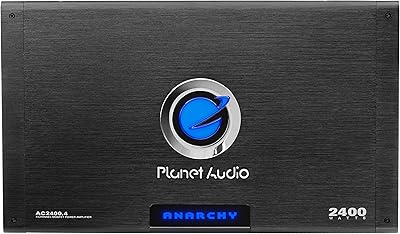
Planet Audio AC2400.4 4-Channel Car Amplifier
84%
95%
Power Output
89%
Sound Clarity
87%
Bass Performance
82%
Ease of Installation
65%
Thermals/Heat Management
More
Recoil REA600.4 4-Channel Car Audio Amplifier
84%
89%
Audio Performance
91%
Ease of Installation
85%
Sound Quality at High Volumes
62%
Heat Management
90%
Power Output
More
Recoil DI550.4 4-Channel Car Audio Amplifier
74%
91%
Value for Money
78%
Power Output
86%
Ease of Installation
74%
Sound Quality
67%
Build Quality
More
Planet Audio AC1200.4 4-Channel Car Amplifier
73%
88%
Value for Money
67%
Power Output
83%
Installation Ease
74%
Sound Quality
61%
Build Quality
More
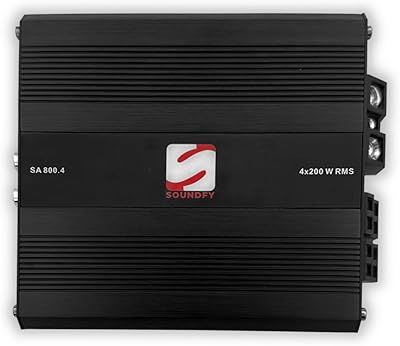
Soundfy SA 400.4 4-Channel Car Amplifier
71%
78%
Value for Money
72%
Sound Quality
63%
Power Output
58%
Build Quality
81%
Thermal Management
More
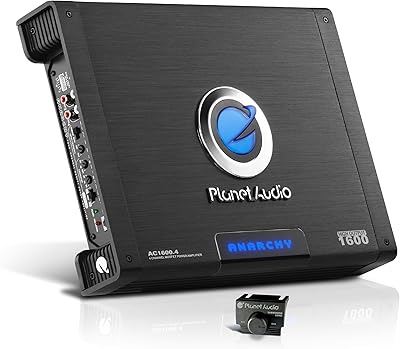
Planet Audio AC1600.4 Anarchy Series 4-Channel Car Amplifier
82%
94%
Power Output
88%
Sound Quality
70%
Ease of Installation
92%
Value for Money
85%
Build Quality
More
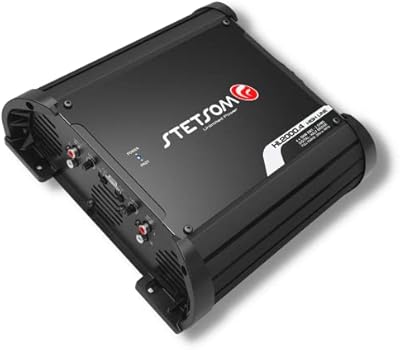
Stetsom HL 2000.4 2-Ohm 4-Channel Car Audio Amplifier
87%
93%
Power Output
85%
Cooling System Efficiency
88%
Sound Quality
91%
Ease of Installation
82%
Durability
More
Hifonics BXX800.4 Brutus 800W RMS 4-Channel Car Audio Amplifier
86%
88%
Sound Quality
92%
Power Output
85%
Build Quality
72%
Heat Management
89%
Ease of Installation
More

FAQ

Not in any practical sense. The 1000W figure is a peak rating, which represents an instantaneous maximum under ideal lab conditions. Real-world continuous RMS output — the number that actually matters for speaker matching — will be considerably lower. This is common practice across budget amplifiers, so go in with realistic expectations and size your speakers accordingly.

Yes, but with some planning. By bridging two of the four channels together, you can direct more power to a single subwoofer. Just make sure your sub's impedance is compatible with the bridged load rating, and keep in mind the actual RMS output may not satisfy a power-hungry woofer.

It is compact enough for many under-seat installs at roughly 15.6″ long and just over 3″ tall, but you will want to measure your available clearance before committing. Sedans and compact SUVs with lower seat rails can be tight, so check both height and depth before purchase.

A wiring kit is not included in the box, so you will need to buy one separately. Look for a kit rated for the amperage your fuse will handle — typically a 4-gauge kit works for most installs at this power level. Basic kits are widely available and inexpensive.

It is one of the more approachable installs in this category. The remote turn-on wire connects directly to the head unit's remote output, the soft-start circuit handles power sequencing automatically, and the LED indicators help you confirm everything is working once powered up. A basic understanding of car audio wiring is helpful, but experienced beginners manage it without professional help regularly.

Mid-range coaxial or component speakers in the 4-ohm range are the sweet spot. Brands like Rockford Fosgate, Pioneer, or Kenwood in the entry-to-mid price tier are commonly paired with this type of amp. Avoid pairing it with high-end, power-hungry speakers — you likely will not give them enough clean power to perform well.

The amp is rated as 2-ohm stable, but pushing all four channels simultaneously at low impedance will generate significant heat. Make sure the heatsink has adequate airflow in your install location and monitor the unit during the first few extended listening sessions to make sure it is not triggering thermal protection.

The soft turn-on circuit is specifically designed to prevent that. As long as your remote wire is properly connected to your head unit's remote output rather than a constant 12V source, the amp should power up quietly without the thump that can stress tweeters over time.

That LED signals the amp has detected a fault condition — most commonly overheating, a short circuit at the speaker terminals, or an impedance load that is too low. Power the system down, let it cool, check your speaker wiring for shorts, and verify your impedance load is within spec before restarting.

It performs acceptably for casual daily listening, but a subset of buyers have reported issues after extended heavy use, especially in hot climates. If you regularly drive in high-temperature conditions or listen at high volume for hours at a time, the heatsink can struggle to dissipate heat fast enough. For occasional or moderate use it holds up reasonably well given the price point.

Where to Buy