Overview

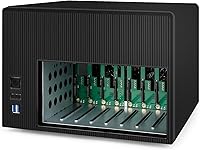
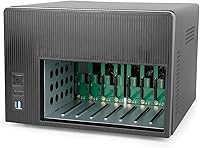
The AUDHEID K7 8-Bay NAS Case is a no-frills enclosure built for DIY enthusiasts who want to roll their own home or small office storage server. What sets it apart from many competing enclosures is its support for both Mini-ITX and Micro-ATX motherboards, giving builders genuine platform flexibility. The chassis is made from alloy steel, which feels noticeably more solid than the plastic shells common at this price tier. One thing to be clear about upfront: this ships as a bare enclosure — no motherboard, no CPU, no drives included. If you're expecting a plug-and-play appliance, look elsewhere. For the builder crowd, though, that open approach is precisely the appeal.

Features & Benefits

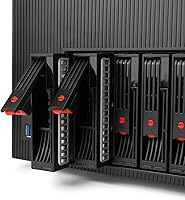
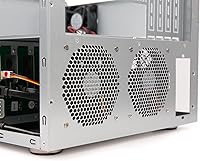
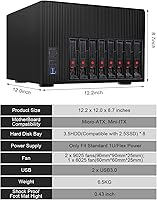
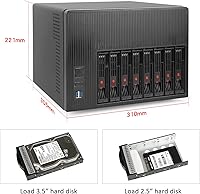
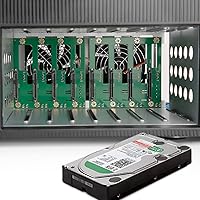
Eight hot-swap drive bays are the headline here, accepting both 3.5-inch HDDs and 2.5-inch SSDs, so you're not locked into a single storage type. The K7 chassis accommodates a standard 1U or FLEX power supply, keeping upgrade options straightforward without hunting for proprietary parts. Cooling is handled by three pre-installed fans — two 90mm units and one 60mm — which move air adequately without generating much noise in a home setting. The package includes SATA data cables, HDD trays, dual back panels, and mounting hardware, so you won't be scrambling for basics on build day. At 12.2 by 12 by 8.7 inches, it fits on a shelf without dominating the space around it.

Best For

This NAS enclosure is a strong match for home lab builders looking to repurpose an older ITX or Micro-ATX board rather than buy into a locked-down commercial appliance. Small offices that need centralized local storage without paying a premium for a proprietary-OS system will also find it a practical option. TrueNAS SCALE and similar platform users tend to like having full control over their hardware. That said, if you need tool-less drive swaps, polished aesthetics, or a rack-ready look, this 8-bay case will probably disappoint. It is built for function over form, and buyers who go in understanding that consistently report the best outcomes.

User Feedback

Across 93 ratings averaging 4.0 out of 5, this NAS enclosure earns generally positive marks, though a few recurring friction points are worth knowing about. Build quality and the assembly process draw consistent praise — buyers appreciate that it goes together without major surprises. Fan noise also fares well; most home users find the included fans quiet enough for everyday use. The real challenge is cable management: eight bays packed into a compact chassis leaves limited routing room, and doing it cleanly takes patience. A smaller group of buyers has flagged incomplete accessory kits on arrival, which is frustrating, even if not widespread. Documentation is thin, so plan to rely on community forums for setup guidance.

Pros

  • Eight hot-swap drive bays in a chassis this compact is a genuinely rare combination at this price tier.
  • Accepts both Mini-ITX and Micro-ATX boards, giving builders real flexibility in choosing or reusing a platform.
  • Alloy steel construction feels meaningfully more solid than the plastic enclosures common in this category.
  • Three pre-installed fans keep thermals in check without creating distracting noise in a home environment.
  • Includes SATA cables, HDD trays, and mounting hardware, covering most of the basics for build day.
  • Hot-swap support on all eight bays makes drive maintenance and upgrades straightforward over time.
  • Compatible with standard 1U and FLEX power supplies, so sourcing a PSU is not a proprietary headache.
  • At just over 12 inches in each major dimension, this 8-bay case fits on a shelf without taking over the room.
  • Buyers consistently praise the build quality and describe assembly as more straightforward than expected.
  • Ranked in the top 750 in its Amazon category, reflecting a track record beyond a typical niche product.

Cons

  • Documentation is thin, leaving first-time NAS builders to figure out configuration largely on their own.
  • Cable routing inside this NAS enclosure gets genuinely cramped when all eight bays are populated.
  • A notable minority of buyers have received shipments with missing accessories, requiring follow-up with the seller.
  • PSU fitment for 1U and FLEX units varies by brand, so compatibility should be verified before purchasing a power supply.
  • No tool-less drive mechanism means swapping drives takes more time compared to premium competing enclosures.
  • At 14.17 pounds empty, the chassis is heavy enough that placement and relocation require some planning.
  • Fan sizes (90mm and 60mm) limit aftermarket replacement options compared to more standard 120mm fan mounts.
  • No built-in display, power indicator panel, or front-facing ports, keeping the feature set minimal.
  • Assembly experience can vary depending on which motherboard and PSU combination is chosen.
  • Community forum research is practically required to get the most out of this chassis, especially for software setup.

Ratings

The AUDHEID K7 8-Bay NAS Case scores below are generated by our AI rating engine after analyzing verified global buyer reviews, actively filtering out incentivized, bot-generated, and outlier submissions to reflect genuine user consensus. The results cover everything from build quality to real-world noise levels, and both the standout strengths and the friction points are reflected transparently in each score. Builders researching this enclosure will find the ratings grounded in the actual experiences of home lab enthusiasts, small office users, and DIY NAS builders who have lived with it.

Build Quality
83%
The alloy steel chassis consistently earns respect from buyers who have handled plastic-bodied enclosures before. Several reviewers noted that the panels feel solid and show little flex even when fully loaded with eight drives, which matters a lot for a machine expected to run continuously for years.
A small number of buyers found minor sharp edges on interior metal panels during assembly, which is not unusual for steel chassis at this tier but worth knowing before you reach inside without gloves. Fit and finish is functional rather than refined.
Drive Bay Design
88%
Eight hot-swap bays that accept both 3.5-inch HDDs and 2.5-inch SSDs give builders genuine flexibility in how they configure storage over time. The ability to pull and replace a drive without a full shutdown is a meaningful practical advantage for anyone running an always-on home or office NAS.
The trays themselves are straightforward but lack the tool-less latch mechanisms found on higher-end enclosures, so drive swaps require a screwdriver. For a machine you might access infrequently, it is a minor issue, but it adds friction for users who swap drives regularly.
Motherboard Compatibility
81%
19%
Supporting both Mini-ITX and Micro-ATX form factors in a single chassis is a real advantage, opening the door to a wide range of build configurations — from repurposed office boards to purpose-built low-power platforms. Buyers who already owned a compatible board found the fit straightforward.
Full ATX boards are not supported, which eliminates some popular desktop platforms from consideration. Additionally, the dual back-panel design, while clever, requires selecting the correct panel for your board's I/O layout, which can be a minor source of confusion for first-time builders.
Cooling Performance
74%
26%
The three pre-installed fans — two 90mm and one 60mm — keep internal temperatures manageable during typical NAS workloads like file transfers and media streaming. Most home users report that drives stay within safe operating temperature ranges under normal use conditions.
With only rear exhaust fans and no front intake fans, airflow path optimization is limited, particularly when all eight bays are populated with high-capacity, heat-generating HDDs. Builders running intensive workloads like RAID rebuilds over long periods may want to monitor temperatures closely.
Noise Level
77%
23%
For a home environment — a living room shelf, home office corner, or basement rack — most buyers describe the fan noise as easy to ignore after a short adjustment period. The 90mm fans in particular run at a low enough RPM that ambient room noise tends to mask them effectively.
The 60mm fan, being smaller, spins faster to move comparable air volume and generates a slightly higher-pitched tone that some users find more noticeable than the larger fans. Those placing this enclosure in a bedroom or a very quiet workspace should consider aftermarket fan replacement as part of their build plan.
Cable Management
58%
42%
The included SATA data cables are an appreciated addition, and the chassis provides basic routing channels that help organize connections for a partially populated build. Builders who plan ahead and use right-angle SATA connectors report a much cleaner finished result.
With eight bays generating eight SATA data cables plus power leads from a compact PSU, the interior becomes genuinely crowded when fully populated. This is the most consistently cited frustration across buyer reviews, and it is not a quick fix — it requires patience and deliberate planning during the initial assembly to avoid airflow blockages.
Power Supply Compatibility
71%
29%
Supporting both 1U standard and FLEX-format PSUs gives builders access to a reasonable range of established brands like Seasonic, FSP, and Enhance. Buyers who already owned a compatible small-form-factor PSU found installation clean and straightforward.
Rejecting full-size ATX power supplies is a hard constraint that catches some builders off guard, particularly those new to the small-form-factor PSU market. Dimensions vary enough between FLEX and 1U models across brands that fitment should be verified against the chassis before purchasing a PSU separately.
Included Accessories
67%
33%
Including SATA cables, all eight drive trays, dual back panels, and a screw assortment covers the essentials and reduces the number of small parts a builder needs to source on their own. Most buyers received a complete kit and were able to begin assembly without a trip to a hardware or electronics store.
A recurring complaint involves some shipments arriving with an incomplete accessory set — missing screws or fewer trays than the listed eight. It is not the majority experience, but it is reported with enough frequency to warrant doing a full inventory check immediately on arrival rather than discovering the gap mid-build.
Value for Money
79%
21%
Getting eight hot-swap bays, an alloy steel chassis, and three fans at a mid-range price point is a strong proposition when compared against purpose-built NAS appliances or higher-priced DIY alternatives. For builders who already have a compatible board and PSU, the total system cost becomes very competitive.
The value calculation shifts for buyers who need to purchase a compatible small-form-factor PSU on top of the chassis cost, as quality 1U and FLEX units add meaningfully to the total build budget. First-time NAS builders who underestimate the total component cost sometimes feel the entry price was misleading.
Assembly Experience
76%
24%
Experienced PC builders consistently describe the physical assembly process as logical and manageable, with the chassis layout following conventional conventions. The dual back panel system, while unusual, is well-designed once you understand its purpose.
The included documentation is minimal — closer to a parts list than an assembly guide — which leaves less experienced builders piecing together the process from community forums and YouTube. AUDHEID does not currently provide a detailed online setup guide to supplement the printed materials.
Thermal Design
69%
31%
The alloy steel body contributes passive heat dissipation that plastic chassis simply cannot replicate, helping to regulate temperatures across the chassis wall rather than concentrating heat around active components. Builders in cooler ambient environments benefit the most from this passive characteristic.
The rear-only active cooling configuration means the front drives in a full 8-bay configuration rely heavily on convective airflow from the back fans, which is less effective than a front-to-back airflow path. Builders in warmer rooms or running the enclosure in an enclosed cabinet should account for this in their thermal planning.
Form Factor & Footprint
82%
18%
Fitting eight bays into a chassis that measures roughly 12 inches on each major dimension is a compact achievement, and most buyers found it fit comfortably on a desk shelf or in a media cabinet without dominating the available space. The weight, while substantial at over 14 pounds empty, is well-distributed.
The enclosure is notably heavier than plastic-bodied alternatives, which makes repositioning it after full assembly — with drives, board, and PSU installed — a two-hand exercise. Buyers who anticipate needing to move or reposition the unit regularly should factor that into their placement planning.
Hot-Swap Reliability
78%
22%
The hot-swap mechanism performs consistently in normal use, and buyers running TrueNAS or Unraid report that drive insertions and removals register cleanly in their operating systems without requiring reboots. For a NAS that doubles as a media server or backup target, this reliability is genuinely useful day-to-day.
The tray retention mechanism on some units has been noted as slightly loose, meaning a fully loaded tray can feel less secure than expected during insertion. It does not affect electrical connection in normal operation, but it reduces the tactile confidence of the hot-swap experience compared to enterprise-grade backplanes.

Suitable for:

The AUDHEID K7 8-Bay NAS Case is purpose-built for hands-on builders who want to construct their own network storage server rather than buy a locked-down appliance. If you have a spare Mini-ITX or Micro-ATX motherboard sitting in a drawer, or you're planning a fresh TrueNAS, OpenMediaVault, or Unraid build, this enclosure gives you a practical and cost-effective foundation. Home lab enthusiasts who need genuine drive capacity — eight bays is hard to find at this price tier — will appreciate the flexibility to mix HDDs and SSDs depending on their workload. Small offices that want centralized local storage without paying for proprietary hardware ecosystems will also find the K7 chassis a sensible starting point. The alloy steel construction and hot-swap bay support make it a notably durable choice for a machine that will likely run around the clock.

Not suitable for:

Buyers expecting a ready-to-run storage appliance will be disappointed quickly, because this NAS enclosure ships without a motherboard, CPU, RAM, or drives — you are buying a bare chassis only. Users unfamiliar with PC building, PSU selection, or NAS software configuration will face a steep learning curve, and the thin documentation included in the box does little to help. Anyone who needs tool-less drive access or a polished, rack-mountable form factor should look at more purpose-built commercial enclosures instead. Cable management inside the K7 chassis is tight by design, so builders with low tolerance for fiddly assembly work may find the experience frustrating. If you also need guaranteed accessory completeness out of the box, the occasional reports of missing hardware in shipments are a real risk factor worth weighing.

Specifications

  • Drive Bays: The enclosure provides 8 hot-swap bays, each supporting 3.5-inch HDDs or 2.5-inch SSDs interchangeably.
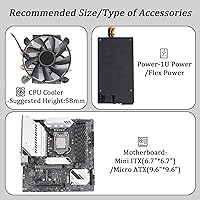
  • Motherboard Support: Compatible with Mini-ITX boards up to 17x17cm and Micro-ATX boards up to 24x24cm.
  • Power Supply: Accepts standard 1U power supplies and FLEX-format PSUs; compatibility should be verified against the specific PSU brand and dimensions before purchasing.
  • Cooling: Ships with three pre-installed fans: two 90x90x25mm units and one 60x60x25mm unit, all positioned at the rear for exhaust airflow.
  • Dimensions: The chassis measures 12.2″ deep by 12″ wide by 8.7″ tall.
  • Weight: The empty enclosure weighs 14.17 pounds before any drives, motherboard, or PSU are installed.
  • Material: The outer shell and internal frame are constructed from alloy steel, providing structural rigidity and passive thermal conductivity.
  • Hot-Swap: All 8 drive bays support hot-swap operation, allowing drives to be added or removed without powering down the system.
  • Included Accessories: Package contents include SATA data cables, 8 hard disk trays, dual back panels, and an assortment of mounting screws.
  • Not Included: Motherboard, CPU, RAM, storage drives, and operating system are not included and must be sourced separately.
  • Color: Available in black only.
  • Brand: Manufactured and sold by AUDHEID.
  • Availability: First listed on Amazon in January 2022.
  • Category Rank: Holds a Best Sellers Rank of #712 in the Computer Cases category on Amazon at time of review.
  • User Rating: Carries an aggregate customer rating of 4.0 out of 5 stars based on 93 ratings.
  • ASIN: Amazon Standard Identification Number for this product is B09QKMQ1B1.

Related Reviews
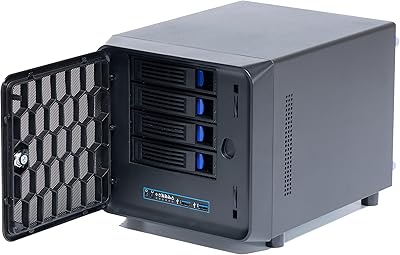
KCMconmey NAS-812 8+2 Bay NAS Case
68%
83%
Build Quality
81%
Hot-Swap Mechanism
78%
Value for Money
61%
Compatibility & Fit
52%
Ease of Assembly
More
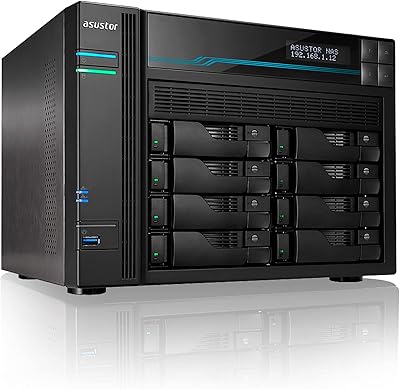
Asustor Lockerstor 8 AS6508T 8-Bay NAS
77%
91%
Network Performance
84%
Value for Money
88%
Build Quality
62%
Software (ADM)
83%
SSD Caching
More
KCMconmey NAS-411 4+1 Bay DIY NAS Case
84%
85%
Ease of Setup
80%
Build Quality
70%
Cooling Performance
90%
Customization Options
88%
Drive Compatibility
More
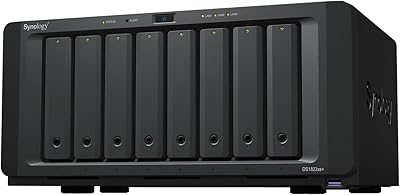
Synology DS1823xs+ 8-Bay NAS Enclosure

80%
91%
Build Quality & Chassis Durability
88%
Processor Performance
93%
Network Throughput & Connectivity
86%
Storage Expansion Flexibility
89%
DSM Software Ecosystem
More
Synology RS1221+ 8-Bay Rackmount NAS
83%
92%
Throughput Performance
94%
Software & DSM Ecosystem
89%
Build Quality & Chassis
83%
Networking Flexibility
91%
Short-Depth Form Factor
More
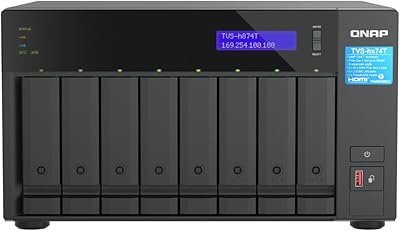
QNAP TVS-h874T-i9-64G 8-Bay NAS
83%
92%
Performance
68%
Setup/Installation
89%
Build Quality
85%
Software/Firmware Experience
80%
Usability/Ease of Use
More
QNAP TVS-h874 i7-32G 8-Bay NAS
80%
93%
Processing Performance
91%
Storage Flexibility
89%
ZFS & OS Reliability
84%
Networking Capability
88%
RAM & Virtualization Headroom
More
QNAP TS-832PX-4G 8-Bay NAS with 10GbE SFP+ and 2.5GbE
85%
91%
Performance
94%
Network Connectivity
89%
Ease of Setup
85%
Expandability (RAM)
88%
Data Security (Encryption)
More
ICY DOCK ToughArmor MB998SP-B 8-Bay 2.5” SATA/SAS HDD/SSD Mobile Rack Enclosure for 5.25″ Bay
87%
91%
Performance
88%
Cooling Efficiency
89%
Build Quality
93%
Ease of Installation
72%
Noise Level
More
Jonsbo N4 NAS PC Case
73%
83%
Build Quality
91%
Aesthetic Design
88%
Storage Flexibility
84%
Hot-Swap Functionality
47%
CPU Cooler Clearance
More

FAQ

No, the AUDHEID K7 8-Bay NAS Case ships as a bare enclosure only. You will need to supply your own drives, motherboard, CPU, RAM, and power supply separately. The box does include drive trays, SATA cables, and mounting hardware, which helps reduce the number of additional parts you need to hunt down.

The enclosure officially supports Mini-ITX boards up to 17x17cm and Micro-ATX boards up to 24x24cm. Most standard boards in those form factors should fit, but if you have a board with an unusual layout or extended heatspreader, it is worth double-checking the clearances before committing. The dual back panel design helps accommodate different I/O configurations.

No, full-size ATX PSUs will not fit. This NAS enclosure is designed around 1U standard or FLEX-format power supplies, which are physically smaller. There are plenty of good options from brands like Seasonic and FSP in those formats, but make sure to check the exact dimensions of your chosen PSU against the chassis before buying.

Most buyers describe the noise level as acceptable for home use — not silent, but not intrusive either. The two 90mm and one 60mm rear fans are described as muted in the product listing, and user feedback generally supports that characterization. If you are placing this in a bedroom or a very quiet workspace, your tolerance may vary, but for a living room shelf or home office corner, most people find it easy to tune out.

It can be, honestly. The interior is compact relative to the number of bays, so routing eight SATA data cables plus power cables from a small-form-factor PSU requires some planning. It is not a dealbreaker, but budget extra time during the build and consider using right-angle SATA connectors to help manage the routing more cleanly.

The chassis itself is OS-agnostic — it is just a case. Any software that runs on your chosen motherboard and CPU combination will work, including TrueNAS SCALE, TrueNAS Core, Unraid, OpenMediaVault, and even Windows Server. The software choice depends entirely on your hardware, not on the chassis.

Yes, all 8 bays support either 3.5-inch HDDs or 2.5-inch SSDs. You can freely mix drive types across bays, which is useful if you want a combination of high-capacity spinning drives for bulk storage and SSDs for faster access tiers or caching.

A small number of buyers have reported receiving shipments with incomplete accessory kits — typically a missing screw set or fewer trays than expected. If this happens, contacting AUDHEID directly through the Amazon seller page is the recommended first step. It is not a common issue, but it is worth doing a quick inventory check as soon as your order arrives.

The alloy steel construction is a meaningful advantage here compared to plastic alternatives, and the chassis is clearly designed with always-on NAS use in mind. Hot-swap support across all eight bays also suggests the product is built for regular maintenance over long periods. That said, like any budget-to-mid-range hardware, longevity will also depend on your thermal management and the quality of the PSU and drives you choose.

Absolutely, as long as your chosen motherboard and CPU have enough processing power for Plex transcoding. The K7 chassis places no restrictions on what software you run — it is just a housing. If you plan to transcode multiple streams simultaneously, prioritize a CPU with hardware transcoding support, such as an Intel chip with Quick Sync, to reduce the load on your processor.