ASRock Arc B580 Challenger 12GB Graphics Card


Overview
The ASRock Arc B580 Challenger 12GB Graphics Card enters a crowded mid-range market with a clear argument: more VRAM than the competition at a price that won't wreck your build budget. Launched in December 2024, it marked Intel's serious push into mainstream gaming with the Xe2-HPG architecture — a meaningful step up from the original Arc lineup. While Nvidia's RTX 4060 and AMD's RX 7600 dominate mindshare in this tier, this Arc B580 card counters with 12GB of GDDR6 memory, undercutting both rivals on that spec alone. Just go in with eyes open: Intel's driver ecosystem is still maturing, and that matters depending on what you play.
Features & Benefits
At 2740 MHz boost clock with memory running at 19 Gbps, the Challenger 12GB delivers frame rates in modern titles that feel genuinely responsive at 1440p — not just on paper. The 192-bit memory bus paired with 12GB of GDDR6 gives it breathing room that cards like the RTX 4060, which ships with 8GB on a 128-bit bus, simply can't match for texture-heavy workloads. Intel's XeSS 2 upscaling performs closer to DLSS than FSR in supported games, which is a real differentiator. The dual fans stay completely off during browsing or video playback — a genuine quality-of-life win for anyone in a quiet workspace. DisplayPort 2.1 and HDMI 2.1a round out a future-ready port selection.
Best For
This Arc B580 card makes the most sense for 1440p gamers who feel priced out of the RTX 4060 but refuse to settle for 8GB of VRAM. If you're coming from a GTX 1060 or an RX 580, the performance jump is substantial — not incremental. Light content creators will also find value here: the XMX AI cores contribute meaningfully to accelerated workflows in supported software, even if this isn't a workstation-class card by any measure. PC builders who care about idle fan noise will appreciate the 0dB mode during non-gaming use. One caveat: if your library skews heavily toward older titles, weigh the drivers carefully before committing.
User Feedback
Owners of ASRock's mid-range contender tend to highlight two things consistently: the VRAM headroom genuinely helps in newer open-world titles, and the card runs cool and quiet under typical gaming loads. Build quality gets occasional mentions too — the metal backplate feels solid, and the card doesn't flex under its own weight like some budget alternatives. Where buyers push back is predictable: DX11 performance in older games can be noticeably rough, and some users hit compatibility hiccups early on that required driver updates to resolve. The consensus leans positive for anyone buying new today, with the understanding that Intel's software stack is still catching up to its hardware ambitions.
Pros
- 12GB of GDDR6 VRAM outclasses most rivals at this price point, giving real headroom in texture-heavy modern games.
- The 192-bit memory bus keeps bandwidth competitive in ways that 8GB cards on narrower buses simply cannot match.
- XeSS 2 upscaling delivers image quality noticeably closer to DLSS than FSR in supported titles.
- Fans stay completely off during idle and light use, making the Challenger 12GB genuinely silent at the desktop.
- The metal backplate adds rigidity and helps with passive heat management — the card feels well-built for its class.
- 1440p gaming performance in modern DX12 and Vulkan titles is strong and consistent for the price.
- DisplayPort 2.1 and HDMI 2.1a outputs are future-ready for high-refresh and high-resolution display upgrades.
- Upgraders from GTX 1060 or RX 580-era cards will notice a night-and-day difference in every modern title.
- Thermal performance under sustained gaming loads is cool and quiet according to the majority of real-world owners.
- XMX AI cores add value for content creators using AI-accelerated tools in compatible software.
Cons
- DX11 game compatibility remains inconsistent — older titles can show stuttering or performance anomalies that driver updates don't always fully resolve.
- Intel Arc driver maturity still lags behind Nvidia and AMD, meaning occasional troubleshooting is a realistic expectation.
- XeSS 2 upscaling benefits are limited to a growing but still incomplete list of supported games.
- The Intel GPU ecosystem has less community troubleshooting knowledge and fewer third-party tools than Nvidia or AMD platforms.
- 4K gaming headroom is limited; this card is firmly a 1440p product and strains noticeably at higher resolutions.
- Software features like overlay tools, capture utilities, and GPU monitoring are less polished than GeForce Experience or AMD's Adrenalin suite.
- Some buyers report needing to update drivers immediately out of the box to resolve compatibility issues in specific titles.
- Resale value and long-term driver support trajectory are harder to predict given Intel's shorter track record in the discrete GPU market.
Ratings
The scores below reflect AI-synthesized analysis of verified global user reviews for the ASRock Arc B580 Challenger 12GB Graphics Card, with spam, incentivized, and bot-flagged submissions actively filtered out before scoring. Every category captures both what real buyers praised and what genuinely frustrated them — nothing is glossed over. The result is a transparent, balanced picture of where this card earns its reputation and where it still has ground to cover.
1440p Gaming Performance
VRAM Capacity & Headroom
Driver Stability & Maturity
Thermal Performance
Idle & Acoustic Behavior
Value for Money
Build Quality & Aesthetics
XeSS 2 Upscaling Quality
Display Connectivity
Installation & Setup Experience
AI Compute & Creative Workloads
Legacy Game Compatibility
Upgrade Value vs. Previous Gen
Long-Term Software Support
Suitable for:
The ASRock Arc B580 Challenger 12GB Graphics Card is built for a specific kind of buyer: someone chasing 1440p gaming performance without stretching their budget to Nvidia RTX 4060 territory. If your game library is mostly modern titles from the last three or four years, this card will handle them confidently, and the 12GB of GDDR6 gives you genuine headroom as games continue to push VRAM limits upward. Builders who want a quiet PC will appreciate the 0dB idle mode — the fans simply don't spin during light use, which matters more than people realize day-to-day. Light content creators doing AI-assisted editing or video work in supported software will also find the XMX cores pull real weight. And if you're still running a GTX 1060 or RX 580, the jump in performance here is substantial enough to feel genuinely transformative rather than marginal.
Not suitable for:
The ASRock Arc B580 Challenger 12GB Graphics Card is a harder sell if your game library leans heavily on older DirectX 11 titles or you play competitive esports games where driver stability is non-negotiable. Intel's Arc software ecosystem, while improving steadily, still lags behind Nvidia and AMD in edge-case compatibility — and if you're the kind of person who installs a new card and expects everything to work perfectly on day one in every title, you may hit friction. This is also not the right pick for serious content creators who need certified workstation-class performance or robust professional software support. Gamers eyeing 4K as their primary resolution will find the card's performance envelope tighter than they'd like. If brand ecosystem maturity and plug-and-play reliability matter more to you than raw VRAM per dollar, the RTX 4060 or RX 7600 XT remain safer bets.
Specifications
- GPU Architecture: Powered by Intel's Xe2-HPG architecture, the same platform that underpins Intel's second-generation discrete gaming GPU lineup launched in late 2024.
- Boost Clock: The GPU boost clock reaches 2740 MHz, which contributes to responsive frame pacing in demanding modern titles at 1440p.
- Memory Capacity: 12GB of GDDR6 onboard memory provides significantly more headroom than most competing cards in this price category.
- Memory Bus: The 192-bit memory bus width balances bandwidth and efficiency, outperforming the 128-bit configurations found on several rival mid-range cards.
- Memory Speed: Memory operates at 19 Gbps, enabling fast texture streaming and reducing bottlenecks in high-resolution gaming scenarios.
- Display Outputs: The card features one DisplayPort 2.1 and one HDMI 2.1a port, supporting high-refresh-rate and high-resolution displays up to 4K and beyond.
- Cooling System: A dual-fan cooling solution using ASRock's Striped Axial Fan design manages thermals efficiently across a range of workloads.
- Silent Idle Mode: The 0dB fan-stop feature keeps both fans completely off during low-load tasks like web browsing, video playback, and desktop use.
- Backplate: A full-length metal backplate reinforces the PCB against flex and contributes passively to heat dissipation from the rear of the card.
- AI Upscaling: Intel Xe Super Sampling 2 (XeSS 2) provides AI-driven resolution upscaling in supported titles, delivering improved frame rates with minimal image quality loss.
- AI Compute Cores: Xe Matrix Extensions (XMX) are dedicated AI acceleration cores built into the GPU, enabling faster inference in supported creative and gaming workloads.
- Dimensions: The card measures 9.8 x 5.2 x 1.61 inches, occupying a standard dual-slot footprint suitable for most mid-tower and full-tower cases.
- Weight: At 2.2 pounds, the card is manageable for installation and sits within the typical range for dual-fan mid-range GPUs.
- Model Number: The official model identifier is B580 CL 12GO, which distinguishes this ASRock Challenger OC variant from other B580 board partner designs.
- Release Date: This card became available in December 2024, coinciding with Intel's broader Arc B-series launch targeting the mainstream gaming segment.
- Power Connector: The Arc B580 reference design requires a single 8-pin PCIe power connector, and board partner implementations like this one follow the same standard.
- API Support: The card supports DirectX 12 Ultimate, Vulkan, and OpenCL, with performance optimized primarily for modern rendering APIs rather than legacy DX11 pipelines.
- Brand: Manufactured and warranted by ASRock, a Taiwan-based hardware company with an established track record in motherboards and add-in graphics cards.
Related Reviews
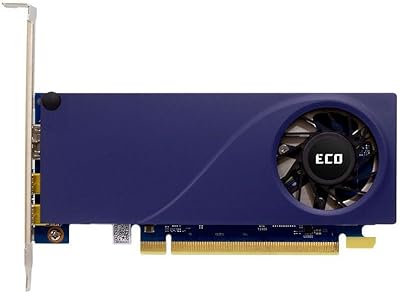
Sparkle Intel Arc A310 ECO 4GB
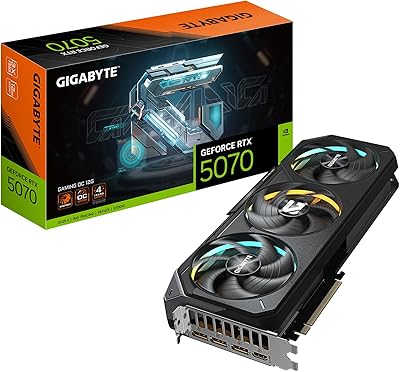
GIGABYTE RTX 5070 Gaming OC 12GB GPU
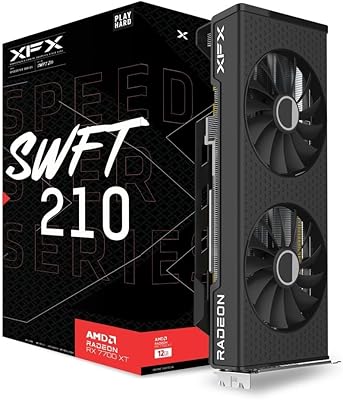
XFX RX 7700 XT 12GB Graphics Card
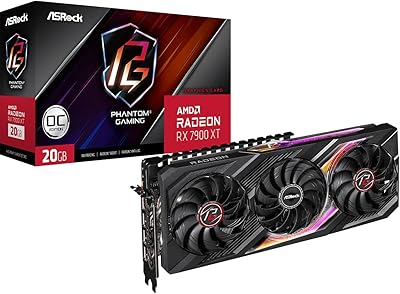
ASRock RX 7900 XT Phantom Gaming Graphics Card
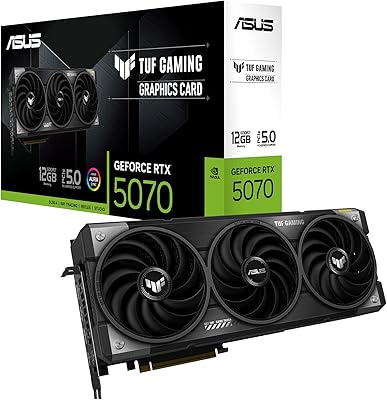
ASUS TUF Gaming RTX 5070 12GB GPU
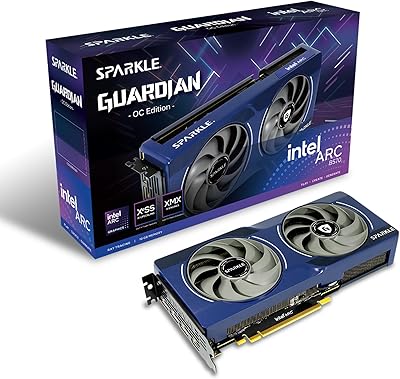
Sparkle Intel Arc B570 Guardian OC Graphics Card 10GB GDDR6
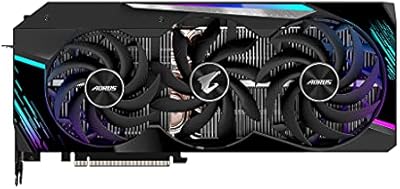
Gigabyte AORUS RTX 3080 Ti Graphics Card
MSI RTX 5070 Ventus 3X OC 12GB
GIGABYTE Radeon RX 6700 XT Gaming OC 12GB Graphics Card