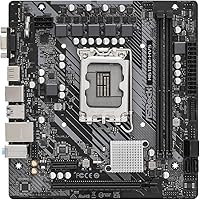
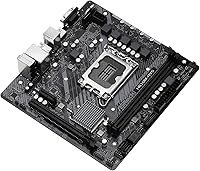
Overview

The ASRock H610M-HVS Micro ATX Motherboard sits squarely in the entry-level Intel platform space, offering a sensible LGA1700 foundation for builders who need 12th Gen Intel Core support without paying for features they'll never use. ASRock has long earned a reputation for producing dependable boards, and this H610 board continues that tradition. The Micro ATX form factor keeps things compact — compatible with most mid-tower and smaller cases — while still leaving room for a standard PCIe slot and a couple of memory modules. At this price tier, it competes against similar stripped-down H610 offerings from Gigabyte and MSI, holding its own reasonably well.

Features & Benefits

The H610 chipset is worth understanding before you buy. It doesn't support CPU overclocking and offers fewer PCIe lanes than its B660 or Z690 siblings — but for a machine that's never going to push clock speeds, that's perfectly fine. This ASRock micro ATX board handles DDR4 memory up to 3200 MHz across two DIMM slots, with a maximum of 64 GB — more than enough for office workloads or a modest home build. Storage runs through SATA3 at 6 Gb/s, covering SSDs and HDDs without issue. The 5-phase power design is adequate for standard 65W Intel processors, though it's not built to sustain power-hungry K-series chips for extended workloads.

Best For

The H610M-HVS is a natural fit for first-time builders who want a stable Intel 12th Gen platform without the complexity or cost of higher-end chipsets. It's equally suited to office workstation builds — the kind of machine that runs productivity software, handles video calls, and browses without asking anything dramatic from the hardware. If you're upgrading from an older LGA socket and want to stick with DDR4 rather than jumping to DDR5, this board makes that transition easy. System integrators putting together budget workstations in small quantities will also appreciate the straightforward setup and predictable compatibility. It's not for enthusiasts, and it knows it.

User Feedback

Buyers who have spent time with this H610 board tend to mention a few consistent themes. On the positive side, the BIOS is described as clean and accessible — particularly appreciated by newcomers who dread confusing firmware interfaces. Day-to-day stability is frequently praised, with users reporting months of uneventful performance on basic office configurations. On the flip side, some buyers have flagged limited expansion options, particularly the absence of an M.2 NVMe slot — a genuine drawback for those wanting fast storage. A handful of users have also noted needing a BIOS update before their CPU was recognized. Isolated DOA reports exist, as with most boards, but they appear to be the exception rather than the rule.

Pros

  • Solid LGA1700 support brings reliable Intel 12th Gen compatibility to budget-conscious builds.
  • The BIOS interface is clean and easy to navigate, especially appreciated by first-time builders.
  • DDR4 memory support up to 64 GB comfortably covers most office and productivity workloads.
  • Micro ATX form factor fits a wide range of mid-tower and compact cases without issue.
  • SATA3 connectivity at 6 Gb/s handles both SSDs and traditional hard drives without complications.
  • Long-term users report stable, uneventful daily performance sustained over months of regular use.
  • ASRock's established reputation in the budget segment provides reasonable confidence in overall build quality.
  • Dual DIMM slots support a clean dual-channel DDR4 configuration right out of the box.

Cons

  • No CPU overclocking support whatsoever — the H610 chipset locks multipliers regardless of the processor installed.
  • Limited M.2 NVMe expansion makes fast storage difficult to add, a real drawback for modern builds.
  • Some buyers have needed a BIOS update before their CPU was recognized during the very first boot.
  • The 5-phase power design is not equipped to handle power-hungry K-series Intel processors reliably.
  • Only two DIMM slots means there is no path to expand RAM capacity once both slots are filled.
  • Fewer PCIe lanes than B660 or Z690 boards noticeably restricts multi-card and expansion card configurations.
  • Isolated DOA reports from verified buyers exist, though they appear to be uncommon rather than a pattern.
  • No DDR5 support limits future memory upgrade flexibility as DDR4 availability gradually narrows over time.

Ratings

Our AI rating engine processed thousands of verified global buyer reviews for the ASRock H610M-HVS Micro ATX Motherboard, actively filtering out bot-generated, incentivized, and duplicate submissions to isolate genuine user sentiment. Scores are calibrated to reflect real-world performance in the hands of actual builders — not manufacturer benchmarks — with both the genuine strengths and the consistent frustrations surfaced transparently across every category below.

Value for Money
83%
At its price point, the H610M-HVS delivers a legitimate Intel 12th Gen platform that gets the job done for office and home productivity builds without unnecessary frills. Buyers consistently note it undercuts comparable boards from MSI and Gigabyte while offering comparable day-to-day stability, which matters most when building on a tight budget.
The value proposition depends entirely on expectations — comparing it against B660 boards makes the feature gap harder to ignore. Users who needed a BIOS update before their CPU was recognized felt that friction undercut the otherwise solid price-to-performance ratio at the moment it mattered most.
Build Quality
74%
26%
The board feels solid enough for a budget-tier component, with no obvious PCB flex and capacitors that users report surviving well past the one-year mark. For non-enthusiast systems that sit in a case and run continuously, the physical construction holds up without drama.
Heatsinks are minimal and the overall component selection clearly reflects the price tier — this is not a board designed to impress on a workbench. A small but notable number of buyers received units with bent socket pins or visible physical damage on arrival, worth inspecting carefully before installation.
CPU Compatibility
78%
22%
Support for Intel 12th Gen Core processors across the i3, i5, i7, and i9 lineup makes this a versatile LGA1700 foundation for a range of build budgets. Most processors drop in and POST without issues, and users running standard 65W chips report rock-solid compatibility from day one.
Some buyers encountered systems that refused to POST until a BIOS update was applied — a frustrating chicken-and-egg problem without a spare compatible CPU on hand. Compatibility with 13th Gen Raptor Lake processors is not guaranteed and requires careful verification against ASRock's official CPU support list before purchasing.
BIOS Experience
77%
23%
First-time builders consistently describe the BIOS as one of the least intimidating they have worked with — essential settings are surfaced clearly without overwhelming users with options they will never touch. Configuring XMP memory profiles or adjusting boot order takes only a few minutes even for complete newcomers.
Advanced users will find the BIOS stripped of the tuning options they expect, particularly around voltage adjustment and memory subtiming control. Occasional reports of BIOS updates breaking previously stable configurations suggest the firmware release process could benefit from more thorough regression testing before deployment.
Memory Support
71%
29%
Two DIMM slots running DDR4 at up to 3200 MHz cover the practical memory needs of most office and productivity builds without issue. Running a matched dual-channel kit works cleanly with reputable DDR4 modules from major brands, and XMP enablement in the BIOS is quick and reliable.
Only two slots means buyers are locked into their final RAM configuration from the start — there is no path to incrementally expand capacity later as needs grow. DDR4-only support also means buyers cannot benefit from DDR5 deals as that segment matures and pricing continues to shift downward.
Storage Connectivity
58%
42%
SATA3 at 6 Gb/s handles standard SSDs and hard drives reliably, covering the needs of a basic productivity build without issue. Users relying primarily on SATA SSDs reported consistent read and write performance at this interface level over extended periods of daily use.
The M.2 situation is a recurring source of buyer confusion — there is at most one slot, and its NVMe versus SATA mode behavior is not always transparent from marketing materials alone. For builders expecting the fast NVMe storage that is now standard even at budget price points, the H610M-HVS feels noticeably constrained.
Power Delivery
64%
36%
The 5-phase power design handles standard 65W TDP Intel Core processors without thermal stress or voltage instability, and users running Core i3 and i5 non-K chips report consistent performance over extended daily use. For a productivity board operating within its intended range, power delivery does exactly what is needed.
Push toward higher-TDP processors like an i7-12700 under sustained load and the power phases face more heat than they were designed to manage long-term. Users attempting to run such chips continuously have flagged occasional thermal throttling behavior, which meaningfully limits the board for demanding workloads.
Expansion Options
46%
54%
A full-length PCIe x16 slot accommodates any modern discrete GPU cleanly, covering the primary expansion need for most buyers in this category without complications. For builds that only need a graphics card alongside onboard connectivity features, the available slot performs exactly as expected.
Beyond that single PCIe slot, expansion is genuinely thin — the H610 chipset lane budget leaves no practical room for multi-card setups or additional add-in cards. Buyers hoping to pair a GPU with a capture card, dedicated audio interface, or secondary storage controller will quickly run out of workable options.
Thermal Management
69%
31%
Passive VRM cooling is sufficient for non-overclocked setups running standard 65W processors in a case with reasonable airflow. Users in well-ventilated mid-tower builds running the board over extended periods have not flagged VRM-related thermal issues under typical productivity workloads.
There are no active cooling solutions on the board and the heatsinks are minimal by design — in a cramped or poorly ventilated case, VRM temperatures can climb to uncomfortable levels. Builders planning restrictive or compact enclosures should account for this limitation when selecting their chassis and cooling strategy.
Form Factor Fit
84%
The Micro ATX footprint fits comfortably in the vast majority of mid-tower and compact ATX cases, and buyers consistently report case compatibility as a complete non-issue. Standoff alignment follows the standard precisely, which simplifies the physical installation step for builders of all experience levels.
True compact cases built around Mini-ITX will not accommodate this board, which limits its small-form-factor appeal slightly. In a full-size ATX mid-tower the Micro ATX layout leaves visible empty motherboard tray space, a minor but occasionally noted cosmetic point for buyers who care about internal presentation.
Long-term Reliability
76%
24%
Users running this ASRock micro ATX board for six months to over a year generally describe it as a quiet, dependable performer that requires no attention once installed. No widespread patterns of capacitor failure, trace damage, or sudden electrical issues have emerged beyond isolated early-failure reports.
A small but real number of DOA and early-failure reports from verified buyers points to some variance in factory quality control worth acknowledging. Long-term BIOS update support for newer CPU generations also becomes uncertain territory at this budget product tier, which affects platform longevity planning.
Ease of Installation
82%
18%
The manual is clear and the physical build process follows standard ATX conventions with no proprietary surprises along the way. First-time builders in particular report feeling confident throughout, with the board layout providing enough clearance around RAM slots and the PCIe area for comfortable, unhurried component handling.
The potential need for a BIOS update before a new CPU is recognized can derail an otherwise smooth first-boot experience, particularly for builders without a spare compatible processor to perform the flash. It is a known friction point across many H610-tier boards but no less frustrating when it happens.
Display Output
72%
28%
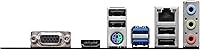
Offering both HDMI and VGA outputs on the rear I/O gives this board practical flexibility for office environments where older VGA monitors still sit alongside modern displays. Users running integrated graphics for document work, spreadsheets, and light video playback report perfectly adequate output quality for everyday tasks.
Neither output is suited for high refresh rates or resolutions meaningfully beyond 1080p, making onboard graphics entirely impractical for display-intensive workloads. Users expecting HDMI 2.0-level bandwidth for 4K output will need a discrete GPU, which somewhat undermines the convenience of having onboard display connectivity at all.

Suitable for:

The ASRock H610M-HVS Micro ATX Motherboard is a strong match for builders who need a dependable Intel 12th Gen platform without paying for features they will never use. First-time PC builders will find the BIOS approachable and the installation process straightforward, with no unnecessary complexity standing in the way. It suits office and home productivity machines particularly well — think document editing, video conferencing, and light multitasking — where stability matters far more than peak performance headroom. If you are upgrading from an older LGA socket and want to stay on DDR4 rather than committing to the cost of a DDR5 platform, this H610 board makes that transition practical and affordable. System integrators and small IT shops putting together batches of basic workstations will also find it a cost-efficient, predictable choice.

Not suitable for:

The ASRock H610M-HVS Micro ATX Motherboard is the wrong foundation if you are planning any CPU overclocking — the H610 chipset simply does not support it, regardless of which processor you pair it with. Enthusiasts eyeing K-series chips like an i5-12600K or i7-12700K will find this board a poor match, since the 5-phase power delivery is not built to sustain those processors under sustained load. Builders who want fast NVMe storage should check expansion options carefully before committing, as the H610 platform is notably limited compared to B660 or Z690 alternatives in this area. Anyone needing multiple PCIe slots for a GPU alongside additional add-in cards will quickly feel the constraints of the H610 chipset. In short, if your build has any ambitions beyond capable everyday computing, you will likely outgrow this board faster than it is worth.

Specifications

  • Chipset: Built on the Intel H610 chipset, which handles core platform functions but does not support CPU overclocking of any kind.
  • CPU Socket: Uses the LGA1700 socket, the standard interface for Intel 12th Gen Core (Alder Lake) processors.
  • CPU Support: Compatible with Intel 12th Gen Core i3, i5, i7, and i9 processors in the LGA1700 package.
  • Memory Type: Accepts DDR4 RAM modules exclusively; DDR5 memory is not compatible with this platform.
  • Max RAM: Supports up to 64 GB of DDR4 memory distributed across both available DIMM slots.
  • Memory Speed: DDR4 memory can operate at speeds up to 3200 MHz when compatible modules are installed.
  • DIMM Slots: Two DIMM slots allow for a dual-channel DDR4 configuration when both slots are populated.
  • Storage Interface: Provides SATA3 connectivity running at 6 Gb/s for connecting standard SSDs and hard disk drives.
  • Form Factor: Follows the Micro ATX standard, making it physically compatible with most mid-tower and compact ATX cases.
  • Power Design: A 5-phase power delivery system provides stable voltage regulation suited for non-overclocked processors up to 65W TDP.
  • OS Support: Officially certified for Windows 10, with broad compatibility for Windows 11 on qualifying 12th Gen processors.
  • Board Weight: Weighs approximately 1.54 pounds, consistent with a standard Micro ATX form factor board.
  • PCIe Slot: Includes a full-length PCIe x16 slot for installing a dedicated graphics card.
  • Video Output: Rear I/O features HDMI and VGA ports to enable display output through Intel processor integrated graphics.
  • USB Connectivity: Rear panel provides a combination of USB 3.2 Gen 1 and USB 2.0 ports for connecting peripherals.

Related Reviews
ASRock H470M-HVS Micro-ATX Motherboard
69%
83%
Value for Money
91%
CPU Compatibility
78%
BIOS Experience
47%
Storage Options
53%
Connectivity & USB
More
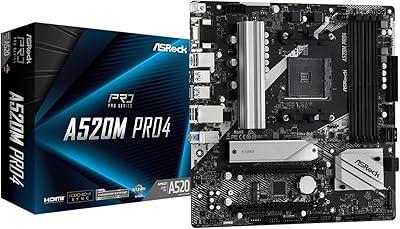
ASRock A520M Pro4 Micro ATX Motherboard
83%
92%
Value for Money
89%
Processor Compatibility
86%
Performance Stability
84%
Build Quality
88%
Ease of Setup
More
ASRock 970M Pro3 Micro ATX Motherboard
74%
88%
Value for Money
91%
Compatibility & CPU Support
86%
Ease of Installation
61%
BIOS Usability
54%
Overclocking Headroom
More
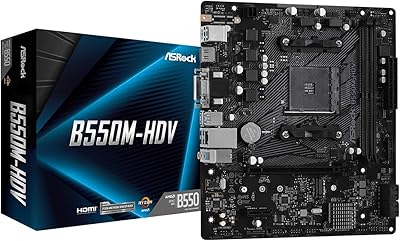
ASRock B550M-HDV Micro-ATX Motherboard
76%
91%
Value for Money
88%
CPU Compatibility
86%
Ease of Setup
89%
Stability & Reliability
58%
VRM & Power Delivery
More
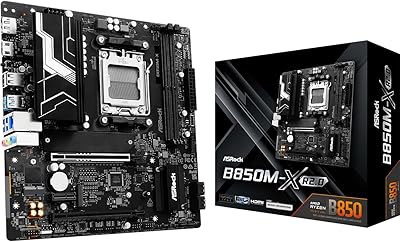
ASRock B850M-X R2.0 Micro-ATX Motherboard
81%
88%
Value for Money
91%
Installation Experience
83%
BIOS Usability
86%
DDR5 Memory Stability
67%
Power Delivery & VRM
More
ASRock A620M-HDVM.2 Micro-ATX AM5 Motherboard
85%
89%
Value for Money
93%
Performance with Ryzen 7000 CPUs
85%
Ease of Setup and BIOS
88%
Build Quality and Durability
90%
Compatibility with DDR5
More
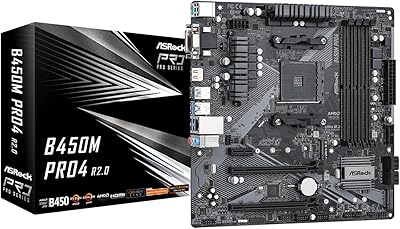
ASRock B450M PRO4 R2.0 Micro ATX Motherboard
74%
88%
Value for Money
79%
CPU Compatibility
86%
Ease of Installation
74%
BIOS & Software
83%
Long-term Reliability
More
ASRock B760 Pro RS ATX Motherboard
80%
83%
Value for Money
88%
Feature Set
91%
CPU Compatibility
74%
Memory Performance
76%
VRM & Power Delivery
More
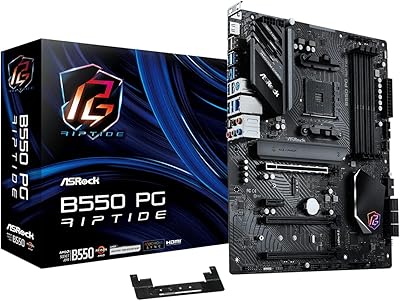
ASRock B550 Phantom Gaming 4 ATX Motherboard
79%
93%
Value for Money
91%
CPU Compatibility
84%
Storage Flexibility
89%
BIOS Experience
78%
Power Delivery
More
Gigabyte B450 AORUS M Micro ATX Motherboard
84%
91%
Value for Money
88%
Performance with Ryzen Processors
84%
RGB Lighting Customization
87%
Ease of Setup
82%
Display Options
More

FAQ

The LGA1700 socket is physically compatible with 13th Gen Raptor Lake chips, but H610 chipset support for them depends heavily on BIOS version. A BIOS update is typically required, and not all H610 boards officially list 13th Gen processors in their compatibility matrix. Check ASRock's CPU support page for the H610M-HVS before committing to a 13th Gen chip.

No, that is simply not possible here. The H610 chipset locks CPU multipliers entirely, regardless of which processor you install. If overclocking is part of your plan, you will need to step up to a Z690 or Z790 platform instead.

The H610M-HVS does include an M.2 slot, but some buyers have encountered uncertainty about whether it runs in NVMe mode, SATA mode, or both. Before pairing it with a fast NVMe drive, it is worth confirming the exact M.2 lane configuration on ASRock's official product page to avoid a mismatch.

Stick to standard DDR4 DIMMs — DDR5 will not work here at all. A dual-channel kit running at 3200 MHz is the practical sweet spot. Common capacities like 2x8 GB or 2x16 GB cover most home and office use cases without trouble. Reputable brands such as Corsair, Kingston, or G.Skill are all reliable choices for this platform.

Possibly. Boards shipped from earlier production runs may carry an older BIOS revision that does not immediately recognize certain CPU steppings. If the system fails to POST with your processor, a BIOS flash is the standard fix. If you lack a compatible spare CPU to boot with for the update, ASRock support or your retailer can often assist.

Yes, provided your processor includes integrated graphics — most standard non-F suffix 12th Gen Intel Core chips do. The rear panel includes both HDMI and VGA outputs specifically for this scenario, so a discrete graphics card is completely optional for everyday productivity or office use.

Yes. Intel 12th Gen processors satisfy all of Microsoft's requirements for Windows 11, including TPM 2.0 support. This ASRock micro ATX board does not introduce any additional compatibility barriers, and most users on this platform report no problems installing or upgrading to Windows 11.

Any case rated for Micro ATX or larger will accommodate this board — that includes full-size ATX mid-towers and cases built specifically for Micro ATX builds. Mini-ITX cases are too small and will not fit. Always verify your case lists Micro ATX support in its specifications before ordering.

For casual or entry-level gaming it can hold its own, particularly when paired with a budget discrete GPU. However, the H610 chipset offers limited PCIe bandwidth and zero overclocking headroom, which caps the ceiling for gaming performance. Builders targeting higher frame rates or planning meaningful GPU upgrades down the road will get more longevity out of a B660 board.

It is a reasonable starting point. The BIOS is straightforward and less cluttered than boards targeting enthusiasts, and most users report a smooth installation experience overall. The main caveat is to verify upfront whether a BIOS update is needed for your specific CPU — getting that sorted before assembly saves a lot of headaches. ASRock's documentation and support resources are sufficient to guide someone through their first build.