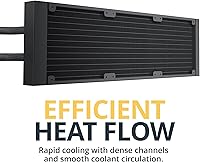
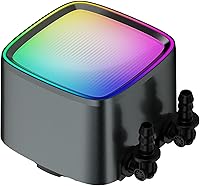
Overview

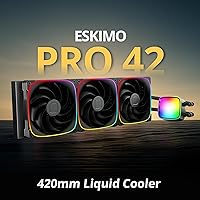
The Geometric Future Eskimo Pro 420mm CPU Cooler enters a fiercely competitive market — and for a brand that only launched this product in late 2024, it's made a surprisingly strong first impression, climbing into the top 100 in Water Cooling Systems within months of release. Geometric Future isn't a household name yet, and that's worth acknowledging upfront rather than glossing over. What they've delivered here is a large-format AIO with broad compatibility across current Intel LGA 1700 and AMD AM5 platforms, dressed in an all-black design with ARGB lighting throughout. Strong value proposition — as long as you go in with realistic expectations about the brand.

Features & Benefits

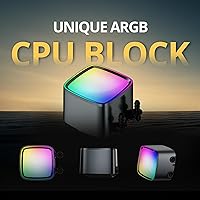
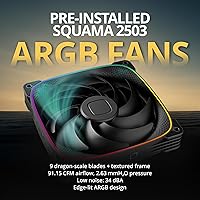
The K6 pump at the heart of this liquid cooler moves fluid at 1.5 liters per minute — a flow rate that helps sustain consistent thermals during prolonged heavy loads like rendering or all-day gaming sessions. Backing that up is a large copper cold plate measuring nearly 56mm on each side, which improves contact coverage on bigger CPU heat spreaders and matters more than people realize when cooling a power-hungry Ryzen 9 or Core i9. The three Squama 2503B fans are PWM-controlled and quiet at moderate speeds, with ARGB sync support across major motherboard platforms. The diffused pump head produces a softer, more even glow than the harsh pinpoint LEDs common on competing units. Fans come pre-installed, which cuts setup time noticeably.

Best For

This 420mm AIO makes the most sense for builders with mid-tower or full-tower cases running power-hungry CPUs — think AMD Ryzen 9 7900X, 7950X, the 9000 series, or Intel Core i9 13th and 14th Gen chips that genuinely benefit from extra thermal headroom. If you're upgrading from a 240mm or 280mm AIO, the jump to three 140mm fans across a larger radiator surface is a meaningful thermal step up. It's also a strong pick for anyone who wants cohesive ARGB aesthetics without committing to flagship brand pricing. That said, it's not the right fit for compact cases or builds with tight radiator clearance — always verify your case's maximum radiator support before ordering.

User Feedback

Buyers consistently highlight easy installation and solid included hardware as standout positives — the mounting system earns frequent praise for being straightforward compared to some competitors that require more trial and error. On noise, most users report the fans stay quiet at low and mid RPM, though a handful mention they become audible when pushed to full speed under heavy sustained workloads. ARGB sync has worked smoothly for most buyers, but a few note it doesn't integrate with every RGB software suite without some manual setup. Pump noise hasn't surfaced as a widespread concern. Stacked against established names like Arctic or DeepCool, buyers generally feel the thermal-to-price ratio holds up well, with overall build quality exceeding initial expectations for a newer brand.

Pros

  • Three 140mm PWM fans offer solid static pressure and stay quiet during everyday and moderate workloads.
  • The oversized copper cold plate improves heat transfer coverage on large modern CPU heat spreaders.
  • Broad compatibility with both Intel LGA 1700 and AMD AM5 covers the current mainstream build landscape.
  • Fans come pre-installed on the radiator, which meaningfully reduces setup complexity.
  • The diffused ARGB pump head produces a softer, more polished glow than many competing units.
  • The K6 pump delivers a consistent flow rate that supports stable thermals under sustained heavy loads.
  • Buyers consistently report that included mounting hardware is complete and well-made for the price.
  • Strong thermal-to-price ratio makes the Eskimo Pro competitive against pricier AIOs in real-world use.
  • All-black finish works cleanly with a wide range of case aesthetics without clashing.

Cons

  • Geometric Future is a newer brand with limited long-term track record on warranty service and support.
  • A 420mm radiator requires case clearance many standard mid-towers simply do not provide.
  • ARGB software integration can require manual setup and does not work plug-and-play with every RGB platform.
  • Fan noise at full RPM under heavy sustained loads has been flagged by some buyers as noticeably loud.
  • Overkill for builds using mid-range CPUs where a smaller, cheaper AIO would perform just as well.
  • Limited independent benchmark data available given how recently this cooler entered the market.
  • Buyers comparing directly against Arctic or DeepCool may find those brands offer stronger ecosystem support.
  • The 6.3-pound package weight is a reminder that shipping damage risk is higher — inspect carefully on arrival.

Ratings

Our AI rating engine analyzed verified global buyer reviews for the Geometric Future Eskimo Pro 420mm CPU Cooler, actively filtering out incentivized, bot-generated, and low-quality submissions to surface what real builders actually experienced. Scores reflect both the genuine strengths that impressed users and the friction points that tempered enthusiasm — nothing is glossed over.

Thermal Performance
83%
Builders running Ryzen 9 and Core i9 chips consistently report stable temperatures during extended rendering sessions and long gaming runs, with many noting a clear improvement over their previous 240mm or 280mm AIOs. The large radiator surface and steady pump flow rate appear to hold up well during multi-hour sustained workloads.
Independent benchmark data is limited given how recently this cooler launched, so concrete delta-T comparisons against established rivals are sparse. A handful of users running heavily overclocked chips reported that temperatures crept higher than expected under extreme all-core loads.
Build Quality
79%
21%
Most buyers are pleasantly surprised by the physical quality of the unit given the brand's newness — the radiator feels solid, the tubing has good flexibility without kinking, and the pump head has a premium weight to it that doesn't feel cheap in hand.
A few users noted that the plastic finish on the fan frames shows minor surface inconsistencies up close, and the all-black coating on the radiator showed light scuff marks straight out of the box in a small number of cases. For a newer brand, quality control is still establishing its consistency.
Installation Experience
88%
Having the fans pre-installed on the radiator is one of the most praised aspects among buyers, especially those who've wrestled with loose fan screws on other units. The mounting hardware is well-organized, clearly labeled, and complete — a detail that matters enormously when you're halfway through a build.
The 420mm radiator format itself creates installation challenges that have nothing to do with the cooler's design — fitting it requires deliberate case planning. A small number of first-time builders found the radiator-to-case fitment tighter than expected even in supposedly compatible cases.
Fan Acoustics
72%
28%
During light gaming and everyday desktop use with a typical PWM fan curve, the Squama 2503B fans are quiet enough that most users report not noticing them over ambient room noise. The low-RPM behavior is smooth and free of bearing chatter, which is a common complaint with cheaper fans.
When thermals push the fans toward their upper RPM range — during heavy video exports or all-core stress tests — the noise level becomes genuinely noticeable, and a few users described it as disruptive in quiet work environments. Users sensitive to fan noise would benefit from manually adjusting their fan curves.
Pump Performance
81%
19%
The K6 pump runs quietly in the vast majority of reported experiences, and users rarely flag it as a noise source even during prolonged heavy sessions. Coolant flow feels consistent based on temperature stability data shared by reviewers in the PC building community.
A small subset of users reported a brief gurgling or bubbling sound during the first few power-on cycles, which is a known characteristic of freshly-installed AIO loops as trapped air settles. It typically resolves on its own, but it can be alarming for first-time AIO users.
ARGB Lighting
76%
24%
The diffused pump head produces one of the softer, more even light effects in this price range — it avoids the harsh, spotty LED look common on budget AIOs and gives the build a cleaner aesthetic, especially when paired with ARGB case fans.
Software sync compatibility is inconsistent across platforms, and some users had to fall back on the included standalone controller rather than integrating it cleanly with their motherboard's RGB ecosystem. The lighting experience is good when it works natively, but the setup friction is real.
Cold Plate Contact
74%
26%
The oversized copper cold plate dimensions mean it covers a wider area of the CPU heat spreader than many competing units, which translates to more efficient heat pickup especially on larger Ryzen and Intel dies. Pre-applied paste coverage is reported as even and adequate by most buyers.
A few users reported having to re-seat the cooler after initial installation to address hot spot readings, suggesting the mounting pressure is not always perfectly uniform straight out of the box. Checking contact quality after a first thermal test is a smart precaution.
Value for Money
86%
Buyers comparing the Eskimo Pro directly against Arctic, Corsair, and DeepCool models at similar price points frequently conclude that the thermal and build quality justify the cost, and sometimes outperform expectations given the brand's entry-level recognition. Getting a 420mm AIO with ARGB fans at this price tier is genuinely competitive.
The value calculus changes if you factor in long-term brand support — established competitors offer better peace of mind on warranty claims and replacement part sourcing. Buyers prioritizing multi-year reliability over upfront cost savings may find the premium brands worth the extra outlay.
Socket Compatibility
82%
18%
Support for both Intel LGA 1700 and AMD AM5 means this liquid cooler covers the current mainstream desktop platform landscape without requiring aftermarket brackets. Builders on modern platforms won't face any socket-related surprises.
The absence of official AM4 support is a limitation for anyone still on older Ryzen hardware and hoping to reuse the cooler across a future upgrade. The socket support list covers current-gen builds well but leaves out a significant base of existing AMD users.
Packaging & Unboxing
77%
23%
Buyers generally report that the cooler arrives well-protected and that the unboxing experience feels organized, with mounting hardware sorted into separate compartments rather than dumped loose in a bag — a small but meaningful quality signal.
A small number of users reported minor cosmetic damage to the radiator finish on arrival, which points to some room for improvement in protective padding density for a unit that weighs over six pounds in its retail package.
Radiator Size Practicality
68%
32%
For builders who've already confirmed 420mm case compatibility, the extra radiator real estate pays off in cooler sustained temperatures compared to three-fan 360mm units, and the three 140mm fans move more air at lower RPMs than 120mm equivalents.
The 420mm format is genuinely limiting for a large portion of PC builders whose cases top out at 360mm. It's one of the first things potential buyers need to verify, and some return requests stem directly from not checking case compatibility beforehand.
Brand Confidence
61%
39%
Geometric Future has made a credible first impression with this cooler, earning strong sales rankings within months of launch and accumulating a solid base of positive buyer experiences that suggest genuine product investment rather than a rushed entry.
The brand simply doesn't have the multi-year track record that gives buyers confidence in post-purchase support, warranty resolution, and parts availability. Buyers who have had warranty claims with established brands know how much that infrastructure matters when something goes wrong two years in.
Tubing Flexibility
78%
22%
The pre-routed tubing has enough flexibility to accommodate a range of radiator mounting positions — top, front, or side — without feeling stiff or prone to kinking during the installation process.
Tubing length is fixed, as is standard with closed-loop AIOs, which can be restrictive in larger full-tower cases where users want to mount the radiator far from the CPU socket. There is no adjustability for unusual build configurations.

Suitable for:

The Geometric Future Eskimo Pro 420mm CPU Cooler is a strong match for PC builders who are running thermally demanding processors — AMD Ryzen 9 7000 or 9000 series chips, or Intel Core i9 13th and 14th Gen CPUs — and want genuine cooling headroom without paying top-tier prices. If your case supports a 420mm radiator, this liquid cooler gives you the kind of thermal buffer that lets high-TDP chips breathe during extended workloads like video encoding, 3D rendering, or long gaming sessions. It's particularly well-suited to builders upgrading from smaller 240mm or 280mm AIOs who want a noticeable step up in sustained performance. The broad socket support covering both LGA 1700 and AM5 also makes it a practical choice for anyone building on current-gen platforms who wants a cooler that won't be obsolete after one upgrade cycle. Builders who care about RGB aesthetics will appreciate the cohesive ARGB implementation across both the fans and the pump head block.

Not suitable for:

The Geometric Future Eskimo Pro 420mm CPU Cooler is not a good fit for compact or mid-tower cases that lack dedicated 420mm radiator support — squeezing a three-fan 140mm setup where it doesn't belong will cause real installation headaches or simply won't fit at all. Buyers who stick to entry-level or mid-range CPUs with modest heat output, like a Ryzen 5 or Core i5, won't see meaningful gains over a quality 240mm or 280mm AIO, making this a harder spend to justify in those builds. If long-term brand support is a priority — warranty service, firmware updates, or replacement parts availability — established names like Arctic, Corsair, or DeepCool offer more reassurance simply because they've been in the market longer. Those who rely heavily on proprietary RGB ecosystems like iCUE or Armoury Crate may encounter some compatibility friction and should verify support before purchasing. Finally, buyers sensitive to fan noise at peak loads should be aware this cooler, like most high-static-pressure fan setups, gets audible when pushed to its upper RPM range.

Specifications

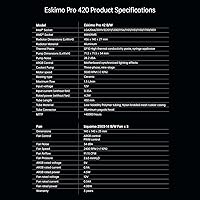
  • Radiator Size: The unit uses a 420mm radiator, accommodating three 140mm fans side by side for a larger heat-dissipation surface than standard 360mm designs.
  • Fan Configuration: Three Squama 2503B 140mm PWM ARGB fans come pre-installed on the radiator, allowing the motherboard to control fan speed dynamically based on thermal load.
  • Pump Model: The K6 liquid pump circulates coolant at a rated flow rate of 1.5 liters per minute, supporting consistent heat transfer under sustained CPU workloads.
  • Cold Plate: The copper cold plate measures 55.8 x 55.8mm, providing wide contact coverage across large integrated heat spreaders common on modern high-TDP processors.
  • Socket Support: Compatible with Intel LGA 1700 and AMD AM5 sockets, covering the current mainstream desktop CPU platforms from both manufacturers.
  • Lighting: Both the CPU block head and all three fans feature ARGB lighting with a diffused design on the pump head for an even, soft glow rather than harsh pinpoint LEDs.
  • Fan Control: All three fans use PWM (Pulse Width Modulation) control, allowing the motherboard or cooling software to modulate speed for the best balance of acoustics and performance.
  • Color Finish: The entire unit ships in an all-black finish, covering the radiator, tubing, pump head, and fan frames for a uniform appearance in dark-themed builds.
  • Package Weight: The complete retail package weighs 6.3 pounds, which reflects the combined mass of the radiator, fans, pump assembly, mounting hardware, and packaging materials.
  • Package Dimensions: The retail box measures 20 x 8.6 x 6.5 inches, useful for confirming shipping compatibility and storage before installation.
  • Model Number: The official model identifier is GEO-EP-42B, which can be used when searching for firmware updates, replacement parts, or manufacturer support documentation.
  • Manufacturer: Produced by Geometric Future, a brand that entered the CPU cooling market with this model in September 2024 and has since gained traction in the water cooling segment.
  • Availability Date: The Eskimo Pro first became available for purchase in September 2024, making it one of the newer AIO liquid cooler releases in its price category.
  • Cold Plate Material: The cold plate is machined from copper, a material preferred in AIO coolers for its high thermal conductivity compared to aluminum alternatives.
  • Tubing: The unit uses pre-routed tubing connecting the pump head to the radiator, with a fixed-length configuration typical of closed-loop AIO designs that requires no user maintenance or refilling.

Related Reviews
ID-COOLING FX240 PRO 240mm AIO CPU Cooler
78%
83%
Thermal Performance
67%
Pump Noise & Vibration
78%
Fan Performance & Noise
74%
Build Quality & Materials
86%
Installation Ease
More
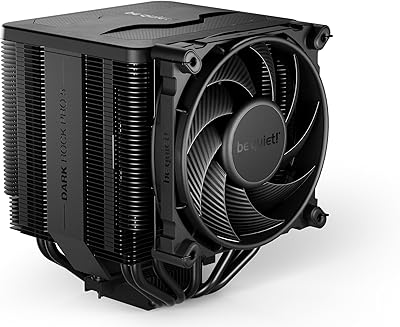
be quiet! Dark Rock Pro 5
85%
93%
Thermal Performance
89%
Acoustic Performance
96%
Build Quality
74%
Installation Experience
61%
RAM Clearance
More
ID-COOLING FX360 PRO White Liquid CPU Cooler
86%
94%
Cooling Performance
89%
Build Quality
75%
Noise Level
91%
Design/Aesthetics
88%
Installation Ease
More
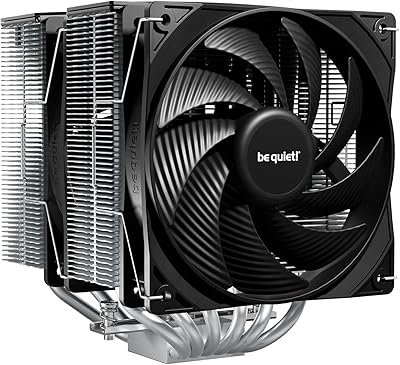
be quiet! Pure Rock Pro 3 CPU Cooler
84%
83%
Thermal Performance
88%
Noise Level
79%
RAM Clearance
91%
Ease of Installation
86%
Value for Money
More
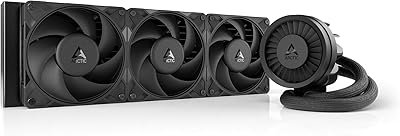
ARCTIC Liquid Freezer III Pro 280 Cooler
82%
91%
Thermal Performance
88%
Noise Level
74%
Installation Experience
89%
Fan Quality
93%
VRM Cooling
More
ARCTIC Liquid Freezer III Pro 360
86%
93%
Thermal Performance
88%
Noise Level
91%
VRM Cooling
89%
Build Quality
94%
Value for Money
More
ARCTIC Liquid Freezer III Pro 420 Cooler
84%
93%
Thermal Performance
91%
Noise Level
58%
Case Compatibility
88%
Build Quality
86%
VRM Cooling
More
Cooler Master Hyper 212 Black CPU Cooler
79%
83%
Thermal Performance
79%
Noise Level
93%
Value for Money
76%
Installation Experience
81%
Build Quality
More
Cooler Master Hyper 212 Halo CPU Air Cooler
84%
88%
Cooling Performance
91%
Noise Level
85%
Ease of Installation
89%
Build Quality
80%
RGB Aesthetics
More
Cooler Master V8 GTS High Performance CPU Cooler
84%
90%
Cooling Performance
88%
Ease of Installation
65%
Fan Noise
92%
Build Quality
85%
Aesthetic Appeal (LED Lighting)
More

FAQ

That depends entirely on your specific case. A 420mm radiator requires a case with explicit 420mm support, which is less common than 360mm clearance. Always check your case manufacturer's radiator compatibility list before ordering — don't assume a large mid-tower will fit it without verifying.

The listed socket support covers Intel LGA 1700 and AMD AM5. AM4 is not listed as an officially supported socket for this unit, so if you're on an older Ryzen build, you'll want to confirm with Geometric Future directly before purchasing rather than assume the mounting hardware will adapt.

At low and mid fan speeds the Eskimo Pro runs quietly and most users don't notice it over normal ambient noise. When the PWM curve ramps up under sustained heavy loads, the fans do become audible — a common trait of high-static-pressure 140mm fans at full tilt. If you're noise-sensitive, a custom fan curve through your motherboard BIOS can help keep things calmer.

Most buyers report that ARGB sync works well with major motherboard ecosystems, but it's not universally plug-and-play across every platform. Some users have had to set it up manually or use the included controller rather than relying on software sync alone. If native sync with a specific platform is critical to you, it's worth checking the Geometric Future support page or community forums for confirmed compatibility.

For a chip like the 7900X, a 420mm radiator does offer meaningful headroom — especially during sustained multi-threaded workloads where a smaller radiator can slowly lose ground as coolant heats up over time. The larger surface area helps the liquid cooler shed heat faster, keeping temperatures more stable over long sessions. That said, a quality 360mm AIO gets you most of the way there; the 420mm advantage is most noticeable at the thermal extremes.

The cold plate typically ships with thermal paste pre-applied from the factory, which is standard for AIO coolers in this category. It's always worth visually inspecting the cold plate when you unbox it to confirm the paste is present and evenly distributed before mounting.

Installation is considered one of this cooler's stronger points. The fans come pre-installed on the radiator, which removes one fiddly step, and the mounting hardware is well-organized. For a first-time builder, the process is manageable — but a 420mm radiator does require more physical planning inside the case than a smaller unit would, so give yourself extra time and consult a build guide for your specific case.

Geometric Future is a relatively new brand, so warranty terms and support infrastructure are worth verifying directly on their official website before purchasing. This is genuinely one area where established brands have an edge, simply because they've had longer to build out service networks and replacement part availability.

A 420mm AIO is a reasonable choice for overclocking the 13900K, which is a notoriously hot chip at stock settings let alone when overclocked. The larger radiator surface and 1.5 L/min pump flow rate provide a solid thermal foundation. That said, extreme overclocking on that chip pushes thermal limits that even large AIOs can struggle with — manage your expectations and monitor temperatures closely after any OC.

Pump noise has not been a widely reported issue with this unit, and most users describe it as effectively silent during normal operation. A small number of buyers have mentioned minor gurgling sounds during initial startup, which is common with AIOs during the first few boot cycles as air settles in the loop — typically not a cause for concern if it goes away quickly.