Overview

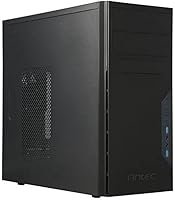
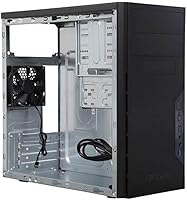
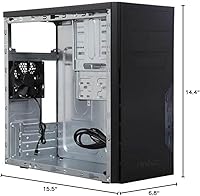
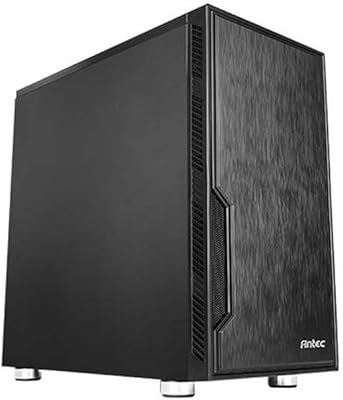
The Antec VSK3000E-U3 Micro ATX Mini Tower Case is the kind of enclosure that doesn't try to impress you with RGB strips or a tempered glass side panel — and that's entirely the point. Antec has been building reliable, no-fuss cases for decades, and this Micro ATX case carries that tradition forward for builders who want their budget working harder on components than on aesthetics. At roughly 14.4 by 6.8 by 15.5 inches, it sits comfortably on a desk or tucks neatly underneath one. The SGCC steel construction feels noticeably more solid than flimsy plastic-heavy competitors at this price tier, giving you a chassis that won't flex when you're routing cables or swapping drives.

Features & Benefits

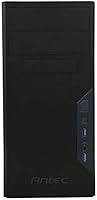
The front panel of this Antec mini tower punches above its weight class, offering two USB 3.0 ports alongside audio in/out jacks — exactly what a daily-use workstation needs without the clutter of cables snaking around the back. There are also two 5.25″ external bays up front, which is genuinely uncommon at this size and price, so if you're keeping an optical drive in the mix, this case has you covered. Two internal 3.5″ HDD bays handle standard storage, and the bottom-mounted PSU keeps the build stable and cable management tidier. A 92mm exhaust fan is included at the rear, with a front intake slot ready if you want to add one later.

Best For

This Micro ATX case is a strong fit for home office and small business builds where the goal is a capable, quiet workstation — not a showpiece. If you're sitting on a pile of older 5.25″ optical drives you'd rather not retire just yet, this case is one of the few compact options that actually accommodates them. First-time builders will also appreciate the straightforward interior layout; there's room to work without feeling cramped. When your parts budget is tight, it makes sense to spend on the processor and memory rather than the enclosure, and the VSK3000E-U3 fits that logic perfectly. It also slides under a desk or onto a shelf without demanding much real estate.

User Feedback

Across roughly 70 ratings, this Antec mini tower holds a 4.2-star average, and the satisfaction is easy to understand once you read through the comments. Buyers consistently point to the sturdy feel, manageable interior space, and clean cable routing as highlights. The downsides are equally consistent: airflow stays adequate but not impressive with just the single rear fan, so anyone planning a higher-TDP build would be wise to budget for that optional front intake. A few users flagged minor sharp edges along the panels during assembly — worth knowing before you reach in bare-handed. Compared to similarly priced options from Cooler Master or Fractal's entry lineup, the VSK3000E-U3 holds its own, though the slim documentation means you may be googling a step or two.

Pros

  • SGCC steel construction feels noticeably rigid — a genuine differentiator among budget-tier Micro ATX cases.
  • Dual 5.25″ external bays are increasingly rare in compact cases at this price point.
  • Two front-panel USB 3.0 ports handle everyday connectivity without adapters or rear-panel hunting.
  • Bottom-mounted PSU placement improves build stability and keeps cable routing cleaner than top-mount designs.
  • Compact dimensions fit comfortably on a desk surface or slide neatly underneath one.
  • Two internal 3.5″ HDD bays cover standard storage needs for most home and office workstations.
  • Antec's long track record means community support, tutorials, and compatible accessories are easy to find.
  • Straightforward interior layout makes this Micro ATX case approachable and forgiving for first-time builders.
  • The front intake fan slot allows an airflow upgrade later without replacing the enclosure entirely.
  • Holds a 4.2-star average across genuine buyer reviews, reflecting consistent real-world satisfaction.

Cons

  • The single 92mm rear fan is barely adequate at stock; high-TDP builds will almost certainly need a second fan.
  • Assembly documentation is sparse — first-timers may end up relying on third-party guides to fill the gaps.
  • Several buyers report minor sharp panel edges that can snag bare hands during the build process.
  • No windowed or tempered glass side panel makes it impossible to showcase internal components.
  • Cable management options are limited compared to purpose-built enclosures in a similar price bracket.
  • The 92mm fan format runs louder under load than the larger 120mm or 140mm fans common in rival cases.
  • Drive bay installation requires a screwdriver throughout — no tool-free mechanisms are included.
  • No dust filtration on intake areas means the interior will accumulate debris faster and need more frequent cleaning.
  • Front panel finish can feel a half-step below comparably priced rivals from Cooler Master or Fractal's entry lineup.

Ratings

The scores below for the Antec VSK3000E-U3 Micro ATX Mini Tower Case were generated by our AI engine after analyzing verified buyer reviews from global sources, with spam, bot-submitted, and incentivized feedback actively filtered out before any rating was calculated. This analysis covers builders across a wide range of real-world scenarios — from compact home office setups to budget small business workstations — to ensure every score reflects genuine usage rather than cherry-picked praise. Both the consistent strengths and the honest frustrations that buyers encountered are transparently represented in every category below.

Build Quality
78%
22%
Builders consistently note that the SGCC steel chassis feels noticeably more rigid than plastic-heavy rivals at this price. Panels resist flex during assembly, and the overall structure holds up well after repeated side-panel removals — for a budget enclosure, the heft alone tends to exceed expectations on first unboxing.
A recurring complaint involves minor sharp edges on interior panel cutouts and around drive bay openings, which can catch bare hands during cable routing. The finish is functional rather than refined, with small burrs and slightly misaligned panel seams appearing often enough in buyer photos to be worth factoring in before assembly.
Value for Money
86%
Across verified reviews the consensus is consistent — this Antec mini tower delivers more case than its price tag implies. The SGCC steel construction, dual 5.25″ external bays, and USB 3.0 front panel together represent a feature set that most competing enclosures quietly trim in order to hit the same price point.
The value calculation weakens slightly once you factor in the near-mandatory cost of adding a front intake fan to address airflow gaps, since the single rear exhaust often falls short for builds with a discrete GPU. Budget-conscious buyers should treat that optional fan as a planned addition, not a genuine optional extra.
Cooling Performance
57%
43%
For light office builds running integrated or entry-level discrete graphics, the single pre-installed 92mm rear exhaust fan keeps temperatures manageable across a typical workday. The front intake slot is a thoughtful addition that makes a future upgrade easy without requiring a new case purchase down the line.
Any build pairing a mid-range CPU with a dedicated GPU under sustained load will expose the stock cooling setup as underpowered fairly quickly. Without the optional front intake fan, warm air stagnates in the compact interior, and several buyers specifically flagged thermal throttling concerns on light gaming or rendering workloads.
Front I/O & Connectivity
83%
Two front-panel USB 3.0 ports cover the most common daily-use needs — plugging in a flash drive, charging a phone, or connecting a webcam without reaching behind the desk. The included 3.5mm audio jacks add genuine convenience for headset users working in a home office or call-center environment.
The USB 2.0 ports are functional but feel dated at this tier, and the absence of a front-panel USB-C port is increasingly noticeable as newer peripherals default to that connector. Power users running multiple external drives alongside other front-panel devices may find two USB 3.0 ports limiting over time.
Drive Bay Versatility
84%
The dual 5.25″ external bays are a genuine standout feature at this price and size category — most competing cases have dropped optical support entirely. Builders repurposing optical drives, adding fan controllers, or mounting bay converters consistently single this out as the primary reason they chose this Micro ATX case over alternatives.
Only two internal 3.5″ HDD bays limit total storage expansion for anyone planning a multi-drive setup. There are also no dedicated 2.5″ SSD trays, meaning SATA SSD users need an inexpensive adapter bracket — a minor but real extra cost and assembly step that first-time builders do not always anticipate.
Cable Management
72%
28%
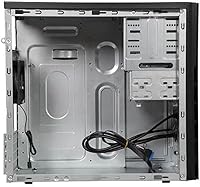
The bottom-mounted PSU bay is a practical help — power cables have a natural upward path without crossing the motherboard tray awkwardly, and builders report enough clearance behind the tray to tuck most cables out of sight with a well-planned build. The interior proportions reward careful routing.
Dedicated cable routing cutouts and tie-down anchor points are minimal compared to enclosures specifically engineered for tidy builds. Builders using non-modular PSUs or running multiple storage drives report that the space behind the tray fills up quickly, making clean results dependent on deliberate pre-planning rather than forgiving design.
Interior Space & Layout
77%
23%
Given the compact 6.8-inch width, builders consistently describe the working space as more generous than the external dimensions imply. Component installation follows a logical sequence that even first-time builders tend to navigate without major difficulty, and there is room to maneuver a screwdriver without feeling boxed in.
Taller aftermarket CPU coolers and longer graphics cards can make the interior feel cramped, and Antec does not publish official clearance figures, which forces builders to rely on community measurement logs. Fitting extra fans alongside a full complement of drives does reduce the sense of usable working space noticeably.
Ease of Assembly
73%
27%
The interior layout is uncluttered and logically arranged, which first-time builders particularly appreciate — there are no confusingly overlapping bay configurations or non-standard mounting schemes. Side panels remove without excessive force, and the overall workflow follows a sensible sequence that experienced builders will complete quickly.
The assembly manual is widely described as sparse, leaving first-timers searching online guides or forum posts for clarification on front-panel header pinouts and drive mounting details. Combined with the sharp interior edge risk on certain panel cutouts, the out-of-box assembly experience is rougher than it needs to be for a beginner-positioned product.
Noise Level
71%
29%
At idle and under light loads, the stock 92mm rear fan operates quietly enough that most home office users will not notice it above typical ambient noise. Builders running basic productivity workloads report the acoustic profile as entirely acceptable for an open-plan workspace or shared home environment.
The 92mm fan format is inherently louder at equivalent airflow rates than larger 120mm or 140mm alternatives — a physical consequence of the smaller blade diameter spinning faster to move the same air volume. Adding a second 92mm front intake fan improves thermals but can raise the audible noise floor noticeably depending on fan quality.
Aesthetics & Design
46%
54%
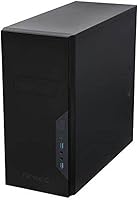
The clean matte black exterior and restrained front panel hold up well in professional environments — it reads as deliberately understated rather than visually cheap. For buyers whose build sits under a desk or in a shared office space, the absence of visual flair is simply not a factor.
There is no side window, no RGB accent lighting, no tempered glass panel, and no option to add any of these features post-purchase — it is a fully opaque utilitarian enclosure and nothing more. Buyers who discover this after purchase are almost always those who prioritized aesthetics and skimmed the listing details.
Structural Rigidity
81%
19%
The SGCC steel frame resists racking and torsional flex in a way that plastic-framed competitors at similar prices simply do not. Builders who have moved the case multiple times between locations note that the chassis holds its shape and side panels continue to seat properly after repeated handling.
While the steel body is genuinely sturdy, the front plastic bezel feels noticeably cheaper by comparison, and several users reported minor flex or a faint creak when pressing the front panel firmly during power button use. It is a purely cosmetic inconsistency but one that slightly undermines the otherwise solid first impression.
Compatibility & Fit
76%
24%
Standard Micro ATX motherboards mount cleanly with no reported fitment issues, and most mid-range graphics cards install in the primary PCIe slot without drama. The bottom PSU bay accepts standard ATX power supplies from any major manufacturer, and the front I/O header follows conventional pinouts that align with typical board layouts.
Full ATX motherboards are entirely incompatible, and longer flagship GPUs or tall tower coolers require clearance verification that Antec does not simplify with published specifications. Builders end up cross-referencing community build logs rather than relying on official guidance, which adds unnecessary friction to the pre-purchase research process.
Documentation & Support
52%
48%
Antec has a long-standing community presence, meaning third-party build guides, forum threads, and compatibility discussions are relatively accessible online for this specific model. For experienced builders, the lean manual is a non-issue — the layout is intuitive enough that most steps are self-evident from the hardware alone.
The included documentation is genuinely minimal, and first-time builders who depend on printed guides will feel underserved at a critical stage of their build. There is no QR code linking to supplemental video content or an online support guide, which feels like a missed opportunity given that this case is marketed partly toward beginners.

Suitable for:

The Antec VSK3000E-U3 Micro ATX Mini Tower Case is purpose-built for builders who want a dependable, no-drama enclosure without sinking unnecessary money into the chassis itself. It is an ideal pick for home office workers and small business owners assembling a dedicated workstation — someone who needs the machine to run reliably day after day, not turn heads on a gaming livestream. Builders with a stash of older optical drives will find the dual 5.25″ external bays genuinely useful, a feature that's increasingly rare at this price tier and form factor. First-time builders also benefit from the logical, forgiving interior; it's hard to get lost in a case this straightforwardly laid out. If desk or floor space is at a premium, the compact footprint means this Micro ATX case tucks neatly under a desk without dominating the workspace.

Not suitable for:

Builders chasing a visually striking rig — think tempered glass panels, RGB lighting, or show-floor aesthetics — will want to look elsewhere, because the VSK3000E-U3 makes absolutely no concessions to style. The single included 92mm exhaust fan is a functional baseline, but anyone building around a power-hungry CPU or a discrete mid-range GPU should plan to add a front intake fan and monitor temperatures carefully, as the stock cooling setup isn't engineered for high thermal loads. The Antec VSK3000E-U3 Micro ATX Mini Tower Case is also strictly limited to Micro ATX motherboards, so if your build has outgrown that form factor, it simply isn't compatible. Enthusiasts who prioritize extensive cable management channels, tool-free drive installations, or modular bay configurations will likely find the feature set underwhelming compared to dedicated mid-range enclosures. Builders running particularly long graphics cards or tall aftermarket CPU coolers should also verify clearance specs carefully before committing.

Specifications

  • Form Factor: This is a Micro ATX Mini Tower enclosure designed to house Micro ATX motherboards in a compact, desk-friendly footprint.
  • Dimensions: The chassis measures 14.4 x 6.8 x 15.5 inches (L x W x H), keeping the overall profile compact enough for tight workspaces.
  • Weight: Unloaded weight is 8.18 pounds, a reflection of the SGCC steel build without excessive bulk that would make repositioning awkward.
  • Material: The chassis is constructed from SGCC (Steel Cold-rolled Coil Galvanized) alloy steel, which provides meaningful structural rigidity at a budget-friendly price tier.
  • Color: The case ships in matte black with solid steel side panels — no windowed panel, RGB accents, or finish variants are available for this model.
  • Motherboard Fit: Compatible with Micro ATX motherboards only; full ATX and larger form factors are not supported by this chassis.
  • Front I/O: The front panel provides two USB 3.0 ports, two USB 2.0 ports, and combined 3.5mm headphone and microphone audio jacks for day-to-day connectivity.
  • External Bays: Two 5.25″ external drive bays are included at the front, suitable for optical drives or third-party bay converter brackets.
  • Internal HDD Bays: Two internal 3.5″ drive bays are provided for standard hard disk drives, covering typical home or office storage requirements.
  • Included Fan: One 92mm rear exhaust fan comes pre-installed, offering a functional baseline for airflow without requiring any additional purchase for light-duty builds.
  • Optional Fan Slot: A single unpopulated 92mm front intake fan slot is present; a compatible fan must be purchased separately to enable front-to-rear airflow.
  • PSU Mounting: The power supply mounts at the bottom of the case, which lowers the center of gravity and allows for cleaner cable routing toward the motherboard.
  • Cooling Type: Cooling is air-based only; there is no dedicated mounting provision for AIO liquid cooler radiators or custom loop hardware.
  • PSU Included: No power supply unit is bundled with the case; a standard ATX PSU must be sourced separately.
  • Model Number: The official model designation is VSK3000E-U3_US, manufactured and warranted by Antec.

Related Reviews
Antec NX200 M Micro-ATX Mini-Tower Computer Case
84%
87%
Cooling Performance
83%
Build Quality
88%
Ease of Setup
80%
Size and Space Efficiency
84%
Storage Options
More
Jonsbo Z20 Micro-ATX Mini Tower Case
80%
93%
Build Quality & Materials
91%
Portability & Carrying Handle
78%
Internal Layout & Compatibility
89%
GPU Clearance & Large Component Support
87%
Cooling Support & Thermal Flexibility
More
Jonsbo TK-1 Micro-ATX PC Case
76%
91%
Build Quality
93%
Aesthetic Design
74%
Thermal Performance
72%
Hardware Compatibility
86%
Value for Money
More
Antec VSK10 Micro-ATX Case
82%
88%
Cooling Performance
85%
Build Quality
70%
Cable Management
90%
Airflow Support
78%
Ease of Installation
More
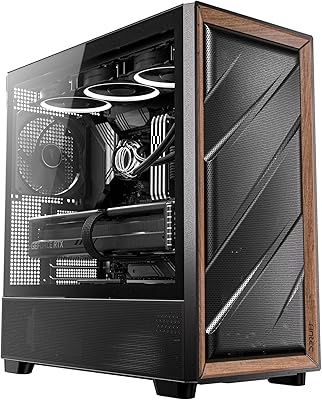
Thermaltake Tower 300 Black Micro-ATX Case
84%
88%
Cooling Performance
90%
Build Quality
85%
Design and Aesthetics
82%
Size and Compatibility
80%
Ease of Setup
More
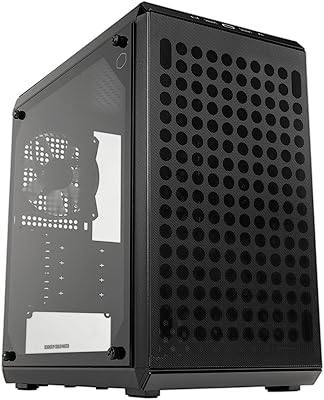
Antec Flux Wood Mid-Tower PC Case
83%
91%
Build Quality
88%
Airflow Performance
94%
Aesthetic Design
86%
Fan Inclusion & Quality
89%
Radiator Compatibility
More
SilverStone FARA H1M Mid-Tower Micro-ATX Case
82%
91%
Airflow Performance
88%
Build Quality
85%
Cooling Options
65%
Cable Management
82%
Aesthetics
More
Antec C5 ARGB
Antec C5 ARGB
84%
93%
Out-of-Box Value
88%
Build Quality
84%
Airflow & Thermal Performance
86%
Cable Management
91%
ARGB Lighting Quality
More
GAMDIAS AURA GC10M ARGB mATX PC Case
78%
91%
Value for Money
72%
Build Quality
78%
Airflow Performance
87%
ARGB Lighting
61%
Cable Management
More
Cooler Master Q300L V2 Micro-ATX Tower Case
77%
91%
Value for Money
83%
Airflow Performance
77%
Build Quality
81%
Tempered Glass Panel
72%
Cable Management
More

FAQ

No — this Micro ATX case is sized specifically for Micro ATX boards, and a full ATX motherboard is physically too large to mount correctly inside the chassis. If your build calls for a full ATX board, you will need to move up to a standard mid-tower designed for that form factor.

No PSU is included. You will need to purchase a standard ATX power supply separately. The bottom-mount bay accommodates most ATX units, and the layout generally makes cable management straightforward once your PSU is installed.

There are no dedicated 2.5″ SSD trays, but M.2 SSDs mount directly to your motherboard so that is not an issue there. For 2.5″ SATA SSDs, an inexpensive adapter bracket lets you mount them in either of the 3.5″ HDD bays — a common workaround builders use without complaint.

Antec has not published an official maximum GPU length for this model, so it is worth checking community build logs for your specific card before buying. Most standard dual-slot mid-range GPUs fit without issue, but very long flagship cards may be a tight squeeze given the compact width of the chassis.

A handful of buyers have noted minor sharp edges on the internal steel panels, particularly around drive bay cutouts and the rear exhaust opening. It is not a universal complaint, but wearing a pair of light work gloves during the initial build is a sensible precaution, especially when routing cables near those areas.

The front intake slot is sized for a standard 92mm case fan. Any compatible 92mm fan will work — just keep in mind it is not included and needs to be added separately. Adding that front fan makes a noticeable difference in airflow for anything beyond a very light-duty build.

It can work well for a compact two-drive NAS or media server build on a Micro ATX platform. The two internal 3.5″ bays limit raw storage capacity compared to purpose-built NAS enclosures, but for a basic setup running TrueNAS or a similar OS, the chassis keeps costs low without sacrificing build quality.

It competes solidly in the same price bracket. The dual 5.25″ external bays are a genuine advantage over most rivals at this level that have dropped optical drive support entirely. Where those competitors sometimes edge ahead is in assembly documentation quality and minor fit-and-finish details on the front panel — but for core build functionality, the VSK3000E-U3 is a legitimate peer.

No — both side panels are solid steel, and there is no tempered glass or acrylic window option for this model. If displaying your build is important to you, this case is not the right fit. If you do not care about visibility and just want a sturdy, functional enclosure, the solid steel panels actually add to the rigidity.

Antec does not list an official maximum CPU cooler height in the published specifications for this model. Based on the 6.8-inch interior width, standard mid-height air coolers in the 130–150mm range should generally fit, but you should cross-reference your specific cooler's dimensions with community build threads for confirmation before purchasing.

Where to Buy