
Overview

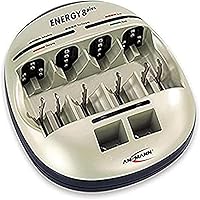
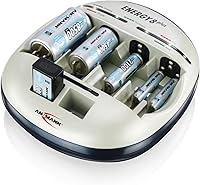
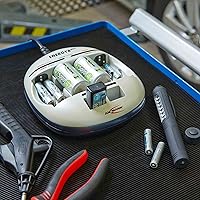
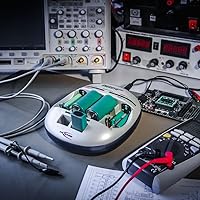
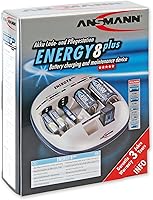
The Ansmann Energy 8 Plus Battery Charger is one of those tabletop stations that makes you wonder why you tolerated a basic four-slot charger for so long. Built by a German battery specialist with decades of experience, this multi-bay battery maintainer handles virtually every common household battery size — AAA, AA, C, D, and 9V — under one roof. It sits firmly in the mid-range tier, meaning you get genuinely intelligent charging behavior without paying for professional-grade equipment. Just keep in mind: this is a desktop unit designed to stay plugged in at home, not something you toss in a travel bag.

Features & Benefits

What sets the Ansmann 8-slot charger apart from cheaper alternatives is how it treats each battery as its own project. Rather than pushing a single charge rate across the board, it monitors every slot independently — so a nearly full AA does not get cooked while a depleted D-cell is still catching up. There is also a battery revival function that can bring degraded cells back to usable capacity, though it will not work miracles on severely worn-out batteries. Defective or accidentally inserted alkalines are automatically rejected, which is a genuinely useful safety net. A trickle maintenance mode rounds things out, keeping charged batteries topped off during long idle periods without shortening their lifespan.

Best For

This charging station is a natural fit for anyone managing a high volume of batteries across different devices. Photographers who burn through AA cells in flashes, families juggling remotes, toys, and handheld vacuums, and hobbyists running RC gear or powerful flashlights will all find the broad size compatibility genuinely practical. It also makes a strong case for emergency preparedness setups, where keeping a large reserve of C and D cells fully maintained matters most. If you have a drawer full of dormant rechargeables you have not touched in years, this is a reasonable first step before writing them off. It is not built for quick turnaround charging, but for high-rotation households the tradeoff is worth it.

User Feedback

Owners who have used this multi-bay battery maintainer for a year or more tend to praise its long-term reliability, noting it keeps working without drama well past the point where budget chargers typically fail. The revival feature earns mixed but mostly positive reactions — it does recover some batteries that other chargers ignore, though a few users report it struggles with heavily degraded cells. The most consistent criticism involves charge speed: this station prioritizes battery health over fast turnaround, and impatient users notice. Status indicators get decent marks for visibility, though some find them harder to read in bright ambient light. A small number of reviewers also flag occasional issues with certain off-brand battery types.

Pros

  • Handles AAA, AA, C, D, and 9V batteries from a single station, eliminating the need for multiple chargers.
  • Each slot monitors its battery independently, so a fast-charging cell never gets overcharged while others catch up.
  • The battery revival function rescues some degraded cells that basic chargers simply refuse to touch.
  • Automatically rejects reversed or non-rechargeable batteries, adding a meaningful layer of safety for busy households.
  • Trickle maintenance mode keeps a fully charged battery ready to go without degrading it during long storage.
  • Built by a brand with a long track record in battery technology, and long-term owners consistently report solid durability.
  • Up to six AA or AAA batteries can charge simultaneously, which is genuinely useful for high-rotation households.
  • Status indicators let you monitor each slot at a glance without guessing which batteries are done.

Cons

  • Charge speeds are noticeably slower than dedicated fast chargers, which can be a real inconvenience in time-sensitive situations.
  • The physical footprint is substantial for a home charger, requiring a dedicated spot on a shelf or desk.
  • The revival feature does not work on all degraded batteries, so results vary and expectations need to stay realistic.
  • Some users report that status indicators are harder to read under bright ambient lighting conditions.
  • Occasional compatibility issues have been flagged with certain off-brand or non-standard battery types.
  • No USB or modern charging outputs, so it handles only traditional rechargeable battery formats.
  • The weight and bulk make it impractical to pack for travel or use away from a fixed power outlet.

Ratings

The scores below for the Ansmann Energy 8 Plus Battery Charger were generated by AI after analyzing verified buyer reviews from global markets, with spam, bot-generated, and incentivized feedback actively filtered out. Each category reflects the honest balance of praise and frustration found across real long-term owners, not just first-impression ratings. Both the standout strengths and the genuine pain points are represented transparently so you can make a fully informed decision.

Battery Compatibility
93%
Owners consistently highlight the sheer range of formats this charging station handles as its single biggest advantage. Being able to drop in AAA cells from a TV remote, D cells from a lantern, and a 9V block from a smoke detector all in one session is something users with busy households genuinely rely on week to week.
A small but notable group of reviewers flag occasional hiccups with certain off-brand or ultra-high-capacity cells, where the charger either rejects them or delivers inconsistent results. For users heavily invested in a specific third-party battery brand, this is worth investigating before committing.
Per-Slot Monitoring
91%
Users who have upgraded from basic shared-rail chargers consistently praise the independent slot monitoring as a meaningful step forward. In practice, it means a nearly full AA cell is not being stressed just because the D cell sitting next to it needs another two hours, which noticeably extends battery lifespan over time.
The intelligence of the per-slot system is not always clearly communicated through the indicators, so some users are not fully aware when a slot has completed charging versus when it has shifted to trickle mode. A clearer visual distinction between these states would improve the day-to-day experience.
Battery Revival Function
74%
26%
When it works, this feature earns genuine appreciation — several long-term owners report recovering entire sets of NiMH cells that had been sitting unused for years, saving them a meaningful amount on replacements. For anyone with a drawer of dormant rechargeables, the revival cycle alone can justify the purchase.
Results are inconsistent enough that reviewers are split on its reliability. Batteries with severe internal degradation or deep-cycle damage rarely respond, and some users feel the feature was oversold relative to actual outcomes. Tempering expectations here is important — it is a useful bonus, not a guaranteed fix.
Charge Speed
52%
48%
Users who prioritize battery longevity over turnaround time tend to accept the measured charge rate as a deliberate trade-off, and many long-term owners credit the gentle charge profile with keeping their cells healthier over hundreds of cycles compared to fast-charge alternatives.
This is the most consistently criticized aspect across all review cohorts. Users who need a fresh set of AAs within an hour or two before a shoot, a trip, or a kid's event find the pace genuinely frustrating. Anyone comparing this to a dedicated rapid charger will notice the difference immediately.
Build Quality
83%
The physical construction earns solid marks from owners who have used the Ansmann 8-slot charger regularly for a year or more, with very few reports of slot contacts degrading or the housing cracking under normal use. It has the reassuring heft of a unit built to stay on a shelf for years, not months.
A handful of reviewers note that the plastic housing, while sturdy, does not feel particularly premium for the price point, and the battery bay springs on certain slot sizes can feel slightly loose with repeated use. It holds up well functionally, but the tactile quality does not match top-tier competitors.
Safety Features
89%
The automatic rejection of alkaline and reversed batteries is one of those features that earns quiet but consistent appreciation, especially from households where kids or non-technical users might grab the wrong battery type. Knowing the unit will refuse to charge something it should not gives genuine peace of mind.
A few users note that the error indication when a bad battery is detected could be more explicit — a blinking LED is easy to miss, and there is no audible alert. In a busy home environment, it is possible to overlook a rejected slot and walk away thinking everything is charging when it is not.
Trickle Maintenance Mode
86%
Emergency preparedness users and photographers who maintain a standing battery reserve particularly value the ability to leave cells plugged in indefinitely without worrying about overcharge damage. It turns this multi-bay battery maintainer into a true readiness station rather than just a charger you use and unplug.
There is no visual confirmation on most slot indicators that specifically signals trickle mode versus active charging, which leaves some users uncertain whether the unit is still working or has simply gone idle. A dedicated trickle indicator light would resolve this ambiguity.
Status Indicators
67%
33%
In typical indoor lighting conditions, the per-slot LEDs do their job well enough — users can glance across the unit and get a reasonable read on which batteries are still charging and which are done. For a simple tabletop setup, the feedback loop works adequately for most people.
Under bright overhead lighting or in sunlit rooms, the indicators become noticeably harder to read, and the lack of a display showing actual charge percentage or estimated time remaining is a real gap at this price point. Users accustomed to more informative charger displays tend to find this aspect underwhelming.
Ease of Use
88%
Setup is genuinely plug-and-play — drop in batteries, connect power, and the unit handles everything automatically. There are no mode buttons to configure or settings to dial in, which suits the majority of users who want a charger that just works without reading a manual.
The simplicity cuts both ways: more experienced users who want control over charge rates, capacity testing, or detailed diagnostics will find the unit too hands-off. There is no way to customize behavior for specific battery chemistries or capacities.
Slot Capacity
87%
The ability to charge up to six AA batteries at once is a practical advantage for households running multiple high-drain devices simultaneously. Photographers prepping for a full-day shoot, or families restocking before a camping trip, find the slot count much more useful than the four-slot standard.
The mixed-format slot layout means that loading C or D cells takes up physical space that reduces the simultaneous AA count, so in practice the effective capacity depends on what you are charging. Users who primarily use D cells may find the total slot count less impressive than the headline figure suggests.
Long-Term Reliability
84%
Multi-year owners are among the most vocal supporters of this charging station, with a notable number reporting trouble-free operation across two or three years of regular household use. The unit does not seem to develop the contact corrosion or charging failures that shorter-lived budget chargers often show after eighteen months.
There are occasional reports of units that began behaving erratically after extended use — particularly around slot detection accuracy — though these appear to be a minority experience rather than a systemic pattern. Warranty support and replacement part availability are factors worth checking before purchasing.
Value for Money
71%
29%
For users who actually exploit the full range of the unit's capabilities — mixed battery sizes, maintenance mode, revival function — the value proposition holds up well over time. Recovering even a few sets of previously dead rechargeables offsets a meaningful portion of the purchase cost.
Users who only ever charge AA batteries in sets of two or four may feel the price is hard to justify against simpler, faster alternatives. The value equation depends heavily on whether you actually need everything this unit offers, and casual users may find themselves paying for features they rarely touch.
Footprint & Design
63%
37%
The unit is stable on a flat surface and the blue finish is inoffensive in a home setting. For a permanent shelf or desk installation, the dimensions work well enough and the layout of the slots is logical once you have used it a few times.
At 8 x 10.5 inches, this multi-bay battery maintainer occupies a meaningful amount of counter or shelf space, and users in smaller apartments or with limited dedicated charging areas may find it genuinely bulky. There is no wall-mount option and no cable management, so the power cord adds to the visual clutter.

Suitable for:

The Ansmann Energy 8 Plus Battery Charger is a strong match for anyone who regularly juggles a wide mix of battery sizes across multiple devices at home. Families with kids who burn through AA and C cells in toys, remotes, and portable speakers will appreciate not needing a separate charger for each format. Photographers relying on AA-powered flashes, hobbyists running RC cars or high-drain flashlights, and anyone building out an emergency preparedness kit will find the broad compatibility and maintenance mode genuinely useful rather than just a marketing bullet point. If you have a stash of older rechargeables sitting in a drawer, this charging station gives you a realistic shot at recovering some of them before you write them off entirely. It rewards patient, high-volume users who prioritize battery longevity over fast turnaround.

Not suitable for:

The Ansmann Energy 8 Plus Battery Charger is not the right tool for every situation, and it is worth being honest about where it falls short. If you need batteries topped off in an hour before heading out the door, this multi-bay battery maintainer will likely frustrate you — it charges at a measured pace that favors cell health over speed. Travelers and commuters looking for something compact to toss in a bag should look elsewhere entirely, as this is a tabletop unit that belongs plugged in at a desk or shelf. Users who only ever need to charge two or four AA batteries at a time may find the size and footprint more than they actually need. Those who primarily use a single battery brand with standard capacity cells may also find that a leaner, faster dedicated charger serves them better at a lower cost.

Specifications

  • Supported Sizes: This charging station is compatible with AAA, AA, C, D, and 9V rechargeable battery formats in a single unit.
  • AA/AAA Capacity: Up to 6 AA or AAA batteries can be charged simultaneously across the available slots.
  • C/D Capacity: Up to 4 C or D cell batteries can be accommodated at the same time.
  • 9V Capacity: Up to 2 9V block batteries can be charged concurrently in dedicated slots.
  • Output Voltage: The unit delivers a 1.2V output voltage, which is standard for NiMH and NiCd rechargeable cells.
  • Cell Monitoring: Each slot operates independently, analyzing and managing its battery separately from all other occupied slots.
  • Safety Detection: The charger automatically identifies and rejects defective, reversed, or non-rechargeable alkaline batteries to prevent damage.
  • Revival Function: A built-in refresh cycle attempts to restore capacity in deeply discharged or degraded rechargeable cells.
  • Maintenance Mode: Once charging is complete, the unit switches to a trickle charge to keep batteries topped off without overcharging.
  • Dimensions: The unit measures 8 x 3 x 10.5 inches, making it a full-sized tabletop station rather than a compact travel device.
  • Weight: The charger weighs 1.33 pounds, reflecting the robust internal components typical of multi-bay stations.
  • Color: The unit is finished in blue, consistent with Ansmann's product family aesthetic.
  • Model Number: The official model identifier is 5207442/US, the North American variant of this charging station.
  • Brand Origin: Ansmann is a German battery technology company with a long-established presence in professional and consumer charging equipment.
  • Status Indicators: LED indicators provide real-time visual feedback on the charge status of each individual battery slot.

Related Reviews
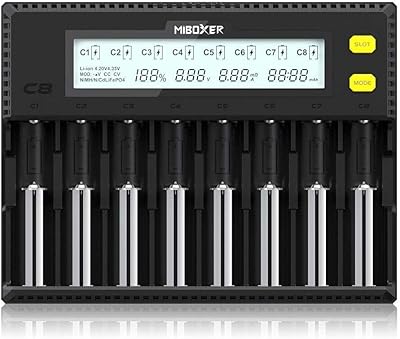
MiBOXER C8 8-Bay Battery Charger
82%
88%
Charging Performance
91%
Battery Compatibility
93%
LCD Display Clarity
86%
Internal Resistance Measurement
89%
Safety Features
More
XTAR Dragon VP4L Plus Battery Charger
85%
89%
Charging Performance
90%
Battery Testing Accuracy
83%
Ease of Use
88%
Build Quality
92%
Versatility (Battery Compatibility)
More
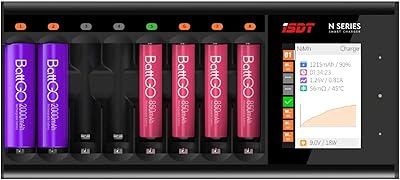
ISDT N8 8-Slot AA/AAA Battery Charger
78%
91%
Independent Channel Performance
78%
Chemistry Compatibility
84%
Build Quality
83%
Display & Interface
86%
Charging Speed
More
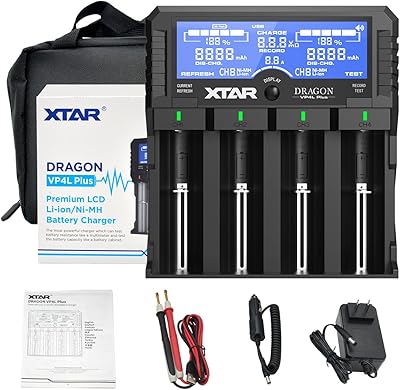
Intelligence 8 Bay Universal Battery Charger
86%
90%
Charging Speed
88%
Usability
93%
Safety Features
85%
Display Clarity
87%
Build Quality
More
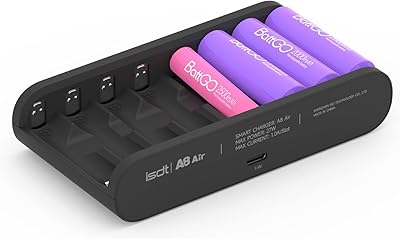
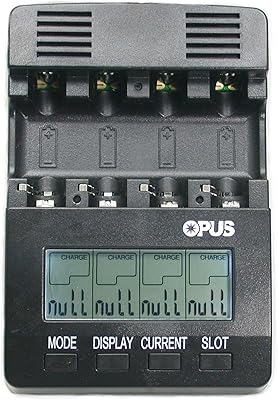
ISDT A8 Air 8-Slot Battery Charger
79%
91%
Build Quality
84%
Charging Speed
93%
Independent Channel Performance
62%
App Experience
88%
Battery Chemistry Compatibility
More
Opus BT-C2400 Battery Charger Analyzer
77%
91%
Measurement Accuracy
88%
Internal Resistance Testing
93%
Channel Independence
54%
Charging Speed
83%
Refresh Mode Effectiveness
More
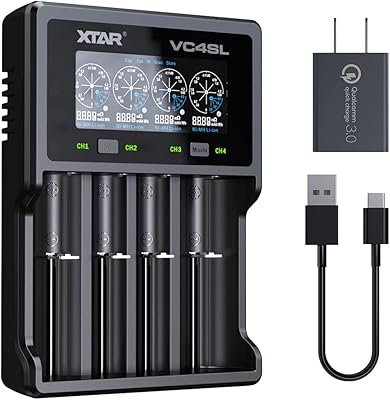
XTAR VC4SL 4-Bay Battery Charger
82%
88%
Charging Accuracy
91%
LCD Display Quality
93%
Battery Compatibility
84%
Grade Mode Usefulness
82%
Build Quality
More
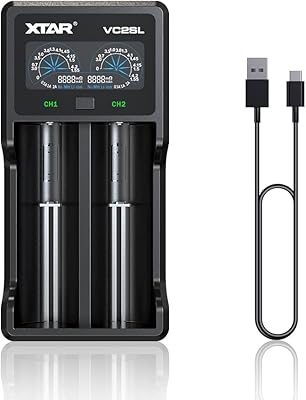
XTAR VC2SL Battery Charger
84%
85%
Charging Performance
88%
Ease of Use
80%
Build Quality
90%
Portability
92%
Battery Compatibility
More
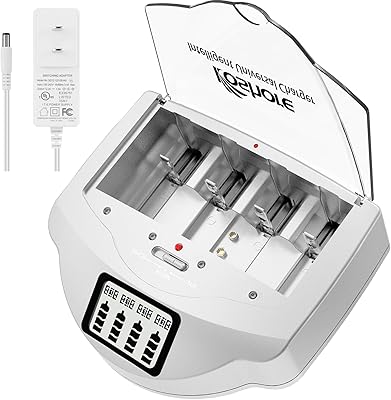
Koshore Universal Rechargeable Battery Charger
72%
88%
Format Versatility
83%
LCD Display Clarity
61%
Build Quality
69%
Charging Speed
78%
Discharge Function
More
Zanflare C4 Smart Battery Charger
86%
88%
Charging Performance
85%
Build Quality
91%
Ease of Use
77%
Charging Speed
94%
Versatility (Battery Types Supported)
More

FAQ

You can absolutely mix sizes in the same session. The Ansmann Energy 8 Plus Battery Charger handles each slot independently, so you could have a pair of D cells charging alongside four AA batteries without any issue.

This charging station is designed for NiMH rechargeable batteries, which are the standard today. If you have older NiCd cells, it is worth checking the product documentation or Ansmann directly, as NiCd compatibility varies by model revision.

The charger is designed to detect non-rechargeable batteries and simply refuse to charge them, which is a genuinely useful safeguard. You will typically see an indicator signal on that slot, and the cell will be left untouched.

Charge times depend on the capacity of your batteries and how depleted they are, but this multi-bay battery maintainer charges at a measured pace by design. It prioritizes battery health over speed, so do not expect the fast turnaround you would get from a dedicated rapid charger — plan for several hours in most cases.

It genuinely does recover some batteries, but it is not a universal fix. Cells that are mildly degraded or have been sitting in storage for a while tend to respond well. Batteries that are heavily worn out or have developed internal faults are less likely to benefit, so keep expectations realistic.

Yes, that is largely the point of the trickle maintenance mode — once a battery reaches full charge, the unit drops down to a low-level maintenance current to keep it topped off without stressing the cells. Most users who run emergency battery stocks or high-rotation households leave cells in the station between uses without issue.

You can charge as few as one battery at a time. The Ansmann 8-slot charger monitors each slot independently, so empty slots are simply ignored and do not affect the charging of occupied ones.

Each slot has its own LED indicator that changes state when the battery in it has completed charging. The display is reasonably clear in normal indoor lighting, though some users note it can be a bit harder to read under very bright ambient light.

The US model (5207442/US) is designed for North American power standards and ships with the appropriate cable for standard household outlets. No adapter should be needed for use within the United States.

This multi-bay battery maintainer operates quietly under normal conditions — there is no fan, and the charging process itself produces no significant noise. A faint warmth from the unit is normal during a heavy charge cycle, but audible noise is generally not a concern reported by owners.