Overview

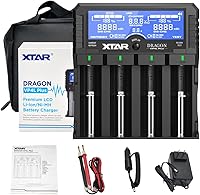
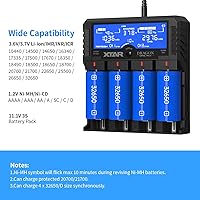
The XTAR VP4 Plus 4-Slot Battery Charger Analyzer isn't just a charger — it's a proper diagnostic tool for anyone who takes rechargeable batteries seriously. Where most chargers simply top off your cells and call it done, this charger-analyzer goes further, letting you measure actual capacity and internal resistance alongside the standard charge cycle. It handles an impressively wide range of chemistries, from compact Li-ion 10440 cells all the way up to hulking 32650s, plus the full Ni-MH lineup from AAA to D. One important note upfront: it cannot charge standard 1.5V alkaline batteries. The VP4 Plus also supports 11.1V 3S battery packs, which is rare at this price tier and genuinely useful for certain photography and electronics applications.
Features & Benefits

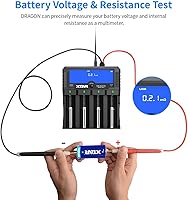
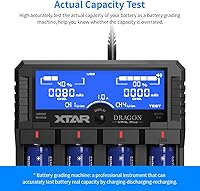
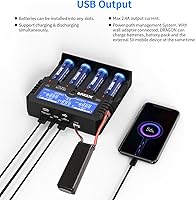
Each of the four slots operates independently, so you can charge a 21700 at 2A in one bay while running a capacity test on a AA cell in another. The adjustable charging current — 0.5A, 1A, or 2A per slot — lets you treat older or smaller cells more gently. The included probe pair checks internal resistance, which is essentially how worn out a cell is; high resistance signals poor performance even when voltage looks normal. Test Mode then cycles the battery to reveal its actual usable capacity rather than the manufacturer's rated number. A Refresh Mode helps Ni-MH cells shed memory effect, and a USB output port lets you charge a device while batteries are simultaneously topping up.

Best For

This charger-analyzer really earns its place in the hands of flashlight hobbyists, photographers shooting with battery-powered strobes, and amateur radio operators juggling large mixed-chemistry inventories. If you regularly cycle through 18650 or 26650 cells and want to know which ones are actually worth keeping versus quietly degrading, the VP4 Plus pays for itself quickly in cells saved and failures avoided. It also suits anyone who occasionally needs to charge an 11.1V 3S pack without buying a separate RC charger. That said, if you just need to top off a few AA batteries for the TV remote, this XTAR unit is overkill — the feature depth is genuinely useful only when you're managing a real battery collection.

User Feedback

Rated 4.4 out of 5 stars across hundreds of verified purchases, the VP4 Plus earns consistently strong marks for its LCD readout clarity — buyers appreciate seeing voltage, capacity percentage, and internal resistance displayed simultaneously for each slot without squinting. Accuracy of capacity readings also comes up frequently as a genuine strength, with many users noting the results track closely to lab-tested cell grades. On the other side, newer users sometimes find the interface takes getting used to, particularly when navigating between Charge, Test, and Refresh modes. A few buyers have flagged that the included adapter cable feels less premium than the unit itself. Overall the consensus is clear: experienced battery users love it; beginners may need patience.

Pros

  • Charges four batteries simultaneously and independently, with no slot interfering with another.
  • Internal resistance testing reveals cell health at a glance, something most chargers cannot do.
  • Test Mode shows real usable capacity rather than just the manufacturer's rated spec.
  • Supports an unusually wide battery size range, from tiny 10440 cells to large 32650s.
  • 3S battery pack charging is a rare feature at this price tier and saves buying a separate device.
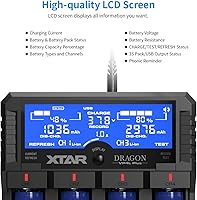
  • The LCD readout is clear and information-dense, displaying voltage, capacity, and resistance per slot.
  • Refresh Mode genuinely helps recover Ni-MH cells suffering from memory effect.
  • Comes with a car adapter, carry pouch, and probe pair — the kit feels complete out of the box.
  • Multiple safety protections including soft-start and temperature control make unattended charging less nerve-wracking.
  • USB output with power-path management means you can charge a phone while cells are loading.

Cons

  • Cannot charge 1.5V alkaline batteries, which catches many first-time buyers off guard.
  • The interface takes time to learn; new users may need the manual just to switch between modes.
  • At nearly two pounds with the adapter, it is too bulky to toss in a travel bag.
  • The included power adapter cable feels noticeably cheaper than the charger unit itself.
  • Maximum charge current tops out at 2A per slot, which may feel slow for users with high-capacity cells.
  • No companion app or wireless connectivity for logging or monitoring charge sessions remotely.
  • Probe-based resistance testing requires an extra manual step that purely charge-and-forget users will rarely bother with.
  • The feature depth makes this a poor fit for buyers who just want a simple, no-configuration charging experience.

Ratings

Our editorial team used AI to analyze verified global buyer reviews for the XTAR VP4 Plus 4-Slot Battery Charger Analyzer, actively filtering out incentivized, bot-generated, and low-quality submissions to surface what real users genuinely experience. The scores below reflect a balanced synthesis of consistent praise and recurring frustrations across hundreds of verified purchases worldwide. Both the standout strengths and the honest shortcomings are weighted equally in every category.

Charging Accuracy
91%
Users who cross-referenced charge termination points with lab-grade equipment consistently found the VP4 Plus stopping at the correct voltage without overcharging. Hobbyists managing expensive high-drain 18650 cells particularly appreciate how precisely each slot handles the CC/CV charge curve independently.
A small number of users noted occasional inconsistency at the 0.5A setting on older or borderline cells, where termination timing felt slightly erratic. This was rarely a deal-breaker but was reported enough to prevent a perfect score.
Battery Compatibility
93%
The range of accepted cell formats is one of the most frequently praised aspects — photographers, preppers, and flashlight collectors love having a single unit that handles everything from tiny 10440 cells to bulky 32650s without adapters or workarounds. Protected 21700 batteries, which trip up cheaper chargers, fit cleanly here.
The inability to charge 1.5V alkaline batteries frustrates buyers who did not read the compatibility notes carefully before purchasing. It is a hard technical limitation that generates a disproportionate share of negative reviews from users who expected universal household battery support.
Diagnostic Depth
88%
The combination of probe-based internal resistance testing and capacity measurement via Test Mode gives this charger-analyzer a capability level that most competitors simply do not offer at any price. Users sorting through aging battery stockpiles call it an eye-opener — many discover cells they assumed were fine are actually well below rated capacity.
The diagnostic results are displayed only on the unit itself with no export, logging app, or data output option, which frustrates more methodical users who want to track cell health over time. For a device positioned as an analyzer, the lack of any connectivity for record-keeping feels like a missed step.
Display Clarity
86%
The multi-line LCD earns consistent praise for packing a lot of per-slot information — voltage, capacity percentage, resistance, charge mode, and current — into a readable layout without feeling cluttered. Users charging in low-light workshop or garage settings appreciate the screen brightness and contrast.
The display does not have a backlight that stays on continuously during longer charge cycles, which some users find inconvenient when monitoring progress across a room. Font size for resistance readings in particular was flagged by older users as slightly small relative to the other displayed values.
Capacity Test Accuracy
84%
For most mainstream Li-ion cells, the Test Mode capacity readings land within a few percentage points of results from purpose-built battery graders, which is impressive for a consumer-grade unit. Users buying second-hand 18650 cells rely heavily on this feature to determine whether they received cells matching the seller's claimed capacity.
Capacity test results can vary slightly between runs on the same cell, particularly at the margin — a cell testing at 2,940 mAh in one run might show 2,870 mAh the next. This level of variance is acceptable for practical sorting purposes but bothers users seeking laboratory-level precision.
Build Quality
77%
23%
The main chassis feels solid and appropriately dense for a desktop unit, and the battery bay sliders move smoothly with a positive click at each position. Most long-term users report no mechanical failures or contact degradation even after years of regular cycling use.
The plastic used on the outer shell picks up scuffs and superficial marks relatively easily, and a few users noted that the bay spring tension feels slightly inconsistent across the four slots. It is durable enough for workbench use but does not feel precision-engineered to the same degree as the electronics inside.
Included Accessories
79%
21%
The inclusion of both an AC wall adapter and a 3A car adapter in the box is a practical touch that many comparable chargers skip entirely. The carry pouch and probe pair add immediate out-of-box utility without needing extra purchases.
The quality of the included power adapter cable is the most commonly cited accessory complaint — it feels noticeably thinner and less premium than the charger unit it powers. Several users replaced it promptly with a heavier-gauge cable for peace of mind, particularly for overnight charging sessions.
Ease of Use
67%
33%
For straightforward charging, dropping cells in and letting the VP4 Plus do its job is genuinely simple — the unit auto-detects chemistry and starts charging without configuration. Experienced rechargeable battery users find the mode navigation intuitive after a short familiarization period.
New users unfamiliar with concepts like internal resistance or capacity testing often feel overwhelmed by the interface, and the manual does not always explain the practical meaning of the readings in accessible terms. Several reviewers specifically recommended this charger-analyzer only to people who already have some background in battery management.
Refresh Mode Effectiveness
72%
28%
Amateur radio operators and high-volume Ni-MH users report meaningful runtime improvements on cells that had become noticeably sluggish from repeated partial recharging. The Refresh Mode is genuinely useful for cells that are structurally healthy but suffering from capacity-robbing memory effect.
Results are inconsistent on heavily used or older Ni-MH cells, with some users seeing no measurable improvement after multiple Refresh cycles. Managing expectations is important here — it is not a restoration tool for cells that have degraded chemically, only for those impacted by memory effect specifically.
3S Pack Charging
74%
26%
The ability to charge 11.1V 3S Li-ion packs directly is a feature that is simply absent on most chargers in this category, making the VP4 Plus a genuine two-in-one tool for users who occasionally need to top off small electronics or field equipment packs without carrying a second dedicated charger.
The 3S charging functionality is more limited in configuration options compared to dedicated RC balance chargers, and users who need precise cell-balancing within the pack will find this feature too basic for serious application. It covers occasional casual use well, but it is not a replacement for a proper RC charger in a demanding context.
USB Output Function
69%
31%
Being able to charge a phone or small device from the USB port while batteries load simultaneously is a genuinely practical bonus, especially for field use or travel situations where outlets are limited. Power-path management means pulling the AC adapter and running purely off the loaded Li-ion cells also works without interruption.
The USB output is capped at 5V with no Quick Charge support, which means charging modern smartphones is noticeably slow compared to what a dedicated fast charger would deliver. Users expecting it to serve as a primary power bank replacement will be disappointed by the output speed.
Safety Features
89%
The comprehensive protection circuit suite — covering over-current, over-voltage, short-circuit, temperature, and soft-start — gave reviewers genuine confidence leaving the unit running overnight or unattended in a workshop. No reports of overheating incidents or unexpected shutdowns surfaced in the verified review pool.
While the safety protections are thorough, the unit does not provide an audible or visual alert prominent enough for some users to notice when a protection event has occurred and charging has been paused. A louder or more persistent notification for fault conditions would improve safety transparency.
Portability
58%
42%
The carry pouch included in the box makes organized transport feasible, and the overall footprint is compact enough to pack into a larger equipment bag for camping or field operations. The 3A car adapter extends practical use beyond a fixed desktop setup.
At 1.87 pounds — and more with the adapter and cables — this XTAR unit is not something most users would describe as travel-friendly. The weight and bulk place it firmly in the desktop or basecamp category rather than everyday carry, which limits its appeal for users who frequently move between locations.
Value for Money
81%
19%
For buyers who regularly manage a serious battery inventory and want both charging and diagnostic capability in one unit, the price-to-feature ratio holds up well when compared to buying a separate charger and a standalone battery analyzer. Long-term users frequently note that identifying and retiring weak cells early has saved them money on equipment and replacements.
Casual users who only charge a few cells occasionally will find the feature set far beyond what they need, and the price will feel hard to justify against simpler four-slot chargers that cost a fraction of the price. The value case is strong only if the diagnostic features are actually used regularly.

Suitable for:

The XTAR VP4 Plus 4-Slot Battery Charger Analyzer is built for people who treat their batteries as equipment, not disposables. Flashlight collectors, landscape photographers relying on battery-powered strobes, and amateur radio operators managing rotating cell inventories will find it genuinely indispensable. It also makes a lot of sense for preppers or off-grid enthusiasts who want to audit their battery stock and know with confidence which cells are still performing and which should be retired. If you occasionally need to charge an 11.1V 3S pack without investing in a dedicated RC charger, this charger-analyzer covers that too. Essentially, anyone who owns more than a handful of Li-ion or Ni-MH cells in mixed sizes, and wants real data on their health, will get strong, lasting value from the VP4 Plus.
Not suitable for:

If you need to charge standard 1.5V alkaline batteries — AA, AAA, C, or D cells from a grocery store — this XTAR unit simply cannot help you; that is a hard technical limitation, not a configuration issue. Casual users who just want to top off a few rechargeable AAs for a remote control or a child's toy will find the interface more complex than necessary and the price difficult to justify. The VP4 Plus rewards users who already understand concepts like internal resistance and cell capacity grading; buyers who are new to rechargeable batteries may feel lost navigating between Charge, Test, and Refresh modes without spending time with the manual. It is also worth noting that at nearly two pounds with the adapter, this is not a travel-light solution — it is a desktop tool meant to live on a workbench or gear shelf.

Specifications

  • Charging Slots: The unit features 4 fully independent charging channels, each operating without affecting the others.
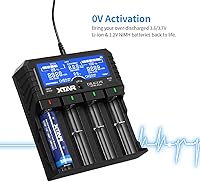
  • Compatible Chemistries: Supports 3.6V and 3.7V Li-ion (including IMR, INR, and ICR types) as well as 1.2V Ni-MH and Ni-CD cells.
  • Battery Size Range: Accepts cylindrical cells from 10440 up to 32650, plus standard AAA, AA, A, SC, C, and D form factors.
  • 3S Pack Support: Can charge 11.1V 3S Li-ion battery packs directly using the included accessories, without requiring a separate RC charger.
  • Charging Currents: Each slot supports selectable input currents of 0.5A, 1A, or 2A to match the appropriate charge rate for each cell type.
  • Operating Modes: Three user-selectable modes are available: Charge (standard), Test (real capacity discharge-cycle measurement), and Refresh (Ni-MH memory effect reduction).
  • Display: A multi-line LCD shows per-slot data including battery voltage, internal resistance, charging capacity, charge current, battery type, and current mode status.
  • Probe Function: Included probe pair measures a battery's voltage and internal resistance independently of the charging slots, functioning similarly to a basic multimeter.
  • USB Output: Provides a 5V DC USB output port with power-path management, allowing a connected device to be charged simultaneously with batteries in the slots.
  • Safety Protections: Built-in circuits guard against over-current, over-voltage, over-charge, short-circuit, and overload conditions, complemented by temperature monitoring and a soft-start function.
  • Power Input: Primary power is supplied via the included 12V 3A AC wall adapter; a 3A car adapter is also included for vehicle use.
  • Dimensions: The unit measures 6.22 x 5.79 x 1.57 inches, making it a compact desktop footprint suitable for a workbench or gear shelf.
  • Weight: The charger weighs 1.87 pounds, which is typical for a feature-rich multi-slot analyzer of this class.
  • In the Box: Package includes the VP4 Plus charger, 12V 3A AC adapter, 3A car adapter, a pair of test probes, a carry pouch, and a user manual.
  • Alkaline Limitation: This unit is not compatible with standard 1.5V alkaline batteries and cannot be used to charge them under any configuration.
  • User Rating: The VP4 Plus holds a 4.4 out of 5 star average rating based on over 223 verified customer reviews on Amazon.
  • Manufacturer: Designed and manufactured by SHENZHEN XTAR Electronics Co., Ltd., a specialist in professional-grade battery management equipment.
  • Model Number: The official model designation is VP4 Plus, with ASIN B07TVJFG9L on Amazon.

Related Reviews
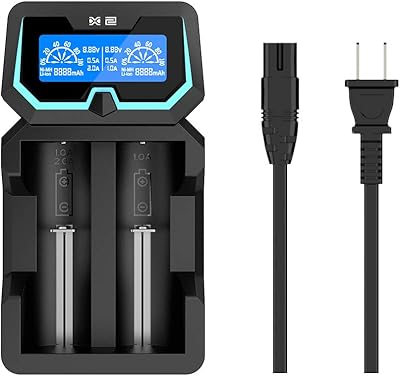
XTAR X2 Smart 2-Slot Battery Charger
86%
92%
Charging Speed
88%
Ease of Use
76%
Portability
85%
Build Quality
94%
Compatibility with Battery Types
More
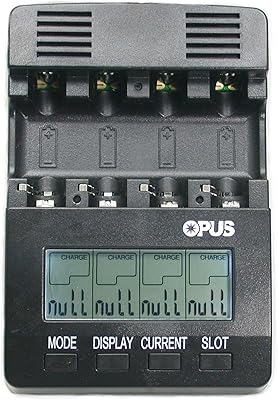
Opus BT-C2400 Battery Charger Analyzer
77%
91%
Measurement Accuracy
88%
Internal Resistance Testing
93%
Channel Independence
54%
Charging Speed
83%
Refresh Mode Effectiveness
More
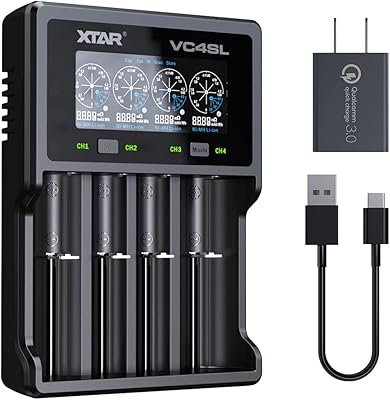
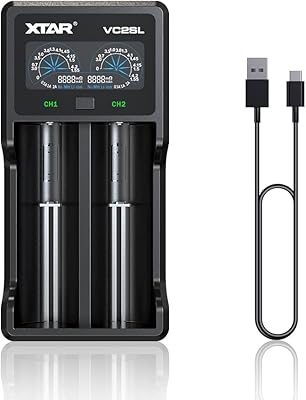
XTAR VC4SL 4-Bay Battery Charger
82%
88%
Charging Accuracy
91%
LCD Display Quality
93%
Battery Compatibility
84%
Grade Mode Usefulness
82%
Build Quality
More
XTAR VC2SL Battery Charger
84%
85%
Charging Performance
88%
Ease of Use
80%
Build Quality
90%
Portability
92%
Battery Compatibility
More
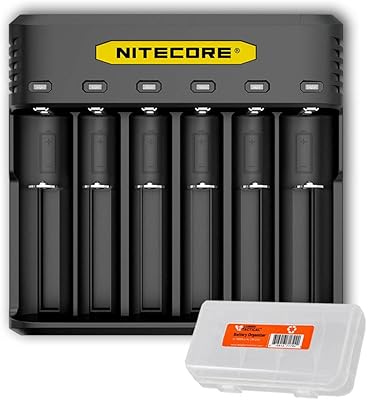
Nitecore Q6 Six Slot Battery Charger
86%
92%
Charging Performance
89%
Value for Money
88%
Build Quality
85%
Ease of Use
90%
Safety Features
More
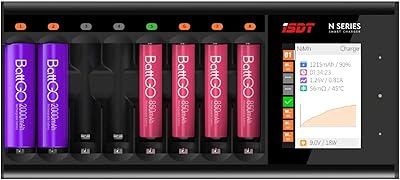
ISDT N8 8-Slot AA/AAA Battery Charger
78%
91%
Independent Channel Performance
78%
Chemistry Compatibility
84%
Build Quality
83%
Display & Interface
86%
Charging Speed
More
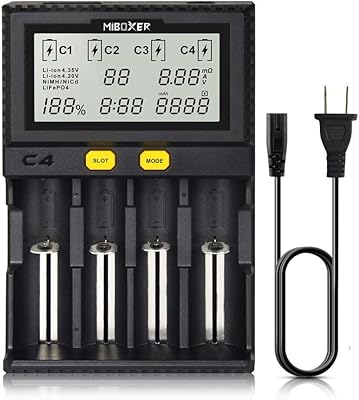
MiBOXER C4 4-Bay Battery Charger
86%
88%
Charging Performance
91%
Usability & Ergonomics
89%
Battery Compatibility
85%
Build Quality
93%
Display & Visuals
More
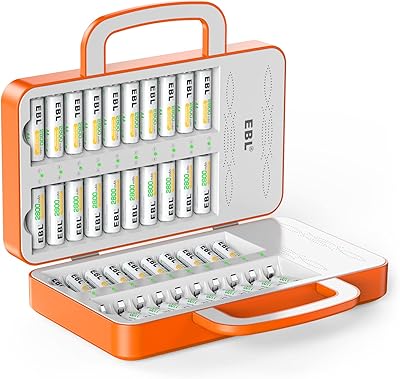
EBL C880 40-Slot Battery Charger
84%
88%
Charging Performance
82%
Build Quality
85%
Ease of Use
90%
Cooling Efficiency
91%
Safety Features
More
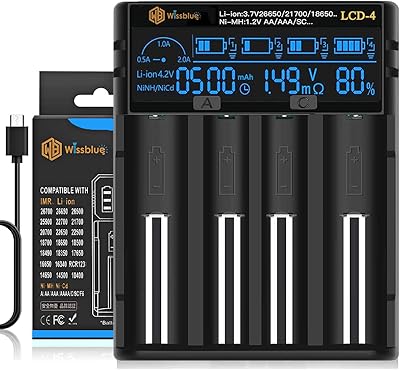
WISSBLUE LCD-4 4-Slot 18650 Battery Charger
81%
88%
LCD Display Quality
86%
Charging Speed
91%
Battery Compatibility
83%
Build Quality
67%
Capacity Reading Accuracy
More
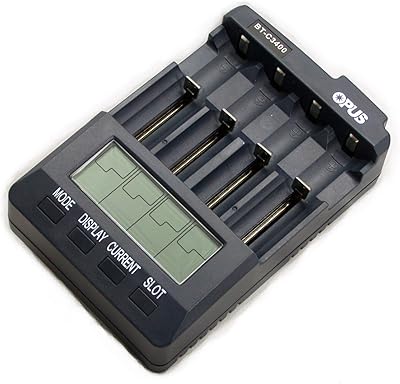
Opus C3400 4-Channel Battery Charger Analyzer
79%
93%
Measurement Accuracy
91%
Multi-Channel Independence
89%
Chemistry Compatibility
88%
Capacity Test Reliability
82%
Internal Resistance Testing
More

FAQ

No, and this is probably the most common point of confusion. The VP4 Plus is designed for rechargeable chemistries only — specifically Li-ion and Ni-MH or Ni-CD cells. Standard 1.5V alkaline batteries from the grocery store cannot be charged here, and attempting to do so could be dangerous. If your AAs are rechargeable Ni-MH cells, those work fine.

Test Mode puts a battery through a controlled discharge-then-charge cycle to measure how much energy it can actually hold, rather than just reading voltage. This is useful because a cell can look healthy on a voltage check but actually deliver far less capacity than its label claims — especially if it is aging or has been heavily cycled. It is the most reliable way to know if a battery is worth keeping.

That is exactly the kind of scenario the VP4 Plus was built for. You can use the probe pair to check internal resistance — a high resistance reading typically means a degraded cell — and then run a Test Mode cycle to confirm actual remaining capacity. It takes longer than a standard charge, but you will come out knowing definitively which cells are worth keeping and which should be retired.

Think of internal resistance as friction inside the battery. A fresh, healthy cell has very low internal resistance and can deliver current efficiently. As a cell ages or sustains damage, that resistance rises, and the battery starts losing more energy as heat rather than usable power. High internal resistance means worse performance under load, even if the resting voltage still looks acceptable. The probe function on this charger-analyzer makes it easy to spot these tired cells.

Yes, each of the four slots is fully independent. You could, for example, charge a Li-ion 18650 in slot one and run a Refresh cycle on a Ni-MH AA in slot two simultaneously without either process interfering with the other. The LCD shows the current status for each slot individually, so you always know what is happening across the board.

Yes, a 3A car adapter is included in the box specifically for this purpose. Just plug it into your vehicle's 12V outlet. Keep in mind that charging speeds and available current modes may be similar to AC use, but it is a convenient option for keeping cells topped up on longer trips.

Ni-MH batteries can develop what is called memory effect over time — essentially the cell starts behaving as if its capacity is smaller than it actually is, because it has been repeatedly recharged before fully discharging. Refresh Mode works by carefully cycling the battery in a way that helps break down this effect, restoring some of the lost capacity. It will not fix severely degraded cells, but for cells that are structurally fine but underperforming, it can make a real difference.

Honest answer: there is a learning curve. If you just want to drop batteries in and have them charge, this charger-analyzer will do that without issue. But if you want to use the Test Mode, Refresh Mode, or probe-based resistance readings, you will want to spend some time with the manual first. The interface is not complicated once you understand what each mode does, but it assumes you have a basic interest in understanding your batteries rather than just charging them blindly.

Yes. The USB output port runs at 5V with power-path management, which means it can power a USB device simultaneously while batteries are charging in the slots. You can also remove the AC power source entirely and use Li-ion batteries already loaded in the unit to run the USB output — essentially using the VP4 Plus as a basic power bank in the field.

Protected 21700 cells are explicitly supported and will fit without issue. The adjustable battery bays are designed to accommodate the extra length that the protection circuit adds to these cells. This is worth noting because some cheaper chargers struggle with protected 21700s — this XTAR unit handles them cleanly.

Where to Buy