Overview

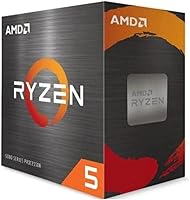
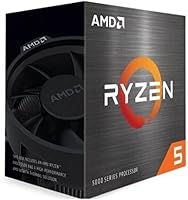
The AMD Ryzen 5 5600X Desktop Processor landed in late 2020 as AMD's mainstream sweet spot from the Zen 3 generation, and the IPC leap over previous Ryzen lineups was significant enough that the chip still holds its own in today's titles and daily workloads. It ships with the Wraith Stealth cooler, so you can drop it into a build and run at stock speeds without an extra purchase on day one. The AM4 socket means compatibility with a vast range of existing boards, making it a practical upgrade for a large installed base. Just keep expectations grounded: this is a capable six-core processor built for gaming and general use, not a heavy content-creation workstation.
Features & Benefits

Six cores and twelve threads may sound modest by today's standards, but in practice the 5600X handles multitasking far more gracefully than the quad-core chips it replaced — background tasks, open browser tabs, and an active game rarely cause a noticeable hiccup. The 4.6 GHz boost clock is the headline for gamers; most titles still lean heavily on per-core speed, and that headroom translates into higher, more consistent frame rates. A generous combined cache keeps frequently accessed data close to the cores, reducing the micro-stutters that affect lower-cache designs. The unlocked multiplier gives enthusiasts room to push further on a B550 or X570 board, and PCIe 4.0 support on those platforms keeps NVMe storage and GPU bandwidth from becoming a constraint.

Best For

This Ryzen 5 chip is most at home in 1080p and 1440p gaming builds where single-threaded performance is the primary constraint on frame rates. It is also a natural upgrade for anyone still running a Ryzen 1000 or 2000 series board — AM4 compatibility often means just swapping the CPU and updating the BIOS. Light video editing, streaming, and everyday productivity tasks all sit comfortably within its range. If you want to get running without sourcing an aftermarket cooler, the bundled Wraith Stealth handles stock operation without complaint. And because the AM4 ecosystem is so well-established, driver support, community guides, and overclocking resources are abundant — a genuine advantage for first-time builders.

User Feedback

Owners consistently highlight frame time consistency as the standout real-world win — not just higher average frame rates, but smoother, more predictable pacing that makes games feel noticeably better. Installation earns high marks too; AM4 veterans describe the upgrade process as refreshingly painless. The Wraith Stealth divides opinion more: casual users find it adequate at stock speeds, but anyone pushing the chip through sustained encoding or long gaming sessions tends to swap it for something with more thermal headroom. A fair concern raised by some buyers is AM4's long-term future now that AM5 has launched, though for builds that reuse existing hardware, the value case remains solid. Head-to-head comparisons with Intel i5 alternatives routinely favor this sixth-gen Zen 3 processor on overall price-to-performance.

Pros

  • Exceptional 1080p and 1440p gaming frame rates that hold up against much newer chips.
  • The 5600X ships with a functional cooler, so your build is complete out of the box.
  • AM4 compatibility makes it a painless drop-in upgrade for a huge range of existing boards.
  • Consistent, mature driver and BIOS support means almost no stability surprises after setup.
  • High single-core boost speed translates directly into smoother frame pacing in real gameplay.
  • Surprisingly low power draw for the performance tier — a genuine plus in small form-factor builds.
  • PCIe 4.0 support on B550 and X570 boards unlocks fast NVMe storage and full GPU bandwidth.
  • Unlocked multiplier gives enthusiasts accessible overclocking options without buying a premium chip.
  • Compares favorably to Intel i5 alternatives on overall price-to-performance in gaming workloads.
  • Enormous community ecosystem means guides, stable OC profiles, and troubleshooting help are everywhere.

Cons

  • The bundled Wraith Stealth cooler runs out of thermal headroom under sustained all-core loads.
  • AM4 is a legacy platform — new builds entering the socket today have a limited upgrade ceiling.
  • All-core overclocking gains are modest; Precision Boost often matches manual tuning with less effort.
  • Memory speeds above DDR4-3600 can introduce instability that demands hands-on timing adjustments.
  • CPU-heavy rendering and large video exports expose the six-core limit faster than gaming ever will.
  • PCIe 4.0 benefits are locked behind specific motherboard chipsets — B450 and older boards miss out entirely.
  • Silicon lottery variance means overclocking results differ meaningfully between individual units.
  • Aging into diminishing relevance faster now that AM5 Ryzen chips are widely available at competitive prices.

Ratings

The AMD Ryzen 5 5600X Desktop Processor earned its reputation across tens of thousands of verified purchases worldwide, and these scores reflect what real builders actually experienced — with spam, incentivized reviews, and bot activity filtered out before analysis. From competitive gaming rigs to budget upgrade builds, the feedback paints a clear and honest picture: this chip punches well above its class in several areas, while a few legitimate limitations are worth knowing before you commit.
Gaming Performance
94%
Owners running titles like Warzone, Cyberpunk 2077, and Elden Ring consistently report smooth, high-framerate experiences at 1080p and 1440p. The high single-core boost speed keeps frame pacing tight, and the generous cache minimizes the micro-stutters that plague lower-end chips in open-world environments.
At 4K, the GPU becomes the dominant bottleneck and the CPU advantage shrinks considerably. A small number of users with very high-refresh-rate monitors noticed the gap narrowing between this chip and newer AM5 options in the most demanding titles.
Multitasking & Everyday Use
88%
Running a game, a Discord call, a browser with multiple tabs, and a background update simultaneously causes no perceptible slowdown for the vast majority of users. The jump from older quad-core chips is immediately noticeable in daily workflows, not just benchmarks.
Heavy parallel workloads — think compiling large codebases or running multiple virtual machines — do expose the six-core ceiling. Users doing serious multithreaded work alongside gaming occasionally wished for more headroom.
Value for Money
91%
For AM4 upgraders in particular, the price-to-performance ratio is hard to argue with — especially when the bundled cooler eliminates one extra purchase. Buyers coming from Ryzen 1000 or 2000 series hardware frequently describe it as one of the most cost-effective upgrades they have made.
With AM5 now established and newer Ryzen chips available, the value equation has shifted slightly compared to launch. First-time builders starting from scratch may need to weigh AM4 platform costs against investing in a newer socket with a longer upgrade path.
Thermal Performance
74%
26%
At stock speeds during gaming sessions, the included Wraith Stealth cooler keeps temperatures reasonable and the fan noise is genuinely unobtrusive. Users running the chip at default settings in mid-tower cases reported comfortable sustained temperatures without intervention.
Under prolonged heavy loads — extended encoding, all-core stress tests, or aggressive overclocking — the Wraith Stealth runs out of headroom faster than most enthusiasts would like. Owners who pushed the chip beyond stock settings nearly universally replaced it with an aftermarket cooler.
Overclocking Headroom
78%
22%
The unlocked multiplier makes manual overclocking accessible on B550 and X570 boards, and the community has produced an enormous library of guides and stable OC profiles. Builders who enjoy tuning their systems appreciate having that option without paying a premium for an X-series chip.
Zen 3 silicon lottery variance means overclocking results are inconsistent between units. Many users found all-core overclocks only marginally better than AMD's own Precision Boost algorithm, making manual tuning feel less rewarding than on previous generations.
Installation & Compatibility
93%
Drop-in compatibility with hundreds of AM4 boards made installation straightforward for upgraders — often just a BIOS update away from being fully operational. First-time builders also praised the clear mounting mechanism and the lack of LGA-style pin anxiety.
Older 300-series and some 400-series motherboards require a BIOS update that itself demands a compatible CPU to flash — a frustrating chicken-and-egg situation for a small subset of upgraders who did not anticipate it.
Power Efficiency
86%
The 65W TDP keeps system power draw surprisingly low for the level of performance delivered, which owners in small form-factor builds especially appreciated. Electricity-conscious users noted meaningfully lower idle and load consumption compared to competing Intel chips of the same era.
Once overclocking or manual voltage adjustments enter the picture, power draw climbs steeply and the efficiency advantage shrinks. A handful of users in hot climates or poor-ventilation setups found the chip ran warmer than the TDP figure implied.
Content Creation Performance
71%
29%
For casual tasks like light video editing in DaVinci Resolve or Premiere, timeline scrubbing and export times are perfectly acceptable. Streamers running a game and encoding simultaneously found the chip handled it without visibly degrading gameplay.
Compared to 8-core or higher chips, rendering times in CPU-heavy exports are noticeably longer. Users who bought the chip primarily for content creation rather than gaming sometimes felt they had optimized for the wrong workload.
Bundled Cooler Quality
67%
33%
The Wraith Stealth is genuinely usable out of the box — quiet at idle, adequate for stock gaming loads, and far better than the no-cooler situation Intel offered competitors at the time. For builders on a tight budget, it removes an immediate purchase decision.
It is a floor, not a ceiling. Thermal throttling under sustained loads is a real risk in warmer environments, and the cooler's modest contact area limits its effectiveness even at stock speeds when ambient temperatures rise.
Platform Longevity
69%
31%
AM4 is a mature, stable platform with years of accumulated support, refined BIOSes, and a massive second-hand parts market. For builders already invested in AM4 hardware, the upgrade path remains practical and well-documented.
AM5 has arrived, and AMD has confirmed AM4 as a legacy platform going forward. New builders starting fresh face a legitimate question about whether to enter AM4 at all, and some existing owners feel the upgrade ceiling is closer than they expected when they bought in.
Memory Compatibility & Performance
83%
DDR4-3200 is a widely available, affordable standard, and the 5600X extracts real performance gains from it compared to slower memory kits. Users who ran paired kits in dual-channel configuration reported noticeably better results in memory-sensitive workloads.
Pushing memory speeds beyond 3600 MHz can introduce instability that requires careful manual tuning of primary and secondary timings. Builders expecting plug-and-play performance at high memory frequencies were occasionally caught off guard.
PCIe 4.0 & Storage Speed
81%
19%
On X570 and B550 boards, PCIe 4.0 support unlocks the full speed of next-gen NVMe drives, and users with Gen4 SSDs noticed genuinely faster load times in game libraries with large asset files. GPU bandwidth also benefits from the wider lane allocation.
PCIe 4.0 is only accessible on specific motherboard chipsets, and users on B450 or older boards do not benefit from it at all. This made the feature feel gated for a meaningful portion of the upgrade market.
Noise Levels
84%
Under light-to-moderate loads, the Wraith Stealth runs near-silently, and the chip itself produces no coil whine or electrical noise. Users in quiet home office environments appreciated being able to work or game without a noisy cooler fan dominating the room.
During sustained heavy workloads, the Wraith Stealth fan ramps up audibly as it struggles to maintain safe temperatures. Builders who prioritized silent operation ultimately needed an aftermarket cooler to achieve it consistently.
Driver & Software Stability
92%
Years of platform maturity mean driver support, chipset updates, and BIOS compatibility are rock-solid. Users rarely reported crashes, instability, or compatibility issues that could not be traced back to other components in their builds.
AMD's Precision Boost Overdrive software has occasionally introduced confusion for less experienced builders who enabled aggressive settings without fully understanding the thermal implications. A small number of users reported instability after automatic software-driven tuning.

Suitable for:

The AMD Ryzen 5 5600X Desktop Processor is purpose-built for builders who want strong gaming performance without overengineering their system or their budget. If you are gaming at 1080p or 1440p — which still represents the large majority of active PC gamers — this chip delivers the high single-core speed that keeps frame rates smooth and frame pacing consistent across the titles that actually matter. It is also an outstanding choice for anyone upgrading from a Ryzen 1000 or 2000 series system, since AM4 compatibility means the swap is often as straightforward as a BIOS update away. Home office users who occasionally cut video, stream content, or run a few applications in parallel will find it more than capable. The included cooler even removes a line item from the parts list, which matters when you are trying to put together a complete, balanced build without unnecessary extras.

Not suitable for:

The AMD Ryzen 5 5600X Desktop Processor is not the right call for buyers who need serious multi-threaded muscle — think 3D rendering, large batch video exports, running virtual machines, or compiling substantial codebases regularly. If your workload keeps all cores pinned for extended periods, the six-core design will feel constrained, and stepping up to an eight-core or higher chip is the more honest recommendation. Builders starting a brand-new system from scratch should also think carefully before committing to AM4; with AMD's AM5 platform now mature and offering a longer upgrade runway, entering a legacy socket in 2024 requires a clear reason — usually an existing AM4 board or a meaningful price advantage. Overclockers who want to squeeze every last megahertz out of their chip will likely find the Wraith Stealth cooler inadequate and the overclocking ceiling less dramatic than Zen 2 was. Finally, anyone primarily running CPU-heavy creative software who assumed this was a budget workstation chip may end up disappointed.

Specifications

  • Architecture: Built on AMD's Zen 3 (Vermeer) architecture, manufactured using TSMC's 7nm FinFET process for improved efficiency and per-core performance over previous generations.
  • Cores & Threads: Features 6 physical cores with simultaneous multithreading enabled, delivering 12 total processing threads for parallel task handling.
  • Base Clock: Operates at a 3.7 GHz base frequency across all cores under sustained all-core workloads.
  • Boost Clock: Reaches up to 4.6 GHz on a single core via AMD Precision Boost 2, providing maximum responsiveness in lightly-threaded applications and games.
  • Cache: Equipped with 35 MB of combined L2 and L3 cache, reducing data fetch latency and improving responsiveness in game engines and real-time applications.
  • TDP: Rated at a 65W thermal design power, enabling efficient operation under stock conditions with the included cooler.
  • Socket: Uses AMD's AM4 socket, compatible with a wide range of 300, 400, and 500 series motherboards subject to manufacturer BIOS support.
  • Memory Support: Officially supports DDR4 memory up to 3200 MHz in dual-channel configuration; higher speeds are achievable with manual tuning on compatible boards.
  • PCIe Version: Supports PCIe 4.0 on X570 and B550 chipset motherboards, enabling full-speed Gen4 NVMe storage and maximum GPU lane bandwidth.
  • Unlocked Multiplier: Ships with an unlocked CPU multiplier, allowing manual overclocking on compatible B550 and X570 motherboards without additional hardware requirements.
  • Bundled Cooler: Includes AMD's Wraith Stealth air cooler, which is rated for stock operation and light workloads without requiring a separate thermal solution purchase.
  • ECC Memory: Provides unofficial ECC memory support when paired with compatible motherboards, useful for workstation or data-sensitive applications outside AMD's official support scope.
  • Integrated Graphics: Does not include integrated graphics; a discrete GPU is required to output video in all configurations.
  • Launch Date: Released in November 2020 as part of AMD's 5000 series desktop processor lineup.
  • Physical Dimensions: The processor die measures approximately 1.57 x 1.57 x 0.1 inches and weighs around 2.8 ounces including the IHS (integrated heat spreader).
  • Instruction Sets: Supports x86-64, SSE4.2, AVX2, and AES-NI instruction sets, ensuring broad software compatibility across modern operating systems and productivity applications.
  • Platform: Designed exclusively for AMD's AM4 platform; it is not compatible with Intel sockets or AMD's newer AM5 platform.
  • Windows Support: Fully supported by Windows 10 and Windows 11, with AMD chipset drivers actively maintained through AMD's official software suite.

Related Reviews
AMD Ryzen 5 5500 B550M K Bundle
78%
88%
Value for Money
79%
Gaming Performance at 1080p
91%
Ease of Installation
83%
Motherboard Feature Set
74%
CPU Thermal Performance
More
HELLOLAND Gaming PC Desktop AMD Ryzen 5 5600X GeForce RTX 5060 8GB 32GB RAM 1TB SSD
86%
89%
Gaming Performance
88%
Multitasking & Productivity
83%
Build Quality
86%
Cooling Efficiency
91%
Ease of Setup
More
AMD Ryzen 5 1400 Processor
82%
92%
Value for Money
85%
Gaming Performance
88%
Overclocking Potential
80%
Thermal Management
90%
Setup and Installation
More
AMD Ryzen 5 PRO 4650G Processor
87%
85%
Gaming Performance
92%
Value for Money
87%
Overclocking Potential
89%
Multitasking Efficiency
88%
Integrated Graphics Quality
More
AMD Ryzen 5 8500G
AMD Ryzen 5 8500G
77%
83%
CPU Performance
71%
Integrated Graphics
78%
Value for Money
67%
Gaming Capability
88%
Platform Longevity
More
AMD Ryzen 5 9600X
AMD Ryzen 5 9600X
84%
93%
Single-Core Performance
91%
Thermal Efficiency
94%
Energy Consumption
89%
Gaming Frame Rates
67%
Value for Money
More
AMD Ryzen 5 1500X Processor with Wraith Spire Cooler
85%
88%
Gaming Performance
82%
Overclocking Potential
85%
Cooling Efficiency
91%
Price-to-Performance Ratio
75%
Multi-Threaded Performance
More
AMD Ryzen 5 1600 Processor with Wraith Spire Cooler
83%
92%
Value for Money
88%
Gaming Performance
85%
Multi-threaded Performance
75%
Overclocking Potential
90%
Thermal Management
More
AMD Ryzen 5 3600
AMD Ryzen 5 3600
84%
94%
Value for Money
88%
Gaming Performance
86%
Multitasking Capability
82%
Thermal Efficiency
67%
Stock Cooler Quality
More
AMD Ryzen 5 2400G Processor with Radeon RX Vega 11 Graphics
84%
92%
Value for Money
80%
Gaming Performance
85%
Overclocking Potential
90%
Ease of Installation
88%
Thermal Performance
More

FAQ

Yes, the AMD Ryzen 5 5600X Desktop Processor includes AMD's Wraith Stealth air cooler in the box. It handles stock gaming and general use without issue. That said, if you plan to overclock or run sustained heavy workloads like video encoding, you will likely want to pick up an aftermarket cooler at some point.

Most AM4 boards from the 400 and 500 series support the 5600X after a BIOS update. Some older 300-series boards may not receive official support depending on the manufacturer. Check your motherboard vendor's CPU compatibility list before assuming it will work, especially if your board predates the 500 series.

On many 400-series boards, yes — a BIOS update is required to recognize Zen 3 chips. The tricky part is that you may need a compatible older CPU to perform that update first. If you are buying a new 500-series board, it almost certainly already ships with a BIOS version that supports the 5600X out of the box.

For AM4 upgraders, absolutely — the price-to-performance ratio remains strong and the platform is proven. If you are building from scratch with no existing AM4 hardware, it is worth comparing AM5 options, since that platform has a longer upgrade runway. For gaming on a budget or a reuse build, the 5600X still makes a lot of sense.

Very well. The high single-core boost speed is a direct benefit in games like CS2, Valorant, and similar titles that are sensitive to per-core performance. Frame rates are high and frame pacing is tight, which is what actually matters in competitive play. Most users report smooth, consistent performance at 1080p and 1440p.

You can overclock it on B550 and X570 boards using the unlocked multiplier. Whether it is worth the effort is debatable — AMD's Precision Boost algorithm does an excellent job of maximizing single-core speed automatically, and manual all-core overclocks often deliver only modest gains while increasing heat and power draw. Tweaking memory speeds and enabling PBO tends to yield better real-world results than a fixed manual OC.

No, the 5600X does not include integrated graphics. You will need a dedicated GPU in your build to get any video output. If you want a Ryzen chip with onboard graphics for a backup display option, look at the G-series APUs instead.

DDR4-3600 with tight CL16 or CL18 timings is widely considered the sweet spot for Zen 3 chips. It sits at the edge of the memory controller's comfortable operating range and delivers noticeably better performance than slower kits. Going significantly above 3600 MHz can introduce instability that requires manual timing adjustments, so unless you enjoy that kind of tuning, DDR4-3600 is the straightforward recommendation.

At the time of launch and through much of its market life, the 5600X matched or beat Intel i5 options at similar price points in gaming workloads, particularly in frame consistency. The gap has narrowed as newer Intel chips arrived, but for buyers comparing older i5 models or building on a budget, this Ryzen 5 chip remains competitive. Platform cost and ecosystem preference often matter more than raw benchmark differences at this level.

Yes, and it handles it reasonably well. Running a game plus a software encoder like x264 in OBS simultaneously puts a real load on all six cores, but most users report acceptable gameplay with minor adjustments to encoder preset settings. For dedicated heavy streaming at high bitrates alongside demanding titles, an eight-core chip gives you more headroom, but the 5600X manages the dual workload for most setups without significant compromise.

Where to Buy