Overview

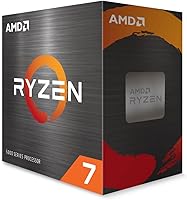
The AMD Ryzen 7 5700X is AMD's answer to builders who want Zen 3 performance without paying a premium for flagship Ryzen 9 chips. It sits comfortably in the middle of the AM4 lineup — more capable than the 5600X in multi-threaded workloads, but priced well below the 5800X it effectively replaced. Eight cores and sixteen threads handle everyday computing, gaming, and moderate content work without breaking a sweat. There's no cooler in the box, so factor in the cost of a decent third-party option. Its real strength is single-core performance that punches above its price tier, making it an attractive pick for anyone building or upgrading a mid-range desktop.

Features & Benefits

Zen 3 was a significant architectural leap for AMD, and this Ryzen chip inherits all of it. The 4.6 GHz max boost clock keeps single-threaded tasks — including most PC games — feeling responsive and quick. On X570 and B550 boards, PCIe 4.0 support opens the door to fast NVMe drives and current-gen GPU bandwidth, which matters if you plan to pair it with a modern graphics card. Native DDR4-3200 memory support keeps platform costs manageable. The 36 MB of combined cache is one of the quieter wins here: it reduces latency in ways that translate to smoother frame rates in popular titles. The unlocked multiplier is a welcome bonus for anyone curious about pushing clocks further.

Best For

This AMD processor makes the most sense for two types of buyers. The first is someone with an existing AM4 board — B450, B550, X470, or X570 — looking to squeeze more performance out of a platform they already own. The second is a first-time builder assembling a 1080p or 1440p gaming rig on a budget. Pair it with a mid-range GPU and you have a balanced system that handles popular titles well. Light video editors and streamers will also find the 16-thread configuration useful for background encoding. Worth noting: AM4 is a mature platform with no new CPU generations ahead, so this is more of a value play than a long-term upgrade foundation.

User Feedback

Across thousands of verified purchases, the praise for the 5700X is fairly consistent. Buyers repeatedly highlight value for money as the standout quality, and the performance-per-dollar is genuinely hard to argue with at this tier. Installation gets positive marks, with most users reporting straightforward compatibility on existing boards, though a handful noted that older B450 motherboards required a BIOS update before the chip was recognized. The main complaint centers on the missing cooler — it is a real added cost that catches some first-timers off guard. Enthusiasts who explored the unlocked multiplier generally reported modest but worthwhile gains. Long-term owners rarely flag reliability concerns, which speaks well of the chip's day-to-day durability.

Pros

  • Exceptional price-to-performance ratio for mainstream gaming and everyday desktop use.
  • Zen 3 architecture delivers noticeably snappier responsiveness compared to older AM4 generations.
  • Drop-in compatible with most B450, B550, X470, and X570 boards, keeping upgrade costs low.
  • 65W TDP keeps power draw and thermals manageable with even a modest air cooler.
  • PCIe 4.0 support on B550 and X570 boards future-proofs storage and GPU bandwidth.
  • Sixteen threads handle simultaneous gaming and streaming without the system feeling strained.
  • Unlocked multiplier gives enthusiasts the option to explore overclocking without extra cost.
  • Long-term owners report consistent stability and no performance degradation over extended use.
  • Native DDR4-3200 support means you do not need expensive memory kits to hit good performance.

Cons

  • No cooler included — budget for a quality third-party option or the chip will throttle under load.
  • Older B450 boards may require a BIOS update using a prior-generation CPU before the chip is recognized.
  • Overclocking headroom is limited in practice; real-world clock gains rarely justify the thermal trade-off.
  • AM4 is a dead-end platform, so there is no CPU upgrade path available after this generation.
  • Sustained all-core workloads push actual power draw noticeably above the rated 65W TDP.
  • Memory stability above DDR4-3600 can be hit or miss depending on the board and kit combination.
  • Heavy content creation workloads like multi-cam 4K editing will expose the core count ceiling quickly.
  • Buyers who later discover the 5800X3D often feel mild regret about not stretching their budget further.

Ratings

Our AI-generated scores for the AMD Ryzen 7 5700X are built by analyzing thousands of verified global buyer reviews, with spam, bot-submitted, and incentivized feedback actively filtered out before any scoring takes place. The result is a balanced picture that reflects where this Ryzen chip genuinely delivers and where real buyers have run into friction. Strengths and recurring frustrations are weighted equally so you can make a truly informed decision.

Value for Money
93%
Buyers consistently call this one of the best performance-per-dollar propositions on the AM4 platform. For the asking price, the jump in gaming and multi-threaded workload performance over older Ryzen generations is substantial enough that most users feel they got more than they paid for.
A few buyers feel the value calculation shifts once you factor in the cost of a third-party cooler, which is mandatory. If your budget is tight, that additional spend can make the overall package feel slightly less attractive than the chip's sticker price suggests.
Gaming Performance
88%
At 1080p and 1440p paired with a capable GPU, the 5700X handles popular titles without the CPU becoming a bottleneck. Games that rely heavily on single-core speed — competitive shooters, open-world RPGs — run noticeably smoother than on older Zen 2 chips buyers upgraded from.
At 4K resolution the GPU takes over entirely, so the CPU advantage becomes irrelevant. A handful of users pushing very high refresh rate monitors noted they eventually felt limited and wished they had stretched the budget to a higher-tier chip.
Multi-Threaded Performance
84%
Sixteen threads handle background tasks, light video encoding, and streaming simultaneously without the system feeling sluggish. Buyers who stream while gaming report a much cleaner experience compared to six-core predecessors, with CPU usage staying manageable even under combined loads.
Heavy creative workloads like 4K video rendering or large 3D scene exports expose the 5700X's limits fairly quickly. Users doing serious production work note that stepping up to a higher core-count chip would have been a better long-term investment for their use case.
Single-Core Speed
91%
The Zen 3 IPC improvement is noticeable in everyday tasks — browsers, productivity apps, and games all feel responsive in a way that earlier AM4 chips did not quite match. Buyers upgrading from Ryzen 3000 series chips specifically call out how much snappier the system feels overall.
The gap between the 5700X and the faster 5800X3D in gaming-specific single-core scenarios is real, and enthusiast buyers who later discovered the 3D V-Cache variant occasionally expressed mild regret about their choice.
Installation & Compatibility
86%
Drop-in compatibility with most B450, B550, X470, and X570 boards makes installation straightforward for anyone upgrading an existing build. Users praise how painless the process is compared to switching platforms entirely, with the chip recognized immediately on modern BIOS versions.
Owners of older B450 boards frequently report needing a BIOS update before the chip is detected, which requires a prior-generation CPU to perform the flash if you do not already have one. This trips up first-time builders who are not aware of the extra step.
Thermal Performance
79%
21%
At stock settings and 65W TDP, temperatures stay very manageable with even a mid-range air cooler. Buyers running the chip in compact mid-tower cases report that it runs cool enough during gaming sessions without any aggressive fan noise.
When pushed hard in sustained workloads or with the multiplier unlocked, heat output climbs meaningfully. Users who underestimated cooling requirements found the chip thermal-throttling under extended rendering tasks, reinforcing that a quality cooler is not optional for demanding use.
Overclocking Headroom
68%
32%
The unlocked multiplier gives enthusiasts the ability to tweak clocks and voltages, and moderate gains are achievable with decent cooling. Buyers who have overclocking experience tend to enjoy having the option even if the absolute gains are modest.
Real-world overclocking headroom on the 5700X is limited by the 7nm process ceiling. Most users report only small clock improvements before heat and instability become factors, making it a feature that adds flexibility on paper but limited practical benefit in most setups.
Platform Longevity
61%
39%
AM4 is an exceptionally mature and well-supported platform with a huge library of compatible boards and affordable DDR4 memory. For buyers who already own compatible hardware, the cost of upgrading is genuinely low and the transition is painless.
AM4 is a closed platform with no new CPU generations planned, meaning this chip is essentially the end of the road for the socket. Buyers thinking two or three upgrades ahead will eventually need a full platform change, which reduces the long-term appeal for forward-planning builders.
Power Efficiency
82%
18%
The 65W TDP is genuinely low for the performance level delivered, and buyers with smaller power supplies or compact builds appreciate how little headroom the chip demands. System-wide power draw during gaming is noticeably lower than competing Intel chips at similar performance tiers.
During all-core stress testing, actual power draw climbs above the rated TDP, which can surprise users who dimensioned their PSU very tightly. It is not a major issue for most builds, but it has caught out a few users in very budget-constrained system configurations.
Memory Compatibility
77%
23%
Native DDR4-3200 support means buyers do not need to spend extra on premium high-speed kits to get good performance. Paired with a decent B550 board, standard DDR4-3200 CL16 kits deliver solid results that most users are happy with out of the box.
Buyers who try to push memory speeds beyond DDR4-3600 report mixed results depending on the specific board and memory kit combination. Some users experienced instability at higher XMP profiles that required manual tuning to resolve, which is not ideal for less experienced builders.
Out-of-Box Experience
71%
29%
The chip itself arrives well-packaged and is straightforward to seat in a compatible socket. Buyers who have built PCs before find the process completely unremarkable in a good way — no surprises, no damage during shipping, no unusual handling required.
The absence of any bundled cooler is the one consistent complaint about the unboxing experience. Unlike some competing chips at similar price points, there is nothing inside the box to get a new builder up and running, and that omission is jarring for first-timers.
Streaming & Content Creation
76%
24%
Sixteen threads give streamers enough headroom to run OBS encoding alongside a game without the stream degrading noticeably. Light video editing in DaVinci Resolve or Premiere runs acceptably well for hobbyists who are not working with high-bitrate 4K footage regularly.
Professional-grade content creation tasks quickly reveal where the 5700X runs out of runway. Buyers who underestimated their workload demands and later tried heavy multi-cam editing or motion graphics rendering found themselves wishing for more cores than this chip provides.
Long-Term Reliability
89%
Buyers who have used the 5700X for a year or more rarely report stability issues or performance degradation. At stock settings, the chip runs within safe thermal and voltage limits that contribute to a long operational lifespan under normal usage conditions.
A very small number of users reported early failures, though these appear isolated rather than systemic. Most negative reliability feedback traces back to improper cooling or aggressive manual overclocking rather than any inherent defect in the chip itself.

Suitable for:

The AMD Ryzen 7 5700X is a strong fit for anyone who wants to extract serious gaming performance from the AM4 platform without rebuilding their entire system from scratch. If you already own a B450, B550, X470, or X570 motherboard, this chip slots in as a meaningful upgrade over older Ryzen 2000 and 3000 series processors with minimal added cost. First-time PC builders assembling a mid-range gaming rig around a capable discrete GPU will find it hits the right balance between price and capability for 1080p and 1440p play. Casual streamers and hobbyist video editors who need more than a six-core chip but do not require workstation-grade throughput will also get genuine value here. Essentially, if your priority is a well-rounded, power-efficient desktop processor that handles games, everyday computing, and light creative work without demanding a premium budget, this chip is a very sensible choice.

Not suitable for:

The AMD Ryzen 7 5700X is not the right call for buyers who are planning a brand-new build and thinking two or three upgrades ahead, since AM4 is a closed platform with no future CPU generations on the horizon. If your workload leans toward serious content creation — heavy 4K video editing, large 3D renders, or complex simulations — the eight-core configuration will hit its ceiling faster than you would like, and stepping to a higher core-count chip on a more current platform makes better long-term sense. Hardcore gaming enthusiasts chasing the absolute highest frame rates on a high-refresh monitor should also look elsewhere, particularly at options with 3D V-Cache technology that specifically targets gaming bottlenecks. Buyers on an extremely tight budget should be aware that the missing cooler adds a real line item to the total cost, which can tip the value calculation if funds are limited. Finally, anyone building around a very old AM4 board should confirm BIOS compatibility before purchasing, since the update process can be a genuine hurdle without access to a supported CPU.

Specifications

  • Architecture: Built on AMD's Zen 3 microarchitecture, which delivers substantially higher instructions-per-clock compared to the previous Zen 2 generation.
  • Core Count: Features 8 physical cores and 16 threads, enabling true parallel processing across gaming, streaming, and productivity workloads simultaneously.
  • Base Clock: Operates at a base frequency of 3.4 GHz under sustained all-core load conditions.
  • Boost Clock: Reaches a maximum single-core boost frequency of 4.6 GHz for lightly-threaded and latency-sensitive tasks like gaming.
  • Total Cache: Equipped with 36 MB of combined L2 and L3 cache, which helps reduce memory latency during repetitive gaming and application workloads.
  • CPU Socket: Uses the AM4 socket, compatible with a wide range of motherboards including B450, B550, X470, and X570 chipsets.
  • Memory Support: Natively supports DDR4 memory up to DDR4-3200 speed in dual-channel configuration with standard JEDEC profiles.
  • PCIe Version: Supports PCIe 4.0 when paired with X570 or B550 motherboards, enabling full bandwidth for modern NVMe SSDs and discrete graphics cards.
  • TDP: Rated at a 65W thermal design power, keeping system power draw and heat output manageable under typical workloads.
  • Process Node: Manufactured on TSMC's 7nm process node, which contributes to the chip's efficiency and clock speed potential.
  • Overclocking: Ships with an unlocked multiplier, allowing users to manually adjust clock speeds and voltages on compatible motherboards.
  • Integrated Graphics: This processor does not include integrated graphics, so a discrete GPU is required to output a display signal.
  • Cooler Included: No CPU cooler is included in the retail box, meaning a compatible third-party cooling solution must be purchased separately.
  • ECC Support: Supports ECC memory in an unbuffered configuration, which may be useful in specific workstation or reliability-sensitive builds.
  • Launch Date: First made available to the public in April 2022 as part of AMD's expanded Ryzen 5000 series lineup.
  • Dimensions: The processor die measures approximately 1.57 x 0.24 x 0.1 inches and weighs just 0.035 ounces without a heatsink attached.
  • Compatible Chipsets: Officially supported on B450, B550, X470, and X570 motherboard chipsets, though BIOS updates may be required on older boards.
  • Virtualization: Supports AMD-V hardware virtualization, making it suitable for running virtual machines in home lab or developer environments.

Related Reviews
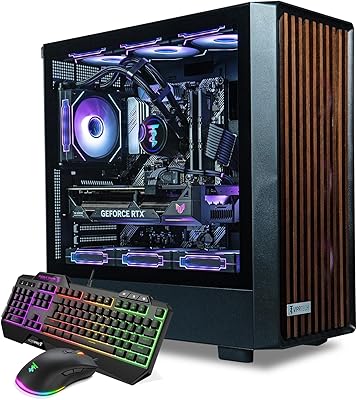
ViprTech Overlord 2.0 Liquid-Cooled Gaming PC - AMD Ryzen 7 5700X, RTX 5070, 32GB RAM, 2TB SSD
88%
94%
Performance
89%
Cooling Efficiency
88%
Build Quality
92%
Graphics & Gaming Experience
95%
Setup & Installation
More
AMD Ryzen 7 3800X 8-Core Processor
87%
92%
Gaming Performance
88%
Overclocking Potential
90%
Value for Money
80%
Cooling Efficiency
87%
Multitasking Performance
More
AMD Ryzen 7 9700X
AMD Ryzen 7 9700X
84%
94%
Gaming Performance
88%
Multitasking & Productivity
62%
Thermal Management
91%
Platform Longevity
74%
Value for Money
More
MINISFORUM UM773 Lite Mini PC with AMD Ryzen 7 7735HS
83%
89%
Performance for Productivity and Gaming
92%
Customization Potential
80%
Build Quality
87%
Cooling Efficiency
84%
Connectivity and Ports
More
AMD Ryzen 7 7700 8-Core, 16-Thread Processor
89%
91%
Overall Performance
94%
Gaming Performance
89%
Overclocking Capability
87%
Thermal Management
85%
Energy Efficiency
More
INLAND AMD Ryzen 7 7800X3D & GIGABYTE X670 AORUS Elite Motherboard Bundle
89%
94%
Performance for Gaming
88%
Ease of Setup
90%
Overclocking Capability
93%
Connectivity and Compatibility
92%
Processor Speed
More
INLAND AMD Ryzen 7 7800X3D Processor with MSI PRO B650-P Motherboard
88%
94%
Overall Performance
96%
Gaming Performance
91%
Multitasking & Productivity
88%
Motherboard Stability
89%
Network Performance (Wi-Fi 6E & LAN)
More
HP 255 G10 15.6″ Ryzen 7 7730U 32GB 1TB
78%
88%
Processing Performance
91%
RAM & Multitasking
87%
Storage Speed & Capacity
62%
Display Quality
93%
Value for Money
More
Lenovo ThinkBook 16 G6 AMD Ryzen 7 7730U 32GB RAM 1TB SSD
86%
92%
Performance
88%
Display Quality
90%
Security Features
89%
Build Quality
84%
Battery Life
More
Beelink EQR7 Mini PC, AMD Ryzen 7 7735U, 32GB RAM, 1TB SSD
88%
91%
Performance
89%
Value for Money
87%
Design & Build Quality
92%
Display Support (Dual 4K)
88%
Wireless Connectivity (WiFi 6, Bluetooth 5.2)
More

FAQ

Yes, absolutely. The box contains only the processor itself with no cooler included. You will need to purchase a compatible AM4 cooler before the system can run. A decent 120mm tower cooler is the minimum recommended; anything beefier is better if you plan to push the chip under sustained load.

It should, but there is an important catch. Most B450 boards require a BIOS update to support Ryzen 5000 series chips, and performing that update requires a compatible older Ryzen CPU to boot the system first. Check your board manufacturer's website to confirm support and review the update process before purchasing.

It is genuinely solid for both resolutions when paired with a capable discrete GPU. At 1080p the CPU can become a minor factor in CPU-bound scenarios, but in the vast majority of popular titles you will not notice a meaningful bottleneck. At 1440p the GPU does more of the heavy lifting and this chip keeps up comfortably.

No. This processor has no integrated graphics, so without a discrete GPU the system will not produce any video output at all. A dedicated graphics card is not optional here — it is a hard requirement for the system to display anything.

Modest gains are achievable, but do not expect dramatic results. The 5700X has limited headroom before heat and instability become issues, and the performance uplift from manual overclocking is relatively small compared to what you get from simply running a good memory kit at DDR4-3600. Most users find the stock configuration performs well enough without touching any settings.

For everyday gaming and light workloads, a quality 120mm or 140mm single-tower air cooler is perfectly adequate. If you plan to run sustained rendering tasks or want to explore overclocking, a dual-tower air cooler or a 240mm all-in-one liquid cooler gives you more thermal headroom and quieter fan speeds under load.

It depends on what you are doing. For gaming, the improvement in single-core performance and cache size does produce noticeable frame rate gains, particularly in CPU-sensitive titles. For general desktop use the difference is real but less dramatic. If you already own a compatible board, the upgrade cost is low enough that most users find it worthwhile.

No. The 5700X is strictly a DDR4 platform processor and is not compatible with DDR5 memory. DDR4-3200 is the native rated speed, though kits up to DDR4-3600 tend to perform well on most boards with XMP enabled.

Reasonably well for most popular games and streaming scenarios. Sixteen threads give OBS or similar software enough CPU time to handle encoding without visibly degrading game performance. Running at 1080p60 stream output with x264 medium or fast preset is manageable, though very CPU-hungry games may show more stress than lightweight titles.

AM4 is a closed platform with no future CPU generations planned, so this chip is essentially the ceiling of what you can run on that socket. For a budget upgrade to hardware you already own, it still makes strong financial sense. If you are building from scratch and thinking long-term, it is fair to weigh whether starting on AM5 gives you a longer upgrade path, even if the upfront cost is higher.