Overview

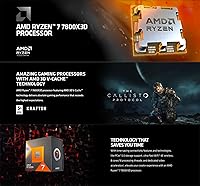
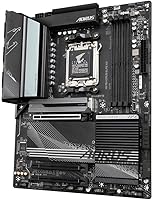
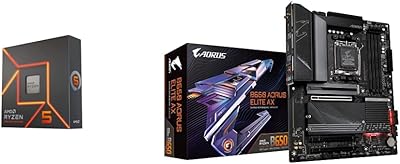
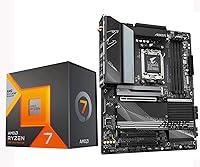
The INLAND AMD Ryzen 7 7800X3D & GIGABYTE X670 Bundle is a CPU-and-motherboard pairing aimed squarely at builders who want a serious AM5 gaming foundation without hunting down compatible parts on their own. The Ryzen 7 7800X3D brings AMD's 3D V-Cache architecture to the table, which in practical terms means meaningfully higher frame rates in CPU-sensitive games compared to standard Ryzen chips at the same core count. The GIGABYTE X670 AORUS Elite rounds out the combo with a capable, well-equipped board. Keep in mind this is a CPU and motherboard only — you still need DDR5 RAM, a GPU, storage, and cooling to complete a build.
Features & Benefits

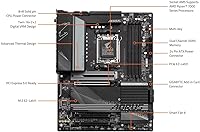
The 3D V-Cache on the 7800X3D is not a marketing footnote — its stacked cache genuinely reduces CPU bottlenecks in gaming workloads, and the difference shows at 1080p and 1440p. On the board side, the 16+2+2 phase VRM handles sustained loads without sweating, which matters if you plan to push the chip hard. Four M.2 slots — one PCIe 5.0 and three PCIe 4.0 — give you real storage flexibility now and headroom for faster drives later. Q-Flash Plus is a quietly useful feature: you can update the BIOS before the CPU is even seated, which saves real frustration during a fresh build.

Best For

This AM5 builder kit is best suited for gamers chasing high frame rates at 1080p and 1440p who are starting fresh on the AM5 platform. It also makes strong sense for anyone migrating from AM4 who wants a clean DDR5 foundation — just note there is no DDR4 support on AM5, full stop. The board's compatibility with Ryzen 7000, 8000, and 9000 series processors means you are not locked into a single CPU generation, which adds real long-term value. Content creators who also game heavily will appreciate the chip's strong single-threaded burst performance alongside its eight cores for lightly threaded and multi-threaded workloads alike.

User Feedback

Buyers consistently praise the out-of-box compatibility between the two components, with most reporting a smooth POST on the first attempt. The board's build quality draws positive comments, and gaming benchmark results match expectations set by independent reviews. The most common frustration is the missing CPU cooler — at 120W TDP, the 7800X3D genuinely needs a quality liquid or high-end air cooler, which adds to your total budget. A handful of buyers noted the bundle price warrants comparison against buying the parts separately depending on current market pricing. BIOS navigation gets decent marks, though first-time AM5 builders occasionally mention a learning curve with EXPO memory profiles.

Pros

  • The 7800X3D's 3D V-Cache delivers real, measurable frame rate gains in CPU-sensitive games — not just on paper.
  • Buying a matched pair removes compatibility guesswork and simplifies the early planning phase of a build.
  • The X670 AORUS Elite's robust VRM handles sustained CPU loads without thermal throttling under normal conditions.
  • Four M.2 slots — including one PCIe 5.0 — offer serious storage flexibility for current and future NVMe drives.
  • Q-Flash Plus lets you update the BIOS before the CPU is installed, a genuine time-saver when troubleshooting a new build.
  • Wi-Fi 6E and 2.5GbE LAN mean you are covered for both high-speed wireless and wired networking without add-in cards.
  • The X670 chipset supports Ryzen 7000, 8000, and 9000 series, giving the motherboard strong long-term upgrade value.
  • EZ-Latch screwless M.2 and PCIe slot design makes swapping drives or a GPU noticeably less fiddly than traditional setups.
  • Buyers consistently report smooth out-of-box POST and solid board build quality for the price tier.

Cons

  • No CPU cooler is included, and at 120W TDP the 7800X3D needs a quality cooler — budget for one separately.
  • AM5 is DDR5-only, so any existing DDR4 memory from a previous build is completely unusable here.
  • Bundle pricing can sometimes exceed the cost of sourcing the CPU and motherboard individually, depending on current deals.
  • The 7800X3D's 3D V-Cache premium is primarily a gaming advantage — heavily multi-threaded workloads see less benefit.
  • First-time AM5 builders occasionally report a learning curve when enabling EXPO memory profiles in the BIOS.
  • The full ATX form factor of the X670 AORUS Elite rules out smaller case builds entirely.
  • Integrated AMD Radeon graphics are present but weak — a discrete GPU is essentially mandatory for any real workload.
  • Smart Fan 6 software has drawn mixed reactions from users who prefer simpler fan curve interfaces.

Ratings

The scores below reflect AI-driven analysis of verified buyer reviews for the INLAND AMD Ryzen 7 7800X3D & GIGABYTE X670 Bundle, collected from global sources and actively filtered to exclude incentivized, bot-generated, and duplicate submissions. Each category captures both what real builders praised and where genuine frustrations emerged, with nothing glossed over. The result is a transparent, balanced snapshot of how this AM5 builder kit performs in the hands of actual users.

Gaming Performance
93%
Buyers building 1080p and 1440p gaming rigs consistently report that the 7800X3D outperforms expectations in CPU-sensitive titles, with noticeably smoother frame pacing in open-world and competitive games. The 3D V-Cache advantage is one of the most frequently praised real-world differences users mention when comparing notes with friends on standard Ryzen chips.
At 4K resolution, the GPU becomes the limiting factor and the V-Cache advantage largely disappears, leaving some buyers who game primarily at 4K feeling the premium was only partially justified. A small number of users noted that workstation and rendering tasks do not benefit the same way gaming does.
Motherboard Build Quality
88%
The X670 AORUS Elite draws consistent praise for its solid physical construction — heatsinks feel substantial, the PCIe slot retention mechanism is sturdy, and the overall board layout is described as well-thought-out by builders with experience across multiple platforms. The EZ-Latch system for M.2 slots earns specific compliments for making SSD installation genuinely tool-free.
A handful of users noted that the DIMM slot latches require more force than expected, which can feel nerve-wracking during a first build. The sheer number of headers and connectors can also make cable management trickier in tighter ATX cases.
Out-of-Box Compatibility
91%
One of the most repeated positives across buyer reviews is that the CPU and motherboard POST successfully on the very first attempt with minimal fuss, which is especially reassuring for builders who are new to the AM5 platform. Knowing both parts are sold as a matched pair removes a real layer of anxiety from the component selection process.
A minority of buyers received boards that required a BIOS update before the CPU was recognized correctly, which adds a step that less experienced builders may not anticipate. Q-Flash Plus helps here, but only if the builder is aware of the process before they start.
Value for Money
71%
29%
For buyers who prioritize convenience and compatibility certainty, the bundle format delivers genuine peace of mind that is hard to put a number on, particularly for those who have previously dealt with incompatible parts. The breadth of features on the X670 AORUS Elite — Wi-Fi 6E, four M.2 slots, 2.5GbE — means you are not paying for a bare-bones board.
Savvy shoppers who track component pricing closely point out that the bundle price can fluctuate above what you would pay sourcing the CPU and motherboard separately during sale periods. Buyers also factor in that no cooler is included, meaning the real out-of-pocket cost to get a running system is meaningfully higher than the bundle price alone suggests.
Thermal Management
74%
26%
The X670 AORUS Elite's VRM heatsink does its job well under sustained gaming loads, and most buyers report stable boost clocks without signs of power throttling during long sessions. Users running quality 240mm or 360mm AIOs report that the 7800X3D stays well within comfortable temperature ranges.
The absence of a bundled cooler is a recurring complaint, and buyers who tried pairing the 7800X3D with modest air coolers found temperatures climbing uncomfortably under stress. The chip genuinely benefits from a higher-end cooling solution, which adds meaningful cost to the overall build.
BIOS & Setup Experience
76%
24%
Experienced builders generally find the GIGABYTE BIOS clean and logically organized, with Q-Flash Plus earning high marks as a practical safeguard for future CPU upgrades. Fan curve customization through Smart Fan 6 is appreciated by users who like granular control over acoustics.
First-time AM5 builders occasionally struggle with enabling EXPO memory profiles correctly, and some report initial confusion around which settings to adjust for memory stability. The BIOS, while functional, has a learning curve that can slow down a first build by an hour or two for newcomers.
Connectivity & I/O
89%
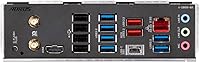
Builders consistently appreciate having Wi-Fi 6E and 2.5GbE LAN on the same board without needing an add-in card, especially those setting up in rooms without a direct Ethernet run. The USB 3.2 Gen 2x2 Type-C rear port at 20 Gbps is called out positively by users with fast external NVMe enclosures.
A few users noted they would have liked more rear USB-A ports for legacy peripherals, and Bluetooth 5.2 — while capable — is not the newest standard available on competing boards at this price tier. Some users found the HDMI output limited to the integrated graphics only, which is expected but caught a couple of buyers off guard.
Storage Expandability
92%
Four M.2 slots is a standout specification at this price point, and builders who run multiple NVMe drives for OS, games, and scratch storage praise the flexibility without needing to sacrifice SATA ports. The inclusion of a PCIe 5.0 M.2 slot future-proofs the build for the next generation of high-speed storage drives.
The PCIe 5.0 M.2 slot is positioned close to the primary GPU slot, which can cause minor clearance issues with oversized graphics cards and their heatsinks in some ATX cases. Populating all four M.2 slots may also require checking for bandwidth sharing limitations in the board's documentation.
Multi-Threaded Workloads
67%
33%
The 7800X3D handles everyday multi-threaded tasks — video streaming, browser workloads, moderate video editing — without any complaints, and eight cores cover most prosumer workloads with headroom to spare. Content creators who split their time between gaming and light production work report a solid, well-rounded experience.
Buyers who primarily run heavily multi-threaded applications like large-scale 3D rendering, compilation, or scientific workloads find the V-Cache premium does not benefit them the way it does gamers. For those users, a higher core-count Ryzen chip without 3D V-Cache often represents better value at a lower cost.
Upgrade Longevity
86%
The X670 board's compatibility with three generations of AM5 processors — Ryzen 7000, 8000, and 9000 — is a meaningful selling point for buyers who plan to upgrade the CPU in two or three years without swapping the motherboard. DDR5 support also aligns with the memory standard expected to dominate the mid-range market for years to come.
The AM5 platform is DDR5-only, so buyers cannot reuse DDR4 memory from a previous build, which creates an additional upfront cost that slightly offsets the long-term upgrade story. Some users also noted that by the time they want to upgrade the CPU, newer chipsets may offer more compelling features than the X670 can support.
Packaging & Delivery
79%
21%
Most buyers report that both the CPU and motherboard arrive well-packaged by Inland, with components securely separated and protected from transit damage. The single-order experience is consistently noted as convenient compared to sourcing parts from multiple vendors.
A small but notable number of buyers mention receiving boxes with minor shipping damage, though the components inside were generally unaffected. A few users noted that the bundled accessory kit for the motherboard felt sparse compared to what they expected at this price tier.
Software & RGB Experience
63%
37%
Smart Fan 6 gives builders genuine control over fan curves and hybrid fan-stop settings, which is appreciated by users who prioritize quiet operation during light workloads. The RGB implementation on the board is subtle rather than overdone, which gets positive marks from builders preferring a cleaner aesthetic.
GIGABYTE's RGB and system monitoring software receives mixed reviews, with some users finding it less polished and less stable than competing solutions from other motherboard brands. A handful of buyers simply disabled the software entirely and managed fan curves through the BIOS instead, which works but removes the desktop convenience.

Suitable for:

The INLAND AMD Ryzen 7 7800X3D & GIGABYTE X670 Bundle is purpose-built for PC enthusiasts who want the strongest possible gaming performance on a modern AM5 platform without spending hours cross-referencing CPU-motherboard compatibility charts. Gamers targeting high frame rates at 1080p and 1440p will get the most tangible benefit from the 7800X3D's stacked cache architecture, which genuinely closes the gap between CPU and GPU bottlenecks in demanding titles. Builders migrating from AM4 who are ready to commit fully to DDR5 will find this a logical and well-matched starting point for a next-generation system. The X670 board's support for Ryzen 7000, 8000, and 9000 series processors also means you are not forced to replace the motherboard the next time you want to drop in a newer chip. Content creators who split time between gaming and lightly threaded production workloads — video editing, streaming, audio production — will also get solid mileage from the 7800X3D's strong single-core burst alongside its eight physical cores.
Not suitable for:

Buyers on a tight overall build budget should think carefully before committing to this AM5 builder kit, because the combo is only the starting point — you still need DDR5 RAM, a discrete GPU, NVMe storage, a case, a power supply, and crucially, a CPU cooler, since none is included and the 7800X3D at 120W TDP genuinely warrants a quality liquid or high-end air solution. Builders who already own DDR4 memory from a previous platform will find no use for it here, as AM5 is DDR5-only with no exceptions. Anyone primarily running heavily multi-threaded workloads like 3D rendering, large code compilation, or video transcoding at scale would likely extract more value from a higher core-count chip rather than paying the premium that 3D V-Cache commands for gaming-focused gains. Budget-conscious shoppers should also check whether purchasing the CPU and motherboard separately at current street prices comes out cheaper, since bundle pricing can fluctuate. Finally, mini-ITX or micro-ATX builders need to look elsewhere, as the X670 AORUS Elite is a full ATX board.

Specifications

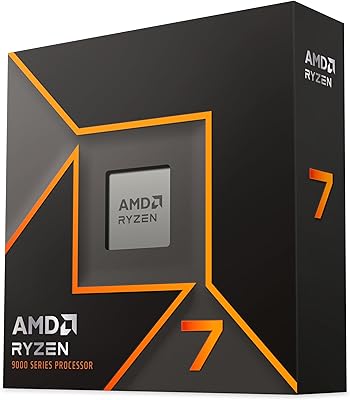
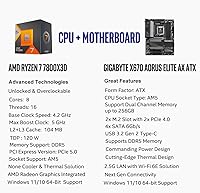
  • CPU Model: The processor included is the AMD Ryzen 7 7800X3D, an 8-core, 16-thread desktop CPU built on the AM5 platform.
  • Clock Speeds: The 7800X3D runs a base clock of 4.2 GHz and boosts up to 5.0 GHz depending on workload and thermal conditions.
  • Cache: Total L2 plus L3 cache reaches 104 MB, with the extra capacity delivered by AMD's stacked 3D V-Cache technology.
  • CPU TDP: The processor has a default thermal design power of 120W, meaning a capable cooler is essential and is not included in the box.
  • CPU Socket: Both the processor and motherboard use the AM5 socket, which is compatible with Ryzen 7000, 8000, and 9000 series CPUs.
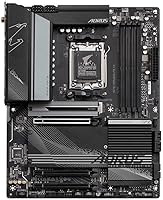
  • Motherboard: The included motherboard is the GIGABYTE X670 AORUS Elite, an ATX form factor board based on the AMD X670 chipset.
  • Memory Support: The X670 AORUS Elite supports dual-channel DDR5 RAM only, with a maximum capacity of 256 GB across four DIMM slots.
  • M.2 Storage: Four M.2 slots are available: one PCIe 5.0 x4 for next-generation NVMe drives and three PCIe 4.0 x4 slots for current-gen SSDs.
  • SATA Ports: The board provides four SATA 6 Gb/s ports for connecting traditional SSDs or HDDs.
  • PCIe Slot: The primary expansion slot is a full-length PCIe 5.0 x16 slot, suitable for current and upcoming discrete graphics cards.
  • Wireless: Onboard Wi-Fi 6E (802.11ax) and Bluetooth 5.2 are included, covering high-bandwidth wireless networking and peripheral connectivity.
  • Wired LAN: A 2.5GbE LAN controller handles wired networking, offering speeds well above a standard gigabit connection.
  • USB Ports: Rear USB connectivity includes USB 3.2 Gen 2x2 Type-C (20 Gbps) and USB 3.2 Gen 2 Type-A ports for fast peripheral and storage transfers.
  • BIOS Feature: Q-Flash Plus allows the board's BIOS to be updated using a USB drive without needing a CPU, RAM, or GPU installed.
  • VRM Design: The board uses a 16+2+2 phase digital VRM solution to deliver stable and clean power to the CPU under sustained workloads.
  • Form Factor: The X670 AORUS Elite uses the standard ATX form factor, requiring a mid-tower or full-tower case with ATX motherboard support.
  • RGB & Fans: The board includes RGB lighting support and GIGABYTE's Smart Fan 6 system with multiple temperature sensors and hybrid fan headers that support fan-stop mode.
  • OS Support: Both components are officially supported on Windows 10 and Windows 11 in their 64-bit editions.
  • Integrated Graphics: The Ryzen 7 7800X3D includes AMD Radeon integrated graphics, useful for display output during initial setup but not intended for gaming use.
  • Package Weight: The combined retail package weighs approximately 6.43 pounds and measures roughly 14.1 by 12.5 by 8.8 inches.

Related Reviews
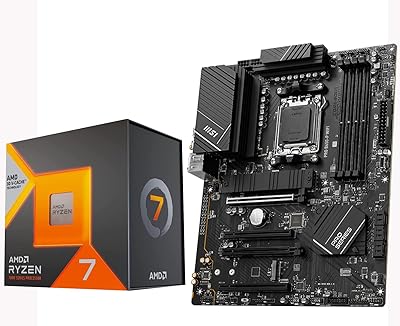
INLAND AMD Ryzen 7 7800X3D Processor with MSI PRO B650-P Motherboard
88%
94%
Overall Performance
96%
Gaming Performance
91%
Multitasking & Productivity
88%
Motherboard Stability
89%
Network Performance (Wi-Fi 6E & LAN)
More
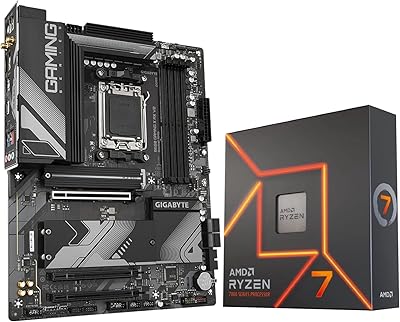
INLAND AMD Ryzen 7 7700X CPU & GIGABYTE B650 Gaming X AX V2 Motherboard
88%
94%
Gaming Performance
92%
Processor Speed
89%
Motherboard Stability
85%
Ease of Setup
90%
Overclocking Potential
More
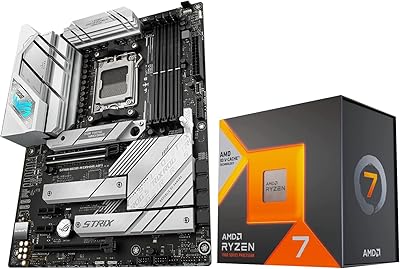
Micro Center 7800X3D B650-A CPU Motherboard Kit
83%
96%
Gaming Performance
93%
Compatibility & Pairing
88%
Motherboard Build Quality
91%
BIOS Stability
61%
Thermal Management
More
Skytech Aqua RX 9060 XT Gaming Desktop
81%
91%
Gaming Performance
88%
Thermal Management
84%
Build Quality
74%
Value for Money
86%
Out-of-Box Experience
More
AMD Ryzen 7 9700X
AMD Ryzen 7 9700X
84%
94%
Gaming Performance
88%
Multitasking & Productivity
62%
Thermal Management
91%
Platform Longevity
74%
Value for Money
More
AMD Ryzen 7 3800X Desktop Processor
83%
93%
Multi-Threaded Performance
86%
Gaming Performance
74%
Value for Money
71%
Thermal Performance
82%
Bundled Cooler Quality
More
AMD Ryzen 7 7700 Desktop Processor
80%
88%
Gaming Performance
83%
Multi-Threaded Performance
91%
Single-Core Speed
74%
Value for Money
86%
Platform Longevity
More
AMD Ryzen 7 5700X
AMD Ryzen 7 5700X
80%
93%
Value for Money
88%
Gaming Performance
84%
Multi-Threaded Performance
91%
Single-Core Speed
86%
Installation & Compatibility
More
MINISFORUM UM773 Lite Mini PC
78%
91%
Processing Performance
74%
RAM & Memory
88%
Storage Speed & Capacity
77%
Graphics & Display Output
93%
Connectivity & Ports
More
AMD Ryzen 5 7600X + GIGABYTE B650 AORUS ELITE AX Motherboard
87%
93%
Gaming Performance
89%
Overclocking Potential
88%
Setup & Installation
91%
Future-Proofing
74%
Thermals & Cooling
More

FAQ

No, it does not. The 7800X3D has a 120W TDP and AMD does not include a cooler in the box for this chip. You will want to budget for a quality air cooler or a 240mm-plus all-in-one liquid cooler separately — it makes a real difference in both temperatures and sustained boost clock behavior.

Unfortunately, no. AM5 is a DDR5-only platform, so DDR4 memory from a previous build will not work here. You will need to purchase DDR5 RAM specifically — the board supports up to 256 GB across four slots and is compatible with AMD EXPO memory profiles for easy overclocking.

Not at all — it is a CPU and motherboard only. To build a working system you will also need DDR5 RAM, a discrete GPU, at least one NVMe or SATA storage drive, a power supply, a compatible ATX case, and a CPU cooler. Think of this combo as the core foundation of your build, not a finished machine.

Yes, the X670 AORUS Elite officially supports AMD Ryzen 7000, 8000, and 9000 series processors on the AM5 socket. That gives you a reasonable upgrade path without swapping the motherboard, which adds meaningful long-term value to the platform investment.

Likely yes, depending on when the board was manufactured. The good news is that the Q-Flash Plus feature lets you flash a BIOS update using just a USB drive — no CPU, RAM, or GPU required. It is one of the more practical features on this board for builders planning future upgrades.

In real-world terms, quite a bit in CPU-limited scenarios. At 1080p and 1440p in titles that stress the CPU heavily — like strategy games, open-world games with lots of AI, and competitive shooters — the 7800X3D consistently pulls ahead of non-V-Cache Ryzen chips at the same core count. The gap narrows at 4K where the GPU becomes the bottleneck, but for most gamers targeting high refresh rates, the difference is tangible.

For a typical gaming build with a mid-range to high-end discrete GPU, a 750W to 850W 80+ Gold unit is a sensible target. The 7800X3D is relatively power-efficient for its performance class, but your GPU will likely be the bigger power draw, so size the PSU to the full system rather than just the CPU.

Most buyers report a smooth setup experience, especially if you follow the manual for memory slot placement and fan header assignments. The BIOS is fairly well-organized, though enabling EXPO profiles for your RAM can trip up first-timers who are not used to AM5. Overall it is manageable for an attentive first-time builder, not just for experienced veterans.

Technically yes — the 7800X3D does include AMD Radeon integrated graphics, and the board has an HDMI output, so you can get a display signal for initial setup and OS installation. That said, the integrated GPU is not meant for gaming or any GPU-intensive work, so a discrete graphics card is effectively required for normal use.

Inland (Micro Center's in-house brand) generally ships components with adequate protective packaging, and most buyers report receiving both the CPU and motherboard in good condition. That said, as with any high-value component purchase, it is worth inspecting both items carefully on arrival and documenting any damage with photos before installing anything.