

Overview

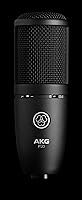
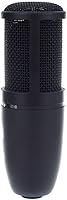
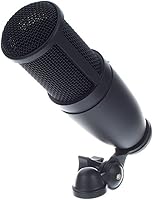
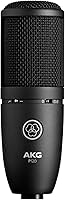
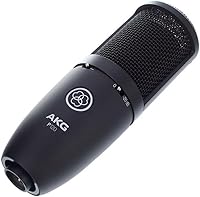
The AKG P120 Condenser Microphone sits in AKG's affordable P-series lineup, aimed squarely at home studio owners and project studio regulars who want a professional-sounding XLR mic without breaking the bank. Unlike many budget condensers that lean on large diaphragms as a selling point, the P120 uses a 2/3-inch low-mass diaphragm — a design choice that tends to favor accuracy over flattery. One thing to know upfront: this is an XLR-only mic, so you'll need an audio interface or mixer that supplies phantom power. Out of the box, it feels solid enough, and the build inspires reasonable confidence for the price.

Features & Benefits

The cardioid polar pattern does exactly what you'd want — it locks onto the source in front while rejecting noise from the sides and rear, which matters a lot in a home recording setup. The 150 dB SPL ceiling means you can point this condenser mic at a cranked guitar amp or a brass instrument without fear of clipping at the mic itself. Flip on the -20 dB pad when you need extra headroom, or engage the bass cut filter at 300 Hz to clean up low-end rumble on vocals or spoken word. Self-noise at 19 dB-A keeps background hiss from creeping into quiet passages or delicate acoustic recordings.

Best For

The P120 is a natural fit for home studio vocalists who've outgrown USB mics and want a proper XLR signal chain without a major financial commitment. Podcasters and voiceover artists will appreciate the clarity and manageable noise floor, provided they're working in a reasonably quiet space. It handles acoustic guitar and violin well in treated rooms, capturing transient detail that cheaper condensers tend to smooth over. Students learning the basics of mic placement and gain staging will find it a genuinely useful tool. That said, if your room is completely untreated — bare walls, hard floors — room reflections will be obvious. Acoustic treatment matters here.

User Feedback

People who've used the AKG P120 consistently point to its vocal clarity as the standout quality — it picks up detail that most condensers at this price level simply miss. On the flip side, several users note that it doesn't flatter untreated rooms; any echo or ambient noise in your space will come through clearly. Compatibility with the Focusrite Scarlett and PreSonus AudioBox series gets mentioned frequently, with most reporting the mic responds well to modest gain levels. The included stand adapter works, but a number of reviewers swapped it out for a dedicated shock mount to cut vibration noise. Phantom power is non-negotiable — the mic won't function without it, and a few buyers learned that the hard way.

Pros

  • Vocal clarity and detail punch well above what most mics at this price tier typically deliver.
  • The 150 dB SPL ceiling handles loud sources like guitar amps or brass without distortion.
  • A switchable -20 dB pad and bass cut filter give you practical on-mic control without extra gear.
  • Self-noise at 19 dB-A keeps recordings clean during quiet vocal takes and delicate acoustic sessions.
  • Works reliably with popular entry-level interfaces, making setup straightforward for new buyers.
  • The cardioid polar pattern does a respectable job rejecting side and rear noise in a home environment.
  • Compact and lightweight enough to fit most standard mic stands and desktop boom arms with ease.
  • The P120 covers the full 20 Hz to 20 kHz range, so nothing in a typical recording gets rolled off by the mic itself.
  • A well-established brand backing means firmware-free, reliable performance with no software headaches.

Cons

  • Requires an audio interface with 48V phantom power — total setup cost is higher than the mic price alone.
  • Highly sensitive to untreated room acoustics; reflections and background noise will be clearly audible in recordings.
  • The included stand adapter feels noticeably cheaper than the mic itself and may need replacing quickly.
  • No shock mount is included, so low-frequency vibrations from desks or floors can bleed into recordings.
  • The 2/3-inch diaphragm produces a leaner sound character that some vocalists find less flattering than larger-diaphragm alternatives.
  • Gain staging can be tricky on weaker preamps — some interfaces need to push gain high enough to introduce their own noise.
  • No USB or direct monitoring option means this condenser mic is inaccessible to buyers without an existing interface.
  • The cable is not included, which is an easy thing to overlook when budgeting for a first XLR setup.

Ratings

Our editorial team trained an AI model to analyze thousands of verified global user reviews for the AKG P120 Condenser Microphone, actively filtering out incentivized, bot-generated, and duplicate submissions to surface what real buyers actually experienced. The scores below reflect a transparent synthesis of both the standout strengths and the recurring frustrations that shaped long-term satisfaction. Whether this mic earns a place in your setup or falls short of your needs, the data tells the full story.

Sound Clarity
88%
Users consistently describe the P120 as one of the clearest-sounding mics they have tried at this price point, with vocalists noting that consonants and sibilance come through with a crispness that cheaper USB mics simply cannot match. Podcasters and voiceover artists in particular praise how natural spoken dialogue sounds without heavy post-processing.
A segment of reviewers found the sound character slightly bright or forward on certain voices, which can translate to listening fatigue during long sessions if the high end is not tamed with a gentle shelf during mixing. It is not universally flattering across all vocal timbres.
Value for Money
84%
Most buyers feel the P120 delivers performance that justifiably sits above its price class, especially when compared to similarly priced condensers from less established brands. Home studio users upgrading from entry-level USB mics often describe it as one of the smarter investments they made early in building their signal chain.
The value equation shifts when buyers factor in the additional cost of an audio interface with phantom power, which is a mandatory purchase. For someone starting from scratch, the total out-of-pocket investment is meaningfully higher than the mic price alone suggests.
Build Quality
74%
26%
The metal body feels reassuringly solid in hand, and most users report no issues with the chassis after months of regular studio use. It does not feel fragile or toy-like, which matters when it is being moved between stands or packed for travel.
The mixed metal and plastic construction draws some criticism, with a few reviewers noting that certain external components — particularly around the filter and pad switches — feel less premium than the overall price would suggest. It is durable enough for home use but may not hold up as well under heavier touring or shared studio conditions.
Room Sensitivity
61%
39%
In a properly treated recording space, the cardioid polar pattern does a commendable job of isolating the source and keeping room coloration minimal, which is genuinely useful for home studio setups with basic acoustic panels.
This is where the most consistent complaints arise: users recording in untreated rooms — apartments with hard floors, spare bedrooms with bare walls — report that the mic captures every reflection and ambient noise with unforgiving clarity. Several buyers admitted they did not anticipate how much the mic would expose their room rather than flatter it.
Ease of Setup
79%
21%
Once buyers understand the phantom power requirement, the actual setup process is fast and intuitive — plug in the XLR cable, enable 48V on the interface, and the mic is ready to record within seconds. Compatibility reports with major entry-level interfaces are overwhelmingly positive.
The learning curve hits hardest for first-time XLR mic buyers who did not realize phantom power was needed and had to purchase an audio interface separately. A small but vocal group of reviewers felt this dependency was not clearly communicated at the point of purchase.
Noise Floor Performance
83%
At 19 dB-A self-noise, the P120 keeps its own electronic noise well below the audible threshold during typical recording sessions, which is particularly appreciated by voiceover artists working with quiet, intimate delivery and needing clean recordings without noise reduction plugins.
Users pairing the mic with lower-quality preamps or interfaces that require heavy gain increases to achieve a usable signal sometimes report that the interface noise becomes a factor, unfairly attributed to the mic itself. The mic performs best when the rest of the chain is up to the task.
SPL Handling
91%
The 150 dB maximum SPL ceiling genuinely impresses users who record loud sources, with guitarists and brass players noting they can place the mic in front of a cranked amp or horn without any sign of capsule distortion. The onboard pad makes this even more flexible for high-output sources.
For the majority of buyers using the mic primarily for vocals or acoustic instruments, this headroom is more than they will ever need, making it a feature they pay for but rarely use. It is a meaningful benefit for a specific subset of users, not a universal selling point.
Onboard Controls
77%
23%
Having both a -20 dB pad and a 300 Hz bass cut filter built into the mic body is a practical advantage that users appreciate — it means less reliance on software correction after recording and more control over the signal at the source during sessions.
The switches themselves feel a bit stiff and imprecise to some users, and their small size makes them slightly awkward to operate mid-session without accidentally bumping the mic. A clearer tactile distinction between on and off positions would improve the experience.
Included Accessories
47%
53%
The included stand adapter is functional and fits standard mic stand threads without any issues, meaning buyers can technically get up and running without any additional hardware beyond the XLR cable.
This is one of the most criticized aspects across user reviews: the adapter provides zero vibration isolation, so desk rumble, keyboard noise, and footsteps bleed into recordings easily. The absence of a shock mount, XLR cable, or carrying pouch feels like a missed opportunity at this price tier.
Vocal Performance
86%
Home recording vocalists frequently highlight how the P120 captures the natural texture of the human voice without the muddiness or congestion common in cheaper condensers, with a midrange presence that translates well on streaming platforms and podcast feeds without heavy EQ work.
Vocalists with naturally bright or thin voices note that the mic's forward upper midrange can occasionally exaggerate harshness, requiring some corrective EQ at around 4 to 6 kHz. It is not the most flattering mic for every voice type without some post-processing.
Acoustic Instrument Recording
81%
19%
Acoustic guitar players and violinists using this condenser mic in treated rooms are largely positive, noting the clear transient response and the detailed reproduction of string overtones that give recordings a sense of air and realism.
In less controlled environments, instrument recordings suffer from the same room sensitivity issues that affect vocal tracking. Players recording in open living spaces report needing to move the mic closer than ideal, which introduces proximity effect that the bass cut filter only partially compensates for.
Podcasting & Voiceover
82%
18%
Podcasters frequently cite the P120 as a step-change improvement over the USB mics they migrated from, particularly appreciating the clean midrange character that makes spoken dialogue sound grounded and broadcast-ready after minimal processing.
Podcasters recording in shared home spaces or open-plan offices consistently run into background noise pickup issues, since the cardioid pattern alone is not enough to tame a genuinely noisy environment. A dynamic mic is often better suited for those conditions.
Compatibility
89%
Users pairing this condenser mic with popular interfaces like the Focusrite Scarlett series, PreSonus AudioBox, and Audient iD4 report smooth, problem-free operation with no driver issues, grounding hum, or unusual frequency behavior.
A small number of users with older or lower-quality mixers reported insufficient gain from their preamps, requiring the gain knob pushed so far that the interface itself introduced noise. The mic is not at fault, but the pairing matters more than some buyers anticipate.
Durability Over Time
76%
24%
A meaningful portion of long-term reviewers report using the same unit for two or more years with no degradation in sound quality or mechanical failure, suggesting the build is reliable enough for consistent home studio use when handled with reasonable care.
A minority of users report that the capsule can become sensitive to humidity over extended periods in poorly ventilated spaces, leading to a subtle increase in self-noise or inconsistent output. Proper storage in a dry environment is recommended to extend the mic's lifespan.

Suitable for:

The AKG P120 Condenser Microphone is a genuinely solid choice for home studio vocalists and podcasters who are ready to move beyond USB mics and invest in a proper XLR signal chain. If you already own an audio interface — something like a Focusrite Scarlett or PreSonus AudioBox — this mic slots right in and delivers a noticeable jump in clarity and detail. Voiceover artists working in reasonably treated spaces will find the low self-noise and tight cardioid pickup pattern give their recordings a clean, professional character without requiring expensive outboard gear. It also performs well on acoustic instruments like guitar or violin in controlled environments, capturing transient detail that budget condensers in lower price brackets often smear. Students and beginners learning mic technique will appreciate having a tool that behaves predictably and rewards good placement habits.

Not suitable for:

If you record in a completely untreated room — bare walls, hard floors, no acoustic panels — the AKG P120 Condenser Microphone will expose every flaw in that space with uncomfortable honesty; the cardioid pattern helps with off-axis rejection, but it is not a substitute for proper room treatment. Buyers expecting a plug-and-play USB solution will also be disappointed, since this mic requires an audio interface or mixer with 48V phantom power — there is no getting around that added cost and setup complexity. Professionals running a serious commercial studio will likely find the 2/3-inch diaphragm and overall output character too modest for critical tracking sessions where a higher-tier large-diaphragm condenser is expected. Similarly, anyone needing a dedicated broadcast or dynamic mic for loud, reverberant environments — live stages, newsrooms, noisy home setups — should look elsewhere, as this mic is simply not designed for those conditions.

Specifications

  • Diaphragm Size: The mic uses a 2/3-inch low-mass condenser diaphragm, a design that prioritizes transient accuracy over the warmer coloration often associated with larger-diaphragm capsules.
  • Polar Pattern: Cardioid (unidirectional) pickup pattern focuses sensitivity directly in front of the mic while naturally attenuating sound arriving from the sides and rear.
  • Frequency Response: The mic captures audio across the full 20 Hz to 20 kHz range, covering everything from low-end warmth to the highest audible harmonic detail.
  • Max SPL: Handles sound pressure levels up to 150 dB, making it capable of capturing loud sources such as guitar amplifiers or brass instruments without distortion at the capsule.
  • Self-Noise: Equivalent noise level is rated at 19 dB-A, a respectable figure for this price class that keeps background hiss well below audible thresholds during quiet recordings.
  • Signal-to-Noise: A signal-to-noise ratio of 75 dB-A provides sufficient headroom to capture clear, detailed audio without the noise floor competing with the source material.
  • Sensitivity: Rated at 24 mV/Pa, the mic produces a strong enough output signal to work well with entry-level audio interfaces without requiring extreme gain increases.
  • Pad Switch: A switchable -20 dB pre-attenuation pad is built into the mic body, allowing the user to reduce the input signal when recording particularly loud or close sources.
  • Bass Cut Filter: An onboard high-pass filter rolls off frequencies below 300 Hz at 6 dB per octave, useful for reducing low-end rumble, handling noise, or proximity effect buildup.
  • Output Connector: Standard 3-pin XLR output requires connection to an audio interface, mixer, or preamplifier that supplies 48V phantom power for the mic to operate.
  • Impedance: Output impedance is 200 Ohms or less, with a recommended load impedance of 1000 Ohms or higher for optimal signal transfer and minimal coloration.
  • Dimensions: The mic body measures 1.57 x 1.57 x 7.09 inches, a compact form factor that fits standard mic clips and most desktop boom arm setups without issue.
  • Weight: At approximately 15.8 oz (0.45 kg), the mic is substantial enough to feel sturdy on a stand while remaining light enough for long studio sessions without counterbalance issues.
  • Build Material: The housing is constructed from a combination of metal and plastic, striking a practical balance between durability and keeping the overall weight manageable.
  • Phantom Power: The mic requires 48V phantom power supplied by the connected interface or mixer; it will not operate passively or from any battery source.
  • Included Accessories: The package includes one stand adapter; no XLR cable, shock mount, or carrying case is included in the standard retail box.
  • Color: Available in a matte black finish that blends cleanly into most studio environments and does not reflect harshly under typical studio lighting setups.
  • Manufacturer: Designed and sold by AKG Pro Audio, a brand with a long history in professional microphone manufacturing and a recognized presence in both live and studio settings.

Related Reviews

AKG C1000S Small-Diaphragm Condenser Microphone
78%
88%
Build Quality
74%
Sound Quality
83%
Versatility
81%
Battery Power
71%
Value for Money
More
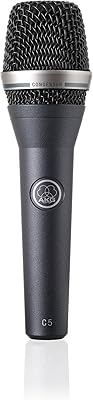
AKG C5 Condenser Vocal Microphone
79%
88%
Sound Clarity
86%
Feedback Rejection
83%
Build Quality
81%
Handling Noise
78%
Plosive Control
More
AKG C3000 High-Performance Condenser Microphone
86%
93%
Sound Quality
88%
Build Quality
90%
Durability
85%
Ease of Use
72%
Noise Handling
More
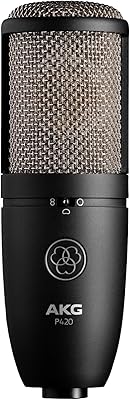
AKG P420 Multi-Pattern Condenser Microphone
85%
88%
Sound Clarity
93%
Polar Pattern Versatility
86%
Build Quality
91%
Value for Money
82%
Noise Floor Performance
More
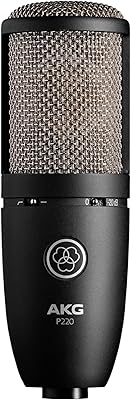
AKG P220
AKG P220
88%
94%
Build Quality
88%
Vocal Clarity
86%
Acoustic Instrument Capture
91%
High SPL Handling
83%
Noise Rejection
More
AKG Ara USB-C Condenser Microphone

77%
83%
Audio Quality
88%
Polar Pattern Flexibility
92%
Ease of Setup
79%
Build Quality
86%
Value for Money
More
AKG C451 B Small-Diaphragm Condenser Microphone
84%
91%
Sound Quality
89%
High-Frequency Detail
88%
Transient Response
93%
Build Quality
64%
Value for Money
More
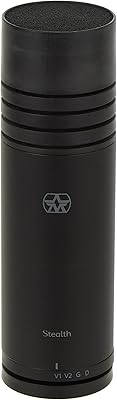
Aston Microphones Stealth Condenser Microphone
79%
88%
Sound Quality
84%
Voice Mode Versatility
86%
Built-in Preamp
91%
Build Quality
83%
Value for Money
More
Blue Blueberry Cardioid Condenser Microphone
79%
93%
Tonal Character
91%
Vocal Performance
89%
Build Quality
94%
Capsule Quality
71%
Preamp Compatibility
More
Neat Microphones Skyline USB Desktop Condenser Microphone
89%
94%
Audio Quality
91%
Ease of Use
89%
Build Quality
90%
Mute Button Functionality
92%
Value for Money
More

FAQ

You will need an audio interface or a mixer that provides 48V phantom power — the mic uses an XLR connector and has no USB output. Something like a Focusrite Scarlett Solo or a PreSonus AudioBox will work well and does not have to be expensive. Just make sure phantom power is switched on before you start recording.

It is a genuinely capable vocal mic for the price, especially if your recording space has at least some basic acoustic treatment like rugs, curtains, or foam panels. It picks up a lot of detail, which is a strength when your room sounds decent but can work against you if the space is echoey or noisy. If you are recording in a treated room, most people will be pleased with the results.

Yes, and it performs well for both applications as long as you have a quiet, reasonably treated recording space. The cardioid pattern helps reject off-axis noise, and the low self-noise keeps your voice sounding clean. That said, if your room is reflective or you are recording near HVAC noise or street sounds, those issues will come through clearly.

It works with both, and those are actually among the most commonly paired interfaces users mention. Just plug in via a standard XLR cable, enable 48V phantom power on the interface, and set your gain so the signal is healthy without clipping. Most people find it responds well without needing excessive gain increases.

It can produce very clean, detailed acoustic guitar recordings in a treated room. Position it around 6 to 12 inches from the 12th fret, angled slightly toward the body, and it captures the natural character of the instrument well. In an untreated space, room reflections will be noticeable, so that is worth keeping in mind.

The pad reduces the signal level hitting the internal electronics by 20 dB before it gets processed, which prevents distortion when the mic is very close to a loud source. You would typically engage it when recording loud guitar amps, brass instruments, or anything where the input might otherwise clip. For standard vocal or speech recording at normal levels, you generally leave it off.

Try engaging the onboard bass cut filter, which rolls off frequencies below 300 Hz. This is especially helpful if you are recording close to the mic, since proximity effect builds up low-end as you get nearer to a cardioid capsule. Moving back a few inches and using the filter together usually clears up a lot of that muddiness.

The adapter that comes in the box is functional and will hold the mic securely, but it does nothing to isolate vibrations. If your desk or floor transmits rumble — footsteps, keyboard typing, HVAC vibration — a separate shock mount is worth the modest extra spend. Many users mention this as one of the first upgrades they made after buying the P120.

The 150 dB maximum SPL rating gives it a lot of headroom for loud sources, which is more than enough for guitar cabs, brass, or drum overheads at normal distances. Engage the -20 dB pad if you are placing it very close to an extremely loud source just to be safe. It is one of the more versatile features of this mic at this price point.

It matters quite a bit. Condenser mics at this sensitivity level pick up the room just as readily as they pick up your voice or instrument, so bare walls, hard floors, and parallel reflective surfaces will all show up in your recordings. Even basic treatment — a few acoustic panels, a rug, recording in a wardrobe full of clothes — makes a significant difference. Do not assume the cardioid pattern alone will solve a problematic room.

Where to Buy