Overview

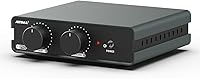
The AIYIMA T3 Pro MM/MC Phono Preamp arrived in April 2024 and has quietly earned a spot among the more compelling mid-range options for vinyl listeners who need both MM and MC cartridge support without spending serious money. It sits at #14 in Home Audio Phono Preamps on Amazon — not bad for a unit less than two years old. The aluminum metal chassis keeps it compact and solid on a shelf, and the op-amp upgrade path — swapping in chips like the OPA2134 or LM4562 — is the feature that most separates it from generic boxes at this price point.
Features & Benefits

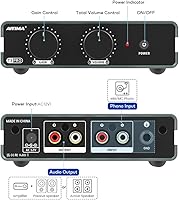
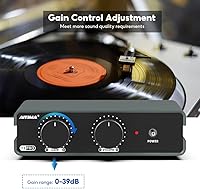
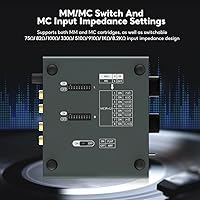
What makes the T3 Pro stand out is the level of control packed into a small enclosure. Front-panel gain switching from 0 to 39dB means you can adjust on the fly without fumbling behind a rack. For MC cartridge users, eight selectable input impedance settings let you tailor the sound signature to your specific cartridge — genuinely rare at this tier. The four-op-amp design ships with NE5532 and JAR2608 chips, but the real draw for hobbyists is rolling in alternatives like OPA2134 or LM4562 to nudge the sonic character. The RIAA curve holds within ±3dB, distortion sits at 0.02%, and the signal-to-noise ratio clears 76dB.

Best For

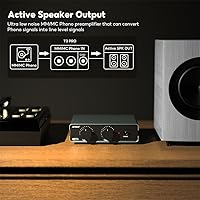
This phono preamp makes the most sense for someone who has outgrown the built-in phono stage on their receiver or entry-level turntable and wants real control over how their setup sounds. MC cartridge owners benefit most — the eight impedance options mean you are not locked into a one-size-fits-all load. Op-amp enthusiasts will find the socketed chip design genuinely inviting, and for those new to the concept, think of it as swapping a key audio component to subtly shift the character of the sound. Active speaker or integrated amp users connect straight via RCA with no additional gear required.

User Feedback

Early buyers of this AIYIMA unit consistently praise the front-panel layout and the solid feel of the enclosure — both details that typically cost more on competing units. MC users in particular report audible improvements over basic built-in stages, with several noting success tuning cartridge load through the impedance settings. The sticking point for some is the included AC wall-wart adapter: external power supplies can introduce hum into a phono stage, and a handful of users mention needing to reposition it or add a ground wire to eliminate noise. Long-term reliability remains an open question given the 2024 launch date, so it is worth monitoring.

Pros

  • Supports both MM and MC cartridges from a single front-panel switch — no rewiring, no separate unit needed.
  • Eight MC impedance settings let you match cartridge load precisely, a feature rarely found at this price point.
  • Gain adjustment from 0 to 39dB is accessible right on the front panel, not buried on the back.
  • Socketed op-amps make it easy to swap in chips like OPA2134 or LM4562 to tune the sound to your preference.
  • The aluminum metal housing feels solid and helps reduce vibration and electrical interference in practice.
  • MC cartridge users consistently report a meaningful jump in clarity and detail over basic built-in phono stages.
  • Compact enough to fit on a crowded shelf without dominating the space around your turntable or amplifier.
  • The T3 Pro delivers strong value relative to what competing units offer at the same price tier.
  • RIAA equalization is accurate and balanced — the sonic baseline is clean and honest, not colored or hyped.
  • An AC power adapter is included in the box, so you are ready to listen without any additional purchases.

Cons

  • The included AC wall-wart adapter introduces hum in some systems, requiring troubleshooting or an upgraded power supply.
  • The manual provides almost no guidance on selecting the correct MC impedance setting for a specific cartridge.
  • Front panel labeling is small and hard to read in dimly lit listening rooms.
  • The 39dB gain ceiling may fall short for very low-output MC cartridges used with sensitive setups.
  • Op-amp swapping, while possible, comes with no safety instructions or step-by-step guide from the manufacturer.
  • Long-term reliability remains unproven — the unit has been on the market for less than two years.
  • A subset of buyers reported slightly loose RCA jacks on their unit straight out of the box.
  • Only a single phono input is supported — connecting any other audio source type will not work.
  • Noise floor in MC mode is noticeably higher than in MM mode, requiring careful attention to grounding and cable routing.
  • Buyers who skip proper grounding setup often report disappointing results that are not inherent to the hardware itself.

Ratings

The AIYIMA T3 Pro MM/MC Phono Preamp has been scored across 13 critical categories after our AI system analyzed verified global buyer reviews, actively filtering out incentivized submissions and bot-generated feedback to surface what real users actually experience. The results reflect both the genuine strengths that keep this unit near the top of its category and the friction points that prospective buyers deserve to know about upfront. No category has been softened — where users consistently struggled, the scores show it.
Cartridge Compatibility
93%
Supporting both MM and MC cartridges from a single front-panel switch is the kind of flexibility that saves buyers from purchasing separate units as their setup evolves. Users upgrading from a basic MM stylus to a higher-output MC cartridge report the transition is handled cleanly with no rewiring.
A small number of MC users with very low-output cartridges noted the gain ceiling of 39dB fell just short of ideal levels for their specific setup. The unit also explicitly does not support any input signal other than phono, which catches some buyers off guard.
Front Panel Usability
91%
Having gain control and cartridge mode switching accessible from the front panel is something competing units at this price rarely offer — most bury those controls on rear-mounted DIP switches that require a flashlight and patience. Buyers consistently praise how easy it is to experiment with settings mid-session.
The labeling on the front panel is small, and in low-light listening rooms a few users found the gain markings difficult to read without leaning in close. A backlit or engraved label would have been a practical improvement.
MC Impedance Adjustment
88%
Eight selectable impedance settings for MC cartridges is genuinely unusual below the three-figure price threshold. Experienced users who have matched cartridge load to preamp impedance before describe an audible difference in tonal clarity — tighter bass, better high-frequency definition — when dialing in the right setting.
For buyers new to MC cartridges, the impedance options come with almost no guidance in the manual, and figuring out the correct setting for a specific cartridge requires independent research. This is not a dealbreaker, but it creates friction for less experienced users.
Build Quality & Housing
86%
The aluminum enclosure feels noticeably more substantial than the plastic-shell competitors often found at similar price points. Users handling the unit for the first time frequently remark that it punches above its weight in terms of perceived quality, and the added mass helps damp vibration on a shared shelf.
Some buyers noted that the internal assembly, once inspected, uses a mix of quality and cost-saving components that do not quite match the premium exterior promise. The RCA jacks on a few units felt slightly loose out of the box.
Op-Amp Upgradability
84%
Socketed op-amps — meaning the audio chips can be physically pulled out and replaced — turn this unit into a low-cost tuning platform. Hobbyists who have dropped in OPA2134 or LM4562 chips report meaningful changes in soundstage width and midrange warmth, extending the useful life of the unit considerably.
Op-amp rolling is genuinely niche, and buyers who are not already comfortable with basic electronics will find the process intimidating without a dedicated guide. AIYIMA provides a list of compatible chips but no instructions on how to safely perform the swap.
Noise Floor & Hum Performance
67%
33%
Under typical conditions — proper grounding, decent cabling, the adapter kept away from the unit — the T3 Pro produces a quiet background that satisfies most casual and intermediate listeners. The SNR specification of 76dB or better holds up reasonably well in practice for MM mode.
The included AC wall-wart power adapter is the most cited source of frustration. A subset of users report an audible hum, particularly in MC mode or in systems with sensitive speakers, that traces back to the adapter placement or a missing ground connection. Upgrading to a linear power supply resolves it for some, but that adds cost.
Sound Quality (MM Mode)
83%
In MM mode, the RIAA equalization sounds balanced and natural across a wide range of musical genres. Buyers coming from a receiver's built-in phono stage consistently describe the T3 Pro as delivering noticeably more detail and a cleaner stereo image, particularly in the upper midrange and treble.
Compared to dedicated phono stages in the higher price tier, the default NE5532 op-amp setup can sound slightly flat or uninspiring in MM mode on revealing speaker systems. This is where op-amp rolling becomes relevant — the stock configuration is competent but not exceptional.
Sound Quality (MC Mode)
79%
21%
MC cartridge users who take the time to dial in the impedance settings describe an improvement over standard MM-only preamps that is hard to ignore — better transient response, more texture in acoustic instruments, and a wider sense of space. For the price, the MC performance-to-cost ratio is strong.
MC mode is more sensitive to power supply quality and grounding, and buyers who skip those housekeeping steps tend to report disappointing results. The noise floor in MC mode is also higher than in MM mode, which is partly inherent to the gain levels required but still worth flagging.
Gain Range & Flexibility
82%
18%
A 0 to 39dB adjustable gain range covers a practical spread for most home listening scenarios, and the volume control knob adds a second layer of output adjustment that proves useful when matching levels to an amplifier or active speaker without a separate preamp stage.
A handful of users with very low-output MC cartridges found 39dB insufficient to reach comfortable listening volumes without pushing their amplifier harder than ideal. A gain ceiling closer to 60dB would broaden compatibility with the most demanding MC cartridges.
Value for Money
87%
Measured against what competing units offer at this price — typically MM-only support, rear DIP switches, and no op-amp access — the T3 Pro represents a genuinely strong proposition. Buyers frequently note that getting both MM and MC support with eight impedance settings feels like they paid for less than they received.
The value case weakens slightly if the AC adapter hum issue requires a workaround, such as a separate linear power supply, which adds to the total cost. Factoring that in, the effective price for a hum-free setup can drift beyond what the out-of-box price implies.
Setup & Documentation
61%
39%
For experienced audio hobbyists, setup is straightforward — connect phono in, RCA out, set the cartridge mode, adjust gain and impedance, and play. The front-panel layout makes the initial configuration faster than units with buried controls.
The included manual is thin and does not adequately explain how to choose the right MC impedance setting for a given cartridge, nor does it address grounding troubleshooting. Beginners have reported spending significant time in online forums solving problems that better documentation would have prevented.
Compact Footprint & Placement
89%
At roughly 4.7 by 4 inches, this phono preamp fits practically anywhere — on a crowded turntable shelf, tucked beside an amplifier, or sitting directly on a side table. The low profile and clean lines mean it does not look out of place in a modern or minimalist listening room.
The external AC adapter requires an available outlet nearby and adds a cable to manage, which can clutter a tidy setup. Users with limited shelf depth have occasionally noted the adapter bumps into the wall when the unit is pushed back.
Long-Term Reliability
64%
36%
For a unit that launched in April 2024, the early reliability signals are cautiously positive — most buyers report consistent performance over their period of ownership without failures or degradation in sound quality. The metal housing suggests reasonable durability against physical wear.
The product simply has not been on the market long enough to draw meaningful conclusions about multi-year reliability. There is insufficient data on capacitor longevity, op-amp socket wear from repeated rolling, or how the unit ages in humid or warm environments.

Suitable for:

The AIYIMA T3 Pro MM/MC Phono Preamp is a strong fit for vinyl listeners who are ready to move past the basic phono stage built into their receiver or turntable and want genuine control over how their system sounds. It makes particular sense for anyone who already owns or is planning to buy an MC cartridge, since the eight selectable impedance settings let you actually tune the load to match your cartridge — something most units at this price simply do not offer. Hobbyists who enjoy tinkering will appreciate that the op-amps are socketed and swappable, meaning you can experiment with different audio chips to subtly shift the sound character without buying a whole new unit — think of it as tuning your car rather than replacing the engine. Home stereo users running active speakers or a separate integrated amplifier will find the RCA output straightforward to integrate. Anyone stepping up from a receiver with a mediocre built-in phono stage and wanting front-panel access to gain and mode switching — rather than fiddling with rear-mounted switches — will feel immediately at home with this unit.
Not suitable for:

The AIYIMA T3 Pro MM/MC Phono Preamp is not the right call for buyers who need a truly plug-and-play experience with zero troubleshooting tolerance. The included AC wall-wart power adapter is a known weak point — in some systems and room layouts it introduces an audible hum, and resolving it may require repositioning the adapter, adding a proper ground connection, or eventually investing in a separate linear power supply, which adds to the real-world cost. Complete beginners who are unfamiliar with concepts like cartridge loading or RIAA equalization will find the manual thin on guidance and may end up frustrated before they hear the unit at its best. Users with very low-output MC cartridges that demand more than 39dB of gain will hit a ceiling and should look at higher-specification dedicated MC preamps. Finally, anyone prioritizing long-term reliability data should be aware that this unit only launched in April 2024 — there simply is not enough multi-year ownership history yet to draw confident conclusions about how it holds up over time.
Specifications

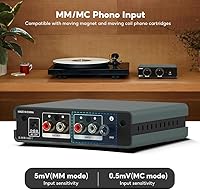
  • Cartridge Support: Compatible with both Moving Magnet (MM) and Moving Coil (MC) cartridges, switchable via the front panel.
  • Gain Range: Adjustable gain from 0 to 39dB, controlled directly from the front panel without accessing rear switches.
  • MC Impedance: Eight selectable input impedance settings are available exclusively for MC cartridge operation to match cartridge load preferences.
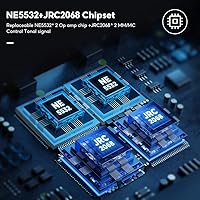
  • Chipset: Ships with a four op-amp configuration using NE5532 and JAR2608 chips in socketed positions for straightforward replacement.
  • Compatible Op-Amps: Documented compatible replacement op-amps include OPA2604, OPA2134, LM4562, and JRC5532 variants.
  • Frequency Response: Follows the standard RIAA equalization curve within ±3dB across the audible frequency range.
  • Distortion (THD): Total harmonic distortion is rated at 0.02%, indicating a clean and accurate signal path under normal operating conditions.
  • Signal-to-Noise: Signal-to-noise ratio is specified at 76dB or better, providing a reasonably quiet background for most home listening setups.
  • Output Levels: Delivers 5mV output in MM mode and 0.5mV in MC mode, with a maximum output amplitude ceiling of 450mV.
  • Power Supply: Operates on AC 12V power; an AC adapter is included in the box and no additional power supply is required to get started.
  • Housing Material: The enclosure is constructed from aluminum and metal alloy, chosen to minimize vibration and reduce electromagnetic interference.
  • Dimensions: The unit measures 4.72 × 4 × 1.26 inches, making it compact enough to fit on a standard turntable shelf alongside other components.
  • Weight: The unit weighs 1.76 pounds, light enough to reposition easily but with enough mass to stay stable during playback.
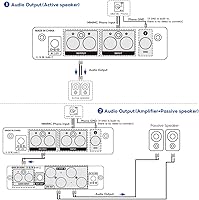
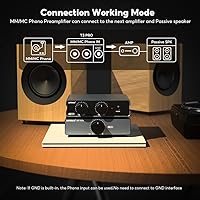
  • Audio Output: Outputs via standard RCA connectors, compatible with active speakers, integrated amplifiers, and passive speaker setups with a separate amp.
  • Audio Input: Accepts a single MM or MC phono input only; no auxiliary, line-level, or digital inputs are supported on this unit.
  • Availability Date: First made available in April 2024, making it a relatively recent product with a still-developing long-term reliability record.

Related Reviews
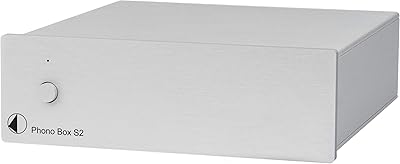
Pro-Ject Phono Box S2 MM/MC Phono Preamp
86%
94%
Sound Quality
92%
Adjustability (Gain & Impedance)
65%
Build Quality
88%
Ease of Use
89%
Value for Money
More
iFi Zen Phono 3 MM/MC Phono Pre-Amplifier
87%
94%
Sound Quality
91%
Adjustability & Features
87%
Build Quality
95%
Noise Reduction
83%
Ease of Use
More
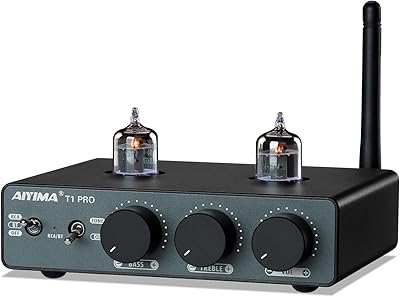
AIYIMA T1 Pro Tube Preamplifier
78%
83%
Sound Warmth & Tube Character
67%
Bluetooth Reliability
78%
Build Quality & Fit/Finish
81%
12V Trigger Functionality
72%
Tone Control Usefulness
More
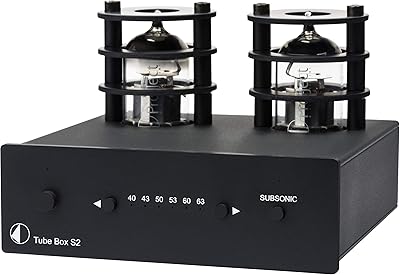
Pro-Ject Tube Box S2 Phono Preamplifier
83%
91%
Sound Quality
88%
Build Quality
93%
Cartridge Compatibility
89%
Gain & Loading Flexibility
82%
Noise Performance
More
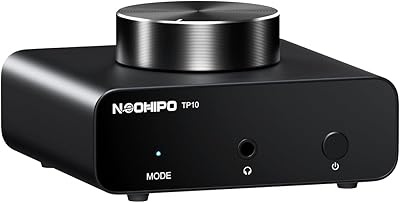
NEOHIPO TP10 Phono Preamp
87%
88%
Sound Accuracy
93%
Build Quality
91%
Signal-to-Noise Ratio
94%
Value for Money
86%
Connectivity Versatility
More
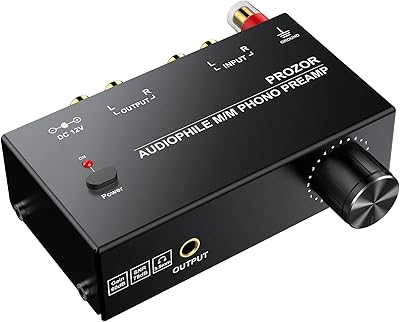
PROZOR PRR019 MM Phono Preamplifier
79%
88%
Value for Money
82%
Signal Clarity & Noise Floor
79%
Build Quality
91%
Dual Output Flexibility
68%
Volume Control Usability
More
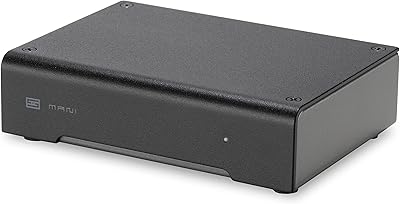
Schiit Mani 2 Phono Preamplifier
80%
93%
Sound Quality
91%
Cartridge Compatibility
94%
Value for Money
89%
RIAA Accuracy
86%
Subsonic Filter
More
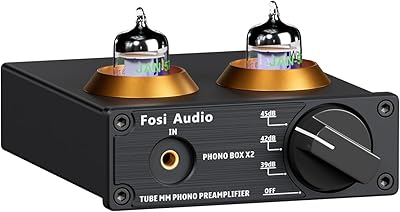
Fosi Audio Box X2
Fosi Audio Box X2
87%
88%
Audio Warmth
92%
Gain Versatility
86%
Build Integrity
94%
Space Efficiency
89%
Tube Rolling Potential
More
Parks Audio Waxwing Phono DSP Preamplifier
80%
91%
MAGIC Noise Reduction Effectiveness
88%
Cartridge Compatibility & Gain Flexibility
86%
App Control & User Interface
83%
EQ Preset Library for Vintage Formats
84%
SUPER MONO Mode
More
Fluance PA10 Phono Preamplifier
78%
88%
RIAA Equalization Accuracy
83%
Noise Floor & Hum Rejection
86%
Stereo Imaging & Channel Separation
81%
Subsonic Filter Effectiveness
54%
Cartridge Compatibility
More

FAQ

It works with any turntable that has a phono output — which is most standard turntables. The key detail is whether your cartridge is MM or MC type, since that determines which mode you switch into. If your turntable already has a built-in phono preamp, you would need to bypass it or connect directly from the cartridge output rather than the line output.

Op-amp rolling just means swapping out the small audio amplifier chips inside the unit for different ones. Think of it like changing a lightbulb, except it subtly shifts how the unit handles treble, midrange, or stereo width. The T3 Pro uses socketed chips — meaning they pull out and plug in without soldering — so it is physically straightforward for anyone comfortable handling small electronics. That said, the stock chips are perfectly respectable and most listeners will not feel compelled to change them.

Hum in phono preamps is more common than people expect, and it is usually not a defect — it is almost always either a grounding issue or the AC adapter sitting too close to the unit or signal cables. Start by connecting the ground wire from your turntable to the grounding post on the preamp if you have not already. Then try moving the power adapter further away from the unit and its cables. That resolves it in the majority of cases.

The correct setting depends on your specific cartridge — most MC cartridges list a recommended load impedance in their specs, typically somewhere between 10 and 1,000 ohms. As a general starting point, many MC cartridges perform well loaded at around 100 ohms, but experimenting across a few settings is genuinely worthwhile since the audible difference can be meaningful. Your cartridge manufacturer's documentation or their website is the most reliable source for the recommended range.

Yes, but you would be adding a second phono stage in the chain, which is generally not what you want — double amplification at phono gain levels will cause clipping and distortion. If your receiver already has a phono input you are happy with, a separate preamp is unnecessary. The T3 Pro is most useful when your amplifier or active speakers only have a line-level input and no built-in phono stage.

It is a reasonable choice if you are stepping up from a receiver with a mediocre built-in phono stage and you want more than the most basic external option. It does require some familiarity with concepts like gain, impedance, and grounding — the manual is thin and does not hold your hand through setup. Buyers who are completely new to external phono stages and want a truly plug-and-play experience may find the learning curve a little steeper than expected.

No — a phono preamp brings the signal up to line level, but that is still far too weak to drive passive speakers on its own. You need either an integrated amplifier or a separate power amplifier between the preamp and your passive speakers. If you are using active or powered speakers with a line-level input, you can connect directly from this unit to those speakers without any additional amplifier.

They solve different problems. The gain control here sets how much amplification the phono stage applies to the raw cartridge signal before it reaches your amplifier — getting this right reduces noise and prevents clipping at the source. Turning up the volume on your amplifier just makes everything louder, including any noise already present. Setting the phono gain appropriately first, then adjusting amplifier volume, gives you a cleaner and more controlled signal path.

Early user reports are mostly positive, and the aluminum housing is a good sign for durability. The honest caveat is that this unit has only been available since April 2024, so there is not yet a meaningful body of multi-year ownership experience to draw from. If long-term reliability data is important to your buying decision, it is worth revisiting reviews in another year or two when that picture becomes clearer.

Yes, and some users actively prefer to. The unit runs on AC 12V, and if you are experiencing hum that grounding alone does not resolve, upgrading to a quality linear power supply is a well-known solution in the phono preamp hobby community. Just ensure any replacement supply matches the AC 12V specification — using the wrong voltage or current type can damage the unit. The stock adapter works fine for most users, but knowing the upgrade path exists is useful.