Overview

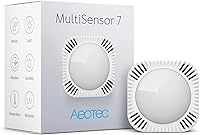
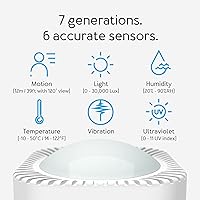
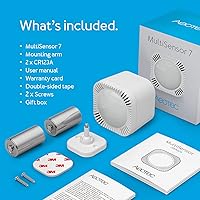
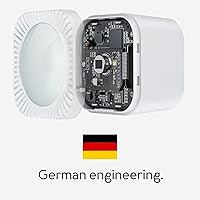
The Aeotec MultiSensor 7 Z-Wave Multi-Sensor is Aeotec's follow-up to their widely adopted MultiSensor 6, arriving in a surprisingly compact body — just 1.77 inches across — that packs in six distinct sensing functions: motion, temperature, humidity, light lux, UV, and vibration. That combination in a single node is genuinely useful for anyone trying to keep their Z-Wave mesh lean. Power flexibility is a real practical advantage here: the included CR123A lithium batteries let you place it anywhere, while USB power eliminates battery-change anxiety for high-traffic spots. The 700-series Z-Wave chip brings S2 security and SmartStart support, which means faster, more secure inclusion into a modern hub — a welcome upgrade over Gen5 hardware.

Features & Benefits

Motion detection reaches up to 16 feet, which works well in hallways, smaller rooms, or angled corners — placement matters, so mounting it high in a corner rather than flat on a wall significantly widens effective coverage. The environmental readings — temperature, humidity, and light lux levels — feed directly into climate automations like adjusting a thermostat or triggering smart blinds based on actual sunlight intensity. The UV sensor is an underappreciated inclusion; it can alert you when exposure crosses a threshold, or help monitor conditions for houseplants. The vibration sensor quietly handles niche tasks, detecting when a washing machine finishes its cycle or flagging unexpected surface movement. Battery efficiency is noticeably improved over the prior generation thanks to the 700-series chipset.

Best For

This Z-Wave multi-sensor is a natural fit for anyone already running a Z-Wave hub — SmartThings and Hubitat users will find pairing and rule-building straightforward. If you're tired of managing four or five separate sensor devices across your hub's node list, consolidating into a single sensor node saves real headaches. It's particularly strong for energy-efficiency automations that hinge on knowing whether a room is actually occupied and what the ambient conditions are. On the hardware side, the compact footprint makes it easy to tuck away discreetly, which matters in living rooms or home offices where bulky sensors look out of place. Security-minded DIYers will also appreciate having motion and vibration sensing covered by one device.

User Feedback

Owners consistently praise the accuracy of readings and the compact size, with many noting this six-in-one sensor blends into a room far better than competing devices. Pairing on SmartThings is generally smooth; reports from users on less mainstream hubs suggest the experience can be hit or miss. The 16-foot motion range draws the most criticism — in open-plan spaces or larger rooms, it leaves blind spots a single unit simply cannot cover. Battery longevity is another sticking point: the three-year estimate assumes conservative reporting intervals, and users with frequent polling configured see significantly shorter life. A handful of buyers feel the step up in price over the MultiSensor 6 isn't fully justified, though that view is far from universal.

Pros

  • Six sensors in a single device cuts hub node count and simplifies your automation setup considerably.
  • The 700-series Z-Wave chip delivers noticeably better range and battery efficiency than older-generation hardware.
  • S2 security and SmartStart support make hub inclusion faster and more secure on modern platforms.
  • Dual power options — battery or USB — give genuine flexibility when choosing a mounting location.
  • Environmental readings are accurate and stable, making them reliable triggers for climate and lighting automations.
  • The compact size means it can sit in a corner, on a shelf, or inside a recessed fitting without drawing attention.
  • UV sensing is a rare inclusion at this price tier and opens up practical use cases for plant care or sun exposure alerts.
  • Vibration detection adds a layer of passive security or appliance monitoring that most standalone sensors completely miss.
  • CR123A batteries are included out of the box, so you can start testing the sensor immediately.
  • Pairing on SmartThings is consistently smooth, with most users reporting quick and stable inclusion.

Cons

  • The 16-foot motion range struggles in larger or open-plan rooms, often requiring multiple units to avoid blind spots.
  • A USB cable is not always included in the box, which is frustrating if you plan to run it wired from day one.
  • Battery longevity drops sharply if your hub is configured to poll the sensor frequently rather than relying on wake-up intervals.
  • Pairing reliability on less common Z-Wave hubs is inconsistent, and troubleshooting documentation is limited.
  • The price step up over the MultiSensor 6 is hard to justify for users who only need basic motion and temperature sensing.
  • No built-in Wi-Fi or Bluetooth means the device is entirely dependent on a working Z-Wave hub — no hub, no function.
  • The mobile and desktop configuration experience varies significantly depending on which hub platform and app you are using.
  • Vibration sensitivity settings can require trial and error to avoid excessive false alerts from nearby foot traffic or HVAC vibration.

Ratings

The scores below reflect an AI-driven analysis of verified global user reviews for the Aeotec MultiSensor 7 Z-Wave Multi-Sensor, with spam, bot-generated, and incentivized feedback actively filtered out before scoring. Each category captures both what real buyers praised and where genuine frustration surfaced, giving you an honest picture rather than a polished marketing summary. Strengths and pain points are weighted equally so you can make a confident, well-informed decision.

Sensor Accuracy
88%
Across humidity, temperature, and light lux readings, users consistently found the data reliable enough to build real automations on — things like adjusting thermostat setpoints based on actual room readings rather than scheduled guesses. Motion detection triggers cleanly in smaller rooms without excessive false positives.
A minority of users noted that the UV readings felt inconsistent compared to dedicated UV monitors, and motion sensitivity in low-contrast environments — such as rooms where people dress in neutral tones — occasionally produced missed triggers.
Hub Compatibility
82%
18%
On SmartThings and Hubitat, the MultiSensor 7 pairs reliably and exposes all six sensor values without requiring custom code or workarounds. SmartStart makes the inclusion process on supported hubs faster than most competing devices in this category.
Users on less mainstream platforms like HomeSeer or older Vera hubs reported inconsistent pairing behavior and limited parameter exposure. The experience is clearly optimized for the major platforms, and buyers on niche hubs are taking a compatibility gamble.
Motion Detection Range
61%
39%
In hallways, small bedrooms, and compact office spaces, the 16-foot PIR range performs well and triggers automations with minimal lag. Mounting high in a corner extends effective coverage and reduces blind spots noticeably.
In open-plan living rooms or spaces wider than roughly 15 feet, a single unit leaves obvious dead zones. Several users found themselves needing a second sensor to achieve full room coverage, which undercuts the value proposition of an all-in-one device.
Battery Life
58%
42%
Under conservative hub configurations — with wake-up intervals set to several minutes and motion-only reporting enabled — some users genuinely approached the two-year mark, which is competitive for a six-sensor device drawing this much data.
Anyone who configures frequent polling or enables all six sensors at tight reporting intervals will burn through CR123A batteries in six months or less. The three-year rating requires hub-side discipline that many buyers don't realize is necessary until the first battery swap.
Build Quality & Design
84%
The housing feels solid for its size, and the compact 1.77-inch footprint is a genuine differentiator — it disappears into a ceiling corner in a way that larger multi-sensors simply cannot. The white finish matches standard residential trim cleanly.
The plastic construction, while adequate, does not feel premium at this price point when held directly. A small number of users noted the wall-mount adhesive that ships in some kits loses grip over time in humid rooms, requiring a screw mount instead.
Setup & Pairing Experience
79%
21%
SmartStart QR-code pairing is genuinely fast — scan the code, power on the sensor, and it joins the network without the user touching the hub app. First-time Z-Wave users on SmartThings typically report being fully operational within ten minutes.
On hubs without SmartStart support, the inclusion process reverts to manual mode, which occasionally requires multiple attempts if the sensor is placed far from the hub during initial pairing. Documentation for advanced parameter configuration is sparse outside of community forums.
Value for Money
67%
33%
For buyers who would otherwise purchase separate motion, temperature, humidity, and lux sensors, consolidating into one node delivers genuine cost and complexity savings. The 700-series chipset also means this hardware has a longer useful lifespan than Gen5 alternatives.
The step up in price over the MultiSensor 6 is hard to absorb for users who have no need for UV or vibration sensing. When compared to budget Z-Wave motion sensors for pure occupancy use, the price gap is difficult to justify on features alone.
Power Flexibility
83%
The ability to switch between battery and USB power without hardware modifications is a practical advantage — you can prototype placement on batteries and then wire it permanently once you have confirmed the optimal spot. Included batteries mean zero delay getting started.
A USB cable is not reliably included in every retail unit, which is a frustrating omission given that USB power is actively marketed as a core feature. Buyers who discover this after opening the box have to source a Micro-USB cable before they can test wired operation.
Vibration Detection
71%
29%
When tuned correctly, the vibration sensor handles appliance-cycle detection — like knowing when the dryer finishes — with surprising reliability. It also adds a passive layer of intrusion awareness for doors and windows without requiring contact sensors on every frame.
Default factory sensitivity settings catch too much ambient noise in some installations, particularly in homes with forced-air HVAC or wooden floors that transmit footstep vibration. Dialing in the right threshold requires patience and a willingness to edit Z-Wave parameters manually.
UV Sensing
66%
34%
The UV index readings are accurate enough for practical automations — monitoring sun exposure in a conservatory or tracking light conditions for indoor plants are use cases where this feature genuinely earns its place in the spec sheet.
For most buyers this sensor will go entirely unused, and there is no way to disable it selectively to conserve battery. The lack of consumer-facing guidance on how to use UV data in common hub automation platforms leaves many users unsure what to do with the readings.
Mounting Versatility
86%
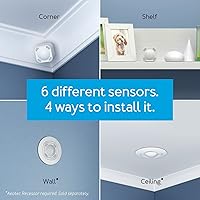
The range of mounting options — corner bracket, shelf, in-wall, and recessed downlight — is broader than most competing sensors and gives real flexibility for different room types. The recessed downlight option in particular makes the sensor almost invisible in modern interiors.
The corner-mount bracket, while clever, is fiddly to align precisely, and some users reported the sensor rotating slightly over time when mounted on smooth painted surfaces. Screw mounting is more reliable but requires putting holes in walls, which renters may want to avoid.
Wireless Range
81%
19%
The 700-series chipset delivers a meaningfully stronger Z-Wave signal than the Gen5 predecessor, and users in larger homes noticed fewer dropped reports and faster response times when the sensor sits at the edge of their mesh.
In thick-walled masonry construction, Z-Wave range limitations are not unique to this device but still become apparent — users in older stone or brick homes may need a repeater node between the sensor and hub to maintain a stable connection.
Environmental Monitoring Trio
87%
The combination of temperature, humidity, and lux readings in a single node is particularly powerful for energy-efficiency automations. Users running whole-home climate control or smart blind systems found this sensor gave them exactly the occupancy-plus-environment context they needed.
Temperature readings can drift slightly when the sensor is mounted directly on a sun-exposed wall, as the housing absorbs radiant heat. Positioning away from direct sunlight and heat sources is necessary for accurate ambient readings, which limits some mounting options.

Suitable for:

The Aeotec MultiSensor 7 Z-Wave Multi-Sensor is built for smart home enthusiasts who already have a Z-Wave hub in place and want to consolidate multiple sensing functions into a single, tidy node. If you're running SmartThings or Hubitat and building automations around occupancy, ambient temperature, or lighting conditions, this sensor slots in cleanly and reliably. It's a particularly strong pick for anyone who has grown frustrated managing several discrete devices — one unit covering motion, humidity, temperature, light lux, UV, and vibration meaningfully cuts hub clutter. The compact, unobtrusive form factor also makes it ideal for living rooms, home offices, or any space where you want sensing capability without an eyesore on the wall. DIY security builders who need motion and vibration detection handled by one device will also find real value here.

Not suitable for:

The Aeotec MultiSensor 7 Z-Wave Multi-Sensor is a poor fit for anyone who hasn't already committed to the Z-Wave ecosystem — without a compatible hub, the hardware simply won't function, and there is no Wi-Fi or Bluetooth fallback. Buyers expecting to cover large, open-plan rooms with a single unit should be cautious: the 16-foot motion range has genuine limits in expansive spaces, and one sensor won't cut it without careful placement or additional units. If you're on a tighter budget and primarily need basic motion sensing, there are simpler, less expensive options that don't ask you to pay for UV and vibration capabilities you may never use. Users on niche or less common Z-Wave hubs should also check compatibility carefully before buying, since pairing experiences outside of SmartThings and Hubitat can be inconsistent. Finally, anyone expecting plug-and-play simplicity without any hub configuration work will likely find the setup curve frustrating.

Specifications

  • Sensors: The device integrates six sensing functions in a single unit: motion (PIR), ambient temperature, relative humidity, light intensity (lux), UV index, and surface vibration.
  • Z-Wave Generation: Built on the 700 Series Z-Wave chipset (Gen7), which improves wireless range and power efficiency compared to the previous Gen5 platform.
  • Security Protocol: Supports Z-Wave S2 security framework and SmartStart, enabling encrypted, QR-code-based hub inclusion for faster and more secure pairing.
  • Motion Range: PIR motion detection covers a maximum range of 16 feet under optimal conditions; effective coverage depends heavily on mounting height and angle.
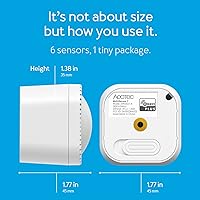
  • Dimensions: The housing measures 1.77″ in diameter and 1.38″ in depth, making it one of the more compact Z-Wave multi-sensors available.
  • Weight: The unit weighs 2.6 ounces, light enough to be mounted on most surfaces without requiring heavy-duty hardware.
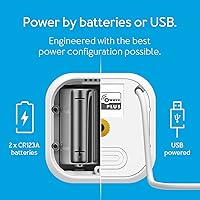
  • Power Source: Runs on two included CR123A lithium batteries or can be powered continuously via a USB connection for high-traffic installations.
  • Battery Life: Aeotec rates battery life at up to 3 years, though actual longevity varies significantly based on sensor reporting frequency configured in the hub.
  • Battery Type: Uses two CR123A lithium batteries, which are included in the box and do not need to be purchased separately to get started.
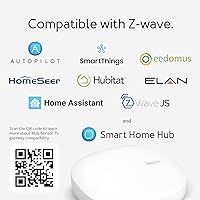
  • Compatible Hubs: Works with any certified Z-Wave hub, with SmartThings and Hubitat confirmed as primary supported platforms for full feature integration.
  • Mounting Options: Can be installed in a room corner, flat on a wall or shelf, recessed into a downlight fitting, or set in-wall using appropriate hardware.
  • Operating Temp: The sensor is rated to operate in environments up to 40 degrees Celsius, making it suitable for standard indoor residential and office conditions.
  • Model Number: The official model number is ZWA024-A, which can be used to verify firmware updates and confirm compatibility with specific hub platforms.
  • Color: Available in white, designed to blend with standard ceiling and wall surfaces in most residential interiors.
  • Connectivity: Uses Z-Wave Plus RF communication exclusively; there is no Wi-Fi, Bluetooth, or Zigbee fallback connectivity option.
  • Package Contents: The retail box includes the MultiSensor 7 unit, two CR123A batteries, and mounting hardware; a USB cable is not guaranteed to be included.
  • UPC: The product UPC is 810667025403, corresponding to the single-unit retail configuration (ZWA024).

Related Reviews
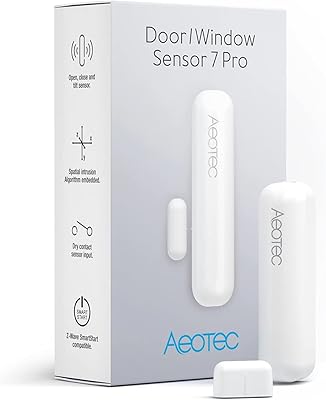
Aeotec Z-Wave Plus Door/Window Sensor 7 Pro, Gen7
86%
94%
Installation Process
91%
Battery Life
78%
Connectivity & Range
89%
Size & Discreetness
85%
Compatibility with Smart Hubs
More
HomeSeer HSM200 Z-Wave Multi-Sensor
80%
93%
Reliability & Uptime
81%
Setup & Inclusion
76%
Motion Detection
69%
Temperature Accuracy
71%
Ambient Light Sensing
More
Aeotec TriSensor 8 Z-Wave Motion Sensor
79%
88%
Motion Detection Accuracy
91%
Z-Wave Range & Connectivity
83%
Hub Compatibility
79%
Temperature Sensing
74%
Light Sensing
More
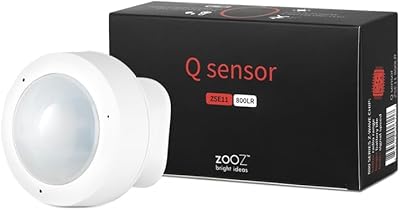
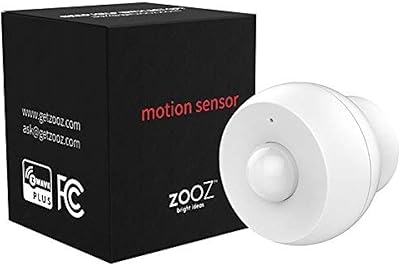
Zooz ZSE11 800LR Z-Wave Multisensor
77%
61%
Hub Compatibility
88%
Motion Detection Speed
81%
Multi-Sensor Accuracy
69%
Setup & Pairing Experience
63%
Battery Life
More
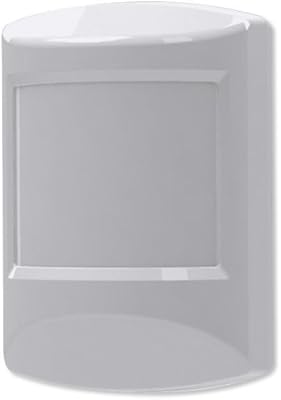
Zooz ZSE18 800LR Z-Wave Motion Sensor
80%
91%
Detection Reliability
88%
Z-Wave Pairing & Stability
78%
Battery Life
86%
Range & Coverage
74%
Mounting & Placement
More
Kwikset HomeConnect 620 Z-Wave Keypad Smart Lock
79%
91%
Hub Integration
88%
Signal Reliability
86%
Keypad Usability
71%
Code Management
84%
Build Quality
More
Fibaro FGPB-101 Z-Wave Plus Scene Controller Button
77%
74%
Ease of Pairing
83%
Reliability
81%
Response Latency
78%
Build Quality
69%
Mounting & Installation
More
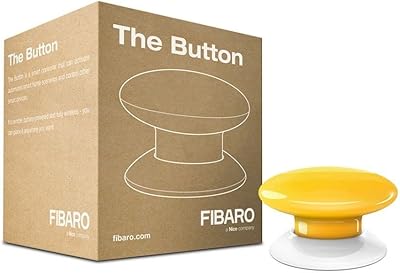
Ecolink PIRZWAVE2-ECO Z-Wave Motion Detector
82%
88%
Z-Wave Connectivity
71%
Pet Immunity Accuracy
83%
Detection Reliability
91%
Battery Life
74%
Hub Compatibility
More
Nikon NIKKOR Z DX 24mm f/1.7
87%
91%
Image Sharpness
89%
Low-Light Performance
93%
Autofocus for Video
87%
Build Quality
95%
Portability/Size
More
TRENDnet TPE-TG327 7-Port Multi-Gig PoE+ Switch
89%
95%
PoE Performance
91%
Data Transfer Speed
87%
Setup & Installation
89%
Build Quality
96%
Noise Levels
More

FAQ

You need a Z-Wave certified hub — it will not work standalone or with Wi-Fi and Zigbee systems. SmartThings and Hubitat are the most commonly tested platforms and tend to offer the smoothest experience. Other Z-Wave hubs should work in principle, but feature depth and pairing ease can vary, so it is worth checking your hub's compatibility list before buying.

The two CR123A batteries are included, but a USB cable is not always bundled depending on the retail variant you receive. If you plan to run the MultiSensor 7 on USB power from day one, have a standard Micro-USB cable on hand just in case.

Three years is possible, but only if your hub is set up to receive reports on a conservative schedule — think every few minutes rather than every few seconds. If you configure frequent polling or high-sensitivity motion reporting, expect battery life closer to six to twelve months. Adjusting the wake-up interval in your hub's device settings is the single most effective way to extend it.

Probably not on its own. Sixteen feet is the maximum under ideal conditions, and open-plan spaces with irregular furniture layouts can create dead zones. Mounting the sensor high in a corner at a slight downward angle helps maximise coverage, but for rooms larger than roughly 15 by 15 feet, you should plan on using two units or combining this sensor with a dedicated PIR detector.

It is genuinely useful in the right context. If you have houseplants that need a minimum UV threshold to thrive, you can set automations to alert you when levels drop too low. It also works as a passive sun-exposure monitor for rooms where people spend long periods. It is a niche feature, but if you have a specific use case in mind, it delivers accurate enough readings to build simple automations around.

The vibration sensor picks up physical movement or impact transmitted through the surface it is mounted on. Practical uses include detecting when a washing machine or dryer finishes a cycle, sensing if a door or window is knocked or forced, or catching minor impacts on a surface. Sensitivity can usually be adjusted through your hub's device parameters, which is important — at factory defaults, some users find it triggers on HVAC vibration or nearby foot traffic.

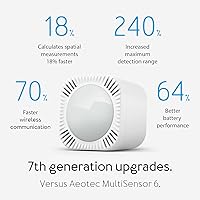
The main upgrades are the 700-series Z-Wave chip, S2 security support, and SmartStart inclusion. These translate to better battery efficiency, stronger encryption, and easier initial pairing. The physical size is slightly smaller and the form factor is refined, but the core sensing lineup is very similar. If you already own a MultiSensor 6 in good working order, the upgrade is hard to justify unless you specifically need S2 security or SmartStart on your hub.

The sensor does read humidity, but it is not rated as waterproof or moisture-resistant, so direct exposure to steam from a hot shower is not a good idea. Mounting it near the door or in an adjacent hallway where humidity levels still rise after a shower is a more reliable approach and will protect the hardware long-term.

On SmartThings, most users get through pairing in under five minutes. You put your hub into inclusion mode, press the action button on the sensor, and it typically identifies itself automatically and loads the correct driver. SmartStart makes it even easier — scan the QR code on the device before powering it on and it will join the network on its own.

No, it is designed for indoor use only. There is no weather resistance or IP rating, and the operating temperature ceiling of 40 degrees Celsius combined with the absence of moisture protection makes it unsuitable for outdoor or semi-exposed installations. For outdoor sensing, you would need a purpose-built weatherproof Z-Wave sensor.

Where to Buy