Overview

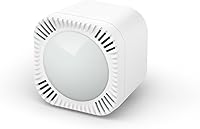
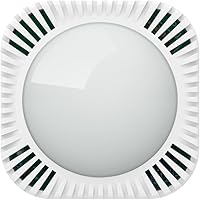
The Aeotec TriSensor 8 Z-Wave Motion Sensor is a compact, battery-powered device that rolls motion detection, temperature monitoring, and ambient light sensing into a single unit smaller than a golf ball. It belongs to Aeotec's 800 Series Z-Wave lineup — a meaningful generational step up from older 500 and 700 Series hardware in terms of range and network reliability. No wiring required, which makes placement genuinely flexible: a corner shelf, a hallway wall, a garage ceiling. It works with SmartThings, Homeseer, Domoticz, and several other certified Z-Wave hubs. Released in 2024, this Z-Wave multi-sensor sits comfortably as a current-generation option rather than aging inventory.

Features & Benefits

Motion detection reaches up to 23 feet with three sensitivity levels, so you can dial it back in a busy living room or crank it up for a quiet storage space. The temperature sensor covers -10 to 50°C with ±1°C accuracy — useful for monitoring a server room, a wine cellar area, or just a drafty entryway. Light sensing tops out at 30,000 LUX, precise enough to trigger lighting automations based on actual room conditions rather than a fixed schedule. What really distinguishes the TriSensor 8 is its Z-Wave Long Range capability, extending coverage up to 2,500 feet — a genuine advantage in larger properties. A single CR123A battery is estimated to last about a year, though real-world results will vary depending on how frequently motion is detected.

Best For

This Z-Wave multi-sensor is squarely aimed at people who already have a Z-Wave hub up and running. If you are building automations around motion, temperature, or lighting — or expanding an existing setup — it slots in naturally. People upgrading from older TriSensor generations or 500/700 Series hardware will notice the range improvement right away. Renters appreciate the battery-powered design since there is no drilling for conduit or pulling wire through walls. That said, buyers new to smart home tech should know upfront: this sensor requires a compatible Z-Wave hub to function at all, and some advanced features depend on how well your specific hub handles 800 Series devices. It rewards technically comfortable users far more than beginners.

User Feedback

Most buyers with a Z-Wave background report that pairing with SmartThings is straightforward, and motion triggering holds up reliably in daily use. Owners upgrading from older TriSensor models consistently mention the range boost as a real, noticeable improvement. Temperature and light readings are generally praised as accurate enough for automation purposes, though some users note that manual calibration offsets are occasionally needed to match real-world conditions. Battery life draws mixed reactions — some report the full-year estimate holding true, while others find it falls short under high-traffic detection. Complaints about the included mounting hardware come up periodically, with a few buyers finding it flimsier than expected. Experienced Z-Wave users rate this Aeotec sensor highly; beginners tend to find the setup steeper than anticipated.

Pros

  • Consolidates motion, temperature, and light sensing into one tidy device, reducing clutter and installation time.
  • Z-Wave 800 Series long-range mode dramatically extends useful coverage in large or spread-out homes.
  • Three adjustable motion sensitivity levels let you tune detection to match the specific room and traffic patterns.
  • Pairs reliably with SmartThings and other major certified Z-Wave hubs according to consistent user reports.
  • Wireless battery operation means zero wiring and genuine placement flexibility — walls, shelves, or ceilings.
  • Temperature accuracy of ±1°C and light accuracy of ±3% are precise enough to drive meaningful automations.
  • Compact form factor blends into most interiors without drawing attention.
  • Broad open Z-Wave compatibility future-proofs the sensor across hub platforms and software ecosystems.
  • A single CR123A battery is estimated to last roughly a year under typical conditions, keeping upkeep low.
  • Users upgrading from older TriSensor generations consistently note a real, tangible improvement in range and responsiveness.

Cons

  • Requires a compatible Z-Wave hub to function — there is no standalone app or cloud fallback.
  • Not all Z-Wave hubs fully support 800 Series features, so long-range mode may be unavailable depending on your setup.
  • Battery life varies noticeably in high-traffic areas, and real-world results sometimes fall short of the 12-month estimate.
  • Some users find the included mounting hardware feels flimsy and inadequate for reliable long-term wall installation.
  • Temperature and light calibration occasionally needs manual offset adjustments to match actual room conditions accurately.
  • The setup and configuration process has a meaningful learning curve for anyone unfamiliar with Z-Wave pairing procedures.
  • CR123A batteries are less commonly stocked than AA or AAA cells, making replacements slightly less convenient to source.
  • No built-in humidity sensing, which puts it behind a few competing multi-sensors at a similar price point.

Ratings

The scores below reflect an AI-driven analysis of verified global user reviews for the Aeotec TriSensor 8 Z-Wave Motion Sensor, with spam, bot-generated, and incentivized submissions actively filtered out before scoring. Each category captures both what buyers consistently praised and where real frustrations surfaced — nothing is glossed over. The result is a transparent, balanced picture of how this Z-Wave multi-sensor actually performs across a wide range of smart home setups.

Motion Detection Accuracy
88%
Users running SmartThings and Homeseer automations consistently report that motion triggering is reliable and responsive in corridors, entryways, and living rooms. The 23-foot range holds up well in practice, and the three sensitivity levels give experienced users meaningful control over when and how the sensor fires.
A subset of users in rooms with pets or HVAC airflow report occasional false triggers even at lower sensitivity settings. A small number of buyers also note a slight detection lag compared to wired PIR sensors, which matters in time-critical automation scenarios.
Z-Wave Range & Connectivity
91%
Upgraders from 500 and 700 Series hardware consistently highlight the range improvement as immediately noticeable, especially in multi-story homes or layouts with thick interior walls. In long-range mode, the TriSensor 8 holds a stable direct connection to hubs at distances that would have required mesh repeaters with older hardware.
Long-range mode only delivers its full benefit if the hub itself supports Z-Wave 800 LR — something not all current hubs do. Buyers who did not verify hub compatibility before purchasing were caught off guard when extended range features were unavailable.
Hub Compatibility
83%
Pairing with SmartThings is widely reported as smooth and quick, and open-platform users on Domoticz and Home Assistant via Open Z-Wave also report solid inclusion experiences. The broad certified compatibility list makes this Aeotec sensor one of the more versatile options in its class.
A handful of users on less common hubs report incomplete device handlers or missing parameter support, meaning some configuration options are inaccessible without manual workarounds. Not every hub surfaces all three sensing channels equally well, and troubleshooting these gaps requires comfort with Z-Wave configuration files.
Temperature Sensing
79%
21%
For automation purposes — triggering a fan, adjusting a thermostat offset, or monitoring a server closet — the ±1°C accuracy is sufficient and well-regarded. Users building climate-aware routines appreciate having temperature data consolidated with motion in a single device rather than deploying a separate sensor.
A recurring complaint involves the temperature reading running slightly warmer than a reference thermometer, likely due to heat from the sensor's own circuitry. Several users mention needing to apply a -1°C or -2°C manual offset through their hub to get readings that match a standalone thermostat, which is an extra step that less experienced users may not know how to configure.
Light Sensing
74%
26%
The 0 to 30,000 LUX range is wide enough to distinguish between a fully dark room, ambient daylight, and direct afternoon sun — making it genuinely useful for automating lighting scenes based on natural light levels rather than time of day. Users with home offices and sunrooms find this particularly practical.
Some buyers report that the light sensor values drift noticeably when the sensor is mounted at unusual angles or near reflective surfaces. A few also note that the LUX readings do not always align with their expectations when compared to a dedicated light meter, requiring trial-and-error calibration before automations behave predictably.
Battery Life
69%
31%
In low-to-moderate traffic areas — a seldom-used guest room, a storage hallway, or a garage — many users confirm the battery holds close to the 12-month estimate. The CR123A chemistry also handles cold environments better than alkaline cells, which matters for sensors placed near exterior walls or in unheated spaces.
In high-traffic rooms where motion fires dozens of times daily, real-world battery life frequently drops to the 6-to-9 month range. The CR123A format, while energy-dense, is less convenient to replace than AA batteries and costs more per cell, which adds up over time across a multi-sensor installation.
Ease of Setup
76%
24%
Experienced Z-Wave users describe the inclusion process as fast and predictable — a few button presses and the sensor is live in the hub within seconds. The compact size makes physical positioning easy, and there is no firmware flashing or complicated provisioning required out of the box.
For buyers new to Z-Wave, the setup process lacks hand-holding. There is no companion app, no QR code scan, and no guided onboarding — just a manual and the assumption that you already know how Z-Wave inclusion works. Support documentation is functional but sparse for troubleshooting edge cases.
Build Quality
77%
23%
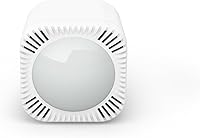
The housing feels solid for its weight class and the matte white finish resists fingerprints reasonably well. The compact footprint means it sits unobtrusively on a wall bracket without looking industrial or out of place in a modern interior.
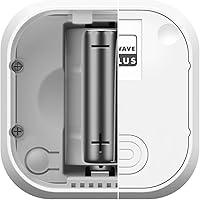
Several users note that the plastic casing, while adequate, does not convey a premium feel relative to the price. The battery compartment latch in particular is cited as feeling less robust than the rest of the unit, with a few buyers reporting it loosens slightly over repeated battery changes.
Mounting Hardware
58%
42%
The included wall-mount bracket gets the sensor up and positioned without needing to source additional parts for a standard installation, and the low weight of the device means the mount holds reliably on drywall with the provided screws.
The mounting bracket is a common friction point in user reviews — it is frequently described as flimsy, difficult to angle precisely, or prone to creeping out of position over weeks of use. A meaningful share of buyers replace it with a third-party ball-joint mount for better directional control and long-term stability.
Value for Money
81%
19%
For a 3-in-1 sensor built on the latest Z-Wave generation with genuine long-range capability, the price is considered fair by the majority of experienced smart home builders who compare it against standalone sensors or competing multi-sensors from Zooz and Fibaro. Buying one unit instead of three separate devices makes the math work favorably.
Budget-conscious buyers who only need motion detection — and have no use for temperature or light data — can find simpler Z-Wave motion sensors at a lower price point. The value proposition weakens if your hub does not support 800 Series features, since you are paying for capabilities you cannot fully access.
Detection Sensitivity Control
82%
18%
Having three distinct sensitivity tiers available through the hub gives automation builders real flexibility — useful when re-purposing the sensor from a busy kitchen to a quiet study, for example, without needing to buy a different device. Users appreciate not being locked into a single fixed sensitivity profile.
The three levels, while useful, can feel coarse for fine-tuned scenarios. Some users want a continuous slider or more granular step increments rather than just low, medium, and high, particularly when trying to exclude a small pet from triggering the sensor without sacrificing coverage of the full room.
Form Factor & Discretion
86%
At under 2 inches on each side, the TriSensor 8 is among the more compact multi-sensors available in its class. Renters and design-conscious homeowners specifically call out how unobtrusive it looks mounted near a door frame or in a corner, especially compared to bulkier competitors.
The white-only color option limits blending into darker decor schemes — users with dark-painted walls or wood-toned interiors find it more visible than they would like. There is currently no charcoal or black variant available, which competing brands do offer.
Reporting Speed
80%
20%
For most automation use cases — turning on a light when entering a room, triggering a camera to record, or logging occupancy — the reporting speed is fast enough that users do not perceive a meaningful delay. The 800 Series radio stack contributes to noticeably snappier mesh communication compared to older hardware.
In back-to-back motion scenarios, some users notice a brief re-arm delay after the initial trigger clears, which can cause lights to switch off prematurely if a person stays still. This is a configurable parameter on most hubs but requires knowing where to find and adjust it.

Suitable for:

The Aeotec TriSensor 8 Z-Wave Motion Sensor is a strong pick for anyone who has already built out a Z-Wave smart home ecosystem and wants a capable multi-sensor without the hassle of running new wiring. It fits especially well for homeowners expanding automation routines that depend on real-time motion, temperature, or lighting data — think automatically dimming lights when a room brightens naturally, or triggering a thermostat adjustment based on occupancy. Renters benefit from the fully wireless, wall-mount design that leaves no permanent marks. Those upgrading from 500 or 700 Series Z-Wave hardware will find the 800 Series range improvement particularly compelling in larger homes or properties where mesh signal used to drop off. Open-platform enthusiasts who prefer tools like Home Assistant or Domoticz over locked-down ecosystems will also appreciate the broad Z-Wave compatibility this sensor brings to the table.

Not suitable for:

The Aeotec TriSensor 8 Z-Wave Motion Sensor is not the right tool for buyers who are just getting started with smart home technology and do not yet own a compatible Z-Wave hub — without one, the sensor simply will not function at all. People looking for a plug-and-play, app-based experience similar to Wyze or Ring products will find this setup process considerably more involved and potentially frustrating. If your hub is older or runs on a non-800-Series Z-Wave stack, you may not unlock the full long-range capability advertised, which undercuts one of the key reasons to choose this model over cheaper alternatives. Buyers who need outdoor motion detection should also look elsewhere, as this sensor is designed for indoor use within a moderate temperature range. Finally, anyone on a tight budget who needs only basic motion alerts — and not temperature or light sensing — will likely find equally reliable options at a lower price point.

Specifications

  • Brand: Manufactured by Aeotec, a brand specializing in Z-Wave smart home devices and accessories.
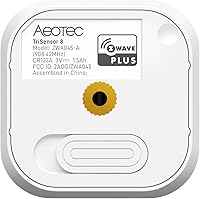
  • Model Number: The part number is ZWA045, also referred to internally as the ZWA045-A variant.
  • Protocol: Uses Z-Wave 800 Series wireless communication, the latest generation of the Z-Wave standard as of 2024.
  • Motion Range: Passive infrared motion detection covers up to 23 feet under typical indoor conditions.
  • Sensitivity Levels: Motion detection offers three adjustable calibration levels to reduce false triggers or increase responsiveness based on environment.
  • Temperature Range: Measures ambient temperature from -10°C to 50°C (14°F to 122°F) with an accuracy of ±1°C.
  • Light Sensing: Ambient light detection spans 0 to 30,000 LUX with a stated accuracy of ±3%, suitable for daylight and artificial lighting environments.
  • Long Range: In Z-Wave Long Range mode, the sensor can communicate directly with a compatible hub at distances up to 2,500 feet.
  • Power Source: Powered by a single CR123A lithium manganese dioxide battery, which is included in the package.
  • Battery Life: Estimated battery lifespan is approximately 12 months, though actual duration varies based on detection frequency and environment.
  • Dimensions: The housing measures 1.38″ deep by 1.77″ wide by 1.77″ tall, making it notably compact for a 3-in-1 sensor.
  • Weight: The unit weighs 1.76 ounces, light enough that standard wall-mount hardware can support it without reinforcement.
  • Mounting Type: Designed for wall-mount installation using the included bracket hardware.
  • Compatible Hubs: Certified for use with SmartThings, Vera, Zipabox, Homeseer HS3, Domoticz, ISY994i ZW Universal Controller, and Open Z-Wave platforms.
  • Wireless Setup: Fully cordless and wireless — no power cable or data cable is required during normal operation.
  • Color: Available in white, designed to blend unobtrusively into standard interior wall and ceiling surfaces.
  • Package Contents: Includes the sensor unit and one CR123A battery; a mounting bracket and screws are also provided for wall installation.
  • Release Date: First made available for purchase on April 16, 2024, making it a current-generation product at the time of this review.

Related Reviews
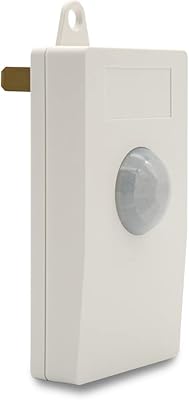
Zooz ZSE18 800LR Z-Wave Motion Sensor
80%
91%
Detection Reliability
88%
Z-Wave Pairing & Stability
78%
Battery Life
86%
Range & Coverage
74%
Mounting & Placement
More
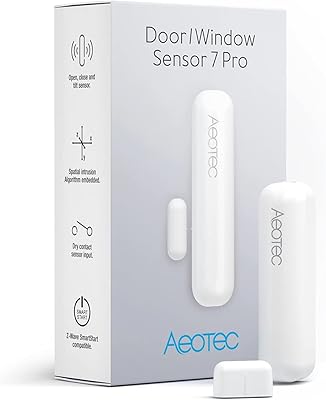
Aeotec Z-Wave Plus Door/Window Sensor 7 Pro, Gen7
86%
94%
Installation Process
91%
Battery Life
78%
Connectivity & Range
89%
Size & Discreetness
85%
Compatibility with Smart Hubs
More
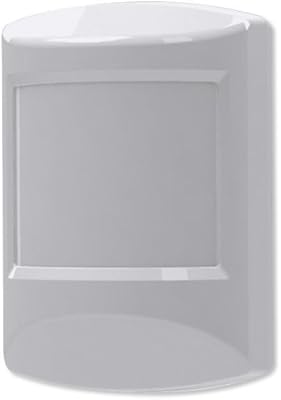
HomeSeer HSM200 Z-Wave Multi-Sensor
80%
93%
Reliability & Uptime
81%
Setup & Inclusion
76%
Motion Detection
69%
Temperature Accuracy
71%
Ambient Light Sensing
More
Ecolink PIRZWAVE2-ECO Z-Wave Motion Detector
82%
88%
Z-Wave Connectivity
71%
Pet Immunity Accuracy
83%
Detection Reliability
91%
Battery Life
74%
Hub Compatibility
More
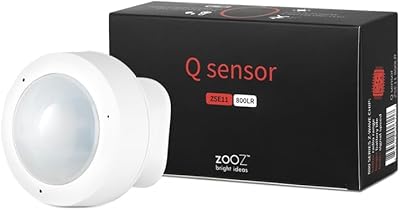
Zooz ZSE11 800LR Z-Wave Multisensor
77%
61%
Hub Compatibility
88%
Motion Detection Speed
81%
Multi-Sensor Accuracy
69%
Setup & Pairing Experience
63%
Battery Life
More
Shaogax Wireless Motion Sensor Driveway Alarm System
71%
91%
Ease of Setup
83%
Wireless Range
88%
Alert Customization
58%
False Alert Rate
61%
Build Quality
More
Actpe Wireless Motion Sensor Driveway Chime
69%
93%
Ease of Setup
88%
Value for Money
76%
Detection Reliability
81%
Wireless Range
61%
Battery Life
More
Viltrox AF 16mm F1.8 Wide Angle Lens
82%
91%
Optical Sharpness
84%
Chromatic Aberration Control
78%
Autofocus Performance
83%
Video Usability
88%
LCD Display Utility
More
Fibaro Motion Sensor
86%
91%
Motion Detection Accuracy
85%
Battery Life
88%
HomeKit Integration
93%
Ease of Installation
89%
Design and Size
More
Shelly BLU Motion Bluetooth Motion Sensor
74%
78%
Ease of Setup
81%
Motion Detection Accuracy
67%
Indoor Range
84%
Battery Life
76%
Lux Sensor Usefulness
More

FAQ

It does not connect directly to a smartphone or any app on its own. You need a certified Z-Wave hub — like SmartThings or Homeseer — as the central controller. Without one, the sensor has no way to communicate with your network or trigger any automations.

Yes, Z-Wave is backward compatible, so the TriSensor 8 will join a mesh network that includes older 500 or 700 Series devices. That said, the long-range mode and some 800 Series-specific capabilities require your hub to also support Z-Wave 800 or Z-Wave Long Range. If your hub is older, you may not unlock those extended range features, but basic motion, temperature, and light reporting will still function normally.

No, this sensor is designed for indoor use. Its operating temperature range of -10°C to 50°C is reasonable for indoor environments, but the housing is not weather-sealed or rated for outdoor exposure. Using it outside risks moisture damage and inaccurate readings.

For users familiar with Z-Wave pairing, the process is fairly routine — put your hub in inclusion mode, press the button on the sensor, and it should be discovered within seconds. SmartThings tends to handle it cleanly. If you have never paired a Z-Wave device before, expect a short learning curve, but most people work through it within a few minutes following the manual.

Aeotec estimates about 12 months from a single CR123A battery, but that figure assumes moderate detection activity. In a high-traffic area where motion is triggered dozens of times a day, some users report the battery running down faster — closer to 6 to 9 months. In a low-traffic space, the estimate holds up better. It is worth keeping a spare CR123A on hand.

Yes, there are three sensitivity levels you can configure through your Z-Wave hub interface. Lowering the sensitivity reduces the detection area and responsiveness, which can help cut down on false triggers from small animals or shifting light. It takes a bit of trial and error to find the right balance for your specific room and pet size, but the adjustment is there.

The sensor reports temperature on a polling basis and when a change threshold is crossed, so it is not streaming data every second. The reporting interval and change threshold are typically configurable through your hub, but exact options depend on which platform you are using. For automation purposes, the response is fast enough for practical use.

For smart home automation purposes, the accuracy is solid — ±1°C on temperature and ±3% on light levels. These are not laboratory-grade instruments, but they are precise enough to build reliable automations around. A small number of users do find the temperature reads slightly high or low compared to a standalone thermometer and apply a manual offset through their hub to correct it.

The sensor comes with a wall-mount bracket and screws intended for a permanent screw installation. Some users also use strong adhesive strips as an alternative to avoid drilling, especially in rental situations. The bracket does get mixed reviews — a few buyers find it less sturdy than they would like, so if you are mounting it in a high-traffic area, making sure the fastening is secure is worth the extra attention.

All three are reputable Z-Wave multi-sensor brands, and the differences tend to come down to hub compatibility depth, reporting granularity, and price. This Aeotec sensor stands out for its 800 Series long-range capability, which neither Zooz nor Fibaro match at this form factor. Zooz sensors are popular for their active community support and competitive pricing. Fibaro is often praised for industrial design and detailed configuration options. If long-range coverage matters to your setup, the Aeotec has a clear edge; if budget or community documentation is the priority, Zooz is worth a look.

Where to Buy