Overview

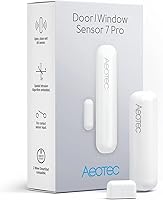
The Aeotec Door/Window Sensor 7 Pro Z-Wave is a compact, capable entry-point sensor built for homeowners who take their Z-Wave ecosystem seriously. Powered by the 700-series Z-Wave chip, it represents a genuine generational step up from older contact sensors — faster, longer-range, and meaningfully smaller. The 3-in-1 design packs a magnetic contact, a dry contact relay, and a tilt sensor into a housing barely bigger than a pack of gum. One important note upfront: this Aeotec sensor requires a Z-Wave hub to function. It is not a Wi-Fi device and has no standalone app. If you are already running a Z-Wave network, though, it fits right in at a mid-to-premium price point that reflects its upgraded specs.
Features & Benefits

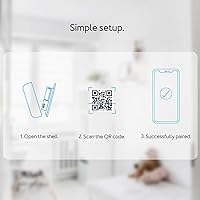
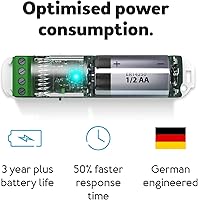
At just 2.8 inches long and weighing barely over 2 ounces, the Sensor 7 Pro is noticeably smaller than its predecessor — 40% by Aeotec's own measurement — which makes it far easier to mount discreetly on door frames or window sills. The SmartStart QR-code pairing is genuinely one of the slicker setup experiences in the Z-Wave world: scan the code with a compatible hub, stick the sensor to your door, and you are done. Underneath the easy setup, S2 security encryption protects every communication on your network. Range and response speed also get a real boost from the 700-series chipset, and the 3-year battery estimate — running on a single 1/2 AA lithium cell — is one of the most competitive figures in this sensor category.

Best For

This Z-Wave door sensor makes the most sense for people already running a Z-Wave hub — SmartThings, HomeSeer, and Home Assistant users via Open Z-Wave tend to report the smoothest experiences. If you need sensors that disappear into a door frame rather than announcing themselves, the compact form factor is a real advantage. Those managing multiple sensors across a larger home will also benefit from the extended wireless range. The dry contact input opens up creative use-cases: water sensors, pressure mats, or any binary-output device can be wired in with some basic know-how. This is not the right pick for someone expecting plug-and-play simplicity without an existing Z-Wave hub already in place.

User Feedback

Across multiple review pools, this Aeotec sensor lands around 3.6 to 3.8 out of 5 — a score that reflects genuinely mixed experiences worth unpacking. Buyers who got setup right consistently praise the small footprint and reliable hub pairing. The battery outlasts competitors by a notable margin, and long-term owners back that claim up. On the negative side, the tilt detection constraint catches people off guard: it only fires when the magnetic contact is also active, so standalone tilt use is simply not possible here. A fair chunk of one-star reviews trace back to hub incompatibility or configuration mistakes rather than hardware faults — worth factoring in before drawing conclusions.

Pros

  • Compact 2.8-inch body installs discreetly on tight door frames and narrow window sills without looking bulky.
  • SmartStart QR-code pairing makes initial inclusion faster and easier than most competing Z-Wave sensors.
  • S2 encryption keeps all device communications local and protected, a genuine advantage over cloud-reliant alternatives.
  • The 700-series Z-Wave chip delivers meaningfully better wireless range than previous-generation contact sensors.
  • Battery life regularly exceeds three years in real-world use, a claim backed up by long-term owners.
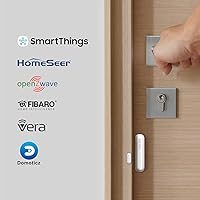
  • Works with a wide range of established hubs including SmartThings, HomeSeer, Vera, Ring, and Domoticz.
  • The dry contact relay input allows connection of third-party binary sensors well beyond standard door and window applications.
  • Ships with the battery already included, so you can mount and test the sensor immediately out of the box.

Cons

  • Requires a Z-Wave hub to function at all — buyers without one face significant added cost and setup complexity.
  • Tilt sensor cannot operate independently; it only activates when the magnetic contact is simultaneously engaged.
  • Several listed compatible platforms rely on community-developed drivers rather than official manufacturer integrations.
  • The 1/2 AA battery format is less common than AA or CR2032 cells, making replacement batteries slightly harder to source locally.
  • Hub-specific quirks have been reported, with some platforms requiring manual parameter adjustments to expose full functionality.
  • Aggregate user rating sits around 3.6 to 3.8 out of 5, pointing to a genuinely mixed ownership experience.
  • No built-in temperature or humidity sensing, unlike several competing multi-sensor units available at a comparable price.
  • Available in white only, which can look mismatched on dark-painted or wood-stained door and window frames.

Ratings

The Aeotec Door/Window Sensor 7 Pro Z-Wave earns a nuanced scorecard across thirteen performance categories, built from AI-driven analysis of verified global buyer reviews with spam, bot-submitted, and incentivized feedback actively filtered out. Scores reflect both the genuine engineering strengths this sensor brings to established Z-Wave setups and the real-world pain points — particularly around tilt sensor limitations and hub-specific compatibility gaps — that shape buyer satisfaction. Strengths and shortcomings are weighted equally to give you a fully transparent picture before you commit.

Setup & Pairing
83%
SmartStart QR-code pairing is a standout feature for users on supported hubs — scan the code, pull the battery tab, and the sensor joins the network automatically with no button sequences or inclusion mode toggling. Buyers running SmartThings or HomeSeer report the whole process takes about a minute from unboxing.
The experience drops sharply for anyone not using a SmartStart-capable hub, where standard Z-Wave inclusion applies and requires more manual steps. A handful of users on older or less common platforms report the sensor failing to include cleanly on the first attempt, requiring a factory reset before retrying.
Battery Life
91%
This is where the Sensor 7 Pro genuinely earns its premium positioning — long-term owners consistently report the single 1/2 AA lithium cell lasting well beyond the two-year mark, with several reaching three-plus years in actively monitored entryways. For anyone managing a multi-sensor home, that kind of interval makes a real maintenance difference.
The 1/2 AA cell format is harder to source than common sizes like AA or CR2032, so when the battery eventually dies, a last-minute hardware store run is unlikely to save you. Ordering a spare at purchase time is practically a necessity rather than just good planning.
Wireless Range
87%
The 700-series chipset delivers a meaningful real-world range improvement over older Z-Wave hardware — users in larger single-story homes report reliable signal transmission across three or four rooms without a range extender. In mesh networks with repeating devices, the coverage improvement is even more pronounced.
Heavy masonry walls, steel doors, or thick concrete floors can still cut the effective range noticeably, and a handful of users in older brick homes or multi-level buildings report needing an additional repeater node to maintain a stable connection.
Hub Compatibility
72%
28%
On the major platforms — SmartThings, HomeSeer, and Home Assistant with Z-Wave JS — this Aeotec sensor pairs reliably and exposes open and close states without any manual configuration. Ring and Domoticz users also report generally positive experiences, making it a versatile choice across the mainstream Z-Wave ecosystem.
Several platforms on the official compatibility list depend on community-built device handlers rather than native manufacturer support, meaning feature parity is not guaranteed across all hubs. Users on Vera and some older Nexia setups have reported partial functionality, with advanced parameters like tilt reporting requiring manual configuration or simply not mapping correctly.
Value for Money
67%
33%
For buyers already running a capable Z-Wave hub who want a long-battery, high-security, multi-function sensor that disappears into a door frame, the price premium over basic contact sensors reflects real engineering differences — the 700-series chipset, S2 encryption, and three-plus-year battery life justify the step up for committed Z-Wave users.
For anyone primarily needing simple open and close monitoring, there are capable Z-Wave sensors at a meaningfully lower price that cover the basics without the Pro-tier feature set. The mid-to-premium price point is harder to justify if the tilt sensor and dry contact input are not features you plan to use.
Form Factor
89%
At 2.8 inches long and just over 2 ounces, this Z-Wave door sensor is noticeably smaller than most competing units and substantially more discreet than previous Aeotec generations. Users installing sensors on cabinet doors, interior frames, or narrow apartment window sills frequently cite the compact body as a deciding factor.
The single white color option creates a mismatch problem on dark-stained wood frames or painted black doors, where the bright housing stands out rather than receding into the background. There is no recessed installation option on this surface-mount model, so it remains visible regardless of placement.
Security Features
93%
S2 encryption is the most rigorous security framework currently available in the Z-Wave standard, and the Sensor 7 Pro ships with it fully implemented. For users who specifically choose Z-Wave over Wi-Fi to avoid cloud exposure and remote-server dependencies, this level of local encrypted communication is exactly what the platform promises.
S2 setup requires a hub that actively supports the S2 handshake, and on some older platforms the key exchange step is handled automatically but not always transparently — a few users report not being able to confirm whether S2 was successfully negotiated after inclusion. This is more of a hub-side limitation than a sensor flaw, but it can create real uncertainty.
Tilt Detection
44%
56%
For users mounting the sensor on a hinged surface where the magnet remains in proximity — such as a cabinet flap or a tilting garage mechanism with the magnet also attached — the tilt input does add a meaningful layer of position awareness beyond simple open and close binary reporting.
The tilt sensor is not independently operable and only activates when the magnetic contact is also engaged, which severely limits its practical use for most buyers who expect standalone angle-detection capability. This constraint is the single most commonly cited complaint in user reviews, and it catches buyers off guard despite being technically documented.
Dry Contact Utility
76%
24%
The dry contact relay input genuinely benefits advanced users who want to centralize multiple sensor types under one Z-Wave node — wiring in a water sensor, floor pressure mat, or external reed switch is manageable for anyone comfortable with basic low-voltage connections. Power users running multi-zone setups appreciate not needing a separate Z-Wave module for every binary input device.
For the majority of buyers who purchase this as a standard door or window sensor, the dry contact input adds complexity without benefit, and its presence contributes to the higher price point they end up paying for features they will never use. There is no plug-and-connect solution here — wiring knowledge is genuinely required.
Installation Ease
79%
21%
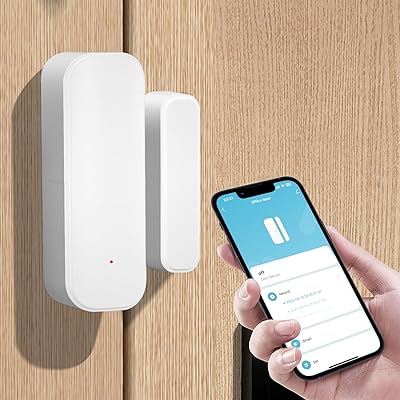
The physical mounting process is straightforward — the sensor body and magnet piece attach to door frames via included adhesive tape or small screws, and alignment tolerances are forgiving enough that most users get it right on the first try. The compact size actually helps, as there is rarely a shortage of flat mounting surface.
The overall installation experience hinges heavily on hub setup knowledge rather than the sensor hardware itself — buyers unfamiliar with Z-Wave inclusion, device parameters, or hub-specific driver installation can find the process genuinely frustrating. A meaningful share of negative reviews specifically describe setup friction that would not exist for an experienced Z-Wave user.
Sensor Accuracy
84%
Contact reporting on doors and windows is consistently accurate — users across major platforms confirm that open and close events fire reliably without false positives, missed triggers, or meaningful latency under normal operating conditions. Long-term reviewers note that accuracy does not degrade over months of continuous use, which is not always the case with cheaper alternatives.
A small number of users report occasional missed events after prolonged sensor-hub separation or following a hub reboot, typically resolved by re-interviewing the device. Contact gap sensitivity can also be finicky on doors with significant warp or flex, requiring careful magnet positioning to avoid chronic misreads.
Build Quality
78%
22%
The housing feels solid for a battery-powered sensor of this size — edges are clean, the plastic shell does not creak or flex under light handling, and the magnetic piece feels appropriately weighted. Several users who have compared earlier Aeotec sensor generations side-by-side confirm the Gen7 unit feels noticeably more refined.
The all-plastic construction, while appropriate for a compact battery device, does not inspire the same confidence as metal-housed alternatives, and a few buyers report the adhesive backing losing grip over time in high-humidity environments such as bathroom windows or exterior-facing door frames.
Documentation & Support
61%
39%
The quick-start guide covers core physical installation and SmartStart pairing steps adequately, and Aeotec maintains an online knowledge base with Z-Wave parameter documentation that technical users find useful for advanced configuration. Community forums around Open Z-Wave and Home Assistant also fill in gaps with user-contributed setup guides.
The included documentation does not clearly explain the tilt sensor's operational dependency on the magnetic contact, a notable omission given how frequently buyers discover this limitation after purchase. Reaching Aeotec support directly yields mixed results — some users report prompt and helpful responses while others describe slow or generic replies that do not resolve hub-specific configuration questions.

Suitable for:

The Aeotec Door/Window Sensor 7 Pro Z-Wave is purpose-built for homeowners already invested in a Z-Wave ecosystem who want a reliable, low-maintenance sensor that blends into its surroundings. If you are running SmartThings, HomeSeer, Home Assistant via Open Z-Wave, or a similar platform, this sensor slots in cleanly, and the SmartStart QR pairing means the whole inclusion process genuinely takes under a minute. The compact 2.8-inch body suits anyone who needs sensors on interior doors, cabinet frames, or narrow window sills where bulkier alternatives look out of place. Security-conscious buyers who prefer S2-encrypted local communication — rather than routing device events through a third-party cloud — will find this a more privacy-respecting option than most Wi-Fi alternatives. The three-year-plus battery life also makes it a smart pick for anyone managing many sensors across a home, where frequent battery swaps become a genuine maintenance burden.
Not suitable for:

If you do not already own a Z-Wave hub, the Aeotec Door/Window Sensor 7 Pro Z-Wave is not a practical starting point — without one, the sensor does not function at all, and factoring in hub costs substantially changes the value calculation. Buyers expecting a simple Wi-Fi setup from a smartphone app will find the Z-Wave inclusion and parameter configuration process has a real learning curve. Anyone hoping to use the tilt detection as a standalone trigger — say, for a garage door angle alert — will be caught off guard: it only activates in tandem with the magnetic contact, not on its own. Users on older or less common Z-Wave hubs should verify driver support carefully, since several platforms on the compatibility list depend on community-maintained integrations rather than official ones. If your priority is basic open/close monitoring at a lower entry cost, there are simpler Z-Wave sensors that cover that use case without the added feature overhead.

Specifications

  • Dimensions: The main sensor body measures 2.8″ long by 0.7″ wide by 0.75″ tall, making it among the most compact Z-Wave contact sensors currently available.
  • Weight: The complete unit weighs 2.08 oz, encompassing the sensor body, included magnet piece, and battery.
  • Protocol: Operates on Z-Wave Plus v2 using the 700-series chipset, the most advanced Z-Wave generation available at the time of this product's release.
  • Security: Supports the S2 security framework, providing AES-128 encrypted communication between the sensor and a compatible Z-Wave hub.
  • Pairing Method: Supports SmartStart inclusion via QR code scan as well as standard Z-Wave inclusion for hubs that have not yet adopted SmartStart.
  • Sensor Types: Integrates three sensing inputs in one housing: a magnetic contact sensor, a dry contact relay input, and a tilt sensor.
  • Battery: Powered by one 1/2 AA lithium cell rated at 3.6V, a type ER14250 equivalent that is included in the box at purchase.
  • Battery Life: Rated for over three years of normal operation, enabled by 700-series power management that consumes up to 66% less energy than previous Z-Wave generations.
  • Frequencies: Transmits at 908.40 MHz and 916.00 MHz, covering the standard Z-Wave frequency bands designated for North America.
  • Mounting: Designed for surface mounting on door or window frames, with the sensor body fixed to the frame and the magnetic piece attached to the moving door or sash.
  • Model Number: The official model designation is DWS7, also referenced under product ID ZC12-20080085 in regulatory certification documentation.
  • Hub Compatibility: Officially listed as compatible with SmartThings, HomeSeer, Vera, Ring, Domoticz, Nexia, Zipabox, and Open Z-Wave, though some platforms depend on community-developed device handlers for full feature access.
  • Power Source: Battery-only device with no provision for wired power; no USB port or hardwired connection option exists for this model.
  • Generation: Represents the 7th generation of Aeotec's door and window sensor line and is the first model in the family built on the 700-series Z-Wave platform.
  • Color: Available in white only; the manufacturer does not offer alternative color variants for this specific model.

Related Reviews

Aeotec TriSensor 8 Z-Wave Motion Sensor
79%
88%
Motion Detection Accuracy
91%
Z-Wave Range & Connectivity
83%
Hub Compatibility
79%
Temperature Sensing
74%
Light Sensing
More
HomeSeer HSM200 Z-Wave Multi-Sensor
80%
93%
Reliability & Uptime
81%
Setup & Inclusion
76%
Motion Detection
69%
Temperature Accuracy
71%
Ambient Light Sensing
More
PHOVOLT DS-007 WiFi Door and Window Sensor
75%
88%
Ease of Setup
74%
App Reliability
83%
Notification Speed
71%
Alexa & Voice Assistant Integration
86%
Installation & Mounting
More
Zooz ZSE11 800LR Z-Wave Multisensor
77%
61%
Hub Compatibility
88%
Motion Detection Speed
81%
Multi-Sensor Accuracy
69%
Setup & Pairing Experience
63%
Battery Life
More
LWOHSI LW103F Home Security System
74%
88%
Ease of Installation
79%
App Performance
83%
Siren Effectiveness
67%
Sensor Reliability
61%
Build Quality
More
Zooz ZSE18 800LR Z-Wave Motion Sensor
80%
91%
Detection Reliability
88%
Z-Wave Pairing & Stability
78%
Battery Life
86%
Range & Coverage
74%
Mounting & Placement
More
Ubiquiti UniFi U7 Pro
82%
91%
Wireless Performance
88%
Build Quality
83%
Range & Coverage
67%
Ease of Setup
78%
Value for Money
More
CAD DMTP7 7-Piece Drum Microphone Pack
73%
83%
Value for Money
89%
Ease of Setup
78%
Kick Drum Performance
57%
Overhead Mic Quality
74%
Dynamic Mic Build Quality
More
Actpe Wireless Motion Sensor Driveway Chime
69%
93%
Ease of Setup
88%
Value for Money
76%
Detection Reliability
81%
Wireless Range
61%
Battery Life
More
S&Z TOPHAND 48×80in Sliding Barn Door Kit
75%
83%
Ease of Assembly
81%
Hardware Quality
78%
Surface & Finish Quality
79%
Value for Money
76%
Moisture Resistance
More

FAQ

A Z-Wave hub is required — the Aeotec Door/Window Sensor 7 Pro Z-Wave has no Wi-Fi or Bluetooth radio and cannot connect directly to a smartphone or router. It communicates exclusively over the Z-Wave protocol, so a compatible hub such as SmartThings, HomeSeer, or a Home Assistant instance with a Z-Wave USB stick must already be in place before the sensor can do anything. If you do not currently own a Z-Wave hub, factor that cost and setup effort into your decision.
If your hub supports SmartStart, you scan the QR code printed on the sensor body or included manual using your hub's app before activating the device. Once you pull the battery tab to power it on, the sensor automatically joins your Z-Wave network without any button presses or manual inclusion mode. Most users report the entire process taking under a minute, which makes it one of the more straightforward Z-Wave pairing experiences available.

No, and this is a genuine limitation that catches a number of buyers off guard. The tilt function on this Aeotec sensor only activates when the magnetic contact is simultaneously engaged, meaning the two components must be in proximity for tilt events to report. If your goal is a standalone tilt trigger — for example, detecting the angle of a garage door panel independently — a different sensor designed specifically for that purpose would be the better choice.

Yes, but it requires some additional hardware and setup steps. Home Assistant does not have a built-in Z-Wave radio, so you will need a Z-Wave USB controller such as the Aeotec Z-Stick Gen5 Plus along with the Z-Wave JS integration or the older OpenZWave add-on. Once that infrastructure is running, the Sensor 7 Pro pairs reliably and reports open and close states correctly; the dry contact and tilt inputs may need manual parameter mapping depending on your configuration.

Long-term owners generally back it up. The 700-series chipset consumes significantly less power than older Z-Wave hardware, and multiple users have reported crossing the two-year mark without a battery change in active households. Actual longevity will vary based on how frequently the sensor triggers and how far it sits from the nearest Z-Wave repeater node, but three years is an achievable figure under typical residential use.

The sensor uses a 1/2 AA lithium cell rated at 3.6V, commonly sold under the designation ER14250. This format is not stocked in most grocery or convenience stores, but it is widely available from electronics retailers and online. It is worth ordering a spare at the time of purchase so you have one ready when the original eventually runs low.

Yes, and that flexibility is one of the more practical aspects of this sensor. Any device that outputs a simple open or closed binary signal — including basic water sensors, pressure mats, or reed switches — can be wired into the dry contact relay input. You do need to be comfortable with basic low-voltage wiring, but once connected, the external device reports through the sensor to your hub just like any other contact input.

Aeotec rates the 700-series radio at up to 67% greater real-world range compared to the previous generation, which in most standard wood-frame homes translates to solid coverage across multiple rooms. Actual range depends on wall materials, obstructions, and whether other Z-Wave devices in your network are acting as mesh repeaters. For larger homes or buildings with concrete or masonry walls, placing a Z-Wave range extender between the hub and the sensor is a sensible step.

A meaningful portion of the negative reviews trace back to setup confusion and hub compatibility issues rather than outright hardware failures. Buyers who were unfamiliar with Z-Wave inclusion steps, or who encountered partial support on less common hub platforms, account for a significant share of lower ratings. Users with established Z-Wave setups and familiarity with the ecosystem consistently rate it higher, so the score reflects a real learning-curve gap more than a product-quality problem.

Metal surfaces can reduce the effective gap tolerance between the sensor body and the magnet, and very thick steel panels may slightly attenuate the Z-Wave radio signal. Most users report successful installation on standard metal-framed doors using the included adhesive tape, but it is worth testing the pairing reliability before committing to a permanent mount. If you are dealing with a heavy steel security door, positioning the sensor on a nearby wooden surround rather than directly on the metal is a practical workaround.

Where to Buy