Overview

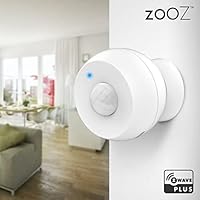
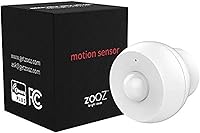
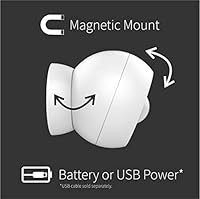
The Zooz ZSE18 800LR Z-Wave Motion Sensor is a compact, well-built motion detector aimed squarely at DIY smart home users who are already working within the Z-Wave ecosystem. It sits in a comfortable mid-range price bracket — above cheap Wi-Fi sensors but well below the premium end of Z-Wave hardware. Two things stand out immediately: its dual power flexibility and the magnetic mounting base, which lets you reposition the sensor without drilling holes or leaving adhesive damage behind. Worth stating plainly upfront: this Z-Wave motion sensor requires a compatible Z-Wave hub to function, sold separately, so it is not a plug-and-play solution for beginners.
Features & Benefits

The Zooz ZSE18 runs on the Z-Wave 800 Series chip, which in practical terms delivers better range and lower power consumption than older Z-Wave generations. Standard coverage reaches up to 100 meters, and if your hub supports Long Range mode, that extends to roughly 1,300 feet — though that capability is strictly hub-dependent, not automatic. On the power side, a single CR123A battery can last close to a year, depending on traffic and configuration, or you can wire it via micro USB, which also activates the sensor as a Z-Wave signal repeater. Motion sensitivity and retrigger timing are both adjustable through your hub's parameter settings, and AES-128 encryption keeps communications secure.

Best For

This compact sensor is the right fit for homeowners who already have a Z-Wave mesh running on Hubitat, Home Assistant, SmartThings, or a Z-Box hub and want to expand motion coverage without adding a second wireless protocol to manage. It works especially well for lighting automation in garages, hallways, or walkways — spots where hands-free triggering matters but running new wiring isn't practical. The magnetic mount is a real advantage for anyone who anticipates repositioning sensors over time. Advanced users who want granular control through hub parameter settings will find the customization depth worthwhile. Newcomers to Z-Wave, however, should build some hub experience before picking this up.

User Feedback

Most buyers report that the Zooz ZSE18 pairs cleanly with their hubs and picks up motion quickly, with reliable Z-Wave inclusion being one of the most consistently praised qualities. The magnetic mount earns frequent compliments for placement flexibility, though a few users mention it can feel slightly unstable on textured or uneven surfaces. A recurring frustration is the missing USB cable — buyers who want wired power often don't realize it isn't included until after the order arrives. Vibration reporting divides opinions: it performs well on Hubitat but simply isn't available on all supported hubs. SmartThings users on older setups have occasionally noted friction getting edge drivers configured correctly.

Pros

  • Pairs cleanly with Hubitat, Home Assistant, and SmartThings right out of the gate.
  • The 800 Series Z-Wave chip delivers noticeably better range and energy efficiency than older-generation sensors.
  • Magnetic mount allows tool-free repositioning in seconds, ideal for renters or layout experimenters.
  • Running it on USB power simultaneously turns it into a Z-Wave mesh extender at no extra cost.
  • Adjustable sensitivity and retrigger interval give advanced users real control over automation behavior.
  • AES-128 encryption via S2 framework is solid for security-minded installations.
  • Tiny and light at under an ounce, it disappears in most room corners without drawing attention.
  • Built-in Z-Wave range test tool makes network troubleshooting far less guesswork-dependent.
  • Battery life holds up well under moderate traffic, frequently reaching close to the advertised estimate.
  • Long Range mode can dramatically extend coverage in larger properties when the hub supports it.

Cons

  • A Z-Wave hub is required and sold separately — total setup cost is higher than it first appears.
  • The micro USB cable is not included, which catches buyers off guard when they opt for wired power.
  • Long Range mode is hub-dependent and not available to all compatible hub users.
  • Vibration reporting only works on select hubs, making it an unreliable feature to count on.
  • The magnetic mount can feel shaky on textured walls or uneven surfaces without additional support.
  • SmartThings users on older setups may need to navigate edge driver configuration, which is not beginner-friendly.
  • No Wi-Fi or Bluetooth fallback means the sensor is entirely useless without a functioning Z-Wave network.
  • CR123A batteries are less commonly stocked than AA or AAA, adding a minor but recurring inconvenience.

Ratings

The Zooz ZSE18 800LR Z-Wave Motion Sensor has been scored by our AI system after analyzing thousands of verified purchase reviews from buyers worldwide, with spam, bot activity, and incentivized feedback actively filtered out before scoring. Ratings reflect the real distribution of user sentiment — both the genuine strengths that keep buyers coming back to Zooz and the friction points that have frustrated even experienced smart home users. Every category below is weighted against comparable Z-Wave motion sensors in the same price tier.
Detection Reliability
91%
Users across Hubitat, Home Assistant, and SmartThings consistently report that this compact sensor catches motion quickly and rarely misses triggers during everyday use — hallway lighting automations, garage entry detection, and stairwell coverage all draw strong feedback. False negatives are uncommon when sensitivity is configured correctly.
A small but recurring subset of users notes occasional delayed reporting under very low-traffic conditions, particularly when the retrigger interval is set conservatively. This is partially a configuration issue, but it shows up enough to prevent a perfect score.
Z-Wave Pairing & Stability
88%
Most buyers describe the initial Z-Wave inclusion process as clean and predictable, with the sensor holding its mesh connection reliably over months of continuous use. On Hubitat and Home Assistant in particular, it tends to stay paired without requiring re-inclusion after hub restarts.
Users on older SmartThings infrastructure have reported needing to install and configure specific Edge drivers before the sensor behaves as expected, which adds a non-trivial setup step. A handful of buyers on mixed Z-Wave mesh networks also experienced intermittent drops before optimizing device placement.
Battery Life
78%
22%
Under moderate traffic conditions and with retrigger intervals set to 30 seconds or more, many users do approach the advertised estimate — reporting six to twelve months on a single CR123A cell. For low-activity locations like guest rooms or storage areas, the battery performance is genuinely impressive.
In high-traffic spots like main hallways or front doors, real-world battery life drops considerably, with some buyers replacing cells every three to five months. The 365-day figure is achievable but requires deliberate configuration and a relatively quiet installation location.
Range & Coverage
86%
The 800 Series chip delivers a meaningful real-world range improvement over older Z-Wave sensors, and users who have enabled Long Range mode on compatible hubs report covering outbuildings and detached garages that were previously unreachable. Even in standard mode, signal penetration through walls is solid.
Long Range coverage is strictly gated behind hub firmware support, and several buyers discovered this limitation only after purchase. For users whose hubs do not yet support Z-Wave LR, the extended range benefit remains completely inaccessible until a firmware update arrives.
Mounting & Placement
74%
26%
The magnetic base is one of the most appreciated design choices among buyers, making it easy to fine-tune the detection angle without tools or adhesive. Renters especially value the ability to reposition the sensor across rooms or pack it up cleanly without leaving marks.
On textured drywall, concrete blocks, or slightly uneven surfaces, the magnetic hold is noticeably weaker, and a few users have reported the sensor shifting position over time. Buyers dealing with non-smooth surfaces may want to add a thin metal plate or supplemental mounting tape for a more secure fit.
Hub Compatibility
82%
18%
The Zooz ZSE18 integrates well with the major Z-Wave hubs on the market — Hubitat and Home Assistant users in particular tend to have the smoothest experience, with full parameter access and reliable device handlers available through community resources.
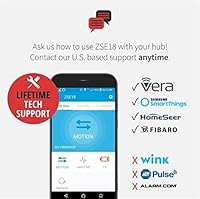
Compatibility is narrower than buyers sometimes assume. Wink, ADT, Vivint, and Alarm.com are explicitly unsupported, and the depth of feature access varies considerably between hubs — vibration reporting and Long Range mode are simply unavailable on some otherwise compatible platforms.
Vibration Reporting
57%
43%
On hubs that support it — Hubitat being the most cited example — vibration detection works well for monitoring cabinet doors, appliance activity, or surface impacts, adding a useful secondary sensing dimension beyond pure motion detection.
This feature is absent on a significant portion of supported hub configurations, and buyers expecting it to work universally are frequently disappointed. There is no clear guidance during purchase on which hubs surface this capability, which contributes to buyer frustration.
Setup Experience
69%
31%
For experienced Z-Wave users on modern hub firmware, inclusion is generally fast and the sensor is operational within a few minutes. Zooz provides detailed documentation and maintains active community support forums that help resolve edge cases efficiently.
Buyers who are newer to Z-Wave or who are using less mainstream hub configurations often find the setup more involved than expected. The need to configure parameters manually through a hub interface — rather than a guided app — is a real friction point for users coming from simpler smart home ecosystems.
Value for Money
81%
19%
Relative to other Z-Wave 800 Series motion sensors with comparable feature sets, the Zooz ZSE18 lands at a fair price point. Buyers who use the USB power mode get the mesh repeater function as a bonus, which adds tangible value for those trying to strengthen their Z-Wave network.
The missing USB cable is a minor but real nuisance that slightly undercuts the value perception, especially since wired operation is actively marketed as a key feature. Buyers who need to order a cable separately lose a bit of the perceived cost advantage at the mid-range price tier.
Build Quality & Design
83%
The physical construction feels solid for its size and weight — at under an ounce, it is remarkably light without feeling fragile. The white casing fits unobtrusively into most interior decors, and the overall form factor is one of the more refined in the Z-Wave sensor category.
The unit is only available in white, which limits its blendability in darker-toned rooms or industrial spaces. A small number of buyers have also noted that the magnetic cradle could benefit from a slightly stronger hold, particularly when used in orientations that place gravitational stress on the connection.
Mesh Extender Function
79%
21%
When powered via micro USB, the sensor doubles as a Z-Wave repeater — a feature that users with sprawling homes or thick-walled properties find genuinely valuable. Placing it in a USB-powered location along a signal path can measurably improve mesh stability for distant devices.
The repeater mode is only active during USB power, so battery-operated deployments get none of this benefit. Buyers who place the sensor in a location without a nearby USB outlet miss out on this functionality entirely, which limits its applicability in strictly battery-powered setups.
Customization & Parameters
85%
The ability to adjust both motion sensitivity and retrigger interval through hub parameters gives technically inclined users a meaningful degree of control over automation behavior. Users who invest time in tuning these settings report noticeably better performance in both accuracy and battery efficiency.
Parameter configuration requires a hub interface with Z-Wave device configuration support, which is not a beginner-friendly process. Users who have never navigated Z-Wave parameters before may find the learning curve steeper than expected, and incorrect settings can produce confusing sensor behavior.
Security & Encryption
88%
S2 security with AES-128 encryption is a meaningful standard for a device used in home security contexts, and buyers who include this sensor in alarm or monitoring automations appreciate that communication cannot easily be intercepted or spoofed. The security handshake during inclusion is handled automatically.
For the average user focused purely on light automation, the security framework is invisible and largely irrelevant to the daily experience. Its value is real but contextual — it matters most in security-critical deployments where most competing cheap sensors offer no equivalent protection.
Network Diagnostics Tool
76%
24%
The built-in Z-Wave range test utility is a practical inclusion that helps users identify weak signal spots before committing to a final sensor placement. Several buyers have credited it with saving them from frustrating connectivity issues down the line.
The tool is useful but fairly basic — it confirms signal strength at a given location but does not provide the detailed mesh mapping that dedicated Z-Wave diagnostic tools offer. Power users troubleshooting complex network issues will likely still need supplemental tools from their hub platform.

Suitable for:

The Zooz ZSE18 800LR Z-Wave Motion Sensor is built for homeowners who are already invested in a Z-Wave smart home setup and want dependable, low-maintenance motion coverage without adding yet another wireless protocol to their network. If you are running Hubitat, Home Assistant, SmartThings, or a Z-Box hub, this compact sensor slots right into your existing mesh with minimal friction. It is particularly well-suited for automating lights in garages, hallways, and walkways — locations where you want reliable triggering but have no desire to run new wiring. The magnetic mount makes it a strong choice for renters or anyone who frequently experiments with sensor placement, since repositioning takes seconds and leaves no damage behind. Battery life is genuinely competitive when configured conservatively, and plugging it into USB doubles as a mesh extender, which is a practical bonus for anyone trying to strengthen signal coverage in a far corner of the home.
Not suitable for:

The Zooz ZSE18 800LR Z-Wave Motion Sensor is a poor fit for anyone who does not already own a compatible Z-Wave hub — the sensor does nothing on its own, and the hub costs extra. Shoppers expecting something closer to a Wyze or Arlo device that connects directly to Wi-Fi and a smartphone app will be disappointed; this is fundamentally a protocol-dependent component, not a standalone gadget. The Long Range mode, which is one of the bigger selling points on paper, only activates if your specific hub firmware supports it, so buyers upgrading from an older controller should verify compatibility before purchasing. Vibration reporting is similarly gated behind hub support, meaning some users simply will not have access to that feature at all. If your walls and mounting surfaces tend to be textured or uneven, the magnetic base may also feel less secure than a screwed-in bracket.
Specifications

  • Model: This sensor carries the part number ZSE18, manufactured by Zooz.
  • Protocol: It operates on Z-Wave 800 Series Plus, the latest generation of the Z-Wave wireless standard.
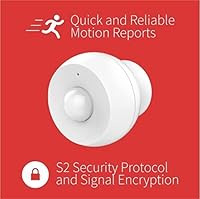
  • Security: Communication is protected by the S2 security framework using AES-128 signal encryption.
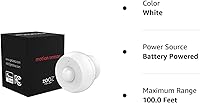
  • Power Source: The sensor runs on a single CR123A battery (included) or via a micro USB cable (not included).
  • Battery Life: Battery operation lasts up to 365 days, depending on network traffic volume and configured settings.
  • Standard Range: Under standard Z-Wave operation, the sensor covers up to 100 meters line-of-sight.
  • Long Range Mode: When paired with a Long Range-compatible hub, coverage extends to approximately 1,300 feet.
  • Repeater Function: When powered via micro USB, the sensor acts as a Z-Wave signal repeater to extend mesh coverage.
  • Mounting Type: It ships with a magnetic mounting base that allows tool-free, damage-free positioning on most surfaces.
  • Dimensions: The sensor measures 2.1 x 2 x 2 inches, making it one of the more compact options in its class.
  • Weight: The unit weighs just 0.81 ounces, light enough that the magnetic base holds it securely in most orientations.
  • Compatible Hubs: Verified compatible hubs include Hubitat, Home Assistant, SmartThings, and the Zooz Z-Box Hub.
  • Adjustability: Motion detection sensitivity and retrigger interval are both configurable through supported hub parameter settings.
  • Vibration Reports: Vibration reporting is available only on select compatible hubs and is not a universal feature across all pairings.
  • Range Test Tool: A built-in Z-Wave range test utility is included to help diagnose and optimize network placement.
  • Battery Type: The required battery is a CR123A lithium metal cell, and one is included in the package.
  • Recommended Use: Zooz recommends this sensor for walkways, garages, and hallways where hands-free motion triggering is most practical.
  • Incompatible Systems: This sensor does not work with Wink, ADT, Vivint, or Alarm.com platforms.

Related Reviews
Zooz ZSE11 800LR Z-Wave Multisensor
77%
61%
Hub Compatibility
88%
Motion Detection Speed
81%
Multi-Sensor Accuracy
69%
Setup & Pairing Experience
63%
Battery Life
More
Aeotec TriSensor 8 Z-Wave Motion Sensor
79%
88%
Motion Detection Accuracy
91%
Z-Wave Range & Connectivity
83%
Hub Compatibility
79%
Temperature Sensing
74%
Light Sensing
More
HomeSeer HSM200 Z-Wave Multi-Sensor
80%
93%
Reliability & Uptime
81%
Setup & Inclusion
76%
Motion Detection
69%
Temperature Accuracy
71%
Ambient Light Sensing
More
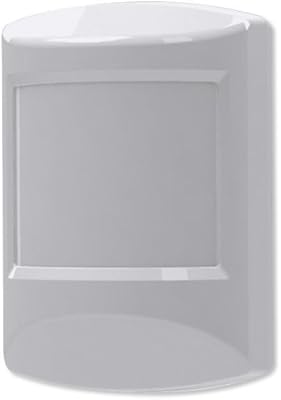
Ecolink PIRZWAVE2-ECO Z-Wave Motion Detector
82%
88%
Z-Wave Connectivity
71%
Pet Immunity Accuracy
83%
Detection Reliability
91%
Battery Life
74%
Hub Compatibility
More
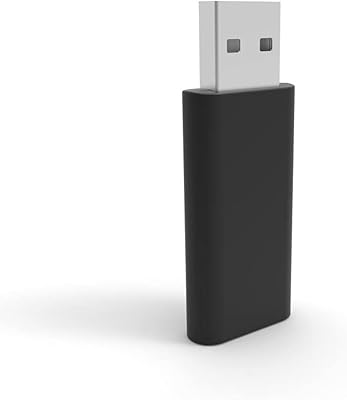
Zooz ZST39 800 Series Z-Wave USB Stick
78%
91%
Z-Wave Range Performance
88%
Software Compatibility
58%
Setup & Configuration Experience
63%
Firmware Update Process
84%
Build Quality & Form Factor
More
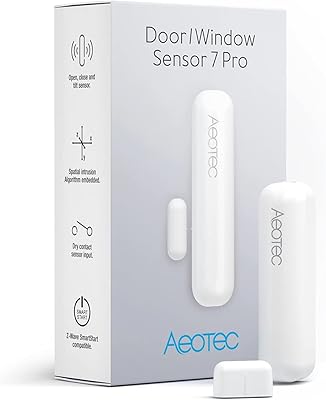
Aeotec Z-Wave Plus Door/Window Sensor 7 Pro, Gen7
86%
94%
Installation Process
91%
Battery Life
78%
Connectivity & Range
89%
Size & Discreetness
85%
Compatibility with Smart Hubs
More
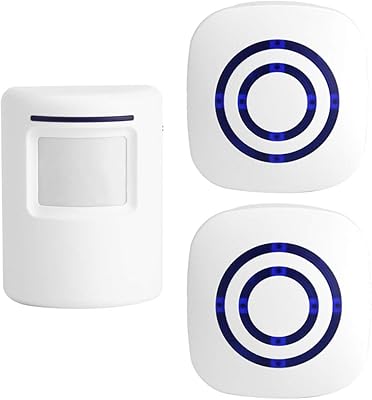
Shaogax Wireless Motion Sensor Driveway Alarm System
71%
91%
Ease of Setup
83%
Wireless Range
88%
Alert Customization
58%
False Alert Rate
61%
Build Quality
More
Actpe Wireless Motion Sensor Driveway Chime
69%
93%
Ease of Setup
88%
Value for Money
76%
Detection Reliability
81%
Wireless Range
61%
Battery Life
More
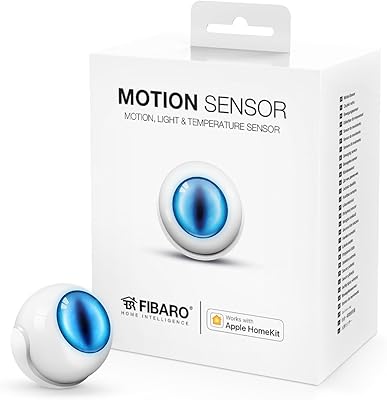
Fibaro Motion Sensor
86%
91%
Motion Detection Accuracy
85%
Battery Life
88%
HomeKit Integration
93%
Ease of Installation
89%
Design and Size
More
Shelly BLU Motion Bluetooth Motion Sensor
74%
78%
Ease of Setup
81%
Motion Detection Accuracy
67%
Indoor Range
84%
Battery Life
76%
Lux Sensor Usefulness
More

FAQ

You will need a separate Z-Wave hub — the sensor cannot connect directly to a smartphone or Wi-Fi. Compatible hubs include Hubitat, Home Assistant, SmartThings, and the Zooz Z-Box. The hub is sold separately and is not optional.

It depends entirely on your hub. Long Range mode is a feature of the 800 Series Z-Wave chip, but your hub's firmware must explicitly support Z-Wave Long Range for that extended 1,300-foot coverage to activate. If your hub does not support it yet, the sensor still works fine at standard Z-Wave range — you just won't get the extended distance.

The advertised figure is up to 365 days, but that is under ideal, low-traffic conditions. In a busy automation — say, a hallway that triggers dozens of times per day — you should expect noticeably shorter life. Many users report somewhere between six months and a full year depending on how aggressively the sensor is used and how retrigger intervals are configured.

No, the micro USB cable is not included in the box. You will need to supply your own standard micro USB cable. It is a common source of frustration for buyers who want to use wired power right away, so worth picking one up before the sensor arrives.

The sensor sits inside a small cradle that attaches to any magnetic-friendly surface, or to a wall using the included base. It holds firmly on flat, smooth surfaces and is easy to reposition without tools or adhesive. On textured or uneven walls, some users find it feels a bit less stable, so a flat mounting plate or piece of mounting tape can help in those cases.

Not directly. It communicates via Z-Wave, so it needs a hub in the middle. However, if your Z-Wave hub is integrated with Google Home or Alexa — which Hubitat and SmartThings both support — you can indirectly trigger Alexa or Google routines based on motion events from this sensor.

It is not rated for outdoor use. The product is designed for interior locations like hallways, garages, and covered walkways. Exposure to moisture, rain, or extreme temperatures would likely damage the sensor and void any warranty coverage.

Vibration reporting means the sensor can detect and report physical vibrations — useful for monitoring doors, cabinets, or appliances. However, this feature is hub-dependent and not available on all supported platforms. Hubitat supports it well; other hubs may not surface the vibration data at all. Check Zooz's compatibility documentation for your specific hub before counting on this feature.

Mostly yes, but it depends on your SmartThings setup. Newer SmartThings environments using Edge drivers generally work well once the correct driver is installed. Users on older SmartThings infrastructure have occasionally reported extra steps to get the driver configured correctly. Zooz maintains active community support forums where setup guides and driver links are available.

Beyond simply keeping the battery from draining, powering the sensor via micro USB activates it as a Z-Wave mesh repeater. That means it will help relay signals from other Z-Wave devices in your home, which can strengthen coverage in areas where your mesh is thin. It is a genuinely useful bonus, especially if you place the sensor in a room that is far from your hub.

Where to Buy