Overview

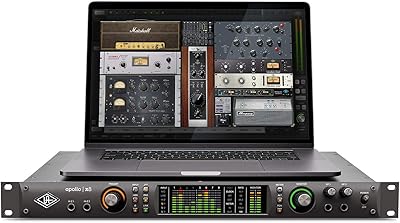
The Universal Audio Apollo x6 Heritage Edition Interface is a rack-mount Thunderbolt 3 unit built for serious home studios and professional recording environments — not hobbyists dipping their toes in. Before anything else, this needs to be said clearly: this Apollo interface runs on Mac only. Windows users should stop here. For everyone else, what makes the Heritage Edition unit stand apart from typical audio hardware is its HEXA Core DSP architecture, which offloads plug-in processing entirely from your computer. The Heritage Edition designation also matters — it adds a curated bundle of UAD plug-ins that meaningfully expands what you can do out of the box. Think of this as buying into a platform, not just a piece of gear.

Features & Benefits

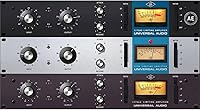
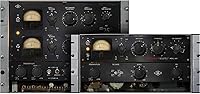
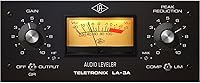
The conversion quality here is the foundation everything else is built on — 24-bit/192kHz conversion delivers the kind of dynamic range and signal transparency that once required dedicated outboard gear. Six onboard UAD DSP chips handle plug-in processing in real time, which means tracking through a Neve 1073 preamp emulation or an SSL channel strip adds virtually no latency, regardless of your buffer settings. This is the real promise of Unison technology: the preamp circuit physically responds to the impedance of whatever emulation is loaded, not just a digital approximation. The Heritage Edition plug-in bundle adds genuine heavyweights — the 610-B Tube Preamp, Pultec EQ, LA-2A, and 1176 compressors — none of which are filler. Selectable +24/+20 dBu headroom also ensures clean interfacing with professional-grade consoles.

Best For

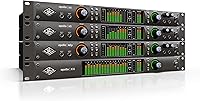
UA's Heritage rack interface makes most sense for producers and engineers who are already running a Mac-based DAW — Logic, Pro Tools, or LUNA — and want to record through authentic preamp emulations without hardware outboard. It suits home studio owners who have outgrown budget interfaces and are ready to commit to a single, expandable ecosystem. Post-production professionals will appreciate the 5.1 surround monitoring capability, which is rare at this level. And because up to four Apollo units can be chained over Thunderbolt, this Apollo interface works as a strong starting point for a scalable studio setup. If you plan to expand over time, the architecture supports that growth without replacing your core hardware.

User Feedback

With 27 ratings and a 3.9-star average, the sample size is small enough that a handful of outlier reviews carry real weight — so take the number with appropriate perspective. Recurring praise focuses on conversion transparency, the genuine tactile response of Unison preamps during tracking, and the reliability of near-zero latency monitoring. The criticism is also consistent: Mac exclusivity genuinely frustrates users who work across platforms, and the UAD plug-in ecosystem — which requires ongoing purchases beyond the included bundle — feels like a walled garden to some. Setup complexity is a real friction point for those new to DSP-heavy interfaces. Build quality earns positive mentions overall, and rack integration tends to be straightforward for users with standard studio setups.

Pros

  • Conversion quality is genuinely reference-grade, capturing transients and dynamics with exceptional clarity and low noise.
  • Six onboard DSP chips handle demanding plug-ins in real time without placing any load on your computer CPU.
  • Unison preamp technology physically models circuit impedance, making vintage preamp emulations feel remarkably authentic during tracking.
  • The Heritage Edition plug-in bundle includes proven classics — the LA-2A, 1176, and Pultec EQ — usable immediately out of the box.
  • Selectable +24 dBu headroom makes clean integration with professional mixing consoles and outboard tape machines straightforward.
  • Built-in surround monitor controller up to 5.1 is a practical, rare differentiator for post-production and scoring work.
  • Thunderbolt daisy-chaining supports expansion to multiple Apollo units over time without replacing your core audio hardware.
  • Front-panel Talkback, Alt Speaker, Dim, and Mono controls are genuinely useful during live tracking and artist monitoring sessions.
  • Build quality is solid and the unit integrates cleanly into a standard rack setup without any reported fitment issues.

Cons

  • Mac-only compatibility is a hard stop — Windows users have absolutely no supported path to use this hardware at all.
  • The UAD plug-in ecosystem requires ongoing paid purchases; the included bundle alone will not cover every production workflow need.
  • New users face a meaningful learning curve navigating UAD Console, DSP allocation, and the plug-in licensing system from day one.
  • Only two Unison-enabled mic preamps on the unit itself limits simultaneous multi-source recording without investing in additional expansion hardware.
  • The Thunderbolt-only connection makes the unit fully incompatible with computers that lack a Thunderbolt port.
  • DSP resources can become a real bottleneck on dense sessions running multiple high-demand UAD plug-ins at the same time.
  • With only 27 ratings on record, drawing firm conclusions about long-term hardware reliability remains genuinely difficult.
  • LUNA Recording System, despite deep Apollo integration, is restricted to Mac and Thunderbolt users, limiting its broader practical appeal.
  • At 16 pounds with full rack-mount dimensions, this is not a portable solution and requires a permanent, dedicated studio space.

Ratings

Based on our AI analysis of verified global user reviews for the Universal Audio Apollo x6 Heritage Edition Interface — with spam, bot-generated, and incentivized feedback actively filtered out — the scores below reflect a balanced, data-driven picture of what real buyers experience. The rating schema transparently captures both the aspects that consistently impress professional engineers and the genuine pain points that give pause to prospective buyers. Where the strengths are significant, so are the trade-offs, and both are represented honestly across every category.

Audio Conversion
94%
Engineers tracking acoustic instruments and vocals consistently highlight the conversion transparency as the standout quality of this Apollo interface. Subtle harmonic detail, tight low-end definition, and a wide dynamic range come through clearly in A/B tests against mid-tier competitors, particularly on percussion and string instruments.
Extracting the full benefit of the conversion requires good gain staging, quality microphones, and well-matched monitoring — factors that less-experienced users may not yet have dialed in. In modest home setups, the conversion advantage can be difficult to perceive without proper acoustic treatment and a quality monitoring chain.
DSP Processing
91%
The six-chip HEXA Core configuration earns consistent praise from engineers running dense plug-in sessions. Producers tracking through Neve or SSL emulations in real time while managing bus compression report minimal strain, and the fact that this processing bypasses the CPU entirely makes a real difference on complex, layered sessions.
Users working on large post-production or film scoring sessions with many simultaneous high-demand plug-ins have hit the DSP ceiling. Freezing tracks or reducing real-time instances becomes necessary, which disrupts workflow in intensive environments. For music production this ceiling is rarely reached, but post-production users should factor it in.
Preamp Emulation
93%
Unison technology earns some of the most enthusiastic feedback in user reviews, specifically from engineers who have used the real hardware it emulates. The preamp circuit physically responds to impedance changes when loading different emulations, and vocalists tracking through Neve or API models report a tactile realism absent in purely software-modeled alternatives.
Users who have never worked with real vintage hardware may find the differences between preamp emulations subtle rather than transformative. A few reviewers also note that the quality gap narrows significantly when tracking with lower-quality microphones, since preamp character only becomes fully apparent in a properly calibrated signal chain.
Value for Money
71%
29%
The Heritage Edition bundle meaningfully shifts the value equation — getting professional-grade compressors, EQs, and preamp emulations ready to use on day one softens the upfront hardware investment considerably. Users who have priced out building a comparable UAD plug-in library separately tend to view the bundle as a substantial practical bonus.
The upfront cost is high by any measure, and the UAD ecosystem adds ongoing financial pressure since expanding beyond the included bundle requires purchasing additional plug-ins at premium prices. Users who expected the bundle to cover all their needs frequently express frustration once they realize the platform's full breadth sits behind additional paywalls.
Platform Compatibility
33%
67%
For Mac users specifically, the Thunderbolt integration is tight and reliable, and backward compatibility with Thunderbolt 1 and 2 means users with older Mac systems are not immediately locked out. Mac-based engineers appreciate the depth of LUNA integration and the stability of UAD Console within the Apple ecosystem.
Windows users cannot use this hardware at all, and that exclusion represents a significant share of the professional recording market. Several negative reviews stem directly from buyers who discovered the Mac-only limitation after purchasing, suggesting this restriction is not communicated prominently enough at the point of sale.
Build Quality
86%
The rack-mount chassis feels appropriately solid for professional studio use, with reviewers noting satisfying front-panel knob action and a form factor that sits cleanly in standard rack enclosures. The unit's physical presence reassures users that it is built for long-term installation rather than repeated transport or frequent repositioning.
A small number of users mention that the unit runs noticeably warm during extended sessions, which is typical for DSP-heavy hardware but worth planning around for rack ventilation. At 16 pounds, it is heavier than some comparable rack units, making rearranging studio gear less convenient.
Setup Experience
54%
46%
Users already embedded in the UAD ecosystem find the setup process familiar and well-documented, with Universal Audio providing detailed guides and active community forums. For experienced engineers, the Console software interface is logically organized once the initial learning investment has been made.
First-time UAD users consistently report a steep learning curve that goes beyond typical audio interface setup — installing software, registering hardware, activating licenses, and understanding DSP routing in Console can collectively take several hours before a single note is recorded. Users new to the platform often feel genuinely overwhelmed in the first week of ownership.
Latency Performance
88%
Near-zero latency monitoring through preamp emulations is one of the most frequently praised aspects across verified user reviews. Vocalists and instrumentalists who previously struggled with latency-induced timing issues report that tracking through UA's Heritage rack interface in Console finally feels natural and fully performable.
The near-zero latency benefit applies only to monitoring through UAD plug-ins loaded in Console — DAW-based processing still introduces standard latency tied to audio buffer settings. Some users are initially confused by this distinction and expect zero latency across all DAW monitoring scenarios, which is not how the system operates.
Plug-in Bundle
87%
The Heritage Edition plug-in suite stands out because the included titles — the LA-2A, 1176, and Pultec EQ among them — are tools that working engineers use on professional releases, not demo-grade content included to look impressive on a spec sheet. Most users report reaching for these plug-ins regularly rather than immediately hunting for replacements.
Some users find that the bundle, while strong, still leaves notable gaps in their day-to-day workflow — particularly around instrument-specific processing or genre-specific effects. The realization that desired UAD titles require additional purchases after an already significant hardware investment is a recurring point of buyer frustration.
Expandability
84%
The ability to chain up to four Thunderbolt Apollo units and six total UAD devices gives this Apollo interface strong long-term scalability for studios planning to grow over time. Users who started with a single unit and later expanded report the process being technically smooth, with additional units recognized without major reconfiguration.
Expansion requires purchasing additional Apollo hardware, which compounds the already substantial initial investment. The four-unit ceiling is also a genuine constraint for larger commercial recording studios with more complex I/O requirements, where alternative infrastructure may ultimately offer greater flexibility at comparable cost.
DAW Integration
79%
21%
Compatibility with VST, Audio Units, and AAX 64-bit formats means this hardware works within Logic Pro, Pro Tools, Ableton Live, Cubase, and other major DAWs without requiring workarounds. Engineers working across multiple DAWs report consistent performance, and UAD plug-in licensing carries over regardless of which application is open.
The LUNA Recording System, Universal Audio's most tightly integrated DAW experience, is restricted to Mac and Thunderbolt users, giving those in other DAWs a less cohesive overall workflow. Some users also note that routing between Console and their preferred DAW requires additional setup steps that are not always intuitive for newcomers.
Monitoring Controls
82%
18%
Front-panel access to Alt Speaker switching, Talkback, and assignable Dim and Mono controls is consistently appreciated by engineers running active tracking sessions with artists in the room. Having these controls on the hardware rather than buried in software menus speeds up common monitoring adjustments noticeably during live recording scenarios.
The surround monitoring support up to 5.1 is a genuine differentiator, but its practical utility is limited to users with properly configured multi-speaker monitoring environments, which represent a minority of buyers. Users focused purely on stereo music production may never engage with the surround monitoring functionality at all.
Ecosystem Costs
41%
59%
The UAD platform offers one of the most extensive libraries of professionally licensed plug-in emulations available anywhere, and users who commit fully to the ecosystem gain access to a genuinely impressive range of vintage hardware recreations. For studios already invested in Apollo infrastructure, the platform cohesion delivers real long-term workflow efficiency.
The closed nature of the UAD ecosystem means every additional plug-in beyond the Heritage bundle requires a separate purchase at typically premium pricing. Users who want flexibility to freely mix UAD titles with third-party native plug-ins often feel constrained, and the platform dependency becomes a long-term financial commitment many did not fully anticipate before buying.
Software Stability
74%
26%
Most Mac users report that the UAD software and Console environment behave reliably once properly installed, with Universal Audio releasing regular updates to maintain compatibility with newer macOS versions. Users who follow recommended installation steps and keep their software current generally report few issues with day-to-day operational stability.
Some users report initial software conflicts and driver hiccups during first-time setup, particularly when migrating from a previous system or running alongside other audio drivers. A handful of reviews mention that macOS updates can temporarily disrupt UAD Console compatibility before Universal Audio releases a patch, creating unwanted periods of uncertainty.

Suitable for:

The Universal Audio Apollo x6 Heritage Edition Interface is the right call for Mac-based producers, recording engineers, and post-production professionals who are ready to move past entry-level gear and commit to a serious, long-term studio workflow. If you track live instruments or vocals and want to monitor through Neve, API, or SSL preamp emulations with near-zero latency — without your CPU breaking a sweat — this Apollo interface is purpose-built for exactly that. Composers and sound designers working in surround formats up to 5.1 will find the built-in monitor controller genuinely useful, not just a checkbox feature. Home studio owners planning to scale their setup over time will benefit from the ability to chain up to four Apollo units via Thunderbolt, building a larger I/O footprint without overhauling their core infrastructure. The included Heritage Edition plug-in bundle also means you can get to work immediately with industry-standard compressors, EQs, and preamp emulations, rather than spending months building up a usable plug-in library from scratch.

Not suitable for:

If you run Windows, stop reading here — the Universal Audio Apollo x6 Heritage Edition Interface has no Windows support whatsoever, and that is not a minor caveat. Beyond the platform wall, anyone expecting a plug-and-play experience may find the UAD ecosystem genuinely intimidating: setting up Console, managing DSP resources, and navigating the plug-in licensing model all require a real time investment up front. The UAD plug-in library operates on a paid model, meaning the included Heritage bundle is a starting point rather than a complete solution — expect additional costs if your workflow eventually demands more titles. Producers who prefer a fully CPU-native plug-in workflow, or those recording on laptops without Thunderbolt ports, will not extract full value from this unit. And if you are early in your recording journey and still building core skills, a simpler, more affordable interface will serve you better until your workflow genuinely outgrows it.
Specifications

  • Connection Type: Uses Thunderbolt 3 for host connectivity, with backward compatibility for Thunderbolt 1 and 2 on supported Mac systems.
  • Conversion: Delivers 24-bit/192kHz A/D and D/A conversion across all analog inputs and outputs.
  • DSP Processing: Equipped with 6 UAD DSP chips in a HEXA Core configuration, enabling real-time plug-in processing independent of the host CPU.
  • Mic Preamps: Includes 2 Unison-enabled mic/line preamp inputs capable of physically modeling the impedance characteristics of classic hardware preamps.
  • I/O Count: Supports 16 simultaneous inputs and 22 simultaneous outputs across all connected analog and digital sources.
  • Surround Support: Functions as a surround monitor controller with format support up to 5.1.
  • Headroom: Offers switchable operating headroom of +24 dBu or +20 dBu for compatibility with professional mixing consoles and outboard equipment.
  • Plug-in Formats: Compatible with VST, Audio Units (AU), and AAX 64-bit plug-in formats for use in all major DAWs.
  • OS Support: Officially supported on Mac OS only; Windows is not supported in any configuration.
  • DAW Integration: Compatible with the LUNA Recording System, a fully integrated Mac and Thunderbolt-exclusive recording application developed by Universal Audio.
  • Expandability: Supports chaining of up to 4 Thunderbolt-equipped Apollo units and up to 6 total UAD devices within a single studio system.
  • Included Bundle: Ships with the Heritage Edition UAD plug-in suite, which includes the UA 610-B Tube Preamp, Legacy Pultec EQs, LA-2A and 1176 compressors, Marshall Plexi Classic, and Ampeg SVT-VR Classic, among other titles.
  • Front Panel: Provides front-panel monitoring controls including Alt Speakers switching, a Talkback microphone input, and assignable Dim and Mono functions.
  • Form Factor: Designed as a rack-mount unit intended for permanent installation in a standard studio rack enclosure.
  • Weight: Weighs 16 pounds.
  • Dimensions: Measures 24 x 17 x 8 inches in overall dimensions.
  • Model Number: Manufactured under model number APX6-HE.

Related Reviews
Universal Audio Apollo x8 Heritage Edition Interface
79%
93%
Conversion Quality
91%
DSP Performance
89%
Preamp Emulation
82%
Heritage Plug-in Bundle
71%
Ecosystem & Software Integration
More
Universal Audio Apollo x4 Heritage Edition Audio Interface
80%
93%
Preamp Quality
91%
Conversion Quality
89%
DSP Performance
78%
Value for Money
88%
Build Quality
More
Universal Audio Apollo Solo Heritage Edition
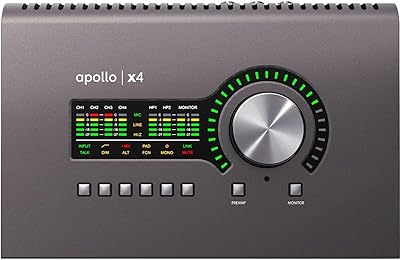
87%
96%
Audio Conversion Quality
93%
Build Quality & Durability
89%
DSP Processing Performance
94%
Unison Preamp Integration
82%
Software Ecosystem & LUNA
More
Universal Audio Apollo x8p Heritage Edition Audio Interface
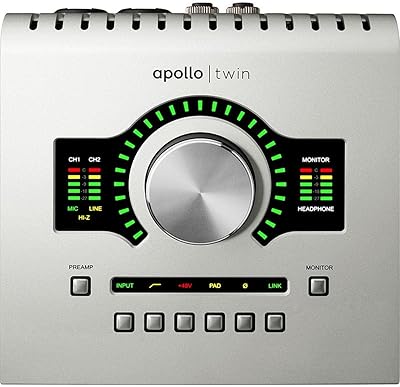
83%
94%
Conversion Quality
91%
Preamp Emulation Accuracy
89%
DSP Performance
86%
Build & Hardware Quality
71%
Software & Driver Stability
More
Universal Audio Apollo Twin USB Heritage Interface
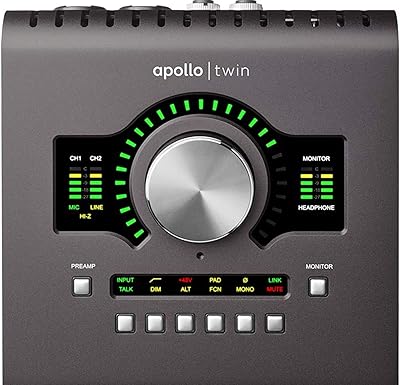
79%
91%
Audio Conversion Quality
86%
UAD DSP Performance
88%
Preamp Quality
71%
Windows Compatibility
74%
Value for Money
More
Universal Audio Apollo Twin MkII Heritage Edition
86%
93%
Audio Performance
94%
Build Quality
88%
UAD Plug-in Bundle
90%
Latency & Tracking
72%
Software Compatibility
More
Universal Audio Apollo Twin X DUO Interface
79%
93%
Sound Quality
91%
Preamp Quality
74%
DSP Performance
81%
Value for Money
57%
Platform Compatibility
More
Universal Audio Apollo Twin X QUAD Interface

81%
93%
Audio Conversion Quality
88%
DSP Performance
91%
Preamp Quality
74%
Value for Money
86%
Build Quality
More
Universal Audio Apollo X16 Audio Interface
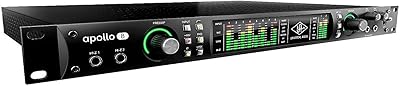
82%
94%
Conversion Quality
91%
UAD DSP Performance
89%
Build & Hardware Quality
92%
Low-Latency Tracking
88%
I/O Flexibility
More
Universal Audio Apollo 8 QUAD Audio Interface
79%
93%
Preamp Quality
91%
DSP Performance
89%
Audio Conversion
92%
Build Quality
74%
Software & Console 2.0
More

FAQ

No — it is Mac-only, full stop. Windows compatibility is not supported in any configuration, and Universal Audio has not released drivers or announced plans to change that. If Windows is your primary operating system, this unit is simply not an option, and you will need to look at alternatives from other manufacturers.

The bundle includes some genuinely useful titles rather than filler: the UA 610-B Tube Preamp, Legacy Pultec EQP-1A and MEQ-5 EQs, LA-2A and 1176 compressors, a Marshall Plexi Classic guitar amp emulation, and the Ampeg SVT-VR Classic bass amp, among others. These are tools that professional engineers actually use on real sessions, so the included suite has practical day-one value.

Not right away — the Heritage Edition bundle gives you a solid working foundation out of the box. That said, the UAD platform is a paid ecosystem, and as your workflow grows, you will almost certainly find plug-ins you want that are sold separately. It is worth factoring that potential ongoing cost into your buying decision before committing.

No. This Apollo interface is Thunderbolt-only — there is no USB mode or alternative connection method. Your Mac will need an available Thunderbolt port to use it. The unit is natively Thunderbolt 3 but is also backward-compatible with Thunderbolt 1 and 2 on Mac, so older Mac systems with the appropriate adapter may still work.

Yes, that is one of the stronger long-term arguments for investing in this ecosystem. The system supports up to four Thunderbolt-equipped Apollo units chained together, along with up to six total UAD devices, letting you expand your I/O footprint significantly without replacing your core hardware.

It works with all major DAWs that support VST, Audio Units, or AAX 64-bit plug-in formats — Logic Pro, Pro Tools, Ableton Live, Cubase, and others are all compatible. Universal Audio also offers LUNA, their own tightly integrated recording application, though LUNA is restricted to Mac and Thunderbolt systems.

Yes, with the right adapter. The Heritage Edition unit is natively Thunderbolt 3, but Universal Audio confirms backward compatibility with Thunderbolt 1 and 2 on Mac. You will need an Apple Thunderbolt 3 to Thunderbolt 2 adapter, and once connected, the unit should function normally.

The unit itself has two Unison-enabled mic/line preamp inputs. For recording more sources at the same time, you would need to bring in additional preamps through the ADAT or AES/EBU digital inputs. The total system supports up to 16 simultaneous inputs, but only two of those are direct mic-level inputs on the unit itself, so plan accordingly if you need more mic channels.

Honestly, yes — it takes some time and patience. You will need to install the UAD software suite, register the hardware, activate your plug-in licenses, and get comfortable with UA Console, the software environment that manages your real-time monitoring and DSP routing. Users consistently flag this learning curve as a real friction point, particularly around understanding DSP resource management and how Unison preamp loading works. Universal Audio does offer solid documentation, but expect to spend a few hours getting properly set up.

It goes well beyond stereo. UA's Heritage rack interface includes a built-in surround monitor controller that supports formats up to 5.1, making it a genuinely practical tool for post-production engineers, film and game audio composers, and anyone working regularly in multichannel formats — not just stereo music production.

Where to Buy