Overview

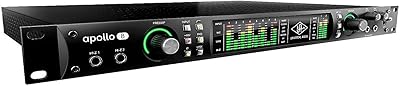
The Universal Audio Apollo x8p Heritage Edition Audio Interface is UA's most capable Thunderbolt 3 interface for serious studio work — and the Heritage Edition distinction makes it notably more compelling than the standard model. Where the base x8p ships with a modest plug-in bundle, this version includes a curated suite of award-winning UAD plug-ins that represent substantial real-world value. With an 18-in/22-out channel count and HEXA Core DSP on board, it's built for producers who need headroom — both sonically and computationally. One thing to state plainly upfront: this is a Mac-only interface. Windows users need not apply.

Features & Benefits

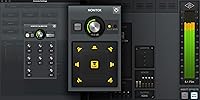
The Apollo x8p Heritage's conversion quality is where it really earns its place in a serious studio. Running at 24-bit/192kHz, the A/D and D/A converters deliver a wide dynamic range and low noise floor that few interfaces match at any channel count. The eight Unison-enabled preamps are a genuine highlight — they allow the hardware to physically reconfigure its impedance and gain structure to authentically mirror classic preamps from Neve, SSL, API, and others. The HEXA Core chip array handles UAD plug-in processing independently, so you can track through vintage compressor and EQ emulations without taxing your CPU. Headroom is switchable between +24 and +20 dBu, which makes interfacing with professional consoles and tape machines practical rather than an afterthought.

Best For

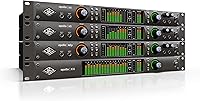
This UA interface is built for a specific kind of buyer: someone already operating — or planning to operate — within the UAD ecosystem, on a Mac. If you're tracking bands or recording multiple vocalists simultaneously, the eight preamps and high channel count give you genuine flexibility. Producers who rely on hardware emulation for color during tracking will find the preamp library compelling. The unit also scales well; you can chain up to four Thunderbolt-equipped Apollos, which makes it suitable for studios that anticipate growing. Home studio owners stepping up from a mid-tier interface will notice the conversion quality difference immediately. That said, if you're on Windows or committed to a CPU-based plug-in workflow, this isn't the right fit.

User Feedback

With 27 ratings and a 3.9-star average on Amazon, the sample size is too small to draw firm conclusions, though the pattern of feedback is still telling. Verified buyers consistently highlight the conversion transparency and the authenticity of the preamp emulations as genuine strengths — the kind of praise that suggests these aren't just marketing claims. On the downside, the Mac-only restriction generates predictable frustration from Windows-based engineers who discover it too late. The UAD ecosystem's cost structure — buying into DSP hardware and additional plug-in licenses — is another recurring point of tension. The Heritage Edition's bundled plug-in suite is frequently mentioned as strong added value, softening the investment. LUNA, UA's proprietary recording app, earns mixed notes: enthusiasts love its integration, while others treat it as a bonus they barely touch.

Pros

  • Conversion quality is genuinely top-tier — the low noise floor and wide dynamic range are noticeable in practice.
  • Eight Unison preamps authentically reconfigure hardware impedance to emulate classic consoles and outboard gear.
  • HEXA Core DSP lets you run multiple UAD plug-ins in real time without taxing your computer at all.
  • The Heritage Edition plug-in bundle adds substantial value over the standard model right out of the box.
  • Switchable +24/+20 dBu headroom makes patching into professional consoles and tape machines straightforward.
  • Thunderbolt 3 connectivity delivers high bandwidth and low latency, with backward compatibility for Thunderbolt 1 and 2 on Mac.
  • Surround monitoring up to 7.1 format is a rare and useful feature for composers working in post-production.
  • The Apollo x8p Heritage scales well — chain up to four units as your studio and session demands grow.
  • Front-panel Talkback mic, Alt Speakers, and Dim controls make live tracking sessions much easier to manage.
  • Verified buyers consistently highlight build quality as solid and appropriate for a professional studio environment.

Cons

  • Strictly macOS-only — Windows users are completely locked out with no exception.
  • Buying into UAD means ongoing costs; most premium plug-ins require separate license purchases beyond the included bundle.
  • Only 27 Amazon ratings for a flagship-tier product makes it hard to gauge long-term reliability trends.
  • LUNA, the companion recording app, only works on Mac with Thunderbolt and adds little for DAW-committed users.
  • The UAD ecosystem creates platform dependency — switching interfaces later may mean leaving your DSP plug-in investment behind.
  • Driver and software updates have occasionally caused compatibility friction for users on newer macOS versions, based on user reports.
  • The DSP processing advantage disappears entirely if your workflow relies on CPU-native plug-ins rather than UAD titles.
  • At this price tier, the lack of Windows support feels like a significant limitation for a so-called professional tool.

Ratings

The Universal Audio Apollo x8p Heritage Edition Audio Interface earns its reputation as a professional-grade tool, but whether it deserves a place in your studio depends heavily on your setup and workflow. These scores were generated by AI after analyzing verified global user reviews, actively filtering out incentivized, spam, and bot-driven feedback, so both the genuine strengths and the recurring frustrations are honestly reflected here.
Conversion Quality
94%
Users who have tracked through other high-end interfaces consistently describe the Apollo x8p Heritage's A/D and D/A conversion as a clear step up — cleaner transients, a noticeably lower noise floor, and a transparency that holds up even at high track counts. Engineers working on acoustic recordings especially appreciate how little coloration the conversion itself introduces.
A small number of users note that the audible difference over very good competing converters is subtle enough to require careful critical listening to detect. For producers whose work is heavily processed and saturated anyway, the conversion advantage may be less meaningful in practice.
Preamp Emulation Accuracy
91%
The Unison technology is widely praised for going beyond typical software modeling — the preamp hardware physically changes its impedance to interact with microphones more like the real gear would. Vocalists and engineers tracking acoustic instruments report that the Neve and API emulations in particular respond with convincing character and weight.
Users with hands-on experience with actual vintage consoles occasionally note that the emulations, while impressive, still fall just short of the real thing in terms of harmonic complexity at the extremes of gain staging. Casual users are unlikely to notice, but seasoned analog engineers may find the comparison unflattering at high drive settings.
DSP Performance
89%
The HEXA Core processing is a genuine differentiator for studios that record through UAD plug-ins in real time. Producers running dense sessions with multiple preamp emulations active simultaneously report that the six DSP chips handle the load without the latency spikes that CPU-native processing tends to introduce at lower buffer sizes.
The DSP advantage is only relevant if you are actively using UAD plug-ins during tracking or mixing. Users who run primarily CPU-native plug-ins from other developers find the onboard chips underutilized, which makes the DSP feel like a resource they are paying for but not fully leveraging in their day-to-day workflow.
Build & Hardware Quality
86%
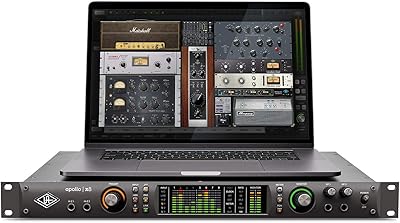
The chassis feels appropriately solid for a professional rack unit, and users consistently report that front-panel controls — including the Talkback mic, Alt Speakers switching, and monitoring knob — respond with the kind of tactile firmness you expect from gear at this tier. Nothing feels flimsy or like an afterthought.
A handful of users mention that the front-panel knob and switch labeling can be difficult to read in low-light studio environments, which is a practical annoyance during live sessions. The unit also runs warm during extended use, which a few users flagged as something to account for in rack ventilation planning.
Software & Driver Stability
71%
29%
When the software stack is working correctly — which is the case for the majority of users on stable, compatible macOS versions — the Console application is responsive, low-overhead, and integrates cleanly with major DAWs. Many users report months or years of trouble-free operation once the initial setup is dialed in.
Driver and software compatibility with newer macOS releases has been a recurring pain point in user feedback, with some reporting dropouts, Console disconnects, or the need to wait for UA software updates before upgrading their operating system. This is a known tension point in the Apple ecosystem and one that prospective buyers should factor into their decision.
Ease of Setup
74%
26%
For users already familiar with Thunderbolt-connected audio interfaces or the UAD ecosystem, getting the Apollo x8p Heritage up and running is fairly intuitive. The UA Console software provides a clear signal flow view, and Thunderbolt detection on compatible Macs is typically automatic without manual driver hunting.
New users coming from USB interfaces often describe the initial UAD software installation, authorization process, and Console configuration as more involved than expected. The learning curve is real, and users who are not already comfortable with audio interface routing concepts may find the first few sessions frustrating.
Value for Money
78%
22%
The Heritage Edition's bundled plug-in suite is the strongest argument for its value proposition — verified buyers frequently cite it as the reason they chose this variant over the standard x8p, since the included tools would cost a meaningful amount to acquire separately. For producers already planning to invest in the UAD ecosystem, the bundle significantly offsets the hardware cost.
For buyers who are not planning to build out a UAD plug-in library over time, the value calculation is less favorable — the DSP advantage and bundled tools only shine if you commit to the ecosystem. Compared to competing interfaces at similar channel counts that do not require proprietary processing investments, the overall cost of ownership is higher.
DAW Compatibility
83%
The Apollo x8p Heritage works with all major Mac-compatible DAWs — Logic Pro, Ableton Live, Pro Tools, Cubase, and Studio One among them — running UAD plug-ins via VST, AU, or AAX 64. Users appreciate that they are not forced to use LUNA and can slot the interface into their existing workflow without restructuring their setup.
AAX DSP, which would allow UAD plug-ins to run natively on Pro Tools HDX systems, is not supported — only AAX 64 native. Users in hybrid HDX environments may find this limiting, and the AAX 64 implementation means UAD processing still runs on the Apollo's DSP rather than integrating directly with an HDX card.
Mac Ecosystem Integration
88%
Within the Mac ecosystem the Apollo x8p Heritage is well-optimized. Thunderbolt detection is reliable on supported machines, and the LUNA recording application — for those who use it — integrates tightly with the hardware in ways that are not possible with third-party DAWs. Producers who work exclusively within the Apple and UA ecosystem tend to report a cohesive, low-friction experience.
The deep Mac dependency is a genuine limitation. Users on older Intel Macs navigating macOS version constraints, or those who split their workflow between Mac and Windows machines, find the platform lock-in frustrating. Any macOS major update introduces a window of uncertainty around driver compatibility that Windows-friendly alternatives do not share.
Latency Performance
92%
Near-zero latency monitoring through UAD plug-in emulations during tracking is one of the most praised practical benefits of this UA interface. Vocalists and guitarists who need to hear themselves through processed signals while recording report that the latency is imperceptible in real-world use, regardless of the audio buffer setting.
The near-zero latency benefit is specific to UAD processing through the Console application and Unison preamps. Standard DAW playback latency is still governed by the audio buffer size set in the DAW itself, so users expecting system-wide near-zero latency across all plug-ins may be disappointed to discover the hardware limitation only applies to the UAD signal chain.
Expandability
87%
The ability to chain up to four Thunderbolt-equipped Apollo units and six total UAD devices is a meaningful long-term advantage for studios that anticipate growing. Users who started with a single unit and later expanded report that the process is relatively straightforward and that DSP and I/O scale predictably across the chain.
Expansion requires additional Apollo or UAD satellite hardware, which represents a significant further investment. For studios that grow to need more inputs quickly, the cost of chaining units adds up faster than simply purchasing a larger-format interface from a competitor that offers a higher channel count in a single unit.
Included Plug-in Bundle
85%
The Realtime Analog Classics Plus bundle is consistently highlighted by Heritage Edition buyers as genuinely useful from day one. The inclusion of classic compressor and preamp emulations means the interface arrives ready for serious tracking sessions without requiring immediate additional plug-in purchases.
The bundle, while strong, is weighted toward vintage analog emulations — compressors, EQs, and preamps. Producers who work primarily in modern genres and have less use for classic hardware emulations may find fewer of the bundled titles essential to their workflow, reducing the perceived value of the Heritage distinction for their specific needs.
Monitoring Controls
82%
18%
Having Alt Speakers, Talkback, and Dim or Mono controls directly on the front panel is genuinely useful during live tracking sessions where quick monitoring adjustments need to happen without diving into software menus. Engineers running solo sessions find these controls help maintain a practical workflow without a separate monitor controller.
The monitoring control set, while practical, is basic compared to dedicated hardware monitor controllers. Users running larger mixing sessions with multiple speaker pairs and complex routing may find themselves needing an outboard monitor controller anyway, which reduces the front-panel monitoring features to a convenience rather than a complete solution.
LUNA Recording App
67%
33%
Users who adopt LUNA as their primary recording environment tend to appreciate its deep integration with Apollo hardware — features like input monitoring, plug-in recall, and session management feel purpose-built in ways that generic DAWs cannot replicate. For Mac-based Apollo users open to switching their recording workflow, it offers a genuinely cohesive experience.
LUNA is Mac and Thunderbolt only, which limits its audience even within the Apollo user base. Many buyers treat it as a bonus they rarely open, preferring to stay in Logic, Pro Tools, or Ableton where their existing sessions, templates, and third-party plug-ins already live. Its value is real but highly dependent on willingness to change established habits.

Suitable for:

The Universal Audio Apollo x8p Heritage Edition Audio Interface is purpose-built for Mac-based producers and engineers who are serious about audio quality and already operate — or plan to operate — within the UAD ecosystem. If you're tracking live bands, recording multiple vocalists at once, or running a busy project studio, the eight Unison-enabled preamps and 18-in/22-out channel configuration give you the kind of flexibility that mid-tier interfaces simply can't match. The HEXA Core DSP is a real advantage for anyone who wants to track through vintage compressor and preamp emulations without worrying about CPU overhead — a common bottleneck in dense sessions. Producers who prioritize conversion transparency will appreciate the 24-bit/192kHz spec in practice, not just on paper. The Heritage Edition is also a smart entry point for engineers who want to grow their setup over time, since you can chain up to four Thunderbolt-equipped Apollo units as your studio expands.

Not suitable for:

If you're on Windows, stop here — the Apollo x8p Heritage Edition Audio Interface is macOS-only, and there are no workarounds. Beyond the OS restriction, this interface demands a genuine commitment to the UAD ecosystem: the onboard DSP is only useful if you're running UAD plug-ins, which require additional license purchases beyond what's bundled. Buyers who prefer a CPU-native plug-in workflow using tools like Waves, FabFilter, or stock DAW plug-ins will find the UAD processing largely irrelevant to their setup. The investment required — both the hardware and the ongoing cost of expanding your UAD plug-in library — makes this a poor fit for hobbyists or producers who record only occasionally. If your studio needs are modest or you're just starting out, there are far more cost-effective interfaces that will serve you better without locking you into a proprietary platform.

Specifications

  • Interface Type: Thunderbolt 3 audio interface, backward compatible with Thunderbolt 1 and 2 on Mac.
  • I/O Configuration: Offers 18 simultaneous inputs and 22 simultaneous outputs for high-channel-count studio sessions.
  • Preamps: 8 Unison-enabled mic/line preamps that physically reconfigure impedance to emulate classic hardware preamps.
  • Conversion: 24-bit/192kHz A/D and D/A conversion with a wide dynamic range and low signal-to-noise ratio.
  • DSP Engine: HEXA Core processing with 6 dedicated UAD DSP chips for real-time plug-in use at near-zero latency.
  • Headroom: Selectable +24 dBu or +20 dBu operating levels for compatibility with professional consoles and tape machines.
  • Surround Support: Onboard surround monitor controller supports formats up to 7.1.
  • Plug-in Formats: UAD Powered Plug-Ins run via VST, Audio Units (AU), and AAX 64 in all major DAWs.
  • Operating System: Compatible with macOS only; no Windows support is available for this interface.
  • Expandability: Up to 4 Thunderbolt-equipped Apollo units and 6 total UAD devices can be chained together.
  • Included Software: Ships with the Realtime Analog Classics Plus UAD plug-in bundle, covering vintage preamps, compressors, and EQs.
  • Recording App: Compatible with LUNA Recording System, UA's integrated DAW application, available for Mac with Thunderbolt only.
  • Front Panel Controls: Includes Alt Speakers switching, a built-in Talkback mic, and assignable Dim or Mono monitoring controls.
  • Dimensions: The unit measures 24 x 17 x 8 inches and is designed for rack or desktop studio installation.
  • Model Number: Official Universal Audio model number is APX8P-HE, identifying it as the Heritage Edition variant.
  • Preamp Emulations: Unison technology supports emulations from Neve, SSL, API, Helios, Manley, and Avalon, among others.
  • Amazon Rating: Holds a 3.9 out of 5-star rating based on 27 Amazon customer ratings as of the listing date.
  • Release Date: First made available on Amazon on November 21, 2020.

Related Reviews

Universal Audio Apollo Solo Heritage Edition
87%
96%
Audio Conversion Quality
93%
Build Quality & Durability
89%
DSP Processing Performance
94%
Unison Preamp Integration
82%
Software Ecosystem & LUNA
More
Universal Audio Apollo x8 Heritage Edition Interface
79%
93%
Conversion Quality
91%
DSP Performance
89%
Preamp Emulation
82%
Heritage Plug-in Bundle
71%
Ecosystem & Software Integration
More
Universal Audio Apollo x6 Heritage Edition Interface
76%
94%
Audio Conversion
91%
DSP Processing
93%
Preamp Emulation
71%
Value for Money
33%
Platform Compatibility
More
Universal Audio Apollo x4 Heritage Edition Audio Interface
80%
93%
Preamp Quality
91%
Conversion Quality
89%
DSP Performance
78%
Value for Money
88%
Build Quality
More
Universal Audio Apollo Twin MkII Heritage Edition
86%
93%
Audio Performance
94%
Build Quality
88%
UAD Plug-in Bundle
90%
Latency & Tracking
72%
Software Compatibility
More
Universal Audio Apollo Twin USB Heritage Interface
79%
91%
Audio Conversion Quality
86%
UAD DSP Performance
88%
Preamp Quality
71%
Windows Compatibility
74%
Value for Money
More
Universal Audio Apollo Twin X DUO Interface
79%
93%
Sound Quality
91%
Preamp Quality
74%
DSP Performance
81%
Value for Money
57%
Platform Compatibility
More
Universal Audio Apollo Twin X QUAD Interface
81%
93%
Audio Conversion Quality
88%
DSP Performance
91%
Preamp Quality
74%
Value for Money
86%
Build Quality
More
Universal Audio Apollo X16 Audio Interface
82%
94%
Conversion Quality
91%
UAD DSP Performance
89%
Build & Hardware Quality
92%
Low-Latency Tracking
88%
I/O Flexibility
More
Universal Audio Apollo 8 QUAD Audio Interface
79%
93%
Preamp Quality
91%
DSP Performance
89%
Audio Conversion
92%
Build Quality
74%
Software & Console 2.0
More

FAQ

No, it does not. The Apollo x8p Heritage is strictly a macOS-only device — the drivers, the LUNA app, and the UAD software ecosystem are all built around Apple's operating system. If you are on Windows, you will need to look at a different interface entirely.

The core hardware is the same, but the Universal Audio Apollo x8p Heritage Edition Audio Interface ships with an expanded UAD plug-in bundle that goes well beyond what the standard model includes. That bundle — covering vintage tube preamps, classic compressors, and iconic EQs — represents significant added value that you would otherwise need to purchase separately.
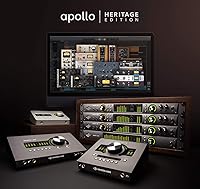
Not immediately. The included Realtime Analog Classics Plus bundle covers a solid range of tools, including compressor and preamp emulations that are genuinely useful day-to-day. That said, the UAD library is extensive, and most users do end up purchasing additional plug-ins over time as their needs grow.

You can absolutely use it with your existing DAW. The Heritage Edition Apollo works with any major DAW on Mac — Logic Pro, Pro Tools, Ableton Live, Cubase, and others — running UAD plug-ins via VST, AU, or AAX 64. LUNA is an optional addition, not a requirement.

Unison goes beyond simple software modeling — it causes the preamp hardware itself to physically change its impedance and gain characteristics to match the target piece of gear. The result is that mic interaction behaves more like the real hardware than a purely software-based emulation would produce.

The Apollo x8p Heritage has 8 Unison-enabled mic/line preamp inputs on the rear panel, so you can record up to 8 microphones simultaneously through the analog inputs. Additional inputs are available via ADAT and S/PDIF digital connections if you need to expand beyond that.

Yes, it will. The interface uses Thunderbolt 3 natively but is backward compatible with Thunderbolt 1 and 2 on Mac using the appropriate adapter. Just be aware that you will need an active Thunderbolt adapter, not a passive one, for reliable performance.

It depends on your workflow. If you track through UAD plug-in emulations in real time — using preamp, compressor, or EQ models while recording — the onboard DSP handles that processing independently of your CPU, which eliminates latency issues regardless of your buffer setting. If you use only CPU-native plug-ins, the DSP offers less direct benefit.

Yes, and this is one of the practical advantages of this UA interface. You can chain up to four Thunderbolt-equipped Apollo units together, and up to six total UAD devices, which means your DSP and I/O can scale significantly as your studio grows without replacing your existing gear.

It is worth keeping in perspective. With only 27 ratings, the sample is too small to draw firm conclusions either way. A handful of negative reviews from users frustrated by the Mac-only limitation or the UAD ecosystem costs can pull an average down quickly at that review count. The feedback from verified buyers who are within the intended use case is generally positive, particularly around conversion quality and preamp emulation.

Where to Buy