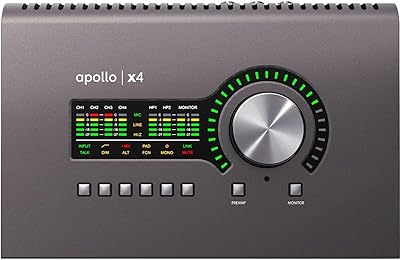
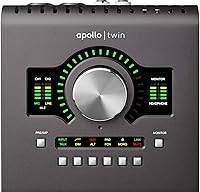
Universal Audio Apollo Twin MkII Heritage Edition Audio Interface
Universal Audio Apollo Twin MkII Heritage Edition Audio Interface — image 1
Universal Audio Apollo Twin MkII Heritage Edition Audio Interface — image 2
Universal Audio Apollo Twin MkII Heritage Edition Audio Interface — image 3
Universal Audio Apollo Twin MkII Heritage Edition Audio Interface — image 4
79%
21%

Overview

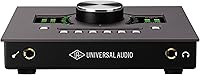
The Universal Audio Apollo Twin MkII Heritage Edition Audio Interface is a compact Thunderbolt desktop unit aimed at serious home studio owners and semi-pro producers who've outgrown their entry-level gear. What sets the Heritage Edition apart from the standard model is the bundled plug-in suite — titles from Teletronix, Pultec, and UA that carry real monetary value if purchased separately. One important caveat upfront: this is a 2-input interface, not a multichannel solution. If you're recording a full band or a drum kit, look elsewhere. It connects via Thunderbolt only — no USB — which works smoothly on modern Macs but may need verification on Windows setups.

Features & Benefits

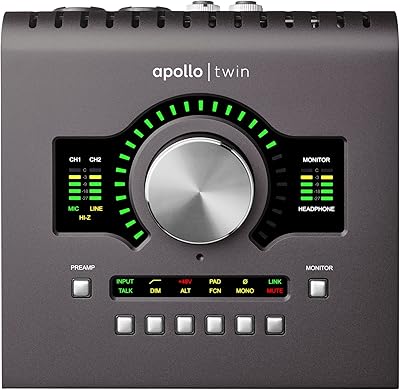
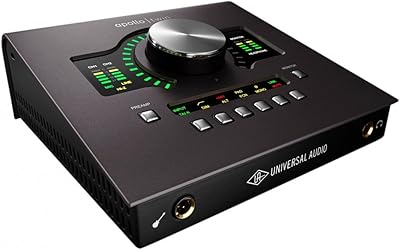
The Unison preamp technology is what most buyers come here for, and it works differently than you might expect. Rather than processing a dry signal through software after the fact, Unison changes the actual electrical impedance of the preamp circuit to match a chosen vintage model — a tube mic pre, a transformer-based console channel, whatever you select. The result is a physical interaction between your microphone and the preamp that sounds noticeably more organic. The built-in UAD-2 DUO Core chip handles this processing with near-zero latency, so you can monitor through an 1176 compressor or a Pultec EQ while tracking without any distracting delay. Conversion tops out at 24-bit/192 kHz, and the front-panel Hi-Z input makes direct guitar recording equally convenient.

Best For

This Apollo Twin Heritage is built for a specific kind of producer: someone who records one or two sources at a time and wants preamp quality that genuinely competes with much larger, more expensive gear. Singer-songwriters, voice-over artists, and bedroom producers who track vocals and one instrument at a sitting will find it more than sufficient. Guitarists benefit too — the front-panel Hi-Z input combined with UAD amp sims makes low-latency direct recording genuinely practical. Mac users will get the most out of it, particularly those using or planning to adopt LUNA Recording System. Windows users can still run it, but they should confirm Thunderbolt compatibility with their specific machine before buying.

User Feedback

Across roughly 57 ratings, the UA interface holds a 4.3-star average — solid, if not unanimous. Buyers consistently praise the build quality, which feels genuinely premium rather than plasticky, and the low-latency monitoring experience draws particular enthusiasm from anyone who's dealt with sluggish interfaces before. The Heritage plug-in bundle also lands well; most reviewers consider it a meaningful inclusion rather than a marketing afterthought. On the critical side, some users feel boxed in by the 2-input ceiling once their setup grows, and a handful note frustration that expanding beyond the bundled plug-ins involves real ongoing cost. The Mac-only LUNA restriction is another sticking point for Windows users who didn't catch it before purchasing.

Pros

  • Unison preamp technology shapes mic impedance at the hardware level, producing a noticeably more organic and analog-accurate sound.
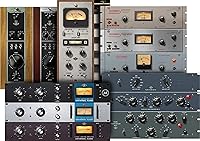
  • The Heritage Edition bundle includes immediately usable studio classics — LA-2A, 1176, Pultec EQs — without any additional purchase.
  • The UAD-2 DUO Core DSP chip handles plug-in processing independently, keeping your computer's CPU free during tracking.
  • Near-zero-latency monitoring lets you track through vintage compressors and EQs in real time without distracting delay.
  • 24-bit/192 kHz conversion delivers transparent, high-resolution capture that holds up in professional mixing and mastering contexts.
  • Build quality feels genuinely solid and premium — well above what you typically find at this price tier.
  • The front-panel Hi-Z instrument input makes direct guitar and bass tracking straightforward without any extra hardware.
  • Optical TOSLINK support opens up to 8 additional digital channels for producers who anticipate needing more sources later.
  • Runs UAD plug-ins via VST, AU, and AAX 64, so it integrates cleanly with Logic Pro, Pro Tools, Ableton Live, and most other major DAWs.

Cons

  • Only 2 analog inputs means this Thunderbolt recording interface will frustrate anyone whose recording needs grow beyond solo tracking.
  • Thunderbolt is the only connectivity option — there is no USB fallback — which creates real compatibility risks on older Windows machines.
  • Expanding the UAD plug-in library beyond the bundled suite involves meaningful additional spending that can add up quickly.
  • LUNA Recording System, the integrated workflow application, is available on Mac only, leaving Windows users without that feature entirely.
  • The UAD ecosystem creates a degree of vendor lock-in; your plug-in investments do not transfer to non-UA hardware.
  • The DUO Core DSP chip can run out of headroom if you stack many simultaneous UAD plug-ins across a complex session.
  • With around 57 ratings on Amazon, the sample size is modest, making it harder to draw firm conclusions about long-term reliability.
  • No USB support means laptop users without a Thunderbolt port are completely locked out, regardless of operating system.

Ratings

The scores below for the Universal Audio Apollo Twin MkII Heritage Edition Audio Interface were generated by our AI engine after analyzing verified buyer reviews from markets worldwide, with spam, incentivized submissions, and suspected bot activity actively filtered before scoring. Each category reflects the honest consensus drawn from real-world usage — including where this interface genuinely impresses and where buyers have run into friction. Both strengths and limitations are transparently represented so you can make a fully informed decision.

Preamp Quality
93%
Buyers upgrading from budget interfaces consistently describe the Unison preamps as a meaningful step up — vocals sound richer and more three-dimensional, and the hardware-level impedance matching means a ribbon microphone through a tube preamp model responds with a physical warmth that software plug-ins layered on a dry signal simply cannot replicate.
At very high gain settings, the preamps introduce a degree of coloration that works well for some sources but feels too pronounced for producers who need a fully transparent, clinical capture. Those coming from high-end outboard preamps may find the character more colored at moderate levels than they are accustomed to.
DSP Performance
91%
Running an 1176 compressor and a Pultec EQ simultaneously while tracking vocals — without any CPU impact on the host machine — is exactly the workflow that draws producers to this interface over software-only alternatives. The DUO Core chip handles typical home studio session loads comfortably, and the near-zero-latency monitoring fundamentally changes how relaxed performers feel in the headphone mix.
Producers who push toward dense UAD plug-in chains across an entire mix eventually hit the DUO Core processing ceiling, which requires either freezing tracks or stepping up to a higher-tier Apollo with more DSP headroom. It is a real constraint for mixing-heavy users who want to run the full UAD catalog simultaneously.
Audio Conversion
89%
Multiple reviewers running informal blind comparisons note that the conversion holds up surprisingly well against interfaces at notably higher price points, with a noise floor and transient transparency that lets acoustic instruments breathe naturally on tape. Producers tracking delicate sources like fingerpicked guitar or breathy vocals find the detail retrieval particularly satisfying.
At the highest 192 kHz sample rates, DSP headroom on the DUO Core chip tightens noticeably, forcing a practical trade-off between maximum resolution and running multiple UAD plug-ins simultaneously during tracking. For most home studio workflows this never becomes an issue, but it is worth knowing the constraint exists before chasing maximum fidelity.
Value for Money
82%
18%
When buyers factor in the Heritage Edition plug-in bundle — which would cost substantially more purchased individually through UA's store — the overall package registers as strong value for someone entering the UAD ecosystem cold. Producers who put the bundled classics to work immediately tend to rate the value highly within their first few sessions.
Users who later discover how much expanding beyond the bundled plug-ins costs often revise their initial value assessment downward over time. The hardware is effectively an entry fee to a broader spending ecosystem, and buyers who did not fully understand that dynamic before purchasing frequently express surprise at how quickly additional costs accumulate.
Input/Output Flexibility
54%
46%
The Optical TOSLINK port opens a legitimate expansion path for producers who already own an ADAT-equipped preamp or digital mixer, allowing the unit to serve a wider studio configuration than its physical size suggests. Having both S/PDIF and ADAT digital options also gives users flexibility when connecting external digital sources.
Two analog inputs is the single most cited limitation across all negative reviews — users who start with vocal-only sessions and later want a room mic, a stereo keyboard, or a second instrument find themselves outgrowing the unit sooner than expected. This ceiling cannot be addressed without adding external hardware, and many buyers wish they had understood it more clearly before purchasing.
Build Quality
88%
The desktop chassis feels dense and well-machined in a way that immediately distinguishes it from plastic-heavy interfaces at lower price tiers, and the knob feel and front-panel controls project a solidity that holds up through extended daily use. Multiple long-term owners report no hardware degradation or loose components after years of regular home studio sessions.
The power adapter and cabling arrangement feels slightly inelegant for a unit at this price point, and the compact footprint places some controls closer together than is ideal for quick adjustments during a live tracking session. Accessory build quality does not quite match the premium impression of the main chassis itself.
Low-Latency Monitoring
92%
Singers and guitarists who have tracked through other interfaces describe the monitoring experience here as a fundamental improvement — performers stop asking engineers to strip effects from the headphone mix because the delay is no longer perceptible or distracting. This capability alone accounts for a significant share of the enthusiastic reviews from working musicians.
A subset of Windows users report that achieving the lowest latency settings required Thunderbolt driver troubleshooting that Mac users never encounter, and the experience varies noticeably depending on Thunderbolt controller quality in different PC builds. On borderline Thunderbolt configurations, the low-latency advantage narrows meaningfully compared to the Mac experience.
Guitar Tracking
87%
Guitarists recording direct into the front Hi-Z input through UAD amp simulations describe the experience as the closest they have achieved to playing through a physical cabinet in a direct-recording context. Near-zero-latency monitoring allows natural, feel-driven performances rather than the stiff, compensatory playing that high-latency direct tracking typically forces.
The UAD guitar amp collection that makes this workflow so compelling requires purchasing additional plug-ins beyond the Heritage bundle in most cases, adding meaningful cost for players who want tonal variety. Guitarists chasing very specific vintage amp characters may also find that the UAD catalog, while broad, does not cover every niche request.
Plug-in Bundle
86%
Getting working access to LA-2A optical compression, 1176 limiting, and Pultec passive EQ models from day one removes a significant barrier for producers who want professional-grade vintage processing without building a library incrementally over months. Most buyers describe the bundle as a tangible production upgrade rather than a token software addition.
Reviewers who already owned the Heritage titles through previous UA purchases found the bundle redundant and felt the pricing did not account for their existing library. There is currently no mechanism to substitute bundled titles for other UAD plug-ins if the Heritage selection does not align with your particular production workflow.
Software Ecosystem
74%
26%
Mac users with LUNA gain a deeply integrated recording environment that feels purpose-built for the Apollo hardware, with analog-style tape and console emulations available inside the recording chain itself rather than as afterthought plug-ins. The breadth of the UAD catalog ensures there is no missing processing tool for studio work for producers willing to invest in the platform over time.
Windows users are excluded from LUNA entirely, and the per-title UAD plug-in purchasing model draws consistent criticism from buyers who expected a more straightforward software cost model after their hardware investment. The sense that you are continually spending to unlock the platform's full potential bothers a meaningful portion of users well after their initial purchase.
Ease of Setup
78%
22%
Mac users with a current Thunderbolt port describe the initial setup as fast and uncomplicated, with UA's Console application offering an intuitive routing and monitoring interface that most producers can navigate confidently within their first session. The hardware itself requires no complex initial configuration to begin recording at a basic level.
Windows setup experiences vary considerably, with some PC users encountering driver conflicts or Thunderbolt handshake failures that required forum research and multiple troubleshooting steps to resolve. Getting UAD plug-in authorization and Console routing configured to personal preference also involves more steps than buyers typically expect from a unit at this price tier.
Headphone Output
83%
The headphone stage delivers enough volume and resolution for reliable critical monitoring during tracking sessions, and producers using high-impedance studio headphones note that the output handles them well without audible distortion at sensible listening levels. Several reviewers specifically rate it above the headphone stages found on competing interfaces in the same price range.
Producers using high-demand planar magnetic headphones occasionally find the output lacks the driving power they are used to from a dedicated headphone amplifier, and very long tracking sessions reveal some listening fatigue on demanding transducers. It covers the vast majority of studio headphone use cases comfortably but is not a replacement for a standalone amp if output power is a priority.
Connectivity
67%
33%
On modern Macs with native Thunderbolt support, the connection is reliable and the interface is recognized without driver intervention, producing a stable, low-jitter link that USB interfaces at comparable price points cannot consistently match for sustained recording sessions. The Thunderbolt bandwidth advantage becomes particularly apparent during complex sessions with multiple simultaneous UAD plug-ins running.
The Thunderbolt-only requirement is the most common source of pre-purchase confusion across all reviews — multiple buyers returned the unit after discovering that USB is not supported and their machine lacked a compatible port. On Windows, Thunderbolt reliability varies significantly depending on the PC manufacturer and controller chipset, making compatibility far less predictable than on Mac.
Windows Compatibility
62%
38%
Windows users with newer machines and confirmed Thunderbolt 3 or 4 support do run this Thunderbolt recording interface successfully, and once properly configured the core recording and UAD plug-in functionality is fully available across all supported DAWs. Experienced PC builders who know their hardware spec in advance tend to report a considerably smoother experience than first-time Thunderbolt users.
The absence of LUNA on Windows removes a meaningful layer of the integrated workflow that Mac users take for granted, and variability in Thunderbolt driver quality across PC manufacturers makes setup less predictable than it should be at this price tier. Windows buyers are consistently advised by existing owners to verify Thunderbolt port compatibility before purchasing rather than assuming it will work.
Long-term Cost
58%
42%
Buyers who research the UAD ecosystem thoroughly before committing tend to budget appropriately and find the ongoing investment reasonable relative to the processing quality they receive session to session. The hardware itself holds its resale value well on the used market compared to many competing interfaces, offering some financial flexibility if circumstances change.
Multiple reviewers who entered the ecosystem expecting a self-contained investment express surprise at how quickly the desire for additional UAD titles grew — and how those individual plug-in purchases added up over the following months and years. Some buyers candidly state they did not fully understand the platform cost model before purchasing and would have approached the decision differently with that knowledge.

Suitable for:

The Universal Audio Apollo Twin MkII Heritage Edition Audio Interface is purpose-built for solo producers, singer-songwriters, and home studio owners who prioritize preamp quality over raw input count. If your typical session involves recording one vocalist, one instrument, or both at once, the two Unison mic preamps will handle everything you need with a level of analog character that entry-level interfaces simply cannot match. Guitarists will find it particularly compelling — the front-panel Hi-Z input paired with UAD amp simulations makes low-latency direct recording a practical, hardware-free workflow. Mac users get the deepest integration, especially those who adopt LUNA as their primary recording environment, though Windows producers with confirmed Thunderbolt support can use it effectively too. If you are stepping up from a budget interface and want immediate access to classic compressors and EQs without building a plug-in library from scratch, the Heritage Edition bundle makes the upgrade feel like a substantive investment rather than a speculative one.

Not suitable for:

The Universal Audio Apollo Twin MkII Heritage Edition Audio Interface is not the right tool for anyone who needs to record more than two sources at the same time. Band tracking sessions, multi-mic drum recording, or any workflow requiring four or more simultaneous analog inputs will hit a hard ceiling here that Optical expansion alone cannot solve for live tracking scenarios. Windows users should also proceed carefully — Thunderbolt is the only connection option, and compatibility depends entirely on your specific machine having a working Thunderbolt port with proper driver support, which is far from guaranteed on older PCs. Budget-conscious buyers should also consider the long-term economics honestly: the UAD ecosystem can feel like a gateway purchase, since any plug-ins beyond the bundled Heritage suite require additional spending and your library stays tied to UA hardware. If you are primarily a mixing engineer who already owns a capable interface and a solid plug-in collection, the practical value here narrows considerably.

Specifications

  • Interface Type: Thunderbolt desktop audio interface compatible with Mac and Windows systems equipped with a Thunderbolt port.
  • Analog Inputs: Two Unison-enabled mic/line preamps with switchable 48V phantom power for use with condenser microphones.
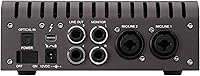
  • Analog Outputs: Two balanced line outputs for connection to studio monitors or other downstream equipment.
  • Front Panel I/O: Includes a Hi-Z instrument input for direct guitar and bass connection, plus a dedicated headphone output with independent level control.
  • Digital I/O: Optical TOSLINK connection supports up to 8 channels of additional digital input via ADAT, alongside S/PDIF for two-channel digital transfer.
  • DSP Processing: Onboard UAD-2 DUO Core chip runs UAD plug-ins with near-zero latency without drawing on the host computer's CPU resources.
  • Sample Rate: Supports audio conversion at up to 24-bit/192 kHz for high-resolution recording and playback across all connected sources.
  • Channel Count: 2x6 I/O configuration, providing 2 simultaneous analog inputs and 6 total outputs including monitor and headphone paths.
  • DAW Compatibility: Runs UAD plug-ins via VST, AU, and AAX 64 formats in all major DAWs including Logic Pro, Pro Tools, Cubase, and Ableton Live.
  • Bundled Plug-ins: Includes the Heritage Edition UAD plug-in suite featuring five award-winning titles from Teletronix, Pultec, and Universal Audio.
  • Included Software: LUNA Recording System is included as a Mac-exclusive integrated recording application built specifically around the Apollo workflow.
  • OS Support: Compatible with macOS and Windows via Thunderbolt, with LUNA Recording System functionality limited to macOS only.
  • Connectivity: Connects to the host computer exclusively via Thunderbolt; no USB connectivity is supported or available on this unit.
  • Dimensions: Compact desktop unit measuring 6 × 8 × 8 inches, designed to sit comfortably on a studio desk without dominating the workspace.
  • Model Number: Official Universal Audio model number is APLTWDII-HE, as listed on the product packaging and documentation.

Related Reviews
Universal Audio Apollo Twin USB Heritage Interface
79%
91%
Audio Conversion Quality
86%
UAD DSP Performance
88%
Preamp Quality
71%
Windows Compatibility
74%
Value for Money
More
Universal Audio Apollo Twin X DUO Interface

79%
93%
Sound Quality
91%
Preamp Quality
74%
DSP Performance
81%
Value for Money
57%
Platform Compatibility
More
Universal Audio Apollo Twin X QUAD Interface
81%
93%
Audio Conversion Quality
88%
DSP Performance
91%
Preamp Quality
74%
Value for Money
86%
Build Quality
More
Universal Audio Apollo x8p Heritage Edition Audio Interface
83%
94%
Conversion Quality
91%
Preamp Emulation Accuracy
89%
DSP Performance
86%
Build & Hardware Quality
71%
Software & Driver Stability
More
Universal Audio Apollo Twin MKII Quad Interface
81%
93%
Audio Conversion Quality
91%
DSP Processing Performance
88%
Preamp Quality
89%
Latency During Tracking
86%
Build & Hardware Quality
More
Universal Audio Apollo x6 Heritage Edition Interface
76%
94%
Audio Conversion
91%
DSP Processing
93%
Preamp Emulation
71%
Value for Money
33%
Platform Compatibility
More
Universal Audio Apollo Solo Heritage Edition
87%
96%
Audio Conversion Quality
93%
Build Quality & Durability
89%
DSP Processing Performance
94%
Unison Preamp Integration
82%
Software Ecosystem & LUNA
More
Universal Audio Apollo x8 Heritage Edition Interface
79%
93%
Conversion Quality
91%
DSP Performance
89%
Preamp Emulation
82%
Heritage Plug-in Bundle
71%
Ecosystem & Software Integration
More
Universal Audio Apollo Twin MkII Solo Interface
78%
93%
Preamp Quality
71%
DSP Performance
91%
Build Quality
89%
Audio Conversion
78%
Software Experience
More
Universal Audio Apollo x4 Heritage Edition Audio Interface
80%
93%
Preamp Quality
91%
Conversion Quality
89%
DSP Performance
78%
Value for Money
88%
Build Quality
More

FAQ

You need Thunderbolt — there is no USB option on this unit, and that surprises a lot of buyers who don't check before purchasing. On modern Macs, Thunderbolt is standard and works without issue. On Windows PCs, you'll need to confirm your machine has an active Thunderbolt port with proper driver support, which isn't guaranteed on older systems.

The bundle includes five UAD titles from Teletronix, Pultec, and Universal Audio — covering classic optical compression, vintage passive EQ, and legendary limiting tools that appear on professional recordings across virtually every genre. These are the same plug-ins engineers pay for individually, so the bundle carries genuine practical value rather than being token software added to justify the price.

Not practically, no. The Universal Audio Apollo Twin MkII Heritage Edition Audio Interface is a 2-input interface, meaning you can only capture two analog sources at once. You can expand digitally via the Optical TOSLINK input for up to 8 additional channels, but those bypass the Unison preamps and require external hardware to feed them. For multi-mic live sessions, you would need a larger interface with more analog inputs.

Unison is Universal Audio's approach to preamp modeling that goes beyond applying a software filter to a recorded signal. It actually changes the electrical impedance of the preamp circuit in real time to match a selected vintage model, so your microphone physically interacts with the preamp differently depending on what you choose. Most users describe the result as sounding more convincingly analog than typical DSP emulations, and it is the main reason this interface commands a premium over simpler competitors.

The hardware itself runs on both Mac and Windows as long as your PC has a working Thunderbolt port. The real limitation for Windows users is LUNA Recording System, which is Mac-only and unavailable on any other platform. If you're on Windows and not planning to use LUNA, the UA interface still works as a full-featured Thunderbolt recording device with UAD plug-in support in your chosen DAW.

The Heritage bundle covers the most essential vintage dynamics and EQ tools, and for many home studio users it is genuinely sufficient to get serious work done. That said, UAD has a much broader catalog — amp sims, reverbs, mixing channel strips — and it is easy to find yourself wanting more titles over time. Just go in with open eyes: additional UAD plug-ins cost extra, and that ongoing investment can add up if you dive deep into the ecosystem.

LUNA is entirely optional. This Thunderbolt recording interface works with any major DAW that supports VST, AU, or AAX 64 plug-in formats, including Logic Pro, Pro Tools, Ableton Live, and Cubase. LUNA is simply an alternative recording application for Mac users who want a tightly integrated Apollo-native workflow. Windows users cannot access it, but they lose nothing in terms of core recording and UAD processing functionality.

Yes, to a degree. The Optical TOSLINK port supports up to 8 additional digital channels via ADAT, which lets you connect an external preamp or digital mixer and meaningfully expand your total track count. Those extra channels won't carry the Unison preamp character — they are clean digital pass-through — and you'll need additional hardware to use them. It is a useful growth path, but it does require further investment beyond the interface itself.

The core hardware is identical — same Unison preamps, same DUO Core DSP chip, same conversion quality. The only difference is the plug-in bundle included in the box: the Heritage Edition ships with a more comprehensive set of classic UAD titles compared to the standard Realtime Analog Classics bundle. If you were planning to purchase those Heritage plug-ins separately at some point, this Apollo Twin Heritage typically works out to better overall value.

You can use UAD plug-ins both while tracking and during mixing, as long as the interface is connected to your computer. The DSP chip handles the processing at any stage of your project. The near-zero-latency benefit is most noticeable when monitoring during tracking, but the plug-ins remain fully available as mix-time processors. Just keep in mind that the DUO Core chip has a processing ceiling, so very dense UAD plug-in sessions may require some careful resource management.