Overview

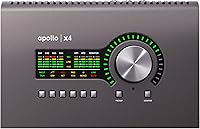
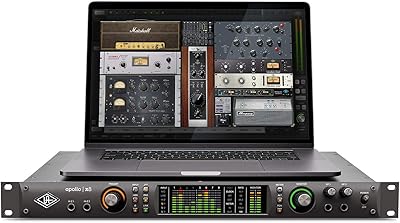
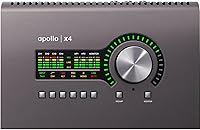
The Universal Audio Apollo x4 Heritage Edition Audio Interface is a desktop Thunderbolt unit built for serious home and project studio producers who want more than a basic recording box. Universal Audio has spent years earning a reputation for hardware-grade analog modeling, and this interface carries that pedigree. The Heritage Edition distinction matters: it ships with 10 curated UAD plug-ins — classic compressors, EQs, and preamp emulations — that represent real standalone value. It connects via Thunderbolt 3, backward compatible with TB1 and TB2 on Mac, and also supports Windows, though certain features favor Mac users. Make no mistake: this is a DSP-dependent ecosystem, not a plug-and-play USB box.
Features & Benefits

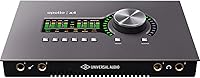
The four Unison mic preamps are the headline feature here, and they work differently from software-only modeling — Unison technology physically adjusts the preamp's impedance and gain structure to replicate the behavior of classic tube and transformer circuits. The converters are lifted directly from UA's rackmount Apollo X line, delivering genuinely clean and accurate signal translation. The UAD QUAD Core DSP engine handles processing internally, which is what makes near-zero tracking latency possible — you can run a vintage compressor or EQ while recording without perceptible delay, regardless of buffer size. Two front-panel Hi-Z inputs, dual headphone outputs, ADAT/S/PDIF expansion, and a built-in Talkback mic round out the I/O sensibly.

Best For

This Thunderbolt audio interface is well matched to home studio owners who track vocals or instruments and want genuine analog-character preamps without buying separate outboard gear. If you're already inside the UAD ecosystem, consolidating DSP and I/O in one unit makes clear practical sense. Singer-songwriters and small-band setups will find the two simultaneous instrument inputs and dual headphone outputs genuinely useful when recording with another person. Mac users — especially those running LUNA as their primary DAW — get the most cohesive experience. Engineers who see the Heritage bundle's Fairchild 670, Teletronix LA-2A, and Pultec EQs as a real working library, rather than a marketing checkbox, will find the value proposition strong. Windows users will still benefit, but should go in with adjusted expectations around LUNA and certain Mac-only functions.

User Feedback

With a 4.6 out of 5 rating across 365 reviews, the Apollo x4 Heritage Edition earns consistently strong marks from buyers who aren't easily impressed. Recurring praise focuses on preamp transparency — users report that recordings genuinely capture the character of classic gear without the coloration sounding forced — and the physical build quality, which feels appropriately solid for the price tier. The Heritage plug-in bundle draws real appreciation, though some reviewers note that once you're hooked, expanding beyond it means returning to UA's store regularly. That's the honest catch: the ecosystem is compelling but deliberately closed. Windows users occasionally flag driver hiccups and the absence of LUNA. For newcomers, Console software carries a learning curve, but most report adapting within sessions.

Pros

  • Unison preamps physically model classic tube and transformer circuits, not just through software approximation.
  • Converters are carried over directly from the premium Apollo X rackmount line, ensuring genuinely high-quality signal capture.
  • Onboard QUAD Core DSP lets you track through vintage compressors and EQs with no perceptible latency during recording.
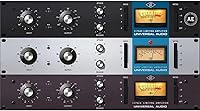
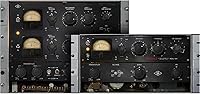
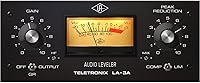
  • The Heritage bundle includes heavy-hitters like the Fairchild 670, Teletronix LA-2A, and Pultec EQP-1A — tools engineers actually reach for.
  • Two independent headphone outputs make simultaneous monitoring practical for two-person recording sessions.
  • Built-in Talkback mic is a small but genuinely useful feature for anyone recording talent in a separate space.
  • ADAT and S/PDIF expansion keeps the I/O options open as your studio grows.
  • Build quality feels appropriately solid and premium — this does not feel like a product that will need replacing in two years.
  • Rated 4.6 out of 5 across hundreds of verified buyers, with consistent praise from experienced engineers and hobbyists alike.
  • Thunderbolt 3 connection is backward compatible with older Thunderbolt ports on Mac, reducing upgrade friction.

Cons

  • Expanding beyond the included plug-in bundle means returning to UA's store, where individual titles carry significant price tags.
  • LUNA Recording System is Mac and Thunderbolt only — Windows users lose access to one of the platform's most promoted features.
  • The UAD ecosystem is deliberately closed; you cannot use UAD plug-ins on a different interface if you ever switch hardware.
  • New users consistently report a steep learning curve with Console software before the workflow feels natural.
  • Windows driver stability has been flagged by multiple buyers, with occasional issues that Mac users do not typically report.
  • Four mic preamps may feel limiting for producers who regularly record full bands or larger ensembles.
  • Requires a Thunderbolt port, which rules out older computers or those with only USB connectivity.
  • The value of the Heritage bundle is real, but only if you actively use UAD plug-ins — it adds no value outside that ecosystem.

Ratings

The scores below were generated by AI after analyzing verified buyer reviews for the Universal Audio Apollo x4 Heritage Edition Audio Interface from multiple global sources, with spam, bot activity, and incentivized feedback actively filtered out. Each category reflects both the genuine enthusiasm and the honest frustrations real users have reported across hundreds of documented sessions. No aspect has been softened — where pain points exist, they are scored and explained plainly.
Preamp Quality
93%
Buyers who track vocals and acoustic instruments consistently describe the Unison preamps as the single biggest reason they chose this interface over competitors. The hardware-level impedance matching produces a warmth and dimensionality that engineers say used to require dedicated outboard gear costing far more.
A small number of users note that the preamp character is subtle enough that less experienced ears may not immediately appreciate the difference from a mid-range interface, making the value harder to justify until your recording skills catch up with the hardware.
Conversion Quality
91%
The A/D and D/A converters inherited from the Apollo X rackmount line are frequently cited as sounding open and accurate without the slight harshness some competing interfaces introduce in the high frequencies. Producers mixing in the box report that stems sound more defined and easier to place.
At this price tier, the conversion quality is expected to be excellent, so it rarely surprises experienced engineers — it simply performs as it should. Budget-focused buyers comparing conversion specs alone may struggle to hear a clear improvement over interfaces costing significantly less.
DSP Performance
89%
The QUAD Core DSP engine genuinely delivers on its near-zero latency promise during tracking — singers and guitarists report being able to monitor through vintage compressors and EQs in real time without the distracting delay that CPU-based plug-in monitoring introduces at modest buffer sizes.
The DSP pool, while substantial for a four-preamp desktop unit, can be exhausted quickly when running multiple DSP-hungry plug-ins simultaneously across several tracks. Users running dense sessions with UA tape emulations and amp sims stacked report hitting the ceiling faster than expected.
Value for Money
78%
22%
When buyers factor in the 10 included Heritage plug-ins — specifically titles like the Fairchild 670, Teletronix LA-2A, and Pultec EQs that carry real standalone market value — the effective cost of the hardware alone drops considerably, which many reviewers explicitly acknowledge as the deciding factor.
The ongoing cost of expanding the UAD plug-in library beyond the bundle is a recurring frustration. Users who assumed the bundle would cover their needs for years often find themselves spending significantly more within the first 12 months as they encounter processing gaps the included titles do not fill.
Build Quality
88%
Reviewers across skill levels consistently describe the chassis as feeling appropriately premium — solid metal construction, well-damped knobs, and front-panel controls that do not wobble or feel plasticky. Several long-term owners note it holds up well in desktop environments without showing cosmetic wear.
A few users mention that the unit runs noticeably warm during extended sessions, which raises minor concerns about long-term thermal performance, though no widespread hardware failure pattern has been reported in the reviewed feedback.
Ease of Setup
62%
38%
For users already familiar with Universal Audio's Console software and the UAD ecosystem, getting up and running is straightforward. Experienced engineers report that initial driver installation and DAW routing take no longer than any other professional interface.
Newcomers to the UAD platform consistently flag the setup process as genuinely confusing. Console software introduces a parallel signal path that sits outside the DAW, and understanding how monitoring, plug-in routing, and latency compensation interact takes real time and patience before it clicks.
Software & Ecosystem
74%
26%
Users who commit to the UAD platform describe Console and LUNA as increasingly capable and tightly integrated tools that reward loyalty. Mac-based producers in particular report that the LUNA environment handles Apollo hardware more responsively than any third-party DAW they have tested.
The ecosystem's closed nature is the clearest pain point across reviews. UAD plug-ins cannot be used outside of UA hardware, LUNA is entirely unavailable on Windows, and the software update cadence occasionally introduces bugs that take weeks to resolve through driver patches.
Windows Compatibility
57%
43%
Windows users can use this Thunderbolt audio interface as a functional recording device with full DAW compatibility across VST and AAX formats, and many report stable day-to-day operation once drivers are properly installed.
The gap between the Mac and Windows experience is wide enough to matter. LUNA is unavailable, certain Console features behave differently, and driver stability complaints from Windows users appear with enough regularity in the review pool to suggest it is a genuine systemic issue rather than isolated incidents.
I/O Flexibility
76%
24%
The combination of four mic preamps, two front-panel Hi-Z inputs, dual headphone outputs, and ADAT/S/PDIF expansion covers most home and project studio scenarios without requiring immediate additional gear. Producers who work with a small ensemble or a single collaborator find the layout practical and well considered.
Four mic preamps is a real ceiling for anyone who records full bands or needs more than two simultaneous mic sources on a regular basis. The ADAT expansion helps, but it requires an additional device, which adds cost and complexity that buyers should factor in before purchasing.
Headphone Monitoring
82%
18%
Having two independent headphone outputs with individual level controls is something buyers genuinely use — singers and engineers giving separate mixes to a vocalist and a guitarist in the same session praise this as a feature that justifies itself in the first week of ownership.
The headphone amplifier output is generally considered good but not exceptional for critical listening at high volumes. Audiophile-focused users who prioritize dedicated headphone amplification report that the output can sound slightly thin when driving high-impedance headphones at loud levels.
Plug-in Bundle Quality
84%
Unlike many bundled software packages that include lightweight or entry-level tools, the Heritage Edition titles are full UAD plug-ins actively used in professional sessions. Engineers who previously licensed the Fairchild 670 or LA-2A separately describe the bundle as a legitimate starting library.
The bundle's value is entirely contingent on staying within the UAD ecosystem. Buyers who later decide to move away from UA hardware effectively lose access to all 10 titles, which changes the long-term value calculation in a way that not all reviewers anticipate at the time of purchase.
Latency During Tracking
87%
Performers tracking through UAD compressors or amp simulations via Console monitoring report no perceptible delay between playing and hearing themselves, even at higher buffer sizes where CPU-based monitoring would introduce obvious lag — a practical advantage that recording engineers find immediately useful.
The near-zero latency only applies when monitoring through Console's UAD signal path, not when monitoring through the DAW directly. Users who prefer DAW-native monitoring or who run non-UAD plug-ins in their monitoring chain do not benefit from the same performance.
DAW Compatibility
86%
UAD plug-ins running in VST, AU, and AAX 64 formats work reliably across Logic Pro, Pro Tools, Ableton Live, and Cubase according to the bulk of reviewed feedback. Producers switching DAWs mid-project report no re-authorization issues or format conflicts.
AAX DSP — the format used to run UAD plug-ins natively inside Pro Tools HDX systems — is not supported on this desktop unit. Pro Tools HDX users looking for tight native integration should verify compatibility specifics before purchasing.
Expandability
79%
21%
The ability to chain up to four Thunderbolt Apollo units and six total UAD devices gives the platform genuine long-term growth potential. Producers who start with this desktop interface and later need more preamps or DSP can add hardware without scrapping their existing setup.
Expansion comes with compounding cost — additional Apollo units and UAD devices are all premium-priced, so the growth path is not accessible to all buyers. Users who need to scale quickly often find the investment required to do so meaningfully outpaces their initial budget assumptions.

Suitable for:

The Universal Audio Apollo x4 Heritage Edition Audio Interface is built for home and project studio producers who are serious enough about recording quality to invest in the hardware but don't need a full rackmount rig. If you track vocals, acoustic instruments, or guitars regularly and want your recordings to carry genuine analog character — the kind that used to require expensive outboard preamps — this interface delivers that at the hardware level through its Unison preamp system. Singer-songwriters working with a collaborator will appreciate having two simultaneous instrument inputs and dual independent headphone outputs, which removes a lot of the usual cable-juggling awkwardness. Producers already using UAD plug-ins will find real consolidation value here, since the onboard QUAD Core DSP handles processing without taxing the computer's CPU. Mac users, particularly those open to adopting LUNA as their recording environment, get the most cohesive and fully featured experience this platform can offer.
Not suitable for:

Anyone expecting a straightforward, plug-in-and-record USB interface should look elsewhere — this Thunderbolt audio interface requires a compatible Thunderbolt port, a willingness to learn Universal Audio's Console software, and an understanding that the UAD plug-in ecosystem involves ongoing cost beyond what's included in the box. Producers who rely heavily on third-party plug-ins for tracking and don't plan to build within the UAD library won't get full value from the onboard DSP. Windows users in particular should go in with realistic expectations: LUNA is unavailable on Windows, and some buyers have reported driver inconsistencies that Mac users rarely encounter. Budget-conscious buyers who are comparing this to a mid-range USB interface need to weigh not just the upfront cost but the long-term investment that comes with committing to a closed, proprietary ecosystem. If your studio runs on a tight budget and you're not yet sure whether UAD processing fits your workflow, the Apollo x4 Heritage Edition may lock you into more than you're ready for.

Specifications

  • Model Number: The unit carries the official model designation APX4-HE, identifying it as the Heritage Edition variant of the Apollo x4.
  • Connectivity: Connection to the host computer is via Thunderbolt 3, with backward compatibility for Thunderbolt 1 and 2 ports on Mac systems.
  • OS Support: The interface is compatible with both Mac and Windows operating systems, though certain features such as LUNA are exclusive to Mac via Thunderbolt.
  • Mic Preamps: Four Unison-enabled mic preamps are built in, capable of physically modeling the impedance and gain characteristics of classic tube and transformer-based hardware.
  • Instrument Inputs: Two front-panel Hi-Z instrument inputs accept guitars and basses directly without requiring a separate DI box.
  • Headphone Outputs: Two independent headphone outputs are provided, each with its own level control, supporting simultaneous monitoring for two listeners.
  • Total I/O: The interface offers a 12-input by 18-output signal path, covering analog, digital, and USB monitoring channels in aggregate.
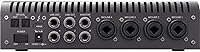
  • Digital Expansion: Up to 8 additional channels of digital I/O are available via optical ADAT or S/PDIF connections on the rear panel.
  • DSP Engine: A UAD QUAD Core DSP chip handles all UAD plug-in processing internally, allowing near-zero-latency tracking independent of the computer's CPU load or buffer size.
  • Plug-in Bundle: The Heritage Edition includes 10 UAD plug-in titles spanning classic compressors (Teletronix LA-2A, 1176, Fairchild 670), Pultec EQs, and the UA 610-B Tube Preamp and EQ, among others.
  • DAW Compatibility: UAD plug-ins run in VST, Audio Units (AU), and AAX 64 formats, making the interface compatible with Logic Pro, Pro Tools, Ableton Live, Cubase, and other major DAWs.
  • LUNA Support: The LUNA Recording System is supported as a fully integrated DAW option, but only on Mac computers connected via Thunderbolt.
  • Talkback Mic: A built-in Talkback microphone is included for direct communication with talent in a recording space and for recording slate cues.
  • Monitor Controls: The unit includes monitor remote functions with dedicated Mono, Mute, DIM, and ALT controls accessible from the front panel.
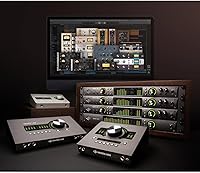
  • UAD Expansion: Up to four Thunderbolt-equipped Apollo units and six total UAD devices can be chained together to expand DSP capacity and I/O.
  • Dimensions: The chassis measures 11 x 8 x 5 inches, designed for desktop placement rather than rack mounting.
  • Weight: The unit weighs 3.2 pounds, keeping it manageable for a desktop setup without feeling insubstantial in build.
  • Plug-in Formats: Beyond tracking, UAD Powered Plug-Ins can be used for mixing in all supported formats across any compatible DAW session.

Related Reviews

Universal Audio Apollo Solo Heritage Edition
87%
96%
Audio Conversion Quality
93%
Build Quality & Durability
89%
DSP Processing Performance
94%
Unison Preamp Integration
82%
Software Ecosystem & LUNA
More
Universal Audio Apollo x8p Heritage Edition Audio Interface
83%
94%
Conversion Quality
91%
Preamp Emulation Accuracy
89%
DSP Performance
86%
Build & Hardware Quality
71%
Software & Driver Stability
More
Universal Audio Apollo x6 Heritage Edition Interface
76%
94%
Audio Conversion
91%
DSP Processing
93%
Preamp Emulation
71%
Value for Money
33%
Platform Compatibility
More
Universal Audio Apollo x8 Heritage Edition Interface

79%
93%
Conversion Quality
91%
DSP Performance
89%
Preamp Emulation
82%
Heritage Plug-in Bundle
71%
Ecosystem & Software Integration
More
Universal Audio Apollo Twin USB Heritage Interface
79%
91%
Audio Conversion Quality
86%
UAD DSP Performance
88%
Preamp Quality
71%
Windows Compatibility
74%
Value for Money
More
Universal Audio Apollo Twin MkII Heritage Edition
86%
93%
Audio Performance
94%
Build Quality
88%
UAD Plug-in Bundle
90%
Latency & Tracking
72%
Software Compatibility
More
Universal Audio Apollo Twin X QUAD Interface
81%
93%
Audio Conversion Quality
88%
DSP Performance
91%
Preamp Quality
74%
Value for Money
86%
Build Quality
More
Universal Audio Apollo Twin X DUO Interface

79%
93%
Sound Quality
91%
Preamp Quality
74%
DSP Performance
81%
Value for Money
57%
Platform Compatibility
More
Universal Audio Apollo X16 Audio Interface
82%
94%
Conversion Quality
91%
UAD DSP Performance
89%
Build & Hardware Quality
92%
Low-Latency Tracking
88%
I/O Flexibility
More
Universal Audio Apollo 8 QUAD Audio Interface
79%
93%
Preamp Quality
91%
DSP Performance
89%
Audio Conversion
92%
Build Quality
74%
Software & Console 2.0
More

FAQ

You need a Thunderbolt cable — not a USB cable. If your Mac has a Thunderbolt 3 port (USB-C shaped), a standard Thunderbolt 3 cable works directly. If you have an older Mac with a Thunderbolt 1 or 2 port (Mini DisplayPort shaped), you will need Apple's official Thunderbolt 3 to Thunderbolt 2 adapter plus a Thunderbolt 2 cable. The interface is backward compatible in that scenario.

Yes, the Apollo x4 Heritage Edition works on Windows, but with notable limitations. LUNA, Universal Audio's own recording application, is Mac and Thunderbolt only and will not run on Windows at all. Some Windows users have also reported occasional driver stability issues, so it is worth checking UA's current driver release notes before purchasing if Windows is your primary OS.

The bundle includes 10 UAD titles covering some of the most sought-after vintage processing tools: the Teletronix LA-2A and 1176 compressors, the Fairchild 670 compressor, Pultec EQP-1A and MEQ-5 equalizers, the UA 610-B Tube Preamp and EQ, and several others. These are full UAD plug-ins, not limited demos — they function as legitimate studio tools for compression, EQ, and preamp coloration on any recorded track.

The UAD plug-ins work in all major DAWs, including Ableton Live, Pro Tools, Logic Pro, and Cubase, through standard VST, AU, and AAX 64 formats. LUNA is simply UA's own DAW that integrates most tightly with Apollo hardware — using it is optional, not required.

When you record through a plugin — say, an 1176 compressor on a vocal — the processing normally adds a small delay between what the singer sings and what they hear in their headphones. With the onboard DSP in this Thunderbolt audio interface, that processing happens inside the hardware rather than going through your computer, which removes that delay almost entirely. Even at higher buffer sizes where software latency would normally become noticeable, tracking through UAD plug-ins stays responsive.

Yes. The two front-panel Hi-Z inputs handle guitars and basses directly, while any of the four mic preamps can handle vocals or acoustic instruments via XLR. You can absolutely run a guitarist on one Hi-Z input and a vocalist on a mic preamp at the same time, and each performer can have their own headphone mix through the two independent headphone outputs.

The bundle is a legitimate starting point — the Fairchild 670, LA-2A, 1176, and Pultec EQs are tools that professional engineers use on real sessions, not beginner presets. That said, most users eventually want plug-ins beyond what is included, and those are purchased separately through UA's online store. The costs add up, so it is worth treating the initial bundle as a foundation rather than a complete library.

The rear panel includes optical ADAT and S/PDIF connectors that support up to 8 additional channels of digital input and output. If you have a standalone mic preamp or a format converter with ADAT output, you can route those channels straight into the Apollo and they will appear in your DAW. You can also chain additional Thunderbolt-equipped Apollo units to expand both I/O and DSP capacity.

It can be, but the learning curve is real. Universal Audio's Console software — which controls monitoring, plug-in routing, and preamp settings — takes some time to understand if you have never worked inside that ecosystem before. Most new users report that things click within a few sessions, but if you are expecting to unbox it and start recording immediately with minimal setup, expect to spend an evening or two with the documentation and tutorial videos first.

No — UAD Powered Plug-Ins require UAD DSP hardware to run, so they are tied to the UA ecosystem. If you switch to a non-UAD audio interface in the future, the plug-ins you have purchased will not follow you. This is the core ecosystem trade-off: the processing quality is excellent, but it only works as long as you stay within Universal Audio's hardware family.

Where to Buy