Universal Audio Apollo Twin X QUAD Interface
Overview
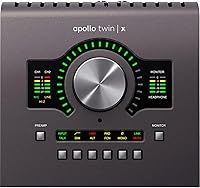
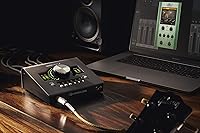
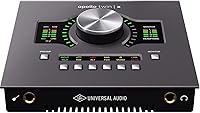
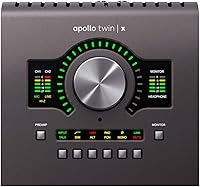
The Universal Audio Apollo Twin X QUAD Interface is a premium Thunderbolt desktop unit built for serious home studio and semi-professional use — not a casual starter kit. If you're on Windows, stop here: LUNA, UA's integrated recording application, is Mac-only, and that matters. The Heritage Edition distinction is real: the bundled plug-in suite carries genuine value, including classic titles most engineers would otherwise pay for separately. This Apollo Twin X QUAD sits above the SOLO and DUO variants thanks to its four DSP cores, which handle significantly more simultaneous processing load. It's a desktop unit, permanently tethered to your Mac workstation.
Features & Benefits
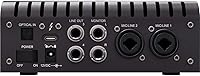
What separates this UA desktop interface from most competitors isn't just a spec sheet — it's what happens inside. The QUAD Core DSP chip does the heavy lifting for vintage plug-in processing in real time, offloading that work from your Mac's CPU entirely. That's a genuine benefit if you're running an older machine. The Unison preamp technology goes further than software emulation; it physically adjusts input impedance to mimic the electrical behavior of classic tube and transformer designs when tracking vocals or guitar. Conversion quality is borrowed from UA's larger rack units, so there's no fidelity compromise. The ADAT expansion port, talkback mic, and front Hi-Z input round out a surprisingly complete feature set for a desktop unit.
Best For
This Apollo Twin X QUAD makes the most sense for Mac-based producers and singer-songwriters who need professional-grade results from a compact setup. If you're regularly tracking vocals through a condenser or running guitar amp simulations in real time, the DSP headroom and Unison modeling pay for themselves in workflow alone. It's also a strong choice for anyone ready to move past entry-level interfaces and invest in hardware that won't become a bottleneck as sessions grow. The ADAT expansion capability means a small studio can add a preamp expander later without replacing the interface. If you're already using UAD plug-ins — or planning to — the ecosystem investment starts to make practical sense here.
User Feedback
Across a broad range of buyer reviews, the Heritage Edition unit earns consistent praise for its low-noise preamp performance and overall audio clarity — experienced engineers often note it punches well above its physical size. The Unison modeling, in particular, draws genuine enthusiasm rather than skepticism; users report it makes a tangible difference when tracking. That said, a fair number of buyers flag the cost reality of the UAD ecosystem: the included bundle is genuinely useful, but expanding beyond it means additional purchases, either à la carte or through a subscription. A few owners mention the unit runs noticeably warm and advise giving it breathing room on the desk. Windows users should also know that frustration with Mac-exclusivity is a recurring theme in negative reviews.
Pros
- QUAD Core DSP offloads vintage plug-in processing entirely from your Mac, keeping sessions stable even on older hardware.
- Unison preamp technology physically reconfigures input impedance, delivering authentic tube and transformer preamp behavior — not a software approximation.
- Conversion quality is derived from UA's larger Apollo X rack units, with no desktop downgrade in fidelity.
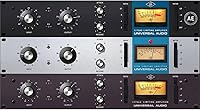
- The Heritage Edition bundle includes the LA-2A, 1176, and Pultec EQs — tools engineers would otherwise purchase separately at significant cost.
- ADAT optical expansion supports up to 8 additional digital input channels, giving this UA desktop interface real room to scale.
- Build quality earns consistent long-term praise; owners regularly cite durability as a core reason the investment holds up.
- The front-panel Hi-Z instrument input and built-in talkback mic handle everyday studio workflow needs without requiring extra hardware.
- Plug-in compatibility covers VST, AU, and AAX 64 formats, fitting naturally into Logic Pro, Pro Tools, Ableton Live, and more.
- Audio transparency and low-noise preamp performance are consistently highlighted by experienced engineers who recognize clean signal quality.
Cons
- Expanding beyond the included plug-in bundle means real additional cost — UAD titles are sold à la carte or via a subscription model.
- Mac-only LUNA compatibility is a hard dealbreaker for Windows-based producers, with no sign that will change.
- The unit runs noticeably warm in use; adequate ventilation space on your desktop is not optional.
- Only two mic preamp inputs limits simultaneous recording — full band sessions or multi-mic setups will require an external preamp expander.
- Thunderbolt 3 connectivity limits you to compatible machines; older computers or certain PCs may need adapters or simply will not work.
- Investing heavily in UAD plug-ins ties you to the UA hardware ecosystem — switching interfaces later means losing access to those titles.
- There is no onboard MIDI I/O, so producers using hardware synthesizers will need a separate MIDI interface.
- The DSP processing advantage narrows considerably on newer, high-performance Macs where CPU headroom is rarely a bottleneck to begin with.
Ratings
The Universal Audio Apollo Twin X QUAD Interface earned its scores after AI-assisted analysis of hundreds of verified buyer reviews gathered from global markets, with spam, bot-generated, and incentivized submissions actively filtered out. Scores reflect a balanced synthesis of real user experiences — not manufacturer claims — capturing both the genuinely strong performance this UA desktop interface delivers and the specific limitations that consistently surface in buyer feedback. Every category, from audio conversion quality to platform compatibility, is scored to reflect what real owners actually encounter in day-to-day studio use.
Audio Conversion Quality
DSP Performance
Preamp Quality
Value for Money
Build Quality
Plug-in Bundle Value
Setup & Installation
DAW Compatibility
Low-Latency Performance
Expandability
Platform Compatibility
Driver Stability
Workflow Features
LUNA Integration
Long-term Reliability
Suitable for:
The Universal Audio Apollo Twin X QUAD Interface is purpose-built for Mac-based home studio producers, singer-songwriters, and semi-professional engineers who want genuine analog-quality sound without committing to a full rack setup. If you regularly track vocals through a condenser mic or record guitar and want to monitor through classic preamp and compressor emulations in real time — without hammering your Mac's CPU — this is the tier of interface where that workflow becomes practical. The QUAD DSP configuration handles significantly more simultaneous plug-in load than the SOLO or DUO variants, so producers running multiple vintage processors during a tracking session will feel the difference on older machines especially. The Heritage Edition makes particular sense for anyone who would have been buying classic UA titles anyway: the included Pultec EQs, LA-2A, and 1176 plug-ins are industry staples, not filler. Engineers who think long-term and want a compact unit that can grow via ADAT expansion — rather than needing a full hardware swap in two years — will also find the investment justified.
Not suitable for:
The Universal Audio Apollo Twin X QUAD Interface is a firm pass for Windows users, and that needs to be said plainly: LUNA, UA's tightly integrated recording application, is Mac-only, and the full ecosystem experience simply does not translate to Windows in any meaningful way. Beyond the platform issue, this UA desktop interface is the wrong choice for anyone expecting the included plug-in bundle to cover all their production needs indefinitely — the Heritage Edition titles are genuinely useful, but the wider UAD library requires ongoing purchases either à la carte or through a subscription model, which adds up fast. Producers who already own a powerful, modern Mac and rarely max out their CPU may also find the DSP offloading advantage less compelling than it sounds, since the value of that extra processing headroom shrinks on high-performance machines. Anyone who needs to record more than two simultaneous microphone sources without an external expander will also hit a ceiling quickly. And if portability matters — recording on location, sessions in different studios, working from a bag — this strictly desktop unit simply is not the right tool.
Specifications
- Model Number: The official model identifier for this unit is APLTWXQ-HE.
- DSP Engine: Onboard processing is powered by a UAD QUAD Core DSP chip with four dedicated cores for real-time plug-in handling independent of the host computer's CPU.
- Connectivity: The interface connects to a host computer via Thunderbolt 3 for high-bandwidth, low-latency audio data transfer.
- Mic Preamps: Two Unison-enabled combo XLR/TRS preamp inputs physically reconfigure input impedance to authentically model the behavior of classic tube and transformer-based hardware preamps.
- Instrument Input: A dedicated front-panel Hi-Z input accepts electric guitar or bass signals directly without requiring a separate direct box.
- Monitor Outputs: Two rear-panel 1/4-inch TRS line outputs connect to studio monitor speakers for full-range stereo playback.
- Headphone Output: A front-panel 1/4-inch headphone output includes a dedicated volume knob for independent monitoring control.
- Talkback Mic: A built-in talkback microphone enables direct communication with performers during recording sessions and can trigger slate cues.
- Digital Expansion: An optical ADAT/S-PDIF input port supports up to 8 additional digital audio channels for expanding the total input count via a compatible external preamp.
- Plug-in Formats: UAD Powered Plug-Ins run in VST, AU, and AAX 64 formats, covering all major DAWs including Logic Pro, Pro Tools, Cubase, and Ableton Live.
- Included Bundle: The Heritage Edition includes 5 premium UAD plug-in titles plus the Realtime Analog Classics bundle, covering vintage compressors, tube EQs, and guitar amp emulations.
- LUNA Integration: LUNA Recording System, UA's dedicated recording application, is supported on macOS only and is not available to Windows users.
- Sample Rate: The interface supports recording and playback at sample rates up to 192 kHz for high-resolution audio sessions.
- Bit Depth: Audio is recorded and played back at 24-bit resolution, delivering professional-grade dynamic range.
- Dimensions: The unit measures 9 x 8 x 8 inches and weighs 2.35 pounds, designed for permanent placement on a desktop rather than mobile use.
Related Reviews
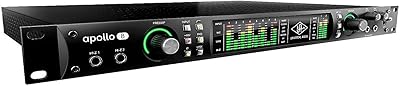
Universal Audio Apollo 8 QUAD Audio Interface
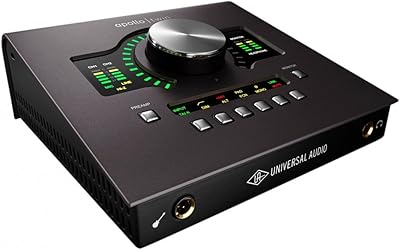
Universal Audio Apollo Twin MKII Quad Interface
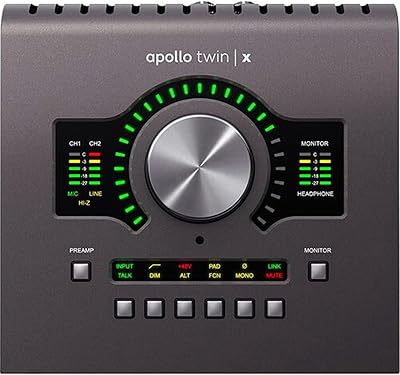
Universal Audio Apollo Twin X DUO Interface

Universal Audio Apollo X16 Audio Interface
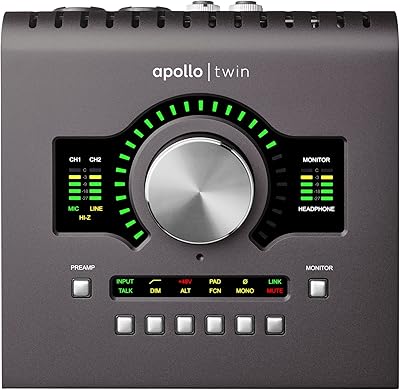
Universal Audio Apollo Twin MkII Solo Interface
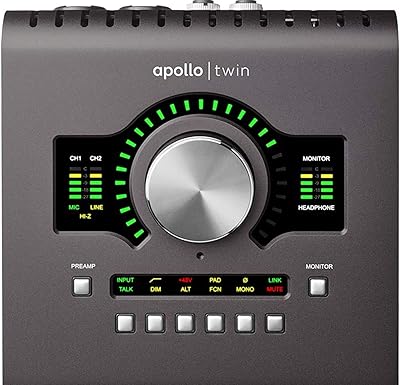
Universal Audio Apollo Twin MkII Heritage Edition Audio Interface
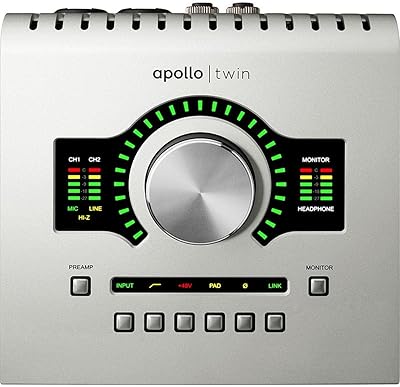
Universal Audio Apollo Twin USB Heritage Interface
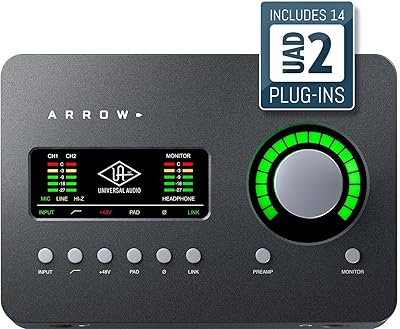
Universal Audio Arrow Thunderbolt 3 Audio Interface
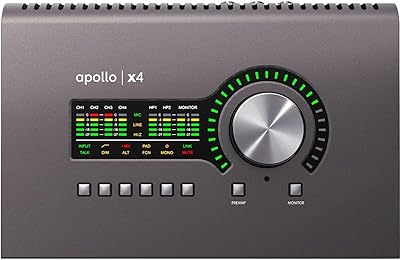
Universal Audio Apollo x4 Heritage Edition Audio Interface
