Overview

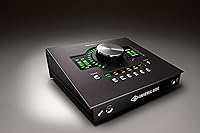
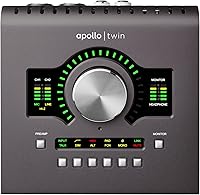
The Universal Audio Apollo Twin MkII Solo Interface sits in a specific sweet spot: a desktop Thunderbolt audio interface built for serious home studio work, not casual recording. What distinguishes it from most compact alternatives is the dual role it plays — high-fidelity conversion at 24-bit/192kHz combined with onboard UAD DSP processing that runs vintage plug-ins in real time. It works with both Mac and Windows, though Thunderbolt connectivity is a firm requirement. The build feels solid and purposeful for its size, and the included Analog Classics bundle — featuring emulations of the LA-2A, 1176LN, and Pultec EQP-1A — adds immediate, tangible value straight out of the box.
Features & Benefits

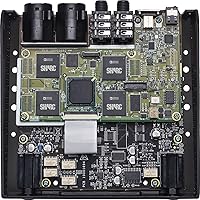
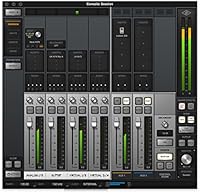
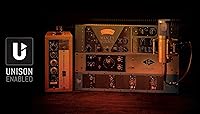
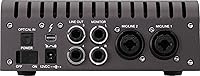
The Apollo Twin MkII Solo's two Unison-enabled preamps do more than amplify a signal — they physically reconfigure impedance and gain characteristics to convincingly model classic hardware like the 610-B tube preamp, which translates to genuine warmth and character rather than a purely clinical signal path. The onboard SHARC DSP chip handles UAD plug-in processing in real time with sub-2ms latency, keeping your CPU free for mixing tasks. On the I/O side, you get a front-panel Hi-Z input for direct guitar or bass, a headphone output, eight channels of optical digital input, and digitally controlled monitor outputs — all managed neatly through the Console 2.0 software environment.

Best For

This Thunderbolt interface makes the most sense for a specific kind of producer or musician. If you track vocals or acoustic instruments at home and want preamps with real analog character rather than transparent cleanliness, it delivers. Guitarists who record direct will appreciate monitoring through amp sim plug-ins in real time without any distracting latency. It also suits producers on CPU-limited machines, since offloading plug-in processing to the DSP chip frees up meaningful headroom. And if you are already curious about the UAD plug-in library, this desktop audio interface is a natural entry point — the optical input means you can expand with extra preamps or outboard gear as your studio grows.

User Feedback

Owners consistently highlight preamp quality as a standout strength, noting that recordings carry a warmth and presence noticeably different from cheaper alternatives. The Console 2.0 software also draws praise for its tactile, hardware-inspired feel. On the critical side, the Solo tier's single SHARC chip does hit its ceiling when stacking multiple UAD plug-ins simultaneously — a real limitation worth knowing upfront, not a minor footnote. Thunderbolt port requirements can also catch older system owners off-guard. A recurring theme in longer-term reviews is the cost of the UAD plug-in ecosystem itself; the included bundle is generous, but premium titles carry premium prices that accumulate meaningfully over time.

Pros

  • Unison-enabled preamps deliver real analog warmth and character, not just clean amplification.
  • 24-bit/192kHz conversion holds up well against interfaces at much higher price points.
  • Real-time DSP processing keeps CPU load low during tracking and monitoring sessions.
  • The included Analog Classics bundle — featuring LA-2A, 1176LN, and Pultec EQP-1A emulations — adds immediate value.
  • Eight channels of optical input makes the interface expandable well beyond its two analog preamps.
  • Console 2.0 software feels genuinely hardware-like rather than a generic software mixer.
  • Build quality is solid and purposeful, with physical controls that feel premium to the touch.
  • Compatible with both Mac and Windows via Thunderbolt, covering most modern professional setups.
  • Front-panel Hi-Z input and headphone output make quick instrument recording straightforward.
  • Built-in talkback mic is a practical touch that many compact interfaces skip entirely.

Cons

  • One SHARC DSP chip hits its limit quickly when stacking multiple UAD plug-ins in a single session.
  • Thunderbolt is a hard requirement — no Thunderbolt port means no compatibility, full stop.
  • The UAD plug-in ecosystem pricing accumulates significantly beyond the included starter bundle.
  • Older Windows machines and many budget laptops lack Thunderbolt ports, creating a real access barrier.
  • Only two analog mic preamps can feel restrictive for sessions that need three or more simultaneous inputs.
  • The learning curve for Console 2.0 and UAD routing is steeper than simpler plug-and-play interfaces.
  • No USB fallback option limits flexibility when switching between different computers or setups.
  • Buying into UAD creates a degree of platform lock-in that affects future hardware and software decisions.

Ratings

Our AI scoring system analyzed verified global buyer reviews for the Universal Audio Apollo Twin MkII Solo Interface, actively filtering out incentivized submissions, bot activity, and outlier feedback to surface what real users consistently experience. The scores below reflect both the genuine strengths that keep buyers loyal to this Thunderbolt interface and the recurring frustrations that inform smarter purchase decisions. Nothing has been softened — the pain points are represented as clearly as the praise.

Preamp Quality
93%
Users repeatedly describe recordings made through the Unison-enabled preamps as having a warmth and presence that stands apart from interfaces at similar or even higher price points. The ability to load a 610-B or vintage console preamp model and have the hardware physically respond to that character — rather than just applying a digital filter — is something vocalists and acoustic instrument recordists notice immediately in the density and naturalness of their captures.
The two-preamp limit means that the sonic quality advantage is accessible only within a fairly narrow channel count per session, which frustrates users who occasionally need three or more simultaneous mic inputs. A small number of reviewers also noted that pushing the preamps into heavier saturation territory can behave differently than expected compared to the original hardware units being emulated.
DSP Performance
71%
29%
For typical home studio tracking scenarios — a single vocal chain, a guitar through an amp sim, or a small number of instruments — the onboard SHARC chip handles real-time processing reliably and keeps the host CPU completely free. Producers working on CPU-limited laptops find this genuinely valuable, particularly when tracking in sessions that are already taxing the machine during playback.
One DSP chip is the Apollo Twin MkII Solo's most significant structural limitation, and experienced users hit the ceiling faster than they anticipate when stacking multiple UAD plug-ins across channels. Running a compressor, EQ, tape emulation, and reverb simultaneously on even two or three tracks can exhaust the available DSP, forcing users to either freeze tracks or bounce processing — which partially defeats the real-time monitoring advantage.
Build Quality
91%
The physical construction draws consistent praise from users who have handled a range of audio interfaces at various price tiers. The front-panel controls feel solid and well-dampened, the gain knobs have a precise, resistance that signals quality manufacturing, and the overall desktop footprint feels intentional rather than cramped. Several long-term owners note that units purchased years ago show no signs of wear or degradation.
A handful of reviewers mention that the monitor output knob, while feeling premium in normal use, can develop minor tracking inconsistencies over extended periods of heavy daily rotation. The unit runs noticeably warm during long sessions, which is not unusual for DSP-equipped hardware but occasionally concerns users who are new to this class of interface.
Audio Conversion
89%
The 24-bit/192kHz conversion holds up favorably in direct comparisons with competing interfaces, with users describing a clean, open top-end and solid stereo imaging across the monitoring chain. Producers who have moved from budget interfaces frequently comment that the difference in perceived space and definition in recordings is noticeable without needing to A/B test carefully.
At very high sample rates, the available I/O count reduces — a technical reality that catches some buyers off guard when they first configure their session. A small segment of more technically oriented reviewers also suggest that while conversion quality is excellent for the price tier, dedicated standalone converters at higher investment levels still offer a perceptible advantage in the very top octave of the frequency spectrum.
Software Experience
78%
22%
Console 2.0 is frequently described as one of the more thoughtfully designed interface control applications in its class, with a hardware-mixer workflow that feels tactile and purposeful rather than like an afterthought utility. The channel strip preset system is particularly appreciated by producers who like to establish a go-to tracking template and load it instantly at the start of each session.
The learning curve is real, and users coming from simpler interfaces occasionally find the routing logic non-intuitive during the first few weeks of ownership. A recurring complaint involves the software requiring updates before a new session can begin, which some users find disruptive when they are trying to work quickly. Console 2.0 is also not the most stable application under all operating system configurations, with occasional crashes reported on Windows.
Connectivity & I/O
74%
26%
The eight-channel optical input meaningfully extends what would otherwise be a very limited two-input interface, allowing users to connect a preamp expander and build a multi-channel tracking setup without purchasing additional hardware interfaces. The front-panel Hi-Z input is well-positioned for guitarists and bassists who want to plug in and record quickly without reaching around to the back of a rack unit.
The hard Thunderbolt requirement remains the most divisive connectivity aspect for buyers who discover post-purchase that their machine lacks a qualifying port. With only two analog mic inputs natively, users who regularly record bands or multi-instrument setups will find the base I/O count restrictive, and the optical expansion option adds cost and complexity that not every buyer anticipated.
Latency Performance
88%
The sub-2ms monitoring latency through the DSP path is functionally transparent for the vast majority of recording scenarios, and users who track vocals or play virtual instruments consistently describe the experience as feeling immediate rather than processed. Guitarists monitoring through amp simulations in real time specifically call out this low latency as a deciding factor in their purchase.
The near-zero latency applies specifically to the UAD DSP monitoring path through Console — not to the standard DAW software monitoring path, which operates at the mercy of buffer settings like any other interface. New users occasionally misunderstand this distinction and are disappointed when they try to monitor through a DAW plug-in and experience the expected buffer-related delay.
Value for Money
69%
31%
For users who fully engage with the UAD ecosystem and leverage both the conversion quality and the real-time DSP processing in their daily workflow, the value proposition is genuine and defensible. The included Analog Classics bundle alone represents meaningful value, with the LA-2A and 1176LN emulations being tools that professional producers actively use on commercial projects.
Buyers who use only a fraction of the UAD capabilities — or who later realize the one-chip DSP ceiling is too limiting for their sessions — often reflect that the price premium over capable non-DSP interfaces is difficult to justify in hindsight. The additional cost of expanding the UAD plug-in library compounds the total ownership cost in a way that is not always obvious at the point of purchase.
UAD Ecosystem Value
66%
34%
Producers already embedded in the UAD plug-in world find that the Apollo Twin MkII Solo integrates cleanly into an existing workflow, with their full plug-in library available from the moment they connect. The ecosystem's plug-in quality is broadly respected, and for users who treat UAD titles as long-term studio tools rather than subscription costs, the investment logic holds up.
For buyers coming in without existing UAD licenses, the ecosystem represents a significant and ongoing financial commitment on top of an already premium hardware cost. The platform's proprietary nature means that plug-ins purchased cannot be used on non-UAD hardware, creating a lock-in dynamic that some users only fully appreciate once they consider switching interfaces or expanding their setup.
Setup & Compatibility
72%
28%
On a Mac with an active Thunderbolt port, the initial setup process is straightforward, and most users report being operational within 30 minutes of unboxing including driver installation and Console 2.0 configuration. The DAW compatibility is broad, covering VST, RTAS, and AAX 64 across all major applications without requiring unusual workarounds.
Windows setup generates a disproportionate share of compatibility complaints, particularly on machines with Thunderbolt implementations that are technically present but inconsistently supported at the driver level. Users on older computers — whether Mac or Windows — frequently encounter additional troubleshooting steps that the official setup documentation does not always anticipate clearly.
Headphone Output
77%
23%
The dedicated headphone output provides enough clean output level for most studio headphones, and users appreciate having independent volume control separate from the monitor outputs — a feature that some competing compact interfaces skip to reduce cost. Tracking sessions where the engineer and performer both need a simultaneous headphone feed benefit from this separation.
The single headphone output is a limitation for collaborative sessions where two people need independent mixes — a scenario that requires either a separate headphone amplifier or accepting a shared blend. A small number of users also note that very high-impedance headphones do not reach their ideal listening volume without pushing the output to its upper range.
Talkback Microphone
75%
25%
Having a built-in talkback mic removes the need for a dedicated workaround when communicating with performers in an isolation booth or separate tracking space, which is a practical convenience that saves setup time in real sessions. Users running small home setups with a treated vocal booth describe it as a feature they use consistently and would miss if it were absent.
The talkback mic is functional rather than high-fidelity, and its pickup and rejection characteristics are modest enough that it occasionally picks up room noise more than intended in untreated spaces. Activation is managed through the Console software rather than a dedicated hardware button, which some users find slightly less immediate than they would prefer during a live take.
Expandability
76%
24%
The eight-channel ADAT optical input gives this desktop audio interface a credible expansion path that is not common at its physical size, allowing users to add a separate preamp unit and grow their input count substantially without replacing the core interface. This forward-thinking design choice means the unit can remain the center of a growing home studio for several years without becoming obsolete.
Expandability via optical is practical only if you invest in compatible external hardware, which adds cost and desk space — partially contradicting the compact form factor that drew many buyers to this unit in the first place. The output expansion options are comparatively limited, which matters for users who want to run multiple headphone mixes or complex monitor switching configurations.

Suitable for:

The Universal Audio Apollo Twin MkII Solo Interface is a strong fit for serious home studio musicians and semi-professional producers who want more than a basic signal path. If you record vocals, acoustic instruments, or guitars at home and care deeply about the character and warmth of your recordings — not just technical cleanliness — the Unison-enabled preamps will genuinely reward that attention. Guitarists who track direct and want to monitor through amp simulations in real time, without the frustration of noticeable latency, will find the sub-2ms DSP processing a practical daily advantage. It also makes particular sense for producers running DAW sessions on machines where CPU headroom is tight, since offloading plug-in processing to the onboard SHARC chip keeps sessions running smoothly. If you are already eyeing the broader UAD plug-in library, this Thunderbolt interface is a logical entry point that can expand over time through its eight-channel optical input.
Not suitable for:

The Apollo Twin MkII Solo is not the right choice for every studio situation, and it is worth being direct about where it falls short. The Solo tier carries only one DSP chip, which means producers who like stacking multiple UAD plug-ins simultaneously — heavy compressor chains, parallel processing, dense mix sessions — will hit the ceiling faster than they might expect. Anyone without a Thunderbolt port on their computer is simply locked out, which remains a real compatibility issue on older Windows machines and certain laptops. Budget-conscious buyers should also factor in that the included plug-in bundle, while genuinely useful, is just the starting point; premium UAD titles cost extra, and the ecosystem can become a significant ongoing expense over time. Podcasters, streamers, or anyone who just needs a clean and simple USB interface for voice-over work will find this desktop audio interface far more complex and costly than their use case demands.

Specifications

  • Connectivity: Connects to Mac and Windows computers via Thunderbolt, which is a hard requirement with no USB fallback option.
  • Audio Resolution: Supports recording and playback at up to 24-bit/192kHz, delivering high-fidelity conversion across all analog inputs.
  • Mic Preamps: Includes 2 Unison-enabled mic/line preamps that dynamically model the impedance and gain characteristics of classic analog hardware.
  • Line Outputs: Provides 2 balanced line outputs for routing audio to studio monitors or outboard gear.
  • Instrument Input: Features a front-panel Hi-Z input for plugging in guitars, basses, or other high-impedance instruments directly.
  • Headphone Output: Includes a dedicated front-panel headphone output with its own independent volume control.
  • Monitor Outputs: Offers 2 digitally controlled analog monitor outputs for precise and repeatable volume management.
  • Digital Input: Accepts up to 8 channels of digital audio via optical connection supporting ADAT and S/PDIF formats.
  • DSP Processing: Houses a single SHARC DSP chip that handles real-time UAD plug-in processing with sub-2ms latency, independent of the host CPU.
  • Talkback Mic: Has a built-in talkback microphone on the front panel for communicating with performers in a separate tracking space.
  • Included Plug-ins: Ships with the Analog Classics UAD bundle, including legacy versions of the LA-2A, 1176LN, Pultec EQP-1A, 610-B Tube Preamp, and Softube Amp Room Essentials.
  • Software: Operates through Console 2.0, a mixer-style application with channel strip presets, drag-and-drop functionality, and dynamically resizable windows.
  • DAW Compatibility: Integrates with all major DAWs through VST, RTAS, and AAX 64 plug-in formats on both Mac and Windows.
  • Dimensions: Measures 6 x 8 x 8 inches, making it a compact desktop unit suited to space-conscious studio setups.
  • Weight: Weighs 3.83 pounds, light enough to reposition on a desk easily but solid enough to feel stable during use.
  • Model Number: The official model number is APLTWSII, corresponding to the Solo tier of the Apollo Twin MkII range.
  • Availability: First made available in January 2017 and remains an active product that has not been discontinued by the manufacturer.

Related Reviews
Universal Audio Apollo Twin MKII Quad Interface
81%
93%
Audio Conversion Quality
91%
DSP Processing Performance
88%
Preamp Quality
89%
Latency During Tracking
86%
Build & Hardware Quality
More
Universal Audio Apollo Twin MkII Heritage Edition
86%
93%
Audio Performance
94%
Build Quality
88%
UAD Plug-in Bundle
90%
Latency & Tracking
72%
Software Compatibility
More
Universal Audio Apollo X16 Audio Interface
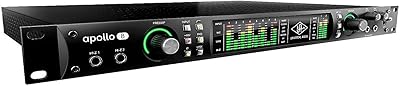
82%
94%
Conversion Quality
91%
UAD DSP Performance
89%
Build & Hardware Quality
92%
Low-Latency Tracking
88%
I/O Flexibility
More
Universal Audio Apollo 8 QUAD Audio Interface
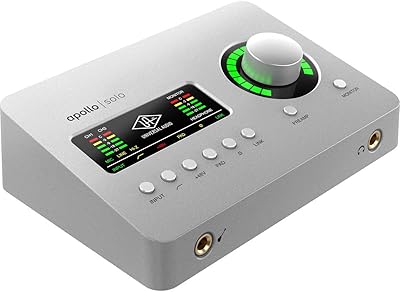
79%
93%
Preamp Quality
91%
DSP Performance
89%
Audio Conversion
92%
Build Quality
74%
Software & Console 2.0
More
Universal Audio Apollo Solo Heritage Edition
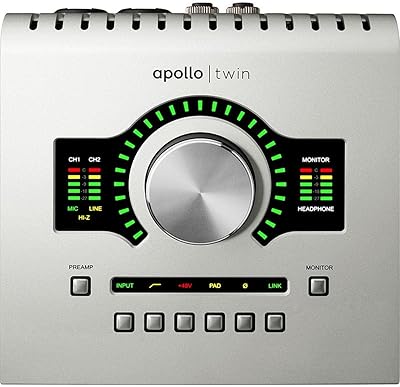
87%
96%
Audio Conversion Quality
93%
Build Quality & Durability
89%
DSP Processing Performance
94%
Unison Preamp Integration
82%
Software Ecosystem & LUNA
More
Universal Audio Apollo Twin USB Heritage Interface
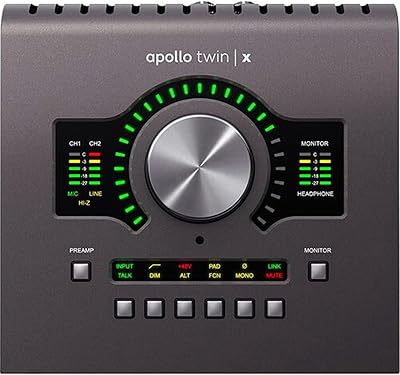
79%
91%
Audio Conversion Quality
86%
UAD DSP Performance
88%
Preamp Quality
71%
Windows Compatibility
74%
Value for Money
More
Universal Audio Apollo Twin X QUAD Interface
81%
93%
Audio Conversion Quality
88%
DSP Performance
91%
Preamp Quality
74%
Value for Money
86%
Build Quality
More
Universal Audio Apollo Twin X DUO Interface
79%
93%
Sound Quality
91%
Preamp Quality
74%
DSP Performance
81%
Value for Money
57%
Platform Compatibility
More
Universal Audio Arrow Thunderbolt 3 Audio Interface
77%
93%
Audio Conversion Quality
91%
Unison Preamp Performance
88%
Real-Time UAD Processing
58%
Thunderbolt 3 Connectivity
61%
Windows Compatibility
More
Audient iD14 MKII
Audient iD14 MKII
87%
94%
Preamplifier Transparency
92%
Build Quality and Weight
89%
Headphone Output Versatility
91%
Digital Expandability
86%
Instrument DI Character
More

FAQ

It works with both Mac and Windows, but the Thunderbolt connection is non-negotiable on either platform. Before buying, confirm that your computer has an active Thunderbolt port — not just USB-C, since the two are physically similar but not always functionally equivalent depending on your machine.

The key difference is the number of onboard DSP chips. The Solo has one SHARC chip, the Duo has two, and the Quad has four. More chips mean you can run more UAD plug-ins simultaneously in real time without hitting a processing ceiling. If you plan to use heavy plug-in chains during tracking, the Solo tier will feel limiting sooner than the higher models.

Yes, any UAD plug-ins already in your account will work through the interface. The onboard DSP chip is what enables them to run in real time, and your existing library carries over fully. The included Analog Classics bundle adds immediately to your collection, but your existing purchases are all accessible from day one.

The included bundle is genuinely useful and not just a token starter pack — the LA-2A, 1176LN, and Pultec emulations are tools professionals actually use. That said, if you start exploring the full UAD catalog, the costs add up quickly. It is worth treating the plug-in ecosystem as an ongoing investment, not a one-time purchase.

When you load a Unison-compatible preamp plug-in, the hardware physically reconfigures its impedance and gain structure to match the behavior of the modeled unit — rather than just applying digital processing after the fact. In practice, this means a mic plugged into a 610-B Unison preset genuinely responds differently than one running through a clean preamp setting, particularly in how it handles transients and saturation at higher gain levels.

For most single-track recording sessions — a vocalist with a compressor and EQ, or a guitarist monitoring through an amp sim — one chip handles things comfortably. Where it gets tight is if you try to run multiple heavy plug-ins across several channels simultaneously, which is more of a mixing scenario than a tracking one. For straightforward home studio tracking, it is generally adequate.

Yes, the eight-channel optical input is there specifically for that purpose. You can connect a separate preamp unit with ADAT output — like an Focusrite OctoPre or a similar expander — and bring in up to eight additional channels of audio through the optical connection, without needing another interface entirely.

You would need a Thunderbolt-equipped computer to continue using the Apollo Twin MkII Solo. There is no USB mode or adapter-based workaround that provides full functionality. This is worth thinking about before purchasing, especially if you use multiple machines or plan to upgrade your computer in the near future.

There is a learning curve, particularly if you are used to simpler interface control panels. Console 2.0 is modeled after a hardware mixer workflow, so concepts like bus routing and channel strips are front and center. Most users find it intuitive after a few sessions, but it is not as plug-and-play as the software bundled with entry-level interfaces.

It requires an external power supply and is not bus-powered over Thunderbolt. This is fairly standard for interfaces with this level of analog circuitry and DSP processing, but it does mean one more cable and power outlet to account for on your desk.

Where to Buy