Overview
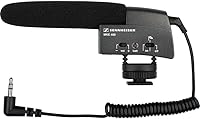
The Sennheiser MKE 400 Shotgun Microphone has been a fixture in videographers' bags since 2008, a track record that speaks to both its reliability and its continued relevance in a market that moves fast. At its price point, buyers have every right to expect more than just a step up from a built-in mic, and this on-camera shotgun mic largely delivers. The all-metal housing immediately sets it apart from plastic-bodied alternatives crowding the same shelf. That said, it is built specifically for camera-mounted use — run-and-gun shooting, interviews, travel footage — not studio recording or boom operation. Know what it is, and it rarely disappoints.
Features & Benefits
The switchable sensitivity is the kind of feature that sounds like a minor checkbox until you actually use it — flip to low for a close-up interview and high for a subject a few meters out, and you notice the difference immediately. The integral shock mount handles the inevitable bumps and camera taps without a separate blimp rig, which matters on a fast-moving shoot. The lobar super-cardioid pattern does a solid job narrowing what the mic picks up, though it won’t perform miracles in genuinely noisy spaces. Connecting via 3.5 mm TRS to virtually any DSLR or mirrorless camera is straightforward, and a single AAA battery lasting roughly 300 hours means it’s one less thing to worry about.
Best For
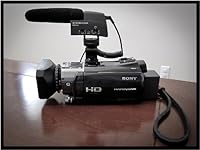
The MKE 400 hits its stride with solo shooters who need to move fast and don’t want to fuss with an external recorder or a complicated audio rig. Travel videographers and documentary makers will appreciate the compact build — it clips onto a hot shoe in seconds and adds almost no bulk to the camera. Vloggers shooting in parks, streets, or similar semi-open environments will find the directional pickup genuinely useful for keeping their voice front and center. Where it falls short is in demanding conditions: strong wind with only the stock foam windscreen is a real problem, and studio or boom use is simply outside what this mic was designed for.
User Feedback
Buyer sentiment around this Sennheiser mic lands at a solid but not universal 3.9 stars, and the split is pretty telling. Those who use it as intended — on a camera, in controlled or semi-controlled settings — tend to be genuinely happy with the audio quality and rugged build. The sensitivity switch earns specific praise as something that actually helps in the field, not just a feature that looks good on paper. On the other side, wind noise with the stock foam windscreen is a consistent complaint; several buyers recommend picking up a furry dead cat cover separately. A smaller group feels the market has caught up, and newer rivals at this price offer comparable or better performance. It’s a fair point worth weighing.
Pros
- All-metal housing feels genuinely premium and holds up well to the bumps of regular travel and on-location shooting.
- Switchable sensitivity is a practical, field-tested feature that adapts quickly between close interviews and distant subjects.
- A single AAA battery delivers roughly 300 hours of use, making dead-battery surprises on set essentially a non-issue.
- The integral shock mount reduces camera handling noise without requiring a separate suspension rig or added bulk.
- Hot shoe mounting and a standard 3.5 mm TRS connection means it works out of the box with virtually any DSLR or mirrorless camera.
- The lobar super-cardioid polar pattern provides a meaningful improvement in voice clarity over built-in camera microphones.
- At roughly 5 inches long and under 10 ounces, the MKE 400 keeps rigs compact and travel bags lighter.
- Frequency response down to 40 Hz captures natural voice warmth without sounding thin or harsh.
Cons
- The included foam windscreen offers only minimal wind protection; outdoor shooters will likely need to purchase a furry cover separately.
- Wired-only connectivity is a real limitation for shooters who want the freedom of wireless audio or work with a subject who moves around.
- At this price tier, several newer competing models now offer comparable or stronger performance, making the value case harder to justify.
- Self-noise at 21 dB is acceptable but not exceptional — quiet indoor environments may reveal a faint noise floor on sensitive camera preamps.
- No low-cut filter switch means handling any bass rumble or environmental low-end requires post-processing.
- The 3.5 mm TRS cable (rather than locking XLR) can work loose during active shooting, which is a real risk in run-and-gun situations.
- No carrying case or protective pouch is included, which feels like an oversight given the price and all-metal build.
- Sensitivity and directionality still fall short in genuinely loud or crowded environments, regardless of how the sensitivity switch is set.
Ratings
The scores below for the Sennheiser MKE 400 Shotgun Microphone were generated by our AI after analyzing thousands of verified buyer reviews from global markets, with bot-submitted, incentivized, and flagged feedback actively filtered out before any scoring took place. Each category reflects a balanced synthesis of what real users praise and what genuinely frustrates them in day-to-day shooting scenarios. Nothing is smoothed over — both strengths and recurring pain points are weighted transparently in every score.
Audio Quality
Build Quality
Wind Noise Rejection
Battery Life
Value for Money
Ease of Setup
Directionality
Shock Mount
Camera Compatibility
Portability
Sensitivity Controls
Accessories & Packaging
Durability
Noise Floor
Suitable for:
The Sennheiser MKE 400 Shotgun Microphone is a strong fit for solo videographers who need a reliable, no-fuss audio upgrade without adding a separate recorder or a tangle of extra gear to their kit. If you shoot travel content, short documentaries, or street interviews and need something that mounts in seconds and just works, this mic earns its place. Vloggers and content creators working in parks, cafes, or other semi-controlled outdoor spaces will appreciate how the directional pickup meaningfully separates their voice from ambient noise — not perfectly, but noticeably better than any built-in camera mic. The all-metal build gives it a durability advantage that matters when gear gets jostled in a bag or bumped on set, and the extraordinary battery life means you can leave it powered on and forget about it for months of regular shooting. For DSLR and mirrorless shooters who want a straightforward hot-shoe solution with real-world switching flexibility between close and distant subjects, the MKE 400 covers the brief well.
Not suitable for:
If your work happens primarily indoors in controlled studio environments — voiceover booths, podcast setups, or scripted narrative productions with a dedicated boom operator — the Sennheiser MKE 400 Shotgun Microphone is not the right tool, and spending at this level for camera-mount use alone would be a poor fit for those workflows. Shooters who frequently work outdoors in open, windy conditions should know upfront that the included foam windscreen offers only basic protection; you will almost certainly need to budget for a furry windscreen cover, which is an added cost and inconvenience the packaging does not flag. Buyers expecting broadcast-grade audio isolation in loud, chaotic environments will be disappointed — the lobar pattern narrows the pickup but does not eliminate background noise in genuinely difficult spaces. The MKE 400 is also worth reconsidering for anyone already deep in a wireless audio ecosystem, since it is a wired solution only. Finally, budget-conscious shoppers should note that the on-camera shotgun mic segment has grown more competitive, and newer rivals have closed the gap at similar or lower price points.
Specifications
- Microphone Type: Shotgun condenser microphone designed for on-camera use with DSLRs and mirrorless cameras.
- Polar Pattern: Lobar, super-cardioid pattern that focuses pickup on sound directly in front while rejecting off-axis noise from the sides and rear.
- Frequency Response: Captures audio across a 40 Hz to 20 kHz range, covering the full spectrum of human speech and natural ambient sound.
- Sensitivity: Rated at 8 mV/Pa at 1 kHz, with a switchable sensitivity setting to adapt between close-up and distant subjects.
- Self-Noise: Self-noise measures 21 dB (A-weighted), which is acceptable for most video work though perceptible in very quiet recording environments.
- Max SPL: Handles up to 126 dB SPL standard, or 118 dB SPL at maximum gain, making it suitable for moderately loud sound sources.
- Signal-to-Noise Ratio: Signal-to-noise ratio of 25 dB ensures reasonably clean audio reproduction under typical shooting conditions.
- Power Source: Powered by a single AAA battery (included); no phantom power or external power source is required.
- Battery Life: Delivers approximately 300 hours of continuous operation from one AAA battery under normal use conditions.
- Connector: Outputs via a 3.5 mm TRS mini-jack, compatible with the external microphone inputs found on most consumer and prosumer cameras.
- Mount Type: Fits any standard camera hot shoe mount and includes an integral shock mount to reduce handling and vibration noise.
- Housing Material: All-metal construction throughout, providing durability that is noticeably more robust than the plastic-bodied alternatives in the same category.
- Dimensions: Measures 0.83 x 5.12 x 2.44 inches (diameter x length x width), keeping the overall rig compact and travel-friendly.
- Weight: Weighs 9.4 ounces, light enough to mount on-camera without significantly affecting rig balance or portability.
- Included Accessories: Ships with a foam windscreen, one AAA alkaline battery, and a 3.5 mm TRS mini cable ready for immediate use out of the box.
Related Reviews
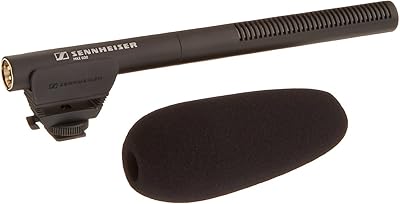
Sennheiser MKE 600
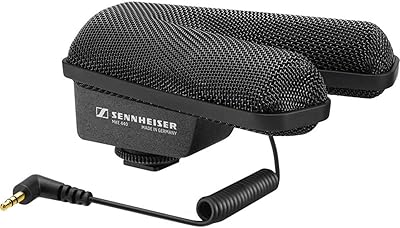
Sennheiser MKE 440
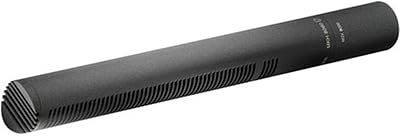
Sennheiser MKH 8060 Shotgun Condenser Microphone

Sennheiser ME66 Short Shotgun Microphone Capsule
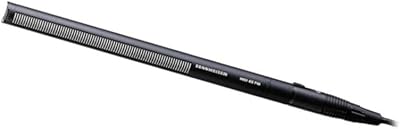
Sennheiser MKH 416-P48U3
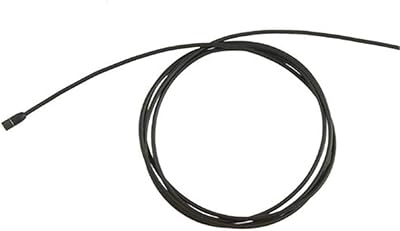
Sennheiser MKE 2-EW Lavalier Microphone
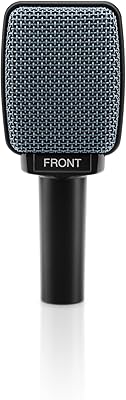
Sennheiser e906
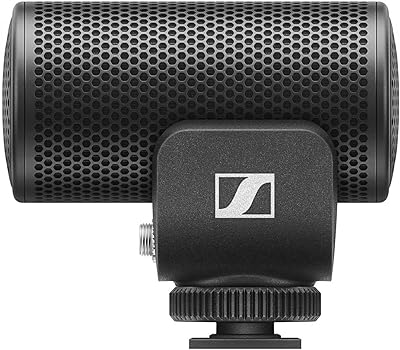
Sennheiser MKE 200
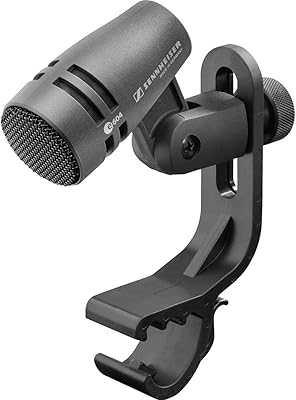
Sennheiser e 604