Overview

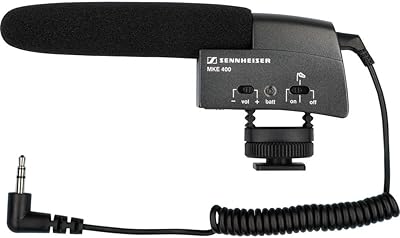
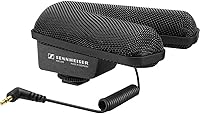
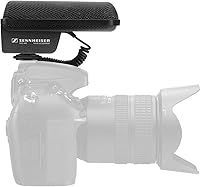
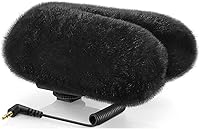
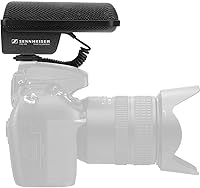
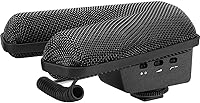
The Sennheiser MKE 440 is a compact, all-metal stereo shotgun microphone built to sit on a camera hot shoe and deliver serious audio without dragging a separate recorder into the bag. It targets videographers, content creators, and run-and-gun filmmakers who are tired of flat mono sound and muddy ambience. The dual mini shotgun capsules capture a natural stereo image with strong frontal focus, immediately putting it in a different league from the typical single-capsule mic clipped to a cold shoe. It runs on two AAA batteries, so there is no need to hunt for phantom power from your camera body.

Features & Benefits

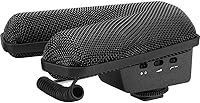
What makes this stereo shotgun mic stand out technically is the way its two super-cardioid capsules are angled apart, producing a genuine stereo field while keeping off-axis noise well under control. The three-position sensitivity switch is genuinely useful in the field — bump it down for a loud event, push it up for a quiet interview, and never touch your camera gain dial again. A built-in low-cut filter handles road rumble and wind at the source, and the integrated elastic suspension absorbs camera handling vibrations before they ever reach the capsules. The 3.5mm TRS output plugs straight into almost any camera body without adapters.

Best For

This camera-mount microphone makes the most sense for solo operators who need dependable stereo audio without building a complex rig. Think documentary filmmakers covering events alone, travel vloggers who want spatial depth in their footage, or journalists grabbing fast-turnaround interviews in unpredictable environments. It also works well as a direct upgrade path for anyone frustrated by the flat, narrow sound of a basic on-camera mic. That said, if you regularly shoot tight talking-head interviews where a wide stereo image sounds unnatural, or you already run an XLR recorder with a proper boom, this mic may not be the most practical fit.

User Feedback

Owners of the MKE 440 are largely satisfied, with the most consistent praise going to the natural stereo width that simply does not exist with single-capsule alternatives. The sensitivity switch also earns repeated mentions as a practical win on location shoots. On the other side, battery life draws genuine criticism — while specs suggest over 100 hours, many users report falling short of that in real-world conditions. A handful of reviewers feel the stereo image spreads too wide for close-range interview work. The price sits firmly at the premium end, and a few buyers admit it took actually hearing the audio quality before the cost felt fully justified.

Pros

  • Dual capsule design produces genuine stereo depth that mono on-camera mics cannot replicate.
  • Three-position sensitivity switch adapts to loud events or quiet interviews without touching camera settings.
  • Integrated elastic suspension measurably reduces handling noise during handheld and walking shots.
  • All-metal construction feels durable and holds up well through regular travel and location use.
  • Lightweight enough at 18 grams to leave on the camera all day without affecting balance.
  • Plugs directly into any 3.5mm camera input with no adapters or external power required.
  • Built-in low-cut filter tackles wind and rumble at the source, reducing post-production cleanup.
  • Hot shoe mounting and dismounting takes seconds, making it practical for fast-paced run-and-gun work.

Cons

  • Battery life falls short of rated specs in real-world use, frustrating shooters on long production days.
  • Stereo image spreads too wide for close single-subject interviews, making dialogue sound spatially unnatural.
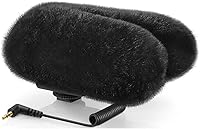
  • No included dead cat windshield means gusty outdoor conditions require an additional purchase.
  • The price point is difficult to justify for casual creators whose content does not demand professional-grade audio.
  • Included cable length can feel short when used with larger mirrorless rigs or extended mounting brackets.
  • Highest sensitivity setting introduces noticeable self-noise in very quiet recording environments.
  • The 3.5mm connector can loosen over time with frequent plugging and unplugging on busy production schedules.

Ratings

The Sennheiser MKE 440 earns its reputation as one of the most capable on-camera stereo mics in its class, and these scores reflect that — but they also reflect the real frustrations buyers encounter once they get it into the field. Our AI has analyzed verified global user reviews, actively filtering out incentivized and bot-generated feedback, to surface an honest picture of where this stereo shotgun mic genuinely excels and where it asks you to compromise.

Audio Quality
93%
The stereo image this camera-mount microphone produces is consistently described as natural, spacious, and well-focused forward. Users shooting documentary footage or event coverage note that the dual capsule arrangement captures environmental depth that single-capsule rivals simply cannot replicate.
A handful of users feel the sound can skew slightly bright in reverberant spaces like tiled rooms or event halls. It is not a dealbreaker for most, but those recording in acoustically challenging environments occasionally need to apply mild post-processing.
Stereo Width & Imaging
88%
Shooters who switched from mono on-camera mics describe the stereo field as immediately noticeable and cinematic. For travel vlogs and event coverage, the sense of space it adds to footage is one of the most praised qualities across buyer reviews.
For tight interview setups where subject and mic are close together, several users find the stereo spread feels unnaturally wide, pulling the voice toward the edges of the field. It is a real limitation for dialogue-focused single-subject shoots.
Build Quality
91%
The all-metal housing earns consistent praise from users who have run it through heavy travel schedules, outdoor events, and repeated hot shoe mounting and dismounting. It feels dense and precise in hand, with nothing rattling or flexing under normal use.
A small number of users note the metal body picks up heat in direct sunlight during outdoor shoots, which can become uncomfortable when handling the camera for extended periods. Cosmetic scratches appear over time but structural integrity holds up well.
Handling Noise & Vibration Rejection
89%
The integrated elastic suspension does genuine work. Users shooting handheld or walking while recording report a clear reduction in footstep and grip noise compared to mics mounted rigidly to the shoe. It is one of the features buyers mention unprompted most often.
The suspension is effective but not perfect — aggressive camera movements or quick pans on unstable terrain can still introduce low-frequency thump. Users relying on it for heavy handheld action work occasionally supplement it with additional grip dampening.
Sensitivity Adjustment
87%
The three-position sensitivity switch draws repeated praise from location shooters who face unpredictable sound environments. Being able to adapt on the fly — without diving into camera menus or adjusting gain — saves real time and prevents clipped audio during live events.
Three positions cover most situations but leave a gap for users who need finer control. Some videographers working in environments that fall between the preset levels find themselves splitting the difference and accepting slight compromises in the final audio.
Wind & Low-Frequency Noise Rejection
82%
18%
The built-in low-cut filter handles mild wind and road rumble effectively in typical outdoor conditions. Users shooting B-roll in urban environments or near traffic report cleaner results than expected for an on-camera mic without an external blimp.
In sustained wind or gusty outdoor conditions, the included protection reaches its limits. Several users recommend adding a third-party dead cat windshield for anything beyond a light breeze, which adds cost and bulk to an otherwise compact setup.
Battery Life
61%
39%
For casual shooters who record a few hours per week, the battery life is rarely a point of friction. Many users go weeks between changes, and the AAA format means replacements are available anywhere in the world when traveling.
This is where buyer satisfaction dips noticeably. Real-world battery life frequently falls short of the rated specification, and compared to competitors claiming 300-plus hours, the MKE 440 can feel demanding for heavy-use shooters on multi-day productions without a reliable supply of fresh cells.
Ease of Setup
94%
Mounting takes seconds — slide it onto the hot shoe, plug the 3.5mm cable into the camera, and you are recording. Users on fast-paced documentary and event shoots highlight how quickly it can be deployed and broken down compared to more complex audio rigs.
The cable management between the mic and camera body can be awkward depending on the camera model, with some users noting the included cable length is slightly short for larger mirrorless rigs with the mic mounted high on an extended bracket.
Size & Portability
92%
At just over 18 grams, the MKE 440 adds almost nothing to a camera rig in terms of weight. Travel shooters and one-bag operators particularly appreciate that it fits into a small accessory pouch without requiring dedicated case space.
Its slightly wider footprint compared to single-capsule mics can block accessory slots or conflict with on-camera monitors depending on the rig configuration. A minor issue for most, but compact mirrorless users with crowded hot shoe areas may need to plan around it.
Compatibility
86%
The standard 3.5mm TRS connector works out of the box with the vast majority of DSLR, mirrorless, and consumer camcorder bodies. Users switching between camera systems appreciate not needing a dedicated cable or adapter for each body they own.
Cameras that require a TRRS connector for combined headphone and mic use may need an adapter that is not included. A minority of users with older or more unusual camera bodies also report needing to check impedance matching before getting optimal signal levels.
Value for Money
72%
28%
For users who actually need stereo on-camera audio at a professional standard, the price aligns reasonably with the output quality and build durability. Buyers who make audio a central part of their productions typically conclude it is money well spent after extended use.
Buyers expecting entry-level pricing based on the physical size of the mic consistently experience sticker shock. Those who primarily shoot for social media or casual content creation may find the investment hard to justify when cheaper alternatives cover basic mono audio at a fraction of the cost.
Noise Floor & Self-Noise
84%
In quiet recording environments like studio interviews or indoor narration setups, the self-noise is low enough to stay out of the way. Users recording ambient sounds for nature or architectural films note the background is impressively clean at the middle and high sensitivity settings.
At the highest sensitivity setting the self-noise rises perceptibly, which a small number of users discovered when recording very quiet subjects in near-silent rooms. Dropping to the middle setting usually resolves it, but it does reduce capture level in the same breath.
Durability Over Time
88%
Long-term owners who have used the MKE 440 for two or more years report no degradation in audio performance or mechanical integrity. The metal construction resists the wear and physical knocks that plastic-bodied mics accumulate during frequent travel and location work.
A small subset of users report issues with the 3.5mm connector becoming slightly loose after extensive use with repeated plugging and unplugging cycles. It is not a widespread complaint but is worth monitoring on high-frequency production schedules.
Directionality & Rejection
85%
Off-axis noise rejection is one of the more technically impressive aspects of this stereo shotgun mic in real-world use. Users recording in noisy environments like markets, streets, or events note that sounds coming from behind and the sides are substantially reduced without filtering in post.
It is not a hyper-focused mono shotgun, so users expecting laser-like rejection of background noise — as they might get from a dedicated long shotgun — will find the stereo design inherently more inclusive of the acoustic environment. Understanding the pickup pattern before purchase avoids disappointment.

Suitable for:

The Sennheiser MKE 440 was built for a specific kind of shooter, and for that person it is genuinely hard to beat. Solo videographers who need to capture natural, spatially rich audio without a sound recordist, a dedicated recorder, or an XLR rig will find it fits their workflow almost perfectly. Documentary filmmakers covering unpredictable environments — street interviews, live events, travel montages — benefit most from the stereo depth and the on-the-fly sensitivity adjustment that keeps audio clean without interrupting a shot. It also makes strong sense for content creators who have outgrown the flat, lifeless sound of a basic bundled mic and want a direct, no-fuss upgrade that mounts in seconds and works with virtually any DSLR or mirrorless body. If you regularly shoot alone and audio quality directly affects the perceived professionalism of your work, this camera-mount microphone sits at a sweet spot between portability and genuine performance.

Not suitable for:

The Sennheiser MKE 440 is a poor match for anyone whose primary shooting style centers on tight, close-range interviews with a single subject, because the wide stereo image can make a voice sound spatially diffuse rather than focused and present. Filmmakers who already run a dedicated audio recorder with XLR inputs and a proper boom setup will find this mic redundant — it solves a problem they do not have. Budget-conscious creators shooting casual content for social media or internal use will likely find the price hard to justify when a simpler, cheaper mono mic covers their actual needs. Heavy production users shooting full days across multiple locations should also factor in the real-world battery performance, which trails behind rival mics in the same category and can become a logistical irritant on long shoots. And if your camera rig is already tight on hot shoe space or crowded with accessories, the slightly wider footprint of this stereo shotgun mic may create mounting conflicts that a slimmer single-capsule option would avoid.

Specifications

  • Capsule Type: Dual super-cardioid shotgun condenser capsules angled apart to produce a true stereo pickup pattern.
  • Polar Pattern: Stereo super-cardioid, providing strong frontal focus with meaningful rejection of off-axis and rear noise.
  • Frequency Response: 50 Hz to 20 kHz, covering the full range of human speech and ambient environmental sound.
  • Sensitivity: Switchable between three positions: 23, 42, and 63 mV/Pa at 1 kHz, allowing adaptation to quiet, moderate, and loud environments.
  • Max SPL: Handles up to 132 dB SPL before distortion, making it suitable for loud live events and high-energy environments.
  • Self-Noise: Self-noise is switchable at 16, 21, or 40 dB depending on the selected sensitivity position.
  • Power Source: Operates on 2 x AAA batteries with no requirement for phantom power from the connected camera.
  • Battery Life: Rated battery life exceeds 100 hours under typical operating conditions, though real-world results may vary.
  • Connector: 3.5mm TRS jack plug for direct connection to DSLR, mirrorless, or camcorder audio inputs without adapters.
  • Dimensions: Measures 2.6 x 4.2 x 5.0 inches, compact enough to sit on a camera hot shoe without dominating the rig.
  • Weight: Weighs just 18.14 grams, adding negligible mass to a handheld or shoulder-mounted camera setup.
  • Construction: All-metal housing provides structural rigidity and resistance to the wear of regular travel and location production work.
  • Suspension: Built-in elastic suspension mechanically decouples the capsule assembly from the body to reduce camera handling and footstep vibration.
  • Low-Cut Filter: Integrated low-cut filter attenuates low-frequency rumble and wind noise directly at the mic before signal reaches the camera.
  • Mount Type: Fits standard camera hot shoe mounts, allowing tool-free attachment and removal in seconds.
  • Included Accessories: Ships with two AAA alkaline batteries and a cable terminated with a 3.5mm jack for immediate use out of the box.
  • Signal-to-Noise: Signal-to-noise ratio is rated at 25 dB, supporting clean capture in controlled recording environments.
  • Channels: Outputs a single stereo signal across one 3.5mm TRS connector, recording left and right channels simultaneously.

Related Reviews
Sennheiser MKE 200
Sennheiser MKE 200
82%
88%
Audio Clarity
81%
Background Noise Rejection
79%
Wind Noise Handling
63%
Build Quality & Durability
94%
Ease of Setup & Use
More
Sennheiser MKE 600
Sennheiser MKE 600
89%
93%
Vocal Clarity
88%
Off-Axis Rejection
96%
Powering Versatility
91%
Build Durability
84%
Environmental Resilience
More
Sennheiser MKE 400 Shotgun Microphone
85%
88%
Audio Quality
94%
Battery Life
90%
Portability
86%
Build Quality
82%
Ease of Use
More
Sennheiser MKE 2-EW GOLD Omni-Directional EW Microphone
87%
94%
Sound Quality
89%
Durability and Build Quality
85%
Ease of Setup
90%
Noise Reduction
88%
Portability
More
Sennheiser HD 650
Sennheiser HD 650
84%
96%
Sound Clarity
88%
Bass Response
94%
Midrange Accuracy
91%
Treble Detail
89%
Comfort
More
Sennheiser HD400S Headset
85%
85%
Sound Quality
88%
Comfort for Long Listening
90%
Portability
80%
Noise Isolation
87%
Build Quality
More
Sennheiser HD 560S
Sennheiser HD 560S
74%
93%
Sound Accuracy
91%
Soundstage & Imaging
88%
Comfort & Fit
63%
Build Quality
71%
Amplifier Dependency
More
Sennheiser e906
Sennheiser e906
88%
96%
Build Durability
94%
Guitar Amp Performance
88%
Tonal Versatility
91%
Off-Axis Rejection
84%
Snare & Percussion Clarity
More
Sennheiser e 604
Sennheiser e 604
88%
94%
Build Quality & Durability
97%
High SPL Handling
88%
Mounting System Convenience
91%
Audio Clarity & Transient Response
93%
Form Factor & Positioning
More
Sennheiser MD 42 Microphone
87%
95%
Sound Quality
91%
Build Quality
92%
Durability
87%
Ease of Use
93%
Wind Protection Performance
More

FAQ

Yes, as long as your camera has a standard 3.5mm stereo microphone input, this camera-mount microphone will connect and record without any adapters. Most Sony, Canon, Nikon, and Fuji mirrorless bodies have this input, but it is worth double-checking your specific model before purchasing, since a small number of cameras require a TRRS plug instead of TRS.

You do need to make sure your camera is set to record stereo audio rather than mono, and that the input gain is set to an appropriate level. The mic handles the stereo capture itself, but if your camera defaults to mono recording, you will only get a summed signal. Check your camera audio menu and set it to stereo before your first shoot.

At the lowest sensitivity setting the self-noise rises to around 40 dB, which is audible in very quiet recording environments like a silent studio. For most real-world shooting situations — interviews, outdoor footage, events — the middle sensitivity setting at 21 dB is a better all-around choice and keeps background hiss well out of the picture.

Not directly without an adapter, since most smartphones use a TRRS 3.5mm jack that combines microphone and headphone connections. The MKE 440 uses a standard TRS plug, so you would need a TRS-to-TRRS adapter. Results can also vary depending on the phone's microphone input impedance, and some mobile devices do not supply enough bias voltage for optimal performance.

For a subject standing or sitting a few feet from the camera, the stereo spread can feel noticeably wide, which some people find unnatural for dialogue. It works better when there is some environmental context around the subject — a room, outdoor setting, or ambient background — rather than a clean isolated voice. For tight talking-head interviews where you want a focused, central sound, a mono mic is usually a better fit.

The built-in foam and the low-cut filter handle light breezes reasonably well, but in windy outdoor environments most users find that an aftermarket furry windshield makes a significant difference. A dead cat style cover fits over the mic body and is worth keeping in your bag if you regularly shoot outside.

It runs on two standard AAA alkaline batteries, which are available at virtually any convenience store, pharmacy, or supermarket worldwide. This is a genuine practical advantage for travel shooters who cannot always predict when they will need a replacement. That said, it is worth carrying a spare pair given that real-world battery life can fall shorter than the rated spec during extended recording days.

It does, noticeably so. When mounted rigidly, low-frequency vibrations from gripping, walking, or bumping the camera body transfer directly to the capsules. The suspension absorbs most of that contact noise before it becomes a problem. It will not eliminate every handling artifact during aggressive movement, but compared to a hard-mounted mic, the difference in a typical handheld walk-and-talk situation is clear.

The Sennheiser MKE 440 occupies the hot shoe directly, so if your primary hot shoe is taken by another accessory you will need a cold shoe adapter or a shoe splitter to mount both items. The mic body is slightly wider than a single-capsule shotgun, so it is worth checking that nothing conflicts physically on your specific rig before committing.

It can capture music in a pinch, particularly for ambient or live performance recording where stereo depth is an asset. However, it is optimized for speech and environmental sound in video production rather than studio music recording. For dedicated music capture you would typically want a mic with a flatter frequency response and lower self-noise across all sensitivity settings.