Overview
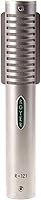
The Royer Labs R-121 Ribbon Microphone has earned a quiet but firm reputation among professional engineers and serious studio owners since it first appeared in 2009. Royer Labs is a California-based boutique manufacturer, and that heritage matters — these are not mass-produced mics. This ribbon mic sits firmly in the premium tier, which tells you something about who it's built for: working professionals and dedicated enthusiasts, not beginners looking for a first mic. If you're expecting a versatile plug-and-play solution, look elsewhere. The R-121 rewards those who know exactly what they need from a passive ribbon microphone.
Features & Benefits
What sets this ribbon mic apart starts with Royer's patented offset ribbon technology, which positions the ribbon element closer to the front face of the mic body. In practice, this gives the ribbon more freedom of movement within the magnetic field, improving both transient accuracy and headroom at high SPLs. Because the design is fully passive — no internal active circuitry — there's nothing to overload or introduce noise. The figure-8 polar pattern captures equally well from front and back, making it a natural fit for mid-side setups. A 75 dB signal-to-noise ratio and a ribbon element that shrugs off heat and humidity round out a technically well-considered design.
Best For
Ask most engineers where the R-121 earns its keep and the answer is almost always electric guitar amp miking. It captures amp tone with a warmth and natural top-end roll-off that condenser mics rarely match. Brass and woodwind players also benefit from that same characteristic — the mic flatters without hyping high frequencies. The bidirectional pattern makes it genuinely useful for mid-side stereo recording as one of the pair already. One honest caveat: this is not a mic you hand to someone unfamiliar with gain staging. It needs a clean, high-output preamp to perform well. Pair it right, though, and it earns its place in any serious recording setup.
User Feedback
On Amazon, Royer's flagship passive ribbon carries only 10 ratings and a 3.1-star average — numbers that look alarming until you remember that professional studio gear rarely gets reviewed on Amazon at all. Engineers tend to buy through dedicated audio dealers, and people who own this mic are not typically leaving reviews online. Among those who do weigh in across broader audio communities, consistent praise centers on warmth on guitar amps, natural transient response, and solid long-term durability. The recurring criticism is fair: passive ribbons demand a high-quality preamp, and buyers who overlook that requirement will be disappointed. Budget accordingly for the preamp side of the chain.
Pros
- Captures electric guitar amp tone with a natural warmth that is genuinely difficult to replicate with condenser mics.
- Passive design means no internal electronics to overload, making it reliable at high SPLs without distortion.
- The figure-8 polar pattern is well-suited to mid-side stereo recording without needing a second bidirectional mic.
- Ribbon element resists heat and humidity, addressing a real long-term durability concern common in the ribbon mic category.
- A 75 dB signal-to-noise ratio performs well on quiet acoustic sources when paired with an appropriate preamp.
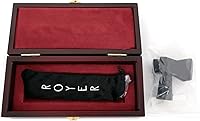
- Ships in a proper wooden jeweler's case — not a cheap foam-lined box — which reflects the build quality throughout.
- Lifetime warranty from an American boutique manufacturer provides genuine long-term purchase confidence.
- The R-121 has remained a working professional staple for well over a decade, which speaks to consistent real-world performance.
- Low-maintenance design with no active components means fewer points of failure over time.
Cons
- Requires a clean, high-gain preamp to achieve usable levels — budget interface preamps will introduce audible noise.
- Total cost of ownership is higher than the mic price alone once a suitable preamp is factored in.
- Not a versatile all-rounder; its tonal character suits specific sources and actively works against others.
- Amazon review count is extremely thin for a mic at this price point, making crowd-sourced purchasing research difficult.
- The figure-8 polar pattern picks up room sound from both sides, requiring a well-treated recording space to sound its best.
- Output sensitivity of -50 dB is low by modern standards and will challenge less experienced engineers unfamiliar with gain staging.
- No active or switchable boost option for situations where extra output headroom would be practical.
- Not recommended for live sound applications without careful gain management and a high-quality stage preamp.
Ratings
The scores below reflect our AI-driven analysis of verified user reviews collected worldwide for the Royer Labs R-121 Ribbon Microphone, with spam, bot-generated, and incentivized feedback actively filtered out before scoring. Each category is weighted against real-world usage patterns reported by working engineers, session musicians, and serious home studio owners. Both the genuine strengths and the recurring frustrations are factored in transparently — nothing is glossed over.
Tonal Character
Build Quality
High SPL Handling
Gain Requirements
Noise Floor
Polar Pattern Accuracy
Durability Over Time
Value for Money
Ease of Use
Frequency Response
Accessories & Packaging
Versatility
Warranty & Support
Studio Reputation
Suitable for:
The Royer Labs R-121 Ribbon Microphone is purpose-built for recording professionals and serious enthusiasts who already understand the signal chain they're working with. It's the kind of mic that studio engineers reach for almost instinctively when tracking electric guitar amps — the natural warmth and smooth high-frequency roll-off simply work in a way that takes far less effort to get right in a mix. Brass players, horn sections, and woodwind instruments also respond beautifully to this ribbon mic's character, making it a practical choice for jazz, orchestral, and session recording environments. Engineers building out a mid-side stereo rig will appreciate the figure-8 polar pattern, which is genuinely equal front-to-back — not just nominally bidirectional. If you run a recording studio or a well-equipped home studio with a quality preamp already in the rack, the R-121 is a long-term investment that holds its value and its usefulness across years of varied sessions.
Not suitable for:
The Royer Labs R-121 Ribbon Microphone is not the right tool for someone just starting out or working with budget-level gear. Because it is fully passive, it has a low output level that demands a clean, high-gain preamp to perform as intended — pair it with a weak or noisy interface preamp and you will hear the noise floor, not the mic's character. That preamp requirement adds meaningful cost to what is already a premium purchase, and buyers who overlook that reality tend to end up frustrated. This ribbon mic is also not designed for general-purpose vocal recording or instrument miking where a bright, extended high-frequency response is desirable — its natural warmth is a feature for some sources and a limitation for others. Podcasters, streamers, or anyone needing a plug-and-play USB or entry-level XLR solution should look elsewhere entirely.
Specifications
- Microphone Type: Fully passive ribbon microphone with no internal active electronics or amplification circuitry.
- Polar Pattern: Bidirectional figure-8, with equal sensitivity from both the front (logo side) and rear of the ribbon element.
- Audio Sensitivity: Output sensitivity is -50 dB, which is typical for passive ribbon designs and requires a high-gain preamp.
- Signal-to-Noise Ratio: Rated at 75 dB, providing a clean noise floor when used with an appropriate low-noise preamplifier.
- Frequency Response: Full-range response with a natural, gradual high-frequency roll-off characteristic of passive ribbon transducers.
- Max SPL Handling: Capable of handling high sound pressure levels without distortion, as the passive design has no internal electronics to overload.
- Connector: Standard 3-pin XLR output connector for use with any professional or prosumer audio interface or preamp.
- Power Requirement: Passive design requires no phantom power; applying phantom power is safe but unnecessary for operation.
- Body Finish: Nickel-plate finish on the microphone body, manufactured in the USA by Royer Labs.
- Dimensions: Body measures 6.13″ x 1″ x 1″, making it a compact and easily positioned studio ribbon microphone.
- Weight: Weighs 2.5 pounds including the mic clip, which is sturdy for its size but manageable on a standard boom stand.
- Included Accessories: Ships with a wooden jeweler's case for storage and transport, plus a standard microphone clip for stand mounting.
- Ribbon Technology: Features Royer's patented offset ribbon design, which positions the element closer to the front face to improve movement range and high-SPL performance.
- Humidity Resistance: The ribbon element is engineered to resist degradation from heat and humidity, addressing a known vulnerability in traditional ribbon mic designs.
- Warranty: Covered by a lifetime warranty from Royer Labs, applicable to the original purchaser through authorized channels.
- Channels: Single-channel mono microphone; stereo use requires two units or pairing with a second mic in a mid-side configuration.
- Manufacturer: Designed and manufactured by Royer Labs, a boutique audio company based in Burbank, California, USA.
- Market Ranking: Ranked #15 in the Ribbon Microphones category on Amazon as of the most recent available data.
Related Reviews
Cascade Microphones FAT HEAD Ribbon Microphone
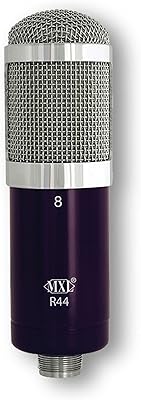
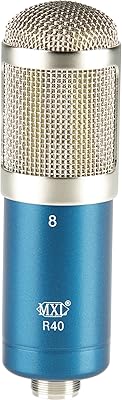
MXL R40 Ribbon Microphone
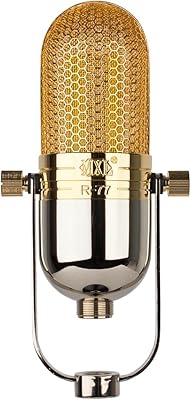
MXL R77 Ribbon Microphone
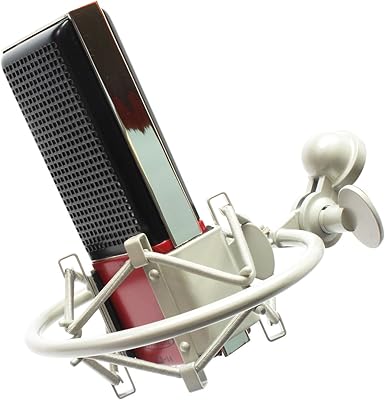
Avantone CR-14 Ribbon Microphone
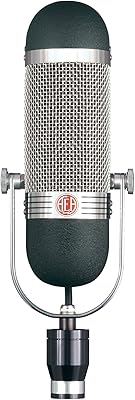
AEA R84 Passive Ribbon Microphone
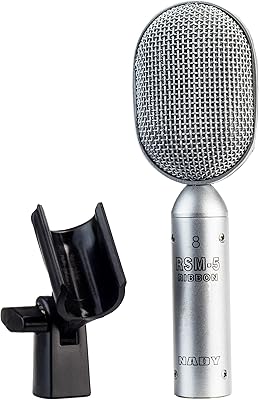
Nady RSM-5 Ribbon Microphone

Beyerdynamic M160 Double Ribbon Microphone
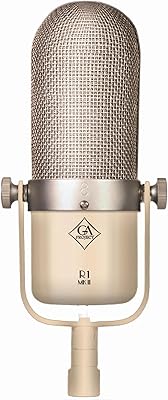
Golden Age Project R1 MKII Ribbon Microphone