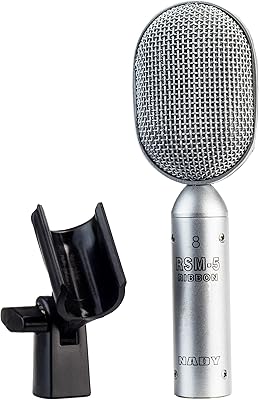
Golden Age Project R1 MKII Ribbon Microphone
Overview
The Golden Age Project R1 MKII Ribbon Microphone is a passive ribbon mic from a Swedish brand that has built a solid reputation for making pro audio tools genuinely accessible. Since its release in 2012, it has earned a steady following in home and project studios as a sensible entry into ribbon mic territory. The character is warm — smooth highs with none of the edge you often get from condenser mics. That said, passive ribbon mics are demanding in a specific way: they need a preamp with plenty of clean gain. Pair this ribbon mic with a weak interface and you will mostly record noise.
Features & Benefits
At the core of the R1 MKII is a 50mm aluminum foil ribbon, just 2 microns thick — the physical reason ribbon mics sound the way they do, with that natural softness on the upper frequencies. The passive XLR design needs no phantom power, but your preamp's quality really does determine the results here. Output impedance is 200 ohms, and preamp matching matters: low-impedance preamps can rob the tone of body. The figure-8 polar pattern extends its usefulness beyond straightforward single-source recording — Blumlein stereo techniques and two-source setups both become possible. The aluminum body feels solid, the gold finish is distinctive, but no shock mount comes in the box.
Best For
This ribbon mic makes the most sense for home studio users who are tired of the brightness or sibilance that condenser microphones can bring. Vocalists and acoustic guitarists in particular tend to appreciate the natural warmth without reaching for heavy EQ afterward. Voice-over artists and podcasters can get a classic broadcast tone from it, assuming they have a quality preamp in the chain. The figure-8 pattern is also useful in treated rooms where you want to capture natural ambience or reject bleed from behind the mic. Budget-conscious engineers looking to explore ribbon techniques without a major investment will find this a credible starting point.
User Feedback
With a 4.4-star average across 37 ratings, the R1 MKII has a positive — though limited — track record to draw from. Common praise focuses on the warm, natural tone it brings to vocals and acoustic instruments, and buyers frequently mention that build quality feels more substantial than its price bracket implies. The main recurring complaint is noise — specifically, preamp pairing issues with budget interfaces that simply lack the clean gain a passive ribbon requires. The missing shock mount gets flagged regularly too; ribbon elements are mechanically fragile, and treating that accessory as a required purchase rather than optional is wise. On balance, Golden Age Project's passive ribbon holds up well given what it costs.
Pros
- Delivers genuinely warm, smooth tone on vocals and acoustic instruments without heavy EQ work.
- Passive design means no phantom power is required — just plug in and record.
- The figure-8 polar pattern opens up stereo recording techniques like Blumlein pairs.
- Aluminum body feels solid and well-constructed for its price tier.
- The retro gold finish gives it a distinctive, professional look on camera or in a studio.
- Has maintained an active, uninterrupted product presence since 2012 — a sign of lasting relevance.
- Consistently praised by buyers for tonal character on acoustic guitar and voice recording.
- 200-ohm output impedance is a standard, compatible spec for most quality preamps.
- A practical entry point for engineers who want to learn ribbon mic technique hands-on.
- Community familiarity means plenty of user tips, preamp pairings, and real-world advice are available online.
Cons
- Demands a high-gain, low-noise preamp — budget interfaces will produce noisy, unusable recordings.
- No shock mount included, and buying one separately is essentially mandatory given the fragility of ribbon elements.
- No carrying case or protective storage solution ships with the mic.
- Low output sensitivity means the signal chain matters far more than with condensers or dynamics.
- Preamp impedance matching affects tone noticeably — low-impedance preamps can thin out the character.
- The 37-rating review pool is too small to draw confident, wide-ranging conclusions about long-term reliability.
- Ribbon elements are mechanically fragile and can be damaged by strong air blasts or rough handling.
- Not a good fit for high-SPL sources like loud drum overheads or close-miked brass instruments.
- Users upgrading from USB or all-in-one interfaces may face unexpected additional costs for compatible gear.
- Figure-8 pattern picks up sound from both sides, which requires a treated room to avoid unwanted reflections.
Ratings
The scores for the Golden Age Project R1 MKII Ribbon Microphone were generated by our AI rating engine after analyzing verified user reviews from buyers worldwide, with spam, bot-generated, and incentivized feedback actively filtered out to reflect genuine ownership experience. The results present an honest picture: real strengths in tonal warmth, high-frequency smoothness, and vocal performance are transparently weighed against significant concerns around preamp requirements, noise floor behavior, and the absence of essential accessories. Where this ribbon mic excels, the scores reflect it — and where real buyers have run into problems, those pain points are captured just as clearly.
Tonal Character
Build Quality
Preamp Compatibility
Value for Money
Polar Pattern Versatility
Low-Frequency Response
High-Frequency Smoothness
Noise Floor Performance
Setup Complexity
Accessory Inclusion
Durability
Vocal Recording Performance
Instrument Recording
Design & Aesthetics
Suitable for:
The Golden Age Project R1 MKII Ribbon Microphone is a strong fit for home and project studio users who want the classic warmth of a ribbon mic without spending at the high end of the market. Vocalists who find condenser microphones too bright or harsh on the upper frequencies will notice an immediate difference — the natural high-frequency rolloff of a ribbon does a lot of the smoothing work before you touch an EQ. Acoustic guitarists and producers miking instrument cabinets will also find it genuinely useful, especially when taming an already bright source. Podcasters and voice-over artists chasing that vintage broadcast character can get real mileage from it, provided they already own or plan to buy a quality preamp with solid clean gain. The figure-8 polar pattern adds versatility for anyone interested in Blumlein stereo recording or managing room bleed in a reasonably treated space. Engineers curious about ribbon mic technique who are not ready to commit to a high-end unit will find this a credible, low-risk way to learn the format.
Not suitable for:
Anyone running a budget USB interface or a preamp with modest gain should think carefully before purchasing the Golden Age Project R1 MKII Ribbon Microphone, because the mismatch is the single most common source of disappointment with this mic. Passive ribbon designs require significantly more clean gain than dynamic or condenser microphones, and pairing one with an underpowered interface typically results in a noisy, thin signal no amount of post-processing can fully fix. Broadcasters or content creators who need a plug-and-play solution will also find this a frustrating fit — there is no USB option, no built-in preamp, and no accessories included in the box. Live sound engineers should look elsewhere entirely, as ribbon mics are fragile by design and ill-suited to high-SPL stage environments. Buyers expecting a complete kit out of the box will be disappointed too: no shock mount is included, and given how sensitive ribbon elements are to vibration and handling, purchasing one separately is not optional — it is necessary.
Specifications
- Mic Type: Passive ribbon microphone with no active electronics, requiring no phantom power to operate.
- Polar Pattern: Figure-8 (bidirectional) pattern captures sound equally from the front and rear while rejecting sound from the sides.
- Ribbon Element: 50mm aluminum foil ribbon element, approximately 2 microns thick, which produces the characteristic warm, smooth high-frequency response.
- Output Impedance: Nominal output impedance of 200 ohms; preamp impedance compatibility is important for preserving full tonal character.
- Sensitivity: Audio sensitivity of -52 dB, which is relatively low and requires a high-gain, low-noise preamp to achieve a clean, usable signal.
- Signal-to-Noise: Signal-to-noise ratio of 160 dB as specified by the manufacturer.
- Connectivity: Standard XLR connector for use with preamps, audio interfaces, and mixing consoles.
- Power Source: Fully passive design that draws no power from phantom power circuits and operates solely through the connected preamp.
- Body Material: Aluminum body construction finished in a distinctive gold color, providing a sturdy build with a retro broadcast aesthetic.
- Weight: The microphone weighs approximately 3.45 pounds.
- Dimensions: Overall product dimensions are 15.98 x 9.02 x 7.01 inches.
- Included Items: Ships with the microphone only; no shock mount, storage case, or XLR cable is included in the box.
- Channels: Single-channel (mono) microphone outputting one audio signal through the XLR connection.
- Brand Origin: Designed and manufactured by Golden Age Project, a Swedish pro audio company known for accessible professional recording equipment.
- Availability: First made available in February 2012 and has not been discontinued, indicating ongoing production and parts availability.
Related Reviews
Golden Age Project R1 Active MKIII Microphone
Cascade Microphones FAT HEAD Ribbon Microphone
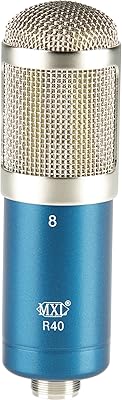
MXL R40 Ribbon Microphone
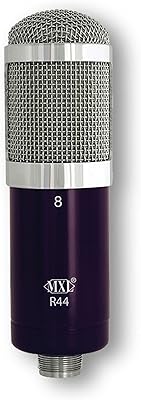
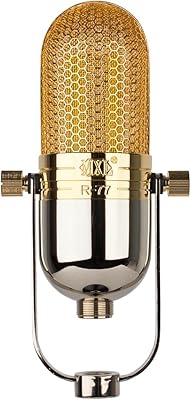
MXL R77 Ribbon Microphone

Beyerdynamic M160 Double Ribbon Microphone
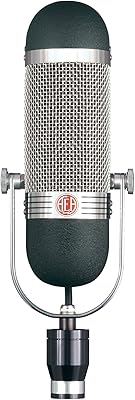
AEA R84 Passive Ribbon Microphone
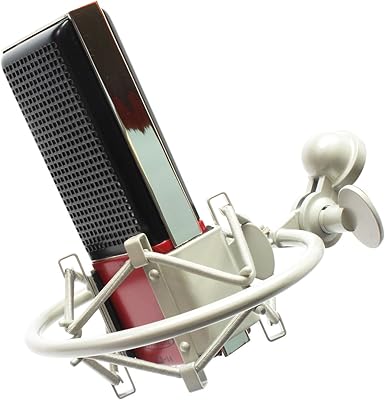
Avantone CR-14 Ribbon Microphone
Studio Projects C1 Large-Diaphragm Condenser Microphone