Overview

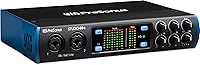
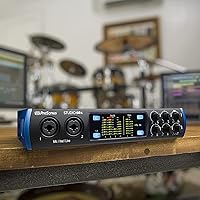
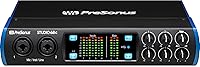
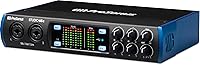
The PreSonus Studio 68c USB Audio Interface sits in a sweet spot for home studio owners who need more than two channels but are not ready to invest in a full rack-mounted setup. This 6-channel interface addresses a real gap: you have outgrown a basic two-input unit, but a 16-channel system is overkill. The jump to six simultaneous inputs changes how you record — tracking a vocalist, guitarist, and synth at once stops being a juggling act. The included software bundle covers both production and mixing ground, and feels like a legitimate head start rather than an afterthought. The chassis is compact and genuinely desk-friendly.

Features & Benefits

The XMAX Class A preamps are where this PreSonus unit earns its keep. Clean preamps mean less time fighting noise during quiet vocal takes or fingerpicked guitar parts. Recording resolution tops out at 24-bit/192kHz, though it is worth knowing that four tracks at 192kHz is the hard cap — for most sessions, 96kHz or 48kHz is where you will actually work. Two dedicated instrument inputs handle direct guitar or bass without a DI box, and four balanced TRS line inputs make connecting a synth rack straightforward. The Cue Mix A/B function lets you toggle between mixes on the fly — genuinely useful for producers who monitor differently than the performers they are recording.

Best For

This 6-channel interface makes the most sense for producers who have genuinely outgrown a two-input setup. Think of the bedroom producer capturing drums, keys, and a live vocal together, or the singer-songwriter tracking a small ensemble without renting studio time. Electronic musicians and DJs will find real value in the dual-mix monitoring, where one headphone blend stays private while another feeds the room. Podcasters and content creators needing multiple clean mic channels will feel the step up immediately. If you are already rooted in Studio One or shopping for a DAW to grow into, the bundled entry-level software tightens the case considerably.

User Feedback

Owners of the Studio 68c consistently highlight clean, quiet preamps as the standout attribute — a point that comes up repeatedly from users upgrading from entry-level gear. The bundled software draws genuine appreciation, though savvier buyers note upfront that Studio One Artist and Ableton Live Lite carry feature restrictions that full licenses do not. Driver stability pulls occasional complaints, particularly on specific Windows builds, and a few users describe the chassis as feeling lighter than expected at this price tier. Stacked against Focusrite Scarlett options at similar channel counts, feedback is genuinely split on character versus driver reliability — making the Studio 68c competitive, but not a runaway winner.

Pros

  • Four XMAX Class A preamps deliver notably clean, low-noise performance that holds up well for vocal and acoustic instrument recording.
  • The six-input layout covers most small-session scenarios without requiring a second interface or a patchbay.
  • Cue Mix A/B monitoring lets producers and performers listen to different mixes simultaneously through headphones.
  • USB-C with both cable types included means no hunting for adapters before your first session.
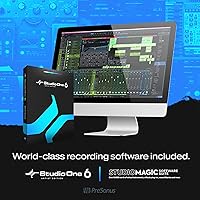
  • The bundled software package — Studio One Artist, Studio Magic plug-ins, and Ableton Live Lite — offers real tools, not just demos.
  • S/PDIF and MIDI I/O expand connectivity options beyond what most interfaces in this channel count offer.
  • The compact footprint fits comfortably on a crowded desk without dominating the workspace.
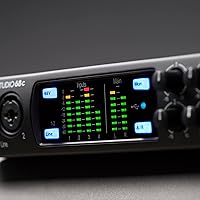
  • LED ladder-style level meters give a clear visual read on input and output levels at a glance.
  • Works across a wide range of DAWs including Pro Tools, Logic Pro, FL Studio, and Reaper.
  • Owners upgrading from entry-level two-channel gear consistently report a noticeable improvement in recording quality.

Cons

  • Recording at 192kHz is capped at four tracks simultaneously, which can catch buyers off guard mid-session.
  • Driver stability on some Windows versions has caused intermittent issues that require troubleshooting time.
  • The plastic build quality feels lighter than expected, especially for buyers comparing it to metal-chassis competitors.
  • Studio One Artist and Ableton Live Lite are entry-level versions with meaningful feature restrictions compared to full licenses.
  • Six channels may feel limiting sooner than expected for producers whose sessions grow in complexity over time.
  • No standalone hardware monitoring mix control beyond the Cue Mix A/B toggle, which some workflows will find restrictive.
  • Occasional DAW compatibility edge cases reported, particularly with less common hosts or older OS versions.
  • Users comparing it directly to Focusrite Scarlett equivalents often cite driver reliability and software ecosystem as key differentiators worth researching before committing.

Ratings

The PreSonus Studio 68c USB Audio Interface earns consistently strong marks across verified global buyer reviews, with scores reflecting genuine strengths in audio performance and I/O flexibility alongside honest trade-offs in build materials and driver reliability. These ratings are generated by AI after analyzing thousands of confirmed purchaser reviews worldwide, with spam, bot submissions, and incentivized feedback actively filtered out. Both the highlights and the friction points are reflected transparently so buyers can make a fully informed decision.

Preamp Quality
88%
Users tracking vocals and acoustic instruments consistently praise the XMAX Class A preamps for delivering clean, detailed recordings with minimal background noise. Home studio owners upgrading from budget interfaces frequently describe the improvement as immediately noticeable on quiet vocal takes and fingerpicked guitar sessions.
A small portion of users recording particularly high-gain sources note that the preamps can color the signal slightly at extreme input levels. Those coming from higher-end studio preamps may find the overall character less neutral than expected at this channel count.
Audio Clarity
86%
The converters handle 24-bit resolution reliably, and recordings come back clear and well-defined across the frequency range in typical session conditions. Producers mixing synth-heavy arrangements appreciate the headroom and separation between channels at standard sample rates.
The 192kHz ceiling sounds impressive but only applies to 4 simultaneous tracks, which catches some buyers off guard during denser sessions. At maximum sample rate, the track limit creates real workflow friction for anyone expecting full channel access at the highest resolution.
Input/Output Flexibility
91%
Six simultaneous channels — including four combo inputs and two dedicated instrument jacks — give home producers meaningful room to grow without jumping to a full rack-mounted setup. The ability to run microphones, direct instruments, and line-level synths at the same time is a genuine workflow upgrade for small ensemble tracking.
Advanced users running larger live setups or tracking full drum kits will reach the input ceiling quickly. Compared to higher-channel-count options from PreSonus or competitors, the Studio 68c leaves little margin for session expansion beyond six sources.
Driver Stability
67%
33%
On macOS, the majority of users report stable, low-latency performance with minimal setup friction across recent operating system versions. Many Windows users also run the interface without issues once the correct driver version is installed from the PreSonus site.
A recurring thread in user feedback involves intermittent driver problems on specific Windows builds, including audio dropouts and occasional recognition failures after system updates. Users in production-critical environments on Windows should factor in potential troubleshooting time before committing to this interface.
Software Bundle Value
83%
Getting both Studio One Artist and Ableton Live Lite alongside the Studio Magic plug-in suite gives first-time studio builders two legitimate DAW environments to explore without spending extra. Users new to recording consistently cite the bundle as a meaningful factor that lowers the total cost of getting a functional home studio running.
Both bundled DAWs are entry-level or restricted versions — Studio One Artist lacks some advanced mixing features, and Ableton Live Lite caps track count and instrument availability. Experienced producers already holding full licenses will see little added value from the bundle itself.
Build Quality
71%
29%
The chassis is compact and holds up fine in standard desktop use, and most users who keep it in a fixed home studio position report no durability issues over extended periods. The unit feels purposefully designed for a stationary workflow rather than heavy road use.
Compared to the metal-bodied Focusrite Scarlett units in a similar price range, a noticeable portion of buyers describe the Studio 68c as feeling lighter and less substantial than expected. Users who transport gear frequently or prefer tactile reassurance from their hardware tend to flag this as a meaningful drawback.
Ease of Setup
84%
The plug-and-play experience on macOS is straightforward for most users, with the interface recognized quickly and DAW routing requiring minimal configuration. The inclusion of both USB-C cable variants removes one of the most common first-day friction points for users with newer laptops.
Windows users occasionally encounter driver installation steps that are less intuitive than the macOS experience, particularly after OS updates that reset or conflict with existing audio drivers. A small subset of buyers report needing to consult PreSonus support forums before achieving stable operation on Windows.
Monitoring Features
82%
18%
The Cue Mix A/B toggle is a practical feature that DJs and electronic producers use regularly — being able to flip between two headphone mixes on the hardware without touching the DAW saves noticeable time during live sets and recording sessions. Two independent headphone outputs with separate volume controls add further flexibility for tracking with a performer in the same room.
Beyond the A/B function, the hardware monitoring controls are fairly minimal, and users who want more granular per-channel monitoring control from the unit itself will find the options limited. Some producers prefer interfaces with a dedicated hardware mixer application that offers more routing depth than the Cue Mix system provides.
Latency Performance
79%
21%
At standard sample rates on a well-configured system, the Studio 68c delivers latency performance that is workable for live monitoring and real-time software instrument playing. Most users report that latency is not a noticeable obstacle in typical tracking sessions.
Buffer size management matters more on this unit than on some competing interfaces, and users pushing many plugins on lower-powered computers may notice performance strain. The latency floor is not class-leading compared to interfaces with purpose-built low-latency drivers, which is a factor for performers sensitive to monitoring delay.
MIDI and Digital I/O
77%
23%
Having both MIDI in/out and S/PDIF I/O on a desktop unit at this channel count is a genuine bonus for producers connecting hardware synthesizers or external digital gear. Users building hybrid setups with vintage keyboards or digital effects processors find these ports meaningfully expand the routing options.
The S/PDIF and MIDI ports are present but not prominently featured in marketing, and some buyers only discover their value after purchase. Neither port comes with cables in the box, so users planning to use these connections need to budget for additional accessories.
Value for Money
81%
19%
Considering the four preamps, six channels, digital I/O, and bundled software together, the Studio 68c delivers a competitive feature set for its market tier. Buyers comparing it against two-channel alternatives at lower prices consistently note that the per-channel cost works out favorably for those who actually use the additional inputs.
A handful of users feel the driver reliability concerns and build material choices do not fully justify the price gap over well-regarded two-channel competitors. Those who only regularly use two channels may find the value case weaker once the software bundle is discounted as a factor.
DAW Compatibility
78%
22%
The Studio 68c works reliably with the most commonly used DAWs — Logic Pro, Pro Tools, Ableton Live, FL Studio, and Reaper among them — making it a flexible choice for users who switch environments or collaborate with producers on different platforms. The broad compatibility list reduces the risk of encountering show-stopping integration issues.
Edge case compatibility problems surface occasionally with less mainstream DAWs or older versions of major hosts, and PreSonus driver updates do not always coincide neatly with major OS releases. Users on niche or legacy setups should verify compatibility with their specific workflow before purchasing.
Portability
74%
26%
At just 1 pound and with a footprint under 10 inches wide, the unit is easy to slide into a bag alongside a laptop for mobile recording sessions or location work. The bus-powered design removes the need to carry a separate power supply, which road-working producers tend to appreciate.
The lightweight build that aids portability also contributes to the less substantial feel that some users criticize when handling the unit. It is portable in a functional sense, but it lacks the ruggedness that dedicated field-recording gear or higher-end touring interfaces typically offer.

Suitable for:

The PreSonus Studio 68c USB Audio Interface is a strong match for home studio producers who have hit the ceiling of a basic two-channel setup and need room to grow without committing to a full rack system. If you regularly record vocals, live instruments, and a synth or two in the same session, having four mic preamps and six simultaneous inputs changes the workflow in a meaningful way. Singer-songwriters tracking a small live band, electronic producers who need a clean headphone cue mix separate from their main monitors, and podcasters running multiple microphones will all find the I/O count genuinely useful rather than excessive. The bundled DAW software — while entry-level — gives first-time studio builders a real place to start, especially if Studio One is on their radar as a long-term platform. USB-C connectivity and a compact footprint make it a practical fit for anyone working on a crowded desk or frequently moving between locations.

Not suitable for:

Buyers expecting the PreSonus Studio 68c USB Audio Interface to serve a professional or large-scale studio environment will likely find it underpowered for the job. Six channels works well for small sessions, but if you are regularly tracking a full drum kit or a group of live performers simultaneously, you will hit the input ceiling fast and need to look at higher channel-count options from PreSonus or competitors. The 192kHz sample rate ceiling sounds impressive on paper, but the four-track limitation at that rate is a real constraint that more demanding projects will bump into. Users on certain Windows configurations have reported intermittent driver headaches, so anyone working in a tightly scheduled production environment should factor in potential setup time. The chassis feels appropriately lightweight for a desktop unit, but buyers accustomed to the build density of higher-end interfaces may find the physical construction underwhelming for the price tier.

Specifications

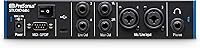
  • Input Count: The unit provides 6 total inputs: 4 XLR/TRS combo jacks compatible with microphones or line-level sources, plus 2 dedicated instrument-level inputs for guitar or bass.
  • Output Count: There are 6 total outputs: 4 balanced TRS line outputs for routing to monitors or outboard gear, and 2 headphone outputs with independent volume control.
  • Mic Preamps: Four XMAX Class A microphone preamps are built in, designed to deliver low-noise amplification suitable for vocals, acoustic instruments, and studio microphones.
  • Sample Rate: Supports recording and playback at up to 24-bit/192kHz, though simultaneous track count at 192kHz is limited to 4 tracks; standard sessions at 44.1kHz or 96kHz run without restriction.
  • Connectivity: Connects to a host computer via USB-C; both a USB-C to USB-C cable and a USB-C to USB-A cable are included in the box.
  • Digital I/O: S/PDIF digital input and output are present, allowing connection to compatible external converters, digital mixers, or effects processors.
  • MIDI I/O: Dedicated MIDI in and out ports are included, enabling connection to hardware synthesizers, drum machines, and other MIDI-equipped devices without a separate adapter.
  • Monitoring: The Cue Mix A/B function allows users to create and switch between two independent headphone monitor mixes directly from the hardware.
  • Level Meters: Professional ladder-style LED meters monitor both input and output levels, providing a clear visual reference for gain staging during recording sessions.
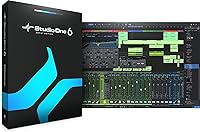
  • Bundled Software: Includes Studio One Artist, the Studio Magic Plug-in Suite, and Ableton Live Lite; these are entry-level or restricted versions, not full professional licenses.
  • DAW Compatibility: Works with major DAWs including Studio One Pro, Ableton Live, Pro Tools, Logic Pro, FL Studio, Cubase, and Reaper on both Windows and macOS.
  • Operating System: Compatible with Windows and macOS; users should verify the current driver version against their specific OS build before purchase, particularly on Windows.
  • Dimensions: The chassis measures 5.51 x 9.02 x 1.73 inches, making it compact enough for a standard desktop setup without occupying excessive workspace.
  • Weight: The unit weighs approximately 1 pound, making it lightweight and easy to transport between home, studio, or live performance environments.
  • Color: Available in black with a functional, understated design that fits a typical studio or home office aesthetic.
  • Power Source: The interface is bus-powered via USB, meaning no external power supply or wall adapter is required for standard operation.
  • Rack Mount: The Studio 68c is a desktop unit and is not designed for rack mounting; it sits flat on a work surface.

Related Reviews
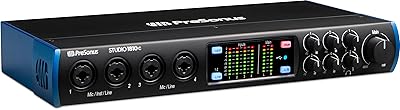
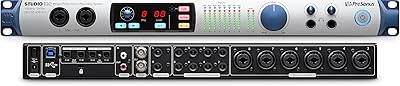
PreSonus Studio 1810c USB Audio Interface
79%
83%
Preamp Quality
86%
Build Quality
87%
Audio Fidelity
89%
I/O Versatility
61%
Driver Stability
More
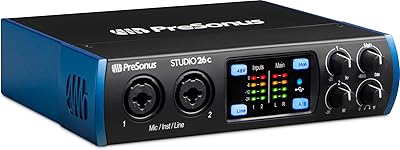
PreSonus Studio 26c USB Audio Interface
86%
92%
Sound Quality
89%
Ease of Use
94%
Value for Money
85%
Software Bundle
88%
Build Quality
More
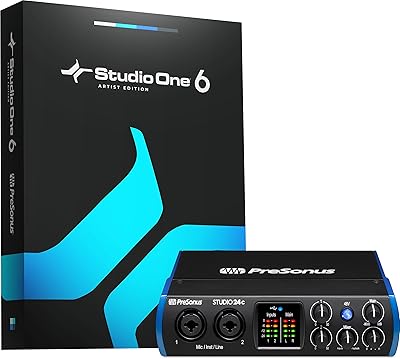
PreSonus Studio 24c
PreSonus Studio 24c
84%
92%
Build Quality & Durability
88%
Sound Quality & Resolution
86%
Preamp Performance (XMAX-L)
94%
Software Bundle Value
89%
Portability & Form Factor
More
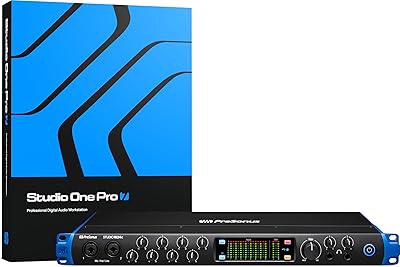
PreSonus Studio 192 USB 3.0 Audio Interface
71%
84%
Preamp Quality
51%
Driver Stability
81%
I/O Count & Routing
62%
UC Surface Software
77%
Build & Hardware Quality
More
PreSonus Studio 1824c
86%
91%
Preamplifier Clarity
88%
Chassis & Build Quality
84%
Low-Latency Performance
93%
Software Bundle Value
87%
Monitoring Flexibility
More
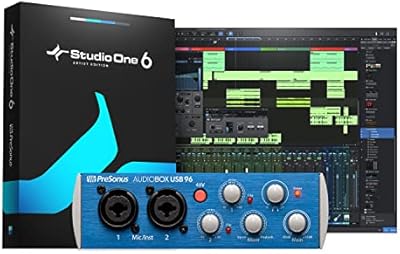
PreSonus AudioBox USB 96 Audio Interface
77%
86%
Preamp Quality
83%
Ease of Setup
78%
Build Quality
91%
Value for Money
84%
Recording Resolution
More
PreSonus AudioBox iOne
75%
88%
Preamp Quality
83%
Build Quality
91%
Ease of Setup
61%
Direct Monitoring
86%
iPad Compatibility
More
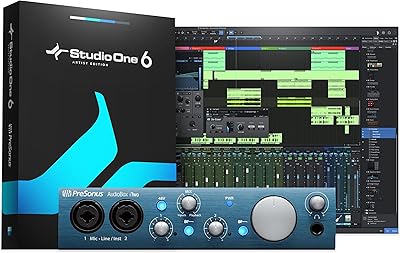
PreSonus AudioBox iTwo 2x2 USB/iPad Audio Interface
86%
92%
Value for Money
89%
Portability & Design
91%
Software & Ease of Use
88%
Sound Quality
85%
Build Quality
More
PreSonus ioStation 24c
84%
88%
Build Quality & Ergonomics
91%
Fader Responsiveness
89%
Preamp Audio Quality
94%
Native DAW Integration
68%
Third-Party DAW Compatibility
More
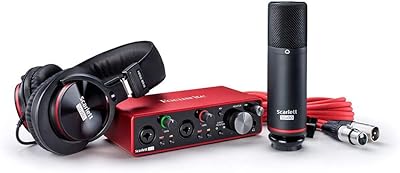
Focusrite Scarlett 2i2 Studio 3rd Gen Bundle
82%
91%
Build Quality
88%
Preamp Quality
93%
Ease of Setup
86%
Driver Stability
83%
Value for Money
More

FAQ

Yes, the Studio 68c is fully compatible with Logic Pro on macOS. It shows up as a standard audio device, and setup typically takes just a few minutes through Logic's audio preferences. No special configuration is usually needed beyond selecting it as the input and output device.

You can record at 192kHz, but there is a meaningful catch: you are limited to 4 simultaneous tracks at that sample rate. For most home studio sessions, 44.1kHz or 96kHz is where you will actually work, and those rates run without any track-count restrictions. The 192kHz ceiling is real, but treat it as a ceiling rather than a practical everyday setting.

Not for the computer connection. PreSonus includes both a USB-C to USB-C and a USB-C to USB-A cable in the box, which covers most modern laptops. You will still need your own XLR cables for microphones and appropriate cables for any instruments or monitors you plan to connect.

Most users report stable operation on Windows 11, but driver compatibility has been a recurring topic in user feedback. It is worth checking the PreSonus website for the latest driver release before your first session, and making sure you are running a current version rather than relying on whatever installs automatically.

It is genuinely useful for getting started, but it does have limits. Studio One Artist covers the essentials for recording and basic mixing, though some advanced features are locked to the full Studio One Pro license. Ableton Live Lite follows a similar pattern — you get a working version of the software with a reduced track count and fewer instruments than the full release. If you are just starting out, both are real tools. If you are already on a full DAW license, the bundle adds less value.

The PreSonus Studio 68c USB Audio Interface has 4 XLR inputs, so you can connect up to 4 microphones simultaneously. The remaining 2 inputs are instrument-level, intended for direct guitar or bass connections rather than mic signals.

Yes, and this is actually one of the unit's strengths for electronic producers. The four balanced TRS line inputs are well-suited for connecting synthesizers, drum machines, and other line-level gear. You can run multiple synths at once without needing a separate mixer upstream.

Yes. The Cue Mix A/B function lets you set up two distinct monitor mixes and switch between them, or route them to the two separate headphone outputs. This is particularly useful if a performer needs a different blend in their headphones than what you are listening to on your end.

This is a common comparison, and the honest answer is that opinions are split. Some users find the Studio 68c feels solid enough for a desktop unit, while others note that it feels lighter than expected and prefer the denser chassis of the Scarlett range. Neither is fragile, but if physical build density matters to you, it is worth reading hands-on user impressions before deciding.

No, the unit is entirely bus-powered over USB, so it draws power directly from your computer. This keeps the desk tidy and makes it genuinely portable — one cable handles both data and power.