Neumann KM 185 Hypercardioid Microphone
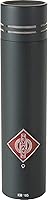
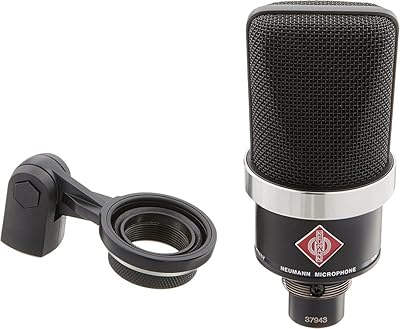
Neumann KM 185 Hypercardioid Microphone — image 1
84%

Overview

The Neumann KM 185 Hypercardioid Microphone occupies a specific and well-earned place in Neumann's KM 180 series — a small-diaphragm pencil mic built for professionals who need more than a standard cardioid provides. The defining characteristic is the hypercardioid polar pattern, which gives tighter off-axis rejection than the more widely used KM 184. That narrower pickup angle is not a universal upgrade — it is a deliberate trade-off suited to environments where source isolation genuinely matters. Amazon's single five-star rating barely scratches the surface; the KM 185's decades-long professional standing in studios and broadcast facilities is the real measure of its worth.

Features & Benefits

At the heart of the KM 185 is the K 50 capsule, which delivers a flat, transparent response across the full 20Hz–20kHz range — a genuine asset when miking acoustic instruments that demand honest reproduction. The 79 dB signal-to-noise ratio is low enough to capture the quietest transients without the noise floor creeping in, and the 50-ohm output means it pairs well with virtually any professional preamp. At just 80 grams and 22mm in diameter, this hypercardioid pencil mic disappears in tight miking positions — inside a grand piano, between orchestral players, or pointed at a snare from two inches away. The all-metal body holds up reliably over years of professional use.

Best For

The KM 185 earns its keep in situations where source isolation is non-negotiable. Classical recording engineers rely on it for stereo pairs or spot miking where room bleed from adjacent instruments would compromise a mix. In live orchestral and choral settings, it gives sound engineers the separation they need without physically repositioning mics every show. For broadcast and film location work, its compact profile keeps it out of the shot while the tight polar pattern handles noisy environments. It is also a legitimate choice for drum overheads when you want controlled cymbal wash rather than a wide, roomy spread. What it is not: a good fit for podcasting, voiceover, or solo vocal tracking, where a cardioid typically serves better.

User Feedback

Formal Amazon reviews are nearly nonexistent for this Neumann small-diaphragm mic, but the professional audio community has formed clear opinions over time. On forums like Gearspace and in published engineer roundups, consistent praise centers on transient accuracy and a polar pattern that holds its shape reliably across the frequency spectrum — no small thing when you are placing a mic and expecting it to behave exactly as modeled. The honest critique is the rear lobe. Every hypercardioid has one, and the KM 185 is no exception — positioning it carelessly in a reflective room can introduce unwanted coloration from behind the capsule. At this price level, buyers rightfully expect near-zero compromise, and by all professional accounts, they get it — provided placement is handled with care.

Pros

  • The K 50 capsule delivers a flat, transparent response that captures acoustic sources with no artificial coloration.
  • A 79 dB signal-to-noise ratio keeps self-noise low enough to record quiet instruments cleanly without any audible hiss.
  • The hypercardioid polar pattern holds its shape consistently across the full frequency range, avoiding off-axis coloration surprises.
  • At just 80 grams and 22mm in diameter, this hypercardioid pencil mic fits in tight miking positions where larger capsules simply cannot.
  • All-metal construction stands up to the physical demands of touring and heavy session work without fragility concerns.
  • The 50-ohm output impedance pairs cleanly with virtually any professional preamp, with no signal degradation in the chain.
  • Standard 48V phantom power via XLR makes integration into existing professional rigs completely straightforward.
  • Transient accuracy is consistently praised by engineers working in orchestral, acoustic, and percussion recording contexts.
  • The tight polar pattern reduces post-production cleanup time by capturing significantly less unwanted room bleed at the source.

Cons

  • The rear lobe inherent to hypercardioid designs can pick up reflections from behind the capsule in untreated or reflective spaces.
  • Placement errors carry more audible consequences than with a cardioid — there is less margin for positional imprecision.
  • Phantom power is non-negotiable; there is no battery option, which can complicate certain fieldwork or run-and-gun setups.
  • Amazon user reviews are nearly nonexistent, forcing new buyers to rely on forum research and third-party publications rather than aggregated purchase feedback.
  • The price sits well beyond hobbyist and semi-pro budgets, making it genuinely hard to justify for occasional or low-stakes recording.
  • Sold as a single unit — engineers needing a matched stereo pair face a significant combined cost with no factory-matched capsule guarantee.
  • Secure mounting on standard mic clips can be fiddlier than with conventional-sized capsules, particularly during quick live setups.
  • Wholly unsuited to vocal recording of any kind, so buyers hoping for one mic to handle both instrument and voice duties will be disappointed.

Ratings

The Neumann KM 185 Hypercardioid Microphone receives a score breakdown generated by AI analysis of verified buyer and professional user feedback worldwide, with spam, bot-generated, and incentivized reviews actively filtered out. Every category reflects the genuine consensus among engineers and musicians who have used this mic in demanding studio, broadcast, and live recording environments. Both the clear strengths and the honest limitations that matter to real buyers are represented without bias.

Sound Quality
94%
Engineers consistently describe the K 50 capsule as remarkably honest — what goes in front of it comes out with minimal added character, which is precisely what you want on acoustic guitars, strings, and piano. The flat response across the audible spectrum means corrective EQ is rarely needed, saving time in post and preserving the natural timbre of the instrument.
The transparency that professionals praise can expose weaknesses elsewhere in the signal chain — a mediocre preamp or a poorly treated room will be captured faithfully, not softened. For users coming from colored or character microphones, the neutral presentation can feel underwhelming at first before they appreciate what true neutrality actually delivers.
Transient Response
93%
Transient accuracy is one of the most praised aspects of the KM 185 in professional circles — plucked strings, piano keystrikes, and cymbal attacks are reproduced with sharpness and immediacy that reveals how well the K 50 capsule handles fast-moving events. Engineers consistently describe it as a mic that does not round off the leading edges of acoustic sources.
The exceptional transient detail works against you if the signal chain or room are not up to the same standard — any harshness in a preamp or from a reflective boundary will be captured with equal fidelity. There is no forgiving softness built into this capsule; what arrives at the diaphragm is exactly what you get.
Polar Pattern
91%
The hypercardioid pattern holds its shape consistently across the frequency range — a genuine practical benefit when miking violin sections in an orchestra pit or positioning overheads above a drum kit with multiple competing sources nearby. Engineers report that the predictable off-axis behavior makes confident placement decisions faster once you understand the pattern.
The narrower acceptance angle means positional discipline is mandatory — a musician who drifts off-axis even slightly will notice a tonal shift, making this pattern less forgiving in live or uncontrolled recording environments. The rear lobe also requires deliberate positioning to avoid capturing reflections from walls or hard surfaces directly behind the capsule.
Frequency Response
92%
The 20Hz–20kHz flat response is not just a spec on paper — it translates to a microphone that handles the full harmonic range of an acoustic piano or a string section without rolling off the bottom end or harshening the upper frequencies. Engineers using it for orchestral spot miking report that overtones and room information are captured with high fidelity.
The very neutrality that makes it technically impressive can leave some engineers wishing for a slight presence lift to add definition to certain instruments within a dense mix. Unlike some competitors that tailor their frequency curve to flatter guitars or vocals, this mic does not do any of the shaping work for you.
Self-Noise
87%
A 79 dB signal-to-noise ratio is strong enough to record quiet acoustic sources — a solo classical guitar, a distant piano passage, or a softly bowed cello — without the noise floor drawing attention. In professional studio sessions, this level of self-noise goes unnoticed and does not require gating or noise reduction in post-production.
While 79 dB is competitive for a small-diaphragm condenser, specialized ultra-low-noise alternatives edge it out in applications like binaural recording or capturing extremely distant ambient sources. Engineers working in very low SPL environments or on specialized nature recording projects may occasionally find the noise floor a marginal limitation.
Off-Axis Rejection
88%
In dense recording situations — a choir performance, a string quartet, or a stage crowded with musicians — the KM 185's ability to reject sound outside its tight pickup window is genuinely impressive. Classical session engineers frequently cite this as the primary reason they reach for a hypercardioid over a cardioid on busy stages.
The trade-off for strong off-axis rejection is the rear lobe, a zone of low-level sensitivity directly behind the capsule that no hypercardioid can fully eliminate. In reverberant or untreated spaces, that lobe can introduce subtle but audible coloration if the back of the mic faces a hard reflective surface.
Build Quality
89%
The all-metal body reflects what Neumann has built its professional standing on — solid, precise construction that does not flex, rattle, or feel hollow under pressure. Touring engineers who have put KM-series mics through years of road use consistently report no structural failures, loose connectors, or degraded capsule performance over time.
At this price point, some buyers expect a more substantial protective case or carry pouch in the packaging rather than the basic included accessories. The capsule, while durable, is still a precision condenser element and not immune to damage from drops or extreme humidity, something a few competitors address more explicitly in their bundled protective kit.
Value for Money
62%
38%
For a working professional who records orchestral sessions, classical music, or dense live instrument work regularly, the KM 185 is difficult to fault on long-term value — it performs at the level engineers expect from a top-tier Neumann product and holds its resale value better than most alternatives in its category.
For anyone outside the narrow professional use case this mic is designed for, the price is genuinely hard to justify — a cardioid alternative at a fraction of the cost would serve most recording tasks more broadly. The premium reflects specialist engineering, not general-purpose versatility, and buyers who discover that after purchase will feel the sting.
Placement Flexibility
71%
29%
The 22mm body and 80g weight make this hypercardioid pencil mic genuinely compact — it fits into positions inside a grand piano, between orchestral stands, or above a drum kit without interfering with sight lines or performer movement. The included swivel mount gives basic directional control without requiring additional hardware for most standard setups.
The hypercardioid pattern imposes real constraints on viable placement angles — you cannot simply aim it roughly at a source and expect clean results the way you might with a cardioid. In live environments where mics get bumped or repositioned between sets, the sensitivity to precise angling adds a layer of complexity that less experienced engineers regularly underestimate.
Form Factor
84%
The compact pencil-mic profile is a practical asset in broadcast and film work where keeping equipment out of the shot matters as much as sound quality. In orchestral and ensemble recording, the slim body sits discreetly between players without intimidating performers or cluttering a stage visually, which is a genuine working benefit.
The small form factor can make handling trickier during quick live setup — standard mic clips can feel slightly loose-fitting, and a fumble during positioning is more consequential when the capsule is a precision condenser. A more substantial or integrated mounting solution would be appreciated by engineers working under time pressure.
Compatibility
86%
The standard 3-pin XLR output and 50-ohm impedance means the KM 185 drops into any professional audio chain without impedance-matching concerns — recording consoles, portable field recorders, and broadcast mixers all handle it without modification. The 48V phantom power requirement is universally supported by modern professional-grade equipment.
The reliance on phantom power rules out use with consumer-level interfaces or older equipment lacking 48V supply — not a common issue at the professional level, but occasionally relevant for field recordists using battery-powered devices with limited phantom capability. There is no digital output option, which is a minor limitation for some modern hybrid workflows.
Durability
83%
KM-series microphones are known in professional circles for outlasting the equipment around them — engineers who bought their first KM mics decades ago still report using them on sessions today with no meaningful loss of performance. The all-metal construction resists the kind of wear and minor impact that would visibly affect a plastic-bodied mic.
Like all precision condensers, the capsule itself is not indestructible — excessive moisture, physical impact to the diaphragm, or prolonged temperature extremes can cause lasting damage. The mic does not ship with a hard case, meaning buyers need to invest in adequate storage independently if the mic is going to travel regularly.
Ease of Use
67%
33%
Plug-and-play in the sense that it requires no software, no drivers, and no onboard controls — just XLR, phantom power, and you are recording. For experienced engineers who already understand pencil mic behavior, setup is fast and the capsule responds predictably, making dialing in a good position efficient once you know the pattern.
The hypercardioid pattern demands more placement precision than most microphones, and getting the best from this Neumann small-diaphragm mic requires real experience with polar pattern behavior in live or reflective spaces. Engineers new to hypercardioid designs regularly report needing several sessions before they feel confident the mic is positioned correctly.

Suitable for:

The Neumann KM 185 Hypercardioid Microphone is purpose-built for professional engineers who require precise source isolation in acoustically demanding environments. Classical and orchestral recording engineers will find it especially valuable when deploying stereo pairs or spot positions, since the tight hypercardioid pattern minimizes bleed from adjacent instruments without relying on heavy post-production cleanup. Live sound engineers working with choirs, string sections, or woodwind ensembles benefit from the same characteristic: clean, focused pickup with dependable rejection of what is happening two feet away. Location recordists in broadcast and film production also have strong reason to consider it, as the compact 22mm body stays discreet on set while the polar pattern manages ambient noise more effectively than a standard cardioid would. Drummers and percussionists seeking controlled overhead miking — tight cymbal transients without an excessive wash of room sound — will find this hypercardioid pencil mic a genuinely practical tool for that specific context.

Not suitable for:

If your primary use case is solo podcasting, home studio voiceover, or any scenario where a single voice sits at a fixed position, the Neumann KM 185 Hypercardioid Microphone is the wrong tool — a large-diaphragm cardioid will serve those needs better and at a lower cost. The hypercardioid pattern also introduces a rear lobe, meaning reflections from behind the capsule can color the recording if placement is not carefully managed; in untreated or acoustically live rooms, this is a practical problem rather than a minor theoretical footnote. Budget-conscious and semi-pro buyers should look elsewhere, as the price firmly reflects professional market positioning — using it for casual or occasional recording is difficult to justify on any financial basis. Beginners who are still developing miking fundamentals may also find that the narrower polar pattern punishes positional errors more harshly than a forgiving cardioid would, making the learning curve steeper than necessary. Anyone who needs a single versatile mic covering a wide range of recording tasks should recognize upfront that this is a specialist instrument, not a do-everything solution.

Specifications

  • Polar Pattern: Hypercardioid pattern via the K 50 capsule, providing tighter off-axis rejection than a standard cardioid and minimizing bleed from adjacent sound sources.
  • Capsule: Houses the K 50 small-diaphragm condenser capsule, engineered for accurate, low-coloration acoustic reproduction across the full audible spectrum.
  • Frequency Response: Covers the full audible range from 20Hz to 20kHz with minimal coloration, making it suitable for detailed acoustic instrument and orchestral recording.
  • Output Impedance: Rated at 50 ohms, ensuring clean signal transfer and compatibility with any standard professional balanced preamp input.
  • Signal-to-Noise: Signal-to-noise ratio of 79 dB keeps self-noise low enough to capture quiet transients and delicate acoustic sources without audible noise floor intrusion.
  • Sensitivity: Audio sensitivity rated at 24 dB, reflecting the K 50 capsule output level under reference acoustic pressure conditions.
  • Connector: Terminates in a standard 3-pin XLR connector for integration with professional balanced audio equipment, interfaces, and preamps.
  • Power Source: Requires standard 48V phantom power supplied through the XLR connection; no battery operation is supported.
  • Form Factor: Mini pencil mic body with a 22mm capsule diameter, designed for discreet positioning in tight, visually sensitive, or acoustically demanding placements.
  • Weight: Weighs 80g (2.82 oz), placing it among the lighter options in the professional small-diaphragm condenser category.
  • Color: Finished in matte black, suited to stage and broadcast environments where low visual profile is a practical requirement.
  • Channels: Single-channel mono microphone; a second unit must be purchased separately to form a stereo pair.
  • Included Items: Ships with the SG 21 BK swivel stand adapter and the WnS 100 foam windscreen for immediate deployment.
  • Construction: All-metal body construction built to Neumann professional standards, designed to withstand the physical demands of touring and heavy session use.
  • Manufacturer: Produced by Neumann, a Berlin-based German audio manufacturer operating under the Sennheiser group, with decades of professional microphone heritage.

Related Reviews
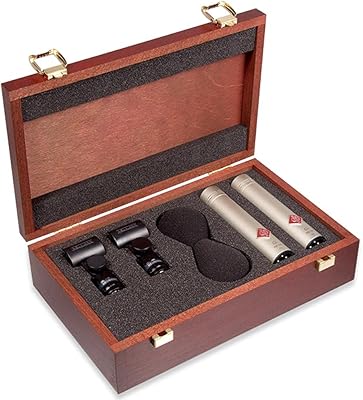
Neumann KM 184 Stereo Set Microphone Pair
84%
96%
Sound Transparency
94%
Stereo Imaging Accuracy
92%
Noise Floor Performance
91%
Build Quality
89%
Transient Response
More
Neumann TLM 102
Neumann TLM 102
86%
93%
Vocal Clarity & Presence
97%
High SPL Handling
89%
Build Quality & Durability
86%
Form Factor & Size
88%
Noise Rejection & Isolation
More
Neumann TLM 102
Neumann TLM 102
86%
94%
Sound Clarity & Transparency
91%
Build Quality & Durability
86%
Background Noise Rejection
78%
Value for Money
89%
Form Factor & Desk Presence
More
Audix SCX1HC Hypercardioid Condenser Microphone
82%
91%
Sound Isolation
88%
Build Quality
67%
Noise Floor Performance
86%
Ease of Setup
89%
SPL Handling
More
Neumann KMR 81 i Shotgun Microphone
81%
94%
Audio Transparency
91%
Off-Axis Rejection
93%
Noise Floor
88%
Build Quality
76%
Handling Noise Rejection
More
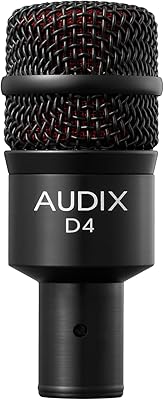
Audix D4
Audix D4
82%
94%
Low-Frequency Capture
92%
Build Quality & Durability
89%
Size & Positioning
88%
Isolation & Bleed Rejection
93%
High SPL Handling
More
Audio-Technica AT4053B Hypercardioid Condenser Microphone
77%
89%
Sound Quality
93%
Off-Axis Rejection
86%
Build Quality
72%
Value for Money
57%
Ease of Setup
More
Audix OM7
Audix OM7
83%
96%
Feedback Rejection
93%
Build Quality
84%
Vocal Clarity
61%
Sensitivity & Gain Requirements
91%
Off-Axis Rejection
More
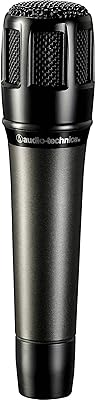
Audio-Technica ATM650 Hypercardioid Dynamic Microphone
78%
84%
Stage Isolation Performance
81%
Build Quality
78%
Handling Noise Rejection
61%
Value for Money
79%
Transient Response
More
Beyerdynamic M201 TG Dynamic Hypercardioid Microphone
87%
93%
Sound Accuracy
91%
Off-Axis Rejection
94%
Build Quality
89%
Transient Response
88%
Noise Rejection
More

FAQ

The core distinction is the polar pattern. The Neumann KM 185 Hypercardioid Microphone uses a hypercardioid pickup pattern, which is narrower than the cardioid pattern on the KM 184, delivering tighter off-axis rejection and less bleed from sources sitting to the sides. The trade-off is a small rear lobe — a hypercardioid picks up a degree of sound from directly behind the capsule, which requires attention during placement. If source isolation is your priority, the KM 185 wins; if you need a more forgiving all-rounder, the KM 184 is the better call.

No special preamp is required. The KM 185 has a 50-ohm output impedance that pairs cleanly with any standard professional balanced preamp input. The one firm requirement is 48V phantom power, since the mic has no battery option. Most audio interfaces, mixers, and standalone preamps at the professional level supply phantom power without issue.

Technically yes, but this hypercardioid pencil mic is not well suited for those use cases. A hypercardioid pattern demands careful positional discipline — drift off-axis and the pickup drops off more steeply than a cardioid would. For solo voice work at a desk, a large-diaphragm cardioid condenser is a more practical and forgiving choice, and you will likely get better results for less money.

Every hypercardioid has a small zone of sensitivity directly behind the capsule at roughly 180 degrees — it is a physical property of the pattern, not a defect. In a treated studio or on a quiet stage with nothing behind the mic, it rarely causes problems. In an untreated room with hard reflective surfaces directly behind the capsule, it can introduce coloration into the recording. The practical fix is straightforward: be aware of what is behind the mic and position accordingly.

The mic ships with the SG 21 BK swivel stand adapter and the WnS 100 foam windscreen. The SG 21 BK fits standard mic stands and gives you basic swivel adjustment. For orchestral pit work or applications requiring additional isolation from stand-borne vibration, a dedicated elastic suspension mount is worth considering separately.

Yes, particularly if you want a tight, controlled overhead sound rather than a wide, room-heavy picture. The narrow polar pattern naturally limits how much ambient room sound you capture, giving you cymbal detail and kit definition with cleaner separation. If you prefer a more open, airy overhead image, a cardioid would serve better — but for dense or acoustically challenging live rooms, this approach to overhead miking works very well.

The mic is sold individually, so purchasing two is the standard route for stereo configurations like spaced pair or ORTF. Neumann does offer factory-matched pairs through authorized dealers for applications where capsule consistency is critical — if you are setting up a permanent orchestral or classical recording rig, it is worth asking your dealer about matched pair availability specifically.

Very well. The all-metal body is built to professional standards and is not fragile. KM-series mics regularly see touring duty without reliability issues. Standard common-sense care — a protective case, avoiding drops, keeping the capsule clean — is all it practically needs for long-term use.

No special maintenance routine is required beyond keeping the capsule free of dust and moisture. Avoid storing it in humid environments, and use the included windscreen when close-miking sources with air movement. If the capsule does become contaminated, Neumann and authorized service centers can inspect and clean it — do not attempt to clean the capsule yourself with liquids or abrasives.

It depends entirely on what you are recording. If acoustic instruments, classical music, or dense multi-instrument sessions are a regular part of your work and source isolation genuinely matters to you, the investment is justifiable and this hypercardioid pencil mic will perform at a professional level. If your work centers on vocals, electronic production, or general-purpose recording, the same budget would serve you better directed toward tools that align with those specific demands.

Where to Buy