Overview

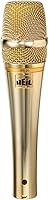
The Heil Sound PR20 Gold Dynamic Microphone is a stage-ready vocal mic from a brand that has spent decades supplying broadcast studios and live sound rigs across the country. The gold finish is purely cosmetic — it marks a limited variant of the standard PR20 and has zero effect on how the mic actually sounds. This is an XLR-only microphone, so it assumes you already own a mixer or interface with a proper mic preamp. It has been listed since 2010, which says something about its staying power in a market that churns through new products constantly. Come to it expecting a live performance tool, not a studio condenser.

Features & Benefits

The PR20 Gold's unidirectional polar pattern does real work on a loud stage — it keeps monitor bleed and crowd noise out of the signal in a way that omni or cardioid mics simply cannot match. The frequency response extends up to 18 kHz, which in practical terms means vocals sound present and defined rather than the muffled, boxy character you get from cheaper dynamics. It can handle up to 140 dB of sound pressure, so even the loudest belters will not push it into distortion. At 1.74 lbs, it feels solid in the hand without weighing you down through a long set. No phantom power needed either — plug it into any XLR-equipped mixer and you are ready.

Best For

This gold-finish dynamic mic makes the most sense for gigging vocalists who have outgrown entry-level dynamics — think someone who has been using an SM58 for years and wants noticeably more vocal clarity without switching to a condenser that cannot handle stage conditions. Podcasters and voice-over artists with a proper XLR interface will also get a lot out of it, since Heil's vocal dynamic produces a warm, characterful tone that suits spoken word just as well as singing. If you perform regularly and care about stage aesthetics, the gold body stands out under lights. It is less of a fit for beginners running directly into a laptop interface with no preamp headroom.

User Feedback

Buyers consistently praise the PR20 Gold for natural-sounding vocals — many note it outperforms the SM58 in clarity, particularly in the upper-mid range where voices cut through a mix. Build quality gets positive marks too, with the gold finish reported to hold up well after regular touring use. That said, two recurring criticisms come up: the mic is noticeably heavier and wider than slimmer competitors, which some vocalists find tiring over a long performance. Several buyers also report disappointment when pairing it with low-gain interfaces — the mic simply does not open up without a preamp that can provide enough headroom. On the gold versus standard question, opinion is split on whether the cosmetic difference alone warrants the premium.

Pros

  • Vocal clarity noticeably surpasses entry-level dynamics, with an open, present tone that cuts through a live mix.
  • The tight polar pattern does an excellent job rejecting monitor bleed and ambient stage noise.
  • Handles extremely loud vocalists without distorting, making it reliable across high-energy performances.
  • No phantom power required — plug it into any XLR mixer or PA and it works immediately.
  • Build quality feels genuinely road-worthy, and the gold finish holds up well with regular touring use.
  • Heil's element design reduces handling noise, so movement on stage does not constantly rattle the signal.
  • Compatible with virtually any XLR-equipped mixer, interface, or PA system without adapters or extra hardware.
  • Has maintained consistent availability since 2010, meaning replacement parts, accessories, and community knowledge are easy to find.
  • Stands out visually under stage lighting or on camera, which matters for streamers and live video performers.

Cons

  • Requires a preamp with solid gain headroom — budget or USB interfaces often leave the PR20 Gold sounding thin and quiet.
  • Heavier and wider than many competing dynamics, which some vocalists notice during long sets.
  • The gold finish is purely cosmetic; buyers paying a premium over the standard black model receive no acoustic benefit.
  • Not well suited to studio recording, lacking the detail and low-noise floor that condenser microphones offer in treated spaces.
  • The wider body can feel awkward for smaller hands or vocalists accustomed to slim-profile handheld mics.
  • No USB connectivity means it is completely inaccessible to performers without an existing XLR signal chain.
  • At this price point, a handful of competing brands offer comparable live vocal performance with lighter builds.
  • Limited official documentation on polar pattern specifics makes it harder to evaluate technically before purchasing.

Ratings

The scores below reflect an AI-driven analysis of verified global buyer reviews for the Heil Sound PR20 Gold Dynamic Microphone, with spam, bot activity, and incentivized feedback actively filtered out before scoring. Each category captures both what real users consistently praised and the friction points that surfaced across hundreds of hands-on accounts. Nothing has been softened — strengths and shortcomings are weighted equally.

Vocal Clarity
88%
Reviewers repeatedly describe the vocal reproduction as natural and open, with a presence in the upper midrange that helps voices cut through dense live mixes without sounding artificially boosted. Singers switching from common entry-level dynamics frequently note they can hear a tangible improvement the first time they plug in.
A small number of users found the clarity unforgiving on vocalists with harsh upper ranges, noting that the mic does not smooth over sibilance the way some darker-sounding dynamics do. In very dry, untreated rooms, the detail it captures can also expose room reflections more than expected.
Stage Noise Rejection
86%
The tight unidirectional pickup pattern drew consistent praise from performers in mid-size venues where monitor bleed and crowd noise are persistent problems. Singers reported noticeably cleaner monitor mixes and fewer feedback incidents compared to wider-pattern alternatives they had used previously.
A handful of users playing in very loud band environments noted that rejection is good but not absolute — high SPL stage monitors positioned closely still bled through at extreme volumes. The pattern performs best when the vocalist maintains consistent on-axis positioning, which takes some adjustment for performers who move around a lot.
Build Quality
83%
The overall construction feels reassuringly solid for a handheld stage mic — the body has genuine heft, and the grille shows no signs of easy denting under normal gigging conditions. Multiple touring musicians noted the mic survived drops, rough transport in gear bags, and the general abuse of regular live use without functional issues.
A recurring concern involves the gold finish specifically — while it holds up well for most users, a subset reported visible scuffing and wear on the body after several months of heavy touring. The finish is more susceptible to cosmetic damage than matte or satin alternatives, which matters to buyers drawn to it for its visual appeal.
Preamp Compatibility
61%
39%
When paired with a mixer or interface that delivers adequate gain, the PR20 Gold rewards the user with a full, authoritative sound that justifies its positioning above entry-level dynamics. Experienced engineers and performers with quality preamp stages reported very few complaints about output level or noise floor.
This is the single most common pain point across user feedback — buyers who paired the mic with budget USB interfaces or low-gain preamps found it underperformed significantly, sounding thin, quiet, and underwhelming. The mic's sensitivity demands a proper signal chain, and that context is not always clear at the point of purchase, leading to real disappointment.
Value for Money
72%
28%
For buyers who own compatible gear and understand what they are buying, the performance-to-price ratio holds up well — the vocal quality it delivers at its price tier is genuinely competitive, and the American manufacturing heritage carries weight with buyers who care about sourcing. Long-term durability also adds to the overall value equation.
The gold variant draws consistent criticism from buyers who feel the cosmetic premium over the standard black model is difficult to justify on sound alone. Users who purchased expecting a significant upgrade from much cheaper dynamics and lacked the supporting gear to unlock the mic's potential reported feeling the purchase was not worthwhile.
Handling Noise
79%
21%
Heil's internal element isolation does a competent job of dampening mechanical vibration during active handheld use, and most performers noted the mic did not require constant grip adjustments to stay quiet. For podcasters recording seated with minimal movement, handling noise was essentially a non-issue.
Energetic live performers who grip and reposition the mic frequently — or tap it against their palm between songs — did notice some transmission of mechanical noise into the signal. It is not a severe problem, but it is more noticeable than on some competitors with more aggressive internal shock mounting.
SPL Handling
91%
The 140 dB SPL ceiling is rarely tested by vocalists, but it translates practically to a mic that never clips or distorts regardless of how loud or dynamic the performance gets. Screaming vocalists, gospel belters, and high-energy rock singers all reported clean, undistorted output even in the loudest moments of a set.
For the vast majority of users, this ceiling is more than sufficient, which means it rarely functions as a deciding differentiator — most competing mics in this tier also handle stage SPL levels without distortion. There is no meaningful downside to this spec, but it also does not single-handedly justify the premium for lower-volume vocalists.
Ergonomics & Grip
67%
33%
The weight distribution feels balanced during normal handheld use, and the body provides enough girth for performers with larger hands to hold it confidently through a full performance. Several users described it as feeling more substantial and professional than lighter budget mics.
The wider-than-average body and 1.74 lb weight drew measurable criticism from performers with smaller hands and from vocalists who move vigorously on stage. A noticeable segment of reviewers described hand fatigue during long sets — particularly during two-hour-plus performances — compared to slimmer-profile dynamics they had used before.
Frequency Response
84%
The extension up to 18 kHz gives the mic a noticeably airier character compared to dynamics that roll off earlier, which singers describe as the sound feeling less closed-in and more like their actual voice. Voice-over artists and podcasters appreciated that consonants and fricative sounds came through with natural definition.
A small number of reviewers with particularly bright vocal tones found the upper-frequency presence slightly too pronounced in untreated spaces, where it can accentuate room resonances. Applying a gentle roll-off in a mixer EQ addresses it, but it is worth noting for vocalists who already sit bright in a mix.
Setup & Usability
88%
Being a passive XLR dynamic mic, there is essentially zero setup complexity for anyone with an existing PA or mixer rig — plug in the cable and the mic is operational immediately with no drivers, pairing, or power management required. Veteran performers appreciated the reliability of having no variables to manage before a show.
For buyers new to XLR-based setups, the lack of any included cable, interface recommendation, or setup guidance in the packaging can leave them unsure about what supporting gear they need. The assumption that the buyer already has a complete signal chain is baked in, and that gap catches some purchasers off guard.
Cosmetic Finish Appeal
74%
26%
The gold finish stands out visibly under stage lighting and in front of cameras, making it a genuine differentiator for streamers, YouTube performers, and artists who want their gear to contribute to their visual identity. Several reviewers specifically cited the look as the deciding factor in choosing this version over the standard model.
Cosmetic durability is inconsistent across user reports — while many found the finish resilient, enough reviewers described premature wear and micro-scratches after normal use to create uncertainty. Buyers expecting a pristine appearance long-term should factor in careful storage and handling, which is not always realistic in touring conditions.
Brand Reputation
87%
Heil Sound carries genuine credibility in the broadcast and live sound world, and buyers familiar with the brand's history expressed strong confidence in the product's design lineage and quality intent. The American manufacturing story resonated particularly well with users who factor sourcing into their purchasing decisions.
Among buyers who came from the mainstream consumer audio market, Heil's name recognition lagged behind Shure, Sennheiser, and Audio-Technica, which created some hesitation at the purchase stage. A handful of reviewers admitted they needed to research the brand before committing, suggesting the company's reputation does not yet have universal reach across all buyer segments.
Podcasting & Voice Recording
78%
22%
The vocal-forward character and reduced proximity effect make this gold-finish dynamic mic a capable tool for close-mic spoken-word recording, and podcasters with a proper XLR chain reported warm, broadcast-quality results that elevated their production without requiring heavy post-processing.
The preamp sensitivity issue is amplified in the podcasting context, where users often run more modest desktop interfaces than live sound engineers do. Several home podcasters reported disappointing results until they added a dedicated preamp or in-line booster, which added unexpected cost and complexity to what they assumed would be a plug-and-record experience.

Suitable for:

The Heil Sound PR20 Gold Dynamic Microphone is a strong fit for working vocalists who have already invested in a proper XLR signal chain and are ready to move past the ubiquitous entry-level dynamics that dominate most stages. If you regularly play mid-size venues where stage monitor bleed is a real problem, the tight unidirectional pickup pattern will make an audible difference in how clean your vocals sit in the mix. Podcasters and voice-over artists who own a dedicated preamp or a quality audio interface will also find a lot to like — Heil's vocal dynamic produces a warmer, more three-dimensional tone than most dynamics in its class, which translates well to spoken-word recordings. Performers who care about visual branding on camera or under stage lighting will appreciate the gold finish standing out from the sea of matte-black mics. It also suits gear-conscious buyers with a preference for American-made audio equipment who want something with a track record stretching back well over a decade.

Not suitable for:

The Heil Sound PR20 Gold Dynamic Microphone is not the right call for beginners who are just building their first home studio setup around a basic USB audio interface — the mic demands a preamp with enough gain headroom to actually perform as intended, and entry-level interfaces often fall short. Anyone expecting a studio condenser experience will be disappointed, since this is purpose-built for live performance rather than critical recording in a treated room. If you are budget-conscious and primarily need a vocal mic for occasional use, the gold cosmetic variant adds a premium that delivers nothing sonically over the standard model, so the value calculation shifts unfavorably. The mic's weight and girth are also a consideration for vocalists who move aggressively on stage or prefer a slim profile — at 1.74 lbs and a wider body than many competitors, some performers find it tiring over a full set. Finally, anyone running a fully digital or USB-native rig without an XLR input should look elsewhere entirely.

Specifications

  • Mic Type: Dynamic moving-coil microphone designed primarily for handheld vocal use in live and recording applications.
  • Polar Pattern: Unidirectional pickup pattern that concentrates sensitivity on-axis while rejecting sound from the sides and rear.
  • Frequency Response: Captures audio across a range extending up to 18 kHz, delivering vocal presence and upper-range clarity beyond typical budget dynamics.
  • Max SPL: Rated to handle up to 140 dB of sound pressure level before distortion, accommodating even extremely loud vocalists without signal degradation.
  • Connector: Standard 3-pin XLR output, compatible with professional mixers, PA systems, and audio interfaces equipped with a mic preamp.
  • Power Requirement: Fully passive design requiring no phantom power, battery, or external power supply of any kind.
  • Channels: Single-channel mono output, standard for handheld vocal microphones in live and studio environments.
  • Weight: Weighs 1.74 lbs, providing a solid, substantial feel in the hand without excessive fatigue during extended performances.
  • Dimensions: Measures 10.6″ x 7″ x 3.7″, reflecting a full-size handheld form factor slightly wider than many competing vocal dynamics.
  • Finish: Gold cosmetic finish applied to the body and grille, serving as a visual variant of the standard-finish PR20 with no acoustic differences.
  • Model Code: Official model designation is PR20G, with the G suffix denoting the gold cosmetic variant within Heil's PR20 product line.
  • Manufacturer: Designed and manufactured by Heil Sound, a family-owned American audio company based in Fairview Heights, Illinois.
  • Compatibility: Works with any XLR-equipped audio mixer, PA system, broadcast console, or audio interface that provides adequate microphone preamp gain.
  • Recommended Use: Intended for live singing, stage performance, voice recording, podcasting, and broadcast vocal applications.
  • Availability Date: This product has been commercially available since February 2010, indicating a long-standing and actively maintained product line.
  • Handling Noise: Heil's internal element mounting is engineered to minimize mechanical noise transmitted through the body during handheld use on stage.

Related Reviews
Heil PR 40
Heil PR 40
79%
94%
Background Noise Rejection
91%
Vocal Tone & Clarity
88%
Build Quality & Durability
62%
Ease of Setup
84%
Aesthetic & Design
More
Heil Sound PR 30 Dynamic Microphone
79%
93%
Sound Character
88%
Vocal Performance
84%
Build Quality
89%
Off-Axis Rejection
62%
Preamp Dependency
More
Heil Sound PR 35 Dynamic Microphone
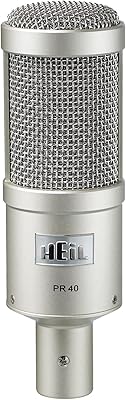
78%
91%
Vocal Clarity
88%
Feedback Rejection
89%
Build Quality
61%
Preamp Compatibility
74%
Stage Handling
More
Heil Sound PR 22 UT Dynamic Microphone
85%
88%
Vocal Clarity
91%
Build Quality
86%
Off-Axis Rejection
71%
Preamp Compatibility
83%
Value for Money
More
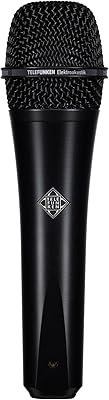
TELEFUNKEN M80 Dynamic Microphone
89%
94%
High-Frequency Clarity
96%
Build Quality & Durability
92%
Off-Axis Noise Rejection
91%
Vocal Cut & Presence
89%
Feedback Resistance
More
Shure PGA48-XLR
Shure PGA48-XLR
83%
93%
Build Quality
86%
Vocal Clarity
91%
Value for Money
82%
Feedback Rejection
74%
Handling Noise
More
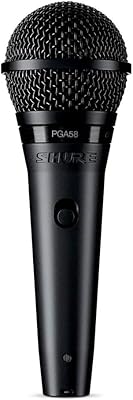
Shure PGA58
Shure PGA58
86%
93%
Build Quality
86%
Vocal Clarity
89%
Feedback Rejection
96%
Value for Money
84%
Switch Design
More
Shure SM63LB Omnidirectional Dynamic Microphone
85%
93%
Build Quality
88%
Audio Clarity for Speech
84%
Omnidirectional Performance
94%
Durability in Field Use
81%
Handling Noise Rejection
More
CAD Audio TSM411 Super-Cardioid Dynamic Microphone
80%
83%
Instrument Sound Quality
88%
Polar Pattern Accuracy
86%
Build Quality
79%
Value for Money
84%
Stage Durability
More
Shure SM57
Shure SM57
87%
98%
Build Durability
96%
High SPL Handling
91%
Signal Isolation
88%
Presence and Clarity
62%
Gain Requirement
More

FAQ

It will work with any interface that has an XLR input and a mic preamp, including USB interfaces. The catch is that the PR20 Gold benefits significantly from a preamp with decent gain headroom. Budget USB interfaces with weak preamps can leave the mic sounding quieter and less open than it should, so if you are running something entry-level, you may want to add a separate preamp boost in the chain.

Not at all — the gold color is purely cosmetic. The Heil Sound PR20 Gold Dynamic Microphone is acoustically identical to the standard black PR20; the only difference is the finish on the body and grille. If you are choosing between the two purely on performance, the decision comes down to visual preference and budget.

Most users who switch from the SM58 report a noticeably more open and present vocal tone with the PR20 Gold, particularly in the upper midrange where voices need to cut through a busy mix. The SM58 is a proven workhorse and nearly indestructible, but the Heil offering tends to reproduce vocals with more character and less of that blanketed mid-scoop quality. Both are solid choices; this one just sounds a bit more natural to most ears.

No, this is a passive dynamic mic — it requires no phantom power, batteries, or any external power at all. You can safely enable phantom power on your mixer without damaging it, but it will not use or need it. Just plug an XLR cable in and it is ready to go.

Based on user reports, the finish holds up reasonably well under regular touring conditions — it is not a fragile plating that chips off after a few gigs. That said, like any metallic finish, it can show scuffs or wear over time with heavy use, drops, and bag friction. If you are particularly protective of gear aesthetics, a mic bag or pouch is worth using between shows.

Yes, and it actually performs quite well for spoken-word applications. The vocal-forward frequency response translates nicely to podcasting and voice-over, giving your voice warmth and presence without excessive bass buildup from proximity effect. You will still need a proper XLR interface or mixer with solid preamp gain — a budget USB interface may not bring out the best in it.

The tight unidirectional pattern does a good job of rejecting off-axis sound — stage monitors, audience noise, and nearby instruments get significantly attenuated. It is not immune to loud ambient environments, but it is considerably cleaner than a cardioid mic in a noisy setting. For home recording, a reasonably quiet room is still helpful since it is not a fully isolated studio setup.

The PR20 Gold is a standard handheld vocal mic and uses a common 5/8-inch thread stand adapter, which is the universal size found on virtually all mic stands. If your stand came with a 3/8-inch adapter, a simple thread converter — often included with stands — handles the difference. Heil also offers their own mic clip accessories if you prefer brand-matched hardware.

It is not discontinued — the product has been actively listed since 2010 and is still in production. Heil Sound supports their product lines well, and because the PR20 platform has been around for so long, third-party accessories, clips, and community knowledge are easy to find. Contacting Heil directly for warranty or service queries is straightforward through their US-based support.

At 1.74 lbs, it is on the heavier side compared to slimmer dynamics, and the body is wider than mics like the SM58 or Beta 58A. Most performers find it perfectly manageable, but if you tend to move aggressively on stage or hold the mic at arm's length for extended periods, you might notice the extra weight by the end of a long set. Trying it before a major purchase decision is worthwhile if grip fatigue is a concern for you.