
Overview

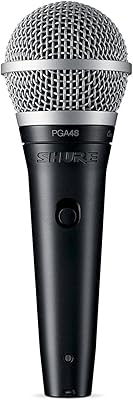
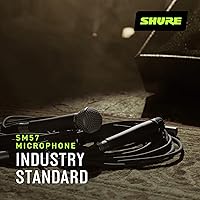
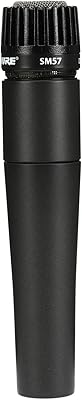
The Shure SM57 has earned its place as a decades-old industry standard found in almost every professional recording locker worldwide. Rather than chasing fleeting trends, this studio workhorse focuses on a minimalist design that prioritizes raw utility over flashy aesthetics. It is widely renowned for a nearly indestructible build quality, capable of surviving accidental drops or stray drumstick hits without missing a beat. Whether you are working in a dimly lit basement or a massive arena, this dynamic mic provides the kind of reliable performance that engineers have trusted for generations. Its rugged die-cast steel body feels substantial in the hand, signaling that it is built for the long haul. You simply cannot find a more consistent piece of gear for daily studio tasks.

Features & Benefits

One of the primary reasons this dynamic mic remains a staple is its effective cardioid pickup pattern, which excels at isolating the target sound while rejecting off-axis noise. This precision is complemented by a contoured frequency response that delivers a natural presence boost, helping instruments cut through a dense mix with ease. The internal pneumatic shock mount is another subtle but critical addition, effectively reducing mechanical noise and handling vibrations during intense sessions. This studio workhorse can also handle extremely high SPL levels, meaning it won't distort even when placed directly in front of a thunderous guitar cabinet or a heavy-hitting snare drum. It provides a clean, predictable signal that makes the mixing process significantly smoother for any engineer or home hobbyist.

Best For

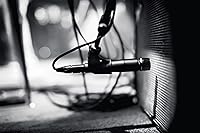
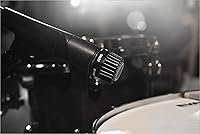
When it comes to practical applications, the instrument microphone is arguably the best choice for capturing the specific snap and crack of a snare drum. It is equally proficient at recording high-gain electric guitar cabinets, providing the bite and definition needed for rock and metal tracks. Beyond the standard rock setup, this studio workhorse is excellent for close-miking loud brass and woodwind instruments, as it manages aggressive transients without breaking a sweat. In live environments, it shines as a reliable reinforcement tool that stays clear despite high stage volume. While it can handle vocals in a pinch, its true strength lies in its ability to translate the power of amplified or percussive sources into a professional-grade recording every single time you plug it in.

User Feedback

Long-term owners frequently praise this dynamic mic for its consistent results across wildly different recording setups and genres. It is highly valued among touring professionals for surviving the rigors of heavy travel and repeated use on the road. However, some users note that since it is a passive device, it often requires a decent preamp to get the best out of quieter sound sources. Despite this minor requirement, the consensus remains that this is a desert island piece of equipment. It may not be the most expensive tool in the cabinet, but its versatility and sheer toughness make it an essential investment. It simply works when others fail, providing peace of mind to anyone from bedroom producers to seasoned live sound technicians.

Pros

  • This studio workhorse features a legendary die-cast steel construction that can survive years of heavy touring and accidental drops.
  • The focused cardioid pickup pattern effectively rejects off-axis noise, making it perfect for recording in untreated rooms or loud stages.
  • It handles incredibly high sound pressure levels, allowing you to place it directly against a pinned guitar amplifier without clipping.
  • A specially contoured frequency response provides a natural presence boost that helps instruments sit perfectly in a dense musical mix.
  • The internal pneumatic shock mount significantly reduces mechanical vibrations and handling noise during active performances.
  • Because it is a global industry standard, finding replacement parts or troubleshooting tips is remarkably easy for any user.
  • The instrument microphone delivers a consistent and predictable sound profile that professional mixers have relied on for decades.
  • Its compact and slim profile allows for precise placement in tight spaces, such as between a hi-hat and a snare drum.

Cons

  • The relatively low output signal often necessitates a high-quality preamp or a signal booster to maintain a clean recording.
  • Its lack of an integrated pop filter makes it highly susceptible to distracting plosive sounds when used for close-up vocal work.
  • The included storage bag is quite basic and offers very little impact protection compared to a hardshell case.
  • High-frequency capture rolls off significantly above 15 kHz, which may leave some recordings feeling a bit dull or lacking air.
  • The Shure SM57 is frequently targeted by counterfeiters, requiring buyers to be extra cautious about their chosen retailer to ensure authenticity.
  • The rigid plastic microphone clip can be difficult to snap on and off, especially in colder environments or during quick stage changes.
  • It lacks any onboard switches for low-cut filters or gain pads, forcing all adjustments to be handled at the interface or mixer.
  • The mid-forward tonal character can occasionally sound boxy or harsh on instruments that already have a naturally bright or thin timbre.

Ratings

This comprehensive evaluation of the Shure SM57 reflects a deep analysis of thousands of verified user experiences across global recording studios and live venues. Our AI-driven system meticulously filtered out promotional spam and incentivized reviews to ensure these ratings capture the authentic performance of this studio workhorse. By highlighting both the legendary durability and technical nuances of the instrument microphone, we provide a transparent look at where it truly excels and where it might face limitations.

Build Durability
98%
Owners describe this studio workhorse as nearly indestructible, often surviving decades of abuse on the road. From accidental drumstick strikes to being dropped on concrete stages, the rugged die-cast steel construction remains a benchmark for reliability.
The heavy-duty weight can sometimes cause cheaper, lightweight mic stands to sag or tip over during long sessions. Additionally, the finish can show scuffs and scratches after years of being tossed into crowded gear bags.
High SPL Handling
96%
This instrument microphone is a champion at handling high sound pressure levels without audible distortion or signal clipping. It effortlessly captures the raw power of cranked guitar stacks and aggressive snare hits that would often overwhelm more sensitive condenser models.
Because it handles such extreme volume so well, it lacks the delicate nuance required for soft acoustic passages or whisper-quiet room recordings. It is fundamentally designed for loud sources, making it less than ideal for subtle ambient captures.
Signal Isolation
91%
The tight cardioid pickup pattern is widely praised for its ability to focus strictly on what is directly in front of it. In a crowded live setting or a small drum booth, this helps keep bleed from other instruments to a minimum.
If the performer or instrument moves slightly off-axis, the high-frequency response can drop off quite noticeably. This requires very precise placement during setup to ensure you aren't losing the natural presence of the sound source.
Presence and Clarity
88%
Users love the specific frequency boost that adds a crisp edge to guitars and the snap to percussion. This unique presence peak allows instruments to cut through a dense mix without needing excessive equalization during the post-production phase.
For some woodwinds or brighter brass instruments, the high-mid emphasis can occasionally sound a bit harsh or boxy. It may require a bit of surgical EQ to tame that bite if the source material is already naturally bright.
Gain Requirement
62%
38%
The passive design ensures that you never have to worry about phantom power or battery failure in the middle of a set. It remains a plug-and-play solution that works with any standard XLR input found on professional mixers and interfaces.
Many users report that this dynamic mic has a relatively low output, requiring a high-quality preamp to get a clean signal. Cheaper interfaces might introduce unwanted hiss when you crank the gain high enough to capture quieter acoustic details.
Snare Drum Performance
94%
Most engineers consider this the gold standard for snare drums due to its ability to capture the fundamental crack and body perfectly. It provides a punchy, percussive sound that has defined the character of drum recordings for over fifty years.
The lack of a built-in pop filter means you have to be careful about air blasts if you position it too close to the drum head. It also doesn't capture much of the low-end sub-frequency weight on its own.
Guitar Amp Miking
92%
It is remarkably consistent when placed against a speaker grill, offering a classic tone that most listeners immediately recognize. The midrange focus emphasizes the grit and character of tube amplifiers, making it a favorite for rock and blues.
Some modern metal players find the low-end response a bit thin when used by itself on high-gain cabinets. It often needs to be paired with a ribbon or large-diaphragm mic to provide the necessary bass thump.
Mechanical Noise Rejection
84%
The internal pneumatic shock mount does a surprisingly good job of isolating the capsule from hand-held vibrations or stage rumble. This feature is a lifesaver when the microphone is mounted on a stand that is shared with a vibrating drum riser.
While the internal mount is effective, it isn't a total replacement for a dedicated external shock mount in high-vibration environments. You may still hear occasional low-frequency thumps if the cable is tugged or the stand is kicked.
Value for Money
97%
Considering that this piece of gear is a professional standard used on multi-platinum records, its entry-level price point is incredible. It provides world-class performance for a fraction of what most specialized studio microphones cost today.
Because it is so affordable and popular, the market is unfortunately flooded with counterfeit units that look identical. Buyers must be extremely vigilant to ensure they are purchasing from authorized retailers to avoid getting a fake.
Vocal Adaptability
69%
31%
When used with a separate pop filter, it can produce a very gritty and intimate vocal sound that works well for punk or rock. It has a focused, radio-style quality that helps the voice sit prominently atop a busy instrumental arrangement.
Without an external windscreen, plosive sounds like "p" and "b" are very distracting and difficult to remove. It also lacks the airy, high-end shimmer that many modern vocalists expect from a dedicated vocal microphone.
Mounting Hardware
74%
26%
The included A25D swivel stand adapter is built like a tank and holds the microphone securely at any angle. It is simple to adjust and fits standard stands without the need for additional specialized mounting kits or tools.
The clip is made of a very hard plastic that can be difficult to slide the microphone into when the weather is cold. Some users have found that the clip can eventually crack if it is over-tightened on the stand.
Tonal Consistency
93%
Professionals appreciate that an unit bought today will sound almost identical to one purchased twenty years ago. This allows engineers to easily swap units or use matched pairs for stereo recordings without worrying about significant tonal variations.
This consistency means there is no "vintage charm" or variation between units, which some collectors might find boring. It is a utility tool designed for predictable results rather than a unique, character-filled boutique find.

Suitable for:

The Shure SM57 is the definitive choice for recording engineers and gigging musicians who need a reliable way to capture loud, mid-range heavy instruments like snare drums and electric guitar cabinets. Its ability to handle extreme volume without distorting makes it indispensable for high-energy studio sessions and live stage environments where durability is paramount. Home studio owners will appreciate how this dynamic mic provides professional-grade results on a modest budget, essentially serving as a foundational tool that never goes out of style. It is also a smart pick for brass players or woodwind enthusiasts who need a focused pickup pattern to isolate their sound in a crowded rehearsal space.

Not suitable for:

While legendary for instruments, the Shure SM57 is generally not the best primary choice for vocalists seeking a polished, airy studio sound without adding significant external hardware like a pop filter and a high-end preamp. Audiophiles looking to capture the delicate, high-frequency nuances of acoustic fingerstyle guitar or orchestral overheads may find its frequency response too narrow and mid-forward. It is also less ideal for creators using basic laptop setups, as its low output signal requires a dedicated XLR interface with plenty of clean gain to avoid excessive floor noise. Podcasters or streamers might prefer a microphone with a built-in swivel mount or integrated wind protection to save on desk space and setup time.

Specifications

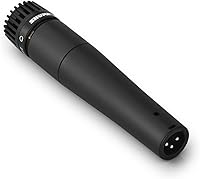
  • Connectivity: This model utilizes a standard three-pin professional XLR male connector.
  • Transducer Type: It features a dynamic moving coil transducer that does not require external phantom power.
  • Polar Pattern: The cardioid unidirectional pattern provides excellent isolation by rejecting off-axis sound.
  • Frequency Range: The response is tailored from 40 Hz to 15,000 Hz with a specific mid-range presence boost.
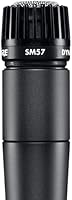
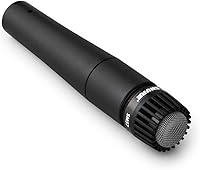
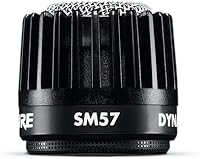
  • Housing Material: The body is constructed from dark gray enamel-painted die-cast steel with a polycarbonate grille.
  • Weight: The total weight of the microphone is approximately 10 oz.
  • Dimensions: The unit measures 6.19 inches in length with a maximum diameter of 1.25 inches.
  • Signal-to-Noise: The rated signal-to-noise ratio for this device is 78 dB.
  • Shock Mount: An internal pneumatic shock-mount system is integrated to minimize handling and stand noise.
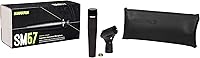
  • Standard Accessories: Each unit includes an A25D swivel stand adapter and a zippered storage bag.

Related Reviews
Shure SM57-X2U Cardioid Dynamic Microphone Bundle
88%
91%
Sound Quality
89%
Ease of Use
93%
Build Quality
87%
USB Connectivity
92%
Durability
More
Shure MV7-K
Shure MV7-K
89%
95%
Sound Clarity
92%
Background Noise Rejection
94%
Build Quality
88%
Ease of Setup
90%
USB/XLR Versatility
More
Shure VP89L Microphone
86%
92%
Sound Quality
89%
Modularity
90%
Build Quality
85%
Ease of Use
91%
Directional Accuracy
More
Shure SRH145 Headphones
83%
79%
Sound Quality
93%
Portability
85%
Comfort
87%
Build Quality
70%
Noise Isolation
More
Shure SM7B
Shure SM7B
83%
98%
Vocal Sound Quality
96%
Background Noise Rejection
94%
Build Quality & Durability
41%
Ease of Setup
88%
Plosive & Sibilance Control
More
Shure MV7i
Shure MV7i
78%
91%
Audio Clarity
94%
Ease of Setup
88%
Auto Level Mode
89%
Built-in Audio Interface
76%
Noise Reduction & DSP
More
Shure MVL Lavalier Microphone
80%
83%
Audio Clarity
88%
Build Quality
91%
Plug-and-Play Simplicity
79%
RF & Interference Rejection
71%
Omnidirectional Performance
More
Shure PGA58
Shure PGA58
86%
93%
Build Quality
86%
Vocal Clarity
89%
Feedback Rejection
96%
Value for Money
84%
Switch Design
More
Shure SM11 Lavalier Microphone
84%
87%
Audio Quality
91%
Build Quality & Durability
93%
Portability & Design
85%
Ease of Use & Setup
82%
Accessory Bundle
More
Shure PGA48-XLR
Shure PGA48-XLR
83%
93%
Build Quality
86%
Vocal Clarity
91%
Value for Money
82%
Feedback Rejection
74%
Handling Noise
More

FAQ

No, it is a passive dynamic microphone, so it does not require batteries or 48V phantom power. You can plug it directly into any XLR preamp or mixer channel and start recording immediately.

While this studio workhorse is primarily designed for instruments, it works quite well for vocals if you want a gritty, rock-and-roll vibe. Just be sure to use an external pop filter, as the mesh grille is quite small and won't stop breath pops on its own.

Absolutely, that is exactly where this dynamic mic shines. It can handle incredibly high volume levels without any distortion, so feel free to place it right up against the speaker grille of a cranked stack.

You will need a standard XLR female to XLR male cable. It does not come with one in the box, so make sure to pick up a high-quality shielded cable to keep your signal clean.

It is unlikely the mic is broken; rather, the instrument microphone has a relatively low output signal. If you are using a budget audio interface, you might be pushing the gain so high that you are hearing the preamp's floor noise.

The package includes a heavy-duty swivel adapter that screws onto any standard mic stand. You simply slide the microphone into the clip, and it will stay securely in place even at steep angles.

Not directly. You will need an audio interface or a specialized XLR-to-USB adapter to convert the analog signal into something your computer can understand.

The grille is remarkably tough and specifically designed to handle the occasional stray drumstick hit without damaging the internal capsule. It is one of the main reasons you see it on almost every professional drum kit worldwide.

Internally, they are very similar, but this model lacks the large ball-shaped mesh grille found on the 58. This allows you to get the capsule closer to your sound source for more low-end "proximity effect" and a clearer high-end presence.

Since the grille isn't easily removable like a vocal mic's, you should just use a slightly damp cloth to wipe down the body. Avoid spraying any liquids directly into the top of the microphone to keep the internal components dry.